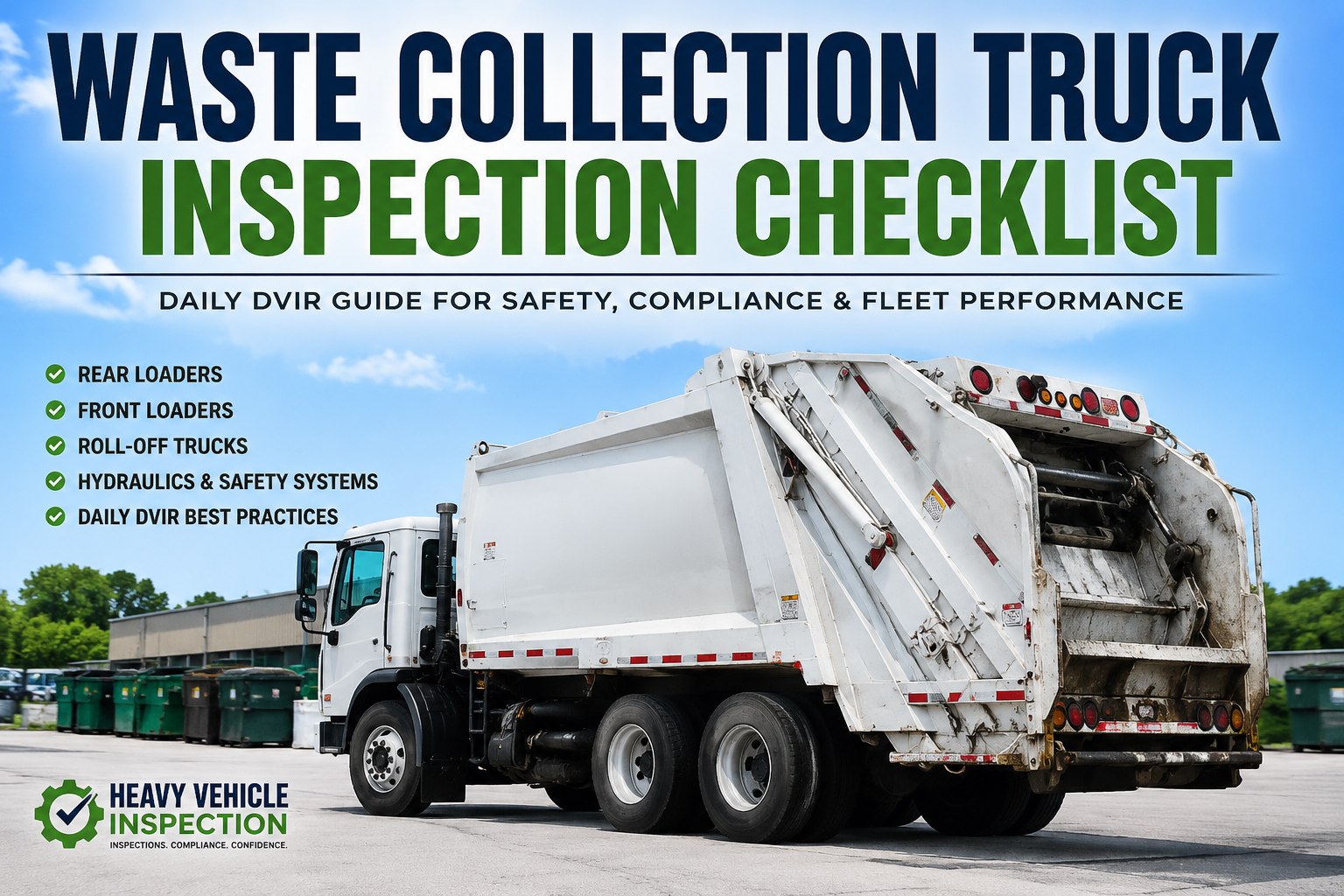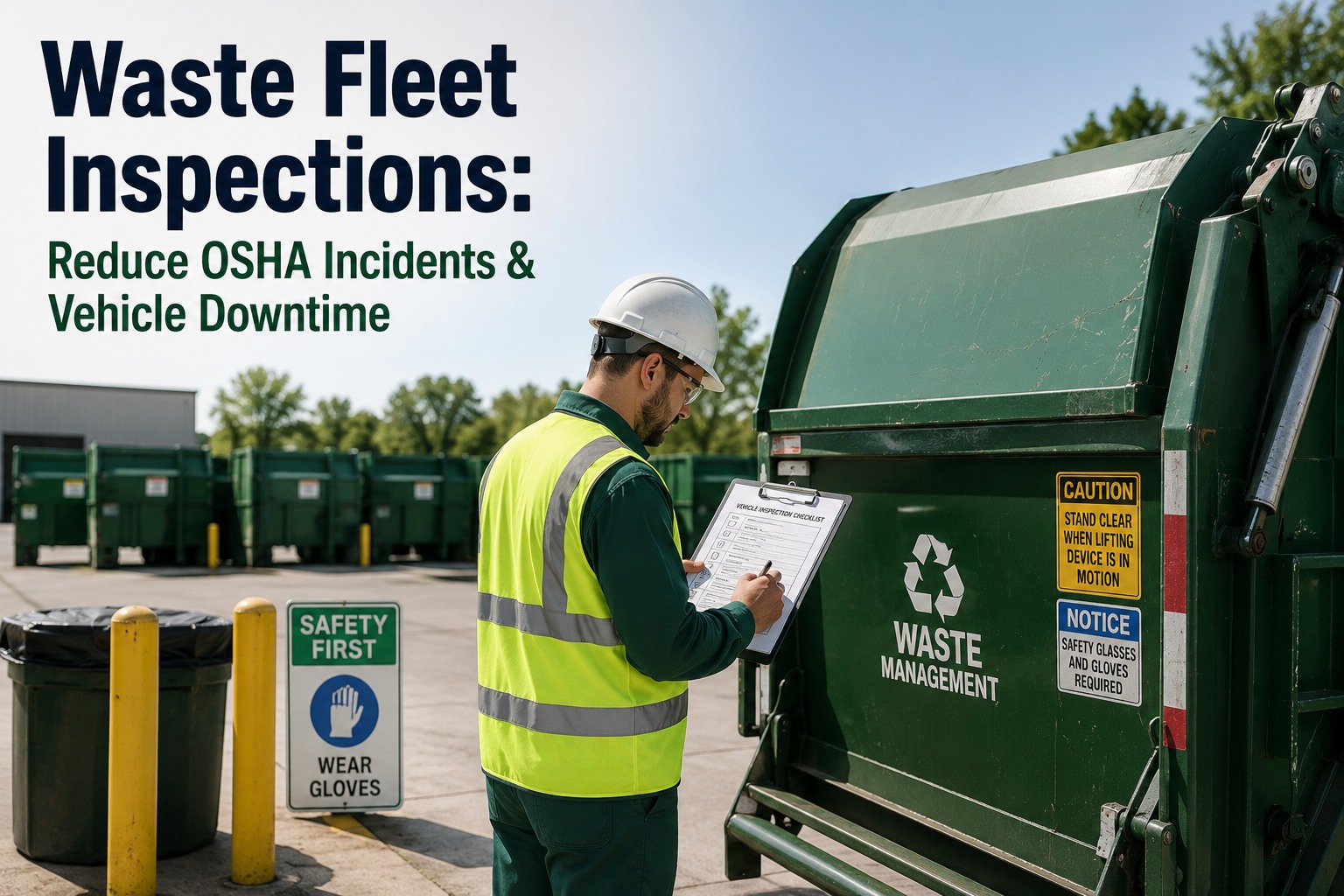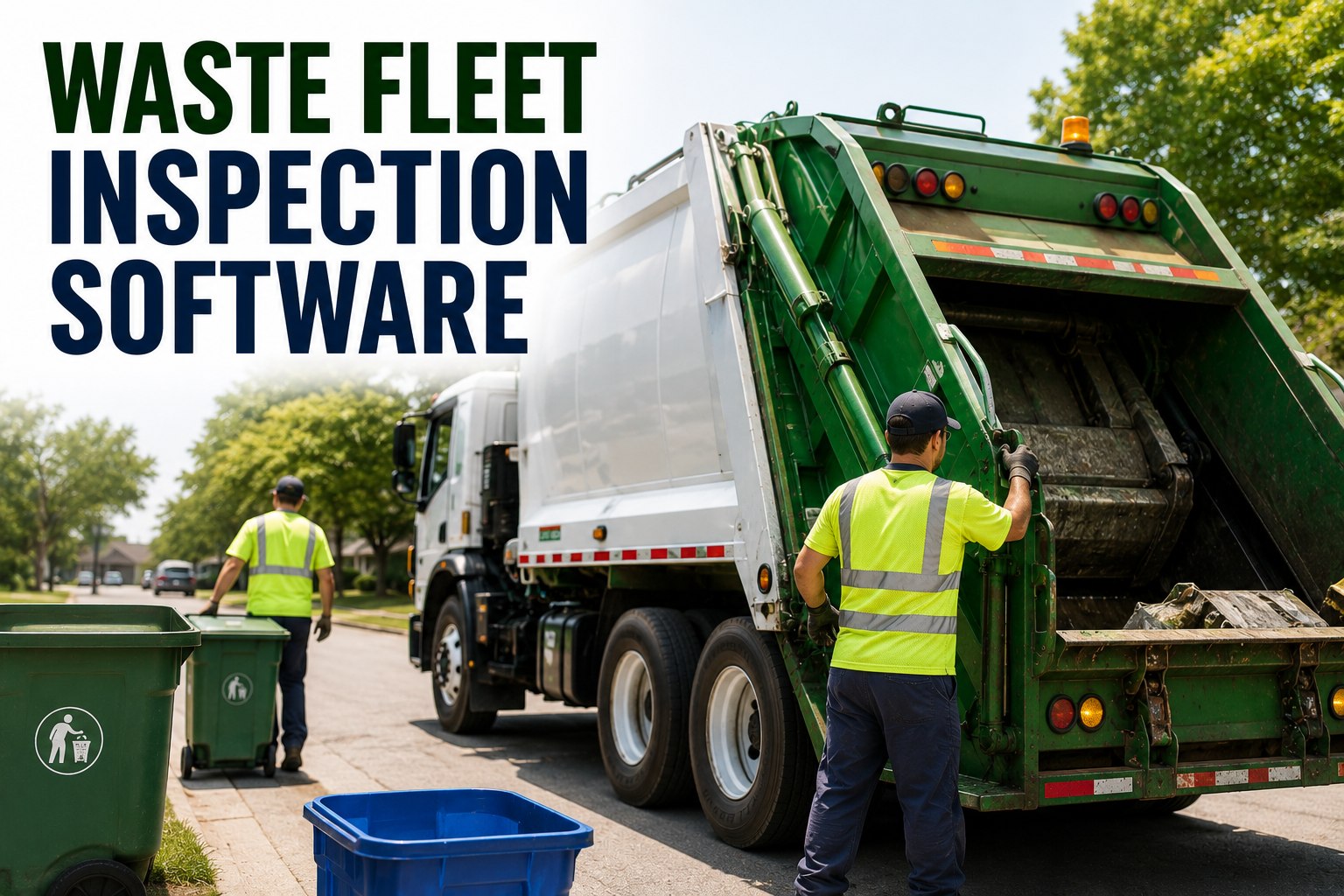
It's 4:30 a.m. and Truck 12 is about to leave the yard for a residential route it will not finish. Not because the engine dies — the engine is fine. Because a hydraulic hose nobody looked at is three cycles from letting go, and the fleet app watching this truck has no idea what a hydraulic hose even is. This is a day in the life of a refuse truck, told the way waste fleet inspection software should see it: not as a vehicle with an odometer, but as a packer, a pair of lift arms, and a PTO grinding through 1,000 cycles before lunch. Follow the shift below and watch where generic software goes blind — and what it costs. Book a walkthrough to see the refuse-specific version.
Waste Fleet Inspection Software, Told as One Route
Generic fleet software sees a truck. A refuse fleet sees hydraulics, a compactor, lift arms, and a PTO cycling itself to failure. Ride one shift and see exactly where the two diverge — and what the gap costs by nightfall.
- Route type
- Residential rear-loader
- Stops today
- 1,040
- Hydraulic cycles
- 1,040
- What generic sees
- Miles only
Every commercial vehicle plays by a set of rules. A garbage truck breaks all of them — it stops every thirty seconds, hauls 25,000 pounds of compaction load, bathes in corrosive waste, and runs its hydraulics harder before 9 a.m. than an over-the-road tractor does in a week. The systems that fail here — the packer, the arms, the PTO, the hoses — are the exact systems a generic checklist has no line for. So follow the clock. At each moment of the shift, one refuse-specific system comes due, and one of two things happens: it was inspected, or it wasn't. See the refuse-specific inspection that catches all of it
Yard-out: the pre-trip that isn't
Hydraulic systemTruck 12 rolls out on a walkaround that checked tires, lights, and mirrors — the generic-app trinity. What it never asked the driver to touch: the hydraulic hoses running 2,500–3,500 PSI to the packer, the cylinder rods, the pressure relief valve. Those are 30–40% of this truck's lifetime maintenance spend and the number-one cause of the breakdown that's coming. A weeping hose here is a $200 fix in the bay.
Generic app blind spot: no hydraulic line items exist, so the hose is never inspected.
Stop 180: the arms earn their keep
Lift arms & grip padsBy the second hour the lift arms have cycled 180 times, each one gripping and tipping a container overhead. The rubber grip pads are wearing — and a worn pad drops a bin, which is a liability event, not a maintenance note. Front-, side-, and rear-loaders stress the arms differently, so a real inspection template has to match the body. A one-size form doesn't have a place to write "grip pad glazing."
Generic app blind spot: lift arms and grip pads aren't on any standard truck checklist.
Cycle 620: the packer under load
Compactor & packer bodyThe packer blade has slammed shut 620 times, compressing waste at 25,000 pounds of force. A packer panel drifting out of alignment is quietly scoring a cylinder rod; a hairline crack is spreading in a weld seam under corrosive fluid; the tailgate cam-lock is one failure from spilling load on a residential street. None of this tracks the odometer — it tracks compaction cycles, a number a mileage-based system never counts.
Generic app blind spot: no cycle counter, so PM is scheduled by miles the truck barely accumulates.
The PTO nobody counts
PTO-driven equipmentEvery one of those packer and arm cycles ran off the power take-off, spinning the hydraulic pump off the engine. Drive-coupling play left unchecked cascades into pump-shaft damage that runs into the thousands. Components here wear by activations, not miles — a cylinder rebuild should trigger at, say, 50,000 cycles. The truck reads 100,000 miles on the dash but carries 8,000+ engine hours and a quarter-million hydraulic cycles. The odometer is lying about this truck's real age.
Generic app blind spot: no PTO or cycle metering, so wear is invisible until something snaps.
Stop 640: the hose lets go
Mid-route failureOn a residential street, mid-cycle, the hose from 4:30 a.m. ruptures. Hydraulic fluid sprays the pump, contaminates downstream components, and the packer stops dead. That $200 hose is now an $8,000+ event: towing, contaminated parts, a driver stranded, customer credits for a route that won't get finished, and overtime to cover it tomorrow. The truck is down. The clock keeps running.
The bill: one uninspected hose = one dead route + a four-figure repair + a broken service contract.
The same shift, run by software that can see
Now rewind to 4:30 and give the driver an app that knows what Truck 12 is. Nothing about the truck changes — only what the software puts in front of the person doing the walkaround. Here's how the day goes when every one of those blind spots is a line item instead.
Truck 12 on generic software
- 04:30 Hose never inspected — not on the form
- 06:15 Grip-pad wear invisible
- 08:40 Packer cycles uncounted, PM by miles
- 10:10 PTO wear untracked
- 11:52 Hose ruptures — route dead, $8,000+
Truck 12 on waste-specific software
- 04:30 Hose flagged weeping, photo taken, work order opened
- 05:00 Bay swaps the hose — $200, truck still makes route
- 06:15 Grip pad logged at wear limit, queued for PM
- 08:40 Packer cycle count triggers upcoming cylinder service
- 14:30 Route finished. Zero downtime. Contract intact.
Same truck. Same driver. Same route. The only variable is whether the software knew to look. Start free and give your drivers the checklist that looks
The six systems a generic checklist can't see
Pull the shift apart and the pattern is stark: nearly every failure point on a refuse truck is a system that doesn't exist on an over-the-road tractor. Tap through them — these are the line items your inspection software has to carry, or it's inspecting the wrong truck.
Hydraulic system
2,500–3,500 PSI across four to six circuits powering the packer, arms, and tailgate. Inspect fluid level and leaks, hoses for cracks, bulges, and weeping, cylinder rods for scoring, and the pressure relief valve. The leading cause of mid-route breakdowns, bar none.
Compactor & packer body
Blade edge against spec, packer panel alignment through full stroke, body walls and weld seams for cracks or rust-through, and the tailgate cam-lock. A misaligned panel destroys cylinders; a failed latch spills load on a residential street.
Lift arms & tipper
Cylinder integrity, pivot lubrication, and the rubber grip pads that hold the container. Front-, side-, and rear-loaders stress the arms differently, so the checklist has to match the body type — a generic form can't.
PTO-driven equipment
The power take-off drives the pump off the engine. Loose drive-coupling play cascades into pump-shaft damage costing thousands. Count PTO activations so cylinder rebuilds trigger at real cycle thresholds, not arbitrary calendar dates.
Roll-off & cable-hoist
Cable, rollers, hoist cylinders, and locking mechanisms carry enormous load. Frayed or loose cables are a serious hazard to drivers and bystanders — and need dedicated inspection items a standard truck form has no place for.
Safety interlocks & DOT
The compactor interlock that prevents activation near the hopper is a life-safety item; the backup alarm and camera are OSHA requirements. Alongside sit the standard DOT items — brakes, tires, lights — and the 49 CFR 396.11 DVIR.
Six systems, and only the last one overlaps with what a generic tool already covers. That overlap gap is the whole reason waste-specific inspection software exists. Load refuse checklists by loader type
Why the odometer lies about a refuse truck
Everything above comes back to one number generic software gets wrong. A garbage truck idles roughly half its shift running the compactor, so it piles up engine hours three to four times faster than miles — and its components wear on cycles fastest of all. One truck, three clocks, three very different readings.
Schedule PM by miles and you service this truck as if it were a third of its real age. Schedule by hours and cycles — whichever threshold hits first — and the cylinder rebuild lands before the failure, not after. See hour- and cycle-based PM scheduling or start a free trial on your own fleet
From the shop floor
We ran a generic fleet app for two years and couldn't figure out why our hydraulic spend kept climbing. Then it clicked — the app never once asked a driver to look at a hose. Those systems weren't failing because we were unlucky. They were failing because nothing was watching them.
The day we switched to checklists that actually included the packer and the arms, drivers started flagging weeping hoses at two hundred bucks instead of us finding them ruptured at eight grand. Same trucks, same drivers. The software finally knew what a garbage truck was.
Questions refuse fleet managers ask
What should waste fleet inspection software include?
It should include checklist items for the systems unique to refuse trucks — the hydraulic system (hoses, cylinders, pump, pressure relief valve, fluid), the compactor and packer body (blade wear, panel alignment, cycle counts, tailgate latch), lift arms and grip pads, PTO-driven equipment, and roll-off cable-hoist assemblies — plus standard DOT items like brakes, tires, and lights. Beyond checklists it needs loader-specific DVIR templates by body type, photo-verified defect capture, automatic defect-to-work-order workflow, PM scheduled by engine hours and cycles rather than just odometer miles, parts and inventory tracking, and retrievable 49 CFR 396.11 compliance records. The core requirement is that the software understands a refuse truck's real failure points instead of treating it like an over-the-road tractor.
Why can't I just use generic fleet software for garbage trucks?
Generic fleet software is built around the over-the-road tractor — engine, brakes, tires, lights, odometer-based maintenance. It has no line items for the components that actually ground refuse trucks: hydraulic compactors, lift arms, PTO systems, and cable-hoist assemblies. Because those systems never appear on the inspection, they never get checked on a schedule until they fail. On top of that, refuse trucks accumulate engine hours three to four times faster than miles, so odometer-triggered PM misses much of the real wear. The result is higher hydraulic spend, more mid-route breakdowns, and maintenance costs that can run tens of thousands of dollars per truck per year higher than a fleet using waste-specific inspection and PM.
How does inspection software reduce garbage truck downtime?
It catches the small, cheap defects before they become catastrophic mid-route failures. On a refuse truck, hydraulics are the leading cause of breakdowns and roughly 30 to 40% of maintenance spend — and a worn hose caught on a walkaround is a $200 planned fix, while the same hose ruptured on route becomes an $8,000-plus event with contaminated components, towing, and an unfinished route. Structured, checklist-driven inspection prevents an estimated 85% of common mid-route breakdowns. Digital software adds photo-verified findings, automatic work-order creation so defects reach the shop, and PM scheduled by hours and cycles so components are serviced before they fail rather than after.
Why is meter- and cycle-based PM important for refuse trucks?
Because a refuse truck's wear doesn't follow the odometer. A residential rear-loader idles roughly half its shift while running the compactor, so it accumulates engine hours three to four times faster per mile than an over-the-road truck — a truck at 100,000 miles may have 8,000-plus engine hours. Hydraulic components wear by cycles: a route cycling the compactor 400 times per shift wears components twice as fast as one cycling 200 times. Scheduling PM on whichever threshold arrives first — miles, engine hours, or PTO and compactor cycles — means a cylinder rebuild is triggered at a real wear point, such as 50,000 cycles, rather than an arbitrary calendar date that either wastes component life or misses the failure entirely.
Does waste fleet inspection software help with DOT and OSHA compliance?
Yes. Refuse trucks are subject to the same DOT requirements as other commercial vehicles, including the driver vehicle inspection report under 49 CFR 396.11, plus OSHA safety items specific to waste operations such as the backup alarm, reversing camera, and compactor safety interlock. Digital inspection software captures these checks as part of the daily routine, timestamps and photo-verifies completion, and retains a per-truck history that can be produced on demand for a DOT audit or a municipal contract review. Instead of hoping a paper DVIR is filed and findable, you get a documented, defensible record for every truck — which also matters for the service-verification reporting many municipal waste contracts require.
Inspect the truck you actually run
HVI runs waste fleet inspections built for the systems that fail — hydraulics, compactor, lift arms, PTO — as guided pass/fail checks with photos, defect-to-work-order workflows, parts tracking, and PM scheduled by engine hours and cycles. Turn the $8,000 rupture back into the $200 hose it started as.
No credit card · No hardware · Live on your fleet in under two weeks