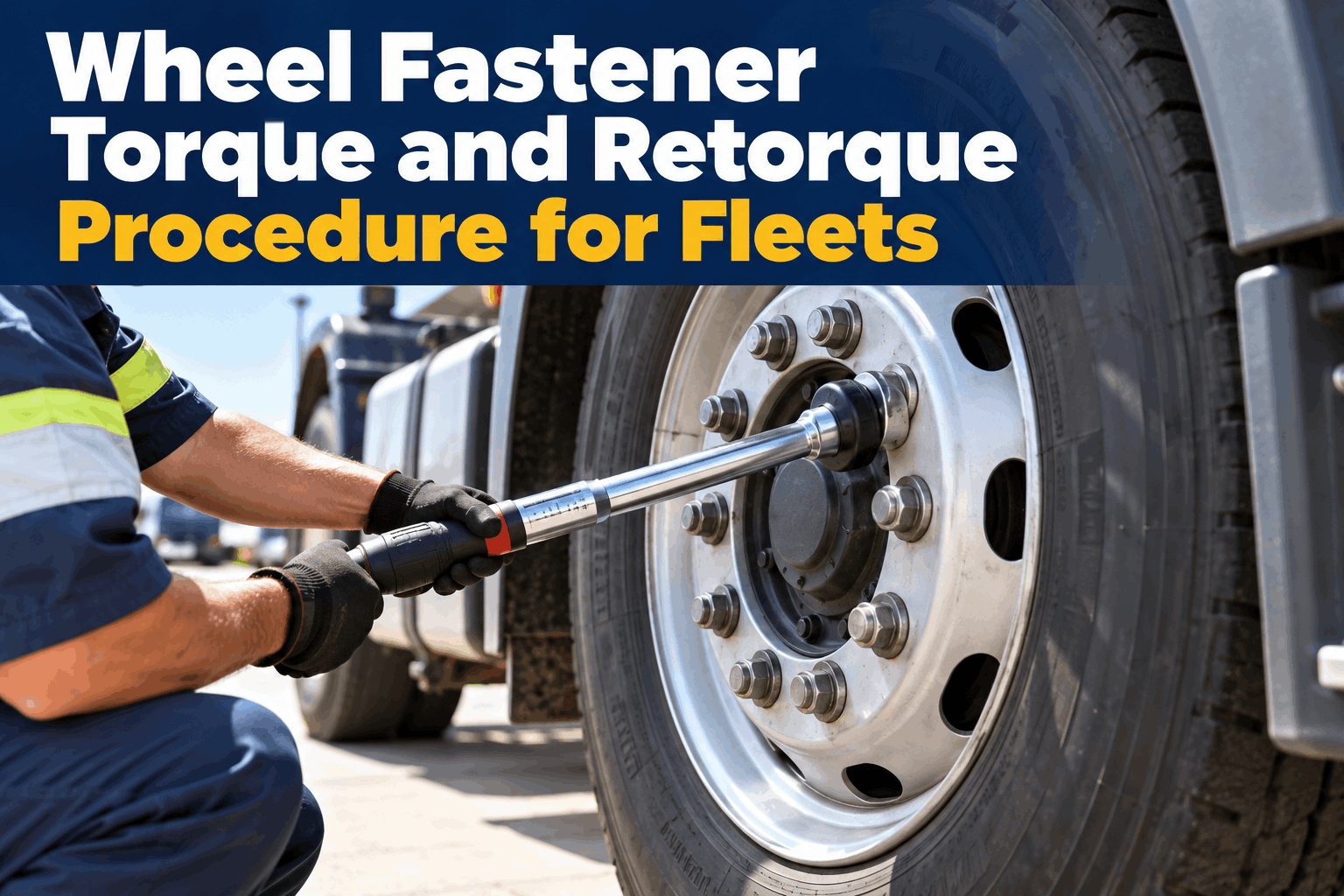
Wheel nut torque is the one spec where "close enough" can put a wheel in the oncoming lane. Too loose and it backs off; too tight and the studs snap; skip the retorque and it quietly works loose over the first hundred miles.
Get the wheel nut torque right — then check it again
The correct torque, the right sequence, clean mounting faces and a scheduled retorque after the first miles are what keep a wheel on the hub. Here's the procedure, and how a fleet makes sure the retorque never gets missed.
A wheel nut isn't a fastener you just "tighten" — it's a calibrated clamp: torqued to spec, in the right order, against clean surfaces, then verified once the joint settles. Always use your equipment's figure; the numbers here are the common reference range.
Wheel nut torque: the number, and why it's a range not a guess
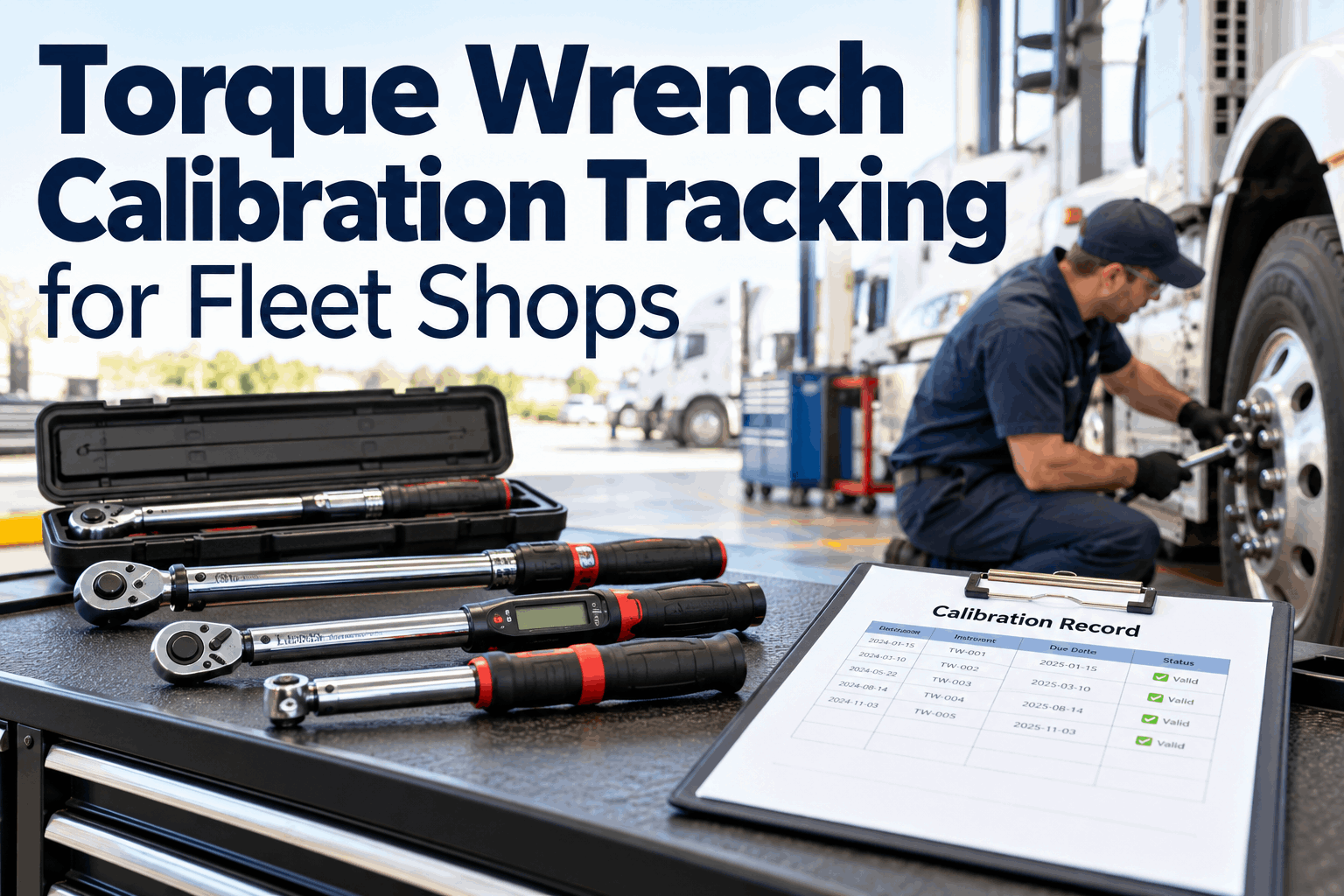
For standard hub-piloted wheels with M22 studs and two-piece flange nuts, the common reference is 450–500 ft-lb — but other nut designs differ, so the equipment spec wins. How you reach it matters too: a calibrated torque wrench for the final pull, never an impact gun.
The joint can't hold the wheel tight; nuts back off and the wheel works loose over miles.
Full clamp load, studs in their elastic range — the wheel stays seated against the hub.
Studs pulled past yield; they stretch, fatigue and can fracture — often with no warning.
Both ends of the range fail the same job, which is why "a bit tighter to be safe" is its own hazard. See the target spec and the torque actually applied on each wheel's record, live in a demo.
Torque in a star pattern, not around the circle
Tightening around the circle pulls the wheel on crooked and overloads some studs. A star (cross) pattern seats it square so clamp load is even — build the procedure into your inspection free:
Clean faces matter as much as the torque wrench
A perfect torque reading on a dirty joint is a lie — rust, paint or grime between the wheel and hub compresses after a few miles and the clamp load vanishes. Prep the joint before the wheel ever goes on:
Clean hub and wheel contact faces free of dirt, rust, peeling paint and grease.
Put a drop or two of oil on the stud threads and nut seats so torque reads true.
Lubricate the wheel or hub mounting faces — they need friction to hold clamp.
Reuse studs or nuts that won't hand-turn — thread damage means replace, not force.
Make the retorque a task that can't be skipped
See how HVI schedules a retorque after every wheel service, records the torque applied and who did it, and flags wheel security on the next inspection.
The wheel nut retorque procedure everyone forgets
This is the step that prevents wheel-off: torque isn't permanent. As the fresh joint seats, the reading drops — so every wheel that comes off and goes back on needs a torque check after the first 50–100 miles. TMC's RP 237 sets the interval.
Clean faces, star-pattern torque to the equipment figure with a calibrated wrench.
Re-check every nut at spec once the joint has seated — the miss that causes wheel-off.
Keep wheel security on the recurring inspection — rust trails, shifted indicators, loose nuts.
The cost of the check is five minutes per wheel; the cost of a separation is a serious-injury claim. A scheduled retorque task is the cheapest insurance on the truck — watch HVI make the retorque automatic after every wheel job.
What a loosening wheel looks like before it leaves
A wheel rarely comes off without warning — the signs are just easy to miss on a fast walkaround. See these flagged automatically on inspection; any one means stop and retorque:
Rust trails from the nuts
Reddish-brown streaks running off a nut mean it's been moving — fretting rust is the classic loose-wheel tell.
Indicators out of line
Loose-nut indicators that no longer point the same way show a nut has rotated since install.
Bright, shiny stud threads
Fresh metal shine around a stud or nut is movement wearing the surfaces — it should be dull and still.
A missing or cracked nut
Two or more missing, loose or broken fasteners on one wheel is a CVSA out-of-service condition — park it.
These are exactly the checks a wheel-end inspection should capture, alongside the wheel and rim inspection for cracks and lug damage — all on the same record.
"We lost a wheel off a trailer on the interstate once. No one was hurt, but I never want that call again. The problem wasn't our torque — it was that nobody owned the retorque after a tire change. Now the retorque is a scheduled task the moment a wheel comes off, it's signed when it's done, and it shows up overdue if it isn't. That one change did more for wheel security than any tool we bought."
How HVI keeps wheel nut torque on the record
HVI turns the procedure into something a fleet can prove it did — the retorque becomes a scheduled, signed, trackable task tied to your mobile inspection. See a wheel's full torque history:
Auto-schedules the retorque
Every wheel service triggers a retorque task due at the first 50–100 miles — it shows overdue if it's skipped.
Records the torque & who did it
Log the target spec, the torque applied and the technician — accountability you can pull up on any wheel.
Flags wheel security
Rust trails, shifted indicators and loose or missing nuts become flagged defects that route a work order.
Wheel nut torque & retorque FAQ
What is the correct wheel nut torque for a heavy truck?
For standard hub-piloted wheels with M22 studs and two-piece flange nuts, the common reference range is 450–500 ft-lb, applied with a calibrated torque wrench — never an impact gun on the final pull. Other nut designs and wheel types torque differently, so always use the wheel and hub manufacturer's specification for your equipment rather than a generic number.
What is the wheel nut retorque procedure, and when do you do it?
After a wheel is mounted, the joint seats and torque drops — so every wheel that comes off and goes back on should be retorqued after the first 50–100 miles of return service. Re-check each nut to the full spec in a star pattern. TMC RP 237 is the retorque guideline fleets use to set their exact interval.
Why torque wheel nuts in a star pattern?
A star (cross) pattern pulls the wheel squarely onto the hub so clamp load is even across all studs. Tightening around the circle in order seats the wheel crooked and overloads some studs while under-loading others. Snug all nuts first, torque to spec in the crossing order, then make a second full pass because earlier nuts relax as later ones are tightened.
What causes wheels to come off even when they were torqued?
Usually a missed retorque or a dirty joint. If the wheel and hub faces had rust, paint or grease, the joint compresses after a few miles and clamp load drops even though the install reading looked right. Over-torque that stretched the studs, and under-torque from damaged threads, are the other causes — which is why surface prep and the 50–100 mile retorque matter as much as the number.
How does HVI help with wheel nut torque and retorque?
HVI schedules a retorque task automatically after any wheel service so it can't be forgotten, records the target spec, the torque applied and the technician who did it, and flags wheel-security signs — rust trails, shifted loose-nut indicators, loose or missing fasteners — as defects that route a work order. Because it lives with your inspections and maintenance, wheel torque becomes documented and accountable rather than something someone was supposed to remember.
Keep every wheel torqued, retorqued and on the record
Put wheel nut torque and the retorque on a schedule with HVI — the right spec, a signed torque record, and wheel-security checks by position — so a missed retorque never becomes a wheel on the highway.