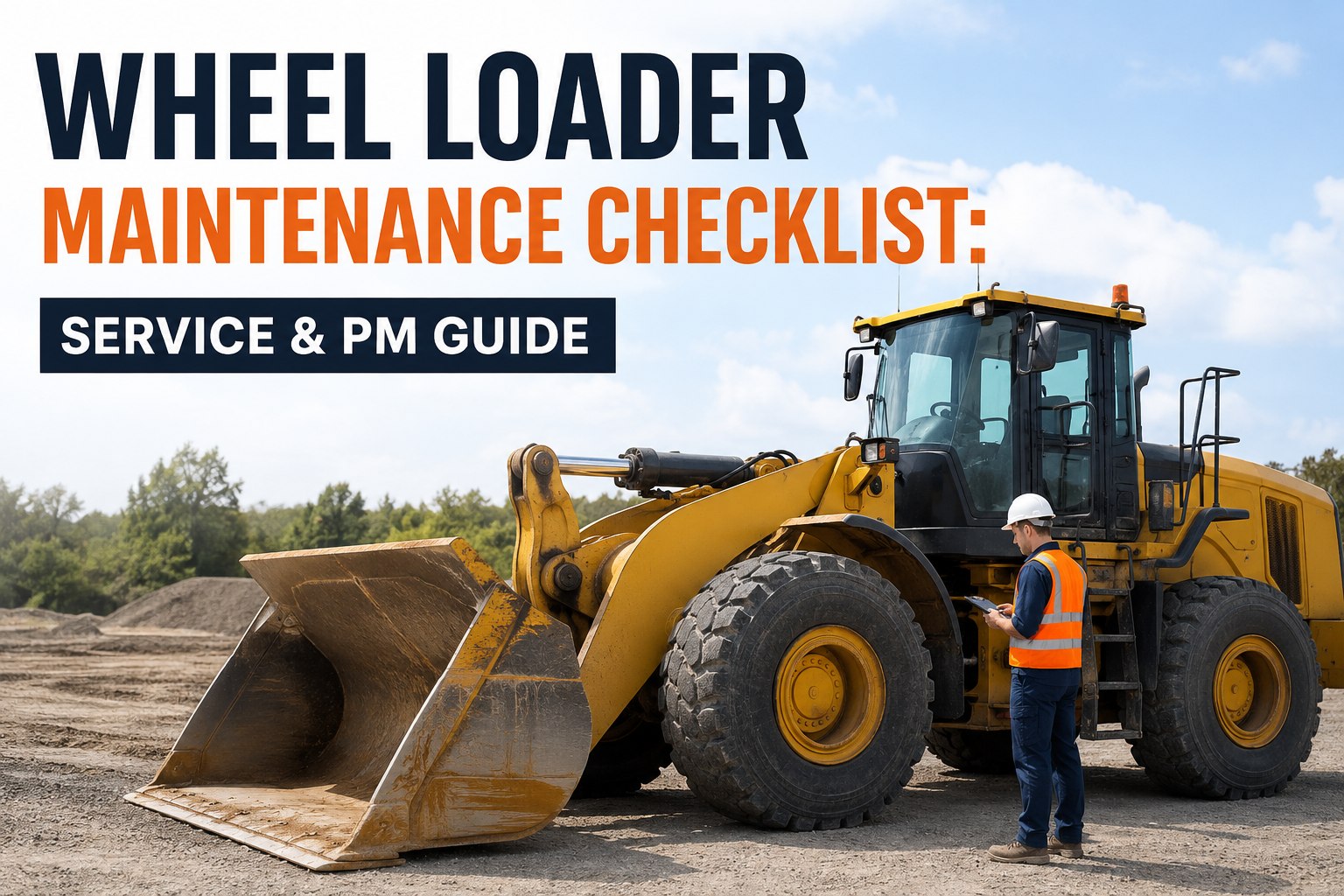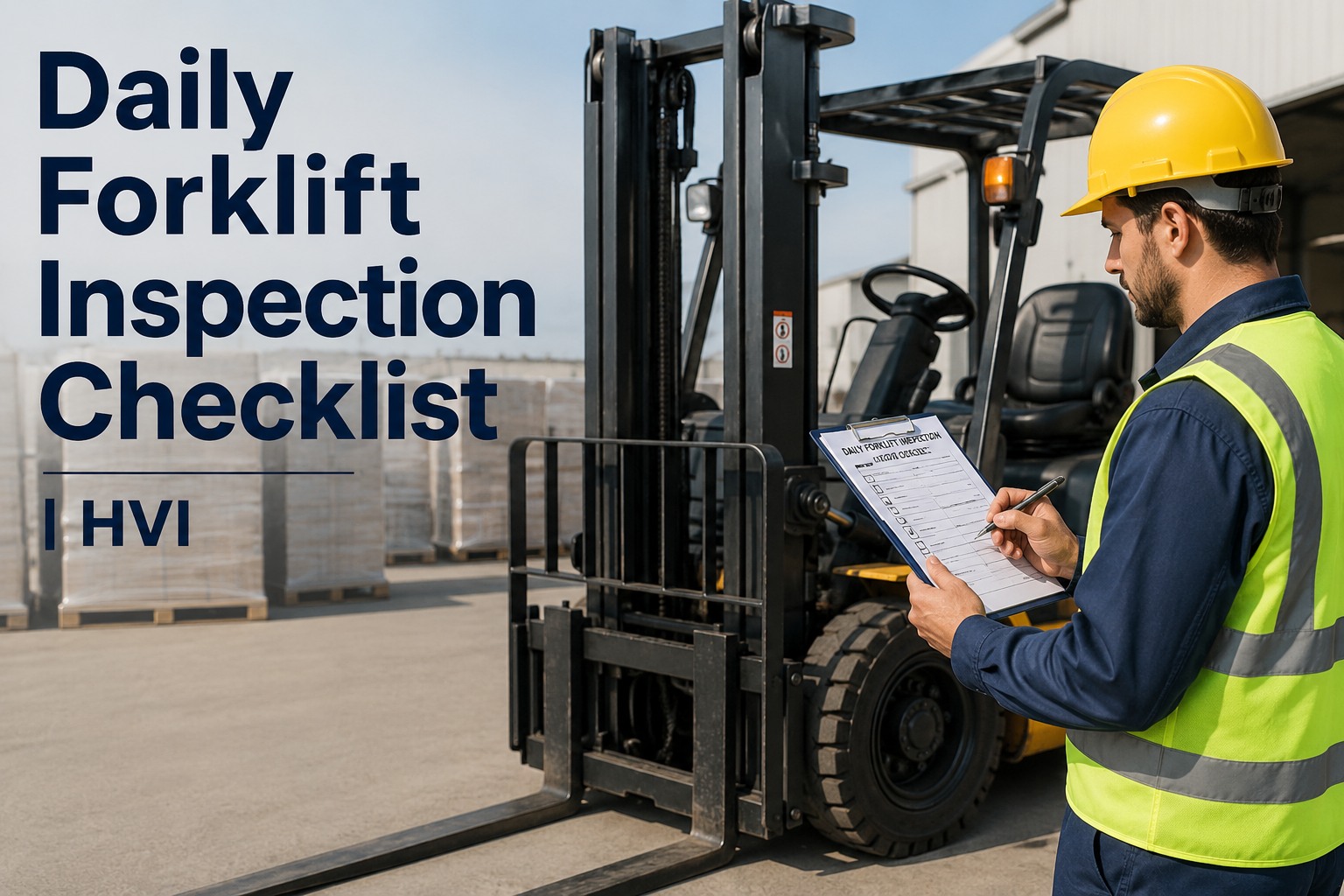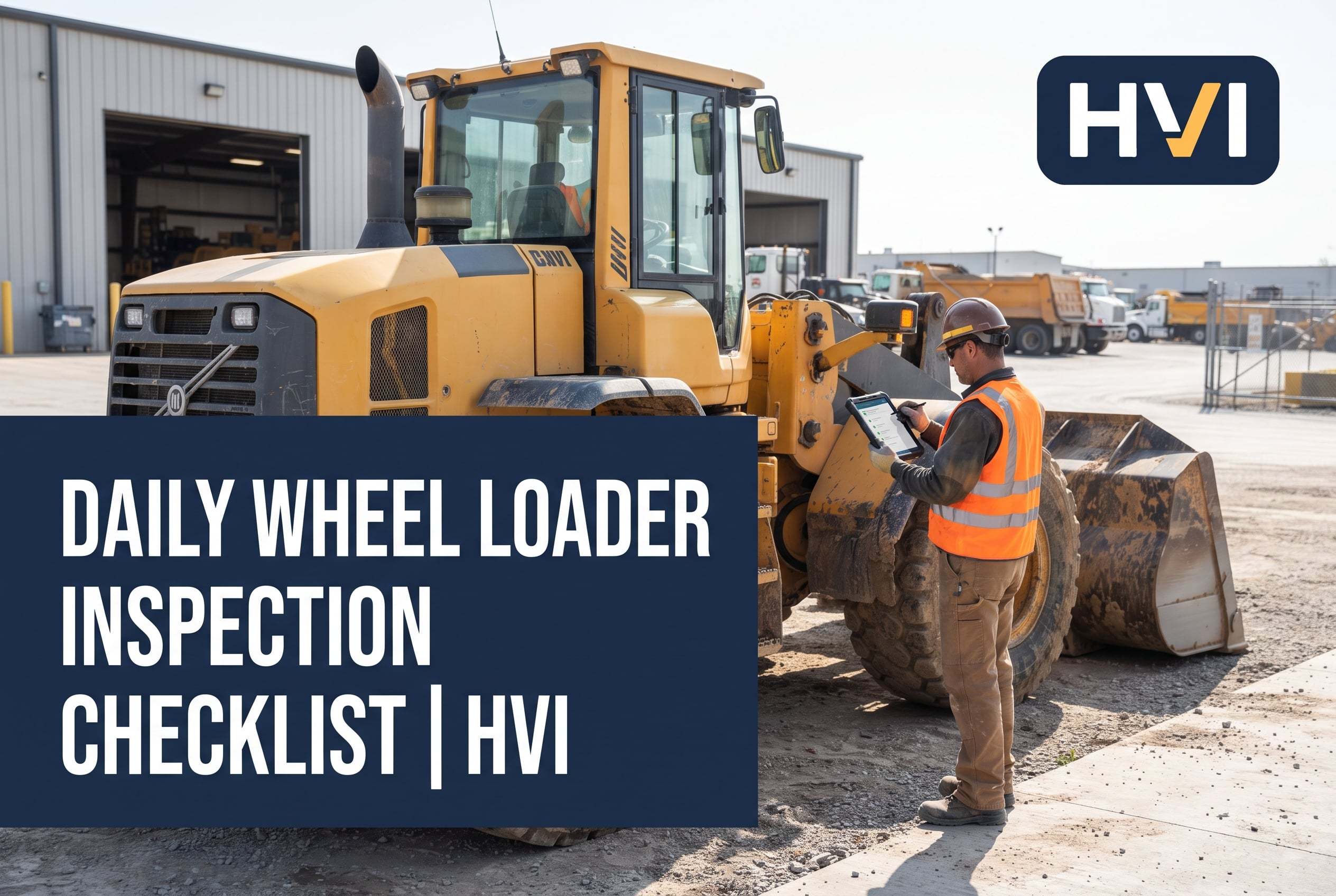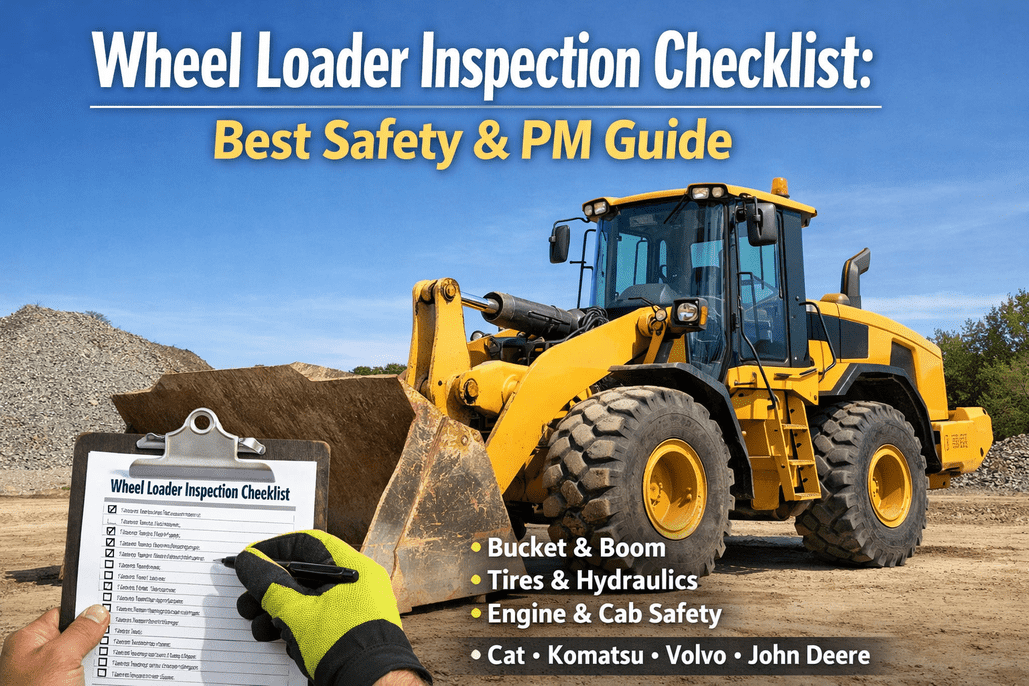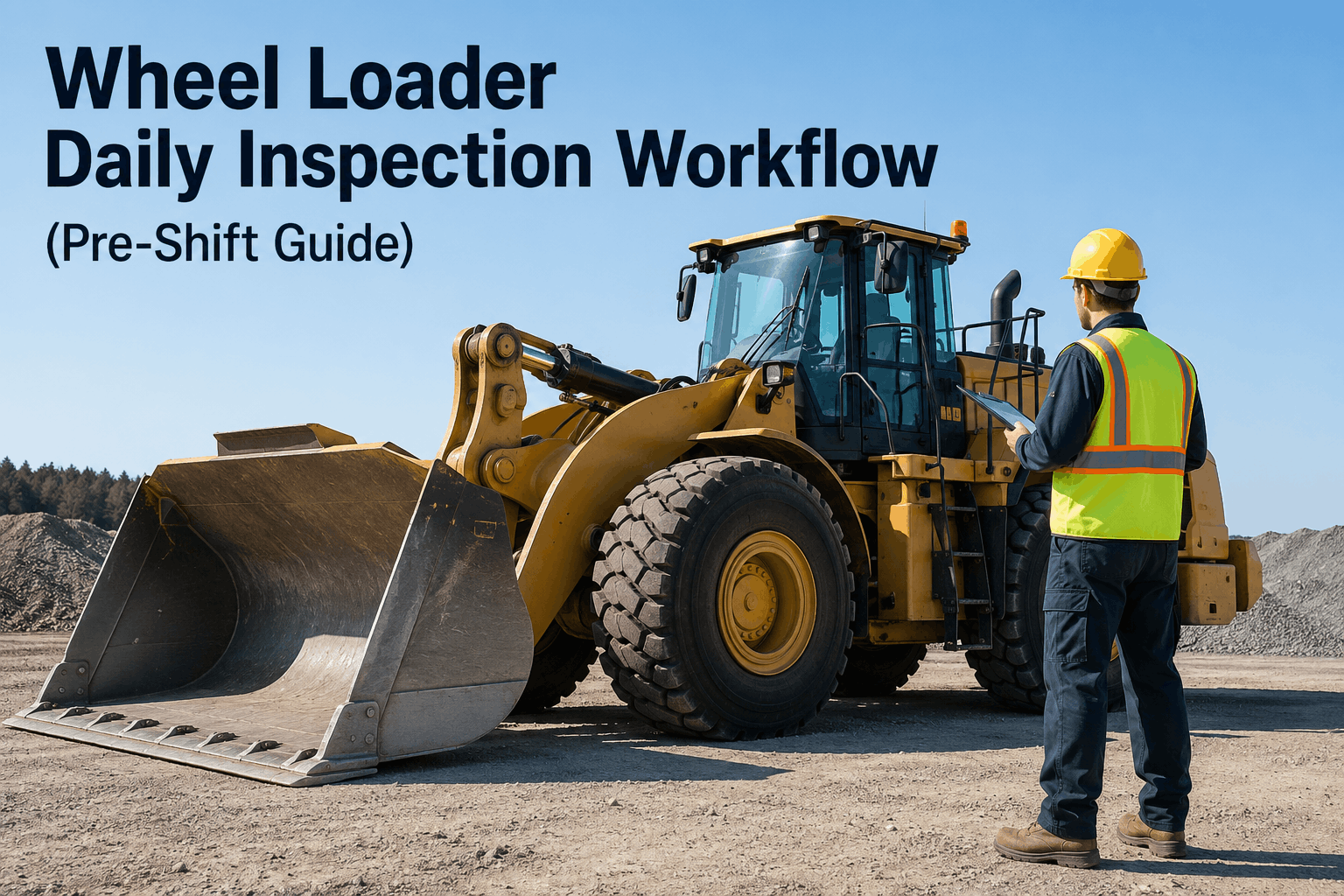
Ask ten wheel loader operators to inspect the same machine and you'll get ten different inspections — one starts at the bucket, another at the engine, a third skips the articulation joint entirely because they were running late. That inconsistency is the real enemy of pre-shift safety, because the check that catches a developing fault is the one done the same way, every time, by every crew. The fix is a workflow, not just a checklist: a fixed clockwise walk-around pattern, performed with the engine cold before the shift, that takes a disciplined operator 10–15 minutes and never varies. Consistency catches what random checks miss. The stakes are real money — a single large loader tire runs $3,000–$8,000, a missed hydraulic leak becomes a pump failure, and a brake or steering fault on a 30-ton machine is a safety incident waiting to happen. HVI's wheel loader inspection software turns that walk-around into a standardized digital workflow every operator follows identically — same pattern, same items, photos on flagged defects, and findings that reach the office instantly. This guide lays out the pre-shift workflow zone by zone, the powered-off and powered-on split, and how HVI makes every crew inspect the same way. schedule a 30-minute walkthrough with our team to see it set up for your Cat, Komatsu, and Volvo loaders.
Ten operators, ten different inspections. Standardize the workflow and that stops.
HVI puts one fixed wheel loader walk-around on every operator's phone — same clockwise pattern, same checks, every crew, every shift — with photos on flagged defects and findings routed straight to the office.
Three rules that make a daily inspection actually work
Before the checklist itself, the method matters more than most crews realize. These three habits are what separate an inspection that catches problems from one that just fills out a form.
Same pattern, every time
Start at the same point and move the same direction — a fixed clockwise loop around the machine. Consistency is what catches the slow-developing fault that random, freestyle checks walk right past.
Use all your senses
Look for leaks and cracks, listen for unusual sounds, feel for excessive heat, smell for burning odors. Get down to eye level with the undercarriage, articulation joint, and hydraulics — problems hide from a standing view.
Engine cold, before the shift
Do the walk-around with the engine cold, before work starts — cold checks read fluid levels accurately and surface overnight leaks. Budget 10–15 minutes; rushing is how the expensive misses happen.
Stage 1 — the powered-off walk-around
Engine off, moving clockwise around the machine, work these five zones in order. In HVI, each zone is a checklist section the operator completes on a phone, with a photo required on any flagged item.
1 Full 360° & underneath
- Walk the full perimeter; check for fluid puddles underneath
- Hydraulic, oil, coolant, and transmission — identify any leak by color
- Loose, missing, or damaged bolts, pins, guards, and decals
- Steps, handrails, and access points clear of mud, ice, grease
- Fire extinguisher present, charged, and accessible
2 Tires & wheels
- Tread depth, cuts, gouges, and embedded debris
- Inflation and uneven or excessive wear patterns
- Rims for dents, cracks, or rust — structural, not cosmetic
- Wheel nuts present and tight
- High-cost item: one large loader tire runs $3,000–$8,000
3 Bucket & loader arms
- Cutting edge, teeth, and bucket for wear or cracks
- Loader-arm and bucket pins and bushings for play
- Lift and tilt cylinders for leaks, scoring, or pitting
- Quick coupler (if equipped) seated and locked
- Hoses and fittings along the arms for chafing or leaks
4 Articulation & frame
- Articulation joint and pins for wear, play, and grease
- Steering cylinders and hoses for leaks
- Frame and welds for stress cracks at boom and axle mounts
- Never remove the articulation lock during service or transport
- Driveline and axle housings for leaks or damage
5 Engine bay & cab
- Engine oil, coolant, hydraulic, and fuel levels (cold)
- Belts and hoses for cracks; air-filter restriction indicator
- Battery secure, terminals clean
- All lights — head, brake, signal, marker, strobe, work
- ROPS, seat belt, mirrors, glass, and wipers
- Overnight fault codes reviewed in the cab display
A fixed five-zone loop means no operator skips the articulation joint because they're in a hurry — the workflow won't let them. sign up for a free HVI account and build this exact clockwise walk-around for your loader fleet, or schedule a live demo to see a flagged hydraulic leak routed straight to a work order.
Stage 2 — the powered-on function test
The walk-around catches what you can see; the function test catches what only shows under power. Start the engine, let it warm, and verify these before the loader goes to work.
Controls & hydraulics
Raise, lower, tilt, and dump the bucket through full range — smooth, no jerking, no drift at rest. Cycle the articulation steering lock to lock. Listen for pump whine or labored response under no load.
Brakes & steering
Test service and parking brakes — they must hold. Confirm steering is responsive with no excessive play. On equipped machines, verify automatic emergency braking and reversing systems. These are the most critical safety components.
Alarms & gauges
Horn, backup alarm, and warning lights functional. Watch oil pressure, coolant and hydraulic temperature, and voltage through warm-up. Confirm no active warning lights remain once the machine is up to temperature.
Pre-trip vs. post-trip: the pre-shift inspection confirms the machine is safe to start work; the post-shift check documents what happened during the shift — a new leak, fresh damage, a performance change. HVI captures both against the same machine so nothing falls between them.
Found a defect? The workflow decides what happens next
A standardized inspection is only as good as what follows a finding. Critical defects stop the machine; everything gets logged. The workflow removes the judgment call about whether to report.
Flag & photo
Mark the item failed and attach a photo — the workflow requires it, so the office sees exactly what the operator saw.
Critical = out of service
Brakes, steering, hydraulics, structural cracks, ROPS — flagging any as critical tags the loader out automatically until repaired.
Work order & record
A work order is created on the spot and the inspection is logged — timestamped, per operator and machine, exportable for any audit.
When every crew follows the same workflow and every defect routes the same way, a leak found on the night shift is fixed before the day shift rolls out. sign up free and standardize your loader inspection across every operator and shift in minutes.
Why standardizing the workflow pays off
The same five-zone routine, done by every operator on every loader, turns a scattered habit into a system — with payoffs in safety, uptime, and accountability.
Freestyle paper checks
- Every operator inspects differently — coverage varies by crew
- Articulation joint or underside skipped when time is short
- Defects noted on paper, left in the cab, acted on days later
- No photos, no proof, no way to verify the check happened
- $3,000–$8,000 tire or pump failure found too late
- Pre-trip and post-trip findings never connected
With HVI software
- One fixed clockwise workflow every operator follows identically
- Required zones mean nothing gets skipped, ever
- Defects reach the office instantly, photo-backed and timestamped
- Critical items auto-tag the loader out and open a work order
- Engine hours feed PM scheduling; fault codes cross-referenced
- Full inspection history exports in seconds for any audit
per shift, done the same way every time — that's all a standardized loader walk-around takes, and it's the cheapest protection against a $3,000–$8,000 tire, a hydraulic pump failure, or a brake incident on a 30-ton machine. HVI makes every crew inspect identically, logs it, and routes defects before they become downtime.
Frequently asked questions
What should a daily wheel loader inspection cover?
Run it as a two-stage workflow. Stage 1 is a powered-off clockwise walk-around in five zones: a full 360° check for leaks and loose components underneath; tires and wheels (tread, inflation, rims, wheel nuts); bucket and loader arms (cutting edge, pins, cylinders, quick coupler); articulation joint and frame (joint play, steering cylinders, weld cracks); and the engine bay and cab (fluid levels cold, belts, lights, ROPS, fault codes). Stage 2 is a powered-on function test: controls and hydraulics through full range, service and parking brakes, steering, and alarms and gauges. The whole routine takes 10–15 minutes with the engine cold before the shift. HVI builds both stages into one standardized digital workflow.
Why does following the same inspection pattern matter so much?
Because consistency catches what random checks miss. When an operator starts at the same point and moves the same direction — a fixed clockwise loop — every component gets seen every time, and a slow-developing problem like a weeping seal or a hairline weld crack gets noticed before it fails. Freestyle inspections, where each operator does it their own way, leave gaps: one person always checks the articulation joint, another never does. Standardizing the workflow across every crew eliminates those gaps. It also makes the inspection auditable and comparable over time. HVI enforces the same pattern and required items for every operator, so coverage no longer depends on who's behind the wheel.
Should the inspection be done with the engine cold or warm?
Do the walk-around portion with the engine cold, before the shift starts. Cold checks give accurate fluid-level readings and let you spot leaks that pooled overnight, which a hot, recently-run machine can mask. Once the visual walk-around is complete, you start the engine for the function test — cycling the hydraulics, testing brakes and steering, and watching gauges through warm-up. So the sequence is engine-cold visual first, then engine-on functional second. Budget 10–15 minutes total for a thorough job; the misses that cost real money almost always come from rushing.
What's the difference between a pre-trip and post-trip loader inspection?
A pre-trip (pre-shift) inspection confirms the machine is safe and ready before work begins — it focuses on verifying everything is operational, especially the critical safety components like brakes, steering, lights, and horns. A post-trip (post-shift) inspection documents what happened during the shift: new damage, a hydraulic leak that started mid-day, or a performance change that appeared under load. Both matter. The pre-trip protects the shift ahead; the post-trip captures issues while they're fresh and feeds the next day's repair planning. HVI captures both against the same machine record, so a problem noted at the end of one shift is visible to the next operator and to maintenance.
How does HVI standardize wheel loader inspections across crews?
HVI puts one fixed inspection workflow on every operator's phone — the same clockwise five-zone walk-around and the same powered-on function test, with required items so nothing can be skipped and photos required on any flagged defect. Every check is timestamped and tied to the operator and machine, so coverage no longer varies by crew or shift. Critical defects — brakes, steering, hydraulics, structural cracks, ROPS — automatically tag the loader out of service and create a work order. Engine hours feed PM scheduling, overnight fault codes can be cross-referenced, and the full inspection history exports in seconds for OSHA or warranty. It works across standard, compact, and large loaders and mixed Cat, Komatsu, Volvo, and John Deere fleets. schedule a demo and we will set it up around your specific loaders and crews on the call.
Make every operator inspect every loader the same way, every shift.
HVI turns your wheel loader pre-shift inspection into one standardized digital workflow — fixed clockwise walk-around, powered-on function test, photo-backed defects, and work orders that route instantly. Stop letting coverage depend on who's behind the wheel. Sign up free and protect your crew, your loaders, and your uptime.
No credit card required · Live in under two weeks · Standardized walk-around + function test + defect work orders in one platform