Two fleet managers used to play a game on the highway: count how many trailer boat tails were folded shut instead of deployed. The answer was a lot — and a boat tail that isn't open saves exactly zero fuel. That's the real story of the boat tail trailer fairing. The aerodynamics are proven and EPA-verified, but the fuel savings only show up if the device is deployed at speed, survives the dock, and stays maintained. This guide covers how boat tails work, what they actually save, and whether one survives your operation. Book a demo to measure real trailer aero savings in HVI.
Boat Tail Trailer Fairings: Real Fuel Savings, or Folded Shut on the Highway?
The drag is real. So is the dock-damage risk. Here's whether a boat tail pays off on your trailers.
Behind every trailer traveling at highway speed is a churning low-pressure wake that literally pulls back on the truck. A boat tail trailer fairing tames that wake — and the EPA has verified real fuel savings for the category. But the financial case rests on more than aerodynamics: it depends on highway miles, speed, whether the device gets deployed, and whether it survives docks and backing without becoming a repair line. Let's separate the physics from the operational reality.
How a boat tail workstaming the wake behind the trailer
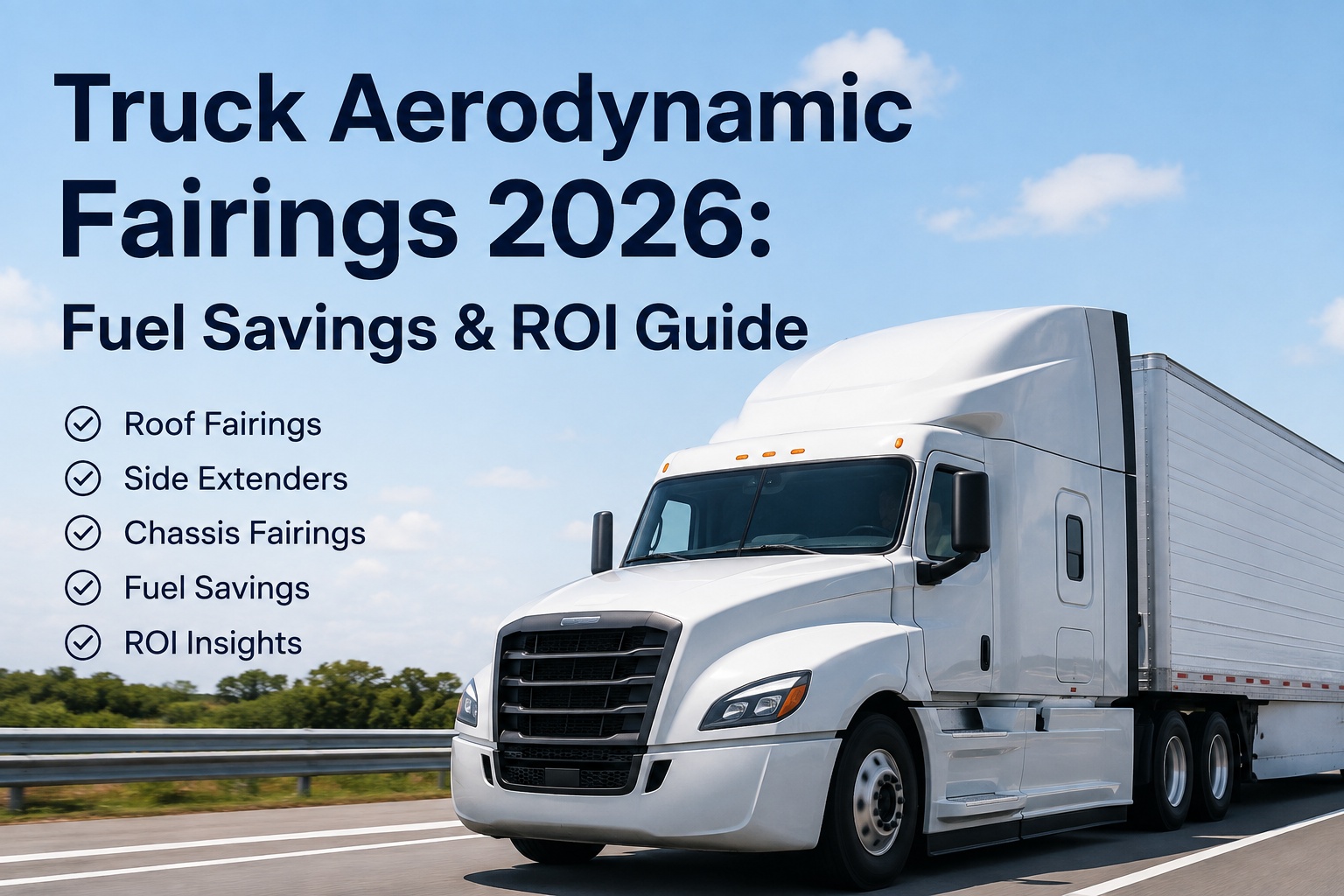
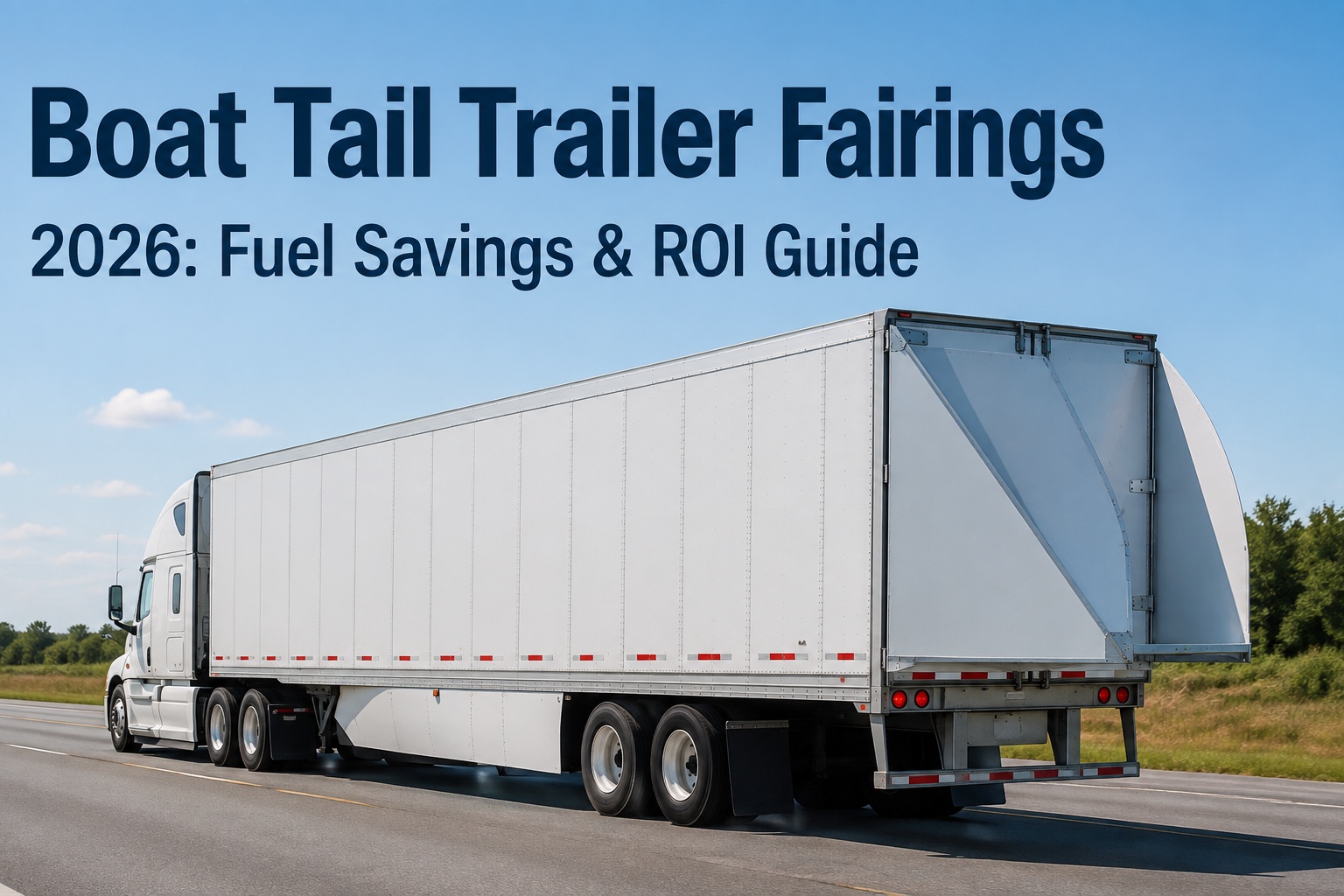
A boat tail (also called a trailer tail, rear fairing, or base device) is a set of angled panels mounted to the rear doors of a trailer. At highway speed, air flowing along the trailer separates sharply at the square back end, creating a turbulent low-pressure wake that drags the whole rig backward.
The panels taper that squared-off back into a softer, more streamlined shape, delaying airflow separation and shrinking the wake. Roughly a quarter of a tractor-trailer's total aerodynamic drag comes from that trailer base region, so smoothing it recovers real energy. Boat tails work best paired with side skirts — the EPA's own program treats them as complementary, and rates a boat tail as a device that should be used alongside skirts. Book a demo to see trailer fuel economy tracked by configuration
What boat tails actually saveEPA-verified numbers, with the fine print
Here's where you need the test conditions, not just the headline. The EPA's SmartWay program verifies trailer aero devices under defined protocols, and boat tails land in specific, honest ranges.
| Device | SmartWay-verified saving | The fine print |
|---|---|---|
| Boat tail alone | ~1% or more | Meant to be paired with skirts |
| TransTex rear fairing (Edge Tail) | ~4% | Verified rear fairing device |
| Skirt + tail combination | ~5% | Qualifies as SmartWay trailer |
| Auto-deploying tail (e.g. AutoTail) | up to ~4.3% | Tested by NRC Canada, highway speed |
| Full trailer aero package | ~9%+ (Elite) | Skirt + gap + base combined |
Read the fine print carefully. These figures come from wind-tunnel, coastdown, and track testing of a 53-foot dry-van trailer at highway speeds — and the EPA is explicit that real-world savings may vary, and that verification is contingent on the device being installed and maintained as tested. A boat tail's ~1% alone becomes meaningful only combined with skirts and only at sustained speed. Start free on HVI and measure the actual MPG change on your trailers rather than assuming the lab number transfers.
The deployment problemwhy manual boat tails quietly fail
This is the issue that sinks more boat-tail investments than aerodynamics ever could. A boat tail only saves fuel when it's open at speed — and manual tails depend on the driver to deploy and stow them every single trip. In practice, that reliability is hard to hit.
Industry veterans have literally made a highway game of counting undeployed tails, and the manual step was a real factor in at least one major product being discontinued. As one fleet manager put it, "the kiss of death for a technology starts with a designer saying, 'all the driver has to do is…'" Every extra driver step erodes the realized savings. That's why the market moved toward automatic deployment.
Manual deploy
Driver opens the tail before the highway and folds it before backing. Lowest cost, but savings depend entirely on consistent driver habit — and undeployed tails save nothing.
Auto-deploy
Speed-sensing systems open the panels automatically above a set speed (e.g. ~35 mph) and fold them when the rig slows, stops, or reverses — removing the driver step and protecting against dock damage.
Auto-deploy systems use a notification light or sensor logic so panels are folded in yards, docks, and city centers, then open on the highway where they earn their keep. If you're spec'ing boat tails at any scale, the automation is often what makes the ROI real rather than theoretical — and tracking whether each tail is actually deploying is how you confirm the savings are being captured, not assumed.
Docks, backing & damagethe operational reality that decides ROI
A boat tail lives on the most vulnerable part of the trailer — the rear, exactly where it meets the dock. This is where the "does it survive real operations" question gets answered, and it's as important as the fuel math.
A tail left deployed while reversing can be crushed against the dock or door. Fold-before-backing is essential; automation enforces it.
Drivers can't easily see a deployed tail, which has led to struck light poles and yard obstacles. Tight, multi-dock sites raise the risk.
Rear panels catch spray, ice, and debris. Durable thermoplastic designs resist wear, but exposure is constant.
Repeated damage repairs can offset or erase the fuel savings — which is why route profile matters as much as the device.
The practical takeaway: boat tails suit high-highway, low-dock-frequency operations — long trunking and line-haul lanes — far better than dense urban multi-drop work where the tail meets a dock ten times a day. Match the device to the route, or the repair bill writes its own verdict. Start free and log damage events against each trailer so the true cost is visible, not hidden.
Run the ROI, three wayswatch payback move with the assumptions
Here's the honest math. Simple formula, decisive inputs. Same boat tail, same cost — only the highway miles, realized savings, and fuel price change.
High miles, few docks, always deployed. The ideal case.
Manual deploy means missed trips. Savings leak away.
Little highway, constant docks. Repairs eat the gains.
Illustrative figures, rounded — but the pattern is the point. The identical boat tail is a clear win on a high-mileage line-haul trailer with automation, and a money-loser on an urban multi-drop unit that meets a dock all day. There's no universal payback — only your trailer's real profile. Book a demo to model this on your own trailers and lanes
Inspection & maintenancethe checks that keep savings real
The EPA's verification is explicit: savings hold only if the device is maintained as tested. A boat tail with a seized hinge, cracked panel, or bent bracket is dead weight — still there, no longer saving. Build these checks into your trailer inspections.
Verify panels open fully and fold cleanly. Seized or sticky hinges mean a tail that won't deploy or won't stow — check on every service.
Inspect for cracks, impact damage, and delamination. A damaged panel disrupts airflow and can worsen drag rather than reduce it.
Check brackets, fasteners, and mounting points for looseness or corrosion. Loose hardware risks a panel departing at highway speed.
On automated tails, confirm the speed sensor deploys and retracts correctly and the status light works — a failed sensor means lost savings or dock damage.
Folding aero-device checks into your digital trailer inspections does two jobs: it protects the fuel savings you paid for, and it catches a loose panel before it becomes a road hazard or a DOT flag. A boat tail is only an asset while it's intact and deploying. Book a demo to add boat-tail checks to your inspection workflow
From a sustainability manager who piloted them
Our first boat-tail trial almost failed — not on aero, on adoption. We bought manual tails, and within a month half were riding folded shut on the highway because drivers forgot or didn't bother. Zero savings on those trailers. The wind tunnel was right; our yard was the problem.
We switched the line-haul fleet to auto-deploy and kept them off the urban trailers entirely, because those back into docks all day and we were bending panels. On the right trailers, the savings finally showed up in the fuel data. The lesson: a boat tail is an operations decision, not just an aero one.
Your boat-tail decision frameworkspec by trailer profile, not by brochure
Run every boat-tail decision through these lenses. They turn "do boat tails work" into "which trailers and lanes justify one, and manual or automatic."
High sustained-speed miles are the whole case. Low-highway trailers rarely justify it.
Savings scale with speed. Line-haul earns; low-speed regional doesn't.
Few docks = low damage risk. Multi-drop urban = high risk, poor fit.
Automation protects savings and prevents dock damage — often the ROI-maker.
High-use trailers recover the equipment cost faster. Match spend to miles.
Include installation and realistic repair exposure, not just the device price.
Work through these and, like Aaron, most fleets equip high-highway line-haul trailers with automated tails and skip the urban multi-drop units — a disciplined plan that only works if you're tracking mileage, speed, deployment, and damage by trailer rather than guessing.
The bottom line on boat tail trailer fairingsthe aero is proven; the operations decide it
Boat tail trailer fairings genuinely reduce wake drag and save fuel — the EPA verifies the category, with a boat tail contributing roughly 1% or more alone and skirt-plus-tail combinations reaching around 5% under highway-speed test conditions. But the verified number is a ceiling, not a promise. The realized savings depend on sustained highway speed, consistent deployment, low dock-damage exposure, and staying maintained as tested. A manual tail folded shut on the highway saves nothing; a bent one on an urban trailer costs more than it saves.
That's why a boat tail is as much an operations decision as an aerodynamic one, and the smart move is to spec it by trailer profile and prove it with data. Connecting trailer mileage, fuel consumption, operating conditions, and damage events is how you separate the trailers where a boat tail truly lowers cost from the ones where it just rides along — which is exactly what HVI is built to measure. Model the ROI on your own trailers, then equip the ones that pay. Book a demo to put real fuel and lifecycle data behind every trailer aero decision.
Frequently asked questions
How much fuel does a boat tail trailer fairing actually save?
Under the EPA's SmartWay verification program, a boat tail alone is categorized at roughly 1% or more fuel savings, and it's intended to be used alongside side skirts rather than on its own. Specific verified products land higher — for example, certain TransTex rear fairings have been verified around 4%, and skirt-plus-tail combinations around 5%, which qualifies a trailer for SmartWay designation. Some automatic-deploying tails have shown up to roughly 4.3% at highway speeds in testing by Canada's National Research Council. Full trailer aero packages combining skirts, a gap device, and a base device can reach 9% or more. But every one of these figures comes from controlled testing — wind tunnel, coastdown, or track — on a 53-foot dry-van trailer at highway speeds, and the EPA explicitly notes real-world savings may vary and depend on the device being installed and maintained as tested. The practical savings depend heavily on how much of your mileage is at sustained highway speed and whether the tail is actually deployed.
Do boat tails get damaged backing into docks?
They can, and it's one of the biggest practical concerns. A boat tail mounts on the rear doors of the trailer — exactly the part that meets the loading dock — so a tail left deployed while backing in can be crushed against the dock or door. Drivers also can't easily see a deployed tail, which has led to struck light poles and other yard obstacles. This is precisely why the market shifted toward automatic-deploying systems that fold the panels when the rig slows, stops, or reverses, and often include a status light indicating whether the tail is open or closed. Manual tails rely on the driver to fold them before every dock approach, which isn't always reliable. The damage risk is heavily route-dependent: high-highway, low-dock-frequency operations like line-haul and trunking see little exposure, while dense urban multi-drop routes that back into docks many times a day face real and repeated damage that can offset or erase the fuel savings. Matching the device and deployment type to the route is essential.
Are automatic boat tails worth the extra cost over manual ones?
For most fleets running them at scale, automation is often what makes the ROI real rather than theoretical. The core problem with manual boat tails is deployment reliability: the device only saves fuel when it's open at highway speed, and depending on drivers to open and stow it every trip means some trailers inevitably run folded shut, saving nothing. This adoption gap was significant enough to contribute to at least one major manual product being discontinued, and industry observers have long noted how many boat tails ride undeployed on the highway. Automatic systems use speed sensing to deploy the panels above a set speed (around 35 mph in some designs) and retract them when the vehicle slows, stops, or reverses — capturing the savings on every highway trip while protecting the device from dock and yard damage. The manual version costs less upfront and can deliver identical savings when deployed, so it can work for disciplined operations, but the automatic version removes the human variable that most often undermines real-world results. Weigh the price difference against how consistently your drivers would deploy a manual unit.
What maintenance does a boat tail need?
A boat tail needs regular inspection because its fuel savings hold only while it's intact and deploying correctly — the EPA's verification is explicitly contingent on the device being maintained as tested. Key checks include the hinges and deployment mechanism (panels must open fully and fold cleanly; seized or sticky hinges mean a tail that won't deploy or stow), the panels and structure (inspect for cracks, impact damage, and delamination, since a damaged panel disrupts airflow and can worsen drag), and the mounts and hardware (brackets, fasteners, and mounting points checked for looseness or corrosion, because loose hardware risks a panel coming off at highway speed). On automatic tails, you also need to verify the speed sensor deploys and retracts the panels correctly and that any status light works, since a failed sensor means either lost savings or dock damage. Building these specific aero-component checks into routine trailer inspections protects both the fuel economy you paid for and operational safety — a damaged boat tail isn't just lost MPG, it's a potential road hazard and inspection flag.
How can fleet software help evaluate a boat-tail investment?
Fleet software provides the measurement layer that tells you whether a boat tail actually lowers your operating cost, rather than assuming the wind-tunnel percentage transfers to your operation. Because the real savings depend on highway mileage, sustained speed, consistent deployment, and damage exposure — all of which vary by trailer and route — a single average figure hides which trailers genuinely benefit. A platform like HVI connects trailer mileage, fuel consumption, operating conditions, and maintenance events, including aerodynamic-equipment damage, so you can measure the real MPG change before and after fitting boat tails, per trailer and across the fleet, and estimate the true financial impact using your own baseline economy and fuel price. That lets you identify which trailers and lanes justify the investment, avoid equipping urban multi-drop units where damage would erase the gains, and verify that installed tails are delivering the projected savings rather than riding folded or broken. It can also fold boat-tail inspections into your maintenance workflow so damage that quietly erodes savings gets caught early. In short, it turns a boat-tail decision from a brochure gamble into a data-driven, per-trailer calculation.
Measure whether boat tails actually cut your fuel cost per trailer
HVI connects trailer mileage, fuel consumption, operating conditions, and damage events — so you can measure the real MPG gain from a boat tail, catch repairs that eat the savings, and equip only the trailers that pay back. Turn trailer aerodynamics into a data-driven decision. One platform, mobile-first, live in under two weeks.
No credit card · Works across dry vans, reefers & aero packages · Fuel analytics on day one