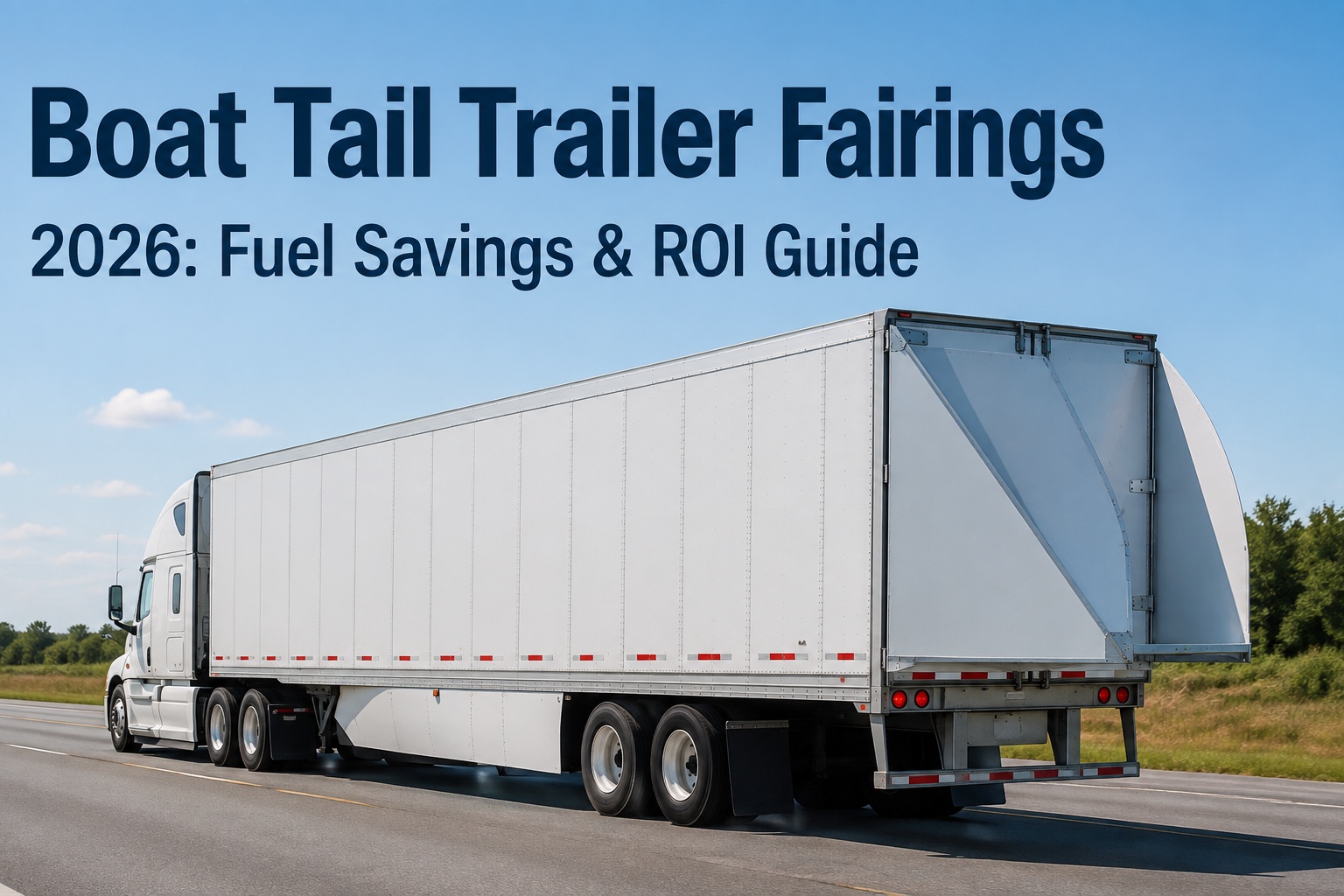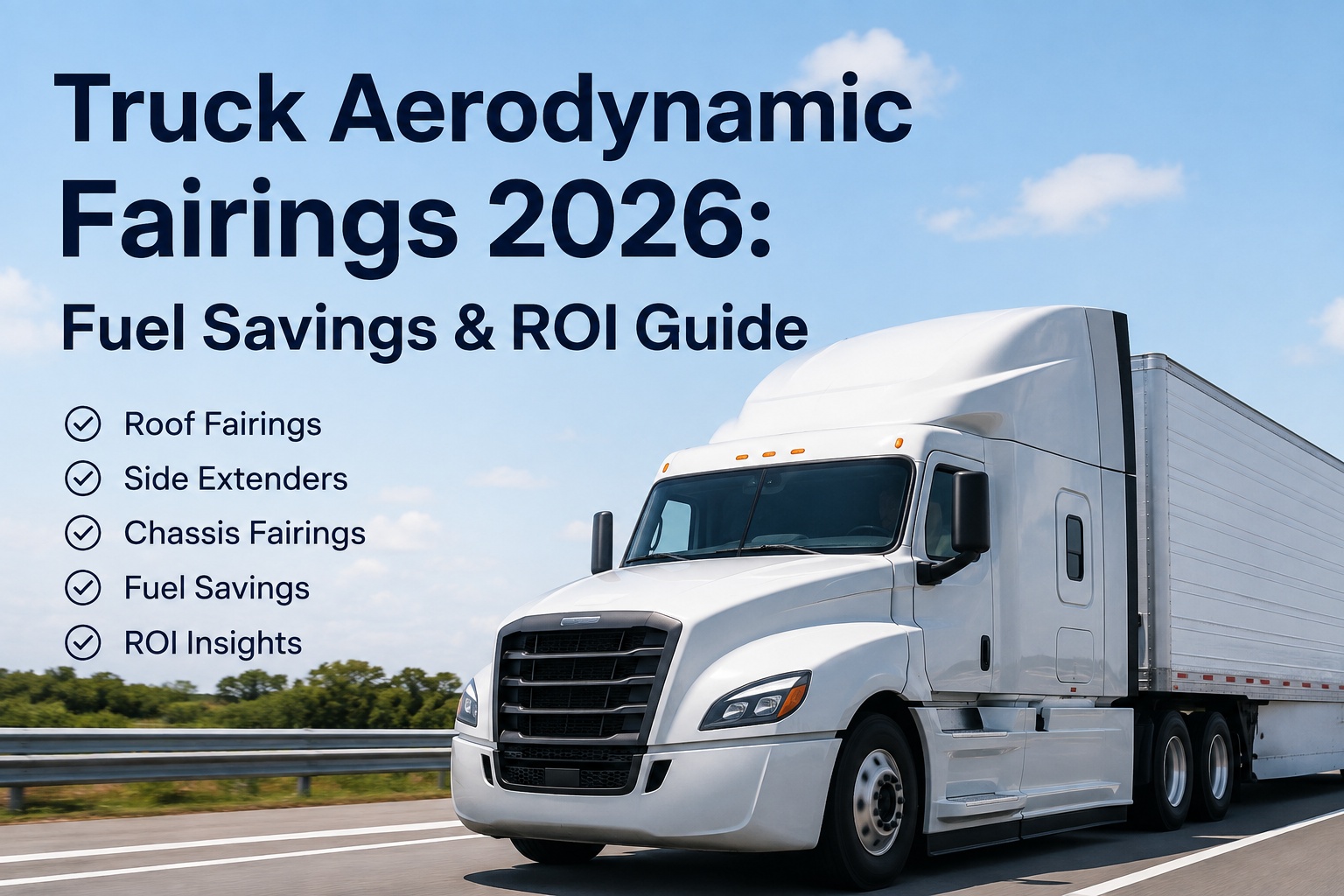
A salesman will tell you an aero package delivers "up to 14% better fuel economy." A certified wind-tunnel test on the same kind of part might show under 1% at a given trailer gap. Both can be true — and that gap between the brochure and reality is the whole story of truck aerodynamic fairings. Fairings genuinely cut drag and save fuel, but the return depends on your speed, trailer gap, mileage, and fuel price, not a headline percentage. This guide shows how each component works and how to run the ROI on your own numbers. Book a demo to measure real aero fuel impact in HVI.
Truck Aerodynamic Fairings: What They Save, and What They Cost
Drag is ~50% of your fuel at highway speed. Here's how fairings cut it — and how to prove the ROI.
Here's the physics that makes aero matter: above roughly 55 mph, aerodynamic drag becomes the single biggest force your engine fights, and it grows fast as speed climbs. That's why fairings pay off on sustained highway runs and do almost nothing in city stop-and-go. Before you spec a package, understand what each piece does, then match it to how your trucks actually run.
The aero package, part by partwhere each fairing fights drag
An aerodynamic package isn't one device — it's a set of components each targeting a different drag zone: the tractor front, the tractor-trailer gap, the trailer sides and underbody, and the trailer rear. Here's what each does.
Roof fairing
Lifts airflow up and over the taller trailer instead of slamming into its face. Effectiveness depends heavily on how well the fairing height matches the trailer — a mismatch wastes much of the benefit.
Cab & side extenders
Panels off the back of the cab that narrow the tractor-trailer gap, keeping air from spilling into it and creating a low-pressure drag pocket. One of the highest-value gap treatments.
Chassis / side fairings
Skirts along the tractor chassis that block and smooth air trying to flow under the truck. Independent research puts chassis fairings in the low single-digit percentage range on fuel economy.
Trailer skirts & base
Side skirts smooth underbody airflow; boat-tails or base devices tame the low-pressure wake behind the trailer. The trailer carries roughly 65% of total drag, so these matter a lot.
The point isn't any single device — it's that these components work as a system, each shaving a different slice of drag. That's also why stacking claimed percentages from separate parts overstates the total: real-world gains don't simply add up. Book a demo to see fuel economy tracked by vehicle configuration
Claimed vs measured savingswhy the numbers are all over the map
This is where fleets get burned. The same component type can be quoted at wildly different savings depending on who's measuring and under what conditions. Read every percentage with its test context attached.
| Component | Typical cited range | The catch |
|---|---|---|
| Chassis fairings | ~2–4% fuel economy | Independent (NACFE) range |
| Trailer side skirts | ~1–5% (some cite 5–7%) | Highly speed- & route-dependent |
| Gap fairing | ~7% drag reduction at 55 mph | Drag %, not fuel %; gap-specific |
| Roof fairing (certified) | <1% at some tractor gaps | Depends on trailer-height match |
| Roof fairing (vendor) | "up to 10–14%" | Best-case marketing figure |
| OEM aero package | Up to ~11% vs old baseline | Versus a dated reference truck |
See the trap? A "7%" gap-fairing figure is a drag reduction at one speed, not a fuel saving — roughly, drag change at 65 mph divides by about 1.85 to estimate fuel impact. A roof fairing certified at under 1% in a controlled test can be marketed as "up to 14%." And OEM "11%" is measured against an old truck, not your current one. Controlled-test results, vendor claims, and real-world fleet results are three different things. Start free on HVI and measure the change on your own trucks instead of trusting any single number.
What actually drives your resultthe variables that make or break aero ROI
Two identical trucks with the same fairings can see very different savings. These are the variables that decide which one you'll be — and why a fleet-wide average hides the truth.
Aero benefit scales with speed. A 65 mph lane earns far more than a 45 mph regional route where drag is a smaller share of fuel.
The share of miles at highway speed is the multiplier. Lots of city time dilutes the payback badly.
Every ~10 inches of gap above roughly 30 inches can add around 2% drag. Fifth-wheel position matters.
A roof fairing tuned to the wrong trailer height throws away much of its benefit. Configuration must match.
Real-world yaw from crosswinds changes drag; devices that help in still air behave differently in gusts.
More highway miles and higher diesel both shorten payback. Both belong in your model, not a fixed assumption.
This is exactly why the idea of "one universal fuel-saving percentage" is a myth — the same fairing is a great buy on a high-mileage 65 mph lane and a poor one on a low-speed urban route. Match the package to the tractor, trailer, and operating profile. Book a demo to segment fuel economy by route and configuration
Run the ROI, three wayswatch payback move with the assumptions
Here's the honest math. The formula is simple; the inputs are everything. Same $3,000 aero add-on, same truck — only the highway share, savings rate, and mileage change.
High miles at speed. Aero's sweet spot.
Mixed duty. Positive, but slower.
Low speed, low miles. Aero barely earns its keep.
Illustrative figures, rounded — but the pattern is the lesson. The exact same fairing pays back in months on a high-mileage highway truck and may never justify itself on a low-speed urban unit. That's why buying aero fleet-wide off one average percentage wastes money on the wrong trucks. Start free and let real MPG data tell you which trucks are worth equipping.
Inspection & maintenancea damaged fairing can cost more than it saves
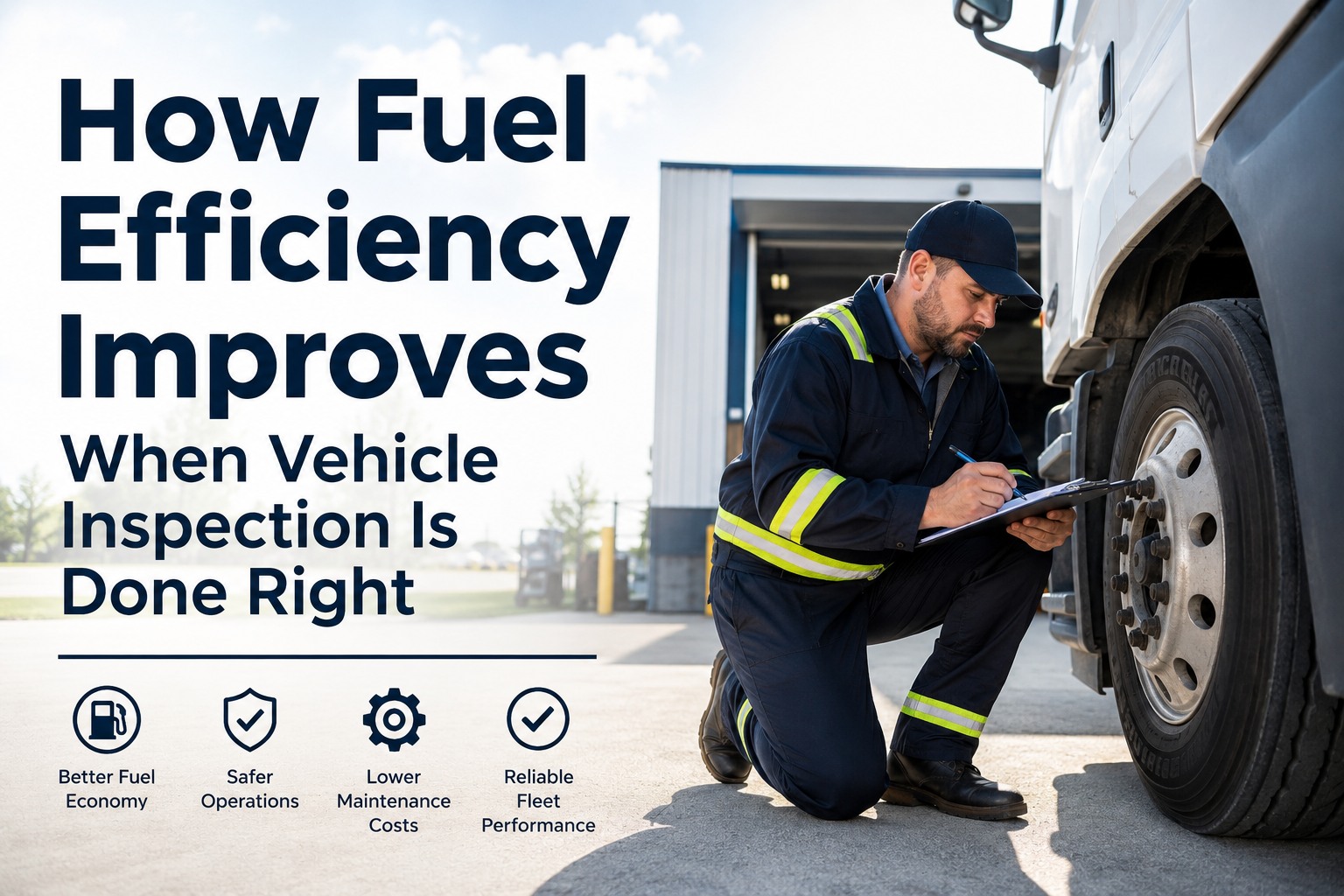
Fairings only save fuel when they're intact and properly mounted — and they take a beating from road debris, curbs, and weather. A neglected aero package quietly stops paying, and a loose panel can become a safety and compliance problem.
Loose or corroded brackets let panels flex, flap, or detach at speed. Check torque and condition on inspection.
Cracked, curb-struck, or sagging skirts lose their airflow benefit and can drag or contact the road. Inspect edges and fasteners.
Bent or misaligned extenders reopen the gap they were meant to close, erasing the fuel benefit. Verify alignment and integrity.
Boat-tails and base devices must fold/stow correctly and keep rear-underride guard clearance to stay DOT-compliant.
Building fairing checks into routine inspections protects both the fuel savings you paid for and operational safety. A damaged panel isn't just lost MPG — it's a defect that can flag on a DOT inspection or come loose on the highway. Book a demo to add aero-component checks to your digital inspections
From a spec manager who audited the claims
A vendor pitched us a roof fairing at "up to 12% savings." I asked for the test conditions and the number quietly became "depends on your gap." So we ran a controlled before-and-after on ten trucks instead of trusting the sheet. On our 65 mph lanes we saw a solid few percent — real money at our mileage.
But our regional units barely moved the needle, because they don't spend enough time at speed. Same fairing, different truck, opposite verdict. We only equipped the highway fleet. The brochure would've had us spend on trucks that'd never pay it back.
Your aero decision frameworkspec by route, not by brochure
Run every aero decision through these lenses. They turn "should we buy fairings" into "which trucks and lanes justify which components."
Sustained highway earns aero; low-speed urban doesn't. Segment the fleet.
The single biggest multiplier on payback. Know it per truck.
High-mileage trucks recover equipment cost fastest.
Roof height, gap, and trailer type must fit the package.
Use grounded ranges, not best-case vendor claims, in the model.
Include installation and ongoing inspection/repair, not just the part.
Work through these and, like Janet, most fleets equip the highway trucks and skip the low-speed ones — a defensible, money-saving plan. But it only works if you're measuring speed profile, mileage, and actual MPG by vehicle rather than guessing.
The bottom line on truck aerodynamic fairingsmeasure the truck, not the brochure
Truck aerodynamic fairings genuinely reduce drag and save fuel — but there's no universal percentage, and the gap between vendor claims and certified test results is enormous. Grounded ranges land in the low single digits per component for most real-world highway operations, with the trailer carrying most of the drag. The return depends on sustained speed, highway mileage share, trailer gap, configuration match, annual miles, and fuel price. A full package can pay back in months on a high-mileage 65 mph truck and never justify itself on a low-speed urban unit.
That's why the smart move is to spec aero by route and prove it with data, not buy fleet-wide off a headline number. Connecting vehicle configuration, mileage, fuel consumption, and operating conditions is how you see the real MPG change and estimate the true financial impact per truck — which is exactly what HVI is built to measure. Model the ROI on your own fleet, then equip the trucks that actually pay. Book a demo to put real fuel-economy data behind every aero decision.
Frequently asked questions
How much fuel do truck aerodynamic fairings actually save?
There's no single universal figure, and this is where claims and reality diverge sharply. Grounded, independent sources put individual components in the low single digits: chassis fairings around 2 to 4% fuel economy, trailer side skirts roughly 1 to 5% (some sources cite 5 to 7% at highway speed), and gap fairings around 7% drag reduction at 55 mph — note that's a drag reduction, not a fuel saving, and drag change at 65 mph divides by roughly 1.85 to estimate fuel impact. Certified tests of specific roof fairings have measured under 1% at certain tractor-trailer gaps, while vendor marketing for similar parts may claim "up to 10 to 14%." A full, well-matched package on a high-speed highway truck can add up to a meaningful combined figure, but stacking individual claims overstates the real total because the gains don't simply add. The honest answer depends on your speed, highway mileage share, trailer gap, and configuration, so measure the actual MPG change on your own trucks rather than trusting a headline percentage.
Why do aerodynamic fairings only help at highway speeds?
Because aerodynamic drag rises steeply with speed and only becomes the dominant force resisting the truck at higher speeds. Below about 55 mph, rolling resistance from tires and drivetrain friction is a larger share of the load; above roughly 55 mph, aerodynamic drag takes over, accounting for about half the fuel consumed at 55 mph and closer to two-thirds at 70-plus mph. Drag grows non-linearly — going faster increases it much more than proportionally. Fairings work by smoothing airflow and cutting that drag, so their benefit is proportional to how much of your fuel is being spent fighting air. On a sustained highway run, that's a large share and fairings pay off; in city stop-and-go or low-speed regional work, drag is a smaller portion of fuel use, so the same fairings deliver little. This is why the highway mileage percentage of a route is one of the biggest factors in whether an aero investment makes financial sense.
Does the tractor-trailer gap affect fuel economy?
Yes, significantly. The gap between the tractor and trailer traps air and creates a low-pressure wake that adds drag, and the larger the gap, the worse the effect. Industry sources indicate that for roughly every 10 inches of gap above about 30 inches, aerodynamic drag can increase on the order of 2%, with a corresponding hit to fuel economy. The gap distance is largely set by the fifth-wheel position, which fleets adjust for weight distribution, so there's often a balance between the ideal aerodynamic gap and the needed load distribution. Cab and side extenders are designed specifically to narrow the effective gap by keeping air from spilling into it, which is why they're among the higher-value gap treatments. Crosswinds make the gap matter even more, because side wind flow enters the gap and strikes the trailer front face, increasing drag further. Managing gap size and adding gap-closing devices are among the most effective aero steps, but the benefit still depends on your operating speed and route.
Do I need to maintain and inspect aerodynamic fairings?
Absolutely — fairings only save fuel when they're intact and correctly mounted, and they take constant abuse from road debris, curbs, weather, and vibration. A cracked or sagging trailer skirt loses its airflow benefit and can drag on the road; bent cab or roof extenders reopen the very gap they were meant to close, erasing the fuel savings; and loose or corroded mounting hardware lets panels flap or, worse, detach at highway speed, which is both a safety hazard and a potential DOT violation. Rear devices like boat-tails must stow correctly and preserve rear-underride guard clearance to stay compliant. Building specific aero-component checks into routine inspections — hardware torque, panel condition, extender alignment, skirt integrity, and clearances — protects both the fuel economy you paid for and operational safety. A damaged fairing isn't just lost MPG; it's a defect that can flag on inspection or become a road hazard, so it deserves a place on your inspection checklist alongside brakes, tires, and lights.
How can fleet software help evaluate an aero investment?
Fleet software turns an aero decision from a brochure gamble into a measured calculation. Because the real savings depend on speed, highway mileage share, configuration, and mileage — all of which vary by truck — a fleet-wide average percentage hides which vehicles will actually pay back. A platform like HVI connects vehicle configuration, mileage, fuel consumption, and operating conditions so you can measure the genuine MPG change before and after an aero upgrade, per vehicle and across the fleet, and estimate the financial impact using your own baseline economy and fuel price rather than a vendor claim. That lets you identify which trucks and lanes justify which components, avoid equipping low-speed units that won't recoup the cost, and verify that installed fairings are delivering the projected savings over time. It can also fold aero-component inspections into your maintenance workflow so damaged panels that quietly erode savings get caught. In short, it provides the measurement layer that tells you whether an aero investment truly lowers your fleet operating cost.
Prove the fuel savings before you spec fairings fleet-wide
HVI connects vehicle configuration, mileage, fuel consumption, and operating conditions — so you can measure the real MPG change from an aero upgrade, estimate financial impact per truck, and equip only the vehicles that pay back. Turn aerodynamics into a data-driven decision. One platform, mobile-first, live in under two weeks.
No credit card · Works across tractors, trailers & aero packages · Fuel analytics on day one