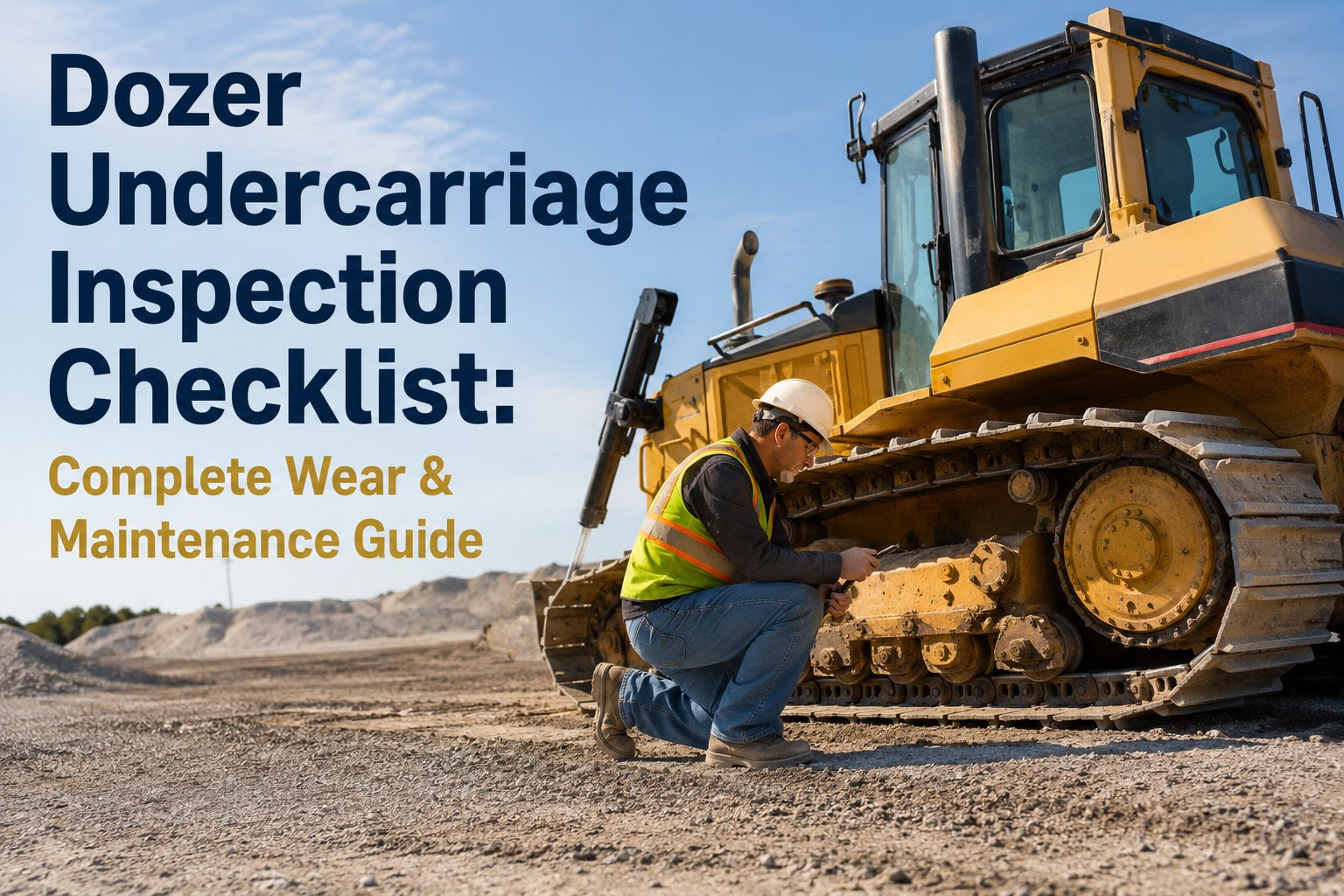
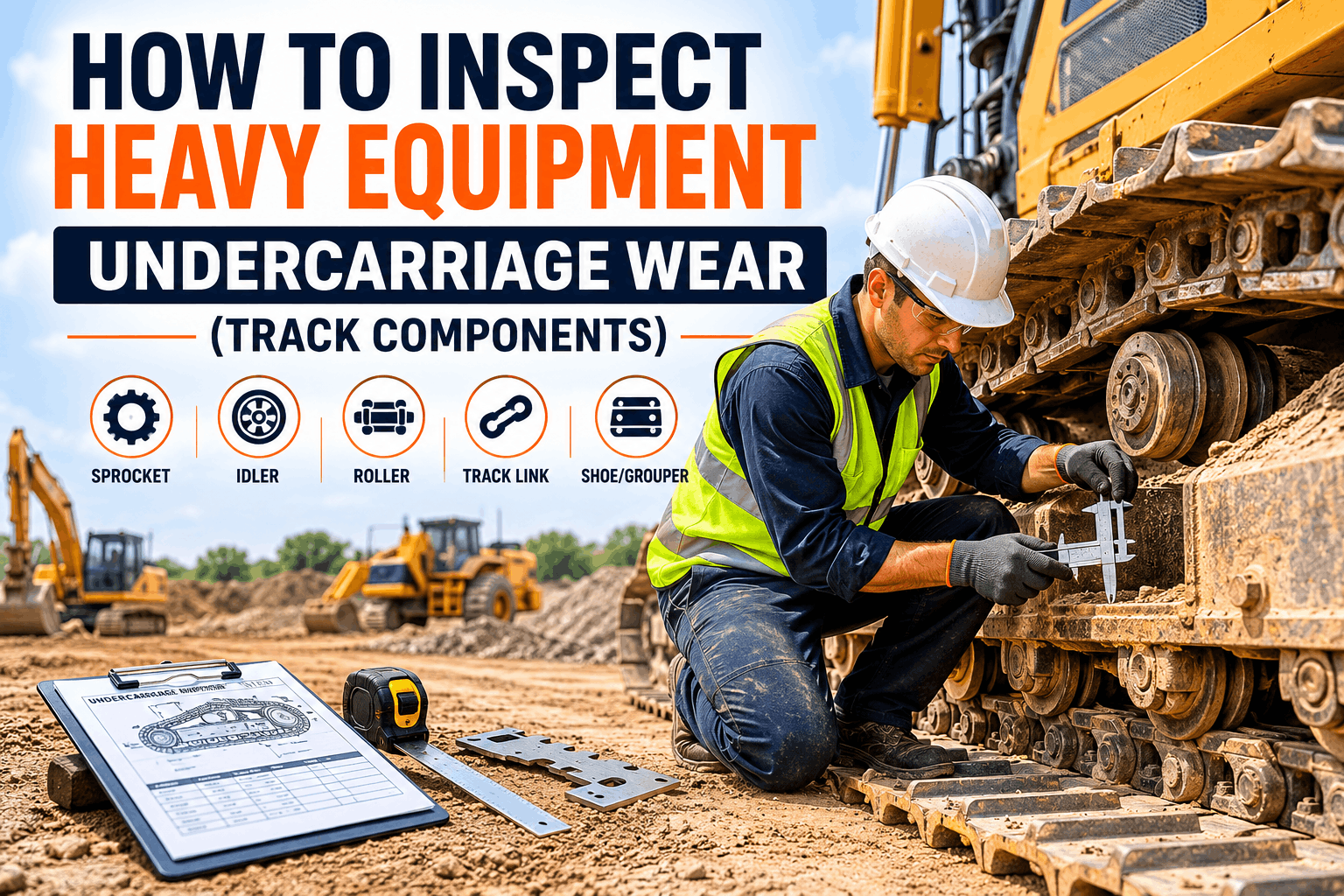
On a track-type dozer, the undercarriage is the single most expensive system you own — accounting for up to 50% of the machine's lifetime owning-and-operating cost, while making up only about 20% of its purchase price. That math is why a few minutes of daily inspection is the highest-ROI activity an operator can perform: poorly maintained dozers run roughly 45% higher operating costs and 35% more unplanned downtime and a single neglected undercarriage rebuild on a mid-size machine runs from $15,000 to well past $50,000. The discipline that prevents it isn't deep expertise — it's looking at the undercarriage frequently, keeping it clean, holding correct track tension, and measuring wear against OEM limits so you replace components at the right threshold, not too early and not too late. This 2026 guide walks all five wear systems, the daily walkaround, and the measurement cadence that turns a surprise rebuild into a planned one. Pair it with HVI inspection and maintenance software to log wear measurements per machine, trend them over time, and schedule undercarriage service automatically. Always measure against your machine's wear-limit chart.
The Five Wear Systems
An undercarriage wears as five interconnected systems — and they don't wear at the same rate. A "60% undercarriage" can mean 70%-worn chains on near-new sprockets. Each system needs its own measurement and its own threshold.
Track Chain (Links, Pins & Bushings)
As pins and bushings wear internally, each segment lengthens — "pitch elongation," the single most important measure of internal chain wear. Measured across a 4-pin span.
Sprockets
Worn teeth shift from rounded to a sharp, hooked profile and cause chain skipping. A worn sprocket destroys a new chain — never run new track on worn sprockets.
Rollers (Top & Bottom)
Carry the machine's weight and guide the chain. Watch for flat spots, leaking seals, and a seized roller — one failed roller shortens the life of every related part.
Idlers & Recoil
Set alignment and tension. Check tread and flange wear, seal leaks, and the recoil spring — a weak recoil transfers shock straight into rollers and idlers.
Shoes & Grousers
The traction surface. Measure grouser height for traction life and check for cracked, bent, or missing shoes and loose pad bolts.
Track Tension: The #1 Lever
If you change one habit, change this. Caterpillar names tight track the number-one cause of crawler-tractor downtime, and correct tension is estimated to prevent about 85% of undercarriage wear problems. It's also the most controllable factor you have.
Accelerates bushing and sprocket wear, wastes horsepower and fuel, and generates pin-to-bushing friction heat that damages track seals.
Caterpillar's rule of thumb: two dips between sprocket and idler. Let the machine coast to a stop on level ground, then measure sag at the midpoint against your OEM spec.
Causes bounce, vibration, and chain snaking — and raises derailment risk, especially on slopes or in turns.
The Daily Walkaround
OSHA requires pre-shift inspection of construction equipment under 29 CFR 1926.20, and on a dozer the undercarriage is where that time pays back most. Five quick steps, every shift.
Clean Out Debris
Clear packed mud and rock from the frame, links, roller frames, and idlers at end of shift. Packed debris keeps components from moving freely and accelerates wear exponentially.
Check Track Tension
Confirm the two-dip sag on level ground, and re-check whenever soil conditions change. This single check prevents most wear problems.
Inspect Rollers & Idlers
Look for oil leakage around seals, flat spots, and flange wear. Rotate rollers by hand where possible and listen for abnormal noise or resistance.
Read the Sprockets & Links
Scan sprocket teeth for hooking or sharpening and links for stretch and pin-boss peening — both early signs of pitch elongation. Sharp sprockets signal the whole system needs attention.
Check Shoes & Recoil
Inspect grouser height and edges, look for cracked or bent shoes and loose bolts, and check the recoil/tension cylinder for leaks. Record findings to track change over time.
Measure to Decide: Wear Thresholds
Daily looking catches the obvious; measuring catches the costly. Every 500 hours (sooner in severe duty), measure the key dimensions and convert to percentage wear against your OEM chart — wear is the difference between new and end-of-life specs, not a simple fraction of size.
Link Pitch (Elongation)
Measure across a 4-pin span with a tape — the most accurate field method for internal chain wear. When the idler can't be adjusted forward any further, the chain is worn out.
Bushing Diameter (Turn Life)
If the top half of the bushing is worn, it's time to turn. The first turn typically comes at 50% wear and full retirement at 100% — turning at the right time can effectively halve undercarriage cost.
Roller & Idler Diameter
Caliper the tread diameter against new and discard specs. Rollers worn past ~50% accelerate chain and sprocket wear, so often it's smarter to renew them together.
Grouser / Shoe Height & Sprocket
Gauge grouser height for remaining traction life and read the sprocket tooth profile. Match sprocket replacement to chain wear so a new chain never runs on worn teeth.
Operating Habits That Save the Undercarriage
How a dozer is run affects undercarriage cost as much as how it's maintained. A few operator habits dramatically slow wear.
Make Wider Turns
Counter-rotation and sharp pivot turns grind track edges and accelerate wear. Make wider turns on level ground where possible.
Travel Straight on Slopes
Working a slope in one direction loads one side, accelerating wear on idlers, rollers, and guide lugs. Alternate turn direction to balance wear.
Control Track Spin
Unnecessary spinning increases wear and cuts productivity. Ease the blade load to keep the tracks gripping instead of slipping.
Replace One, Not Five
Replacing a single worn component beats replacing pins, bushings, seals, and washers all at once because a small problem went unnoticed. Catch it early.
Eyeball Habit vs. HVI
Five systems, a measurement cadence, percentage-wear math, and a rebuild forecast to manage — this is exactly the work a digital system was built to carry.
EYEBALL & MEMORY
HVI INSPECTION SOFTWARE
Stop Guessing at Your Most Expensive System
HVI gives construction fleets a guided undercarriage checklist, wear measurements logged per machine and trended against OEM limits, automatic turn-and-replace threshold alerts, defect-to-work-order routing, and replacement forecasting for your highest-cost system. Turn a $50,000 surprise rebuild into a planned, budgeted job. Trusted by 25,000+ users worldwide.
.png)