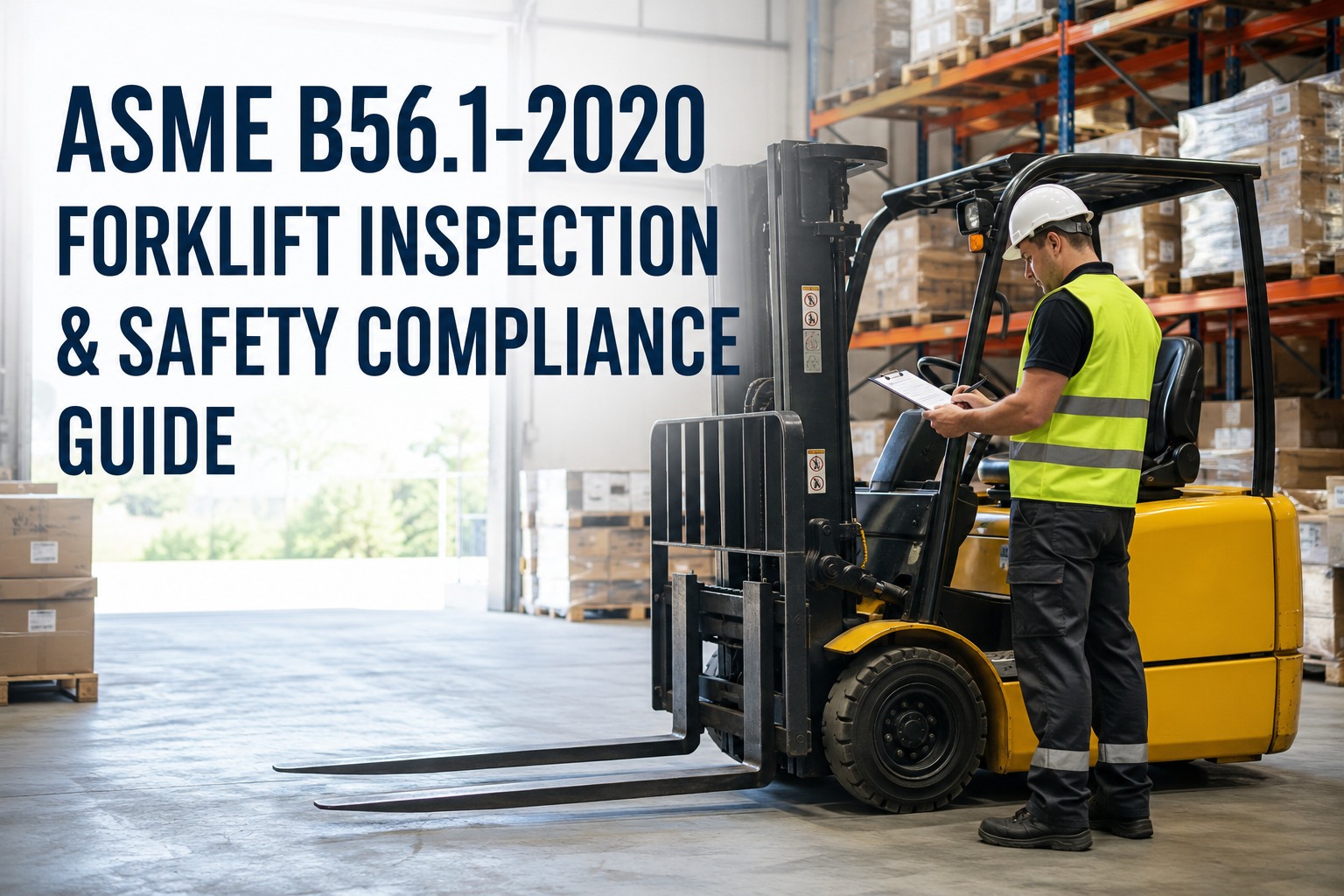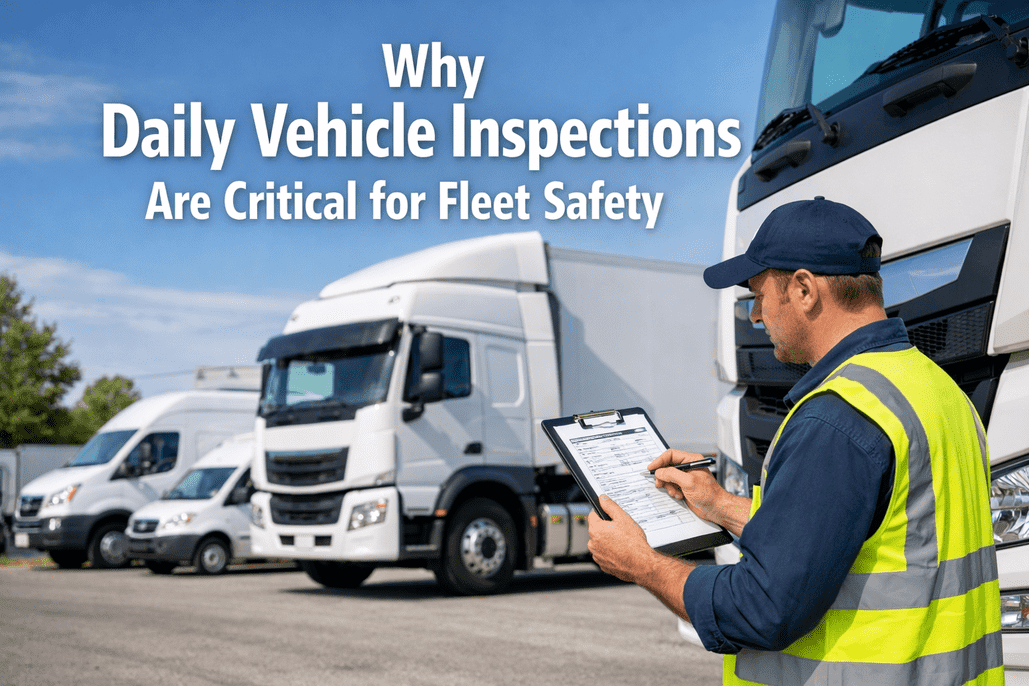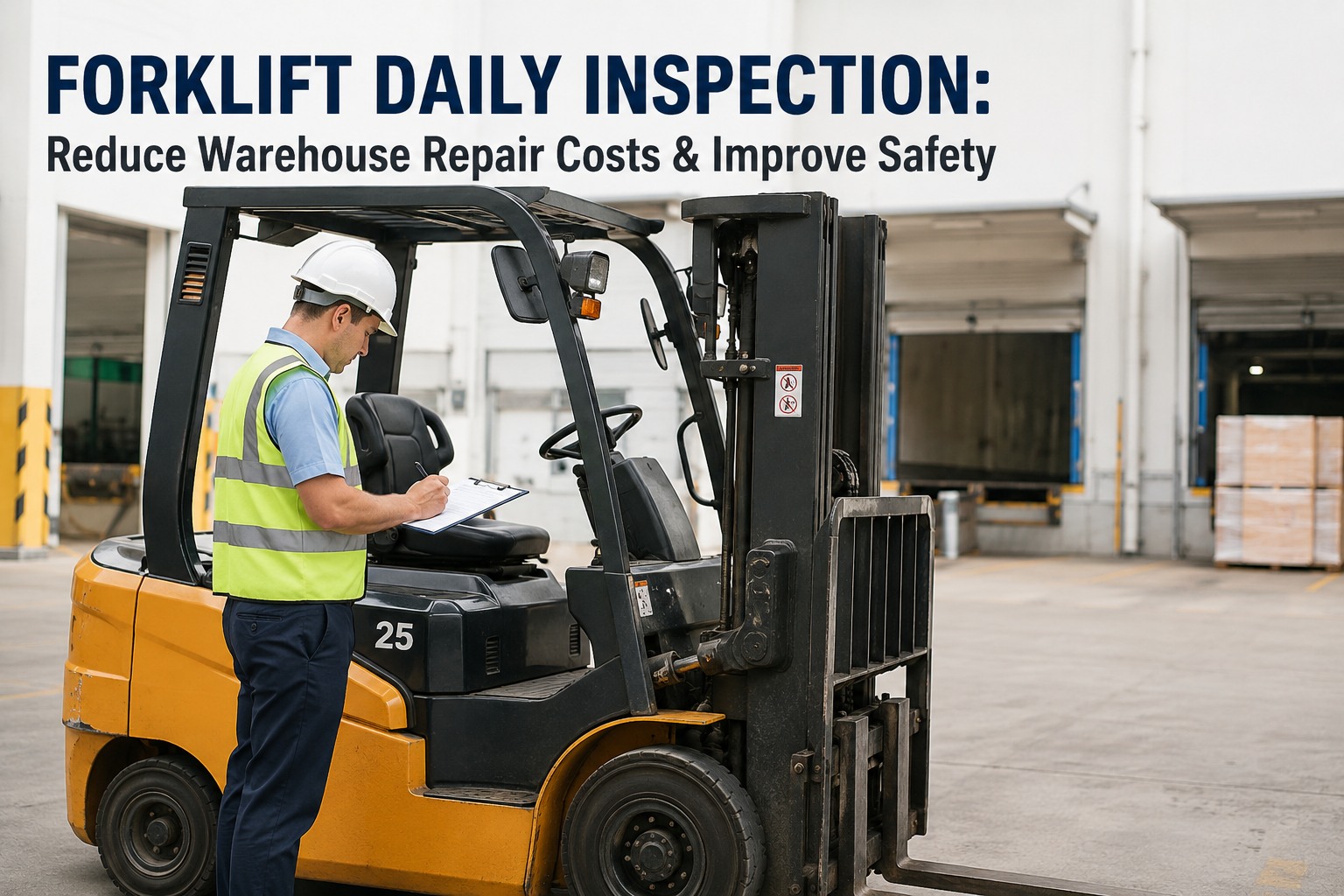
A warehouse forklift is the single most expensive piece of equipment that operators are trusted to inspect themselves — and the one most likely to be skipped when the dock is busy. OSHA standard 29 CFR 1910.178(q)(7) requires every powered industrial vehicle to be inspected before each shift, yet forklifts ranked sixth on OSHA's Top 10 Most Cited Violations list in 2024 with 2,248 violations, and they are involved in roughly 25% of all warehouse accidents worldwide. The cost of skipping that 7-minute check is staggering: a single forklift-related injury averages $38,000–$41,000 in workers' compensation alone, an unplanned breakdown costs western U.S. distribution centers an average of $18,400 per incident, and reactive maintenance typically runs two to three times more than preventive care. The good news is that the same daily inspection that prevents accidents also extends forklift life by 20–40% and cuts unplanned downtime by 30–50%. A digital forklift inspection checklist built for warehouse operations turns a paper chore into a 7-minute habit that protects your people, your equipment, and your bottom line. This page breaks down what to inspect, what it costs to skip, and how to make the check stick.
The Numbers Every Warehouse Manager Should Know
Before we get to the checklist, look at what daily forklift inspections are actually protecting. These are not abstract industry averages — they are the dollar figures and human costs that show up on a warehouse's P&L and OSHA 300 logs when a pre-shift check is skipped or pencil-whipped.
What a Daily Forklift Inspection Actually Covers
OSHA splits the daily check into two stages — a pre-operation visual walk-around and an operational check once the forklift is started. A complete inspection covers six areas, every shift, before the first pallet moves. Each one takes about a minute, and each one corresponds to a specific failure mode that shows up in accident reports.
Forks & Mast
Cracks, bends, wear, and missing retaining pins. Check mast chains for proper tension, lubrication, and cracked rollers — a failed mast chain is a top-three cause of load-drop incidents.
Fluids & Leaks
Engine oil, coolant, hydraulic fluid, and brake fluid levels. Look under the vehicle for fresh puddles — hydraulic leaks are the most common defect flagged in pre-shift checks and the cheapest to fix if caught early.
Tires & Wheels
Tire pressure, tread depth, cuts, embedded debris, and lug nut torque. A pneumatic tire run soft will fail catastrophically under load; a chunked solid tire can drop a 4,000-pound load without warning.
Brakes & Steering
Service brake travel, parking brake hold, and steering response. Test in a clear aisle before entering a racking row — brake failure is the leading cause of forklift-pedestrian collisions in warehouse aisles.
Horn, Lights & Alarm
Horn at intersections, headlight and strobe for visibility, and backup alarm that activates in reverse. These are the operator's only warning to pedestrians — and the first thing an OSHA inspector tests after an incident.
Battery / Fuel & Data Plate
Charge level or propane tank condition, electrolyte levels (if flooded), and a legible data plate showing capacity and attachments. An illegible data plate is a stand-alone OSHA citation, even on a perfect vehicle.
The Real Cost of Skipping the Check
The argument against daily inspection is always the same: "We don't have time." The math says you don't have time not to. Reactive maintenance — fixing forklifts after they break — costs two to three times more than preventive care, and that's before you count the downstream damage of a failure mid-shift.
REACTIVE: SKIP THE DAILY CHECK
PREVENTIVE: DAILY DIGITAL CHECK
The 4-Step Daily Forklift Inspection Cycle
A daily inspection isn't a one-time event — it's a cycle that repeats every shift on every vehicle. The cycle only works when each step is documented and routed to the next person who needs it. Here's what one complete loop looks like.
Pre-Shift Walk-Around
Operator opens the vehicle's digital log on a phone, walks the forklift, and checks the six areas — forks, fluids, tires, brakes, signals, battery.
Operational Test
Start the vehicle, test brakes, steering, horn, and travel functions in a clear aisle. Log hour meter reading and confirm all systems respond.
Flag or Pass
Sign the digital checklist. Any defect is photo-documented, severity-tagged, and routed to maintenance — the vehicle is locked out until cleared.
Maintain & Verify
Maintenance closes the defect, the record is timestamped and stored, and the next shift opens a vehicle with a clean, verified history.
OSHA Compliance — What 29 CFR 1910.178(q)(7) Actually Requires
The rule is one sentence, and it's the one warehouses most often misread. It doesn't say "inspect once a day" — it says before each shift, with a separate inspection for any vehicle used around the clock. Here's what that means in practice, and what an OSHA inspector will ask to see after an incident.
The Requirement
- Inspection before each shift by the operator who will run the vehicle
- In multi-shift operations, a separate check at the start of every shift
- Any vehicle found unsafe must be taken out of service immediately
- All repairs by authorized personnel only — no operator fixes
- Nameplate, capacity, and attachments must match and be legible
- Records retained and producible on demand for OSHA inspection
The Cost of Non-Compliance
- $16,131 per serious violation (2024 OSHA penalty, adjusted annually)
- $161,323 per willful or repeated violation
- Forklifts ranked #6 on OSHA's 2024 Top 10 Most Cited list (2,248 violations)
- Post-incident inspections almost always request the last 30 days of checklists
- Missing or pencil-whipped records shift liability squarely onto the employer
- One undocumented vehicle in operation = one citable violation per vehicle
How HVI Turns the Daily Check Into a Habit
The reason paper checklists fail isn't that operators don't care — it's that the checklist lives in a binder that nobody opens, the defect has nowhere to go, and the office can't see what was reported. HVI replaces that binder with a phone app that makes the right action the easy action.
Capture on the Phone
Operator opens HVI on a phone, walks the vehicle, taps the checklist, snaps a photo of any defect, signs with a finger. Average time: 7 minutes.
Route to Maintenance
Defects route instantly to the maintenance queue with photo, severity, and vehicle ID. The vehicle is flagged out-of-service until cleared — no operator override.
Prove Compliance
Every check is timestamped, geo-tagged, and stored. When OSHA walks in, export 30 days of records per vehiclein one click — no binder hunt, no scrambling.
Make the 7-Minute Check the Easiest Part of Every Shift
HVI digitizes the OSHA-required forklift inspection on a phone — defects route to maintenance with a photo, the vehicle is locked out until cleared, and every check is timestamped and audit-ready. Cut unplanned downtime by 30–50%, extend forklift life by 20–40%, and walk into any inspection with 30 days of records on one screen. Trusted by 25,000+ users worldwide.