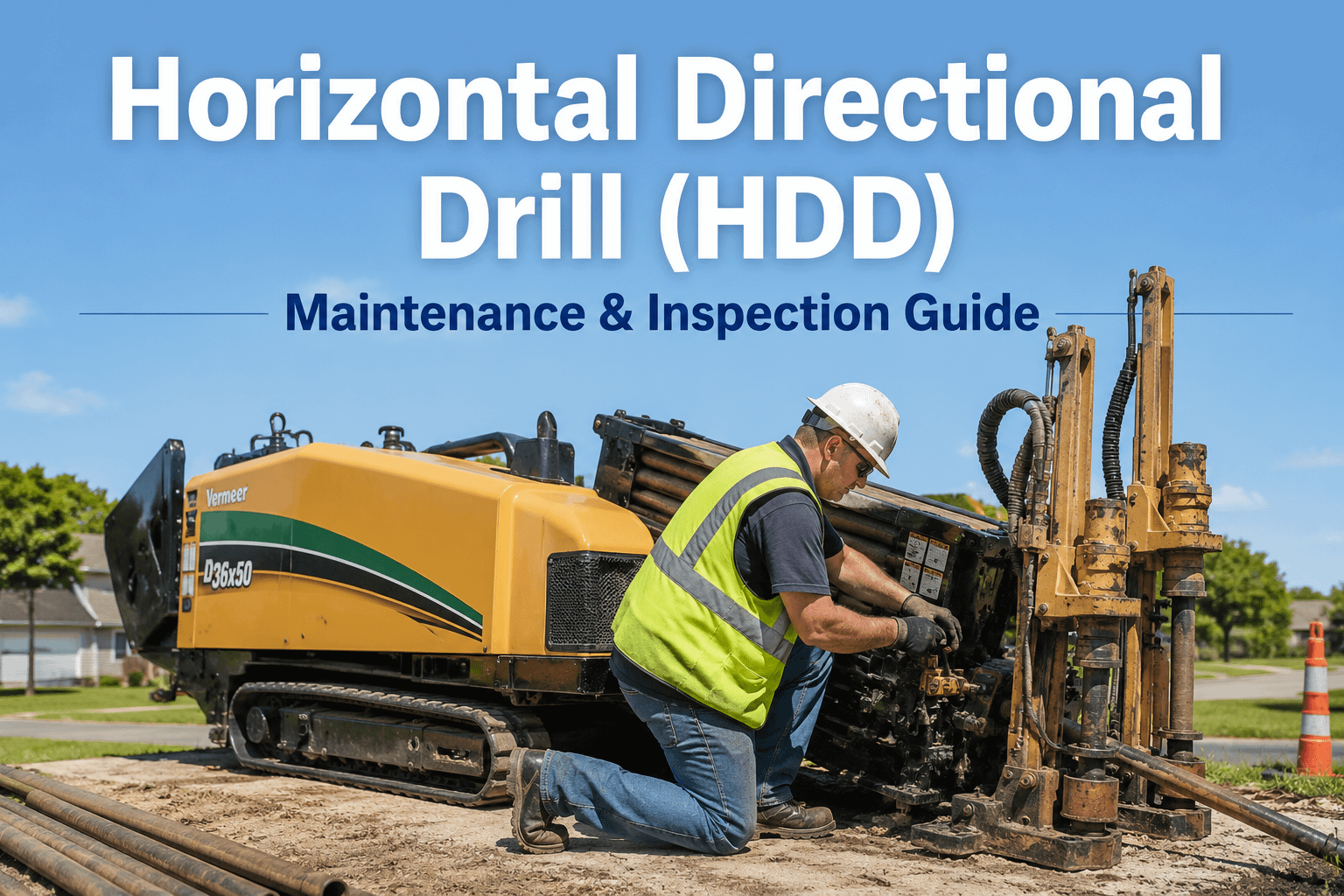
A horizontal directional drill earns its money underground, where you can't see it work and can't easily fix it when it fails. That makes an HDD rig unusually unforgiving: a mud pump that quits mid-bore, a drill string that cracks downhole, or a hydraulic system that overheats doesn't just stop the machine — it can leave a bore half-finished, a crew idle, and a utility install behind schedule with the tooling stuck in the ground. The good news is that HDD failures are highly predictable, and the manufacturers spell out exactly how to prevent them. Vermeer and Ditch Witch publish detailed schedules with services at 50, 100, 150, 250, 500, and 1,000 hours, plus daily walk-arounds, because the rig's four core systems — the mud/drilling-fluid system, the rod-handling and drill string, the hydraulics, and the powertrain — each wear on a known curve. The single most expensive consumable, the drill pipe, behaves like a tire: rotate it and the wear spreads evenly; neglect that and the first 100 feet wears out while the rest sits nearly new. HVI's inspection & maintenance software turns those published intervals into tracked, documented service that keeps the rig boring — guiding the daily walk-around, scheduling every interval by engine hours, and routing defects to work orders before they strand a bore. This guide breaks down the four systems, the inspection priorities, and the full schedule, and shows where HVI's software keeps each one on track.
The Four Systems That Keep a Drill Boring
An HDD rig comes down to four interdependent systems. Each has its own wear pattern and its own way of stopping the bore — and the drill string and mud system are the ones most unique to directional drilling.
Mud / Drilling-Fluid System
The lifeblood. Mixes and pumps drilling fluid downhole to cool the bit, carry cuttings, and stabilize the bore. A failure here stalls the bore fast.
Care: check pump and seals, clean mixing system and screens, inspect hoses and fittings, verify fluid mix and flow, flush after each job.
Drill String & Rod Handling
The bones. The drill pipe and rod loader push the bit through the ground. The single most expensive consumable on the rig.
Care: rotate pipe to spread wear, inspect pin threads for mushrooming and galling, verify makeup torque, lubricate, check rod loader alignment.
Hydraulic System
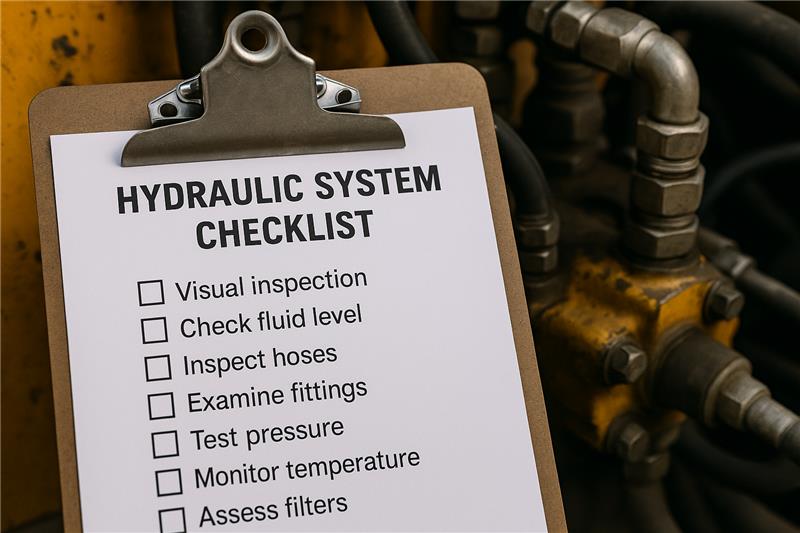
The muscle. Powers thrust, pullback, rotation, and the rod loader. Heat and contamination are its enemies; failure cuts boring power.
Care: check fluid level and condition, pressure and flow, relief valves, hoses for chafing and leaks, filter changes on schedule.
Powertrain & Tracks
The base. Engine, drivetrain, and undercarriage that power the rig and move it on site. Runs hard supplying every other system.
Care: engine oil, coolant and filters on interval, air filter restriction, track tension and rollers, battery and electrical, belts and hoses.
The Drill Pipe Is a Tire: Rotate It or Lose It
The most expensive mistake in HDD maintenance is the quiet one — letting the drill string wear unevenly. The pipe behaves exactly like a tire, and the discipline is the same.
First 100 ft Does All the Work
Crews use the first several hundred feet of pipe for corrective steering on every bore. Never rotated, that lead section is constantly overworked — so by the last rack of rods, only about a quarter of the footage is left while the rest sits nearly new.
Wear Spreads Evenly
Rotating the pipe through the string, exactly like rotating tires, spreads the wear across the whole set. The full footage reaches end-of-life together — maximizing the life of the rig's most expensive consumable.
The HDD Maintenance Schedule by Interval
Directional drills run on tightly-defined hour-based intervals published by the manufacturer. The daily checks catch the immediate hazards; the deeper services keep the four systems reliable bore after bore.
The Daily Pre-Shift Checklist
A consistent pre-shift routine is the fastest way to catch a small issue before the first rod goes in the ground. These are the priorities every morning, before boring starts.
Fluids
Engine oil, coolant, hydraulic reservoir, and fuel — verify levels and top off. Check the air-filter restriction indicator.
Leaks & Hoses
Scan under the machine for hydraulic leaks; check hoses and belts for chafing, cracking, or looseness; confirm fittings are tight.
Mud System
Inspect the pump, mixing system, and screens; verify drilling-fluid mix and flow before the bore begins.
Drill Rod & Connections
Check pin threads for mushrooming or galling, confirm rod loader alignment, and lubricate. The bones of the bore.
Electrical, Tracks & Safety
Confirm battery and connections, lights and alarms, E-stop and interlocks; check track tension, rollers, and lugs.
From Pre-Shift to Documented Uptime
The payoff of a tracked program is the loop HVI's inspection & maintenance software runs for you: inspect daily, schedule by hours, fix early, and document — so the mud pump gets serviced, the drill string gets rotated, and the rig keeps boring on schedule.
Inspect Daily
Crew runs the guided pre-shift check on a phone — fluids, mud system, drill rod, hydraulics, tracks — photos on any defect.
Schedule by Hours
The 50/250/500/1,000-hour services track by engine hours; the work order fires before each interval is due.
Fix & Document
A flagged defect becomes a routed work order; every inspection and service logs to the rig's record, audit-ready.
Keep Every Directional Drill Boring on Schedule
Guided daily inspections for the mud system, drill string, hydraulics, and powertrain; 50 / 250 / 500 / 1,000-hour PM scheduling; drill-rod rotation and connection tracking; defect-to-work-order routing; and timestamped records — built for Vermeer, Ditch Witch, and every HDD rig in a utility contractor's fleet. Trusted by 25,000+ users worldwide.