The transition from diesel to electric heavy equipment isn't an overnight switch — it's a 3-7 year phased migration where diesel, hybrid, and fully electric machines operate side by side on the same job sites, maintained by the same teams, and tracked on the same platform. Getting this transition right means understanding which machines to electrify first (not all of them), what infrastructure each job site needs, how to maintain a mixed fleet without doubling your maintenance complexity, and how to capture the TCO advantages that make electrification worth the upfront premium. The electric construction equipment market reached $14.5 billion in 2024 and is projected to hit $29 billion by 2029 at a 20.7% CAGR. Every major OEM — Volvo, Caterpillar, Komatsu, JCB, Hitachi, Hyundai — is shipping battery-electric models. Hybrid machines from Komatsu (PC365-11 hybrid with 20% fuel reduction) and Volvo (EC250E/EC300E hybrid with 15% fuel savings) offer a middle path for duty cycles that aren't yet viable for full electric. But the biggest risk in fleet electrification isn't choosing the wrong machine — it's losing control of inspections and maintenance across a mixed fleet where diesel, hybrid, and electric equipment need different inspection templates, different PM schedules, different technician skills, and different compliance requirements. This guide provides the phased transition roadmap, TCO comparison framework, infrastructure planning, mixed-fleet management strategy, and training requirements to execute the transition without operational disruption — and shows how HVI manages all three powertrain types on one platform.
Three Powertrains Compared: Diesel vs. Hybrid vs. Full Electric
The transition isn't binary — diesel or electric. Hybrid machines serve as a critical bridge for duty cycles and machine sizes where full electric isn't yet practical. Understanding where each powertrain excels drives the right acquisition strategy.
Best For
Large machines (40+ tonne), remote sites without power, continuous 10+ hour shifts, heavy earthmoving at full throttle
Mid-large machines (20-40 tonne), sites with some power access, mixed-intensity duty cycles, operators wanting familiar controls
Compact to mid-size (1-25 tonne), urban/indoor sites, predictable shift-length duty cycles, sites with charging infrastructure
Fuel/Energy Cost
$12,000-$25,000/yr depending on machine size and utilization
15-25% lower than diesel equivalent due to energy recovery and electric swing/boom assist
40-55% lower than diesel. 20-tonne excavator: ~$9,400/yr electricity vs. ~$18,000/yr diesel (IDTechEx)
Maintenance Cost
Baseline. Oil changes, DPF/DEF, filters, coolant, transmission service, belt/hose replacement
10-20% lower — electric components reduce load on diesel systems. Still requires oil, filters, DPF/DEF for diesel subsystem
40-50% lower. No oil changes, no DPF/DEF, no transmission. Fewer brake replacements (regen). Battery cooling + electrical systems are primary maintenance focus
Upfront Premium
Baseline
10-25% above diesel equivalent. No charging infrastructure required — self-charging from duty cycle energy recovery
40-60% above diesel (narrowing from 100%+ a few years ago). Battery pack pricing now ~$300/kWh. Requires charging infrastructure investment
Runtime
Unlimited with refueling (5-10 min)
Same as diesel — no charging required. Electric systems are self-charging from regenerative energy capture
4-8 hours typical (model/application dependent). Tethered operation available on some models for unlimited runtime. Charging: 1-8+ hours depending on power level
Inspection Requirements
Standard equipment inspections: engine, hydraulics, drivetrain, electrical, safety systems
Diesel + electric: engine, hydraulics, drivetrain, PLUS electric motor, battery/capacitor systems, HV cables, inverter
EV-specific: battery SoH, HV system integrity, thermal management, charging system, regenerative braking, electric drivetrain. No engine/DPF/DEF items
HVI provides powertrain-specific inspection templates for diesel, hybrid, and full-electric equipment — the correct checklist items for each type on one platform.
Book a demo to see mixed-fleet inspection management. Or
start free.
The Four-Phase Transition Roadmap
Fleets that approach electrification strategically achieve 30-45% better TCO outcomes than rushed deployments. This roadmap spans 3-7 years depending on fleet size and converts your operation without disrupting productivity.
Assessment & Pilot
Fleet audit: Map every machine by type, age, utilization hours, fuel consumption, maintenance cost, and remaining useful life. Identify the 10-20% of machines approaching replacement age — these are your first electric candidates.
Site power assessment: Survey your top 3-5 job sites for electrical capacity. Document available power (amps/voltage), proximity to panels, and grid upgrade feasibility. Most urban sites have adequate power for Level 2 charging.
Pilot deployment: Acquire 1-3 electric machines in the category with strongest TCO case (typically compact excavators or compact wheel loaders). Run alongside diesel equivalents on the same site for direct comparison.
Maintenance platform setup: Configure HVI with both diesel and EV inspection templates. Begin tracking EV battery health, charging data, and operational metrics from day one — this data drives Phase 2 decisions.
Expand & Optimize
Analyze pilot data: Compare diesel vs. electric TCO from Phase 1 — fuel savings, maintenance costs, operator productivity, downtime. Use actual data (not projections) to build the business case for expansion.
Expand to 15-25% electric: Replace aging diesel machines at end-of-life with electric equivalents where TCO data supports it. Add hybrid machines for mid-size categories (20-40 tonne) where full electric runtime is insufficient.
Charging infrastructure: Install Level 2 charging at primary depot/yard. Evaluate portable DCFC or mobile charging for high-utilization job sites. Target overnight charging as default, opportunity charging for daytime top-ups.
Technician training: Train 2-3 technicians on HV safety (OSHA-compliant), EV-specific diagnostics, and battery health monitoring. These become your EV maintenance leads.
Book a demo.
Scale & Standardize
Scale to 40-60% electric/hybrid: Electric for all compact and urban equipment. Hybrid for mid-size machines. Diesel retained only for large machines (40+ tonne) and remote sites without power. Each replacement at end-of-life, not premature.
Standardize charging operations: Charging protocols integrated into daily operations — shift-start SoC targets, opportunity charging during breaks, overnight depot charging schedules. Track DCFC vs. Level 2 ratios per machine for battery health.
Optimize mixed-fleet maintenance: PM schedules fully differentiated by powertrain. EV battery health monitoring feeding replacement forecasts. Diesel PM intervals adjusted for reduced-fleet remaining diesel machines. All on one HVI platform.
Apply for incentives: California CORE, state-level clean equipment programs, municipal green-fleet requirements. Documented TCO and emissions data from HVI supports grant/incentive applications.
Mature Fleet
70%+ electric/hybrid: Diesel retained only where no viable electric/hybrid alternative exists (very large machines, extremely remote sites, specialized applications). Hydrogen alternatives may begin entering this segment.
Battery lifecycle management: First pilot-era batteries approaching 70-80% SoH. Execute replace-vs-recondition decisions using 3-5 years of HVI battery health data. Assess second-life value for retired packs.
Continuous optimization: PM interval refinement based on fleet-wide EV data. Charging infrastructure right-sized based on actual utilization. Capital replacement modeling incorporating battery replacement costs into lifecycle TCO.
Compliance readiness: EU Battery Passport (2027), expanding low-emission zones, municipal zero-emission contract requirements — your fleet data positions you for compliance and competitive advantage in green procurement.
Managing Mixed Fleets: The Operational Challenge
During the 3-7 year transition, you're operating three powertrain types simultaneously — each with different inspection requirements, PM schedules, technician qualifications, and parts inventories. This is where most transitions fail: the maintenance system can't handle the complexity, so either diesel or electric machines get neglected.
Pre-Shift Inspection
Engine (oil level, leaks, noise), hydraulics, coolant, DPF/DEF indicator, belts/hoses, safety systems, ground-engaging tools
All diesel items PLUS electric motor indicators, HV cable insulation, battery/capacitor status light, regenerative system indicators
Battery SoC/SoH display, HV system status indicator, charging port/connector condition, thermal management system, regen braking function, electric drivetrain sounds
PM Schedule
250hr: oil/filter. 500hr: hydraulic filter, air filter. 1000hr: coolant, DPF service. 2000hr: major service. All interval-based on engine hours.
Diesel PM intervals (reduced due to lower engine load) PLUS quarterly: battery/capacitor inspection, HV cable check, electric motor inspection, inverter/controller check
No engine PM. Monthly: battery SoH trend review, thermal system check. Quarterly: HV system integrity, charger/connector inspection. Annual: full battery diagnostic, coolant replacement
Technician Skills
Standard diesel mechanic. Engine, hydraulics, drivetrain, electrical 12/24V
Diesel mechanic + HV safety awareness. Ideally ASE xEV Level 1 for HV components. Can isolate HV system for diesel-side work.
HV-qualified technician (ASE xEV Level 1 minimum, Level 2 preferred). OSHA-compliant HV PPE. De-energization/lockout-tagout certification for HV systems
Parts Inventory
Oil, filters (engine/hydraulic/air/fuel), coolant, DEF, belts, hoses, brake components, seals
Diesel parts PLUS electric motor brushes/bearings, capacitor modules, HV cable assemblies, inverter fuses
Different inventory: battery coolant, HV connectors, thermal interface materials, contactor assemblies, charger components. No oil, no DPF/DEF, no engine filters
Safety Protocols
Standard lockout/tagout. Fire extinguisher (ABC rated). Spill kit for fluids.
Diesel LOTO + HV de-energization procedure. Class 0 insulating gloves (ASTM F1505). 400-800V DC awareness. Dual-hazard fire risk.
HV de-energization mandatory before any maintenance. Class 0 gloves, insulated tools, face shield. 50-150 ft evacuation radius for thermal events. Li-ion rated fire suppression.
HVI manages diesel, hybrid, and electric equipment on one platform — with powertrain-specific inspections, differentiated PM schedules, and fleet-wide TCO comparison.
Book a demo. Or
start free.
Infrastructure, Training, and Incentives
Three operational requirements determine whether your transition succeeds beyond the machines themselves: charging infrastructure on site, technicians qualified to work on HV systems, and incentives that offset the upfront premium.
Charging Infrastructure
Depot/yard Level 2: 7-19 kW per port. Best for overnight/off-shift charging. Equipment cost: $400-$6,500 per unit. Installation: $3,000-$12,000 including electrical. Best battery health (lowest degradation).
Job site DCFC: 50-350 kW. For rapid turnaround between shifts. Equipment: $50,000-$350,000+. Requires significant power supply. Use strategically — high-power DCFC doubles battery degradation rate.
Mobile/portable: Komatsu/Dimaag MWCS and similar units bring fast charging to any site. Battery-swap systems available for some compact models. Solar charging proven viable for smaller machines.
Grid assessment first: Before purchasing any chargers, assess available electrical capacity at each site. Panel upgrades can cost $50,000-$500,000+ and take 3-12 months — this is the #1 timeline risk in fleet electrification.
Technician Training
HV safety awareness (all techs): Every technician working near electric equipment needs HV hazard awareness — even if they only work on diesel components. Covers recognition of HV systems, emergency procedures, and "don't touch" boundaries.
ASE xEV Level 1: Qualified to perform routine maintenance on HV systems under supervision. Includes LOTO procedures, PPE requirements, basic diagnostic capability. Target: 2-3 technicians in Phase 2.
ASE xEV Level 2: Full diagnostic and repair capability on HV systems. Battery module replacement, thermal system service, motor/inverter diagnostics. Target: 1-2 technicians by Phase 3.
Operator training: Pre-shift EV inspection procedures, charging protocol compliance (20-80% SoC), regenerative braking operation, thermal event response, and emergency HV disconnect. 30-minute training session per operator.
Incentives & Regulations
California CORE: Clean Off-Road Equipment Voucher Incentive Project offers point-of-sale discounts on qualifying electric heavy equipment. One of the most substantial programs available.
30C infrastructure credit: 30% tax credit on EV charging infrastructure costs (through June 2026). Covers equipment, installation, and electrical upgrades. Significant offset for depot charging buildout.
Low-emission zone expansion: Construction equipment increasingly included in urban emission zones (London ULEZ, Norwegian municipal requirements, EU Big Buyers Initiative targeting 20% emission-free public project sites by 2025, 50% by 2030).
Green procurement advantage: Municipal and public-sector contracts increasingly require or preference zero-emission equipment. Documented fleet emissions data from HVI supports competitive bids.
CONEXPO-CON/AGG 2026: Electric Everywhere
Every major OEM at CONEXPO 2026 (March, Las Vegas) showcasing electric and hybrid models. Volvo debuting 14+ new machines including L120 Electric wheel loader. Komatsu launching PC220LCi-12 with IMC 3.0. Electric is no longer experimental — it's the production line.
Hybrid Bridging the Gap for Large Machines
Komatsu PC365-11 hybrid (20% fuel reduction, 15% productivity increase) and Volvo EC250E/EC300E hybrid (15% fuel savings) proving hybrid viability for 25-40 tonne machines. Self-charging — no infrastructure required. Key transition technology for heavy earthmoving.
Book a demo.
Battery Pricing Driving Affordability
Pack-level pricing now ~$300/kWh (down from $500/kWh recently). Equipment premiums narrowing from 100%+ to 40-60% over diesel. Goldman Sachs projected 40% battery price decrease by 2025-2026 — trajectory confirmed. TCO parity accelerating across more machine categories.
Mixed-Fleet Management Is the Real Challenge
The machines are ready. The challenge is managing diesel, hybrid, and electric equipment on one maintenance platform with the correct inspection templates, PM intervals, and technician routing for each powertrain. This is exactly what HVI was built to handle.
Why HVI for the Electrification Transition
The transition challenge isn't acquiring electric machines — it's maintaining a mixed fleet without operational disruption. HVI was built to manage diesel, hybrid, and electric equipment on one platform because that's the reality every transitioning fleet faces for 3-7 years.
Powertrain-Specific Inspection Templates: Diesel machines get engine, DPF/DEF, drivetrain, and hydraulic items. Hybrid machines get diesel items PLUS electric motor, HV cables, battery/capacitor, and regenerative system checks. Electric machines get battery SoH, HV system integrity, thermal management, and charging system items. Operators see only the correct checklist for their assigned machine.
Differentiated PM Scheduling: Engine-hour triggers for diesel. Blended engine-hour + battery-cycle triggers for hybrid. Battery-cycle + calendar triggers for electric. One PM calendar showing every machine due for service — with the correct interval logic per powertrain type.
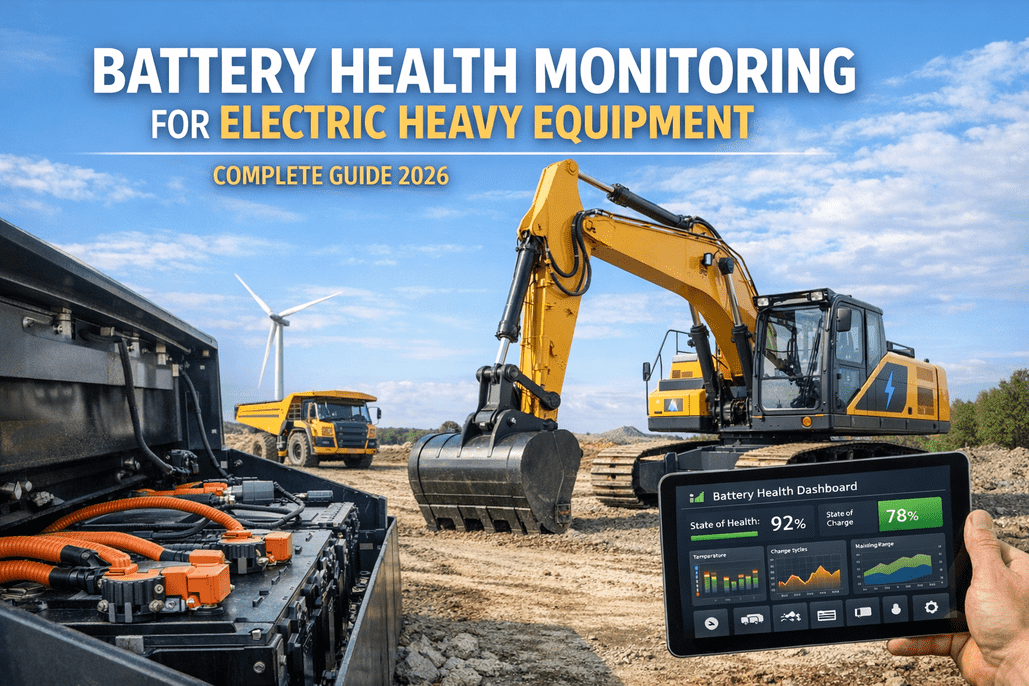
Battery Health Monitoring: SoH trending, charge event logging, thermal event tracking, and degradation rate analysis for every electric and hybrid asset. Alerts when degradation exceeds expected curve. Data feeds replacement planning and warranty management.
Unified Work Orders with Skill Routing: Defects from any powertrain flow through the same work order system. HV-related defects route to qualified technicians (ASE xEV Level 1/2). Diesel defects route to standard mechanics. One system, correct routing.
Fleet-Wide TCO Comparison: Side-by-side cost tracking: diesel fuel vs. electricity, diesel PM costs vs. EV maintenance, uptime comparison by powertrain. Data-driven evidence for every phase of the transition — proving the business case with your actual numbers.
Transition Progress Dashboard: Fleet composition tracking: percentage diesel/hybrid/electric over time. Emissions reduction documentation. Incentive application support. Compliance readiness for emission zones and green procurement requirements.
The Transition Is a Marathon, Not a Sprint
The fleets that will lead the electric heavy equipment era aren't the ones that bought the most electric machines the fastest — they're the ones that executed a phased transition with data-driven acquisition decisions, proper infrastructure, trained technicians, and a maintenance platform that handles all three powertrain types without operational disruption. Start with the machines that deliver immediate TCO advantage (compact and mid-size), use hybrids as a bridge for larger categories, retain diesel only where no viable alternative exists, and manage the entire mixed fleet on HVI — with powertrain-specific inspections, differentiated PM schedules, battery health monitoring, and fleet-wide cost analytics that prove the business case at every phase.
Mixed-Fleet Management for the Electrification Transition
HVI manages diesel, hybrid, and electric equipment on one platform — powertrain-specific inspections, differentiated PM schedules, EV battery health monitoring, and fleet-wide TCO comparison.
Frequently Asked Questions
Q: How long does a full fleet transition take?
Typically 3-7 years for a phased approach. Phase 1 (6 months): pilot with 1-3 electric machines. Phase 2 (12 months): expand to 15-25%. Phase 3 (24 months): scale to 40-60% electric/hybrid. Phase 4 (ongoing): mature fleet at 70%+. Aggressive 1-2 year timelines often result in operational failures. Replace at end-of-life, not prematurely.
Q: Where should I start — which machines to electrify first?
Compact excavators and compact wheel loaders deliver the strongest immediate TCO case: proven performance parity with diesel, 4-8 hour runtime matching typical shifts, and the widest selection of commercial models. Mini excavators (1-8 tonne) are the most mature electric segment. Urban and indoor sites where diesel emissions are problematic are ideal first deployments.
Start tracking with HVI.
Q: What's the TCO advantage of electric vs. diesel?
For a 20-tonne excavator: ~$8,600/year fuel savings (IDTechEx), 40-50% lower maintenance costs (no oil, DPF/DEF, transmission service), with 40-60% higher purchase price. Payback: 3-5 years for high-utilization machines. Compact machines reach TCO parity faster due to lower battery costs. Hybrids offer 15-25% fuel savings with only 10-25% upfront premium and no charging infrastructure.
Q: Do I need separate maintenance systems for diesel and electric?
No — and that's critical. Running separate systems creates data silos and doubles management complexity. HVI manages all three powertrain types on one platform with powertrain-specific inspection templates (correct items for each type), differentiated PM schedules (engine-hours for diesel, battery-cycles for EV), unified work orders with technician skill routing, and fleet-wide TCO comparison.
Q: What about hydrogen as an alternative for large machines?
JCB, Liebherr, Komatsu, and Caterpillar are investing in hydrogen combustion engines for large equipment (40+ tonne) with 8+ hour continuous duty cycles where battery-electric runtime is insufficient. Hydrogen is 3-5 years behind battery-electric in commercial availability for construction equipment. Hybrid diesel-electric is the practical bridge technology today for these large machine categories.
Q: Are federal EV incentives still available in 2026?
Federal clean vehicle tax credits for vehicles acquired after September 30, 2025 have ended. However, the 30C charging infrastructure tax credit (30% of costs, through June 2026) remains available. California CORE offers substantial point-of-sale discounts on electric heavy equipment. Many state-level programs remain active. Municipal green-fleet procurement requirements create market access advantages that are effectively incentives.