
How Investor-Owned Utilities Reduce Risk with Digital Inspection Programs

By Sophie Hill on June 23, 2026

investor-owned-utilities-reduce-liability-inspections

For an investor-owned utility, the biggest financial risk on the balance sheet often isn't fuel cost or rate cases — it's a single catastrophic event and the lawsuit that follows. When wildfires or equipment failures are traced to utility infrastructure, the damages run into the billions: PG&E paid roughly $23 billion to exit bankruptcy, PacifiCorp faces potential liabilities reported as high as $11 billion in a single class action, and Southern California Edison has filed multi-billion-dollar mitigation plans while defending fresh claims. In nearly every one of these cases, the decisive evidence is the utility's own records — courts subpoena maintenance and inspection histories, and gaps, delays, or missing documentation become the proof of negligence. The flip side is just as true: a complete, timestamped inspection record is one of the strongest defenses a utility has, and in some states a documented mitigation program affects liability directly. HVI inspection and maintenance software turns scattered paper into a defensible digital trail across the whole fleet. This page covers where utility risk concentrates, how digital inspections reduce it, and what a compliant program looks like.

INVESTOR-OWNED UTILITIES · RISK MANAGEMENT
Your Inspection Records Are Your Best Legal Defense
When liability is on the line, courts look at the utility's own maintenance history first. HVI gives investor-owned utilities a complete, timestamped, defensible inspection trail across every line truck, aerial device, and asset — turning compliance into protection.
$23B
PG&E settlement to exit bankruptcy
$1B+
first-dollar damages a utility bears per major fire
13 mo
max interval for ANSI A92.2 aerial device inspection
150 hr
trigger for a frequent aerial inspection

Where the Risk Concentrates

Utility risk isn't one thing — it's four exposures that all trace back to whether equipment was inspected, maintained, and documented. A digital program addresses each at the source.

Catastrophic Liability

A fire or failure traced to infrastructure can mean billions in damages. Utilities bear the first $1 billion themselves in many wildfire frameworks.

Regulatory Penalties

Commissions impose fines for safety lapses and flawed program execution. Their citations then become evidence in civil cases.

Worker Safety

Aerial devices and line trucks carry electrocution and structural-failure risk. A missed dielectric test or daily check can be fatal — and indefensible.

Credit & Investor Risk

Liability exposure raises borrowing costs and rattles investors. A documented safety program is increasingly what the market and regulators expect.

Every one of these exposures has the same root: was the work done, and can you prove it? HVI answers both with a record that holds up. sign up for a free HVI trial and build a defensible program.

How a Paper Gap Becomes a Lawsuit

The pattern in utility liability cases is remarkably consistent. Plaintiffs don't need to have watched the failure happen — they reconstruct it from the records, and missing documentation does the rest. Here's the chain digital inspections break.

1

A Check Is Skipped or Unlogged

An inspection is missed, rushed, or recorded on paper that never reaches a central file — a gap no one notices at the time.

2

A Failure Occurs

Equipment fails or ignites. Investigators trace the cause to the asset and pull its full maintenance and inspection history.

3

The Gap Becomes Negligence

Delays, omissions, and incomplete records are presented as a pattern of negligence — and drive settlements, penalties, even bankruptcy.

In the Camp Fire, inadequate inspection of an aging transmission component became central to the utility's liability, and decades of maintenance and inspection gaps were presented in court. The lesson isn't that inspections prevent every failure — it's that documented inspections are what stand between a utility and a finding of negligence.
A digital inspection that's timestamped, photo-backed, and centrally stored is the opposite of a paper gap — it's affirmative proof the work was done. schedule a demo to see the compliance audit trail.

The Compliance Picture for Utility Fleets

Beyond catastrophic risk, IOU fleets carry a stack of overlapping inspection mandates — each with its own interval and its own documentation requirement. HVI tracks them all on one schedule.

ANSI A92.2 · Aerial Devices

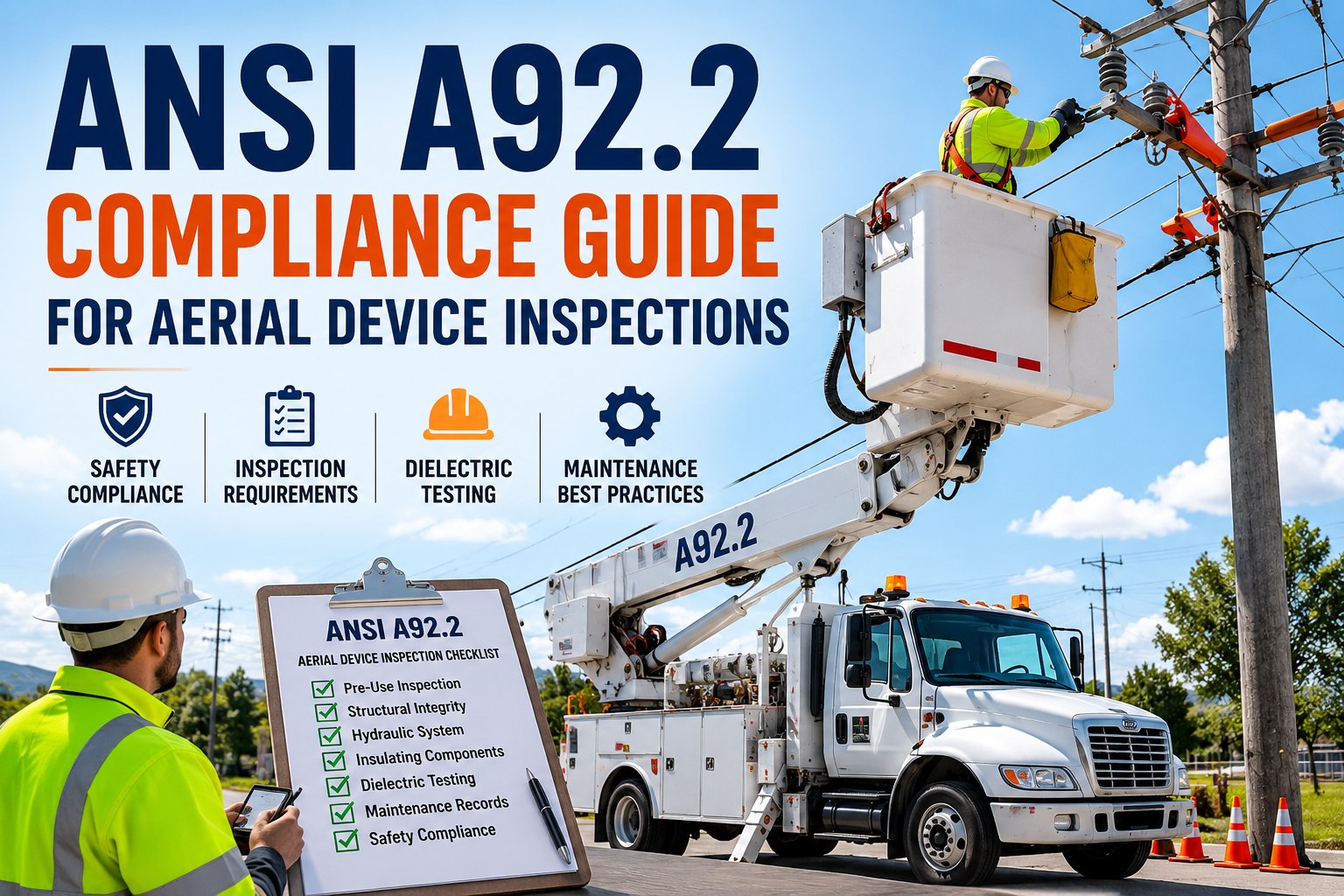
Daily pre-use checks, frequent inspections at 3 months or 150 hours, and an annual inspection within 13 months — incorporated by reference into OSHA, so enforceable.

Dielectric Testing

Insulated booms and digger derricks must be dielectrically tested at least every 12 months — a check that's literally life-or-death for line crews.

DOT / FMCSA Annual

Line trucks and bucket trucks need annual DOT inspections to stay road-legal — another interval and another record to keep current.

NFPA 70E · Electrical Safety

Electrical-safety practices for crews working energized systems — documented training and equipment checks that protect workers and demonstrate due care.

Missing one interval on one asset is how a clean program develops a gap — HVI fires the reminder before the deadline and logs the proof after the check. start a free HVI trial and never miss an interval.

From Exposure to Protection

The same digital inspection program reduces risk on every front at once. Here's what shifts when records move from the cab to a defensible central system.

PAPER & REACTIVE

Records scattered, incomplete, or lost
Missed intervals discovered after a failure
No proof a check was actually performed
Defects noted but never tracked to repair
Audit prep is a frantic paper hunt

DIGITAL & DEFENSIBLE WITH HVI

One central, searchable record per asset
Automated reminders before every deadline
Timestamped, photo-backed, signed proof
Every defect routed to a tracked work order
Audit-ready history available on demand

What a Digital Program Returns

Risk reduction is the headline, but a digital inspection program pays back across the whole operation — safer crews, lower cost, stronger standing with regulators and investors alike.

Liability Shield

A complete, timestamped record is affirmative evidence of due care — the strongest defense against negligence claims and the documentation courts demand.

Regulatory Confidence

A documented, consistently executed program is what commissions look for — and in some states a compliant mitigation program affects liability directly.

Safer Crews

Enforced daily checks and on-time dielectric testing keep line workers off compromised equipment — the outcome that matters most.

Lower Cost & Downtime

Catching defects early turns emergency failures into planned repairs, while accurate asset history sharpens maintenance and replacement decisions.

Turn Compliance Into Your Strongest Defense

HVI gives investor-owned utilities one defensible system for every inspection their fleet requires: daily aerial-device checks, ANSI A92.2 and dielectric intervals, DOT annuals, and NFPA 70E practices — with automated reminders, photo-backed records, defect-to-work-order tracking, and audit-ready history per asset. Reduce liability, protect crews, and prove due care. Trusted by 25,000+ users worldwide.
Frequently Asked Questions

How do digital inspections actually reduce utility liability?
By producing the evidence that decides liability cases. When a failure is traced to utility infrastructure, investigators and plaintiffs' attorneys subpoena the utility's own maintenance and inspection history — and delays, omissions, or missing records become the proof of negligence that drives settlements and penalties. A digital program flips that: every inspection is timestamped, photo-backed, signed, and centrally stored, so the record shows affirmatively that the work was done on schedule. It can't prevent every failure, but it's the difference between a defensible record and a paper gap a court reads as negligence. HVI builds that trail across the whole fleet. Sign up for a free HVI trial to build yours.
Why are a utility's own records so central in court?
Because plaintiffs reconstruct what happened from documentation rather than eyewitness accounts. A utility's maintenance history is often the most critical evidence in a wildfire or equipment-failure case — records showing when and how often equipment was inspected, serviced, or flagged. In the Camp Fire, inadequate inspection of an aging transmission component became central to liability, and decades of inspection gaps were presented as a pattern. The same principle protects utilities that document well: a complete record is strong evidence of due care. Schedule a demo to see defensible record-keeping.
What inspection intervals do utility aerial devices require?
Vehicle-mounted aerial devices follow ANSI A92.2, which is incorporated by reference into OSHA and therefore enforceable. That means a daily or pre-use inspection before each shift, a frequent inspection at 3 months or 150 work hours (whichever comes first), and an annual inspection no later than 13 months after the last. Insulated booms and digger derricks must also be dielectrically tested at least every 12 months, and line trucks need annual DOT inspections. Each interval carries its own documentation requirement — HVI tracks them all on one schedule and reminds you before each is due. Sign up for a free HVI trial to track every interval.
Can one system handle a whole mixed utility fleet?
Yes. Utility fleets mix line trucks, insulated bucket trucks, digger derricks, and support vehicles, each with different inspection profiles and intervals. HVI lets you build asset-specific checklists and schedules for every class, then rolls everything into one searchable view of status, open defects, overdue items, and upcoming deadlines across the fleet. That single source is what makes audits fast and a missed interval nearly impossible — instead of chasing paper across yards and contractors, the whole compliance picture is on one screen. Schedule a demo to see fleet-wide management.
Does a documented program help with regulators, not just lawsuits?
Yes. Utility commissions impose fines for safety lapses and flawed program execution, and their citations frequently become evidence in later civil cases — so regulatory and legal risk are linked. A consistently executed, well-documented inspection and maintenance program is exactly what regulators expect to see, and in some states a compliant, documented mitigation program affects a utility's liability position directly. A digital system also makes regulatory reporting and audit response far faster, because the records are organized and available on demand rather than scattered across paper files. Sign up for a free HVI trial to strengthen compliance.

Share This Story, Choose Your Platform!

Start Free Trial Book a Demo