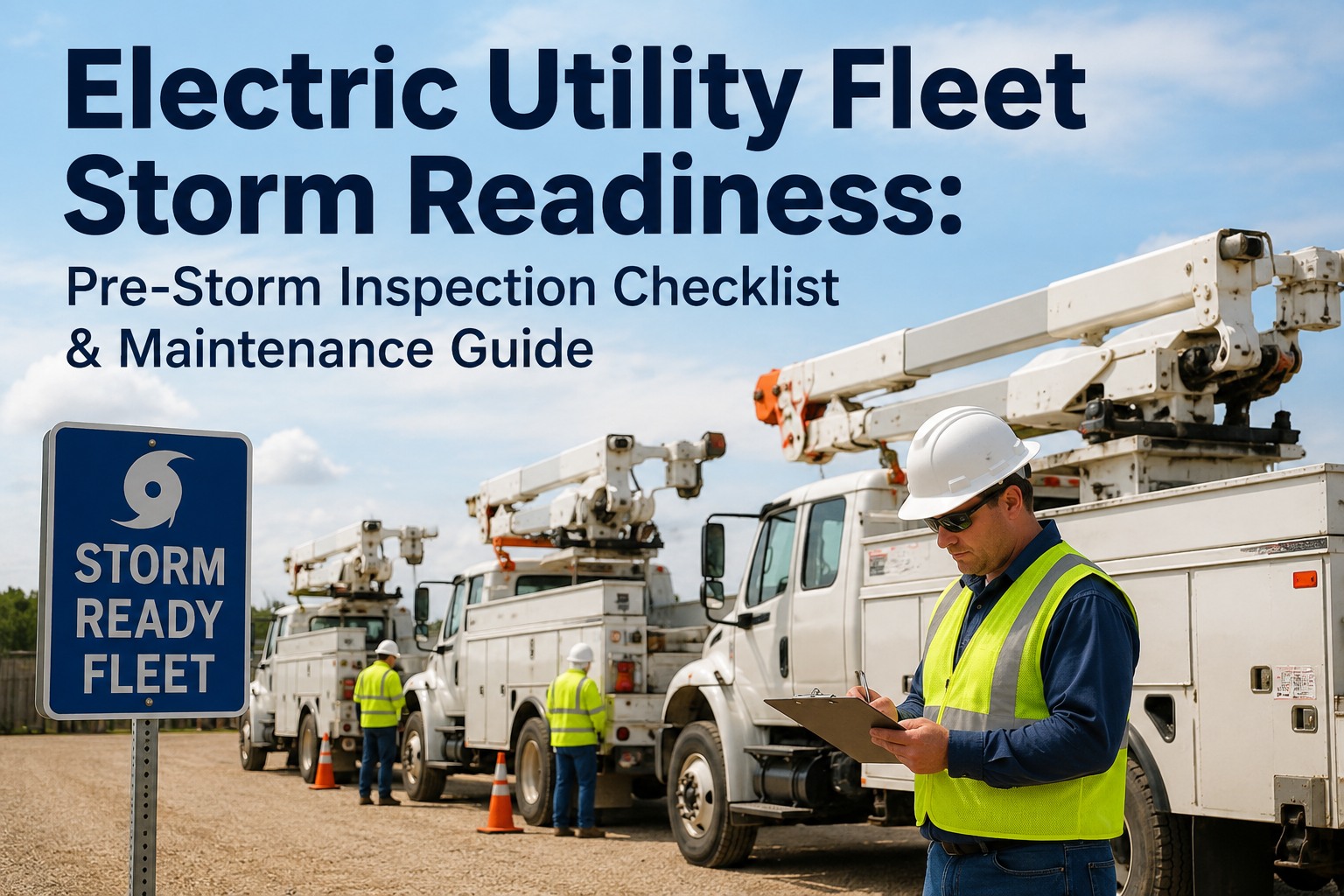
Electric Utility Fleet Storm Readiness: Pre-Storm Inspection Checklist & Maintenance Guide

By Bruno Talley on June 24, 2026

electric-utility-fleet-pre-storm-inspection-checklist

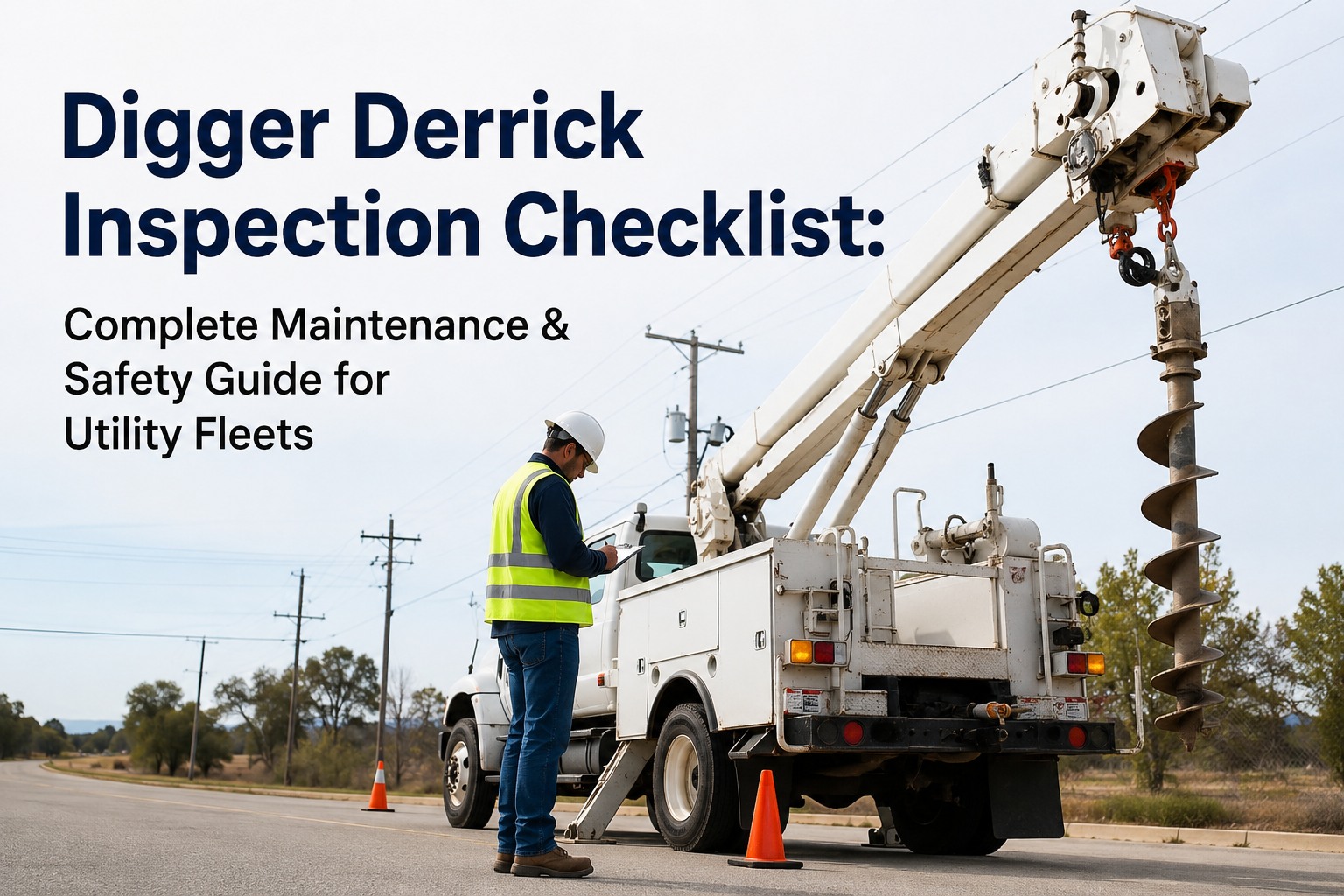
When a major storm hits, an electric utility's fleet is its restoration capacity — every bucket truck, digger derrick, and support vehicle that can't roll is a neighborhood that stays dark longer. The stakes are enormous: outage delays cost local economies millions, and crews and trucks can't even cross state lines for mutual aid without proof of readiness — current dielectric certificates, DOT compliance, and documented inspections. The utilities that restore power fastest don't scramble when the forecast turns; they run a rehearsed cycle of year-round maintenance, pre-storm inspection, and staged deployment, with every check documented. The difference between a fleet that's ready and one that isn't comes down to whether inspections happened on schedule and can be proven. HVI inspection and maintenance software gives utility fleets the pre-storm checklist, the compliance trail, and the real-time readiness view that storm response demands. This guide walks the full readiness timeline — what to inspect, when, and how to keep every truck deployment-ready.

ELECTRIC UTILITY FLEET · STORM READINESS
When the Storm Hits, Your Fleet Is Your Response
Every truck that can't roll is restoration capacity lost. HVI gives electric utility fleets a documented pre-storm inspection program, automated compliance tracking, and a live readiness view — so every bucket truck and digger derrick is staged, certified, and ready to deploy.
12 mo
max interval for dielectric boom testing
13 mo
ANSI A92.2 annual aerial device inspection
Daily
pre-use check required before each shift
Proof
needed to cross state lines for mutual aid

The Storm Readiness Timeline

Restoration speed is decided long before the wind picks up. The best utilities run a three-phase cycle — and a fleet only reaches the second and third phases ready if the first was done right.

YEAR-ROUND

Continuous Maintenance

Keep every vehicle on its service intervals all year — engine, hydraulics, brakes, and the safety-critical dielectric and ANSI cycles. A fleet maintained continuously is one that's already most of the way to storm-ready when a forecast appears.

PRE-STORM

Readiness Inspection & Staging

As the forecast firms up: run the pre-storm checklist on every truck, confirm certificates are current, top off and secure fuel, and stage equipment near the predicted impact zone so crews hit the ground running the moment it's safe.

RESTORATION

Deploy & Document

Crews deploy after safety clearance, logging daily job reports and any defects in the field. Mutual-aid trucks arrive needing verified compliance — and every check stays documented for audit and reimbursement.

Pre-positioning equipment near the impact zone is what slashes recovery time — but only trucks with current, documented inspections can be staged and crossed into a T&D corridor. sign up for a free HVI trial and keep every truck deployment-ready.

The Pre-Storm Inspection Checklist

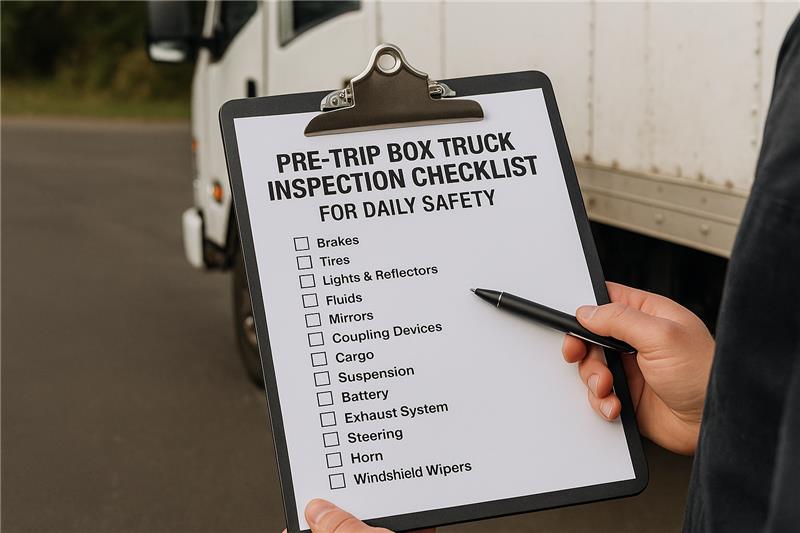
This is the core of readiness — the walkaround that confirms a truck can be deployed and won't fail in the field or sideline a crew at the worst possible time. Inspect each of these on every vehicle before staging.

Dielectric Certification

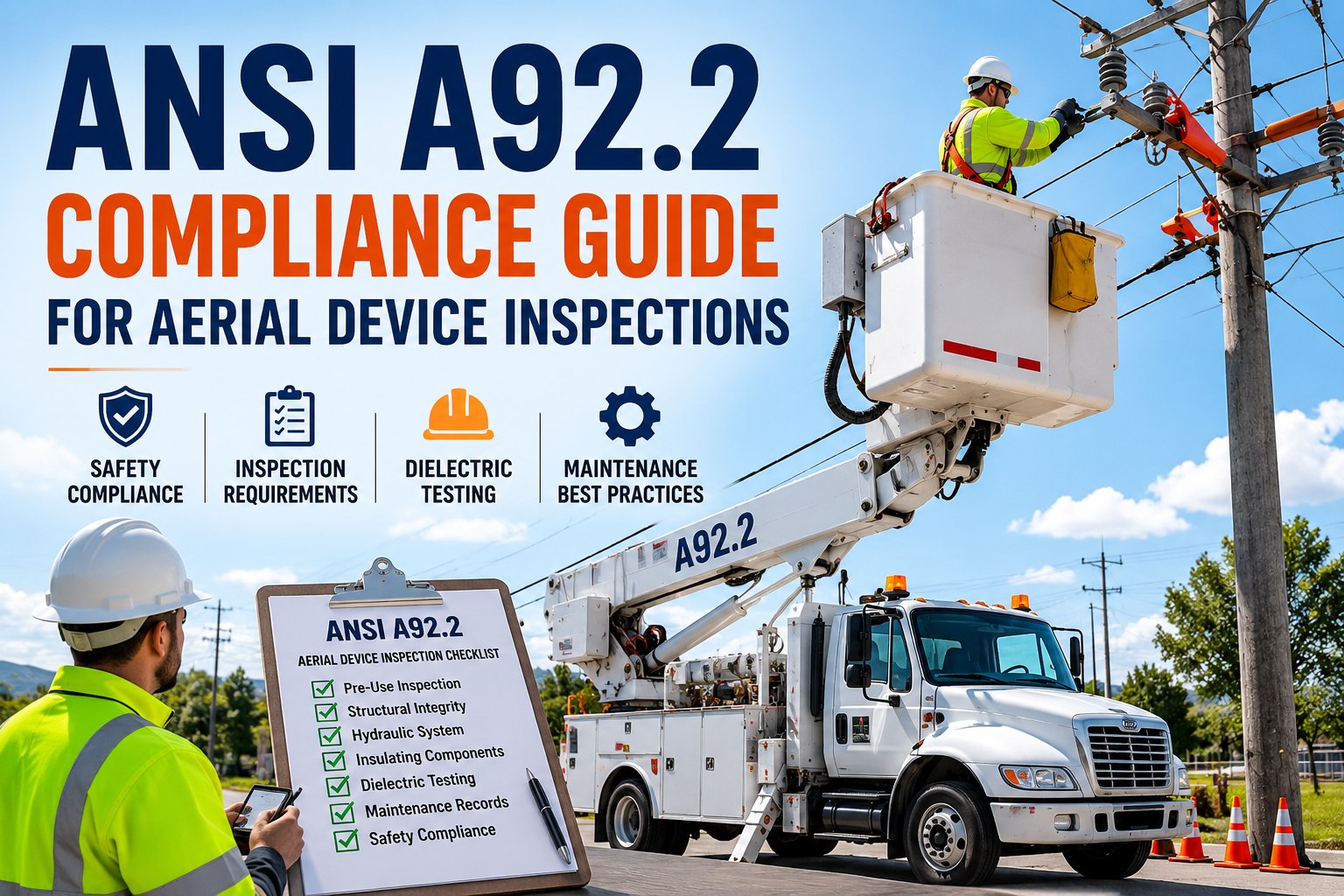
Confirm insulated booms and digger derricks have a current dielectric test — required at least every 12 months and literally life-or-death when crews work energized lines.

Aerial Device & Hydraulics

Check boom operation, leveling, controls, and hydraulic lines for leaks or wear, per ANSI A92.2 — the standard incorporated into OSHA, so enforceable.

PTO, Brakes & Outriggers

Verify power take-off, brakes, and outrigger stability to OSHA and NESC standards — the systems that keep a truck safe under load on rough, storm-damaged ground.

DOT / CDL / GVWR Compliance

Confirm DOT annual inspection, weight ratings, and driver credentials are current — without proof, traveling fleets can't legally cross state lines for mutual aid.

Fuel & Fluids

Top off fuel and confirm spare fuel cards or supply, since stations may be down for days. Check oil, coolant, and hydraulic fluid levels before staging.

Safety Kits & Equipment

Verify PPE, rubber goods, grounds, lighting, and emergency contacts are aboard and assigned per NFPA and OSHA protocols — a crew is only as ready as its kit.

Six checks across an entire fleet, against the clock of an incoming storm — that's where paper falls apart. HVI runs the checklist on a phone and flags any truck that isn't ready. schedule a demo to see the pre-storm checklist in action.

Why Documentation Decides Deployment

Storm response runs on proof, not assurances. A truck that's actually fine but can't show current certs is as good as grounded — and a mutual-aid caravan moves only as fast as its paperwork.

Corridor & Border Access

Crews can't enter a T&D corridor or cross state lines without proof of readiness. Current, retrievable certificates are what get trucks moving instead of held at a checkpoint.

Crew Safety & Liability

A documented inspection proves a truck was deemed safe before deployment — protecting crews working energized lines and the utility if anything is later questioned.

Cost Recovery

Daily job reports linked to each crew lead support reimbursement and audit. Storm spending hits the balance sheet long before payment clears — clean records speed recovery.

Regulatory Expectations

Commissions expect documented, repeatable readiness. A digital trail meets that bar and turns a post-storm review into a report, not a paper hunt.

Scramble vs. Staged Readiness

The forecast is the same for every utility. What differs is whether the fleet was kept ready or has to be readied in the narrowing window before landfall. Here's the contrast.

LAST-MINUTE SCRAMBLE

Certs and DOT status checked truck by truck, by hand
Expired dielectric tests discovered too late
No clear view of which trucks are deployable
Mutual-aid paperwork assembled under pressure
Field defects radioed in and lost

STAGED READINESS WITH HVI

Compliance status live on one dashboard
Reminders fire before any cert expires
Fleet-wide readiness visible at a glance
Certificates retrievable on demand
Field defects logged with photos, tracked to fix
Readiness isn't a forecast-week activity — it's a state HVI keeps your fleet in year-round, so the pre-storm phase is a quick confirmation, not a panic. start a free HVI trial and stay storm-ready always.

Keep Every Truck Storm-Ready and Deployment-Proven

HVI gives electric utility fleets a documented pre-storm inspection checklist, automated tracking for dielectric, ANSI A92.2, and DOT intervals, defect-to-work-order routing from the field, and a live readiness view across the whole fleet — with certificates retrievable on demand for corridor access and mutual aid. Restore power faster, protect crews, and prove it all. Trusted by 25,000+ users worldwide.
Frequently Asked Questions

What should a pre-storm fleet inspection cover?
Every safety-critical and deployment-critical system on each vehicle: a current dielectric certification on insulated booms and digger derricks, aerial device and hydraulic operation per ANSI A92.2, PTO, brakes, and outrigger stability to OSHA and NESC standards, DOT/CDL/GVWR compliance, fuel and fluid levels with spare fuel arranged, and safety kits including PPE, rubber goods, and grounds. The goal is to confirm each truck can be safely staged and deployed — and to catch anything that would sideline a crew in the field. HVI runs the whole checklist on a phone and flags any truck that isn't ready. Sign up for a free HVI trial to build your checklist.
How often must utility bucket trucks be dielectrically tested?
Insulated booms and digger derricks must be dielectrically tested at least every 12 months under ANSI A92.2, and some utilities test more frequently. This verifies the insulating strength of the fiberglass boom sections, bucket liners, and related components — the barrier that protects a lineman working an energized line. On top of dielectric testing, aerial devices require a daily pre-use check, a frequent inspection at 3 months or 150 work hours, and an annual inspection within 13 months. Each carries its own documentation requirement, and a missed or expired cert can ground a truck during a storm. HVI tracks all of these intervals and reminds you before each is due. Schedule a demo to see interval tracking.
Why does documentation matter so much in storm response?
Because storm response runs on proof. Crews and trucks can't cross state lines or enter a transmission and distribution corridor without proof of readiness — current dielectric certificates, DOT compliance, and inspection records. A truck that's mechanically fine but can't show current certs is effectively grounded. Documentation also protects crews and limits liability by proving each vehicle was inspected before deployment, and daily job reports linked to crew leads support cost recovery and audit, which matters because storm spending hits the balance sheet long before reimbursement clears. A digital trail makes all of this retrievable on demand instead of buried in paper. Sign up for a free HVI trial to keep records ready.
How does fleet readiness speed up outage restoration?
Restoration speed depends on getting crews and equipment to the impact zone fast and safely. Utilities pre-stage trucks near predicted impact areas so crews can deploy the moment it's safe — but only vehicles with current, documented inspections can be staged and moved. A fleet kept ready year-round needs only a quick pre-storm confirmation, while a fleet that has to be readied in the narrowing window before landfall loses precious time and may discover expired certs too late. The faster every truck is confirmed deployable, the faster the lights come back on. Schedule a demo to see fleet readiness tracking.
Can one system manage mutual-aid and home fleets together?
Yes. A mixed storm fleet includes home-utility bucket trucks, digger derricks, support vehicles, and incoming mutual-aid trucks, each needing verified compliance before deployment. HVI lets you build inspection profiles per vehicle class and maintain one searchable readiness view of status, expiring certificates, open defects, and upcoming intervals across the entire fleet. When mutual-aid resources arrive, their compliance can be confirmed and documented in the same system, so the whole caravan moves on verified proof rather than assembled-under-pressure paperwork. Sign up for a free HVI trial to unify your fleet.

Share This Story, Choose Your Platform!

Start Free Trial Book a Demo