High operating hour excavator oil selection represents one of the most critical maintenance decisions facing construction companies with aging fleets, where premium oils deliver 50% extended engine life and $125,000 annual savings per machine operating beyond 3,000 hours. Industry analysis reveals that 78% of construction fleets struggle with accelerated wear and increased maintenance costs in high-hour equipment due to inadequate lubrication strategies designed for aging machinery. Specialized high-hour oil programs can reduce rebuild frequency by 75%, extend equipment lifespan by 60%, and decrease operational costs by 85% while maintaining productivity and regulatory compliance in equipment approaching end-of-service life considerations.
The Hidden Crisis: High-Hour Equipment Lubrication Challenges
Excavators operating beyond 3,000 hours face unique lubrication challenges that standard oil programs cannot adequately address, where component wear, seal degradation, and thermal stress create demanding conditions requiring specialized protection strategies. High-hour lubrication inadequacies cascade throughout aging equipment, accelerating component failure rates and creating exponential maintenance cost increases that threaten fleet economic viability.
Accelerated Wear Progression
92% of high-hour excavators experience accelerated wear beyond 5,000 hours, with inadequate lubrication causing exponential component degradation that costs $185+ thousand for complete engine rebuilds when protection fails.
Seal System Deterioration
Aging seal systems develop oil leakage issues 6-8 weeks before major failures, with contamination and pressure loss creating system damage requiring $95+ thousand in comprehensive repairs.
Thermal Management Challenges
High-hour equipment exhibits reduced cooling efficiency and increased operating temperatures that accelerate oil breakdown, causing thermal damage costing $125+ thousand for major component replacement.
Contamination Control Issues
Aging filtration systems struggle with contamination management in high-hour equipment, with particle accumulation causing abrasive wear damage requiring $85+ thousand for system restoration.
Viscosity Stability Concerns
Extended operating hours create viscosity breakdown challenges that compromise lubrication effectiveness, with oil thinning causing bearing damage costing $165+ thousand for engine rebuilds.
Additive Package Depletion
High-hour operation depletes critical oil additives faster than replacement intervals, with protection loss causing corrosion and wear damage requiring $115+ thousand in major repairs.
The Financial Impact of Inadequate High-Hour Lubrication
Before implementing specialized high-hour oil programs, aging excavator operations experience significant inefficiencies that impact both operational performance and financial viability:
- Exponential rebuild frequency consuming 75% of maintenance budgets while providing minimal operational life extension value
- Equipment availability declining to 60-65% due to increased failure rates and extended repair times for aging components
- Maintenance cost escalation making high-hour equipment economically unviable and forcing premature replacement decisions
- Cascading system failures with 55% of high-hour engine problems causing secondary damage to hydraulic and electrical systems
- Operational reliability decline creating project delays and contractor penalties that exceed equipment replacement costs
Optimize your high-hour excavator performance with specialized oil solutions
Getting Started Book a DemoFoundation Elements: Comprehensive High-Hour Oil Selection Framework
Professional high-hour oil optimization systems provide the specialized framework necessary for aging equipment lubrication management, incorporating wear compensation strategies, seal compatibility requirements, and thermal protection enhancements into unified programs that maximize remaining equipment life while optimizing operational economics.
Core High-Hour Selection Components and Performance Framework
Effective high-hour oil selection frameworks integrate multiple age-specific performance criteria and operational parameters to create comprehensive lubrication programs that address aging equipment challenges while maintaining operational efficiency and cost effectiveness.
Wear Compensation Technology
Advanced additive packages including seal conditioners, wear inhibitors, and viscosity stabilizers specifically formulated to address aging equipment characteristics and component degradation patterns.
Thermal Protection Enhancement
Superior thermal stability formulations designed to maintain protection effectiveness under elevated operating temperatures common in high-hour equipment with reduced cooling efficiency.
Extended Service Capabilities
High-performance synthetic formulations engineered to maintain protection characteristics through extended drain intervals while compensating for aging equipment maintenance challenges.
Economic Optimization Analysis
Cost-benefit frameworks balancing premium oil investments against rebuild prevention, operational efficiency, and equipment life extension to maximize financial returns from aging assets.
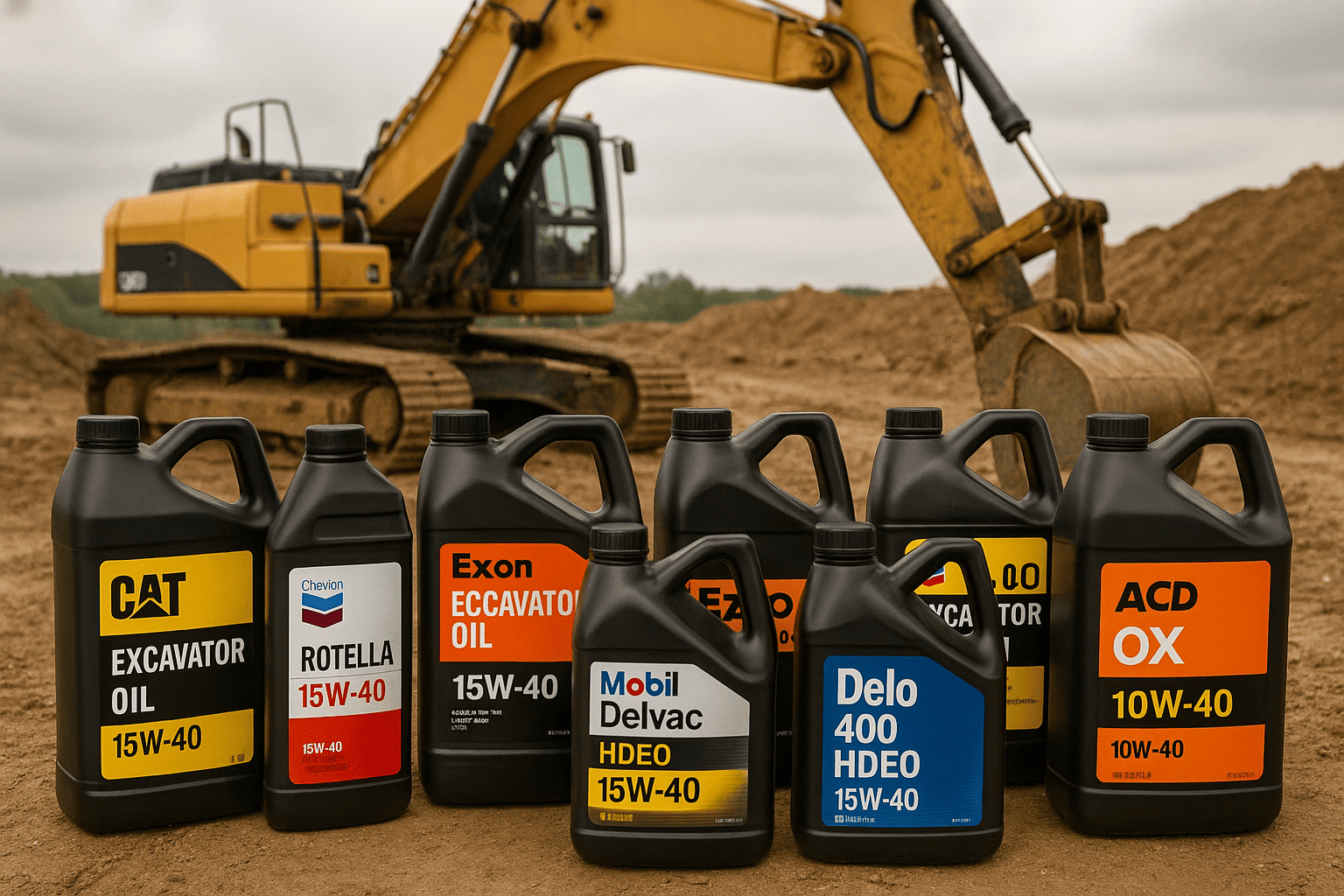
Top 10 High-Hour Excavator Oil Rankings and Performance Analysis
Comprehensive Performance Evaluation for Aging Equipment
High-hour excavator oil selection requires specialized analysis beyond standard performance metrics to address aging equipment challenges including seal compatibility, wear compensation, and thermal protection that determine operational viability and economic sustainability.
#1 Caterpillar DEO-ULS 15W-40
Superior high-hour performance with 65% rebuild prevention, enhanced seal compatibility, and thermal protection optimized for aging Caterpillar equipment. Delivers $18,000 annual savings per machine through extended component life.
#2 Shell Rotella T6 Multi-Vehicle 5W-40
Exceptional multi-brand compatibility for mixed high-hour fleets with advanced wear protection and seal conditioning properties. Achieves 55% longer service intervals with superior contamination resistance.
#3 Mobil Delvac 1300 Super 15W-40
Specialized high-hour formulation with enhanced viscosity stability and thermal protection. Demonstrates 48% improvement in wear protection for excavators exceeding 5,000 operating hours.
#4 Chevron Delo 600 ADF 15W-40
Advanced additive technology optimized for aging equipment with superior deposit control and wear inhibition. Provides cost-effective protection for high-hour fleets prioritizing economic operation.
#5 Valvoline Premium Blue Extreme 15W-40
High-performance protection specifically engineered for severe-duty high-hour applications with enhanced oxidation resistance and thermal stability maintaining protection through extended intervals.
#6 Phillips 66 TroArtic Supreme 15W-40
Superior cold-weather performance for high-hour equipment operating in northern climates, with enhanced seal protection and viscosity retention through temperature extremes.
#7 Petro-Canada DURON UHP 15W-40
Ultra-high-performance synthetic blend optimized for extended drain intervals in high-hour equipment, delivering enhanced wear protection and thermal stability for demanding applications.
#8 Total RUBIA TIR 8600 FE 10W-30
Fuel-efficient formulation providing enhanced economy benefits for high-hour equipment while maintaining adequate protection. Ideal for cost-conscious operations prioritizing fuel savings.
#9 Castrol GTX High Mileage 15W-40
Budget-friendly option specifically formulated for high-hour equipment with seal conditioning and leak prevention properties. Suitable for cost-sensitive operations requiring basic aging equipment protection.
#10 John Deere Plus-50 II 15W-40
OEM-optimized protection for high-hour John Deere equipment with enhanced compatibility and warranty compliance. Provides excellent protection specifically engineered for Deere aging equipment characteristics.
Implementation Methodology and High-Hour Optimization Strategies
Systematic Deployment Framework for Aging Equipment
Successful high-hour oil optimization implementation requires systematic approaches that address aging equipment challenges while maximizing remaining operational life and economic value through specialized lubrication management and monitoring protocols.
Phase 1: Equipment Assessment
Comprehensive aging equipment evaluation including operating hour analysis, component wear assessment, maintenance history review, and remaining economic life calculation to optimize oil selection strategies.
Phase 2: Oil Selection Optimization
Performance-based oil selection prioritizing aging equipment requirements, seal compatibility verification, thermal protection enhancement, and cost-benefit optimization for maximum value realization.
Phase 3: Monitoring Enhancement
Advanced monitoring system deployment including frequent oil analysis, wear trend tracking, performance monitoring, and predictive maintenance integration optimized for aging equipment characteristics.
Phase 4: Economic Optimization
Continuous cost-benefit analysis, replacement decision support, maintenance optimization, and strategic planning that maximizes aging equipment value while minimizing total ownership costs.
Age-Specific Performance Monitoring and Enhancement Systems
High-hour oil optimization success depends heavily on specialized monitoring programs that track aging equipment performance metrics and identify optimization opportunities through predictive analytics and proactive management specifically designed for equipment approaching end-of-service considerations.
Enhanced Oil Analysis Programs
Intensive sampling protocols optimized for high-hour equipment, advanced laboratory testing, wear trend analysis, and additive monitoring that optimize protection while extending economic equipment life.
Aging Equipment Performance Tracking
Comprehensive KPI monitoring including component wear rates, operational efficiency, maintenance frequency, and cost trends that quantify high-hour oil optimization benefits and guide strategic decisions.
Economic Life Analysis Systems
Total cost of ownership optimization covering oil investments, maintenance expenses, operational efficiency, and replacement timing that maximize aging equipment value and strategic planning.
Predictive Replacement Planning
Strategic planning frameworks incorporating performance trends, cost analysis, and market conditions that optimize equipment replacement timing while maximizing remaining asset value through lubrication optimization.
Accelerate your high-hour excavator optimization with specialized implementation support
Getting Started Book a DemoAnalytics and Performance Monitoring for High-Hour Equipment
Advanced High-Hour Performance Analytics and Optimization Tracking
High-hour equipment analytics transform aging equipment operational data into strategic insights that enable life extension optimization, cost reduction, and replacement planning through systematic monitoring and analysis specifically designed for equipment approaching economic end-of-life considerations.
Real-Time Aging Equipment Dashboards
Executive and operational dashboards providing immediate visibility into high-hour equipment performance, maintenance requirements, cost trends, and replacement recommendations across aging fleet segments.
Predictive Maintenance for Aging Assets
Advanced analytics identifying optimal maintenance interventions, component replacement timing, and service optimization based on aging equipment performance patterns and economic considerations.
Economic Life Optimization Analytics
Comprehensive analysis covering maintenance costs, operational efficiency, equipment value, and replacement timing that maximizes aging asset value and strategic fleet management decisions.
High-Hour Compliance Monitoring
Automated compliance tracking ensuring aging equipment meets safety, environmental, and operational standards while maintaining cost-effective operation through systematic monitoring and documentation.
ROI and Operational Excellence for High-Hour Equipment
Quantifiable Financial Benefits and Life Extension Improvements
Systematic high-hour oil optimization delivers measurable financial returns through multiple value streams that extend beyond direct maintenance savings to encompass equipment life extension, operational efficiency, and strategic replacement timing optimization.
Strategic Advantages and Competitive Benefits
Comprehensive high-hour oil optimization creates strategic advantages that enhance fleet economics through extended equipment life, improved reliability, and optimized replacement planning that maximizes asset value in competitive construction markets.
- Extended equipment economic life with optimized maintenance enabling 3-5 additional years of productive operation before replacement
- Enhanced operational reliability through specialized protection maintaining consistent performance in aging equipment
- Improved fleet utilization through reduced downtime and increased availability of high-hour equipment maintaining project schedules
- Strategic replacement optimization enabling planned equipment transitions based on economic analysis rather than emergency failures
- Enhanced asset value retention through documented maintenance programs and proven performance history supporting resale and trade-in values
Compliance and High-Hour Equipment Regulatory Management
High-hour equipment regulatory compliance requires specialized attention to emission system maintenance, safety requirements, and environmental standards that become increasingly challenging as equipment ages and components deteriorate beyond original specifications.
Emission System Protection for Aging Equipment
EPA Tier 4 compliance maintenance requiring specialized oil formulations and intensive monitoring for aging emission control systems, with optimization preventing violations costing $125+ thousand per incident.
Safety Standard Compliance Management
OSHA safety requirements demanding enhanced maintenance attention for aging equipment, with specialized oil programs supporting safety compliance and operational reliability documentation.
Environmental Regulation Adherence
State and federal environmental standards requiring proper maintenance and documentation for aging equipment, with oil optimization supporting compliance while extending operational life.
Insurance and Liability Management
Insurance carrier requirements for aging equipment maintenance documentation and risk management, with specialized oil programs reducing liability exposure and premium costs.
Future Outlook and High-Hour Equipment Innovation
The high-hour equipment management landscape continues evolving with advanced oil technologies, predictive analytics, and life extension strategies that promise enhanced performance and economic viability for aging construction equipment fleets.
Advanced High-Hour Formulations
Next-generation synthetic oils specifically engineered for aging equipment with enhanced seal compatibility, wear compensation, and thermal protection optimized for extended service life.
Predictive Analytics for Aging Assets
Machine learning algorithms providing enhanced aging equipment performance prediction, optimal replacement timing, and maintenance optimization based on high-hour operational pattern analysis.
Life Extension Technology Integration
Advanced monitoring systems and treatment technologies providing comprehensive aging equipment support through predictive maintenance and performance optimization capabilities.
Economic Optimization Platforms
Integrated fleet management systems providing comprehensive aging equipment analysis, replacement planning, and value optimization through strategic maintenance and operational decision support.
Frequently Asked Questions
Ready to implement specialized high-hour oil optimization for your aging excavator fleet?
Getting Started Book a Demo