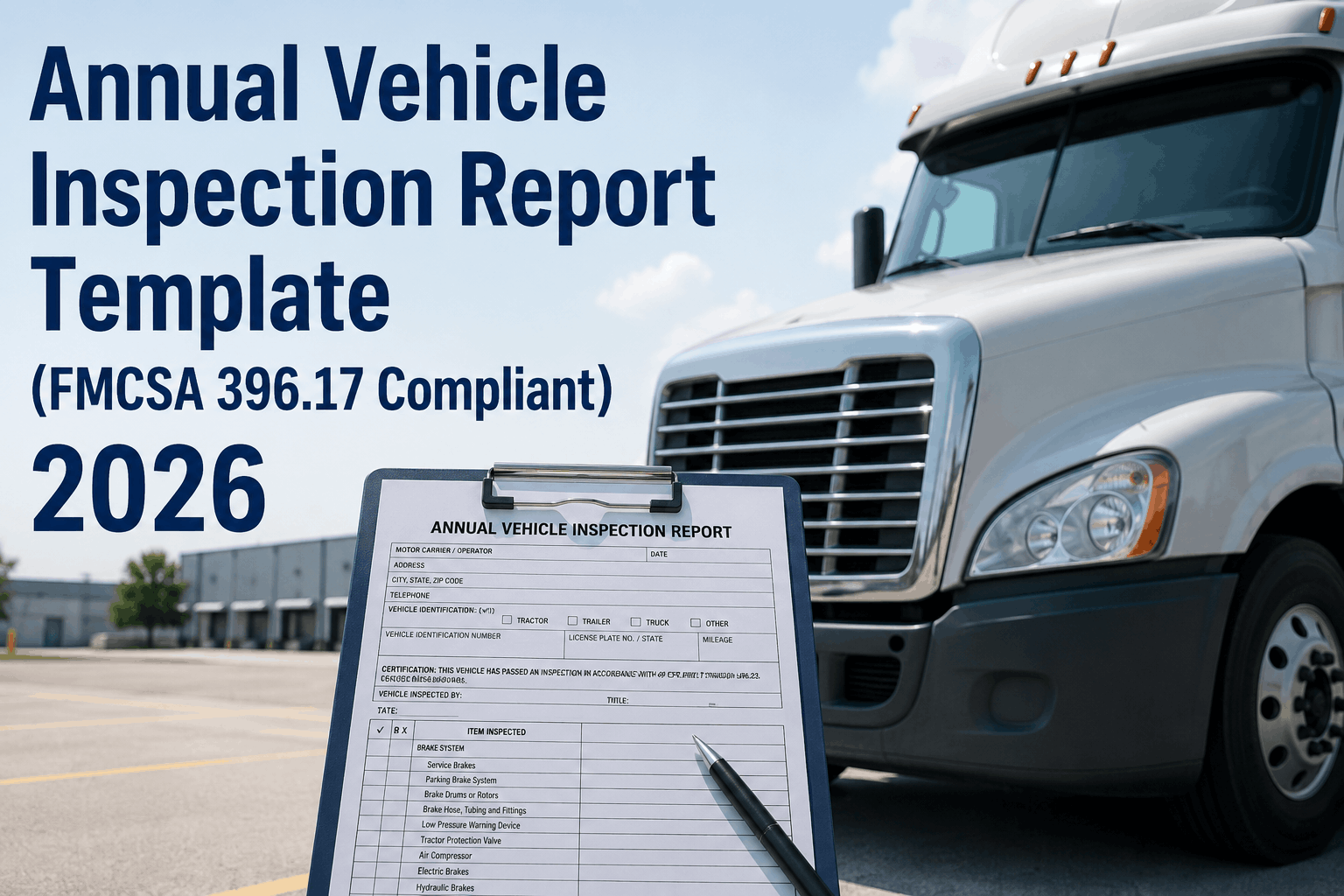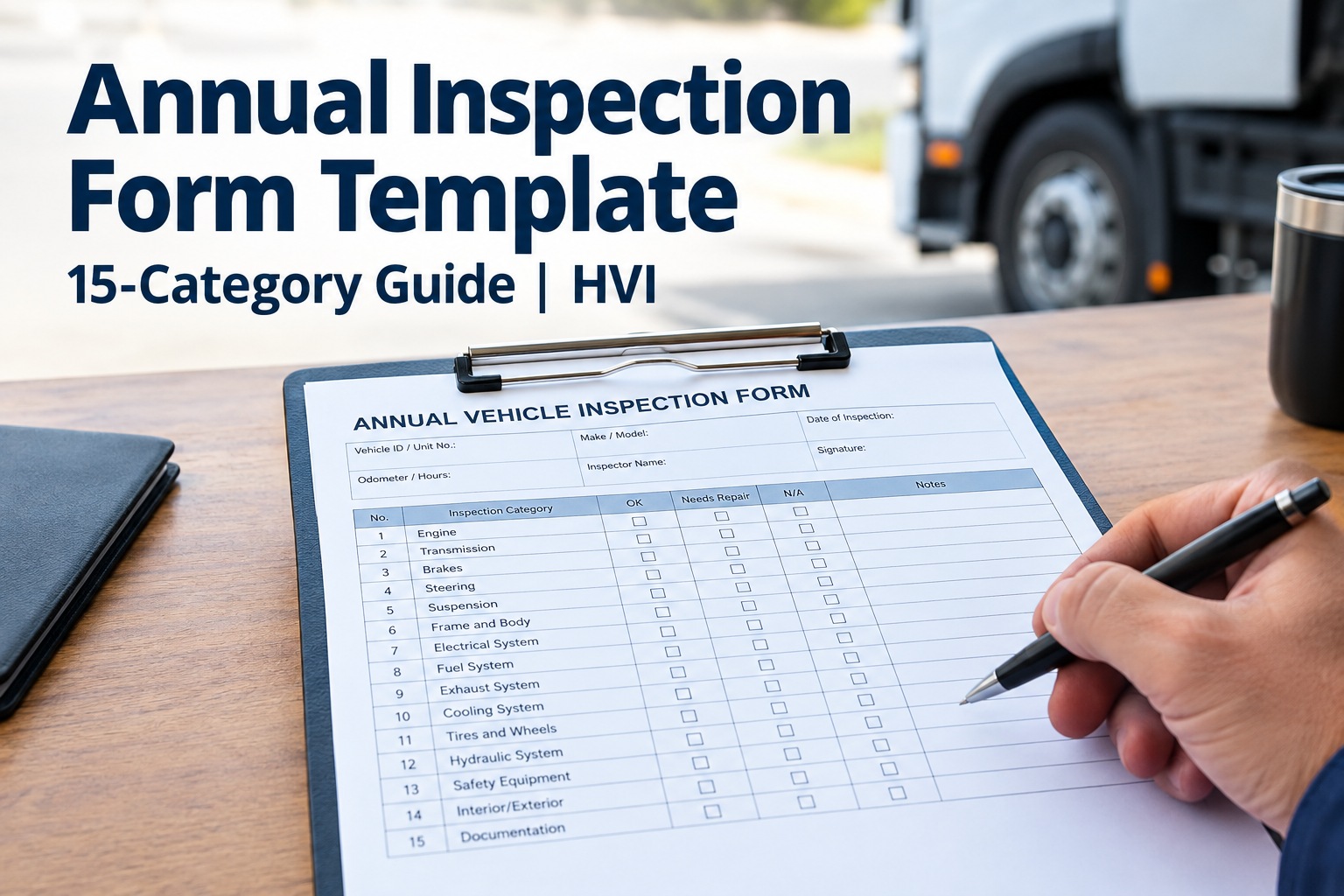
An auditor pulls three trucks at random and one annual inspection form is missing the tire tread measurements. Not the whole inspection — just the numbers. That single blank field is enough to trigger a citation, because a real annual inspection form template has to capture more than a row of checkmarks. See an audit-ready form
The Annual Inspection Form That Survives an Audit
Fifteen required categories, the measurement fields a basic checklist skips and a 14-month retention plan — built once, applied to every truck and trailer.
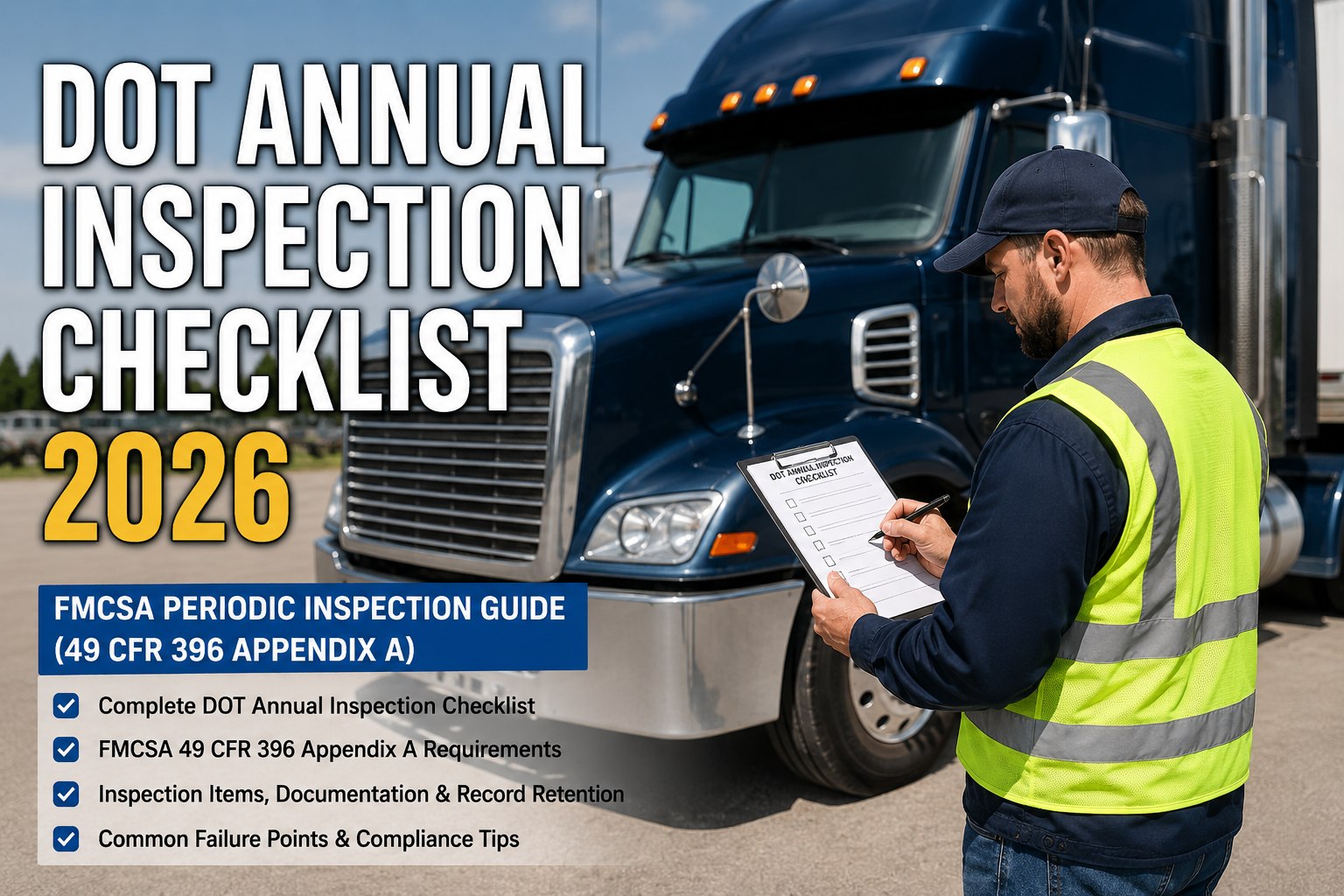
This is the exact form structure that holds up in an audit: the 15 required categories, the fields a basic checklist always skips, and how to build it once instead of re-creating it for every truck, trailer, and terminal. The structure below follows the U.S. FMCSA standard under 49 CFR Part 396 Appendix A — the most widely referenced periodic inspection standard globally — so if you're outside the U.S., check it against your own regulator's equivalent (DVSA, NHVR, Transport Canada) before treating it as a direct substitute.
Why a Basic Checklist Isn't an Annual Inspection Formthe gap between "we checked it" and "we can prove it"
A checklist with fifteen checkboxes and a signature line looks complete. It isn't. An annual inspection form has to survive a compliance review months after the inspection happened, when the technician who did it might not even work there anymore. If the form doesn't carry a measurement, an inspector name, and a component-level result, it doesn't hold up — it's a memory with a signature attached.
See what an audit-ready annual inspection record looks like inside HVI, measurements included.
Anatomy of a Compliant Annual Inspection Formfour zones, every one of them required
Before the 15 categories even come into it, a valid annual inspection form needs four structural zones. Skip any one and the form fails 49 CFR 396.21's recordkeeping requirements regardless of how thorough the actual inspection was. Most fleets get zones one and two right without thinking — it's zones three and four, the measurements and the certification language, that quietly go missing under a deadline.
Identification & inspector record
Vehicle VIN or unit number, carrier name, inspection date, and the name and qualification reference of the person who performed it.
Category-by-category checklist
All 15 Appendix A categories, each with its own pass/fail result — not one blanket "inspected OK" line covering the whole vehicle.
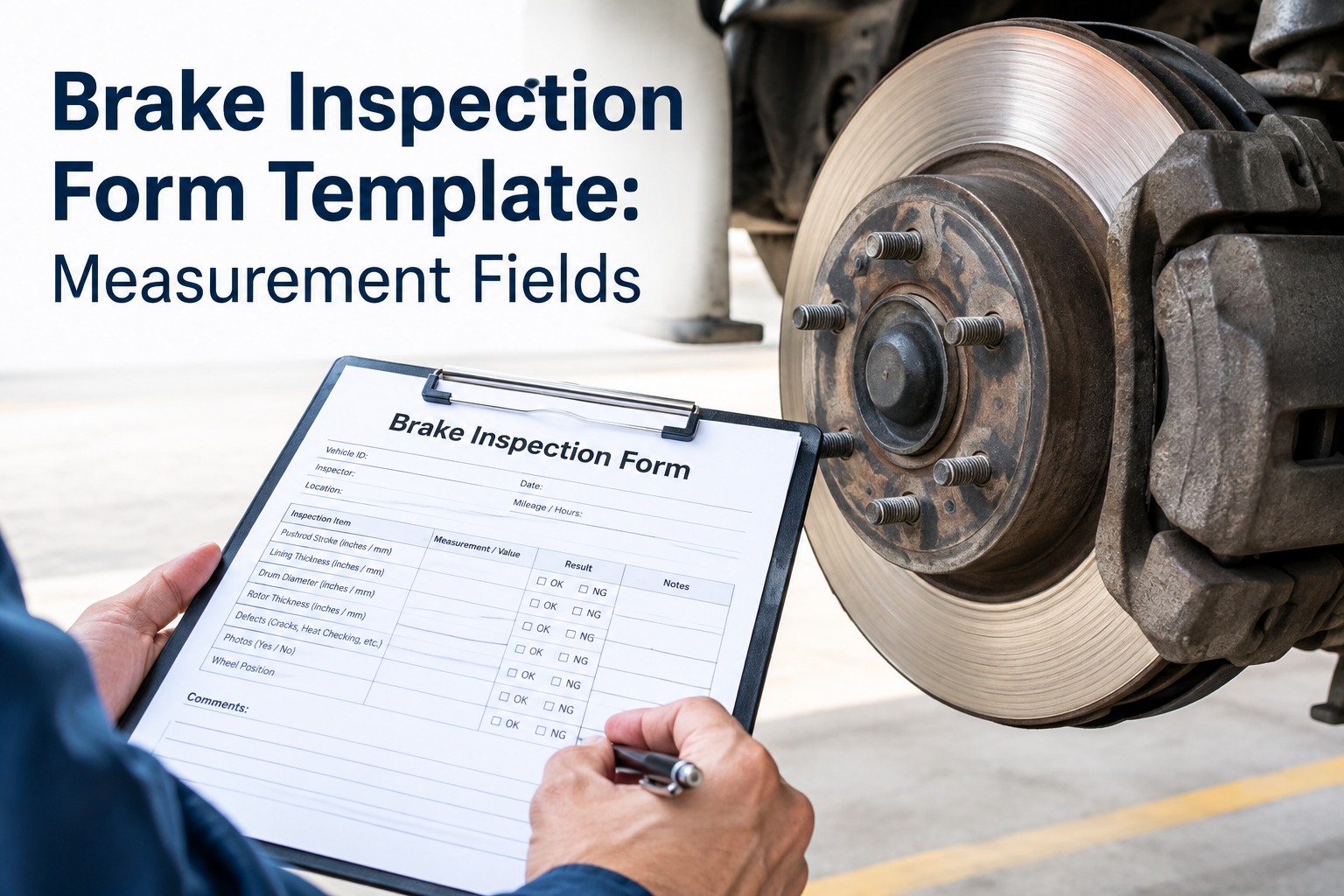
Measurements & defect capture
Tread depth, brake lining thickness, pushrod stroke, kingpin play — actual numbers, plus a defect description field for anything that fails.
Certification & signature
A signed statement certifying the inspection meets Appendix A standards, dated and retained for 14 months per 396.21.
These four zones apply the same way whether it's a single straight truck or a full tractor-trailer combination. Walk through this four-zone layout as a live, fillable template instead of a diagram on a page.
The 15 Categories Every Annual Inspection Form Must Coverper 49 CFR Part 396 Appendix A
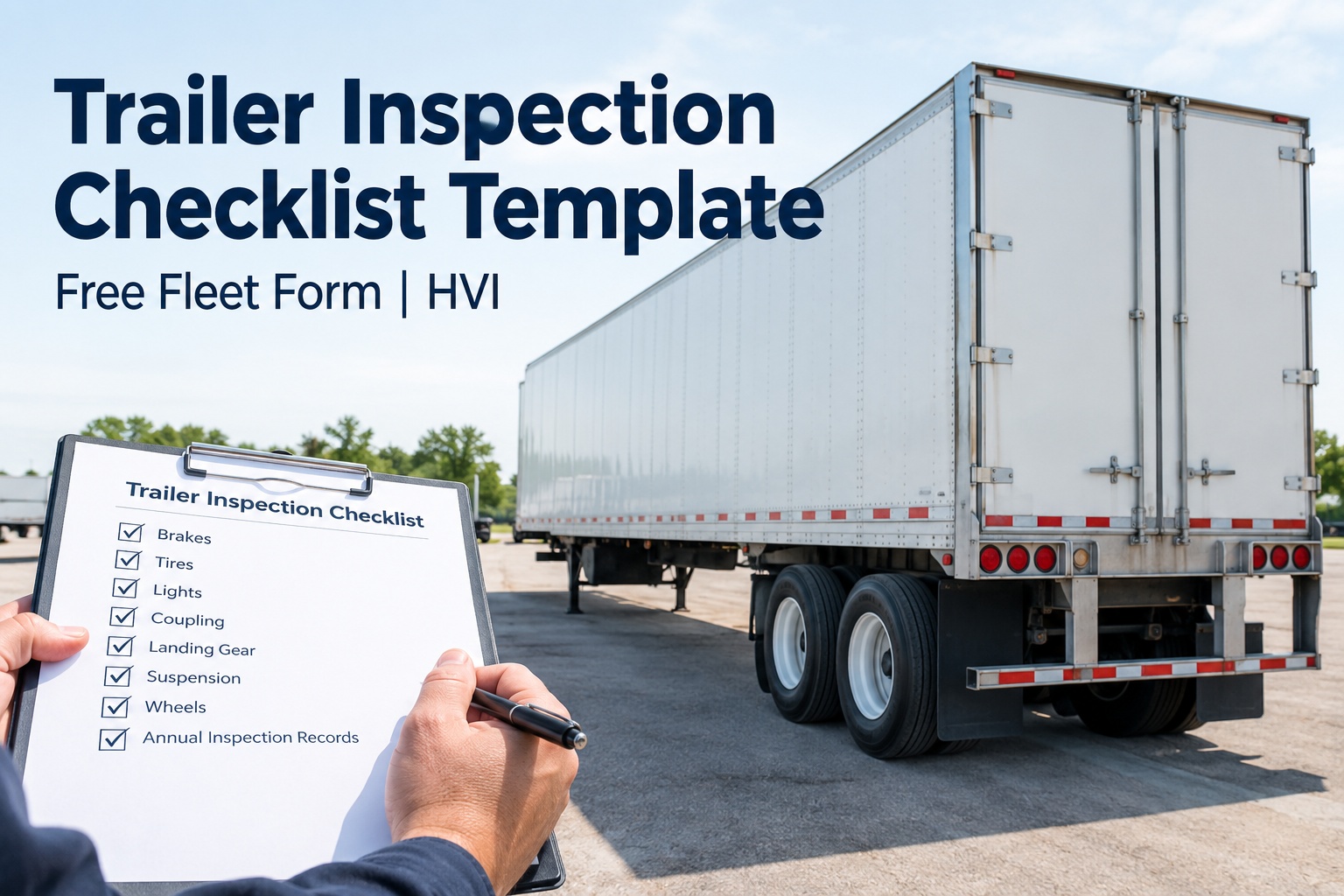
These are the minimum categories a periodic inspection form has to include. Group them however your template layout makes sense, but every one needs its own line — not a shared checkbox.
Safety-Critical Systems
- 01Brake system
- 02Steering mechanism
- 03Suspension
- 04Tires
- 05Wheels and rims
- 06Coupling devices
- 07Frame
Equipment & Structure
- 08Exhaust system
- 09Fuel system
- 10Lighting devices
- 11Safe loading / cargo securement
- 12Van and open-top trailer bodies
- 13Windshield glazing
- 14Windshield wipers
- 15Emergency equipment
Notice the split: seven categories where a failure is likely to put a vehicle out of service on the spot, eight more that are just as mandatory but get skimmed when a shop is rushing through a periodic inspection template at the end of the day. A pre-built checklist in the checklist center keeps all fifteen in front of the inspector in order, so nothing gets skipped because the form ran out of room. Each vehicle in a combination — tractor, semitrailer, full trailer, converter dolly — needs its own separate form covering the categories that apply to it; a trailer doesn't have a fuel system, but it still needs its own signed record. Load all fifteen categories into a template you can adapt per asset type in a few minutes.
5 Fields a Basic Checklist Skips — and an Auditor Won'tthe difference between a checklist and an inspection record
Measurement fields
Tread depth in 32nds, brake lining thickness in millimeters, pushrod stroke in inches. A pass/fail box says nothing about how close a component is to the limit.
Defect codes & severity
A free-text "issue found" note isn't enough. A structured defect field tied to the failed category makes the corrective work order and the compliance record the same document.
Inspector qualification record
FMCSA regularly requests proof that the person who signed off met 396.19 qualification standards — including third-party inspectors at outside garages performing the work on the carrier's behalf.
Digital signature & certification statement
The report has to certify the inspection meets Appendix A standards, not just carry a name. A typed signature with a timestamp is what makes the record defensible later.
14-month retention & audit trail
A form isn't compliant just because it exists — it has to still be retrievable 14 months later, tied to the right unit, when an auditor asks for it.
See these five fields built into a single configurable template instead of five separate spreadsheet columns someone has to remember to fill in.
From a safety manager who rebuilt the form after an audit finding
Our old annual inspection form was a single-page checklist — fifteen boxes, one signature line. It passed for years until an audit flagged three files for missing brake measurements. Nothing was actually wrong with the trucks; the form just never asked for the number. We rebuilt it with a measurement field under every safety-critical category, and now a technician physically can't submit the form without entering tread depth and lining thickness. That one change closed the entire finding category.
Spreadsheet Template vs. Configurable Digital Formboth can technically cover 15 categories — only one holds up at scale
- Consistency: varies by whoever fills it in that day
- Measurement fields: easy to leave blank, hard to flag out-of-spec
- Retention: a filing cabinet or shared drive nobody indexes
- Rolling out to new units: copy, rename, hope nobody edits the formulas
- Consistency: same 15-category structure on every inspection, every unit
- Measurement fields: required inputs with automatic out-of-spec flags
- Retention: stored automatically, searchable by unit and date
- Rolling out to new units: bulk import the fleet list, apply the template once
How HVI Builds Your Annual Inspection Form Template
HVI's template builder starts from the 15-category Appendix A structure and lets you configure it around your own fleet — adding measurement fields for tread depth or lining thickness, setting out-of-spec thresholds that flag automatically, and attaching the inspector qualification record to every submission. Build your first template online free and see it apply across your fleet in minutes rather than rebuilding a spreadsheet for every unit.
Bulk import brings your entire vehicle list in at once, so the same annual inspection form template applies to every truck, trailer, and dolly without manual setup per unit. Completed reports are stored automatically and stay retrievable well past the 14-month retention window, tied to the specific asset and inspector. For fleets managing this alongside broader compliance work, the same records feed into safety management and give one place to show an auditor exactly what was measured, who measured it, and when.
Frequently Asked Questions
What are the 15 categories on an annual inspection form?
Under 49 CFR Part 396 Appendix A, the 15 required categories are: brake system, coupling devices, exhaust system, frame, fuel system, lighting devices, safe loading, steering mechanism, suspension, tires, van and open-top trailer bodies, wheels and rims, windshield glazing, windshield wipers, and emergency equipment. Each needs its own pass/fail result on the form, not one combined line.
Is a checklist enough, or do I need a full inspection form template?
A basic checklist covers the 15 categories but usually misses the fields that make a record defensible in an audit — actual measurements, a defect description tied to any failure, the inspector's qualification reference, and a certification statement. A proper annual inspection form template includes all of that alongside the category checklist itself.
How long do annual inspection records need to be kept?
Under 49 CFR 396.21, the completed inspection report must be retained for 14 months. It needs to stay tied to the specific vehicle and be retrievable on request — a form that exists but can't be located when an auditor asks for it is treated the same as a missing inspection.
Who is qualified to sign an annual inspection form?
The inspector must meet the qualification standards in 49 CFR 396.19 — understanding Part 393 and Appendix A criteria, knowing inspection methods and tools, and having relevant training or experience. This applies whether the inspection is done in-house, at a third-party commercial garage, or through a state periodic inspection program, and carriers should keep a record of that qualification on file.
Can I use the same annual inspection form template for trucks and trailers?
The same 15-category structure applies to both, but trailers won't have every truck-specific item (like a fuel system), so a configurable template that can turn categories on or off per asset type is more practical than one rigid form. Each vehicle in a combination — tractor, semitrailer, full trailer — still needs its own separate inspection record.
The Takeaway
An annual inspection form template only does its job if it survives a compliance review, not just a quick glance at the shop. That means all 15 Appendix A categories on their own lines, real measurements instead of vague pass marks, a defect field tied to every failure, an inspector qualification reference, and a retention plan that holds up past 14 months. Build that structure once as a configurable template and every truck, trailer, and new-hire inspector uses the same audit-ready form from day one.
Get your annual inspection form template built and audit-ready
HVI turns the 15 Appendix A categories into a configurable template with measurement fields, defect capture, inspector records, and signatures — applied across your whole fleet in one bulk import.