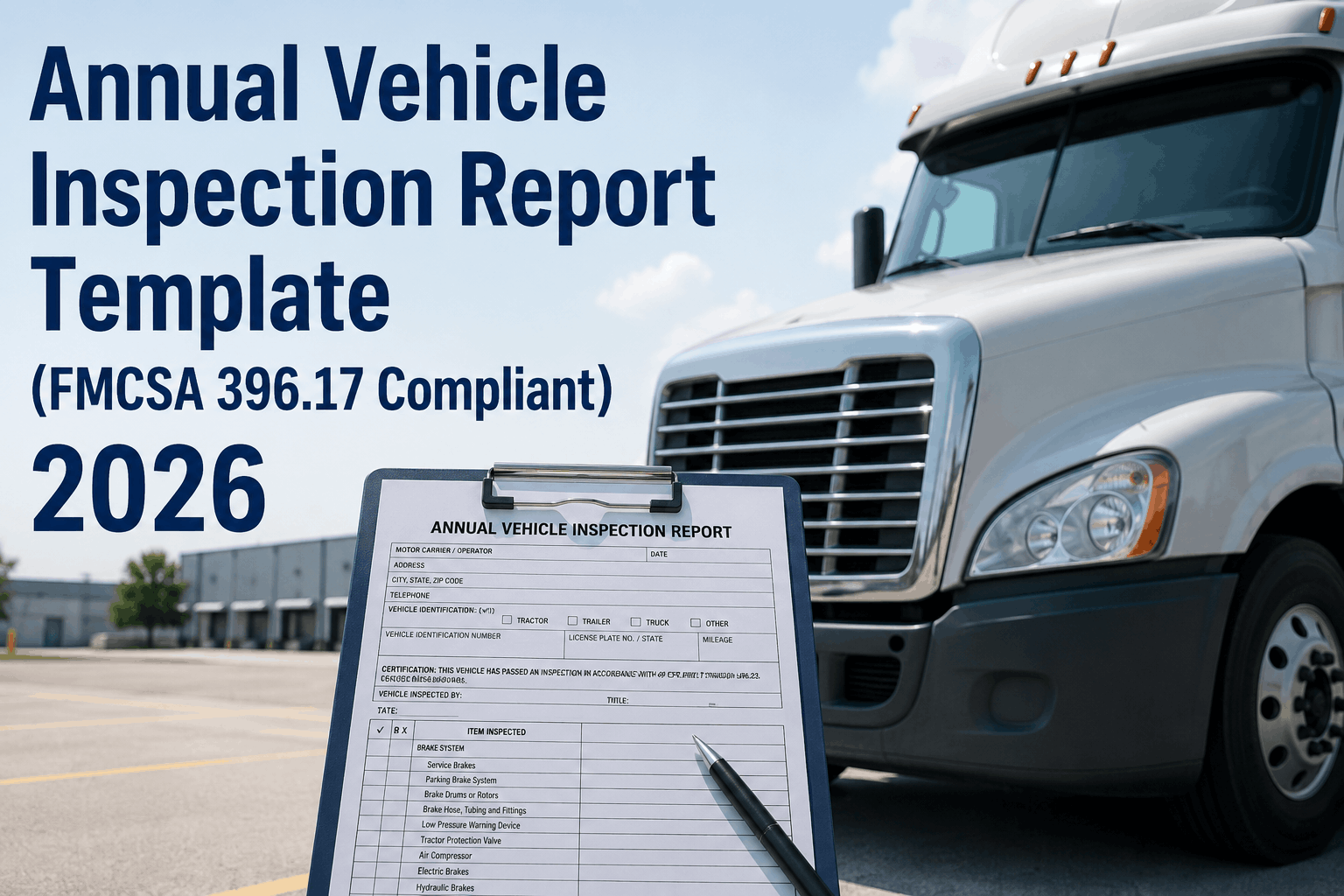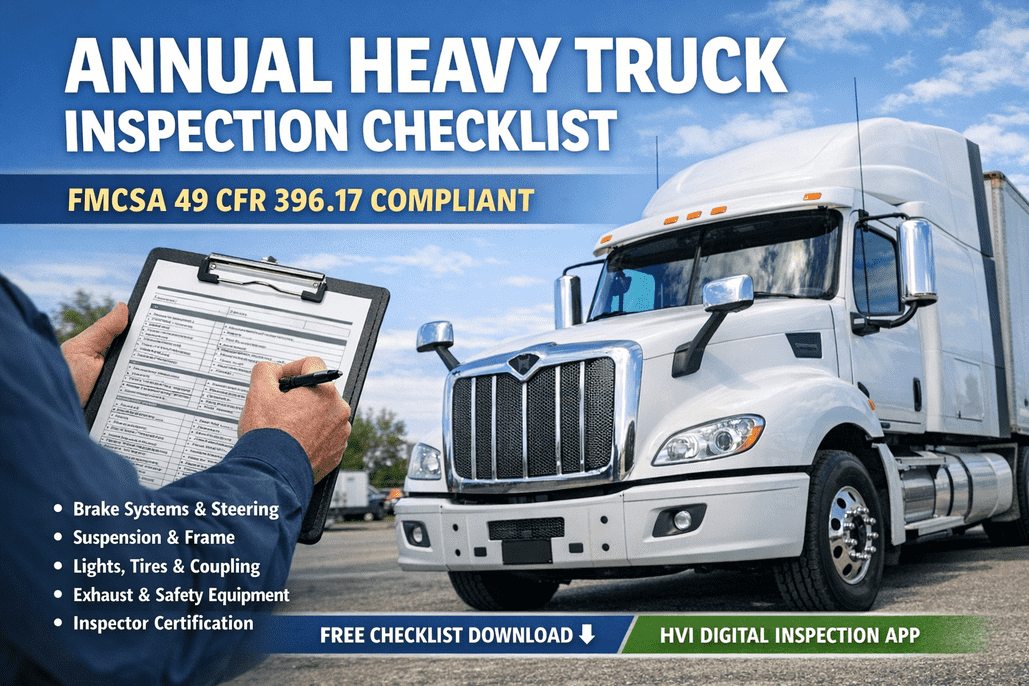
FMCSA §396.21 sets the recordkeeping requirements for annual (periodic) commercial motor vehicle inspections: six specific elements must appear on every inspection report, and every report must be retained for 14 months from the date of inspection at the location where the vehicle is housed or maintained. Annual inspection violations rank among the top FMCSA audit findings — approximately 133,000 citations per year per FMCSA data. Missing the record fails the audit regardless of whether the physical inspection was performed. Book a demo .
FMCSA §396.21 — Periodic Inspection Report Elements + Retention Rules
Every annual inspection report needs six specific elements. Every report gets retained for 14 months. Missing either fails audit — the physical inspection isn't the compliance requirement, the records are.
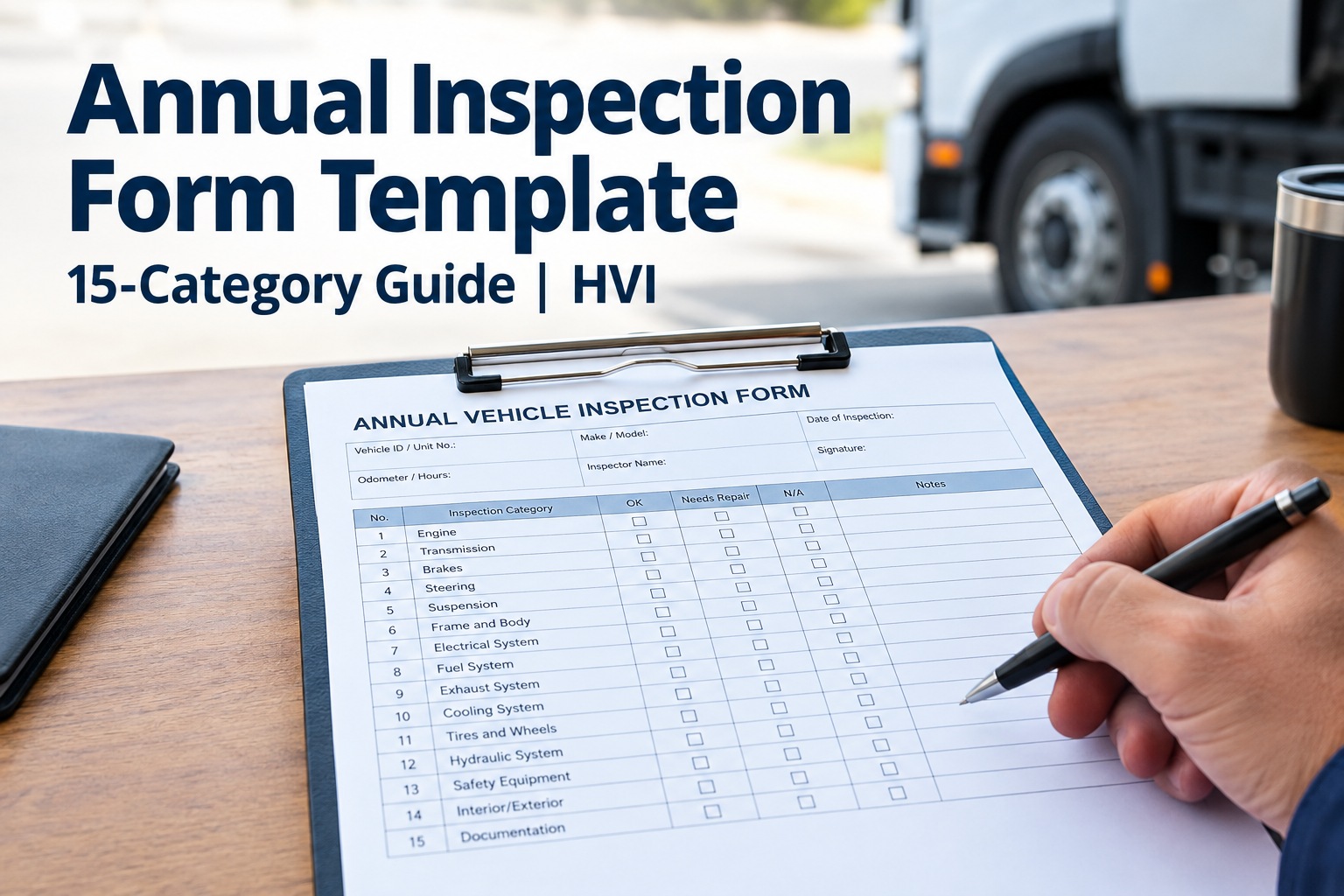
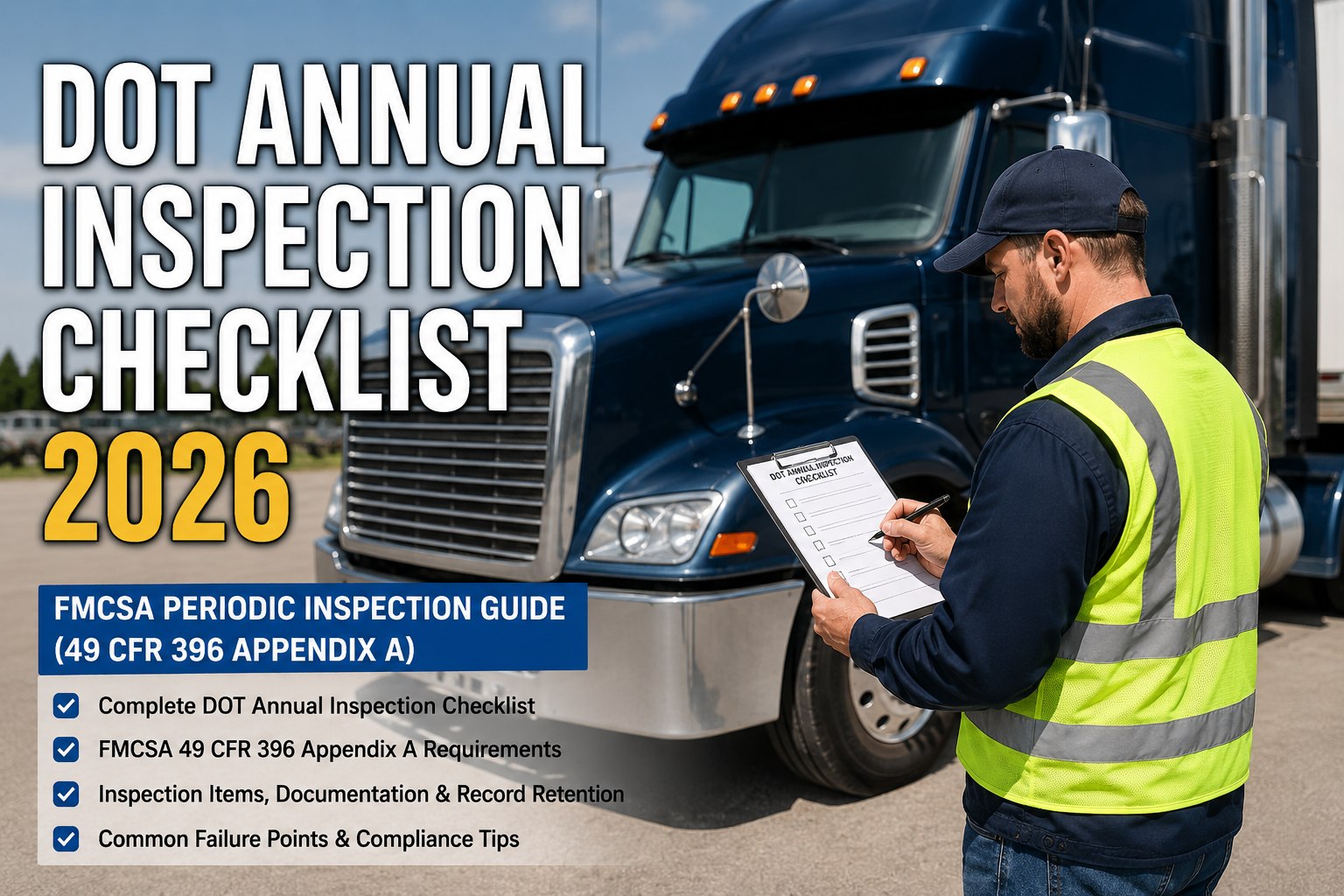
FMCSA 49 CFR §396.21 — "Periodic inspection recordkeeping requirements" — is the records rule attached to the §396.17 annual inspection requirement. Every commercial motor vehicle subject to Part 396 must undergo periodic inspection at least once every 12 months, and every inspection must generate a report containing six specific elements enumerated in §396.21(a). That report must be retained for 14 months from the date of inspection, kept where the vehicle is housed or maintained, and be available on demand to authorized federal, state, or local officials. The regulation's audit exposure isn't primarily about performing the physical inspection — it's about producing the specific documentation the inspection generates. Fleets that perform excellent inspections but keep incomplete records fail the same audit as fleets that skip inspections entirely. The compliance requirement is the records chain, not just the physical work.
The six required report elements — what §396.21(a) actually specifiesEvery annual inspection report must contain these six specific pieces of information
Section 396.21(a) enumerates six specific report elements that every periodic inspection must document. A report missing any one of the six is a defective report at compliance review — not a report that "mostly complies." Digital inspection templates aligned to the six-element requirement produce audit-ready reports by design; paper forms and generic checklists commonly miss one or two elements without the fleet realizing it. Book a demo to see HVI's §396.21-aligned inspection templates
The qualified inspector's identity per §396.19 qualifications. Name, signature or digital equivalent, and typically inspector qualification reference. This element ties the report to a specific qualified person whose qualification records the audit can also request under §396.19.
The motor carrier operating the vehicle, or the intermodal equipment provider intending to interchange the vehicle to a motor carrier. DOT number, USDOT number, or equivalent carrier identification. Ties the vehicle to the responsible operator.
Specific date the inspection was performed. This date sets the 14-month retention clock and determines the vehicle's next-due inspection cycle. Common paper-form error: date is entered but not clearly, or is entered in a format that produces ambiguity at review.
Specific vehicle identifier — VIN, unit number, or fleet identifier that ties the report to a unique vehicle. Each vehicle in a combination requires a separate inspection and separate report: a tractor + semi + full trailer combination generates three separate reports per annual cycle.
Every component category from Appendix A to Part 396 must be documented with the inspection result. Components not meeting the Appendix A minimum standards must be specifically identified. Appendix A covers brakes, coupling, exhaust, fuel, lighting, safe loading, steering, suspension, frame, tires, wheels/rims, windshield glazing, wipers, and related items.
The qualified inspector's certification that the inspection was performed accurately, completely, and in compliance with all §396.21 requirements. Signature or digital equivalent. This is the compliance attestation that makes the report legally-recognized documentation of the inspection.
14-month retention: where, how, and available on demandStorage location, retention period, and the on-demand access requirement to authorized officials
Section 396.21(b) sets three specific record-storage requirements: 14-month retention period, storage location tied to the vehicle, and on-demand availability to authorized officials. Each of the three is a separate audit-checkable requirement, and each has a common failure pattern in paper-based systems.
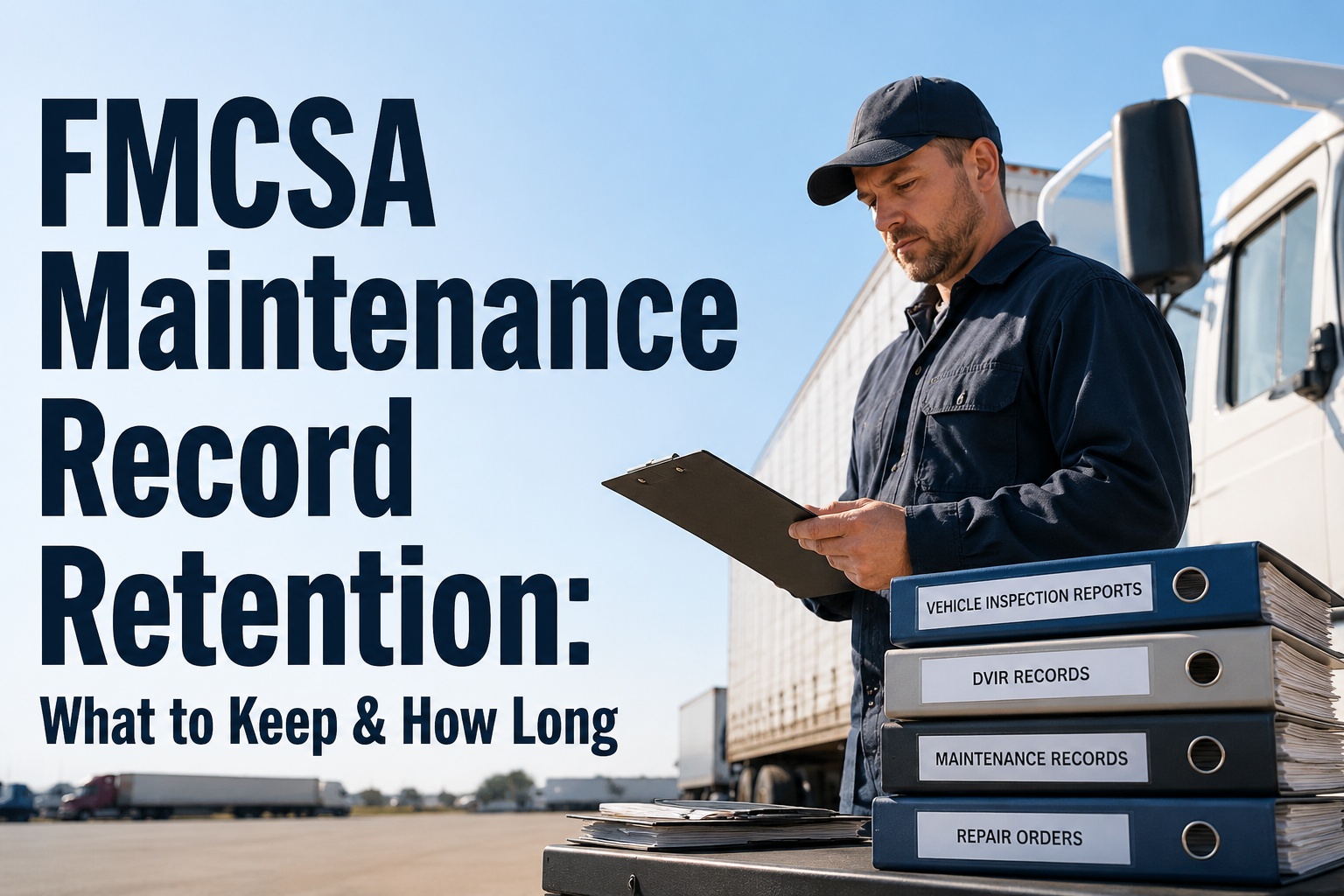
Original or copy of the report retained for 14 months from the date of inspection. The 14-month window ensures that by the time the vehicle's next annual inspection is completed (typically at month 12), the prior year's report is still on file for reference and compliance-review response. Two months of overlap between prior report and next inspection.
The record must be retained at the location where the vehicle is housed or maintained — not necessarily at headquarters. Multi-terminal operations should either centralize records digitally or ensure each terminal maintains records for its vehicles. Records at wrong location = same audit finding as no records.
Federal, state, or local officials authorized to request the records must be able to obtain them on demand. In practice, on-demand means during a scheduled compliance review or at roadside inspection with reasonable time to retrieve. Digital records systems accessible from any location satisfy this in a way paper files stored at a specific terminal typically don't during off-hours or from remote roadside.
Regulation allows either a copy of the current inspection report OR a decal on the vehicle. The decal option requires date of inspection, name and address of inspector or motor carrier, and vehicle identification. Fleets typically choose one convention (report OR decal) and apply consistently across the fleet rather than mixing.
Part 396 retention timelines — how §396.21 compares to other Part 396 records14 months for periodic inspection reports vs 3 months for DVIRs vs 1yr+6mo for maintenance files
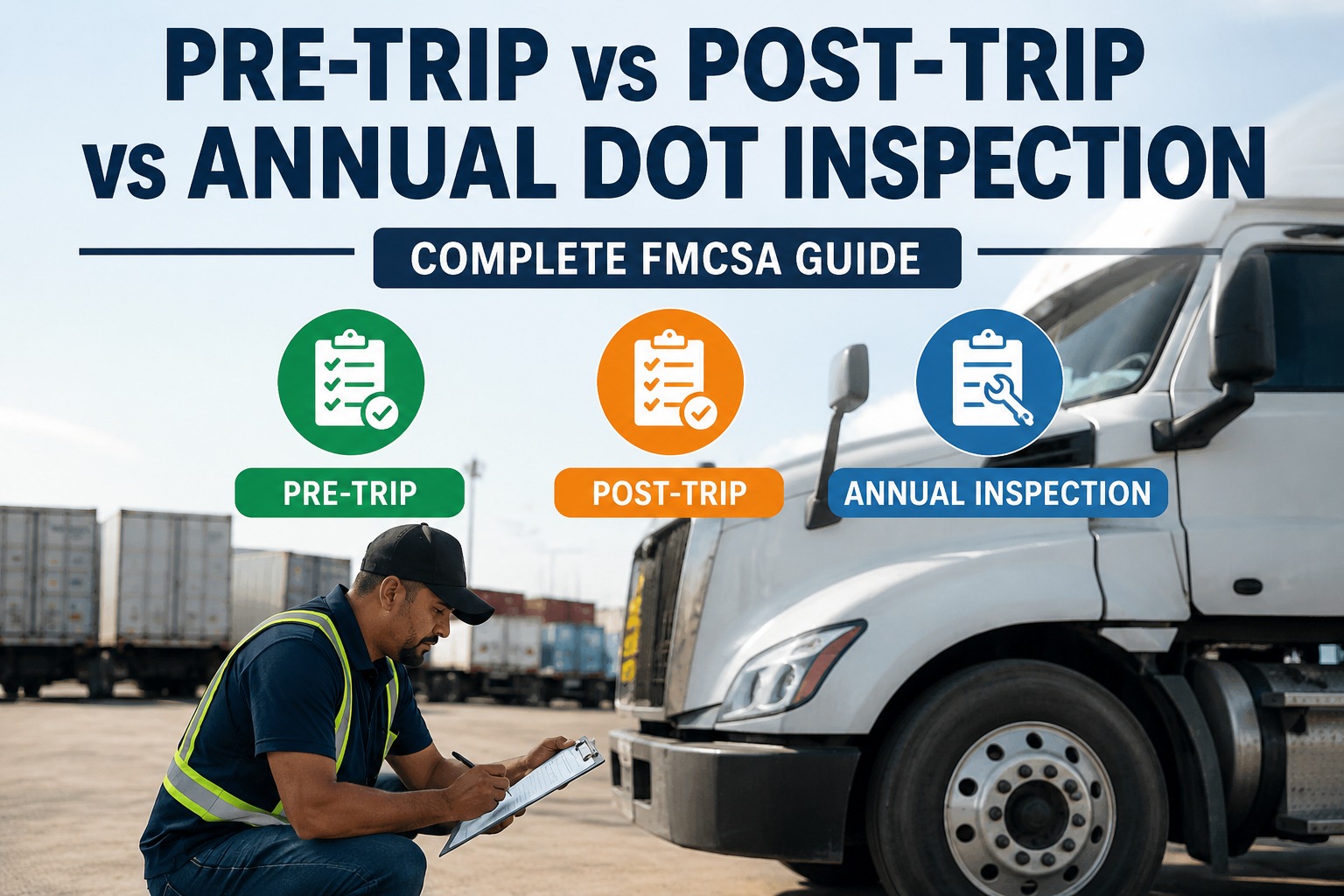
Part 396 has multiple record-retention requirements with different timelines. Confusing the timelines is a common source of both over-retention (unnecessary storage burden) and under-retention (compliance gap). The four commonly-referenced retention periods:
Daily driver-completed DVIRs, certification of repairs, and driver's review certification. Retained for 3 months from date of the written report.
Annual DOT inspection reports per §396.17 requirement. Retained 14 months from inspection date at location where vehicle is housed or maintained.
General maintenance records: vehicle identification, nature and due date of inspections/maintenance, dates and descriptions of work. Retained 1 year while under carrier's control + 6 months after vehicle leaves control.
Qualification evidence for annual inspectors. Retained while inspector performs annual inspections for the carrier + 1 year after the inspector no longer performs the function.
From a fleet compliance director on §396.21 records discipline
Our compliance-review pain point wasn't the inspections themselves — every truck got inspected on schedule by qualified mechanics. Our pain point was that when the auditor asked for the periodic inspection reports for 12 randomly-selected trucks going back 14 months, we could only produce 8 of them. The other 4 were somewhere in a filing cabinet at a terminal 300 miles away, or in a mechanic's toolbox drawer, or in a paper file that got moved when we reorganized the shop 8 months ago. The physical inspection had happened; the record was just missing when we needed it.
What fixed the audit response wasn't better inspections — the inspections had always been fine. It was digitizing the report generation and centralizing storage. Every §396.21 report now generates in the mobile app at the shop, uploads to central records, and stays accessible from any of our terminals via the compliance portal. The auditor asks for a report on any truck, we produce it in 60 seconds regardless of which terminal the truck sits at. That's what §396.21 compliance actually looks like when the records infrastructure works — not a paper coordination challenge.
Frequently asked questions
How long must FMCSA periodic inspection records be kept?
Under 49 CFR §396.21(b), the original or a copy of every periodic inspection report must be retained by the motor carrier for 14 months from the date of the inspection report. The record must be kept at the location where the vehicle is housed or maintained (not necessarily at headquarters), and it must be available on demand to authorized federal, state, or local officials. The 14-month window is designed to ensure the prior year's report is still on file when the vehicle's next annual inspection is completed (typically at month 12) — producing approximately two months of overlap between the prior report and the next inspection. Digital records systems commonly retain periodic inspection reports significantly longer than the 14-month regulatory minimum (3-5 years is typical) to support crash defense documentation, insurance claim response, warranty verification, and pattern analysis — the marginal cost of extended digital retention is negligible once the infrastructure is in place. Regardless of retention duration, the specific 14-month period is the compliance minimum and the reference point for audit review. Records at the wrong location or unavailable on demand produce the same audit finding as missing records entirely.
What information must be included in a periodic inspection report?
Section 396.21(a) requires every periodic (annual) inspection report to contain six specific elements. (1) Identifies the individual performing the inspection — the qualified inspector's name and identifier per §396.19 qualifications. (2) Identifies the motor carrier operating the vehicle, or the intermodal equipment provider intending to interchange the vehicle to a motor carrier — carrier identification including DOT/USDOT number. (3) Identifies the date of the inspection — sets the 14-month retention clock and the vehicle's next-due inspection cycle. (4) Identifies the vehicle inspected — VIN, unit number, or fleet identifier that ties the report to a unique vehicle; each vehicle in a combination requires a separate inspection and separate report. (5) Identifies the vehicle components inspected and describes the results, including specific identification of components not meeting the minimum standards set forth in Appendix A to Part 396. (6) Certifies the accuracy and completeness of the inspection as complying with all §396.21 requirements — signed attestation by the qualified inspector. A report missing any single element is a defective report at compliance review, regardless of whether the physical inspection was performed correctly. Digital templates that require all six elements before submission prevent the incomplete-report failure pattern common to paper-based systems.
Does a commercial vehicle need an annual inspection sticker?
The regulation provides two options for on-vehicle documentation of the annual inspection: either a copy of the current periodic inspection report kept on/in the vehicle, or a decal (commonly called a sticker) affixed to the vehicle indicating the annual inspection status. Neither is universally required — the fleet can choose either approach. If the decal option is used, the decal must include the date of inspection, the name and address of the inspector or motor carrier, and a vehicle identifier that ties the decal to the specific vehicle. Fleets typically choose one convention (report OR decal) and apply it consistently across the fleet rather than mixing options across different vehicles. The decal is convenient for roadside inspection because it's immediately visible without accessing paperwork, but requires a physical replacement each year and depends on the decal remaining legible and attached. The on-vehicle report requires that a current copy accompany the vehicle at all times, which is straightforward with digital records that can be produced from a mobile app. Either approach satisfies the §396.21 on-vehicle documentation requirement when properly maintained; specific applicability to a given fleet's operations should be confirmed with qualified DOT compliance counsel.
Where must periodic inspection records be kept?
Section 396.21(b) specifies that the periodic inspection report must be retained where the vehicle is housed or maintained — not necessarily at the motor carrier's headquarters or principal place of business. This location-tied storage requirement is a common source of compliance-review findings in multi-terminal fleets: records stored only at headquarters may not satisfy the "where housed or maintained" requirement if the vehicle actually operates from a satellite terminal. Multi-terminal operations have two practical options: (1) centralize records digitally in a system accessible from any location including the terminal where the vehicle is housed, or (2) ensure each terminal maintains complete records for the vehicles physically operating from that location, with a clearly documented terminal-by-terminal records convention. Records at the wrong location produce the same audit finding as no records. Records must also be available on demand to authorized federal, state, or local officials — on-demand access from anywhere the vehicle operates is a practical consideration that digital systems handle more reliably than distributed paper files, particularly during off-hours, weekend inspections, or roadside inspections where the terminal storage location isn't immediately accessible.
How does HVI support §396.21 periodic inspection recordkeeping?
HVI provides the digital inspection template, six-element report generation, records retention, and centralized audit-response infrastructure that §396.21 compliance operates within. Features that apply to §396.21 workflow include: configurable annual inspection templates aligned to the six required §396.21(a) elements (inspector identification, carrier/IEP identification, inspection date, vehicle identifier, component results with Appendix A component coverage, and certification of accuracy) so reports generate compliant by design; automatic report retention meeting the 14-month §396.21(b) minimum with extended retention (3+ years typical) supporting crash defense, insurance claims, and pattern analysis; centralized digital records accessible from the principal place of business, authorized terminal locations, or any location where the vehicle is housed or maintained per §396.21(b) storage requirements; on-demand records access supporting compliance-review response with searchable multi-year records; and per-vehicle inspection history supporting the annual inspection cycle. HVI is not itself an FMCSA compliance authority, DOT roadside inspection authority, legal compliance counsel, third-party periodic inspection program, or DOT sticker/decal issuer — those functions remain with authorized regulatory personnel, qualified third-party inspection providers, and specialized compliance professionals. What HVI provides is the digital inspection records infrastructure that turns §396.21 compliance from a distributed paper-coordination challenge into a centralized, audit-ready records system.
Physical inspection isn't the compliance requirement — the records are. §396.21 measures what you can produce, not what you performed.
HVI generates §396.21-aligned reports meeting the six required elements, retains them digitally beyond the 14-month regulatory minimum, and produces the searchable centralized records that compliance-review response requires from any location — the digital records infrastructure that closes the gap between "we performed the inspection" and "we can produce the report."
No credit card · No hardware · Setup in minutes