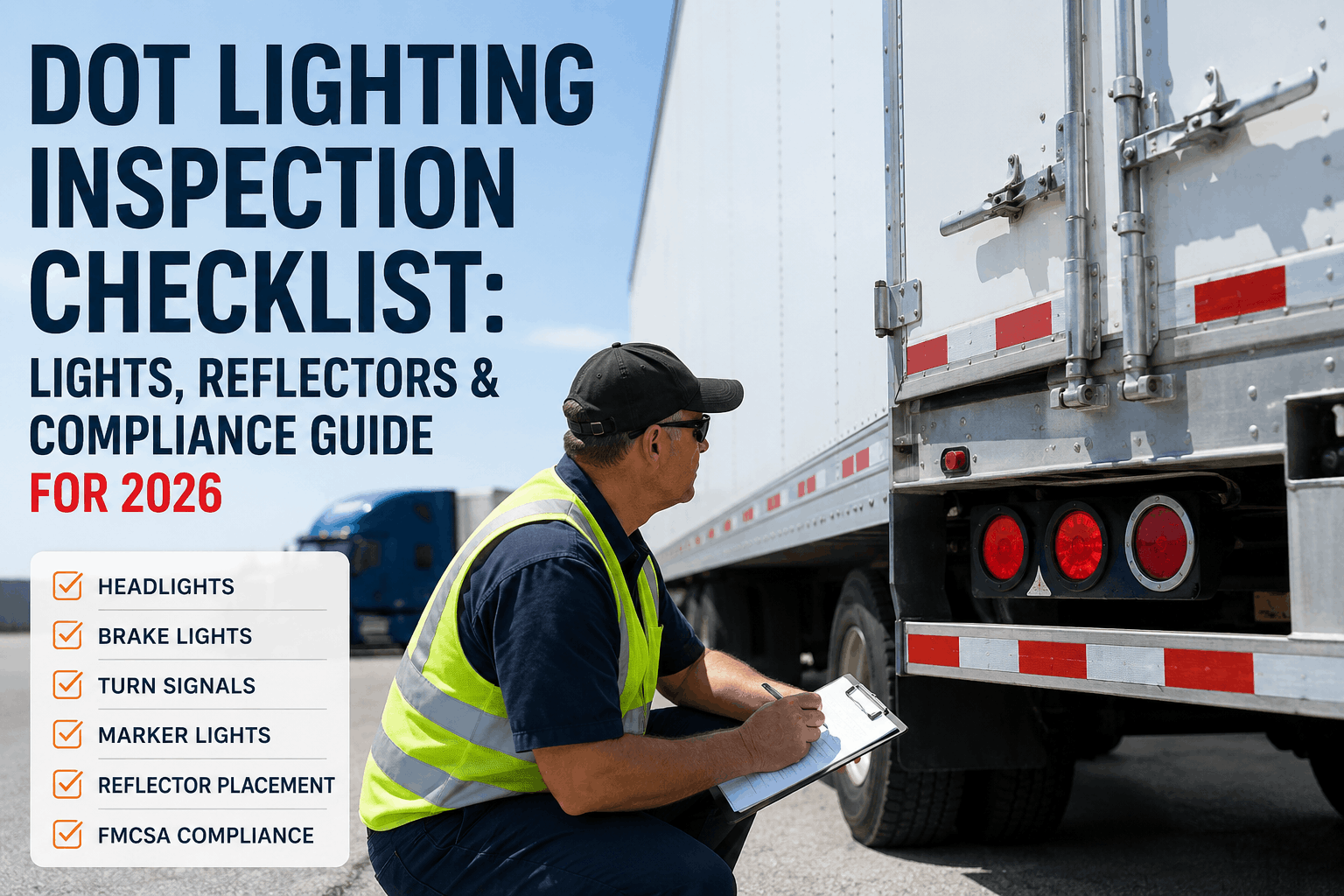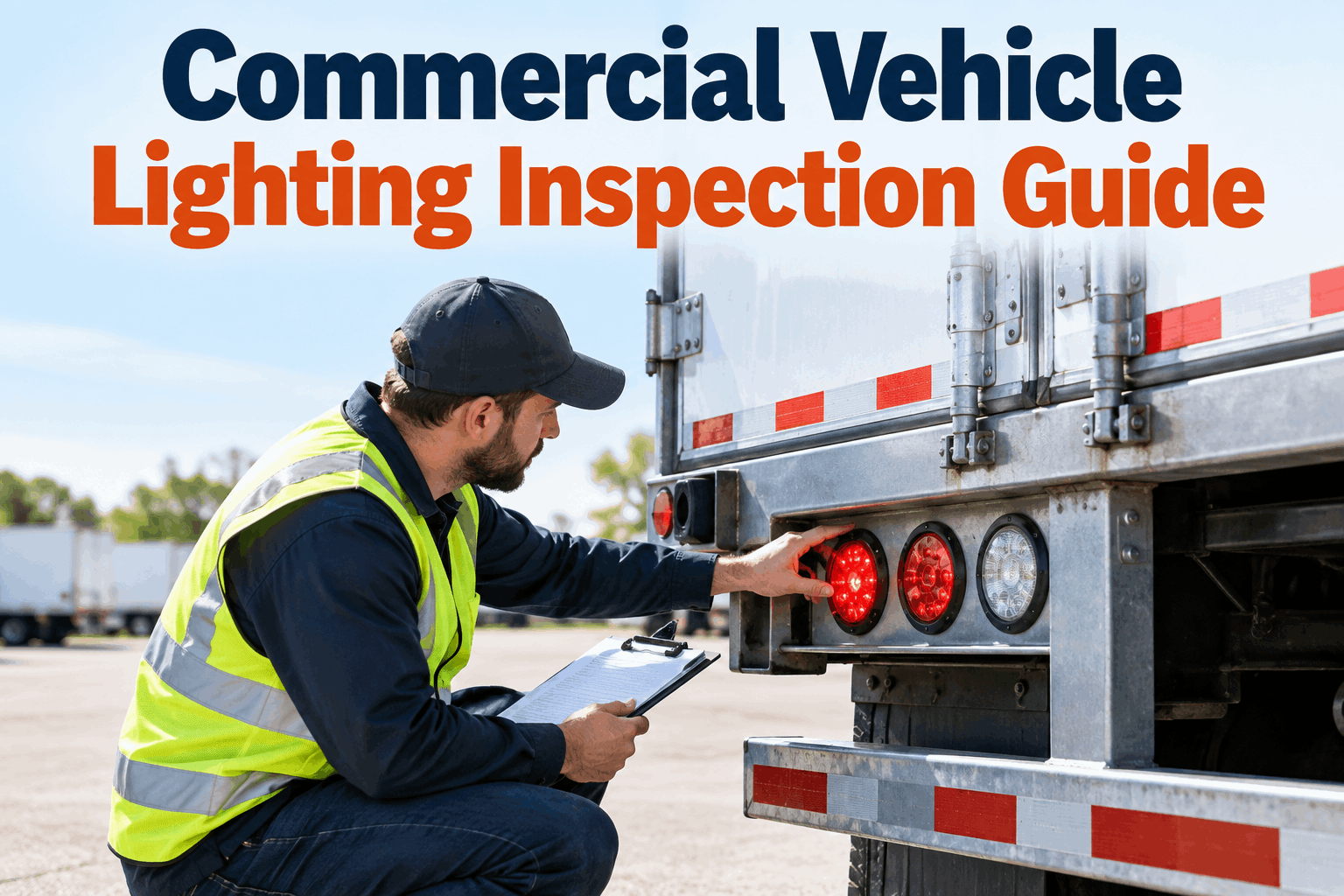
A dead marker lamp is the cheapest violation in trucking and the one written up most — a five-dollar bulb that triggers a full roadside stop and a CSA hit. Spotting it was never the hard part. The flagged lamp dies in a notes field while the truck rolls. See a flagged lamp become a work order on its own.
A commercial vehicle lighting inspection that closes the loop
Every required lamp on the tractor and trailer, checked with photo proof — and the dead one routed straight to a work order before it becomes a roadside write-up.
The checklist part is well covered — walk the rig, confirm every lamp lights. What actually keeps trucks legal is the ten minutes after a driver writes "RH marker out."
Why lighting is the cheapest defect to find and the easiest to lose
Lighting sits near the top of the roadside violation list every year — not because it's hard to catch, but because a flagged lamp slips through the gap between the walkaround and the shop.
The money isn't in finding the lamp. It's in making sure a found lamp never rolls out the gate still dead.
The daylight trap: why a lamp that "passed" still fails at night
Half an LED cluster can be dead and the lamp still glows in sunlight. The driver sees light, writes "OK," and the trailer runs dark after dusk — straight into an inspection.
The fix is checking function, not glow — and recording it, so "marker OK" means someone actually confirmed it lit — see a half-dead LED flagged instead of passed.
Where the lighting defect dies — and how routing saves it
A defect noticed is worthless; a defect routed, fixed and verified is compliance. On paper the chain breaks in the same place every time.
- Driver writes "RH marker out"
- ×Note sits in a stack / a text thread
- Shop never sees it in time
- Truck rolls — same lamp, now a violation
- 1Lamp tapped on the checklist + photo
- 2Auto-becomes an assigned work order
- 3Fixed, verified, closed against the unit
- 4Truck leaves legal — nothing lost
Without that chain the inspection is theater. With it, the walkaround finally earns its time — start routing lighting defects to work orders free.
What a full commercial vehicle lighting inspection covers
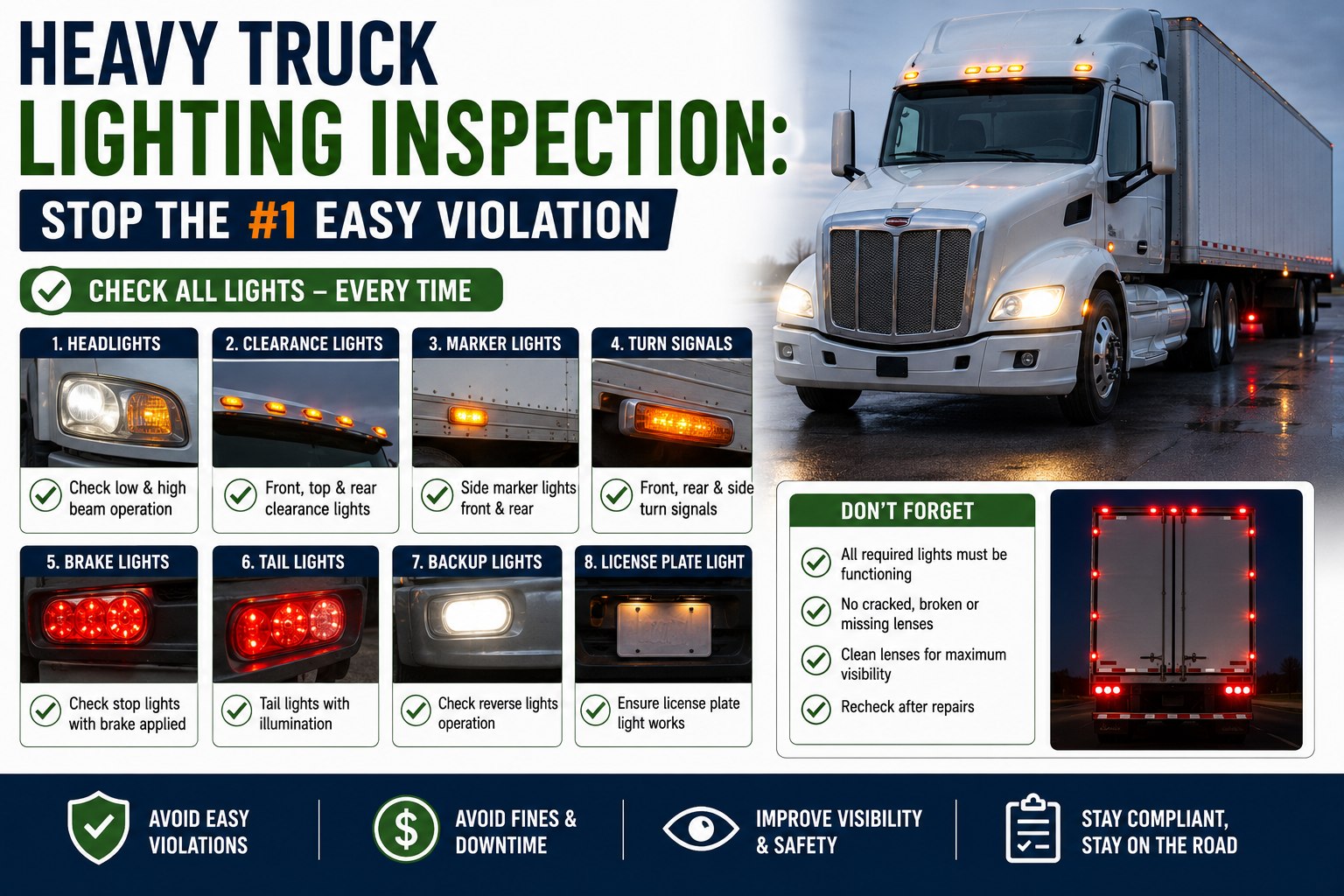
Required lamps break into groups by where they sit and what color they show. Miss a group and you've left a gateway stop on the truck.
Headlamps & turn signals
White low and high beam, amber front turn signals and hazards, lenses intact — the driver's first impression to an officer.
Clearance, marker & ID lamps
Amber to the front and side, red to the rear, plus the three-lamp ID bar up top — most often dark, least often noticed.
Tail, stop & turn
Red tail and stop lamps, turn signals and a white plate lamp — the most-cited single miss. Press the pedal, confirm the stops light.
Reflectors & conspicuity tape
Red/white tape and reflex reflectors that make the trailer visible at night. Faded, peeling or mud-caked tape fails the same as a dead lamp.
Connector & wiring
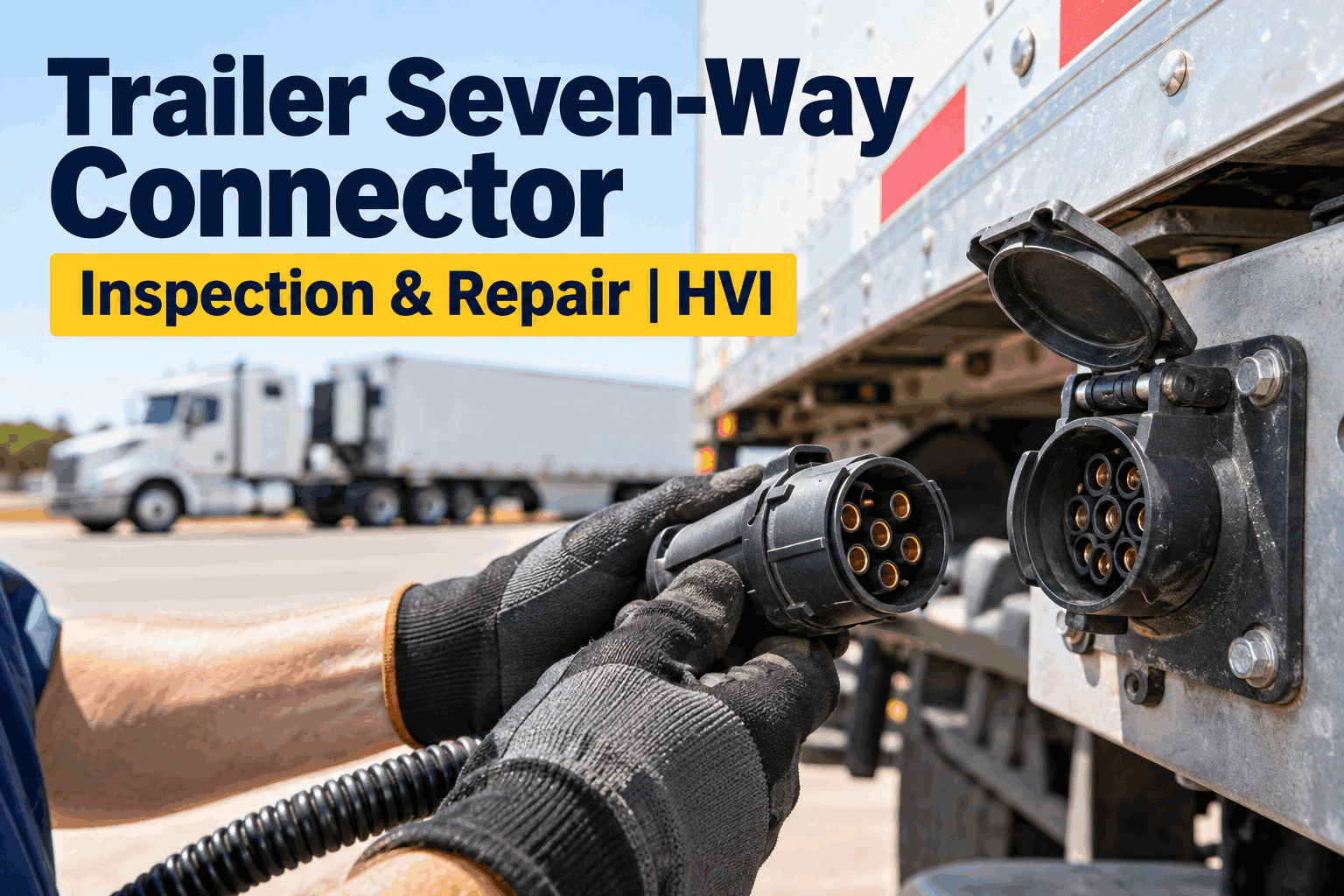
The seven-way connector, pins and harness — corroded pins and chafed trailer wiring are why a lamp that tested fine goes dark on the road.
The LED daylight trap
A cluster with half its diodes dead still looks lit in daylight but fails at night and under inspection. Check function, not just a glow.
Each group is a configurable line a fleet standardizes across every unit — see the lighting checklist built to your fleet. This is the resolution side of the lamp-by-lamp walkaround checklist and the DOT lighting and reflector requirements.
The repeat offender: why the same corner keeps going dark
A lamp that fails once is a bulb. The same position failing every few weeks is a wiring, ground or connector fault the parts counter can't fix.
That's the difference analytics make: a lighting defect stops being a recurring annoyance and becomes a solved one — watch a repeat-failure position get flagged.
How HVI runs the whole commercial vehicle lighting inspection loop
The inspection, the proof, the work order and the pattern all live in one place instead of scattered across a clipboard, a text thread and a whiteboard.
Configurable lighting checks + photos
Build the lamp-by-lamp list once and run it on every unit, with a photo attached to each flagged defect as proof it was caught and where.
Automatic defect-to-work-order routing
A flagged lamp becomes an assigned work order instantly — the defect can't die in a notes field, and the truck doesn't roll with it still open.
Repeat-defect analytics by position
The same corner failing again shows up as a pattern, pointing the shop at the wiring or ground fault instead of another bulb.
It runs on the same platform as the rest of your digital fleet inspections, so lighting isn't a separate binder — it's one more thing that gets flagged, routed and closed.
We weren't failing inspections because drivers missed lights. They caught them fine. The write-up said "trailer marker out" and three days later the same trailer rolled through a scale with the same marker out.
Once a flagged lamp turned itself into a work order, that stopped. The surprise was the pattern report — two trailers were eating bulbs monthly. Turned out to be grounds, not bulbs. Fixed the grounds, the tickets went away.
Frequently asked questions
What does a commercial vehicle lighting inspection cover?
Every required lamp on the tractor and trailer: headlamps, front and rear turn signals, tail and stop lamps, clearance, side marker and identification lamps, the license-plate lamp, plus reflectors and conspicuity tape. It also checks the seven-way connector and wiring, since corroded pins kill lamps that otherwise test fine.
Why are lighting defects such a common roadside violation?
Lighting sits near the top of the out-of-service list — around 14% of vehicle OOS orders — yet it's the most preventable category. The defect is usually easy to spot and cheap to fix; it becomes a violation when a flagged lamp doesn't get repaired before the truck rolls.
What is defect routing and why does it matter for lighting?
Defect routing turns a flagged lamp into an assigned work order automatically, instead of leaving it in a notes field. It matters because the hard part of lighting isn't finding the bad lamp — it's making sure the fix happens before the next trip.
Why does the same lamp position keep failing?
A position that fails repeatedly usually isn't a bulb problem — it's a chafed wire, a bad ground, or a corroded connector pin. Tracking failures by position surfaces the pattern so the shop fixes the root cause instead of replacing another bulb.
How does HVI help with lighting inspection?
HVI runs a configurable lighting check on every unit with photo evidence, routes each flagged lamp straight to a work order, and flags positions that keep failing. The defect is caught, proven, assigned and verified in one place, so lighting stops becoming roadside violations.
Make every commercial vehicle lighting inspection one that actually closes
Configurable lamp checks with photo proof, each flagged defect routed straight to a work order, and repeat positions surfaced before they cost you a roadside stop. Turn the cheapest violation in trucking into one you don't get.
No credit card · Inspection, defect routing and analytics in one place