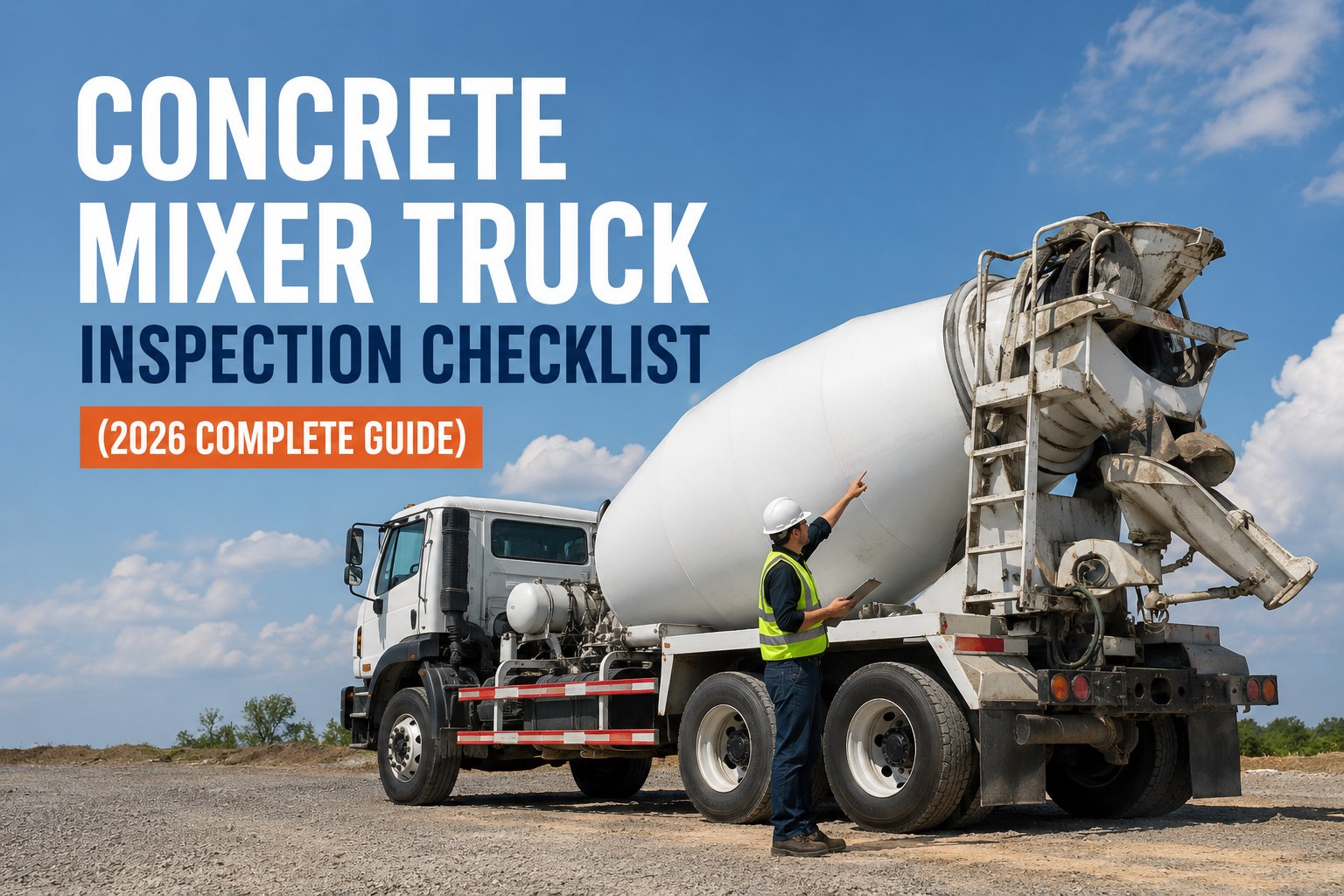
A concrete mixer truck is two machines in one — a Class 8 highway tractor and a continuously rotating 10-cubic-yard drum — and the daily inspection has to cover both. A missed drum bearing check becomes a $45,000 drum replacement with three weeks of downtime. An overlooked hydraulic leak becomes a mid-pour failure that ruins 10 yards of concrete and a customer relationship. This is the complete concrete mixer truck inspection checklist for 2026, built for how ready-mix fleets actually operate. Book a demo to digitize your mixer fleet inspections.
Concrete Mixer Truck Inspection: 7 Systems, One Walkaround, Before the First Load
Every ready-mix day starts here. Inspect the truck. Inspect the mixer. Then load.
System 1: Mixing Drumthe $45,000 component that needs daily attention
The drum is the defining feature of the mixer truck and the single most expensive component to replace. Drum bearing failure, fin breakage, and hardened concrete buildup are the three failure modes that take mixers offline for weeks. All three are preventable with a consistent daily inspection.
Systems 2 & 3: Chutes + Waterdelivery and cleanup — where customer quality meets driver safety
Systems 4 & 5: Hydraulics + PTOthe drive system that keeps the drum turning
The hydraulic system powers everything the mixer does — drum rotation, chute deployment, and in some trucks, the water pump. The PTO (power take-off) is the mechanical link between the truck engine and the hydraulic pump. A failure in either system stops drum rotation, which means the concrete sets up inside the drum.
Check level at sight glass with drum stopped. Inspect for contamination (milky = water, dark = overheated). Low fluid = air in system = inconsistent drum speed.
Trace every hose from pump to motor. Look for chafe, bulge, weep at fittings. A burst hydraulic hose on the highway sprays oil 30 feet and stops drum rotation instantly.
Listen for whine, cavitation, or grinding during drum rotation. Check operating pressure if gauge is available. Pump failure runs $8,000+ with a loaded drum. Book a demo
Must engage and disengage smoothly. Listen for grinding or popping at engagement. Verify the PTO indicator light functions. Never drive with PTO engaged unless actively rotating the drum.
Systems 6 & 7: Chassis + DOT Pre-Tripthe truck underneath the mixer still needs a full DVIR
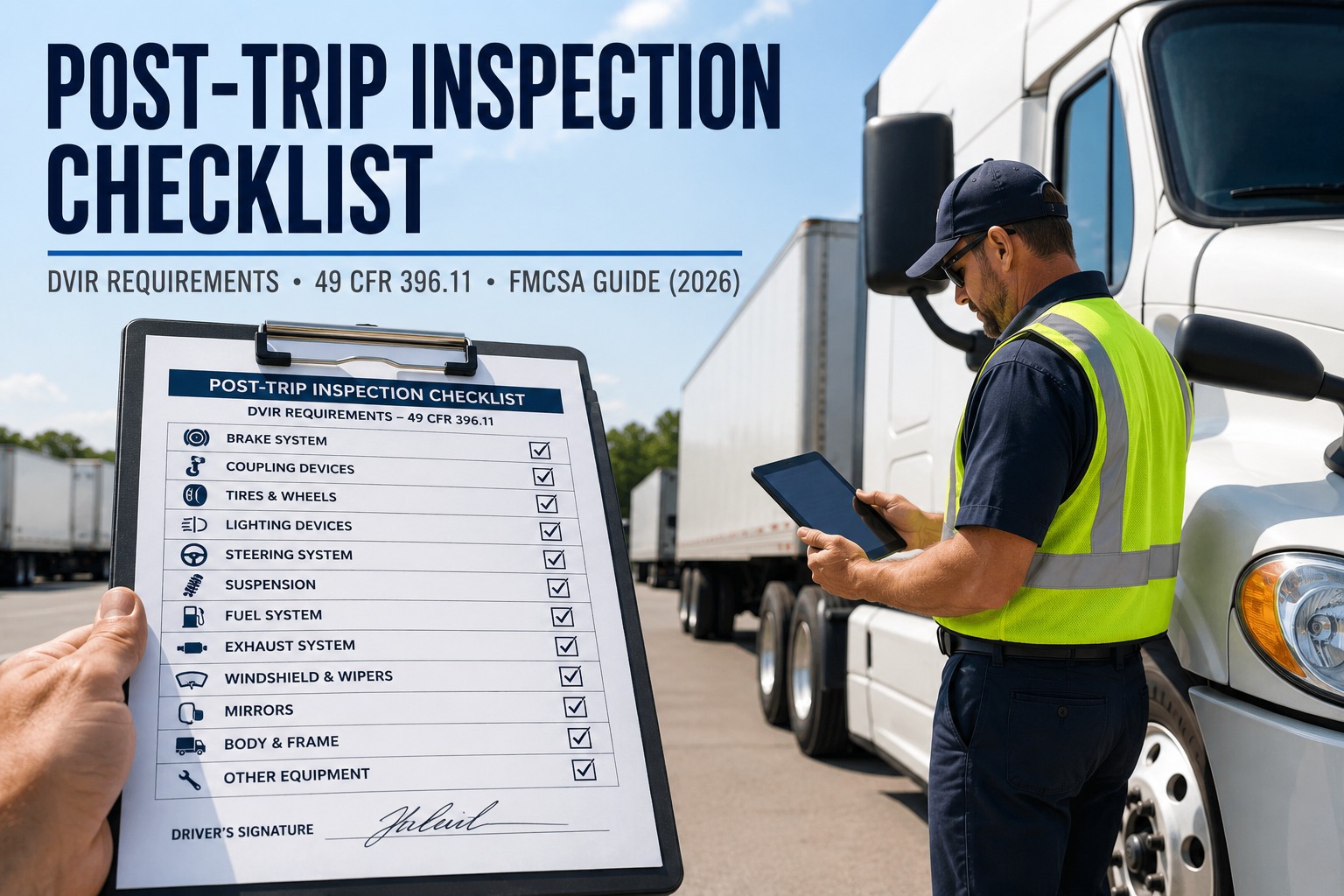
Every concrete mixer is also a commercial motor vehicle that needs a DOT pre-trip inspection under 49 CFR 396.13 before every trip. The mixer-specific checks above don't replace the standard DVIR — they add to it. A loaded mixer at 66,000 to 80,000 pounds GVW amplifies every chassis deficiency.
Service and parking brakes under load. Air pressure build-up and governor cut-out. Brake adjustment. A loaded mixer needs 40% more stopping distance than empty.
Inflation, tread depth, damage, lug torque. Loaded mixers run at maximum tire capacity every trip. Under-inflation causes blowouts under weight.
All lights functional. Reflective tape intact. Mixers operate pre-dawn on most schedules — visible lighting is critical for job-site safety.
Leaf springs, U-bolts, kingpins, tie rod ends. Loaded/unloaded cycles stress suspension components far more than steady-state highway hauling. Book a demo
Oil level, coolant, DEF, air filter indicator. Mixers run high-RPM PTO loads that stress the engine differently than highway cruising.
Fire extinguisher, triangles, PPE. Clean windshield and mirrors. Horn. Backup alarm. Concrete splatter on mirrors is a daily problem — clean at every pre-trip.
The 5 Failures That Cost Ready-Mix Fleets the Mostand what the daily inspection catches before they happen
From a ready-mix operations manager running 32 mixer trucks
We were losing an average of two mixer days per week to breakdowns — mostly hydraulic issues and drum-related problems that showed warning signs for days before they failed. Drivers were doing paper pre-trips, but the mixer-specific items (drum bearings, hydraulic fluid, water pump) weren't on the standard DOT form, so they got skipped.
When we built a custom digital checklist that combined the DOT pre-trip with mixer-specific systems and required photos at the drum opening and hydraulic connections, our breakdown rate dropped by about 40% in the first quarter. The photos were the key — drivers couldn't check "OK" on the drum without actually looking inside it.
Frequently asked questions
How often should a concrete mixer truck be inspected?
Concrete mixer trucks should be inspected daily before the first load of the day, with the drum empty for full visibility and access to all components. The DOT pre-trip inspection (49 CFR 396.13) is required before every trip on public roads. Mixer-specific systems (drum, chutes, hydraulics, PTO, water system) should be inspected as part of the daily walkaround but are not covered by the standard DOT DVIR form. Post-trip inspections should include drum washout verification and a check for concrete buildup. Weekly inspections should include drum bearing greasing, slew ring lubrication, and a more detailed hydraulic system check. Monthly inspections should include mixer fin inspection, drum end-play measurement, and hydraulic pump output testing.
What are the most important mixer-specific inspection items?
The five most critical mixer-specific inspection items are drum bearing condition (listen for noise during rotation, check for play or wobble), hydraulic fluid level and condition (check at sight glass, inspect for contamination), mixing fin condition (inspect through drum opening for wear and breakage), chute hinge pins and locks (check for wear and proper engagement), and water system function (verify tank level, test spray nozzles and pump). These five items catch the failure modes responsible for the majority of mixer truck downtime. Standard DOT pre-trip items (brakes, tires, lights, steering) are equally important but are covered by the standard commercial vehicle DVIR form.
What happens if concrete hardens inside the drum?
Hardened concrete inside the drum is one of the most costly mixer truck failures. Once concrete cures, removal requires chemical concrete dissolvers that can damage the drum's interior surface, or mechanical chipping that risks fin damage. A severe case can cost $3,000 to $5,000 in chemical treatment and labor, and in extreme situations can require drum replacement at $45,000 or more. Prevention is entirely through the daily inspection: verify the water system is functional before the first load, confirm adequate water tank level, and ensure complete drum washout after every load. A failed water pump that goes undetected during the pre-trip inspection can result in concrete setting up during the first delivery of the day.
How is a mixer truck inspection different from a standard DOT pre-trip?
A standard DOT pre-trip DVIR covers the truck as a commercial motor vehicle: brakes, tires, lights, steering, mirrors, horn, windshield, and other items required by 49 CFR 396.13. A mixer truck inspection adds seven systems not covered by the DOT form: mixing drum (exterior, fins, bearings, rotation, seal), chute system (main chute, extensions, hinges, locks), hydraulic system (fluid, hoses, pump, motor), PTO (engagement, indicator, condition), water system (tank, pump, nozzles, hoses), concrete buildup (drum interior, chute, hopper), and drum rotation function (charge and discharge operation). The DOT pre-trip and the mixer-specific checks should be combined into a single daily inspection flow so nothing gets skipped.
Can I digitize concrete mixer truck inspections?
Yes. A platform like HVI (Heavy Vehicle Inspection) lets ready-mix fleets build custom inspection templates that combine the standard DOT pre-trip DVIR with mixer-specific systems in one inspection flow. Drivers complete the inspection on a phone or tablet, with required photo capture at the drum opening, hydraulic connections, chute hinges, and water system. Defects auto-generate work orders that go directly to the maintenance shop, eliminating the gap between finding a problem and fixing it. Every inspection is timestamped, GPS-tagged, and signed digitally, creating an audit-ready record for DOT compliance, insurance, and fleet management analysis. Ready-mix fleets that switch from paper to digital typically see 30 to 40 percent more defects caught before they become breakdowns.
32 mixer trucks. Zero paper checklists. 40% fewer breakdowns.
Combine DOT pre-trip and mixer-specific inspections in one flow. Require photos at drum, chutes, and hydraulics. Auto-generate work orders. Timestamp and GPS-tag every inspection. Pull any record in seconds. Works on any phone. Live in under a week.
No credit card · No hardware · Built for ready-mix operations