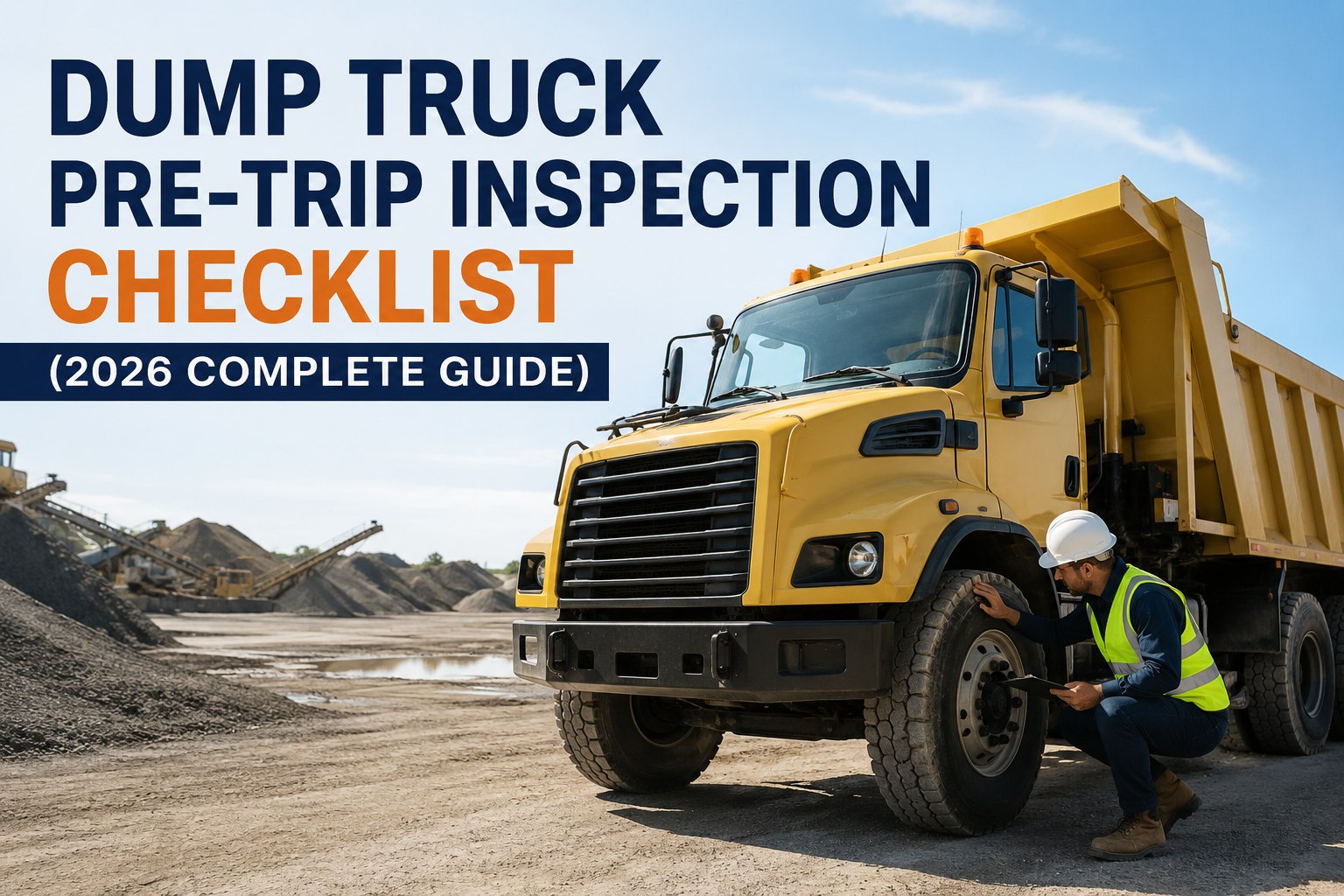
FMCSA estimates that thorough pre-trip inspections prevent roughly 14,000 commercial vehicle accidents every year — and dump trucks need the inspection more than most. Heavy loads on rough terrain, constant hydraulic cycling, steep grades, and frequent stop-start operation wear brakes, tires, and hoist systems at multiples of highway rates. During the 2025 CVSA International Roadcheck, 22.6% of inspected vehicles were placed out of service, the majority for defects a proper pre-trip would have caught. This is the complete dump truck pre-trip inspection checklist for 2026. Book a demo to digitize your dump fleet inspections.
Dump Truck Pre-Trip Inspection: On-Highway + Off-Highway in One Checklist
Two worlds. One walkaround. Know what changes between the highway and the haul road.
The Walkaround: 8 Stops, One Loopstart at the cab, work clockwise, finish at the dump body
Every dump truck pre-trip follows the same discipline: engine off, parking brake set, walk a complete loop. The 8 stops below cover the standard DOT DVIR items plus the dump-specific systems (hoist, body, PTO, tailgate) that aren't on a generic CMV checklist.
Oil, coolant, power steering, DEF levels. Belt condition. Air filter indicator. Check all gauges and warning lights at key-on. Verify horn, wipers, mirrors, seatbelt.
Kingpins, tie rod ends, drag link. Steering gear for leaks. Tire condition, inflation, lug torque. Front brake drums, linings, slack adjusters. Wheel seals for leaks.
Fuel tank secure, cap tight. Exhaust system for leaks and hangers. Air lines and fittings. Suspension: springs, U-bolts, shock mounts. Frame for cracks. Book a demo
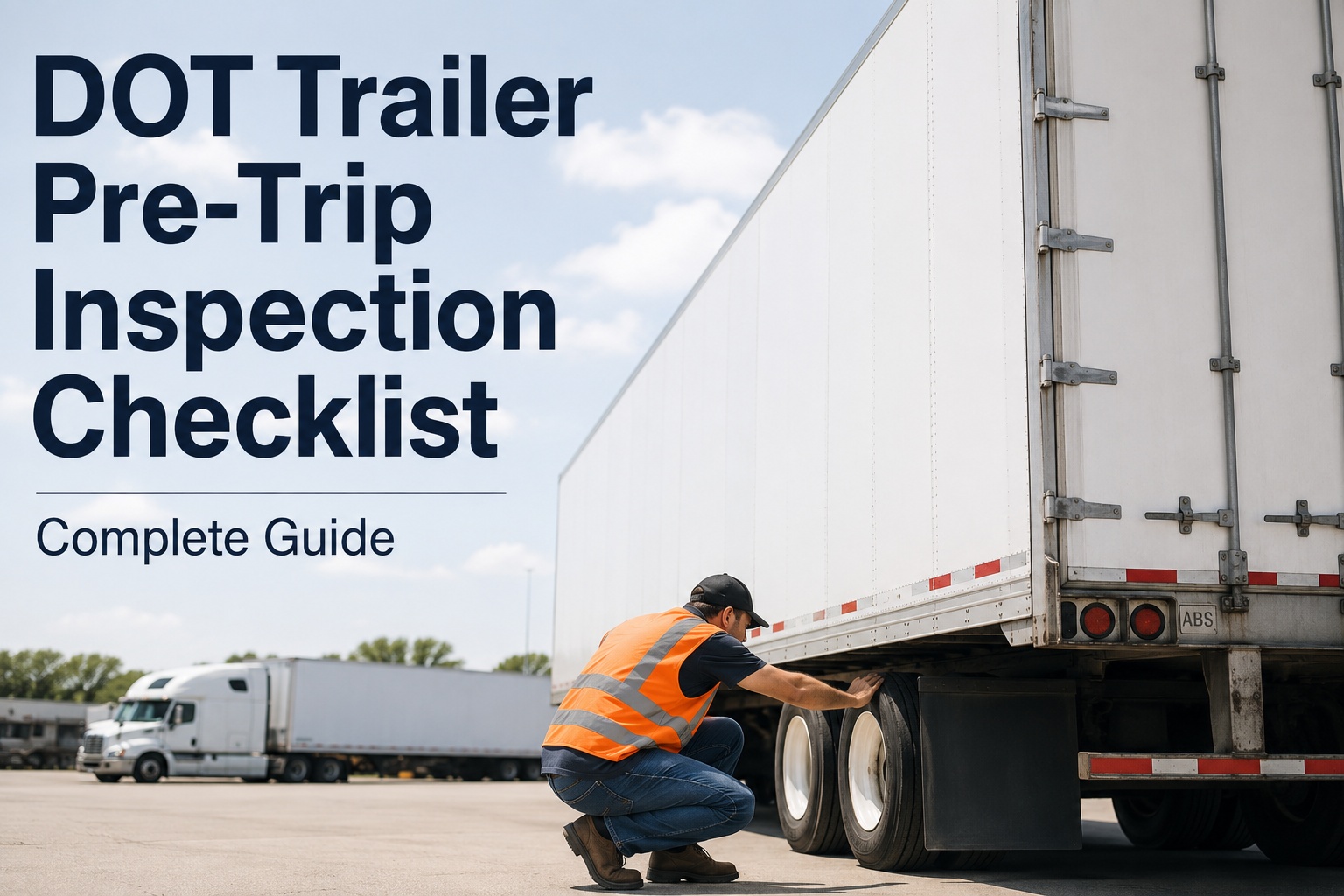
All tires (inner and outer duals) for inflation, cuts, tread depth. No debris between duals. Brake drums, linings, slack adjustment. Wheel bearings. Axle seals.
Body for cracks, bends, rust-through at stress points (corners, floor joints). Tailgate hinges, pins, and latches — must lock securely. Body prop (safety support) present and functional.
Hoist cylinders for leaks, rod scoring, and secure mounting. All hoses and fittings for chafe, bulge, weep. Hydraulic fluid level at sight glass. PTO engagement: smooth, complete, indicator light functional.
Mirror opposite of driver side: suspension, air lines, exhaust, frame. Check mud flaps present and secure. DOT reflective tape intact. Start free — build dump-specific DVIR templates in HVI
Air brake build-up and governor cut-out. Low-air warning. Service brake test at slow speed. Parking brake hold. Raise and lower dump body (clearance verified). All lights: headlights, tails, turn signals, hazards, strobes.
The Dump-Specific Systemswhat separates a dump truck inspection from a standard CMV DVIR
A standard DOT DVIR covers the truck as a commercial motor vehicle. The dump-specific items below are what make the difference between a generic inspection and one that actually prevents dump truck failures.
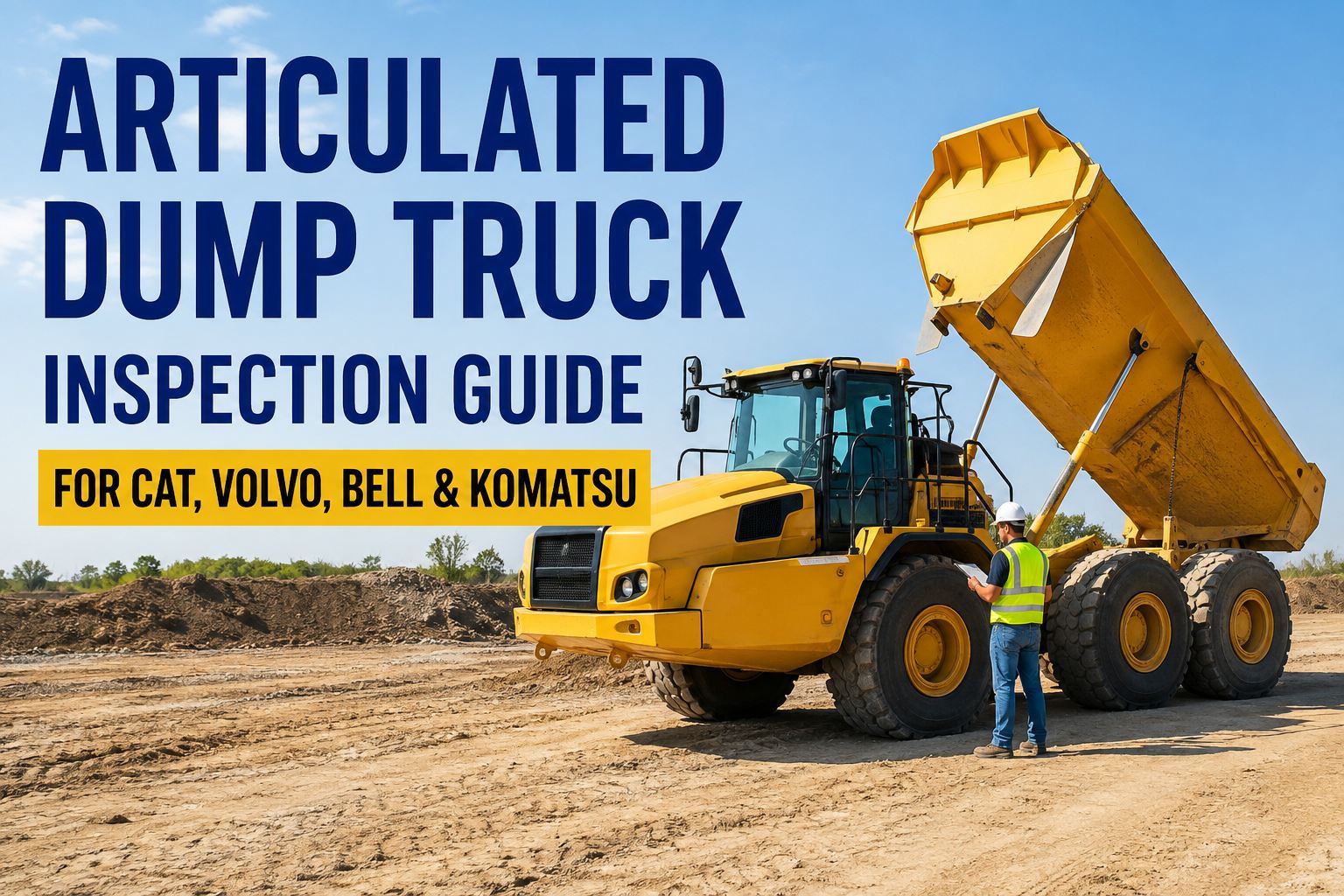
Articulated Dump Trucks (ADTs)what changes when the truck doesn't go on a public road
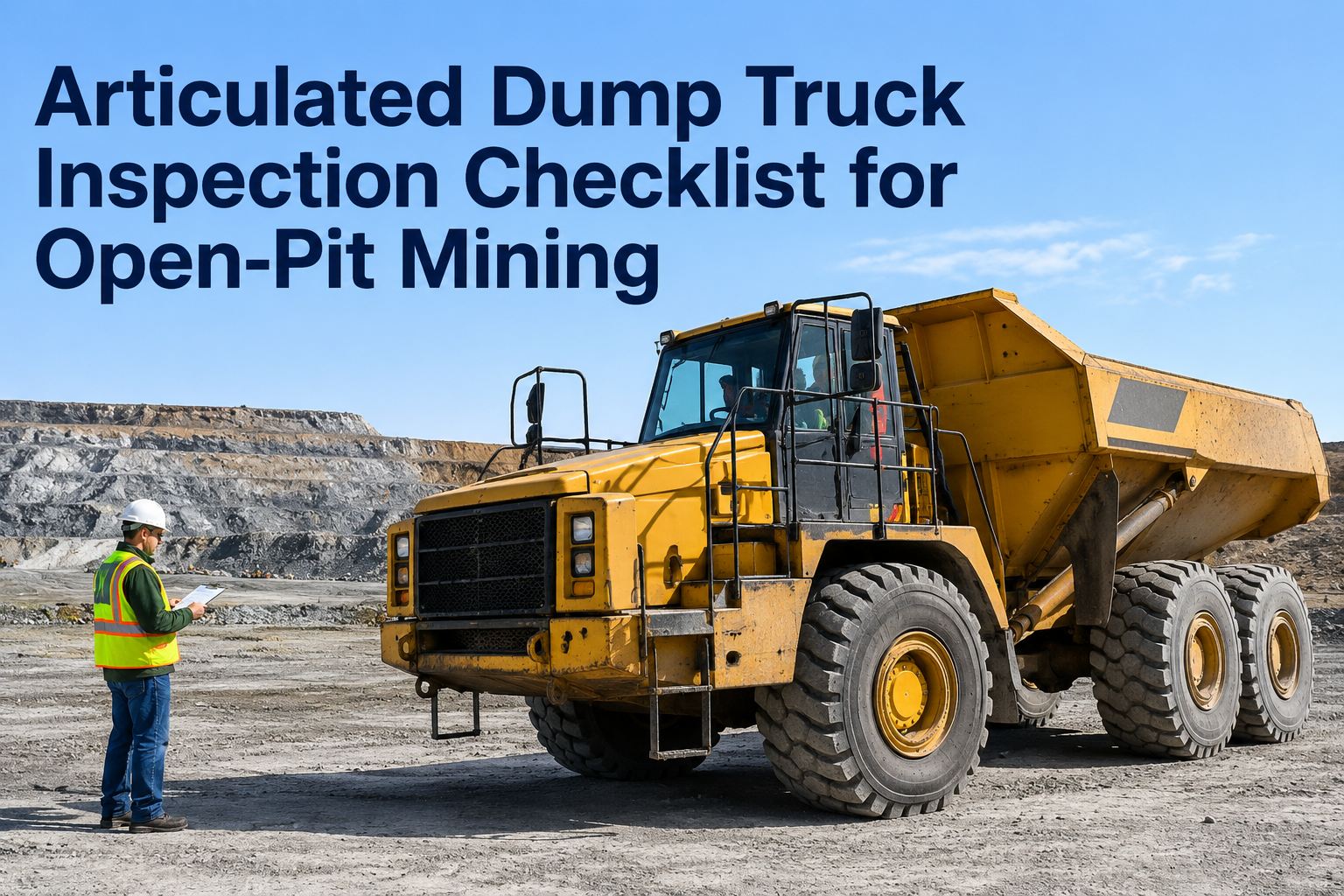
Articulated dump trucks — Volvo A25 to A60, CAT 725 to 745, John Deere 260E to 460E, Komatsu HM series — operate exclusively off-highway. They're not subject to DOT pre-trip requirements, but they are subject to OSHA construction standards and MSHA regulations on mine sites. The inspection adds items that highway trucks don't need.
From a construction fleet manager running 18 dump trucks
We got three OOS orders in one quarter — two for brake adjustment and one for a tailgate latch that was held together with a bolt the driver had rigged himself. All three should have been caught on the pre-trip. The problem was our paper checklist only had the standard DOT items — no hoist check, no tailgate latch inspection, no PTO test. Drivers were doing the minimum to fill out the form and heading to the job site.
When we switched to a digital inspection that included the dump-specific items and required a photo of the tailgate latches and hoist cylinders, our OOS rate went to zero for the next 11 months. The photo requirement was the difference — you can't photograph a tailgate latch without looking at it.
Frequently asked questions
What is required in a dump truck pre-trip inspection?
A dump truck pre-trip inspection must cover all standard DOT DVIR items (brakes, tires, steering, lights, mirrors, horn, wipers, coupling devices, emergency equipment) plus dump-specific systems: hydraulic hoist cylinders (leaks, rod scoring, mounting), PTO engagement and indicator, dump body condition (cracks, bends, rust-through), tailgate latches and hinges, body prop / safety support, tarp system if equipped, and hydraulic fluid level and hose condition. Under 49 CFR 396.13, CDL drivers must be satisfied the vehicle is in safe operating condition before driving, and under 49 CFR 392.7, specific safety components must be verified functional. A thorough dump truck walkaround takes 15 to 20 minutes and should follow the same systematic route every time.
How is an articulated dump truck inspection different?
Articulated dump trucks (ADTs) operate exclusively off-highway and are not subject to DOT pre-trip requirements, but they are regulated by OSHA on construction sites and MSHA on mine sites. The ADT inspection adds several items not found on highway dump trucks: articulation joint inspection (pins, bushings, bearing wear, articulation lock), steering cylinder inspection (ADTs steer by pivoting the front and rear frames at the joint), retarder function testing (critical for steep-grade speed control), haul road condition assessment (grade, surface, drainage, sight lines), and off-road tire inspection (cuts, embedded rocks, sidewall damage, pressure). The hydraulic hoist, dump body, tailgate, and brake inspections are similar to on-highway trucks.
What are the most common dump truck inspection violations?
The most common dump truck violations during DOT roadside inspections mirror those found across all commercial vehicles but are amplified by the harsh operating conditions dump trucks face. Brake violations lead the list: out-of-adjustment brakes, worn linings, and air brake leaks are found more frequently on dump trucks because heavy loads and frequent stops accelerate brake wear. Tire violations are second: under-inflation, tread depth, and damage from construction sites. Lighting violations are third: broken or missing lights from job-site impacts. Dump-specific violations include non-functional tailgate latches, hydraulic leaks, and missing or damaged body props (safety supports). During the 2025 CVSA Roadcheck, 22.6% of inspected vehicles were placed out of service.
How often must dump truck inspections be documented?
Under DOT regulations, a pre-trip inspection must be completed before every trip on public roads. DVIR records must include the driver's signature, date, time, vehicle identification, and any defects noted. Records must be retained for a minimum of 90 days. For off-highway articulated dump trucks, OSHA and MSHA require pre-shift inspections with documentation of any defects found. Best practice for all dump trucks is a daily pre-trip before the first load and a post-trip at the end of the shift, with any defects reported immediately so maintenance can address them before the next operating day.
Can I digitize dump truck pre-trip inspections?
Yes. A platform like HVI (Heavy Vehicle Inspection) lets construction and aggregate fleets build custom dump truck inspection templates that combine the standard DOT DVIR with dump-specific systems (hoist, PTO, body, tailgate, tarp) in one digital flow. Separate templates can be created for on-highway dump trucks and off-highway articulated haulers. Drivers complete the inspection on a phone or tablet with required photo capture at critical points (tailgate latches, hoist cylinders, tire condition). Defects auto-generate work orders to the maintenance shop. Every inspection is timestamped, GPS-tagged, and signed digitally, creating audit-ready records for DOT, OSHA, or MSHA compliance.
18 dump trucks. Zero OOS orders. 11 months and counting.
Combine DOT pre-trip with hoist, PTO, body, and tailgate inspections. Build separate templates for highway and articulated trucks. Require photos at every critical point. Auto-generate work orders from defects. Live in under a week.
No credit card · No hardware · Built for construction and aggregate fleets