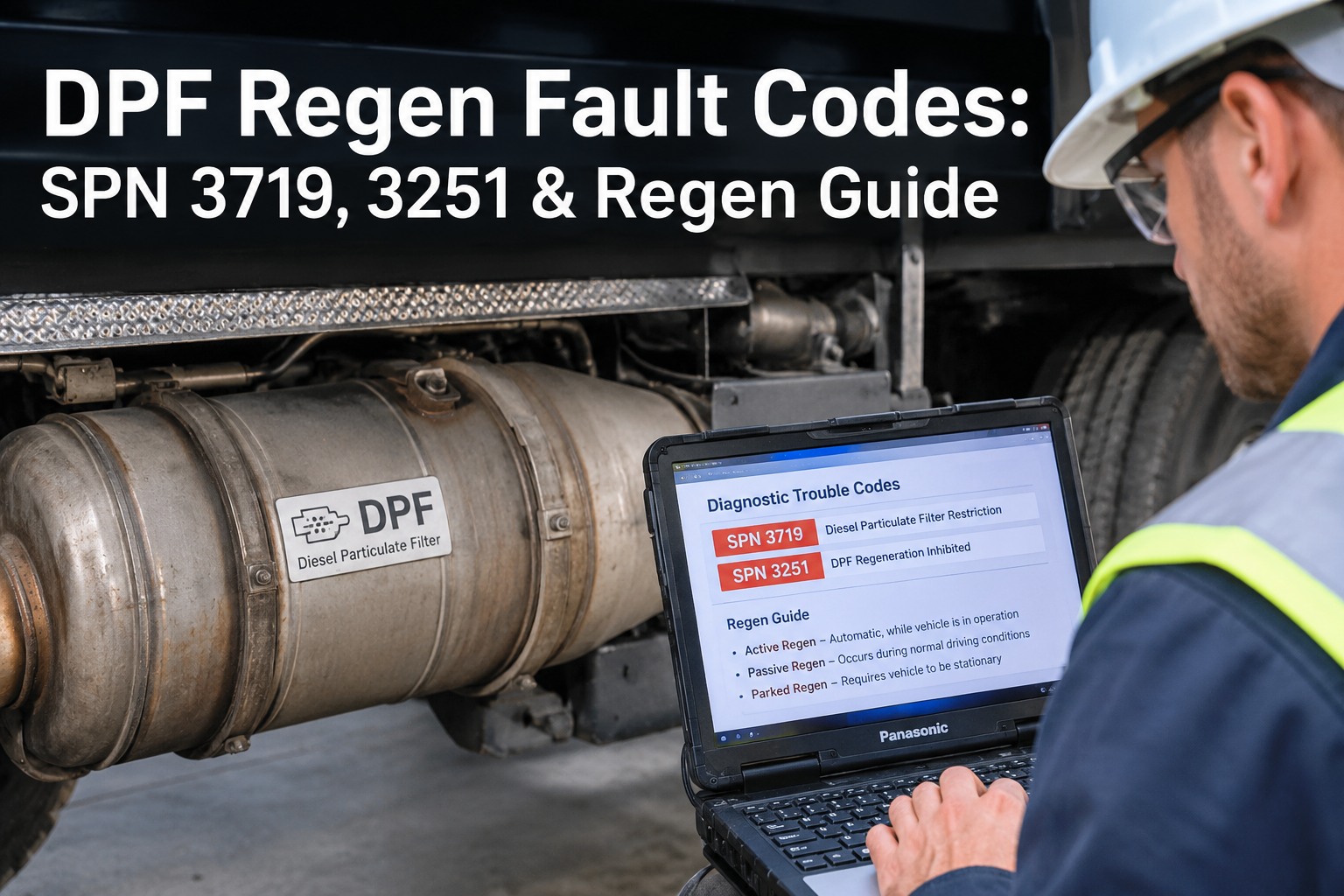
A driver pulls in with a dash light and a code — SPN 3719 or SPN 3251 — and the instinct is to run a forced regen and send the truck back out. Two weeks later it's back with the same code. That loop is the real problem with DPF regen fault codes: the code is the starting point of a diagnosis, not the answer. This guide explains what these fault codes actually mean, how passive, active, and parked regeneration differ, why forcing a regen can be the wrong move, and how fleets stop chasing the same fault twice. Book a demo to see fault history tracked per truck in HVI.
DPF Regen Fault Codes, Decoded
SPN 3719, SPN 3251, and the regeneration cycle behind them — what the code means, and what to check before you force a regen.
Meaning and severity depend on the FMI and the engine OEM. Always confirm against manufacturer service data.
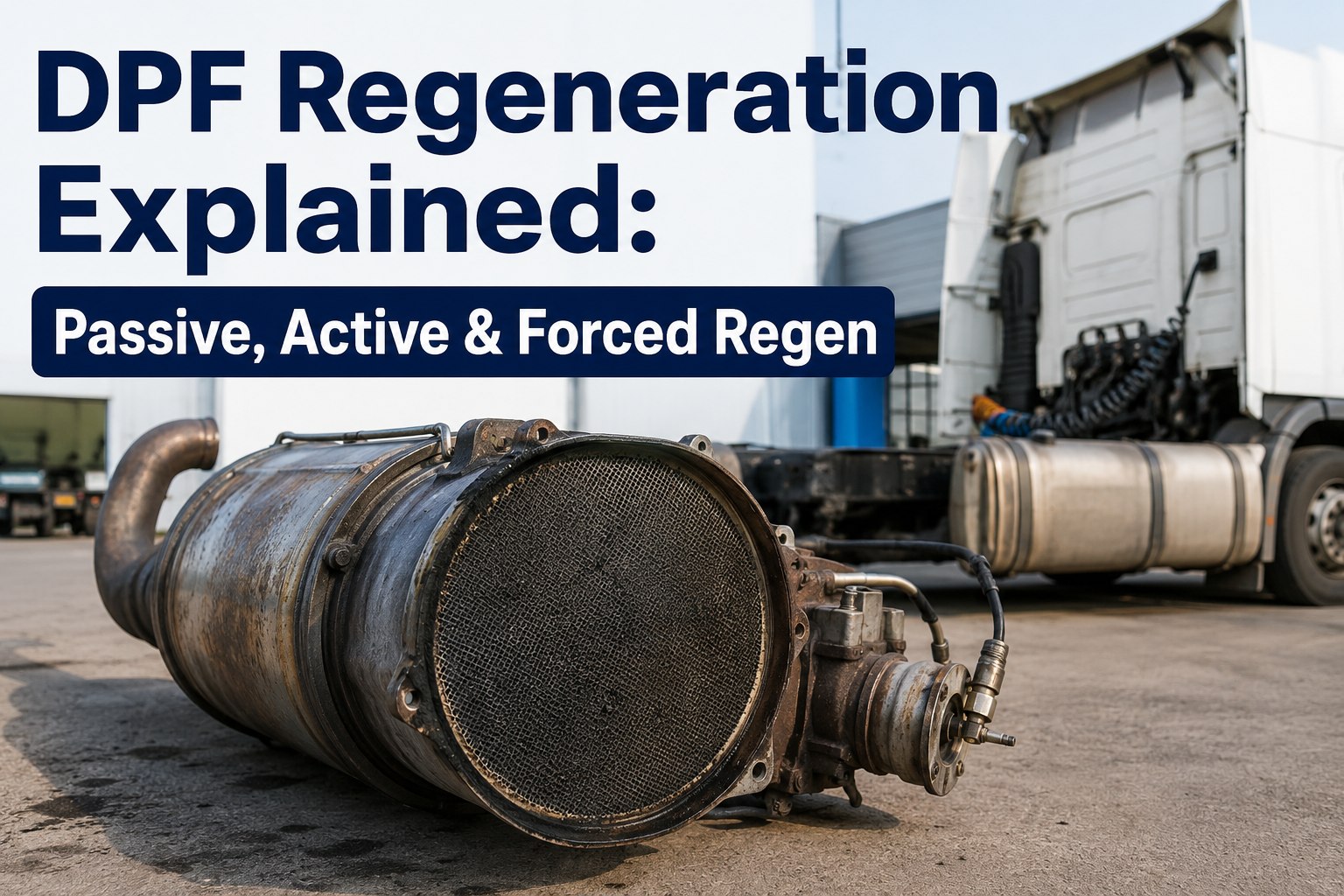
A diesel particulate filter traps soot from the exhaust so it never reaches the air. That soot has to be burned off periodically — that's regeneration. When regeneration is working, you rarely think about the DPF. When it isn't, you get fault codes, warning lamps, reduced power, and derates. Understanding the fault starts with understanding the three ways a DPF cleans itself.
Three ways a DPF regenerates
Passive, active, and parked regeneration aren't competing methods — they're an escalation. The system tries the easy one first and steps up as soot load climbs. Knowing which stage a truck is stuck at tells you a lot before you ever plug in a scan tool.
Passive
Happens naturally on long, hot runs. When exhaust temperature stays high enough (roughly 250–400°C) under steady highway load, soot oxidizes quietly in the background. No fuel penalty, no driver action, often unnoticed.
Active
When passive isn't keeping up and soot reaches a set level (often around 40–50% of capacity), the ECU raises exhaust temperature itself — typically via post-injection — to burn soot while you keep driving. You may notice higher idle or cooling fans running.
Parked / forced
When soot climbs too high for active regen to run or complete, the truck requests a stationary regen — parked, engine at elevated RPM until temps burn the soot down. A driver-initiated parked regen or a technician-commanded forced regen lives here.
SPN 3719 — DPF soot load high
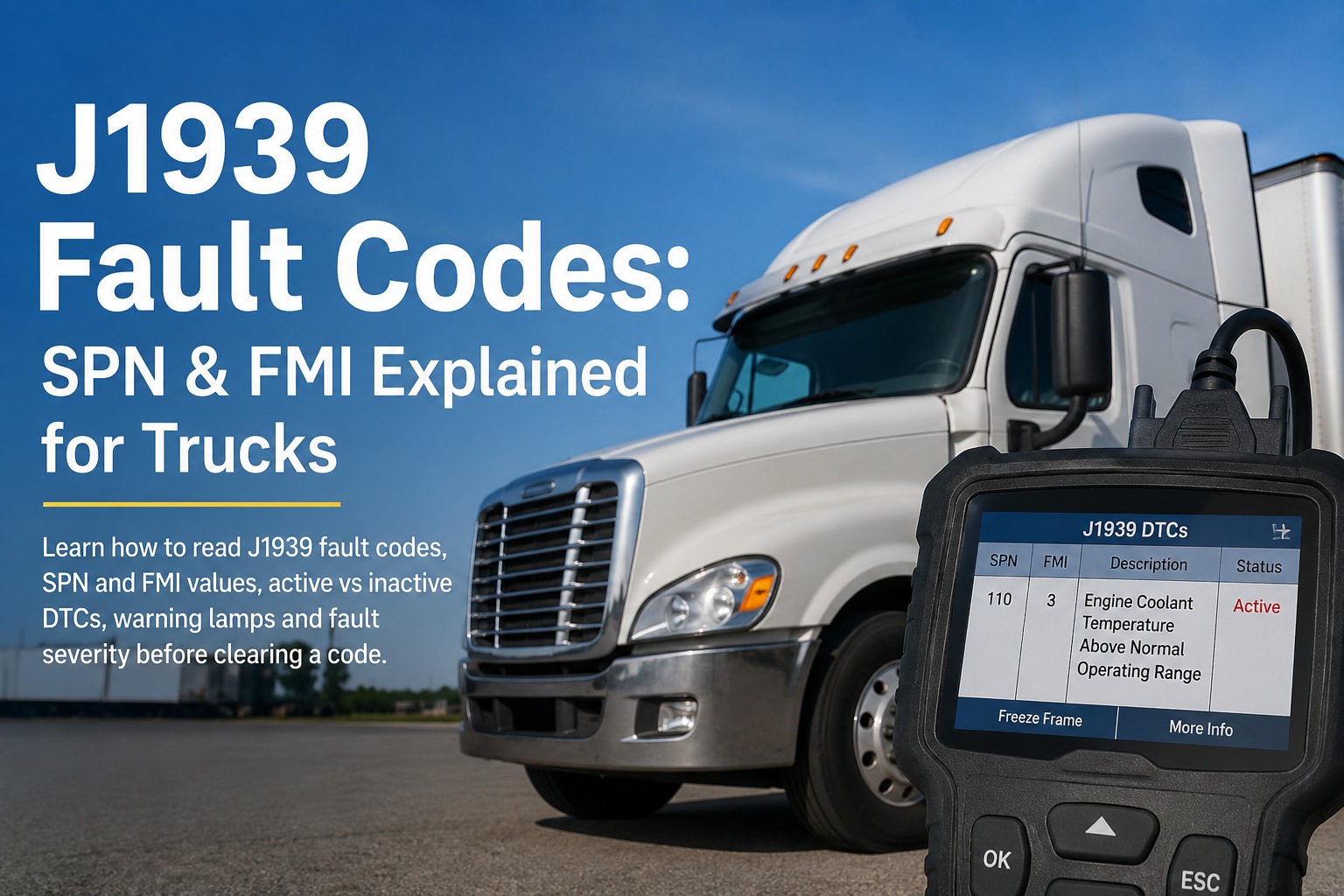
This is the "your filter is too full, regen needed" family of codes. It's a standard J1939 code that shows up across Cummins, Detroit, Volvo, PACCAR, Mack, International, and many European makes — but the severity and the ECU's response hinge on the FMI.
SPN 3719 broadly indicates the ECM believes DPF soot accumulation has passed a safe threshold. The FMI tells you how bad. A higher-severity FMI (for example FMI 0 on many platforms) signals soot high enough that the ECM may be preparing a derate — and in some strategies the ECM will block regeneration until an underlying issue is addressed, precisely because forcing heat into an overloaded filter can damage it.
The most important diagnostic fact about SPN 3719: if it comes back after a successful parked regeneration, the filter isn't the root cause. Something upstream is over-producing soot — commonly EGR problems, turbo or boost issues, injector faults, sensor problems, or excessive idling and short-trip duty cycles. Clear-and-regen without finding that cause just resets the countdown to the next fault.
- EGR system faults
- Turbo / boost problems
- Injector faults
- Sensor issues
- Excessive idle / short trips
- Exhaust leaks
So SPN 3719 is best read as "soot is too high — find out why," not "perform a regen." The regen may be part of the fix, but only after the cause is identified. Exact thresholds, lamp behavior, and derate strategy vary by engine and calibration, so always confirm against OEM service data for that platform. Book a demo to see whether 3719 keeps returning on the same unit
SPN 3251 — DPF differential pressure
This is the single most misdiagnosed aftertreatment code — because the obvious answer is usually wrong. SPN 3251 does not automatically mean "the DPF is plugged." It means the controller is reading a differential-pressure value it considers out of range.
Real soot or ash restriction raising back-pressure. The case people assume — but only one of several.
The pressure tubes can kink, crack, or fill with condensate — feeding the sensor a false reading with a healthy filter.
The sensor itself can read out of spec. Replacing the DPF here would be an expensive miss.
FMI drives severity: on Cummins platforms SPN 3251 maps to fault code 1921 (FMI 16, moderately severe) or 1922 (FMI 0, most severe), typically amber lamp with a possible engine-protection derate. And the hardware differs by OEM — a Cummins setup centers on one sensor and two tubes, while a Detroit DD platform uses two sensors with a cross-check, so "replace the differential sensor" isn't even the same job across engines. Confirm the architecture before you condemn a part. Start free and keep each truck's sensor and DPF repair history in one place.
Before you force a regen: the diagnostic sequence
Forcing a regen without diagnosis is how the same truck comes back next week. This is the order a technician should work through — identify the root cause first, regen second. Adapt each step to the OEM's service information for that engine.
Capture the complete code, the FMI, and whether it's active or inactive — not just the SPN.
Check the manufacturer's service data for that specific engine and aftertreatment system.
Look at soot load, differential pressure, and relevant temperature data where available.
Look for associated inhibit codes or sensor faults (EGR, turbo, injectors, NOx, temp sensors).
Duty cycle, idle time, and regeneration history — is this a drive-cycle problem or a hardware problem?
Only after the above — determine why regen failed before initiating a forced or parked regen.
Document what was fixed and the result of the regeneration.
Watch the vehicle afterward — did the code stay gone, or is it back?
Notice steps 1 and 7–8: the sequence begins and ends with documentation. A forced regen is sometimes exactly right — but it's a treatment applied after diagnosis, not instead of it, and never a fix for an ash-loaded filter or an unaddressed upstream fault. Book a demo to capture this whole sequence as a repeatable digital workflow
Symptoms that a regen problem is building
DPF trouble rarely arrives all at once. It escalates — and the early signs are your cheapest chance to fix the cause before a derate strands a truck. Watch for these, and treat rising regen frequency as the loudest signal of all.
The truck asks for parked regens more and more often.
DPF lamp, check-engine, or a flashing aftertreatment light.
Noticeable power loss as the ECM protects the engine.
The interval between regens keeps shrinking — the key trend.
Any one of these on a single day is easy to dismiss. The pattern — more regens, closer together, on the same truck — is what a driver or a lone shop visit can't see but a fleet system can. That trend is the difference between a sensor swap now and a filter replacement plus downtime later — which is exactly why trending regen frequency per vehicle, rather than reacting to one-off lights, is where the savings live.
From a fleet mechanic who stopped clearing the same code
We had a truck that kept throwing 3251. First tech replaced the DPF — code came back in a week. Turned out one of the pressure tubes had a crack; the filter was fine. We'd spent big on a part that was never the problem, because nobody could see the history — each visit looked like the first one.
Now every code, regen, and repair goes on the truck's record. When a code comes back, we can see it's a repeat and what we already tried, so we stop guessing and start actually diagnosing. The repeat visits dropped because we quit treating every fault like it was brand new.
When one code becomes a fleet problem
A single DPF fault is a shop ticket. The same fault returning on the same truck — or the same pattern spreading across similar units — is a fleet-management problem, and it's invisible without centralized history.
Every code timestamped per vehicle, so a repeat is obvious the moment it recurs.
Parked and forced regens recorded, so rising frequency shows as a trend, not a surprise.
What was replaced and when, so the next tech doesn't repeat a fix that already failed.
Post-repair monitoring answers the only question that matters: did the fault return?
This is the difference between responding to isolated codes forever and actually resolving them. When your team can see that truck 412 has thrown SPN 3719 three times and the last two "repairs" didn't hold, they can prioritize a real diagnosis instead of running regen number four. That's the shift from reacting to fault codes to managing aftertreatment health. Book a demo to see repeat-fault analytics across your fleet
The code is the question, not the answer
DPF regen fault codes like SPN 3719 and SPN 3251 tell you something is wrong with soot management or pressure sensing — but never, on their own, exactly what to fix. SPN 3719 means soot is too high and asks you to find out why; SPN 3251 means the differential-pressure reading is out of range, which could be a restricted filter, a cracked tube, or a bad sensor. In both cases the FMI and the engine OEM change the meaning, the severity, and the repair, so the honest first step is always the manufacturer's service data — not a universal fix. And forcing a regen before diagnosis, or on an ash-loaded filter, simply resets the clock to the next fault.
For a fleet, the deeper win isn't decoding one code — it's seeing the pattern. When fault history, regeneration events, and repair actions live together per vehicle, your team can tell a first-time fault from a chronic repeat, prioritize the trucks that actually need attention, and confirm whether a repair truly worked. That's exactly what HVI is built to do: turn a stream of isolated aftertreatment codes into a vehicle-level history you can act on. Always follow OEM diagnostic procedures for the specific engine and emissions system. Book a demo to see how HVI tracks fleet faults and aftertreatment issues.
Frequently asked questions
What does SPN 3719 mean on a truck?
SPN 3719 broadly indicates that the engine's ECM believes the diesel particulate filter's soot load has exceeded a safe threshold — in plain terms, the filter is too full and a regeneration is needed. It's a standard J1939 code that appears across many platforms including Cummins, Detroit, Volvo, PACCAR, Mack, and International, as well as many European makes. The severity depends on the FMI: a higher-severity FMI such as FMI 0 on many engines signals soot high enough that the ECM may prepare a derate, and in some strategies the ECM will actually block regeneration until an underlying issue is corrected, because forcing heat into an overloaded filter can damage it. The most important point: if SPN 3719 returns after a successful parked regeneration, the DPF isn't the root cause — something upstream (EGR, turbo, injectors, sensors, or an idle-heavy duty cycle) is over-producing soot. Exact thresholds and responses vary by engine and calibration, so confirm against OEM service data.
Does SPN 3251 mean my DPF is plugged?
Not necessarily — and assuming so is the most common way this code gets misdiagnosed. SPN 3251 is the Aftertreatment 1 DPF Differential Pressure parameter under J1939, and the code sets when the controller reads a differential-pressure value it considers out of range. That out-of-range reading can come from a genuinely restricted filter, but it can equally come from a pressure sensor tube that's kinked, cracked, or full of condensate, or from a faulty differential-pressure sensor itself. Replacing the DPF when the real problem is a cracked tube or bad sensor is an expensive miss. The FMI indicates severity — on Cummins platforms SPN 3251 corresponds to fault code 1921 (FMI 16, moderately severe) or 1922 (FMI 0, most severe), usually with an amber lamp and a possible engine-protection derate. The sensor architecture also varies by manufacturer, so the correct diagnosis and repair depend on the specific engine. Verify the reading and the hardware before condemning the filter.
What's the difference between passive, active, and parked regeneration?
They're an escalation based on how much soot has built up. Passive regeneration happens automatically during long, hot highway driving, when exhaust temperature stays high enough (roughly 250 to 400 degrees C) to oxidize soot in the background with no fuel penalty and no driver action — but it can't happen on short trips or low-speed work where temperatures stay low. Active regeneration is initiated by the ECU when soot reaches a set level (often around 40 to 50 percent of capacity): the engine raises exhaust temperature itself, typically through post-injection, to burn soot while you keep driving. Parked (or forced) regeneration is a stationary process used when soot climbs too high for active regen to run or complete — the truck must be parked at elevated RPM, either driver-initiated or technician-commanded with a scan tool. A key limitation across all three: regeneration only burns off soot, not ash, so an ash-loaded filter needs professional cleaning or replacement, not more regens.
When should I NOT perform a forced regen?
A forced regen is the wrong first move whenever the underlying cause of high soot hasn't been identified. If a code like SPN 3719 keeps returning after a successful regen, forcing another one just resets the countdown while an upstream problem — EGR, turbo, injectors, sensors, exhaust leaks, or an idle-heavy duty cycle — keeps over-producing soot. Forcing a regen is also ineffective on a filter loaded with ash rather than soot, because regeneration can't burn ash off; that filter needs professional cleaning or replacement no matter how many regens you run. Some ECM strategies deliberately inhibit regeneration at very high soot loads specifically to prevent the damage that forcing heat into an overloaded filter can cause, so overriding that without diagnosis risks harming the DPF. The right sequence is always to record the full SPN/FMI, review soot, pressure, and temperature data, check for related faults, and identify the root cause first — then regen if appropriate, following the OEM procedure for that engine.
How can fleets stop repeatedly clearing the same DPF fault?
The reason the same DPF code keeps coming back is usually that each shop visit is treated as if it's the first — without visibility into what happened before, a technician can't tell a chronic repeat from a one-off, and may repeat a repair that already failed. The fix is centralized, vehicle-level history. A platform like HVI records every fault code, regeneration event, and repair action per truck, so a returning code is immediately recognizable as a repeat, complete with what was already tried. Fleet teams can trend regeneration frequency to catch a problem building before it becomes a derate, prioritize the specific vehicles that are genuine repeat offenders rather than reacting to every isolated code, and monitor after a repair to confirm the fault actually stayed gone. That turns aftertreatment management from an endless loop of clearing codes into a measurable process where you can see whether corrective action truly resolved the issue — which is both cheaper and far less disruptive than repeated downtime.
Track fleet faults and aftertreatment issues in one place
HVI records every fault code, regeneration event, and repair action per vehicle — so your team spots repeat offenders, trends rising regen frequency before a derate, and confirms whether a fix actually held. Turn a stream of isolated DPF codes into a vehicle history you can act on. Mobile-first for the shop and the road, live in under two weeks.
No credit card · Fault-code & regen history per vehicle · Repeat-fault analytics on day one