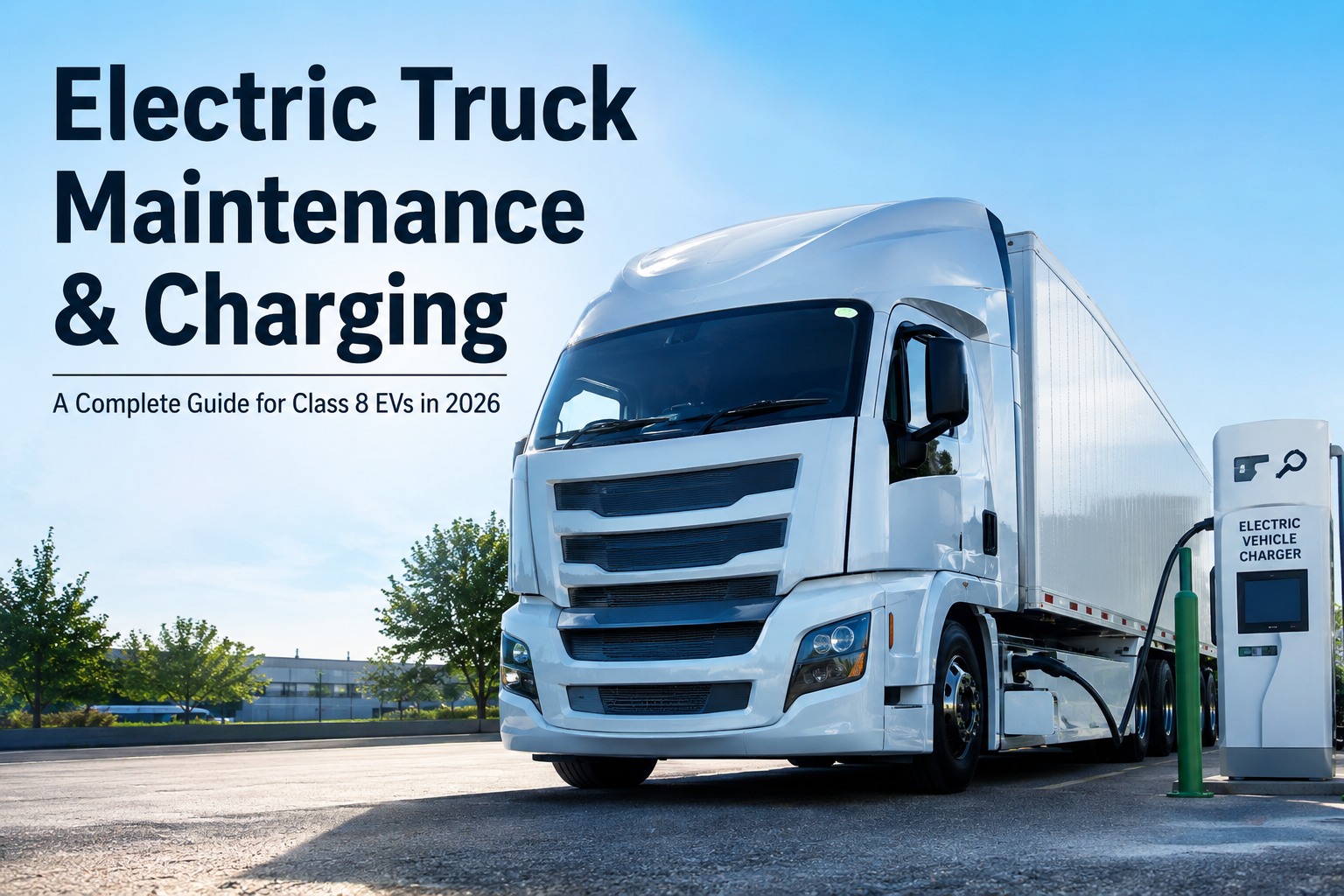
Electric truck maintenance follows a fundamentally different playbook than diesel. Class 8 EVs eliminate oil changes, DPF service, DEF refills, fuel filters, and injector cleanings entirely, but introduce battery state-of-health monitoring, thermal management, high-voltage integrity checks and charging infrastructure PM. NACFE modeling indicates battery-electric maintenance runs 30-50% below comparable diesels. Book an HVI demo → to see EV-specific templates in action.
The PM program you built for diesel doesn't fit a Class 8 EV.
Battery-electric Class 8 trucks eliminate a third of legacy diesel PM tasks, retain another third unchanged, and introduce a third category built around high-voltage systems. Getting the redesign right captures NACFE's 30-50% maintenance cost reduction.
The maintenance transformation — what actually changes
Class 8 EV maintenance breaks into three categories: eliminated, retained, and newly added. Getting NACFE's projected 30-50% cost reduction requires actively redesigning the PM program — not just skipping tasks that no longer apply.
What disappears is straightforward. What remains is often overlooked — tires wear faster from higher torque, HVAC draws directly from the battery, and suspension fatigues on identical intervals. What's new lives entirely in the high-voltage domain, and this is where the redesigned PM program earns out. Book an HVI demo to see EV-specific templates aligned to each OEM's tiered maintenance schedule.
Class 8 EV models on the road in 2026
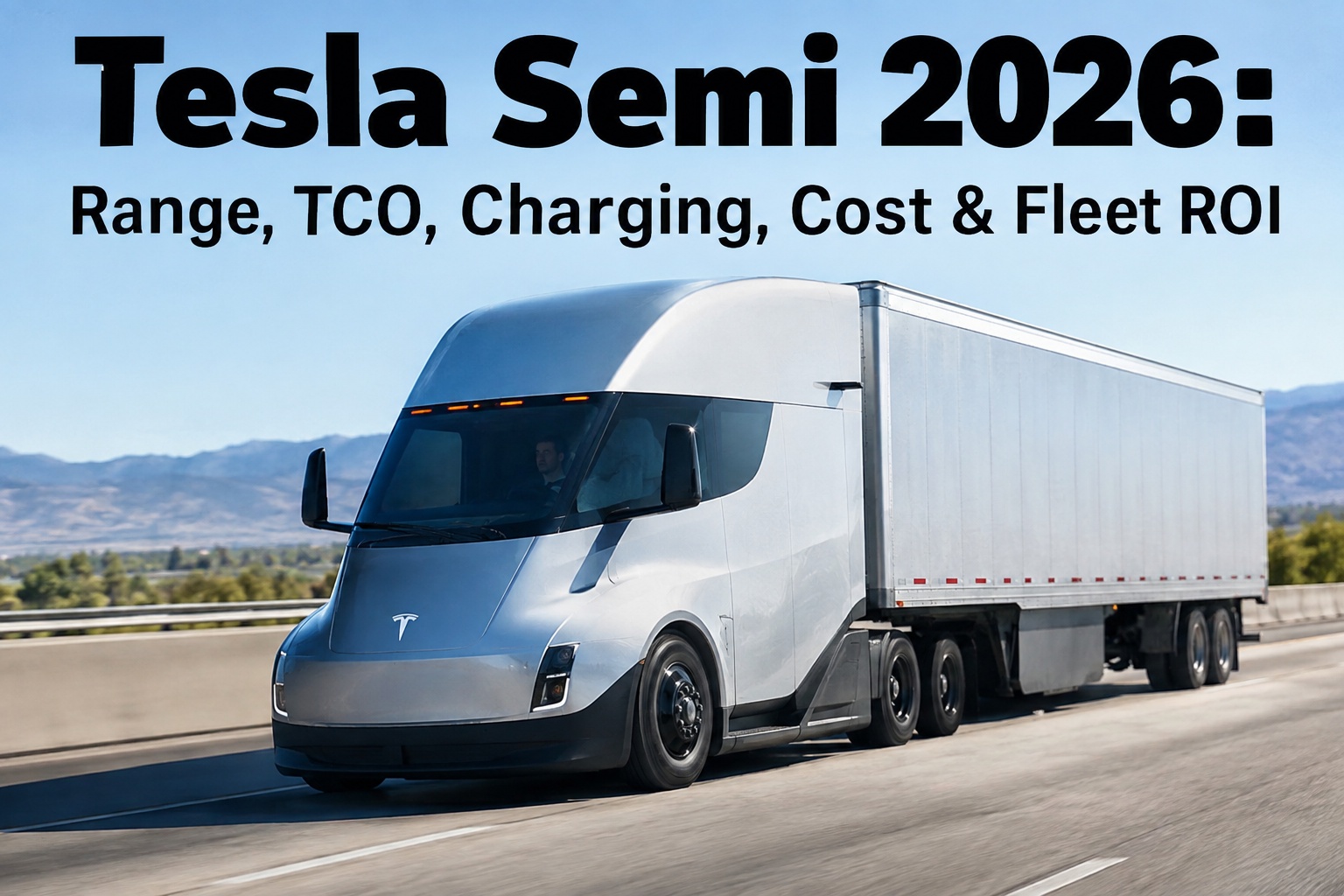
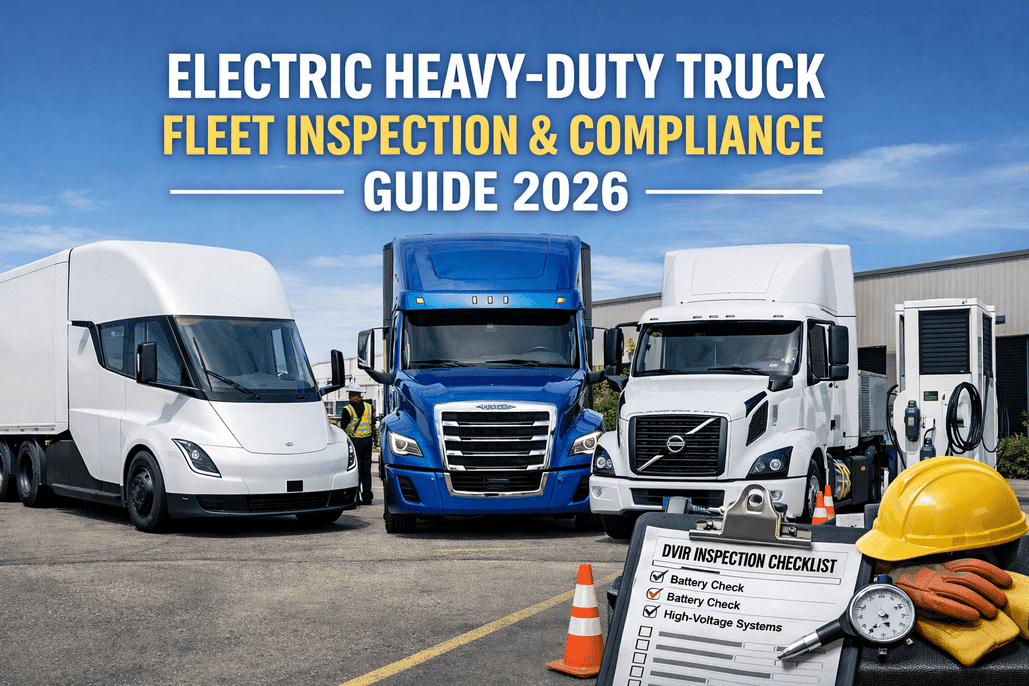
Approximately 3,000 Class 8 electric trucks are now in active fleet operation across North America. Schneider surpassed one million miles on Freightliner eCascadia units. PepsiCo, Walmart, and Sysco operate Tesla Semi fleets. Canadian grocery chain Loblaw runs eCascadia in Vancouver.
Additional Class 8 EVs in 2026 include Kenworth T680E, Peterbilt 579EV (both Paccar), and International eMV. Purchase pricing: $180K-$280K — a $50K-$110K premium over diesel tractors. Try HVI free to configure OEM-specific EV templates across a mixed fleet.
Battery state-of-health — the single most important EV KPI
On a diesel, engine hours and fuel economy dominate the maintenance dashboard. On a Class 8 EV, battery state-of-health (SoH) replaces both as the primary KPI. SoH measures current maximum capacity as a percentage of the original rated capacity. A new battery reads 100%; a pack at end-of-warranty (year 8-12) reads 70-80%.
Charging behavior is the biggest lever. Consistent DCFC above 80% SoC accelerates capacity fade. Thermal management is second — cells above 45°C degrade faster than cells at 15-35°C. Fleets applying best practices see SoH curves 5-8 points above average at 5 years. Battery replacement runs $100K-$200K, so protecting SoH is capital preservation. Book an HVI demo to see SoH trended per truck against operational data.
Charging speed — from overnight L2 to megawatt fast charging
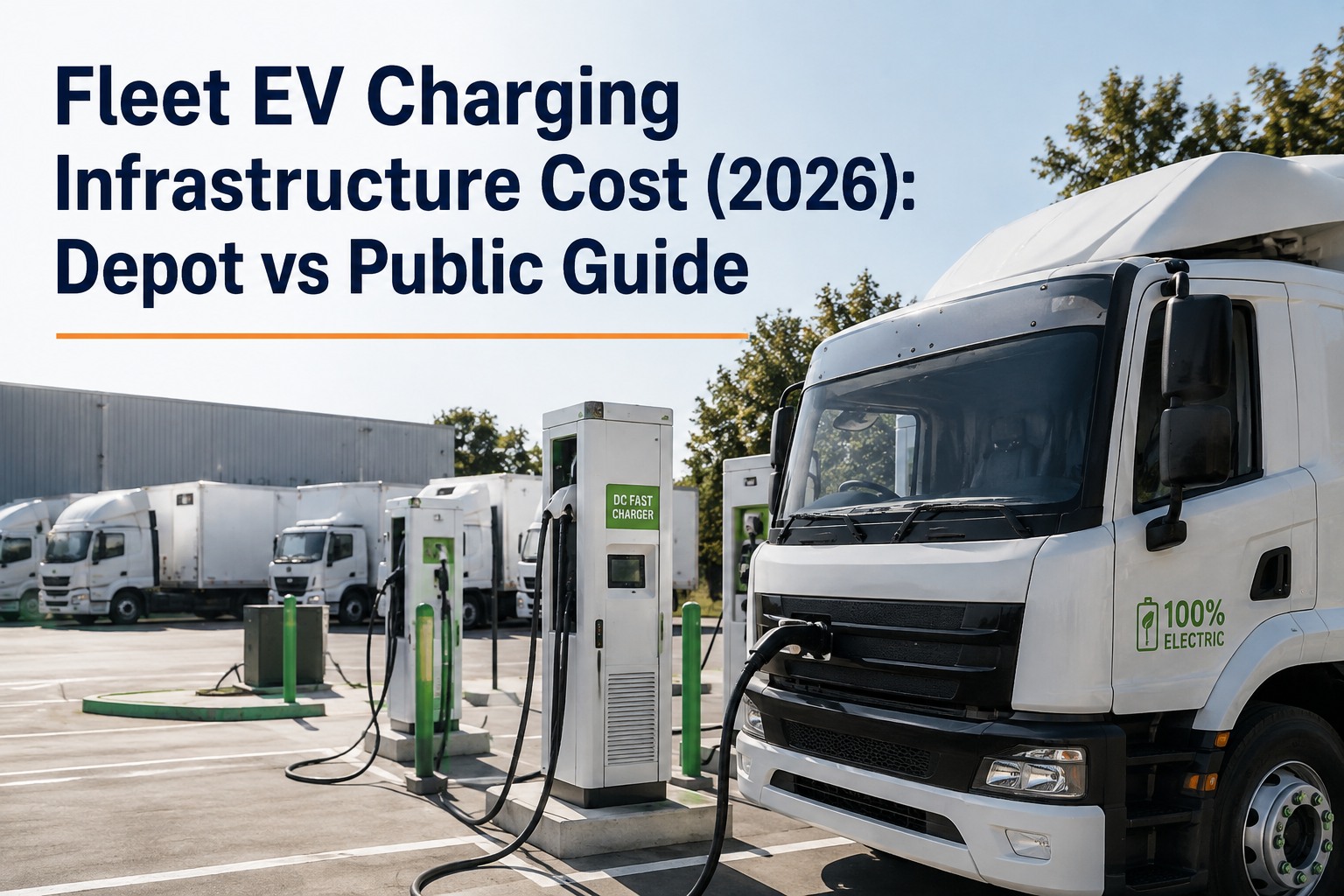
Charging infrastructure planning is often the operational constraint on Class 8 EV deployment. DC fast chargers cost $30,000-$100,000+ per unit installed, plus utility upgrades that can equal hardware costs. Understanding speeds and matching them to route requirements is foundational.
Depot charging economics beat en-route: commercial electricity runs $0.10-$0.18/kWh vs $0.30-$0.60/kWh for public DCFC. Most 2026 Class 8 EV deployments use depot charging predominantly, reserving high-speed for exceptions. Chargers require PM too — connector inspection, cable cooling service, firmware updates, ground-fault testing. A broken charger idles the truck it was scheduled to feed.
The 5-year TCO cascade — where the savings actually live
The financial case concentrates in two line items: fuel per mile and maintenance per mile. Purchase premium ($50K-$110K over diesel) is offset by operational savings. Realistic regional scenario: 150 miles/day, 150,000 miles/year, 5-year hold, depot charging at $0.14/kWh.
The delta narrows on long-haul where diesel fuel efficiency is higher. It widens on urban delivery where diesel MPG suffers. TCO also depends on incentives (federal, state, utility) reducing EV purchase price by $40K-$120K in some jurisdictions. Try HVI free to capture per-truck maintenance and charging cost data automatically.
From a fleet director running 47 eCascadia units
We deployed our first eight eCascadia units in Q3 2024 running regional loops around our Southern California DCs. Depot charging overnight, roughly 175 miles per shift. First-year lesson: we ran them on our diesel PM schedule out of habit, and everything worked fine — too fine. We were still paying for oil-change slot time and DPF service on trucks that had neither.
Rebuilt the PM program from scratch in Q1 2025 with EV-specific templates. Added battery SoH check every 25,000 miles, thermal system service every 40,000, HV cable inspection annually. Result: PM cost per mile dropped 43% year over year. Uptime up 11%. SoH data 6 points above fleet average at 18 months. Charging infrastructure is now on the same PM calendar as the tractors.
DKDaniel K.Fleet Director · Regional grocery distribution · 47 Class 8 EV, 128 diesel tractors
Frequently asked questions
How much does electric truck maintenance cost vs diesel?
NACFE fleet modeling indicates BEV maintenance runs 30-50% below diesel per mile. Savings come from eliminated PM: no engine oil, DPF cleaning, DEF system, fuel filters, injectors, turbocharger, or emissions diagnostics. Regen extends brake life 2-3x. Typical regional distribution: diesel $0.15/mi vs EV $0.08/mi — ~45% reduction, or $52,500 savings per truck across 150,000 mi/yr over 5 years. Savings don't come automatically — fleets running EVs on legacy diesel PM schedules miss EV-specific inspections. Realizing full advantage requires redesigning PM with EV-specific templates aligned to each OEM's tiered schedule.
What are the biggest maintenance differences on Class 8 electric trucks?
Three categories relative to diesel. Eliminated: engine oil, DPF, DEF, fuel filters, injectors, turbocharger, emissions diagnostics, multi-speed transmission fluid. Retained: tires (wear faster due to higher torque), suspension, wheel bearings, air compressor, hydraulic brakes, HVAC (higher demand). New: battery state-of-health tracking, thermal management, HV cable integrity, regen diagnostics, DC/DC converter and inverter service, charging system PM, CAN-bus and firmware updates. The overall PM cadence shifts from combustion-related mechanical service toward electronics, cooling, software, and high-voltage integrity.
How long do electric truck batteries last?
Class 8 EV battery packs carry 8-12 year warranties with expected end-of-warranty SoH of 70-80% of original capacity. Real-world life depends on three variables: depth-of-discharge (20-80% window outlasts 0-100% cycling), charging behavior (frequent DCFC above 80% SoC accelerates fade), and thermal exposure (cells consistently above 45°C degrade faster than at 15-35°C). Fleets applying best practices see SoH curves 5-8 points above average at 5 years. Battery replacement runs $100K-$200K plus dealer labor. Some OEMs offer battery leasing to transfer replacement risk.
How long does it take to charge a Class 8 electric truck?
Depends on battery capacity, charger output, and target SoC. Freightliner eCascadia (438 kWh) or Volvo VNR Electric (up to 565 kWh) on a 250-270 kW DCFC reaches 80% SoC in ~90 minutes. Full charge takes 2.5-3.5 hours because rate tapers above 80%. Level 2 AC (240V, ~20 kW) takes 12-20 hours — suitable for overnight depot only. Tesla Semi uses Megawatt Charging (MCS) above 1 MW for sub-30-minute 80% charges. Depot charging beats en-route: commercial electricity $0.10-$0.18/kWh vs $0.30-$0.60/kWh public DCFC. Most 2026 deployments use depot charging predominantly.
Do electric trucks need less brake maintenance because of regenerative braking?
Yes, with a counterintuitive twist. Regen recovers up to 80% of braking energy, extending brake pad and rotor life 2-3x. Brake replacements every 100,000-150,000 mi on diesel might occur every 250,000-400,000 mi on EV — approximately $4,400/vehicle/year savings on heavy-duty applications. The twist: reduced brake use creates its own problems. Pads and rotors that rarely engage develop rust in wet or road-salt conditions. Caliper components can seize. Brake fluid absorbs moisture regardless of use. Right adaptation: modified inspection focus — shorter visual intervals, rotor surface checks, caliper pin lubrication, fluid moisture testing on time (not just mileage).
Turn the 30-50% maintenance advantage into your fleet's operating reality.
HVI ships with EV-specific inspection templates aligned to Freightliner eCascadia, Tesla Semi, Volvo VNR Electric, Kenworth T680E, and Peterbilt 579EV tiered maintenance schedules. Battery state-of-health tracking, thermal management, HV cable integrity, regen diagnostics, and charging infrastructure PM. One unified system for BEV and diesel Class 8 assets. Live in 5-7 days.
Freightliner · Tesla · Volvo · Kenworth · Peterbilt · NFPA 70E aligned · SOC 2 Type II