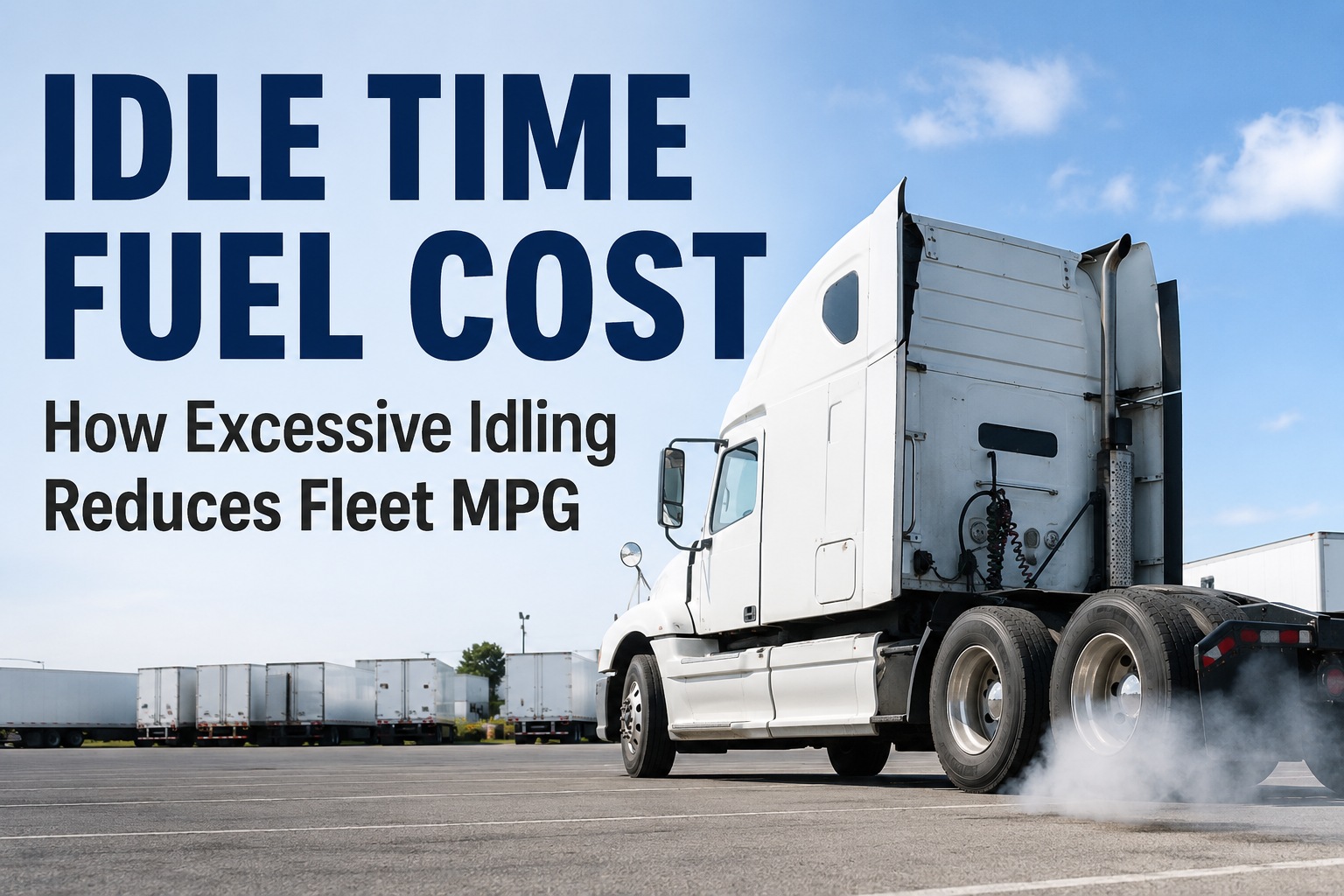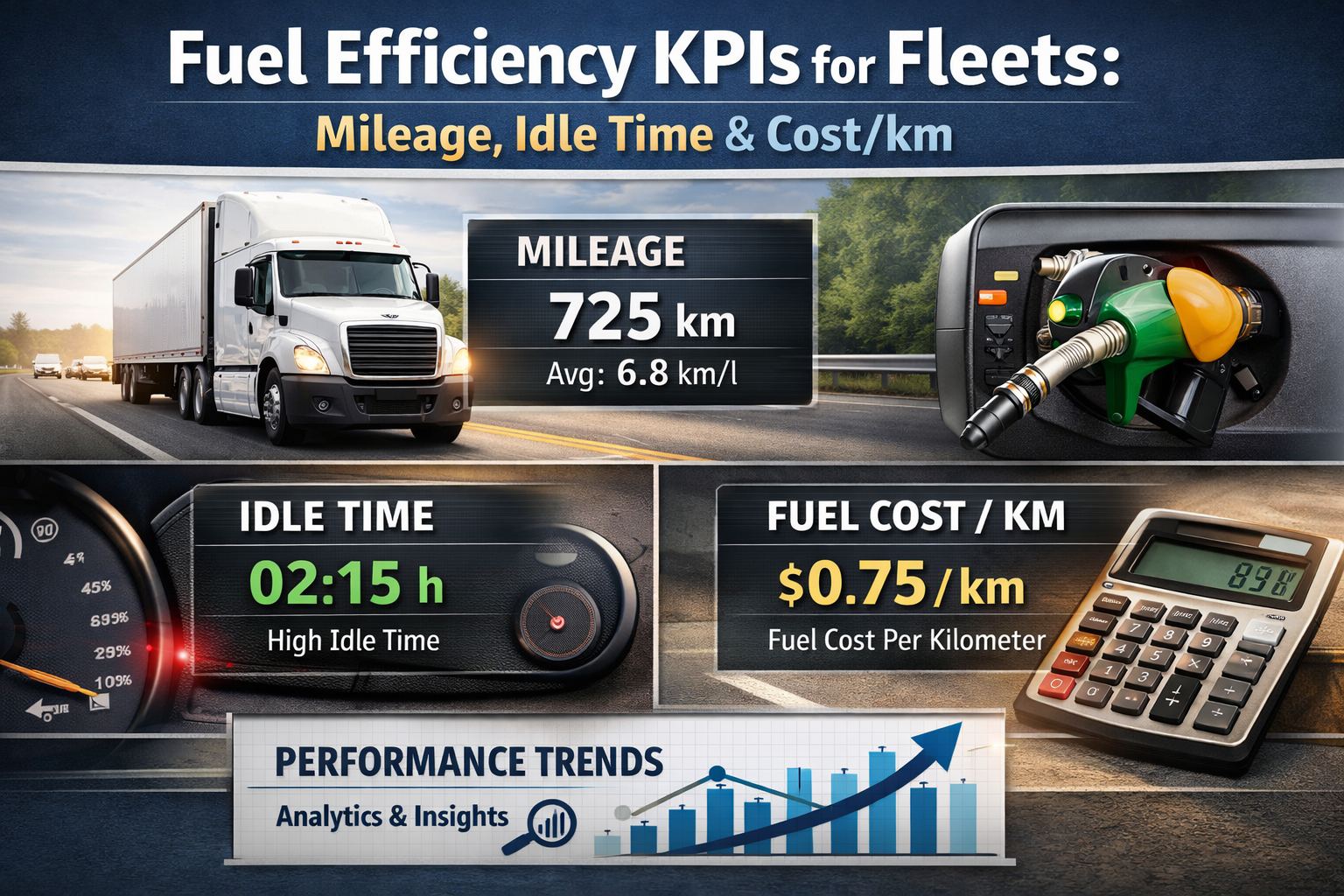
Fleet idle time reduction is one of the highest-ROI fuel-saving levers commercial fleets have — and it's rarely about a single fix. A typical Class 8 tractor at idle burns 0.8–1.5 gallons per hour producing zero miles, adds roughly 25 miles of engine wear per idle hour, and quietly erodes fleet MPG month after month. On a 100-truck fleet averaging 30% idle time, that's approximately $224,000 in annual idle fuel cost plus thousands of hours of unnecessary engine wear and rising emissions that increasingly matter for CSA scoring, insurance underwriting, and shipper contract eligibility. This 2026 fleet idle time reduction guide walks the five core anti-idle strategies (policy, telematics, driver coaching, battery HVAC, and APUs), the state regulations making some mandatory, and the exact stacked approach that moves a fleet from 30% idle to under 10% inside a year. Book a demo after you see how integrated telematics + policy enforcement closes the gap.
5 Fleet Idle Reduction Strategies at a Glance
No single intervention gets a fleet to best-in-class idle levels. Below is the full stack — from zero-cost policy to high-capex hardware. Pick your entry point, layer the rest over time.
Anti-idling policy
Written 5-minute idle policy with defined exceptions. Zero capex, immediate rollout.
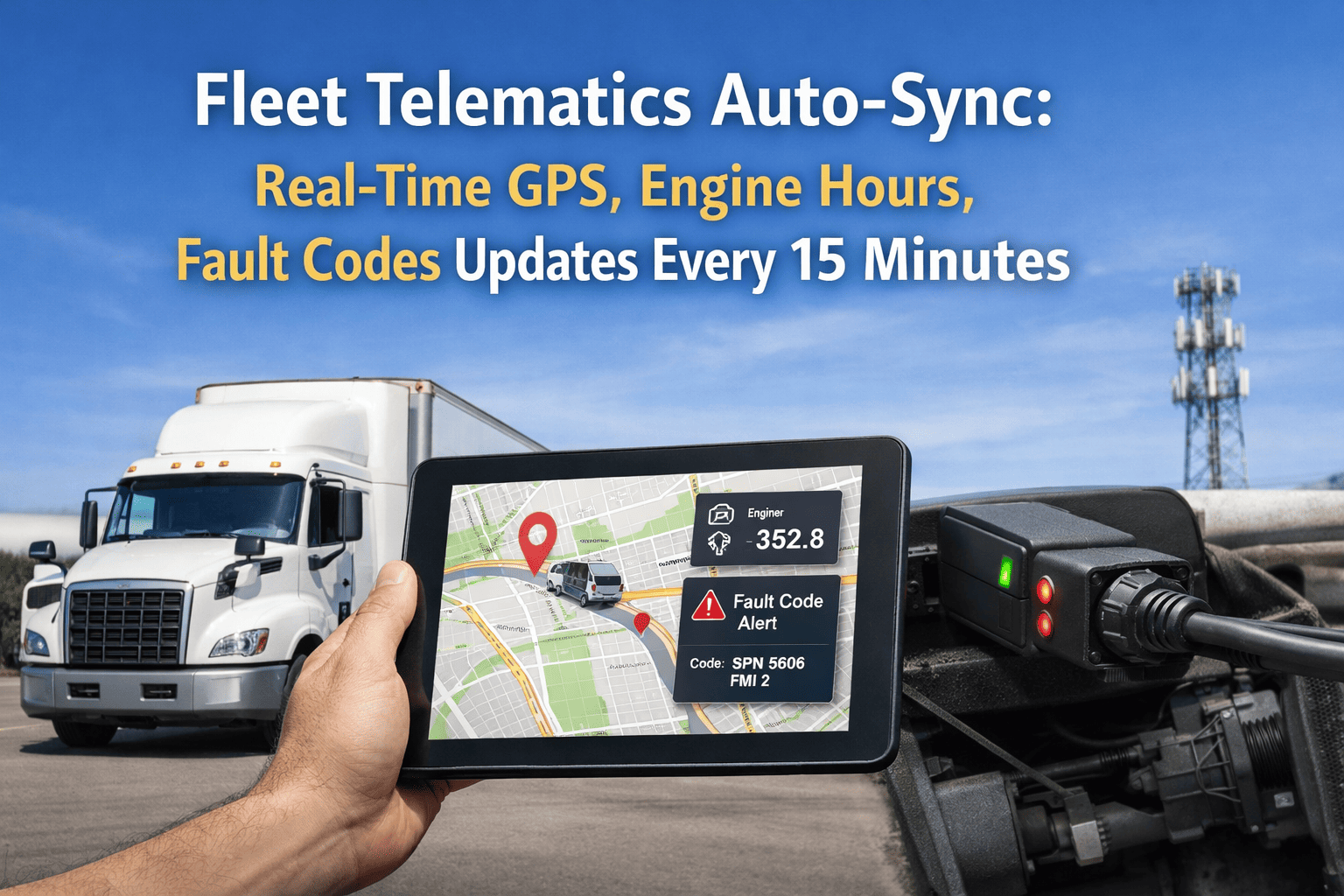
Telematics visibility
$25–45/vehicle/month. Per-truck ECM capture and dashboards. Payback 30–60 days.
Driver coaching
Weekly scorecards + bottom-quartile coaching. Requires telematics data as input.
Battery HVAC / bunk heater
$800–$2,500/unit. Cab comfort without engine idle. Fits regional or short-haul.
Auxiliary Power Unit (APU)
$8,000–$14,000/truck. Full cab HVAC + shore power. Long-haul sleeper fit.
The five strategies above stack. Layered in the right order, a fleet moves from 30%+ idle baseline to under 10% within twelve months. Below is the detail on each — plus the state anti-idling laws that dictate where some are legally required.
Anti-idling laws every commercial fleet should know
Idle reduction moved from voluntary cost control to partial compliance obligation over the last decade. Below are the key jurisdictions where idle time reduction is legally enforced — most fleets operating cross-country intersect with at least one.
Strict enforcement states
Additional restricted jurisdictions
Beyond regulation, the EPA SmartWay program certifies fleets on idle metrics, and increasingly, insurance underwriters and sustainability-focused shippers ask for idle percentage data in RFPs. Idle discipline is now a commercial-eligibility question, not just a cost question. Book a demo to see automated idle compliance tracking
Auxiliary Power Units (APUs) — the anti-idle hardware option
APUs are small onboard power systems that provide cab climate control, HVAC, and 120V power without running the main engine. They're the highest-capex idle reduction strategy but the largest single-intervention impact for long-haul sleeper operations where drivers rest overnight in the cab.
Small 2-cylinder diesel engine drives a generator, HVAC compressor, and 120V inverter. Burns 0.15–0.25 gph vs 1.0+ gph for main engine idle — 75–85% fuel reduction for cab-comfort load.
Battery-driven HVAC + inverter, recharged during driving from alternator or shore power. Zero fuel burn during rest. Duration limited by battery capacity (typically 8–10 hours) — fits most sleeper rest cycles.
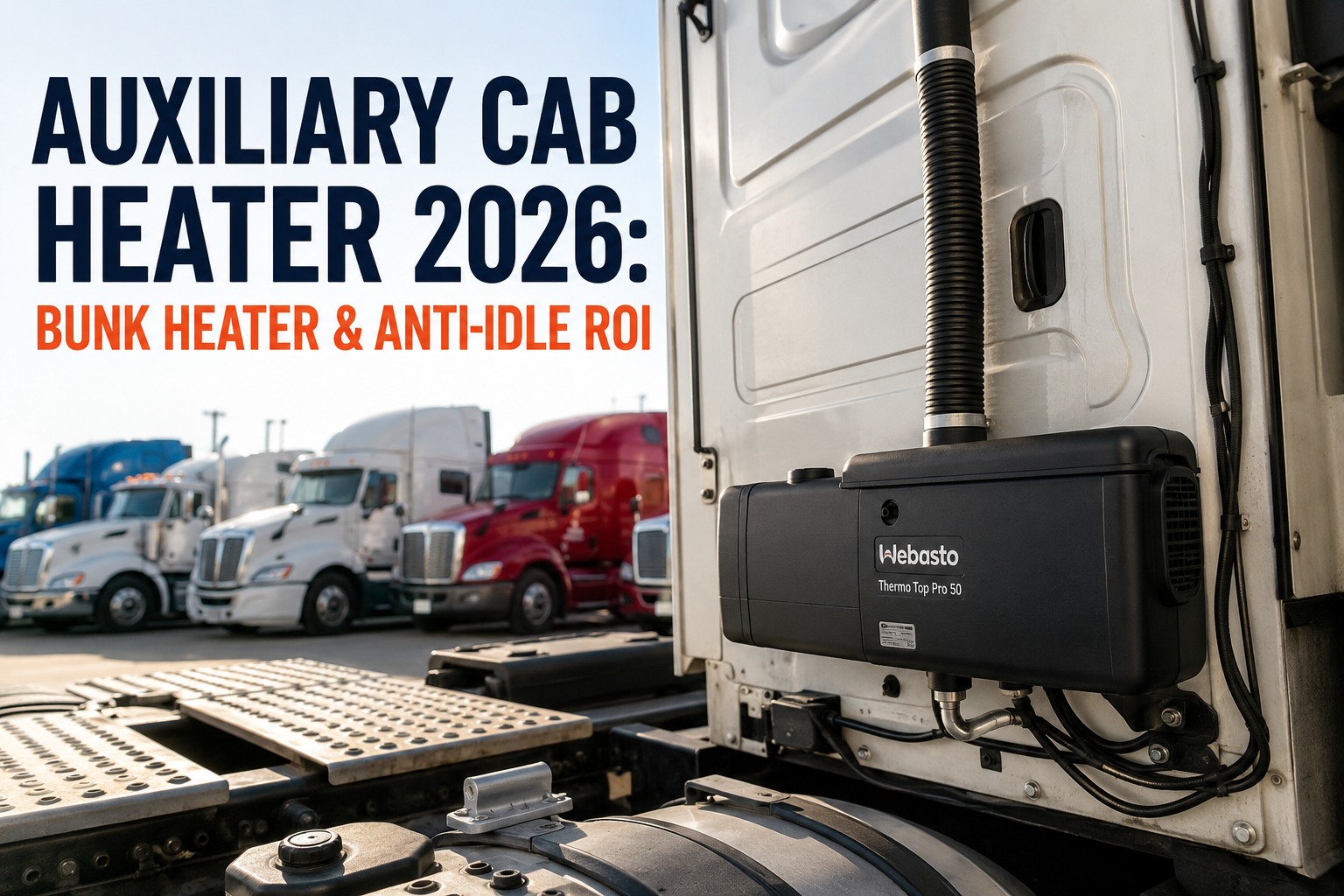
Diesel-fired heater for cab warmth in cold weather only — no A/C or 120V power. Fraction of full APU cost. Fits fleets whose main idle driver is winter cab-comfort heating, not summer A/C.
APU selection depends on operating region, sleeper duty cycle, and driver preferences. Long-haul OTR fleets in mixed climates favor full battery-electric or diesel APUs; regional short-haul or winter-heavy operations often get better ROI from bunk heaters alone. Start free and track per-truck APU utilization
Building an effective anti-idling policy — the 7-point checklist
Every idle reduction program should start with a written anti-idling policy. It costs nothing to draft, takes a week to roll out, and creates the foundation every other strategy depends on. The seven points below are the minimum every fleet's policy should cover.
A written policy without measurement is theater. Once the policy is in place, telematics visibility (Strategy 2 above) is what turns it from documentation into daily behavior. Book a demo to see anti-idling policy enforcement built into HVI
5 mistakes fleets make with idle reduction programs
Every underperforming idle reduction program traces to one of five recurring mistakes. All are preventable.
Buying APUs before rolling out policy
Fleet spends $500K on APUs across 50 trucks. Drivers who never had an idle policy in place still idle the main engine out of habit. APUs sit unused. Capital burned, idle unchanged.
Setting one blanket idle target for every duty cycle
Fleet mandates "under 10% idle" fleet-wide. Long-haul OTR trucks hit it easily; reefer operations with mandatory PTO idle can't. Compliance becomes impossible for entire subclasses.
No exception protocol for cold-weather or heat waves
Idle policy has no weather exemption. Drivers in -10°F winter shut engines off, cabs become uninhabitable, drivers restart within 20 minutes anyway. Compliance appears to fail; safety concern grows.
Coaching without positive reinforcement
Idle reduction program consists only of warnings and discipline. Best drivers hitting under 5% idle never hear about it. Program becomes seen as punitive, morale drops, culture pushes back.
Measuring idle only in aggregate, never per driver
Fleet reports "12% average idle" on monthly dashboard. Number stays flat quarter after quarter. Nobody sees the per-driver spread — 4 drivers at 22% idle are dragging the average up while 30 drivers at 8% do the work.
Every mistake above compounds silently until quarterly review reveals the idle number hasn't moved despite investment. Get the program design right the first time. Book a demo to see integrated idle workflow — or start free and put Strategies 1–3 in place this week .
From a fleet safety and operations manager on the twelve-month journey
Baseline idle was 28% across 60 tractors when we started. We wrote a policy in week one, rolled it out with signed acknowledgments in week two, layered telematics visibility by month one. First quarter, we hit 18% idle just from measurement and policy alone.
Weekly driver scorecards started month four. Bottom quartile got coaching. Top quartile got a $200 quarterly recognition bonus. By month nine we were at 10%. APUs went in on the 22 long-haul sleepers in month ten. Ended year one at 7% idle fleet-wide. Total savings: about $215,000 in the first twelve months. Everything on the strategy stack above — in that order — works.
Frequently asked questions
What's a good fleet idle time percentage to target?
Best-in-class fleets consistently run under 10% idle time fleet-wide, measured as idle hours divided by engine-on hours. Well-managed operations sit at 10–15%. Anything above 20% signals missing policy or telematics visibility. Above 30% is common on fleets that have never systematically tracked idle and represents the largest short-term cost-recovery opportunity available — typically hundreds of thousands of dollars annually across a mid-sized fleet. Duty cycle matters: long-haul OTR should sit at 6–10%, regional day-cab at 8–12%, heavy vocational (dump/mixer) can legitimately run 15–25% due to loading cycles. Reefer operations, PTO work, extreme-weather cabin comfort, and emergency response are legitimate exceptions but should be defined explicitly and tracked separately. The overall target isn't a single number — it's a duty-cycle-adjusted per-vehicle baseline with continuous downward pressure through the strategy stack in this guide.
How much money does reducing fleet idle time actually save?
A typical Class 8 tractor at idle burns 0.8–1.5 gallons per hour, and at $3.75/gal diesel that's $3–$6 per hour of pure idle cost. For a 100-truck fleet averaging 3 hours of idle per truck per workday over 250 workdays, moving from 30% idle to under 10% idle recovers approximately 300,000 gallons of fuel annually — roughly $1.1 million at current diesel prices. On top of that, engine wear reduction (roughly 25 miles equivalent wear per idle hour per ATA), DPF regeneration completion improvements that reduce aftertreatment maintenance 30–40%, and DEF consumption reductions all compound the savings. Insurance underwriting increasingly rewards fleets with low idle metrics, and shipper contract eligibility (particularly food-grade cold chain and DC yards) increasingly requires anti-idling compliance. The financial case is measurable in months, not years.
Do APUs actually pay for themselves?
Yes for long-haul sleeper operations where drivers rest overnight in the cab. A diesel APU costing $8,000–$12,000 typically pays back in 18–30 months on OTR trucks that would otherwise idle 8–10 hours per night for cab HVAC. Battery-electric APUs at $9,000–$14,000 pay back in 24–36 months and deliver zero emissions during rest, which increasingly matters for California operations, port drayage, and sustainability-scored contracts. Bunk heaters at $1,200–$2,500 pay back in 6–18 months for cold-climate fleets whose main idle driver is winter cab warmth. APUs are less valuable for regional day-cab operations where drivers don't rest overnight in the cab — those fleets get better ROI from the first three strategies (policy, telematics, coaching) before considering hardware. The rule: measure idle behavior first, then invest in hardware to attack the specific idle source that remains after policy and coaching have run their course.
What states have anti-idling laws?
Anti-idling regulation is enforced in a patchwork of US jurisdictions. California enforces a 5-minute limit under CARB with commercial-vehicle fines up to $300 per violation, plus stricter local air-quality management district rules. New York enforces 5 minutes statewide, with New York City restricting to 3 minutes (1 minute near schools). Massachusetts, Connecticut, and New Jersey enforce 5-minute limits with fines from $100 to $500. Illinois, Colorado, Utah, and Washington enforce statewide or municipal limits typically at 5 minutes. Major municipalities including Denver, Salt Lake City, Boston, and Philadelphia enforce their own limits above state law. Common exemptions across jurisdictions include extreme weather (typically below 32°F or above 80°F), sleeper berth operation on federally certified equipment, active PTO work, and emergency response. Interstate operators should assume the strictest jurisdiction they touch sets the fleet-wide policy standard.
What's the fastest way to reduce fleet idle time?
The fastest zero-capex intervention is a written 5-minute idle policy with signed driver acknowledgment, which typically drops fleet idle 3–5% within 30 days from the awareness effect alone. Layer telematics visibility on top ($25–45 per vehicle per month) and idle drops another 5–8% inside 60 days from real-time measurement. Add weekly driver scorecards with per-driver rankings and both coaching for bottom quartile plus recognition for top quartile, and idle drops another 4–6% inside a quarter. All three combined typically move a 30% idle baseline to under 15% inside 90 days with zero hardware investment. From there, the hardware layer (bunk heaters, APUs, battery HVAC) closes the remaining gap to under 10% inside twelve months. The stacked approach beats any single-intervention approach every time, and it costs less because the low-capex strategies eliminate the idle sources that don't require hardware.
Turn every idle reduction strategy into a measured, managed KPI
HVI captures per-truck idle hours automatically, alerts on state anti-idling limit crossings, tracks driver-level idle scorecards for coaching, and monitors APU utilization to prove your hardware ROI. Live in under two weeks — and typical fleets identify 5–8% of recoverable idle in the first month.
No credit card · No hardware · Idle dashboard ready day one