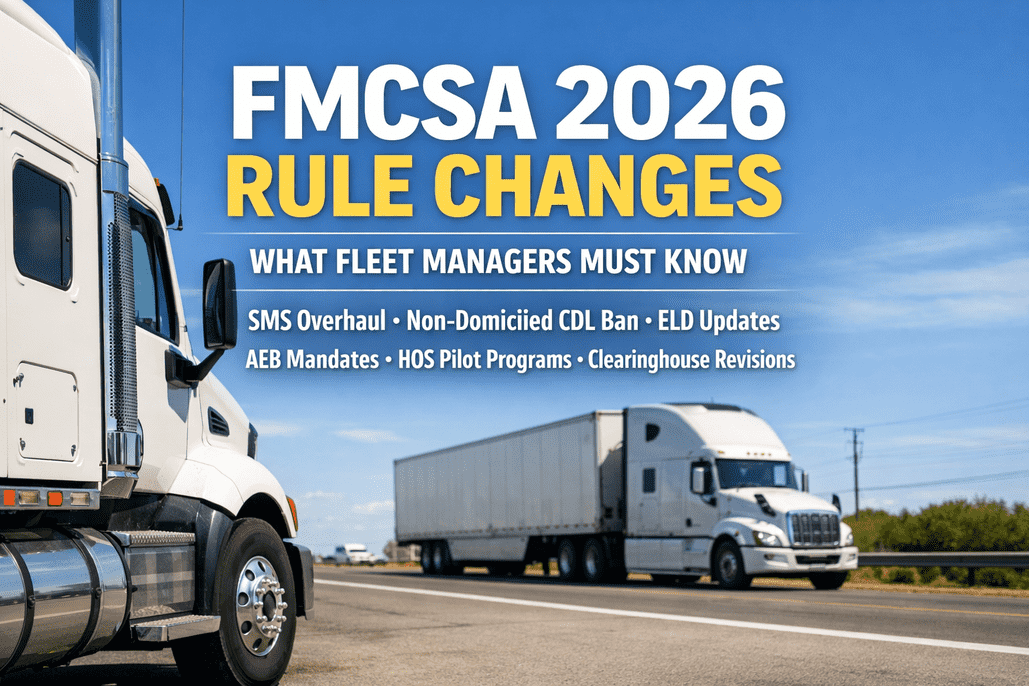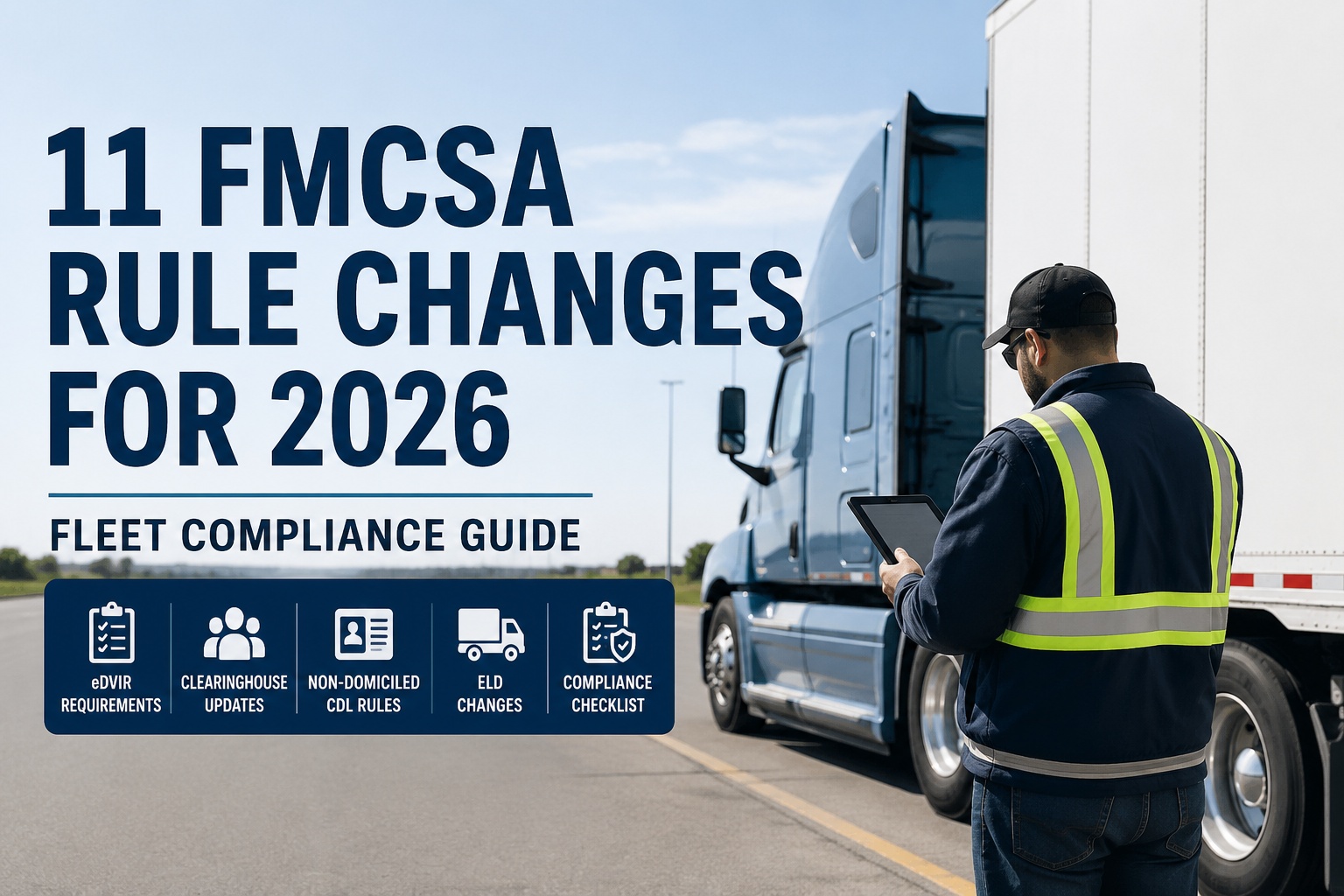
The 11 FMCSA rule changes for 2026 add up to the most significant regulatory shift in commercial trucking since the ELD mandate took full effect in 2019. Some rules formalize digital compliance that's already standard practice in leading fleets (electronic DVIR, MOTUS registration). Others tighten enforcement on gaps inspectors have been flagging for years (revoked ELDs, non-domiciled CDL abuse, English Language Proficiency as OOS). Several sit in active rulemaking — AEB requirements, HOS sleeper berth splits, and ADS inspection standards — and will shape the next 24 months of fleet operations. This page walks all 11 FMCSA rules changes for 2026 grouped by impact category, when each takes effect, what compliance actually looks like, and the specific action fleet safety and maintenance teams should be taking right now. Book a demo after you see how digital compliance workflow closes every gap.
The 11 FMCSA Rule Changes Fleets Face in 2026
Grouped by category: what's actively enforced today, what new requirements just took effect, and what's coming next in FMCSA rulemaking. Every rule with its effective date and impact rating.
The 11 changes above are grouped by what compliance action they demand today. Enforcement rules require immediate audit of current fleet operations. New requirements demand workflow updates. In-progress rulemaking demands monitoring and planning. Below is the deep dive on each rule, in the same three categories, with the specific action fleet compliance teams should be taking now.
The 4 FMCSA enforcement changes hitting fleets right now
These four rules are already active and being enforced at every roadside stop and audit. Each one has grounded trucks or dinged CSA scores in the first quarter of 2026.
CSA Scoring Overhaul
Feb 2026The BASIC categories are replaced with a peer-comparison model that ranks carriers directly against similar-sized fleets. OOS violations now carry a 2x severity weight, the counting window narrows from 24 months to 12 months, and Vehicle Maintenance splits into standard and Driver Observed subcategories. Recent inspections carry maximum weight.
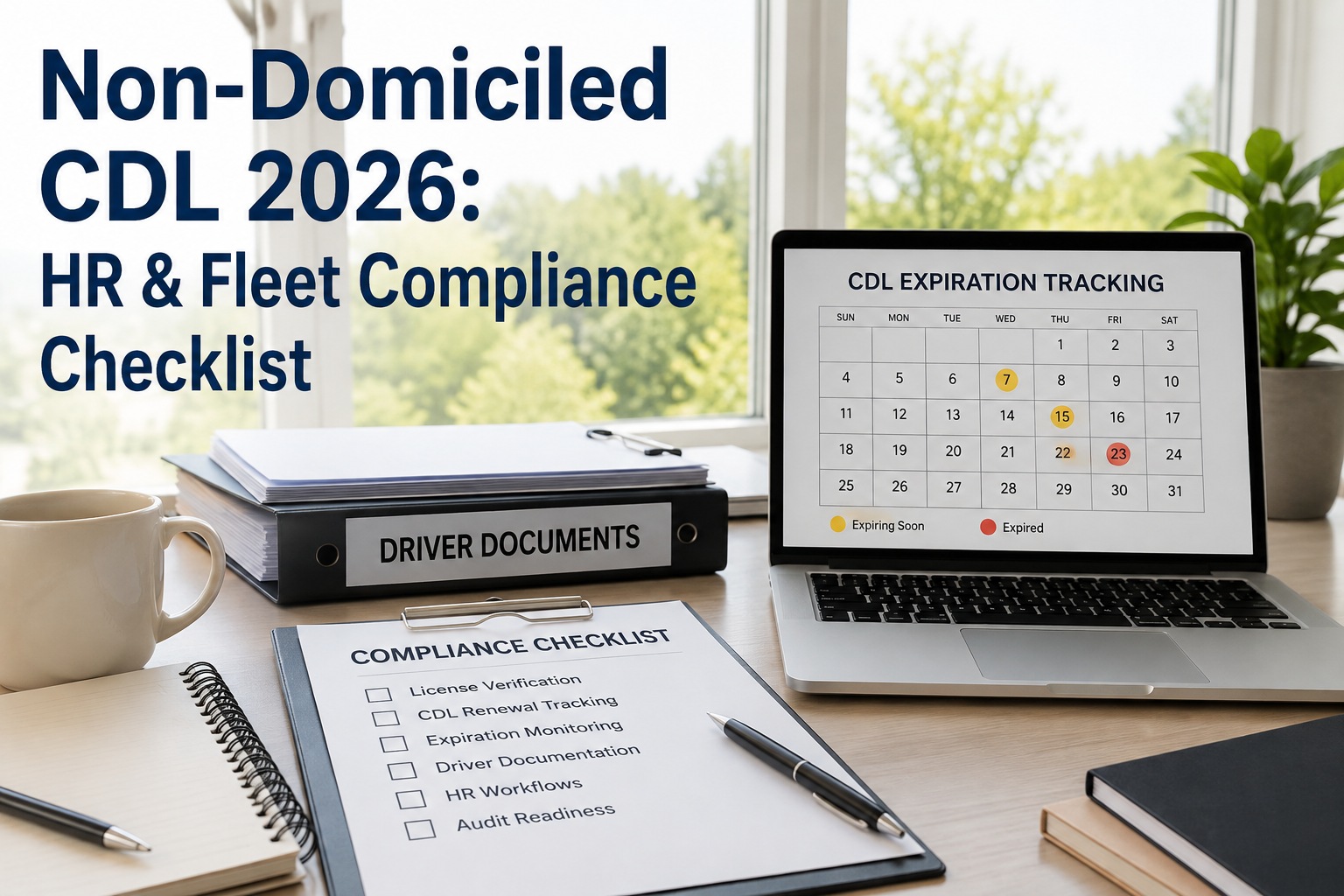
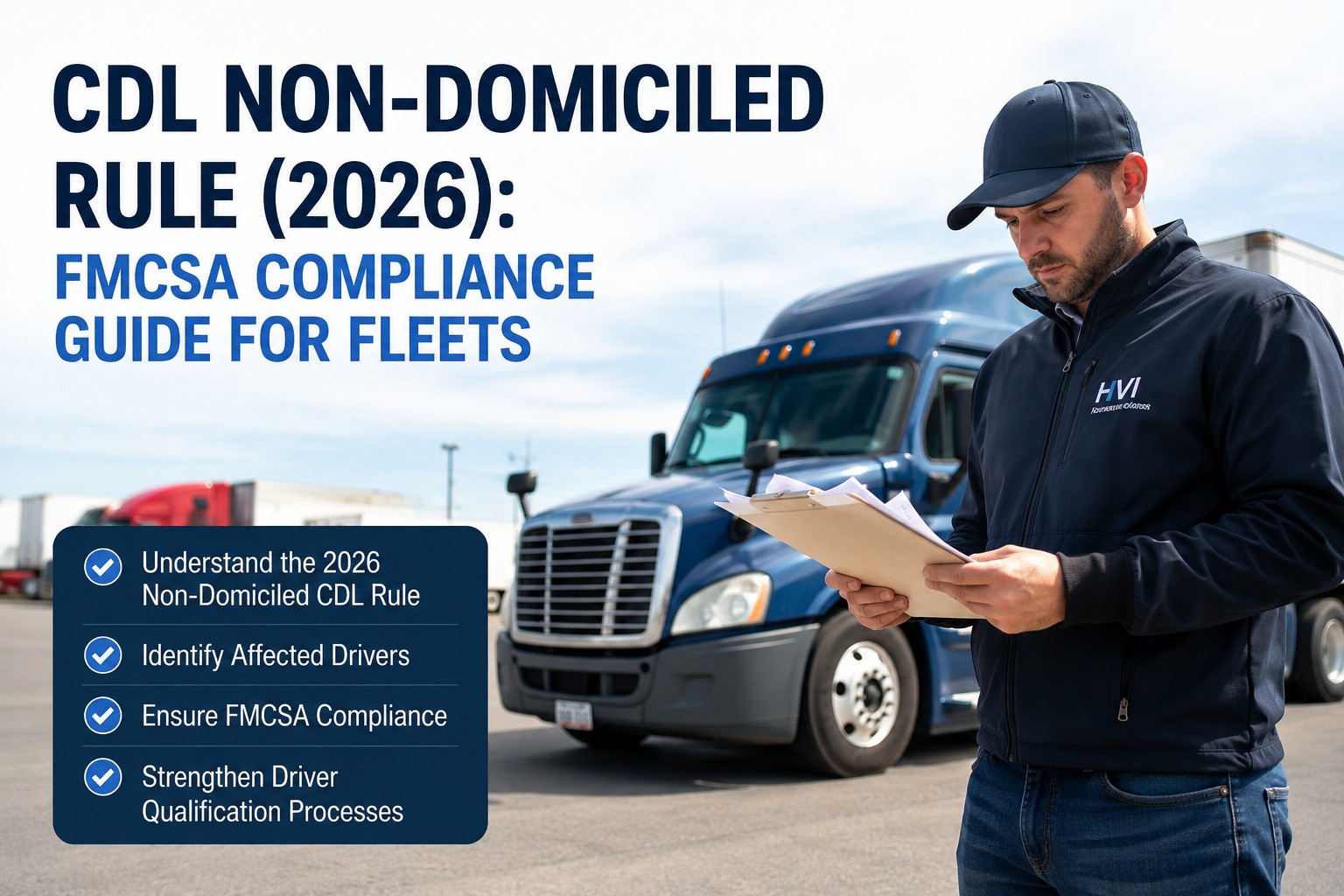
Non-Domiciled CDL Crackdown
Feb 7, 2026Following safety audits and fatal crashes, FMCSA effectively removed over 90,000 non-domiciled CDLs from non-compliant state programs. Renewals now require in-person visits, stricter visa and identification checks, and proof of lawful presence under 49 CFR 383.23. Several states have paused issuance entirely; some are phasing out non-domiciled CDLs altogether.
ELD Registered List Enforcement
Feb 7, 2026Using a revoked ELD now triggers immediate out-of-service at any roadside inspection. As of late 2025, PSS ELD, Black Bear ELD, and RT ELD Plus were removed from the FMCSA registered list. Carriers had 60 days to replace non-compliant devices; enforcement is active as of Feb 7, 2026. The OOS violation also lands on the carrier's CSA record.
English Language Proficiency OOS
May 2025FMCSA made English Language Proficiency (ELP) violations an out-of-service condition. A CDL alone does not equal proof of English proficiency — drivers must demonstrate real-time communication ability during roadside interactions. Inspectors have discretion to place drivers OOS if they cannot respond to questions in English.
The four enforcement changes above account for the sharpest increase in fleet OOS rates over the last 12 months. Every one of them is preventable with the right audit process. Book a demo to see per-truck CSA impact tracked live
The 4 new FMCSA requirements that just took effect
These four changes formalize new compliance requirements — some enabling (digital DVIR), some restricting (broker financial responsibility). All four require workflow changes now.
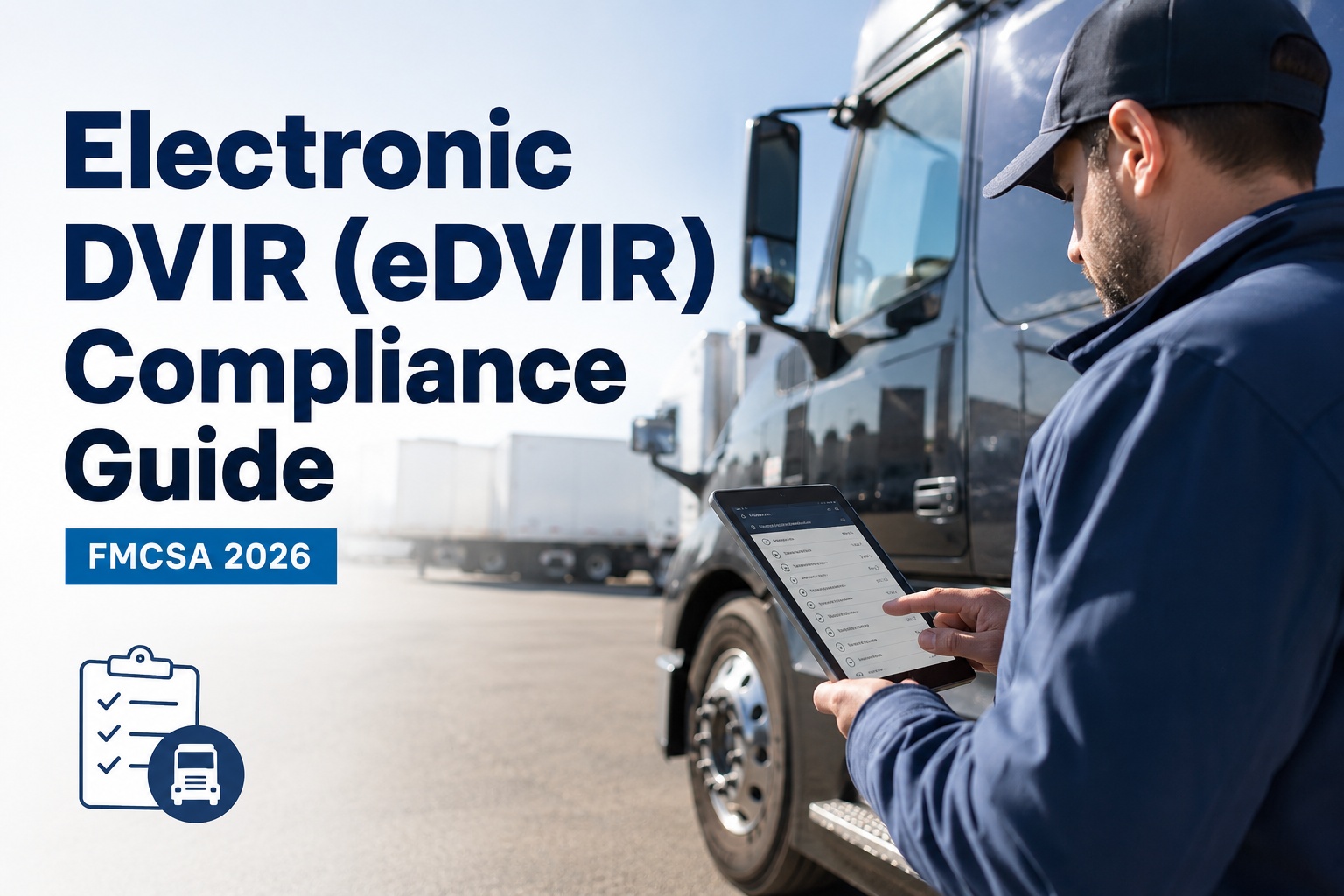
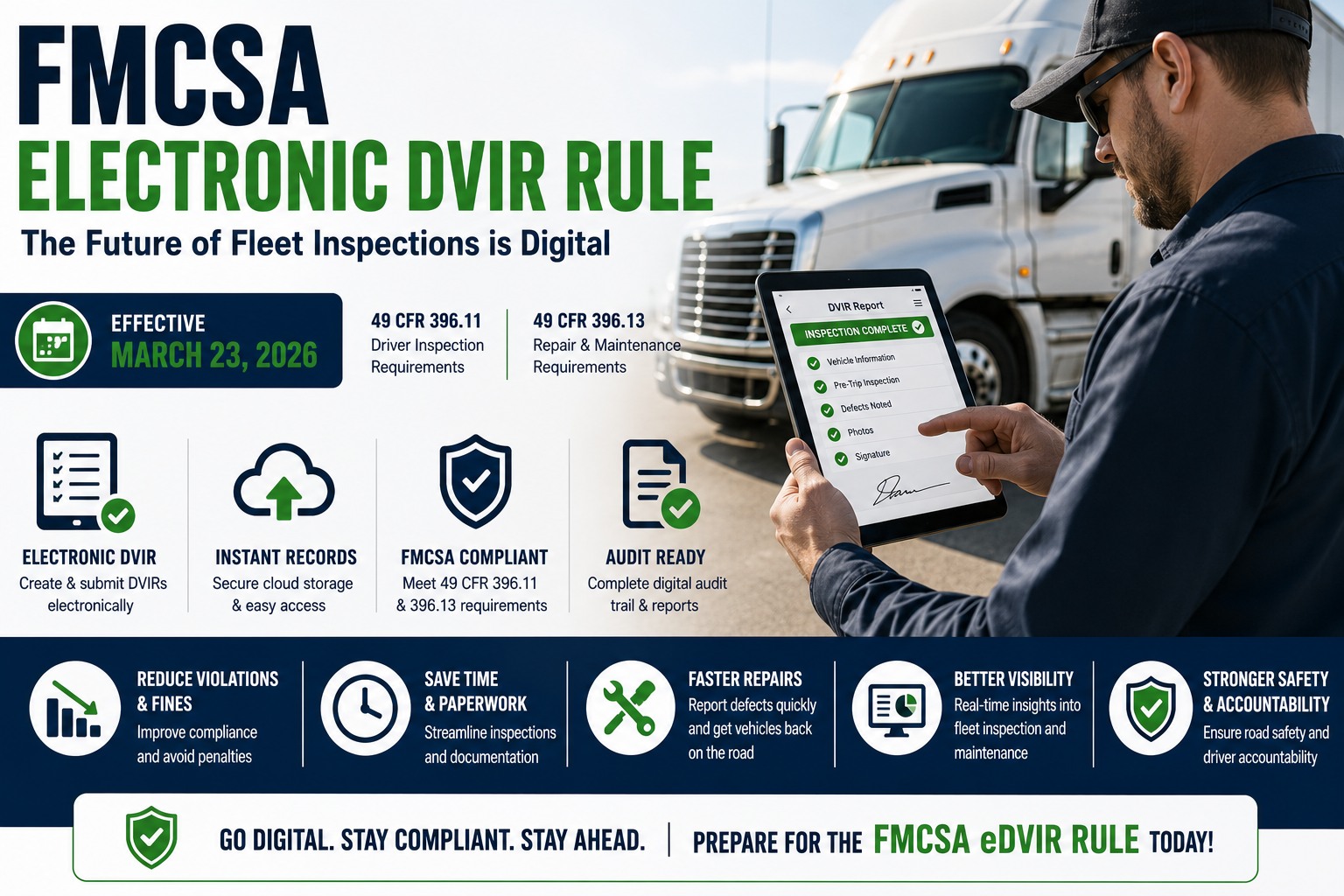
eDVIR Final Rule
Feb 19, 2026The Electronic DVIR Final Rule formally removes ambiguity around paper-based Driver Vehicle Inspection Reports. Electronic DVIRs are now explicitly legal under federal regulation: digital signatures from both driver and mechanic are valid (no wet ink required), records must be stored electronically and be producible for a DOT auditor within minutes. Paper is still permitted but no longer preferred.
Broker Financial Responsibility
Jan 16, 2026Stricter financial responsibility requirements for brokers and freight forwarders. Rule aims to ensure intermediaries have sufficient financial backing to cover unpaid carrier invoices. Trust and surety arrangements now face tighter oversight. Indirect impact for carriers: broker solvency risk drops, but broker selection due diligence rises.
Clearinghouse-II Updates
2026 rollingDrug & Alcohol Clearinghouse enforcement now emphasizes 3-business-day reporting timelines by employers or Consortium/Third-Party Administrators. Tighter integration with state licensing agencies means Clearinghouse violations immediately affect driver eligibility — before the carrier even receives notice. Compliance shifts from paper management to data accuracy.
MOTUS Registration System
2026 phasedFMCSA is rolling out MOTUS to replace the long-delayed Unified Registration System (URS). MOTUS is a fully digital, fraud-resistant registration ecosystem — part of FMCSA's long-term move toward eliminating chameleon-carrier fraud. Phased rollout throughout 2026 with transitional guidance ahead of launch.
The four new requirements above shift the compliance workflow from reactive paper-checking to proactive digital enforcement. Fleets already running digital compliance systems adapt with minimal disruption; paper-based fleets face a compressed catch-up timeline. Start free and get eDVIR-ready this week
The 3 FMCSA rulemakings in progress fleets should track
These three aren't finalized yet, but movement is expected in 2026. Fleets that treat them as planning items now avoid the scramble later.
HOS Sleeper Berth Pilot
2025–2026FMCSA is running sleeper berth pilot programs testing more flexible rest splits, including 6/4 and 5/5 options in addition to the current 8/2 and 7/3 splits. Goal: give drivers additional ways to manage fatigue while maintaining compliance. Early findings from the 2025–2026 pilot will determine whether alternative splits move into formal rulemaking. This is a potential operational opportunity, not a restriction.
AEB Rule Reissued for Comment
2026 comment periodFMCSA and NHTSA reissued the Automatic Emergency Braking rule for public comment in 2026 with updated analysis. Direction is unmistakable: factory-installed AEB and Electronic Stability Control (ESC) will be required on all new Class 7 and Class 8 truck orders in the coming years, with medium-duty coverage expected to follow. Rule not final yet, but regulatory direction is clear.
ADS Inspection Rule (Autonomous Trucks)
May 2026 proposedBy May 2026, FMCSA expects to propose a rule addressing inspection, repair, and maintenance standards for automated driving systems (ADS). This rule could set the framework for how autonomous trucks coexist with traditional fleets. Fleets running or planning autonomous operations should be monitoring closely.
None of the three above will change fleet operations tomorrow. All three will shape fleet operations over the next 24 to 36 months. Compliance teams tracking them now avoid the scramble that hit fleets when the ELD mandate finalized. Book a demo to see the compliance calendar with rulemaking alerts
5 mistakes fleets are making with the 2026 FMCSA rule changes
Every fleet that fails an FMCSA audit or gets dinged on CSA scoring under the 2026 rules can trace it back to a small set of preventable mistakes. Here are the five most common.
Not verifying ELD registration status quarterly
Carrier assumes their ELD is fine because it worked last quarter. In fact the device was moved to the Revoked list 30 days ago. First roadside inspection = immediate OOS.
Delayed Clearinghouse violation reporting
Employer or C/TPA takes 10 business days to report a positive drug test to Clearinghouse. Under the 3-day rule, that's non-compliance. Under Clearinghouse-II, the delay compounds because violations affect driver licensing before the carrier knows.
Keeping paper DVIRs after eDVIR final rule
Paper is still permitted, but the audit gap is now impossible to close. Auditor requests 12 months of DVIRs. Paper system produces partial records with unreadable signatures. Digital system produces complete records in under 10 seconds.
Not auditing non-domiciled CDL driver files
Fleet has 20 drivers on non-domiciled CDLs. Renewal dates weren't tracked. Three drivers hit renewal windows in states that paused issuance. Trucks parked, contracts missed.
Treating CSA overhaul as a scoring quirk instead of a system shift
Fleet ignores the 2026 CSA changes because "the scores fluctuate anyway." Under the new peer-comparison model with 2x OOS severity and 12-month window, one bad inspection cycle drives the percentile into intervention thresholds — and shipper contracts follow the scores.
Every mistake above is preventable with a digital compliance workflow that treats all 11 FMCSA rule changes as one integrated system. Paper systems and one-off spreadsheets can't keep up. Book a demo to see the full workflow — or start free and get compliance-ready this week .
From a fleet safety director on the 2026 FMCSA compliance shift
The 2026 FMCSA changes hit our operation like three separate crises stacked on top of each other. Our ELD provider got revoked in December — 60 days to replace 40 devices. CSA scoring changed underneath us the next month. Then we got audited in March and the auditor asked for 18 months of DVIRs across 60 trucks.
The paper system couldn't produce the records fast enough. The digital rebuild took the rest of the quarter. Advice to anyone still on paper: don't wait for the audit to force the migration.
Frequently asked questions
What are the most important FMCSA rule changes for 2026?
The most impactful 2026 FMCSA rule changes are the CSA scoring overhaul (peer-comparison model with 2x OOS severity), the non-domiciled CDL crackdown that removed over 90,000 CDLs, ELD registered list enforcement with immediate OOS for revoked devices (Feb 7, 2026), the eDVIR Final Rule formally legalizing electronic DVIRs (Feb 19, 2026), stricter broker financial responsibility (Jan 16, 2026), Clearinghouse-II enforcement with 3-business-day reporting, English Language Proficiency violations now treated as OOS, the MOTUS registration system replacing URS, and pending rulemakings on AEB, HOS sleeper berth pilots, and ADS inspection standards. Together these represent the largest FMCSA regulatory update cycle since the ELD mandate took full effect in 2019.
Do I have to switch to electronic DVIRs in 2026?
Not strictly — paper DVIRs remain permitted under the February 19, 2026 Electronic DVIR Final Rule. The rule doesn't mandate electronic, it explicitly authorizes it and confirms that digital signatures from both driver and mechanic are legally valid without wet ink. However, most fleets are migrating to eDVIR for three practical reasons. First, audit-ready records: 2026 rules require records producible within minutes for a DOT auditor, which paper systems struggle with. Second, integration with ELD: FMCSA noted streamlined compliance when DVIR and ELD systems connect. Third, defect-to-work-order routing: eDVIR platforms funnel defects directly into the maintenance workflow with photo verification. Best practice: adopt eDVIR proactively rather than under audit pressure.
How do I check if my ELD is still registered with FMCSA?
Visit eld.fmcsa.dot.gov/List and search for your device model. The list shows which devices are Registered (compliant) and which are Revoked (must be replaced). As of early 2026, several providers had their registrations revoked for failing to meet technical specifications — PSS ELD, Black Bear ELD, and RT ELD Plus were removed in late 2025. Under the February 2026 enforcement update, officers can place your vehicle out of service immediately if your ELD is on the Revoked list. Best practice: check the list quarterly. If your device is removed, you have 60 days to replace it with a registered device; during that window, drivers should maintain paper logs as backup. Repeated Revoked-ELD violations can trigger a compliance investigation.
What happens to my CSA score under the 2026 overhaul?
The 2026 CSA overhaul restructures how percentiles are calculated but keeps the same goal — ranking carriers by safety risk. Key changes: out-of-service (OOS) violations now carry a severity weight of 2 (up from 1), meaning one OOS event drives your percentile up sharply. The counting window narrowed from 24 months to 12 months. Vehicle Maintenance has been split into standard and Driver Observed subcategories. The peer-comparison model ranks you directly against similar-sized fleets, meaning clean inspections at high volume actively improve your percentile. Practical implication: constant inspection readiness matters more than ever, and one bad month is harder to hide.
Are non-domiciled CDL holders still allowed to drive commercial vehicles?
Yes, but with substantially tighter oversight. Following safety audits and fatal crashes, FMCSA effectively removed over 90,000 non-domiciled CDLs from non-compliant state programs by February 7, 2026. Renewals now require in-person visits (not remote or online), stricter visa and identification checks, and documented proof of lawful presence under 49 CFR 383.23. Several states paused issuance entirely (including Pennsylvania at various points), and some are phasing out non-domiciled CDLs altogether. Existing licenses may be revoked if improperly issued. For fleets employing non-domiciled drivers: audit driver qualification files immediately, flag renewal dates in your compliance calendar, and build in 30–60 extra days of processing time to avoid mid-assignment expiration.
One workflow closes 8 of the 11 FMCSA 2026 compliance gaps at once
HVI enforces eDVIR compliance out of the box with GPS-stamped, photo-verified inspections, tracks per-truck CSA impact under the new peer-comparison model, verifies ELD registration status, surfaces Clearinghouse reporting deadlines, and preserves audit-ready records for every FMCSA and CVSA inspection. Live in under two weeks.
No credit card · No hardware · 2026 compliance-ready day one