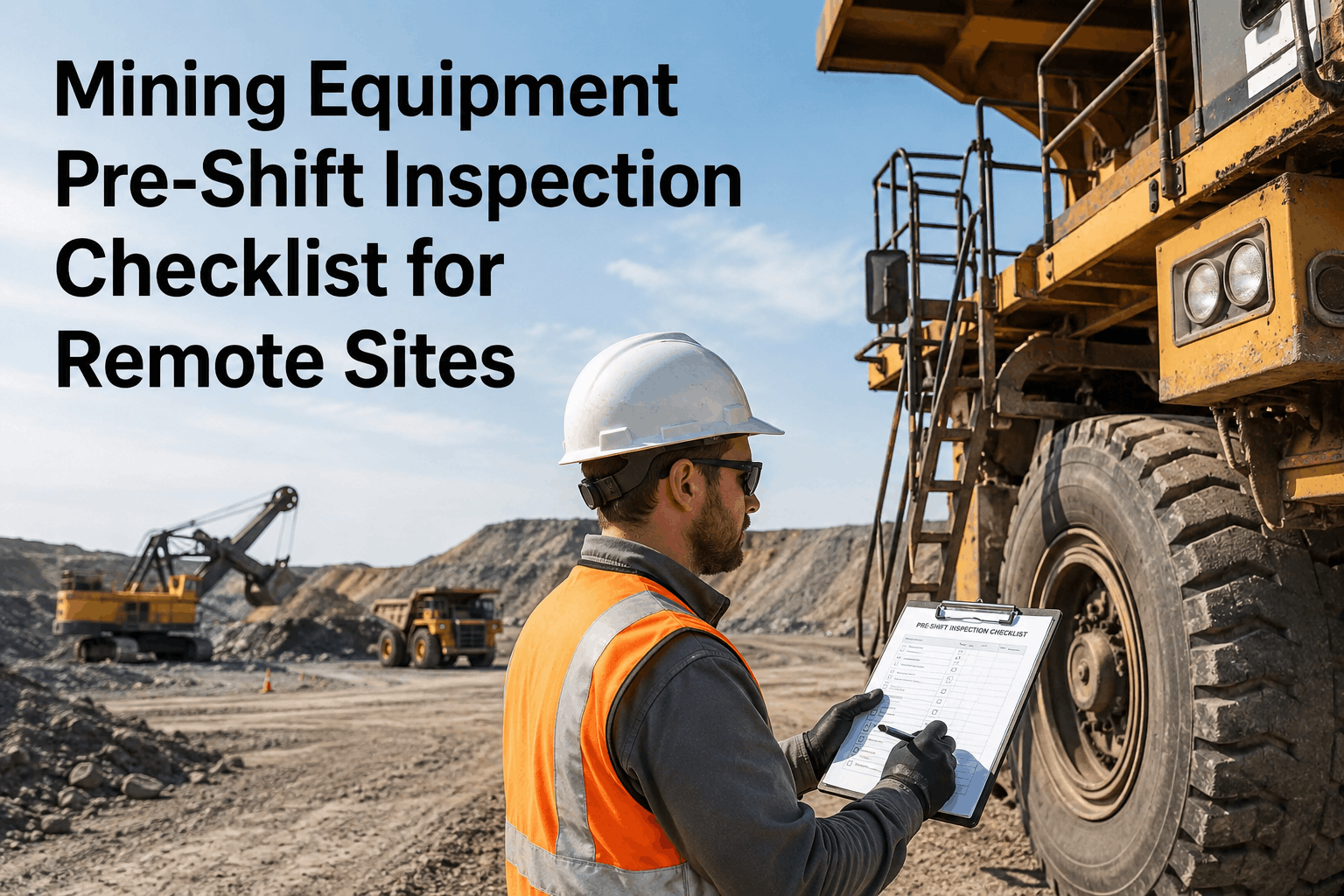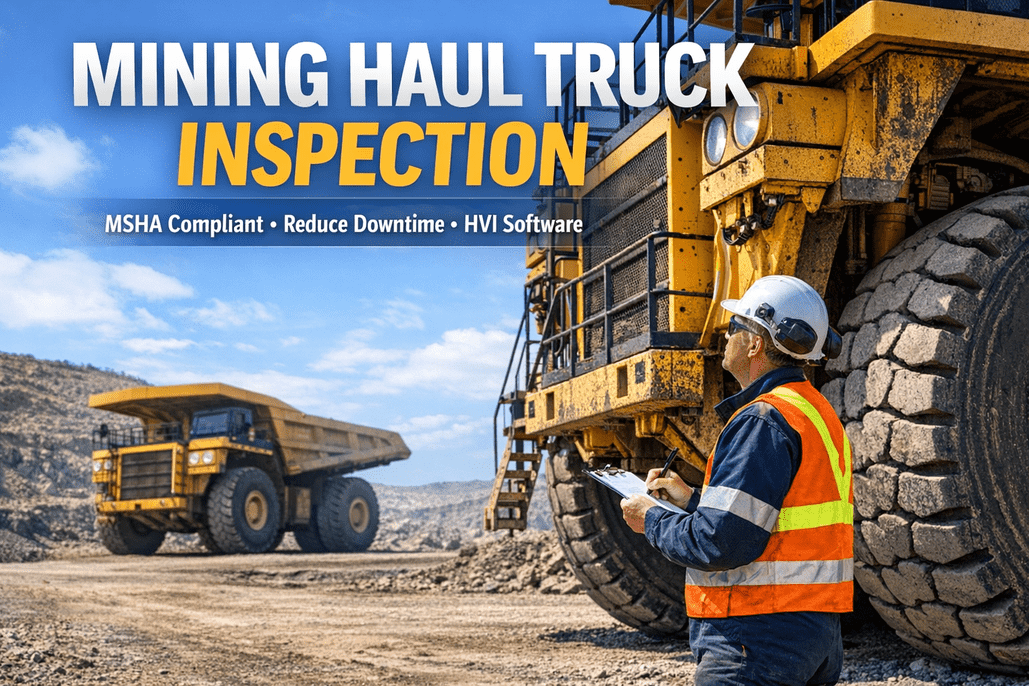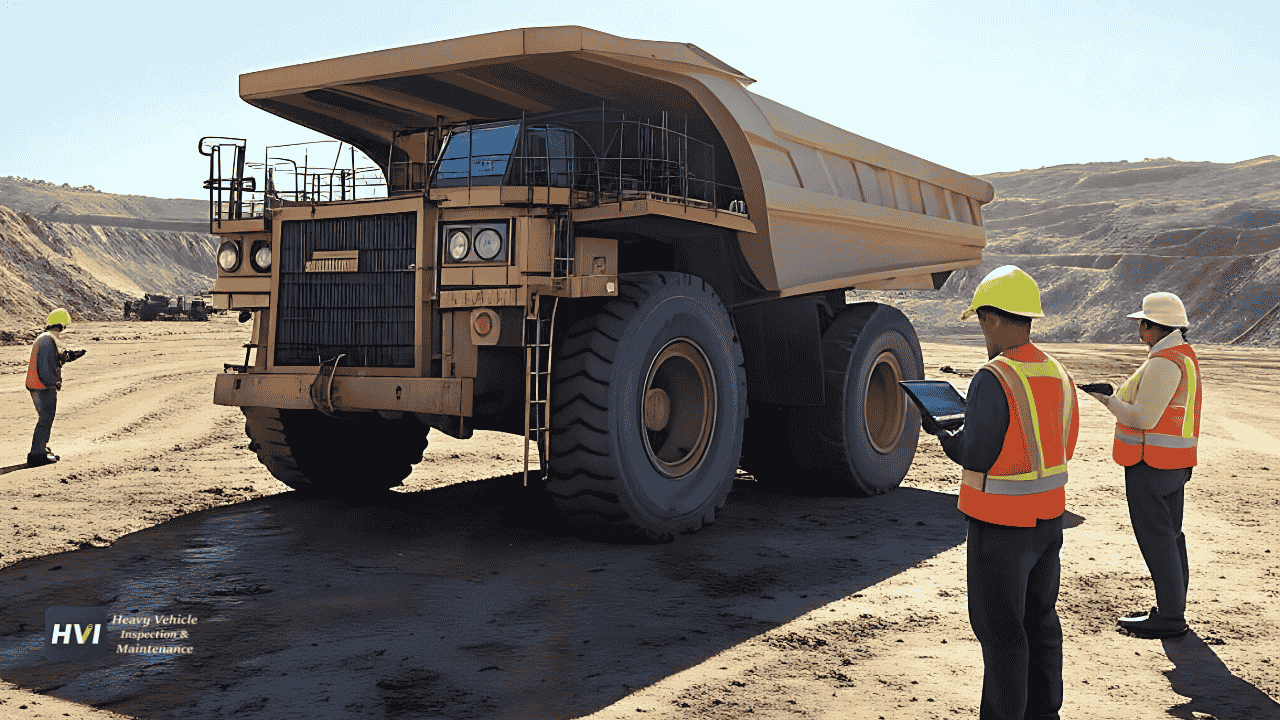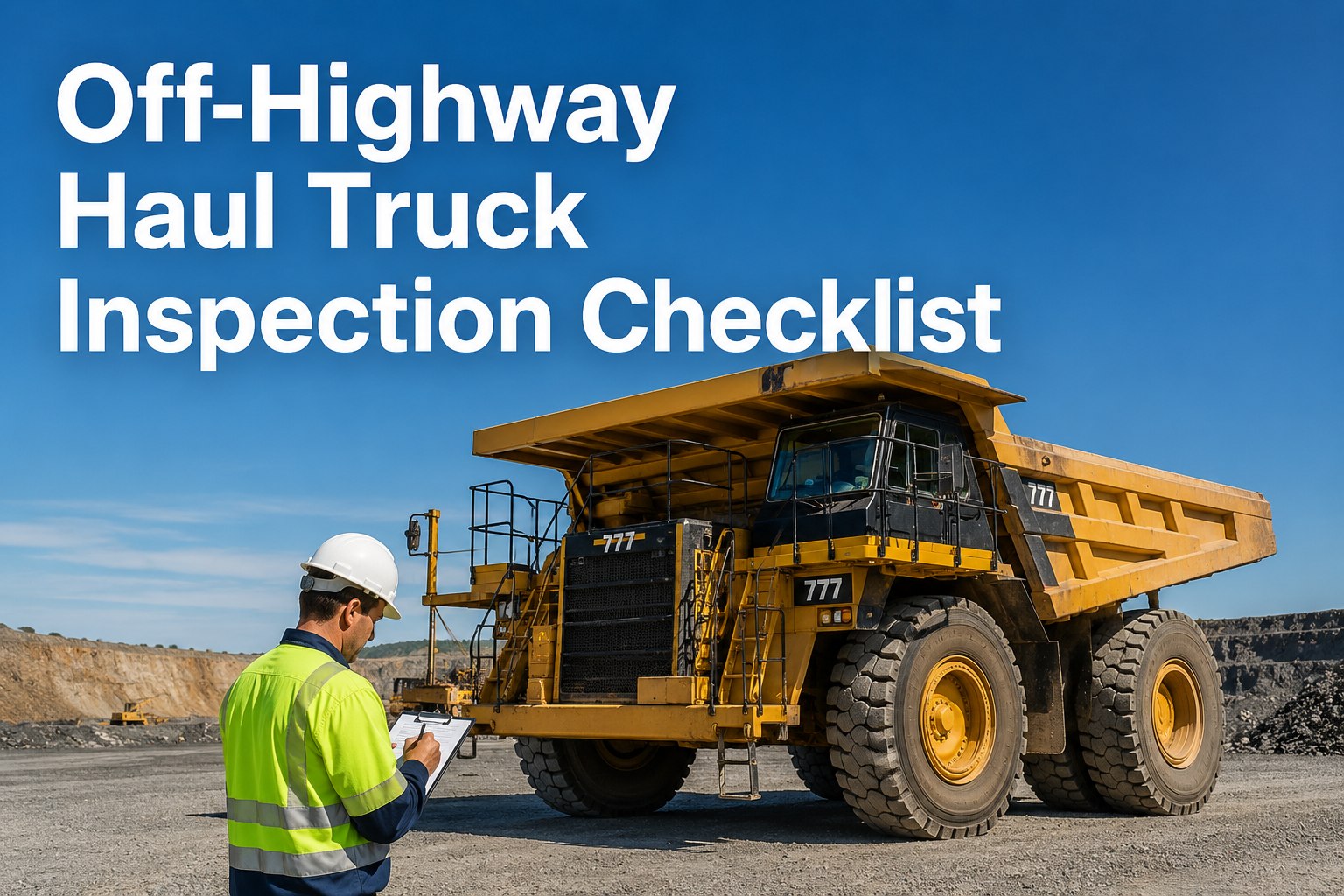
An off-highway haul truck is the backbone of every mine and quarry — a rigid-frame machine hauling 100 to 360 tons a cycle, and the one asset whose availability translates straight into production tons. Which is exactly why the pre-shift inspection isn't a formality: a comprehensive inspection program can extend haul-truck lifespan 15–20% and cut downtime by up to 35%, while a missed defect on a 200-ton machine on a haul ramp is a catastrophic-failure and safety event, not just a repair. These trucks live in the harshest duty cycle there is — constant maximum payload, abrasive dust, steep grades, and around-the-clock running — so the items that matter most are the ones built for that load: the frame, the hydropneumatic suspension, the wet-disc retarding brakes, the dump body, and the payload system that keeps every load inside the truck's structural limits. This guide lays out the 360° walk-around, the system-by-system inspection checklist, why payload monitoring belongs on that checklist, and how to turn a found defect into a tracked repair. book a 30-minute walkthrough to see it set up for your haul fleet.
A 200-ton machine on a haul ramp. The pre-shift check is what stands between it and catastrophe.
HVI runs the full off-highway haul truck inspection from a phone or tablet — frame, suspension, brakes, body, and payload — captures defects with photos, tags unsafe trucks out of service, turns defects into work orders, and works offline in the pit for rigid haulers across your fleet.
What a real inspection program delivers
The pre-shift check is the cheapest insurance on the most expensive machine in the pit. The numbers make the case before the checklist does.
Haul trucks are the backbone of production, so even small gains in availability translate directly into tons and dollars. The pre-shift inspection is where those gains start — it catches the developing failure while it's still a cheap fix at ground level instead of a stranded machine blocking a haul road.
Start with the 360° walk-around
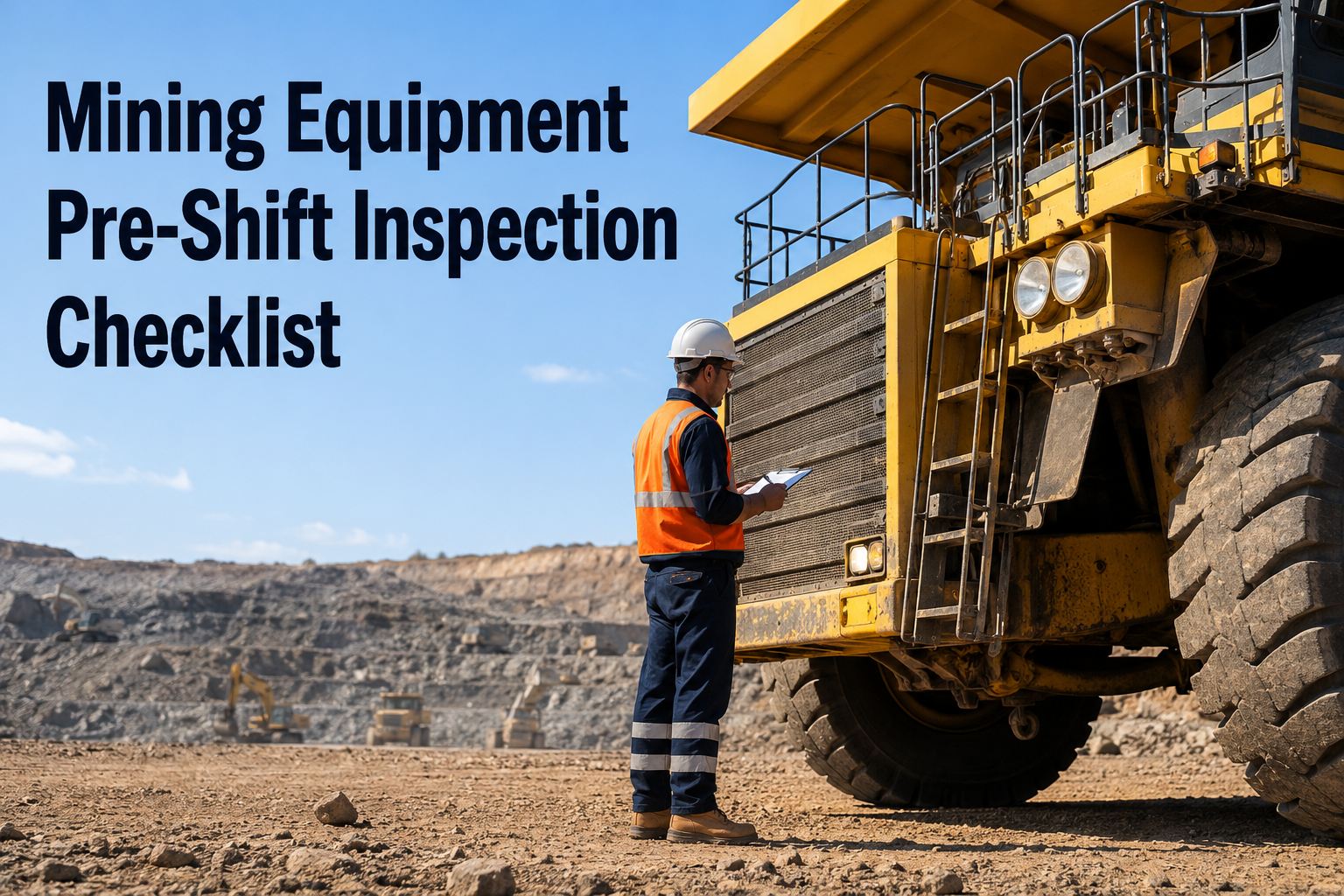
Before any system check, the operator walks the whole truck. On a machine this size, the walk-around is a safety ritual as much as an inspection — and modern haulers are built to support it from the ground.
Access & egress
Diagonal stairway, steps, and handholds clean, secure, and undamaged — three points of contact on a machine where a fall is a serious injury.
ROPS / FOPS & ground checks
Rollover and falling-object protection intact, no leaks pooling under the truck, no visible damage to frame, tires, or body from the previous shift.
Ground-level service center
Modern haulers centralize fluid ports, isolators, and emergency stops at ground level — check levels and isolators safely without climbing the machine.
The walk-around is also where camera and monitoring systems get verified — a 360° bird's-eye camera system is only a safety asset if every lens is clean and working. HVI guides the operator through the walk-around step by step, with photo capture on anything found.
The system-by-system checklist
After the walk-around, the inspection works through the systems that carry the load and stop the truck. These are the high-consequence checkpoints unique to a rigid hauler.
Frame & structure
The rigid frame takes the full payload every cycle. Inspect for cracks, especially at welds and high-stress points, plus deformation and corrosion — a frame crack is a catastrophic-failure precursor.
Hydropneumatic suspension
Front struts and rear suspension cylinders checked for correct charge, oil leaks, and ride height. Worn suspension transfers shock straight into the frame and accelerates structural fatigue.
Brakes & retarder
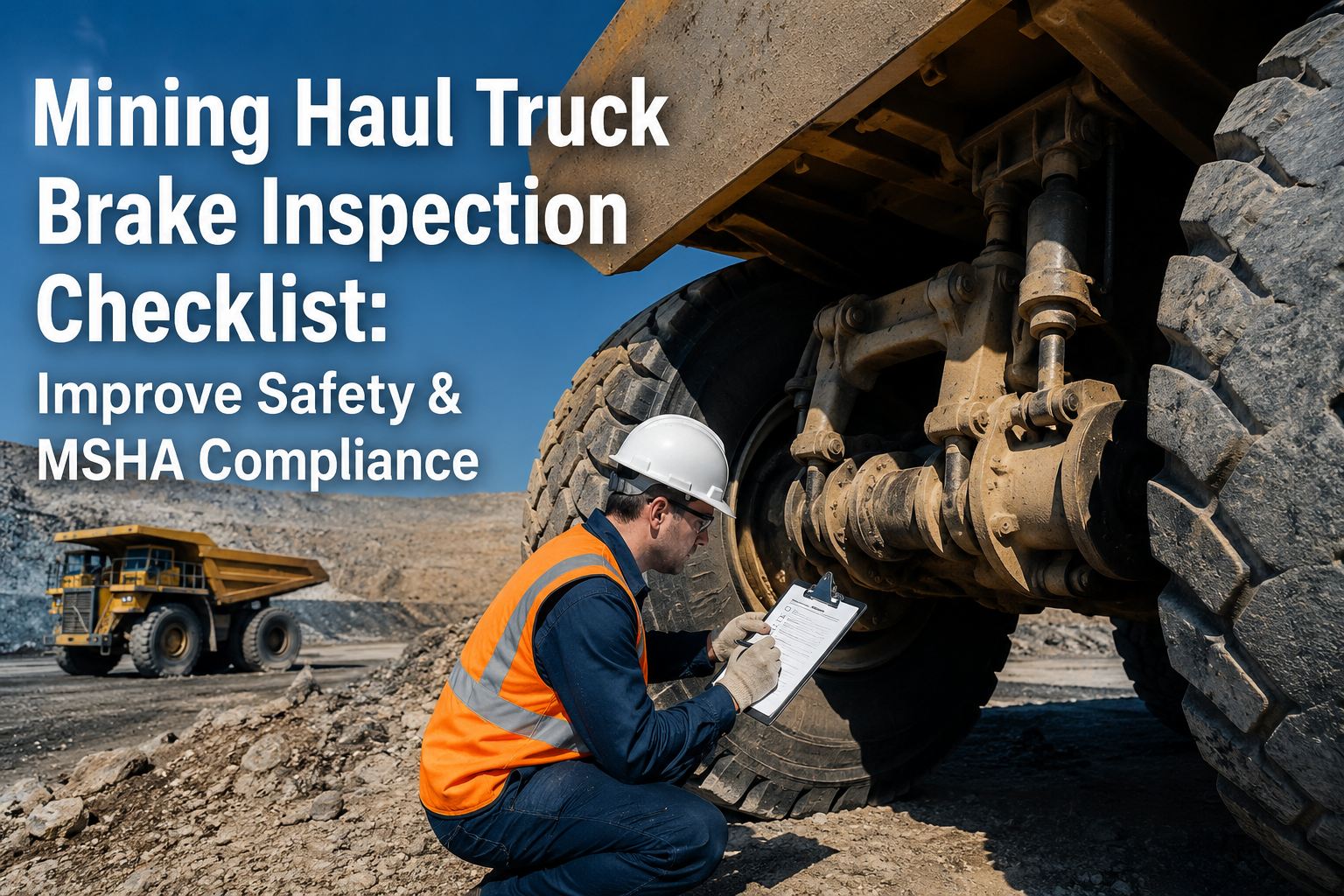
Oil-cooled wet-disc service brakes, parking brake, and the retarder that controls descent on grade — all tested for holding and response. On a loaded downhill haul, the retarder is the difference between control and disaster.
Tires & wheels
Tire condition, pressure, cuts, and heat, plus wheel and rim integrity. The most expensive consumable on the truck and the one abrasive haul roads punish hardest.
Engine, drivetrain & fluids
Engine oil, coolant, transmission and hydraulic levels, leaks, belts, and the aftertreatment system — checked at the ground-level service center before start.
Dump body & hoist
V-shape body inspected for cracks, wear, and material carryback; hoist cylinders and pins for leaks and security. Carryback adds dead weight that eats payload and stresses the frame.
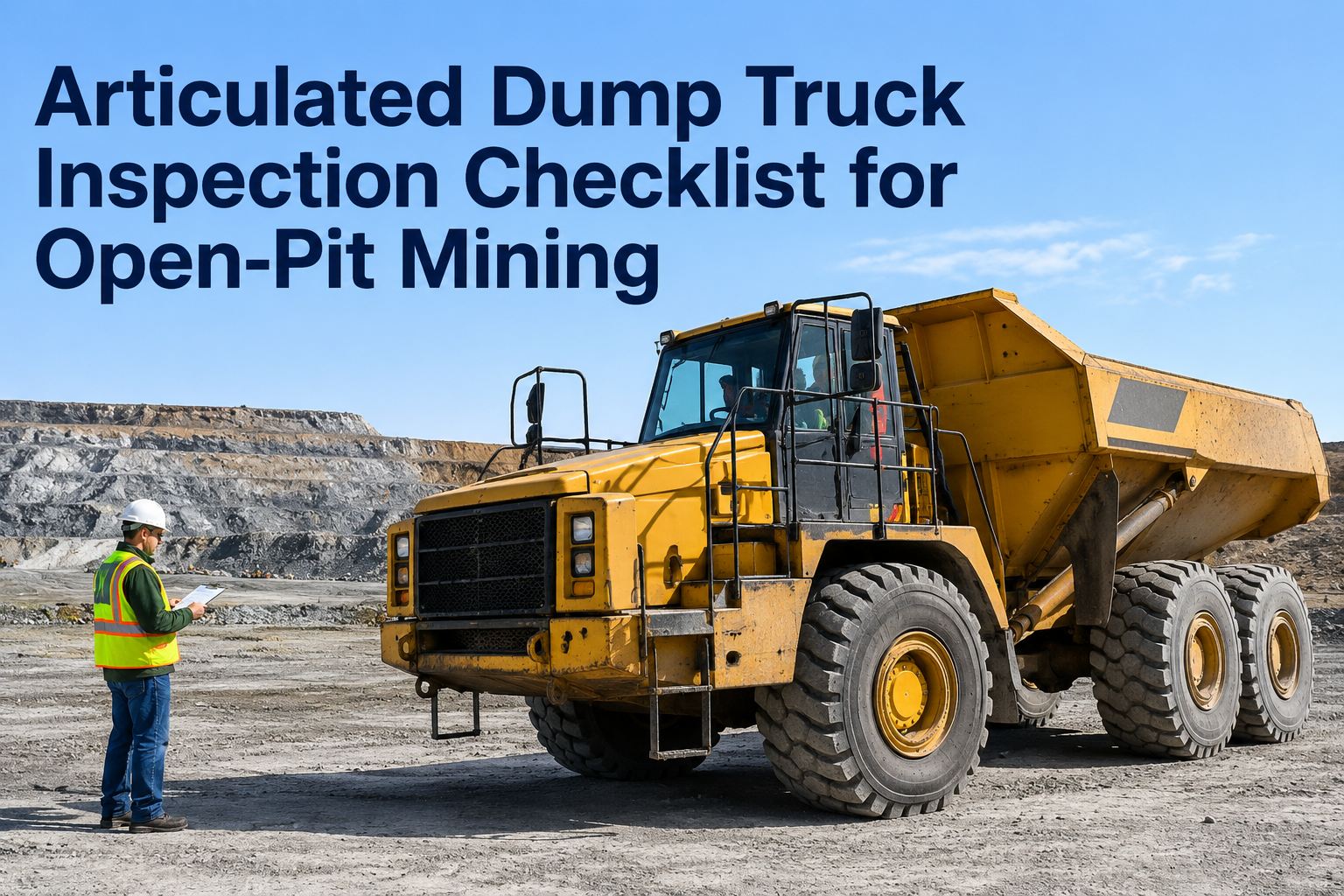
A generic truck checklist misses the rigid-hauler specifics — frame welds, retarder, hydropneumatic charge — that actually cause catastrophes on these machines. sign up free and use haul-truck-specific templates with every system pre-built, or book a demo to see rigid and articulated templates.
Payload monitoring belongs on the checklist
The most underrated inspection item on a modern hauler isn't a part — it's the payload system. Overloading is the single fastest way to destroy frame, suspension, tires, and brakes, and the payload meter is what prevents it.
Verify the payload meter
The integrated payload meter manages the load each cycle. Confirm it's reading and calibrated — an unmonitored truck is one bad load away from a structural overload.
Overload destroys structure
Every ton over rated payload multiplies stress on frame welds, suspension cylinders, and tires — turning a productivity shortcut into premature, expensive failure.
Track loads over time
Payload data trended per truck reveals chronic overloading before it cracks a frame — and links a structural defect back to the loads that caused it.
Payload monitoring is where inspection meets production: keeping every load inside the structural limit protects the asset and the haul-road safety margin at once. HVI captures payload-system status on the inspection and can trend load data per truck alongside defect history.
From found defect to closed repair
Finding a defect is only half the job. A safety-critical fault on a haul truck means the machine comes out of service until it's fixed — which requires the defect to flow into a tracked, assigned, verified repair.
Capture with photo
The operator logs the defect on the spot with a mandatory photo — documented exactly as found, even offline in the pit.
Tag out if unsafe
A safety-critical fault flags the truck out of service so it can't be dispatched until the repair is verified complete.
Auto-create work order
The defect becomes an assigned work order with truck, system, and severity attached — routed to the right mechanic automatically.
Sync & document
When signal returns, the inspection, defect, and work order sync — building the maintenance and compliance record per truck.
A frame crack noted on paper and never actioned is exactly the failure mode that strands a truck and triggers an investigation. sign up free and close the loop from inspection to verified repair on every hauler.
Paper checklists vs. HVI
Both technically capture a pre-shift check. Only one runs offline in the pit, uses haul-truck-specific items, tracks payload, and turns a found defect into a verified repair.
Paper / reactive
- Generic checklist misses rigid-hauler specifics
- Forms lost or smudged in pit conditions
- Frame and suspension defects noted, then forgotten
- Payload system never verified on inspection
- Unsafe trucks dispatched because tag-out didn't stick
- No maintenance history when a truck is sold or audited
With HVI software
- Haul-truck templates for rigid & articulated machines
- Inspections run fully offline, sync when in range
- Every defect auto-creates an assigned work order
- Payload-system status captured and load data trended
- Safety-critical faults tag trucks out of service
- Complete maintenance history per truck, export-ready
less downtime. A comprehensive inspection and maintenance program cuts haul-truck downtime by up to 35% and extends lifespan 15–20% — and on machines that are the backbone of production, that availability converts straight into tons hauled and dollars earned. HVI runs the full pre-shift inspection, payload check, and defect-to-repair loop in one platform built for the pit.
Frequently asked questions
What should an off-highway haul truck pre-shift inspection cover?
It starts with a 360° walk-around — access stairs and handholds, ROPS/FOPS, ground-level leak and damage checks, and verifying the camera and monitoring systems — then works system by system. The frame and structure are inspected for cracks at welds and high-stress points, since a frame crack is a catastrophic-failure precursor on a machine carrying 100 to 360 tons. The hydropneumatic suspension is checked for charge, leaks, and ride height; the wet-disc brakes and the retarder that controls downhill descent are tested for holding and response; tires and wheels for condition, pressure, and heat; engine, drivetrain, and fluids at the ground-level service center; and the dump body and hoist for cracks, carryback, and cylinder leaks. The payload monitoring system should be verified too. HVI's inspection and maintenance software provides haul-truck-specific templates with every system pre-built and works offline in the pit. sign up free and digitize your haul-truck pre-shift check.
Why is payload monitoring part of haul truck maintenance?
Because overloading is the single fastest way to destroy a haul truck's structure. Every ton over the rated payload multiplies stress on the frame welds, suspension cylinders, tires, and brakes, so a truck that's chronically overloaded fails prematurely and expensively — cracked frames, blown suspension, and shortened tire life all trace back to it. Modern rigid haulers carry an integrated payload meter that manages the load each cycle, and verifying that meter is reading and calibrated belongs on the inspection just like checking the brakes. Beyond the single-shift check, trending payload data per truck reveals chronic overloading before it cracks a frame and links a structural defect back to the loads that caused it. That's why payload sits at the intersection of inspection and production. HVI's inspection and maintenance software captures payload-system status and can trend load data per truck alongside defect history. book a demo to see payload and defect tracking together.
How often should off-highway haul trucks be inspected?
Every shift, without exception. A pre-shift inspection performed by the operator focuses on safety-critical items and immediate operational concerns before the truck is dispatched, and a more comprehensive daily inspection covers deeper engine, cooling, and hydraulic checks. Because these trucks run a 24/7 duty cycle in mining and quarrying, there's no natural downtime window — inspections have to be scheduled around shift changes rather than "when the truck isn't in use." On top of the shift and daily checks, the truck follows tiered preventive maintenance fired by operating hours. The payoff is significant: a comprehensive program extends lifespan 15–20% and cuts downtime up to 35%. HVI's inspection and maintenance software runs the shift inspection offline in the pit and tracks the hour-based PM intervals automatically. sign up free and keep every truck on schedule.
What's the most critical item on a rigid haul truck inspection?
There's no single answer, but the highest-consequence items are the frame, the retarder, and the suspension — because failures there are catastrophic rather than merely costly. The rigid frame absorbs the full payload every cycle, so cracks at welds and high-stress points are inspected closely as catastrophic-failure precursors. The retarder controls the truck's descent on a loaded grade, and on a downhill haul it's the difference between control and disaster. The hydropneumatic suspension protects the frame from shock loading, so worn or undercharged suspension accelerates structural fatigue across the whole machine. Tires and brakes round out the safety-critical group. A generic vehicle checklist tends to miss exactly these rigid-hauler specifics, which is why a haul-truck-specific template matters. HVI's inspection and maintenance software builds those high-consequence items into every haul-truck inspection.
How does HVI help with haul truck inspections?
HVI is an inspection and maintenance software platform built for off-highway haul fleets. Operators run the full pre-shift inspection — 360° walk-around plus frame, suspension, brakes, tires, powertrain, dump body, and payload — from a phone or tablet using rigid- and articulated-hauler-specific templates, with mandatory photo capture on defects, and it works fully offline in the pit and syncs when signal returns. A safety-critical fault tags the truck out of service until the repair is verified, and every defect auto-creates an assigned work order routed to the right mechanic so nothing dies on a clipboard between the pit and the shop. It captures payload-system status and can trend load data per truck, tracks hour-based PM intervals, and keeps a complete maintenance history per truck for resale and audits. Because it's the same platform running your whole fleet, the inspection, the defect, and the repair all connect. book a demo and we'll map the software onto your haul fleet on the call.
Catch every defect at ground level, before it strands a 200-ton machine.
HVI runs the full off-highway haul truck inspection from a phone — frame, suspension, brakes, body, and payload — works offline in the pit, captures defects with photos, tags unsafe trucks out of service, turns every defect into an assigned work order, and keeps a complete maintenance history per truck. Cut downtime up to 35%, extend truck life, and protect both the asset and the haul road.
No credit card required · Live in under two weeks · Haul-truck templates + offline pit inspections + payload tracking + work orders in one platform