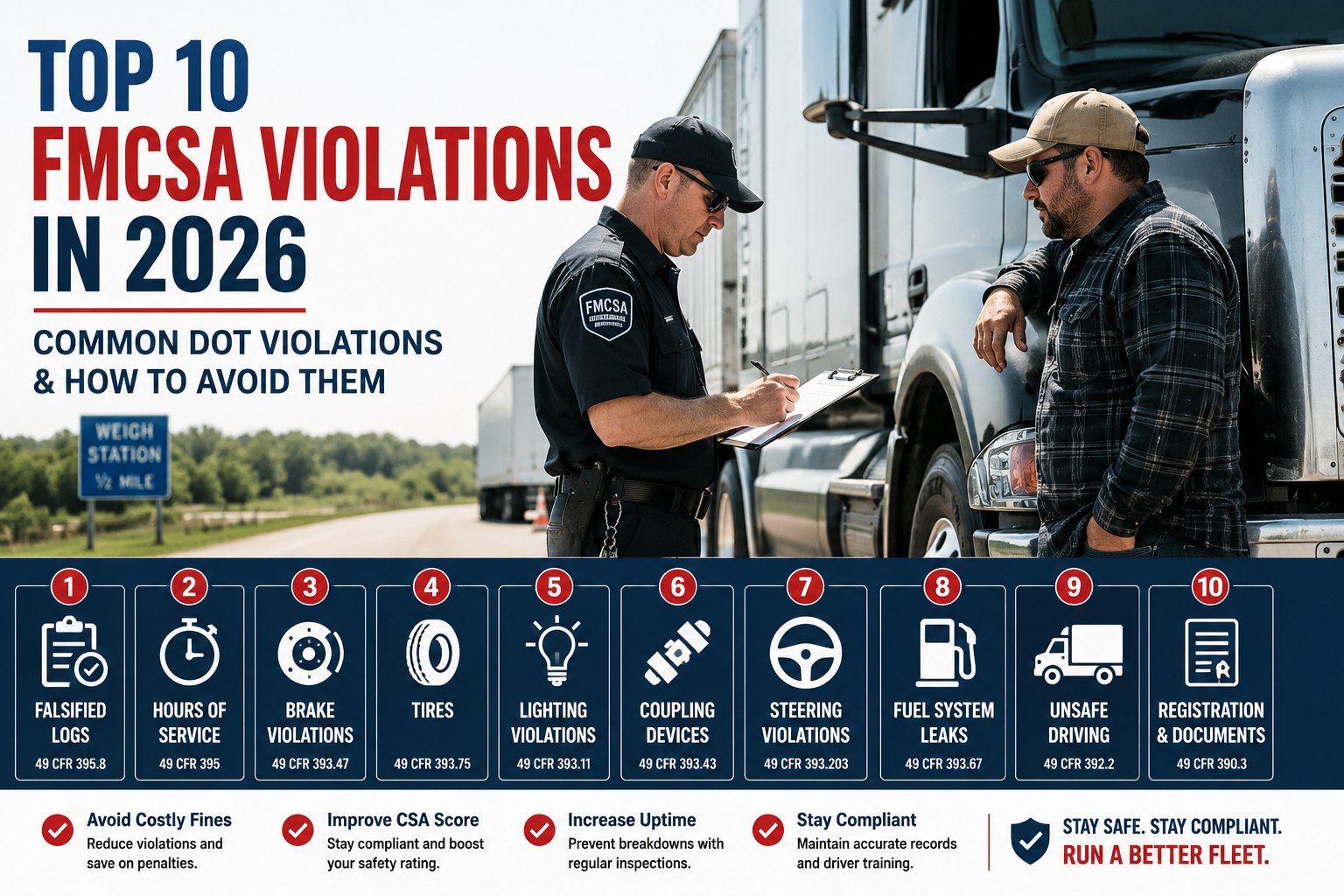
Across all of FMCSA's 2025 enforcement data, one number jumps off the page: $1.2 billion in fleet-borne fines, tow charges, OOS downtime, and recordkeeping penalties — almost all of it traceable to defects that should have been caught during pre-trip. Brakes, tires, and lights alone make up over 60% of vehicle out-of-service orders. None of these violations are mysteries. They show up on the same FMCSA citation list every year, and the average OOS event costs the carrier roughly $4,200 before the truck rolls again. This guide walks drivers and owner-ops through the top 10 missed items from 2025–2026 FMCSA citation data, the per-citation cost of each, the repeat-defect patterns that betray weak inspection habits, and the 30-second pre-trip routine that catches roughly 80% of citable defects. Start your free HVI trial to put guided eDVIRs and instant defect routing on every driver's phone, or book a demo to see how HVI prevents these citations before they happen.
The top 10 missed items — countdown from FMCSA citation data
Ranked by 2025 FMCSA roadside inspection violation frequency and out-of-service consequence. Numbers 1–4 alone account for over 70% of every vehicle pulled off the road.
Sounds minor. Stacks fast. Mud flaps protect following vehicles from debris kicked up by tires. Missing or torn-off flaps add a citation that compounds CSA scores fleet-wide.
Eleven percent of vehicle OOS orders in 2025. CVSA's 2026 vehicle focus area. A tiedown that passes load-rating math on paper but shows visible degradation is an OOS condition. Includes loose tools, dunnage, tarps, spare tires on flatbeds.
Easy to ignore. Easy to cite. Federally required conspicuity treatment must reflect properly along the rear and lower sides of trailers. UV damage and road salt eat the tape over time.
A cracked windshield in the driver's line of sight, a worn wiper blade leaving streaks, or a side mirror that won't hold position — all citable. All easily overlooked on a quick walk-around.
Locking jaws not fully engaged, sliding fifth wheel pins not seated, kingpin damage, or visible cracks in the mounting plate. A coupling that doesn't pass at roadside is automatic OOS.
Visible fluid leaks from any system are citable. A puddle under the truck after a 20-minute stop is enough to trigger a defect entry. DEF leaks add SCR system complications. Fuel leaks escalate to OOS quickly.
14% of all vehicle OOS orders in 2025. The most preventable violation on the entire list. A burned-out clearance light, a non-functioning brake light, or a marker bulb is a citation that any driver could have caught in a 30-second walk-around.
Steer tires below 4/32" tread depth = automatic OOS. Drive tires below 2/32" = automatic OOS. Visible damage exposing belts or cords = OOS regardless of tread. The minimum standard is not optional — inspectors carry depth gauges.
65,184 citations nationwide in 2025 — the single most-cited violation in the FMCSA roadside data. "Tires – All others, leaking or inflation less than 50% of the maximum inflation pressure." Tire OOS combined accounts for 21.4% of all vehicle OOS orders.
24.4% of all vehicle OOS orders in 2025 — combined with "20% defective brakes" it accounts for over 41% of all vehicle OOS. Out-of-adjustment slack adjusters, audible air leaks at chambers, brake lining below 1/4 inch, cracked drums, scored rotors. The #1 reason trucks are pulled off the road.
The 2026 CSA "Driver Observed" trap
FMCSA's 2026 Safety Measurement System overhaul split the old Vehicle Maintenance BASIC into two scored categories. The one that hurts drivers the most is the new "Driver Observed" sub-category — violations that a driver should have caught during pre-trip. Bald tires, broken lights, obvious fluid leaks, missing reflective tape. These now score separately and visibly damage your CSA rating.
All mechanical violations bundled together. A pre-trip miss looked the same as a deep shop-only issue. Drivers had no individual accountability surface in the score.
Violations that a driver should have caught — bald tires, broken lights, fluid leaks, missing tape — score in their own category. Investigation threshold: 80th percentile. Insurance and shipper visibility track here directly.
The 2026 penalty schedule — what each citation actually costs
FMCSA penalties are adjusted annually for inflation. The amounts below reflect 2026 figures from 49 CFR Part 386 Appendix B. The "average" cost per OOS event ($4,200) factors in downtime, tow charges, and emergency repairs — not just the civil penalty itself.
Repeat-defect pattern — where the violations actually cluster
Looking at where the OOS orders actually fall, the violation distribution is brutally consistent. Five categories generate over 90% of every truck pulled off the road in 2025.
The 30-second routine that catches 80% of citations
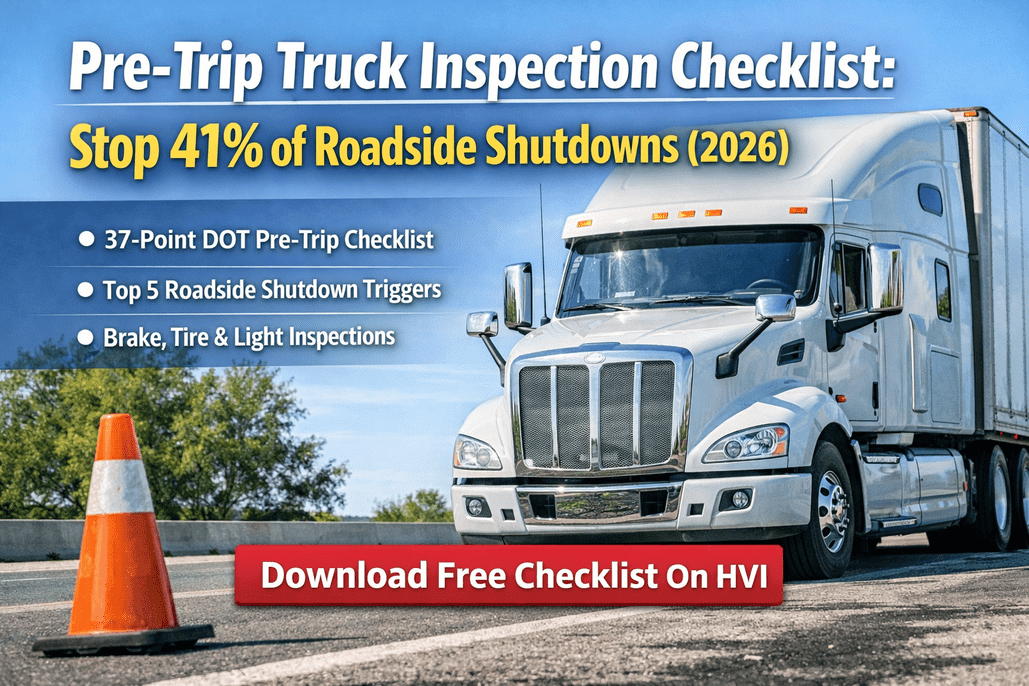
This isn't a full pre-trip — it's the compressed scan that catches the categories driving most citations. Combine it with a complete walk-around and you cover both the highest-risk items and the long tail.
Look for fresh fluid patches before the truck has time to mask drips. Oil, coolant, fuel, DEF — anything wet is a defect entry.
Look at every tire from the front and side. Bulges, cuts, exposed cord, low pressure look. Pressure-gauge any tire that looks soft.
All lights on, including hazards. Walk around. Anything dark, dim, or yellowed = swap the bulb before pulling out.
Tug-test the fifth wheel coupling. Verify glad-hand seals on the air lines. No leaks, no slack, no obvious problems.
Mirrors locked, windshield clear, wipers work. Quick glance at cargo — tiedowns tight, dunnage in place, load doesn't shift.
Why drivers miss what they miss
The top 10 missed items aren't hard to spot. They're just easy to skip when the process is unstructured. Here are the four root causes that show up in every fleet that struggles with pre-trip citation rates.
Drivers under load-deadline pressure compress inspection time. A full pre-trip takes 15–30 minutes. If dispatch is leaning on the driver, that becomes 3–5 minutes — and the long tail of low-frequency items gets dropped.
"I know what to look for" is the most expensive sentence in any pre-trip. Even experienced drivers skip items they routinely catch. Guided digital checklists with required-field enforcement prevent that.
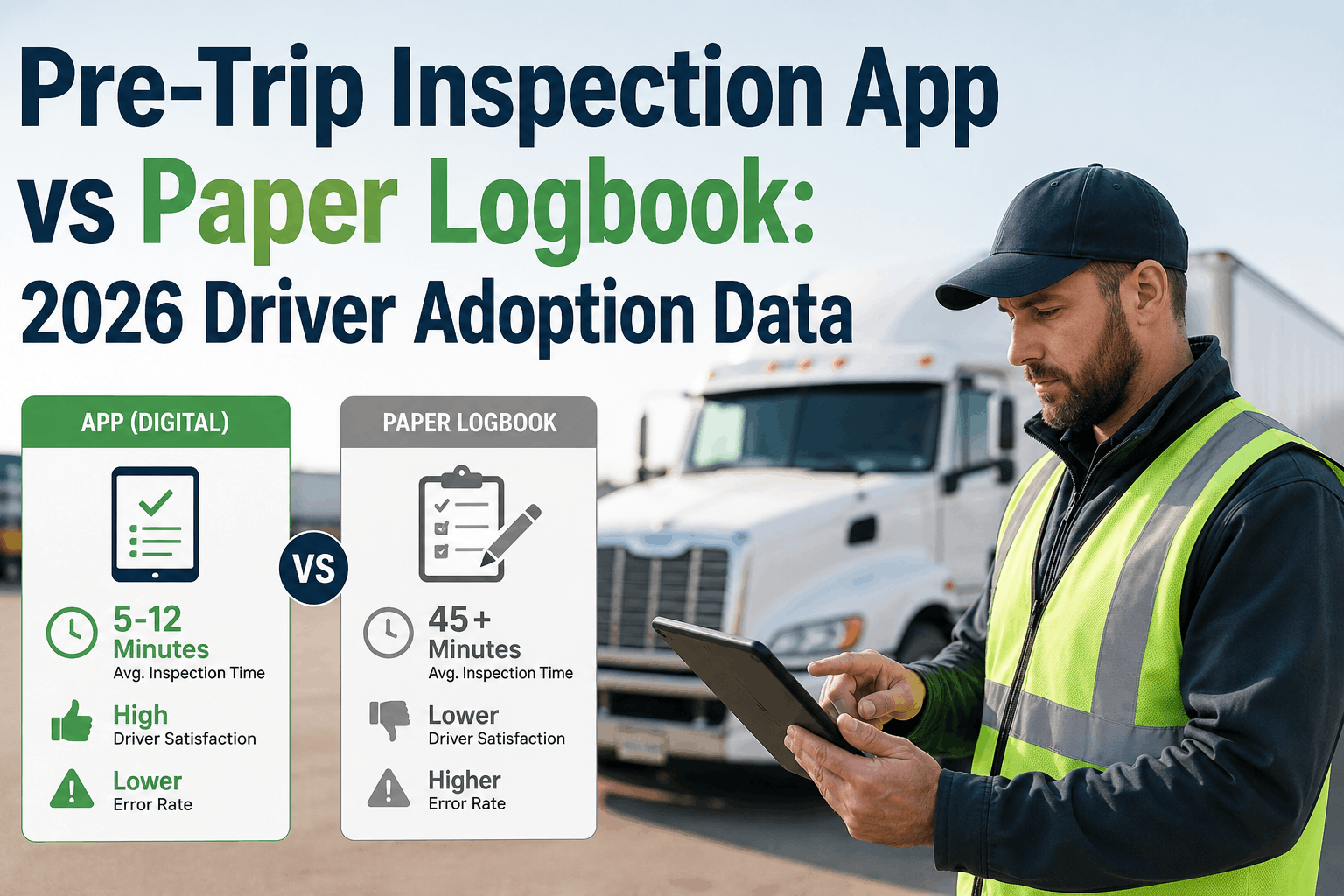
If no one knows the inspection actually happened, drivers know it. Paper DVIRs file into nowhere. Mobile inspections with photo evidence and timestamps create the accountability that paper never did.
Drivers stop flagging defects when nothing happens with them. If the cracked mirror was reported three shifts ago and no work order followed, the next pre-trip skips it. Defect-to-work-order automation breaks the cycle.
How HVI eliminates these 10 mistakes by design
HVI's mobile inspection app builds the prevention into the workflow. Every item on the top-10 list above maps to a specific HVI feature that makes skipping it operationally difficult rather than the path of least resistance.
Required-field enforcement on every category. Drivers cannot submit the eDVIR until brakes, tires, lights, fluid, coupling, and cargo all show pass/fail with documentation.
Every flagged defect requires a photograph. GPS-timestamped, tamper-evident, attached to the eDVIR. Proves the inspection occurred and what was found.
Any "Fail" tap auto-routes a work order to the maintenance team — closing the loop drivers stop trusting when paper handoffs fall through.
HVI's templates are pre-mapped to the 2026 "Driver Observed" BASIC categories — so every pre-trip captures exactly the evidence the new methodology rewards.
Driver pre-trip, mechanic certification, next-driver acknowledgment. Vehicle cannot return to service until the chain closes. Eliminates the gap that creates 61% of typical DVIR citations.
Every inspection, work order, repair certification, and PM record indexed by VIN and date. Inspector-ready exports in under a minute.
Carriers running paper DVIRs are leaving their citation exposure entirely up to driver memory. Start your free HVI trial and the first guided eDVIR your driver completes covers every category on the top-10 list.
Frequently asked questions
The top 10 mistakes are the same every year. The fleets that fix them stop showing up in the citation data.
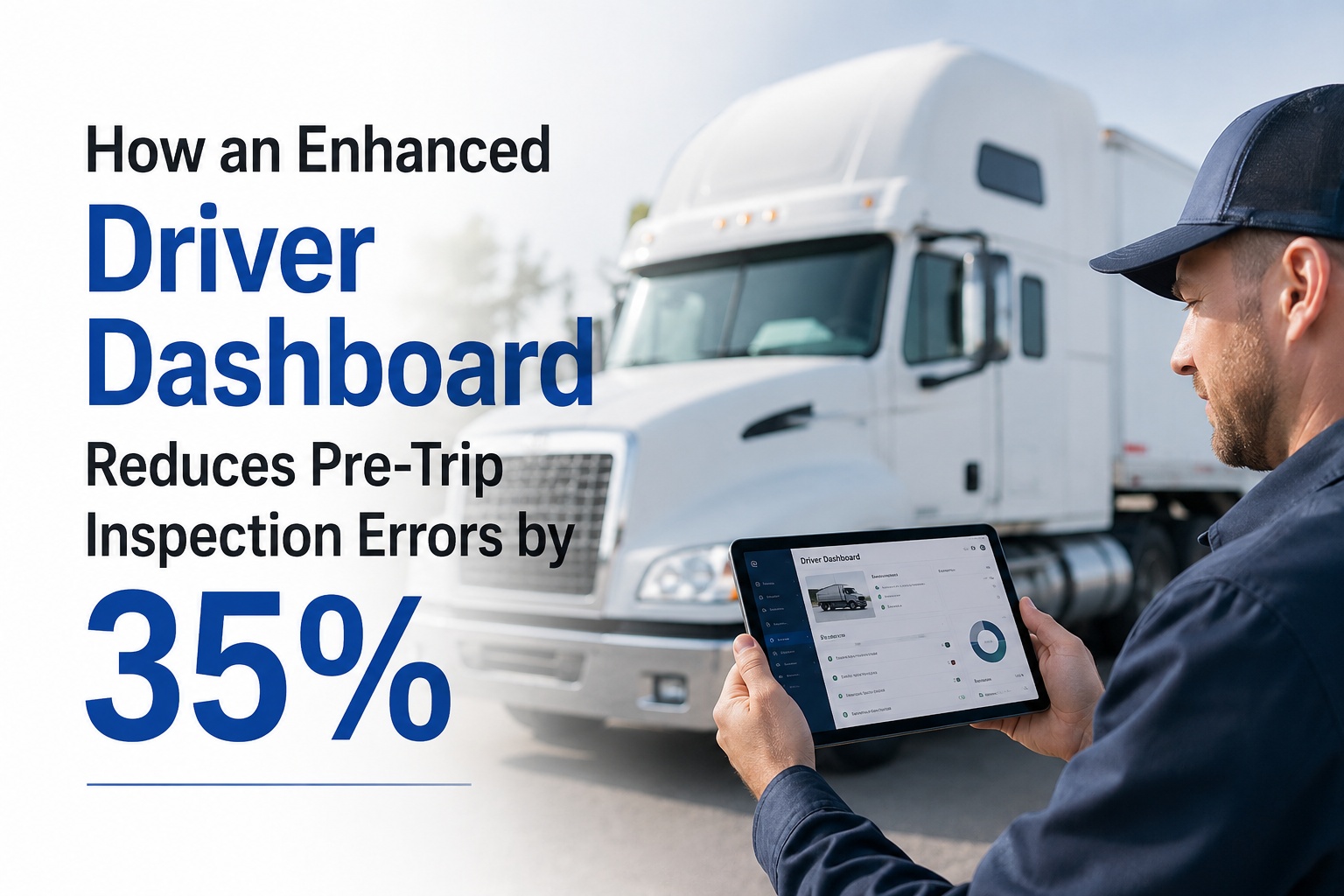
HVI replaces memory-based pre-trips with guided eDVIRs that block submission until every category is complete — and route every flagged defect to maintenance in seconds. No hardware, no IT lift, measurable CSA improvement in 60–90 days.
No credit card required · Guided checklists for the top 10 missed items · Inspector-ready records from day one