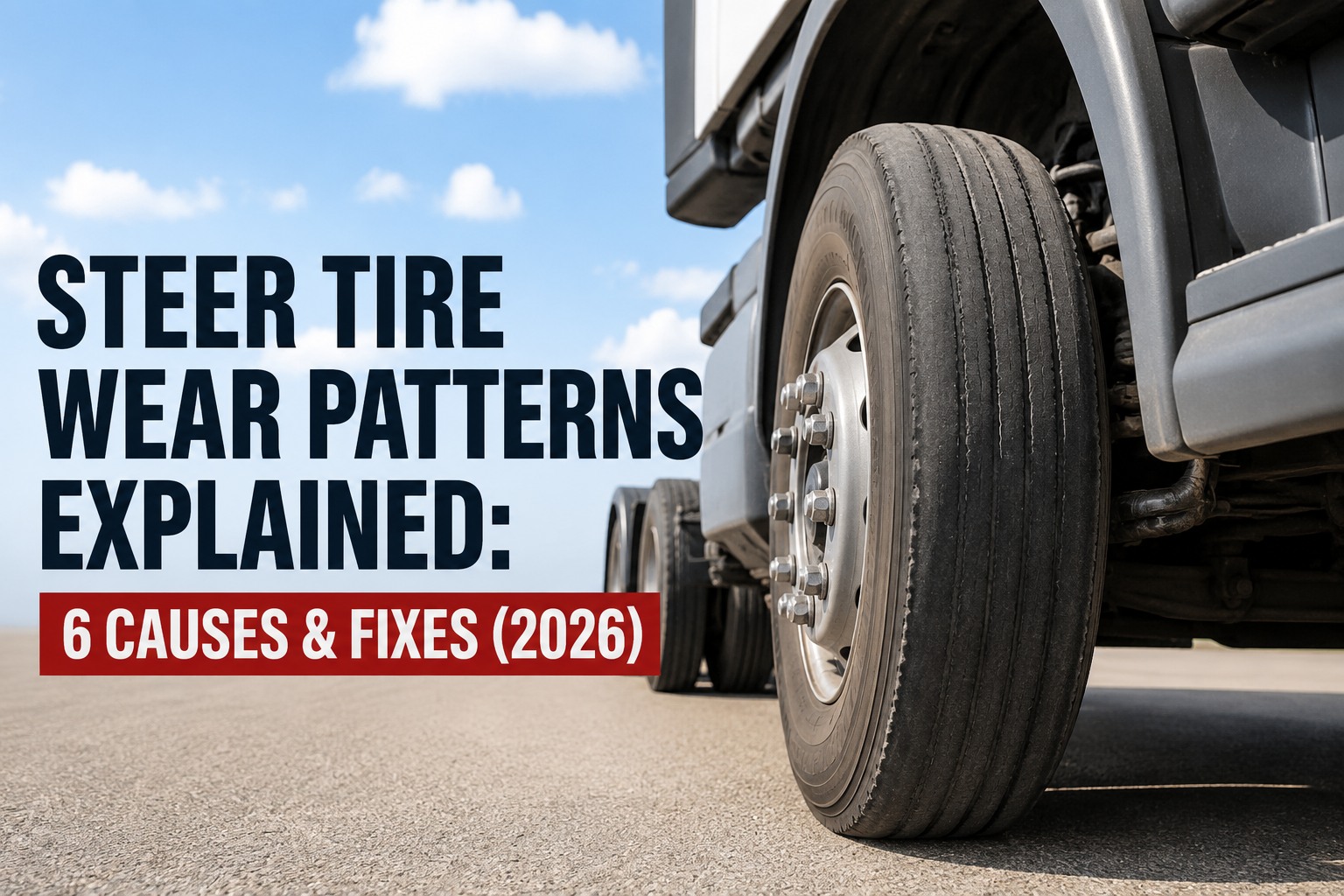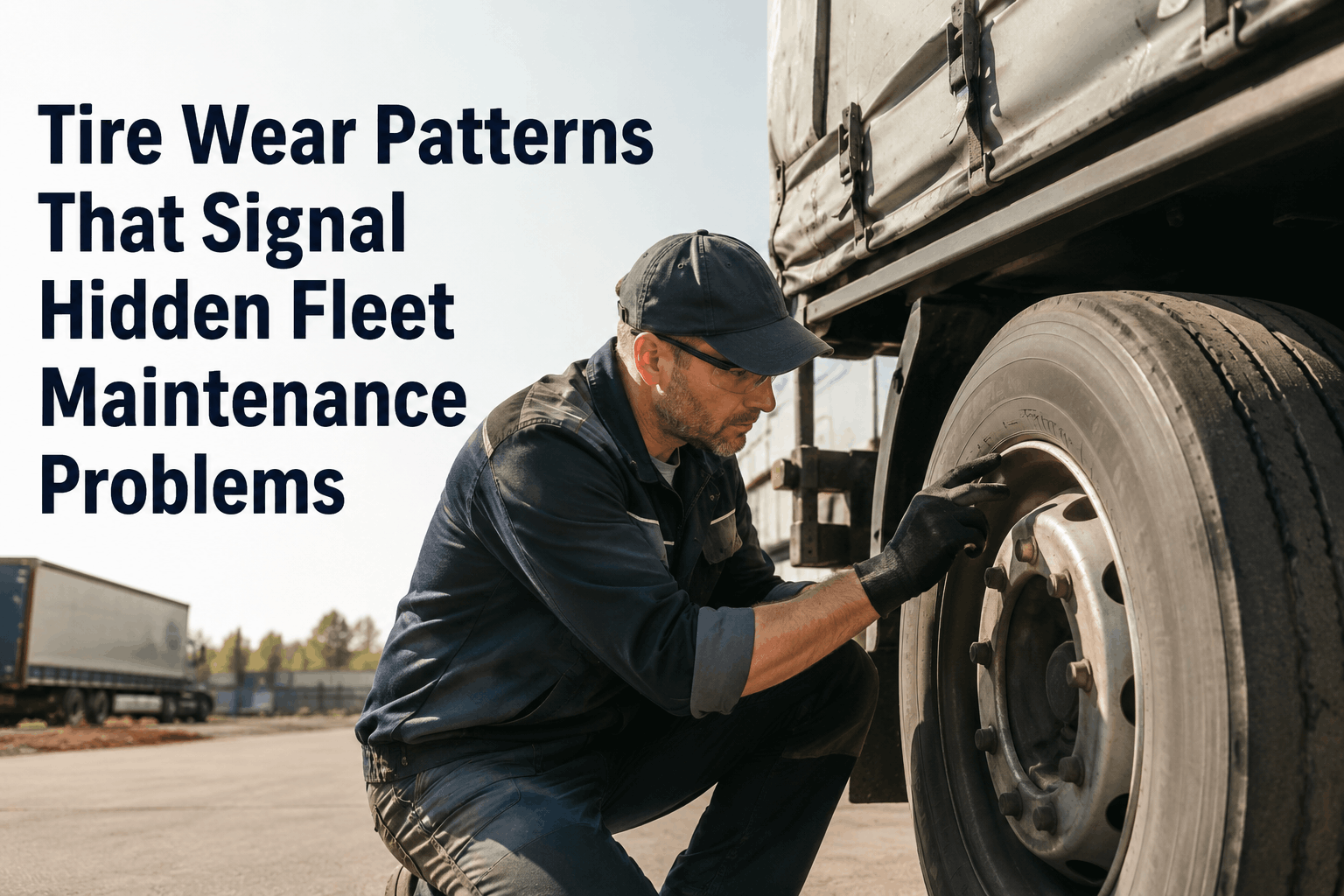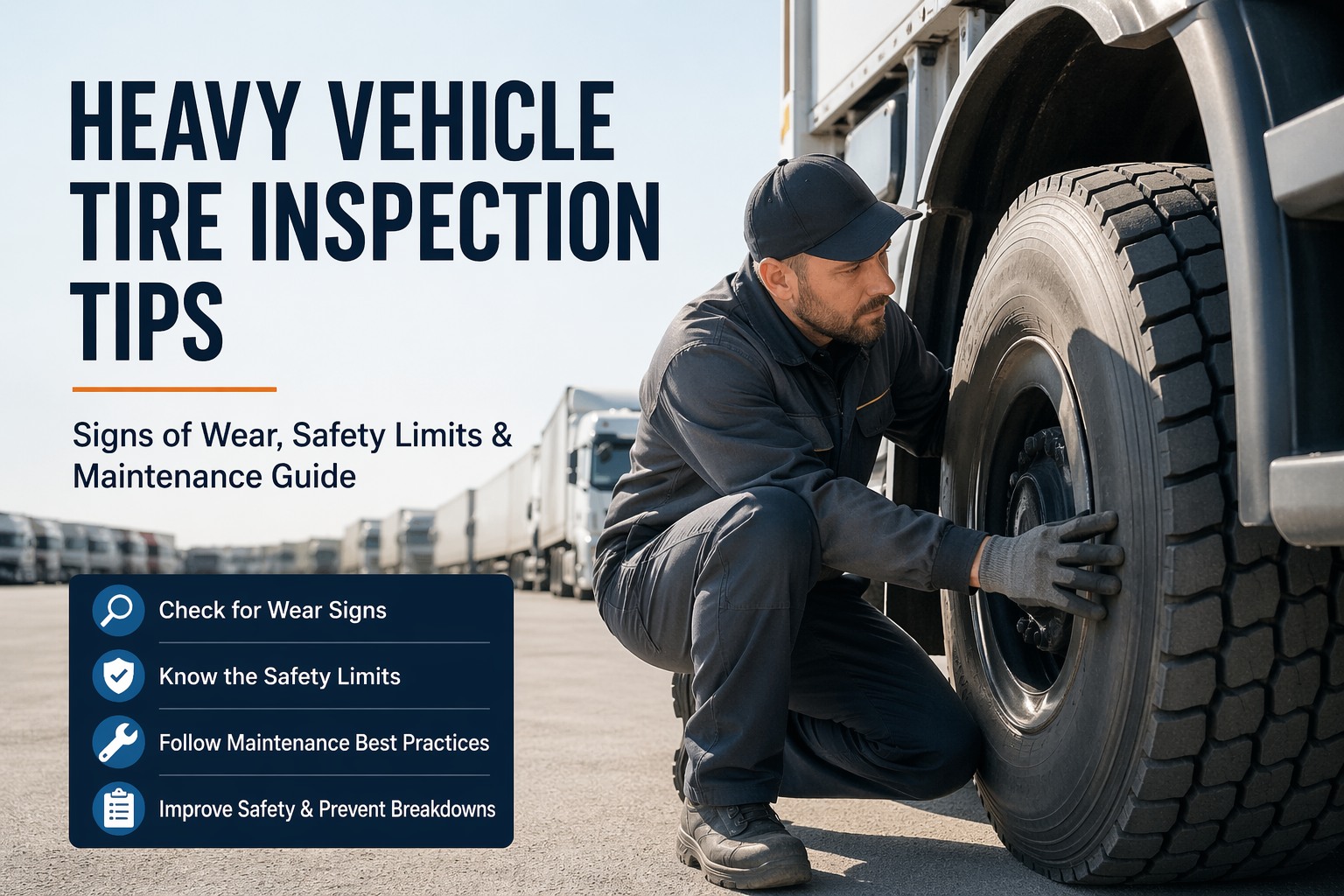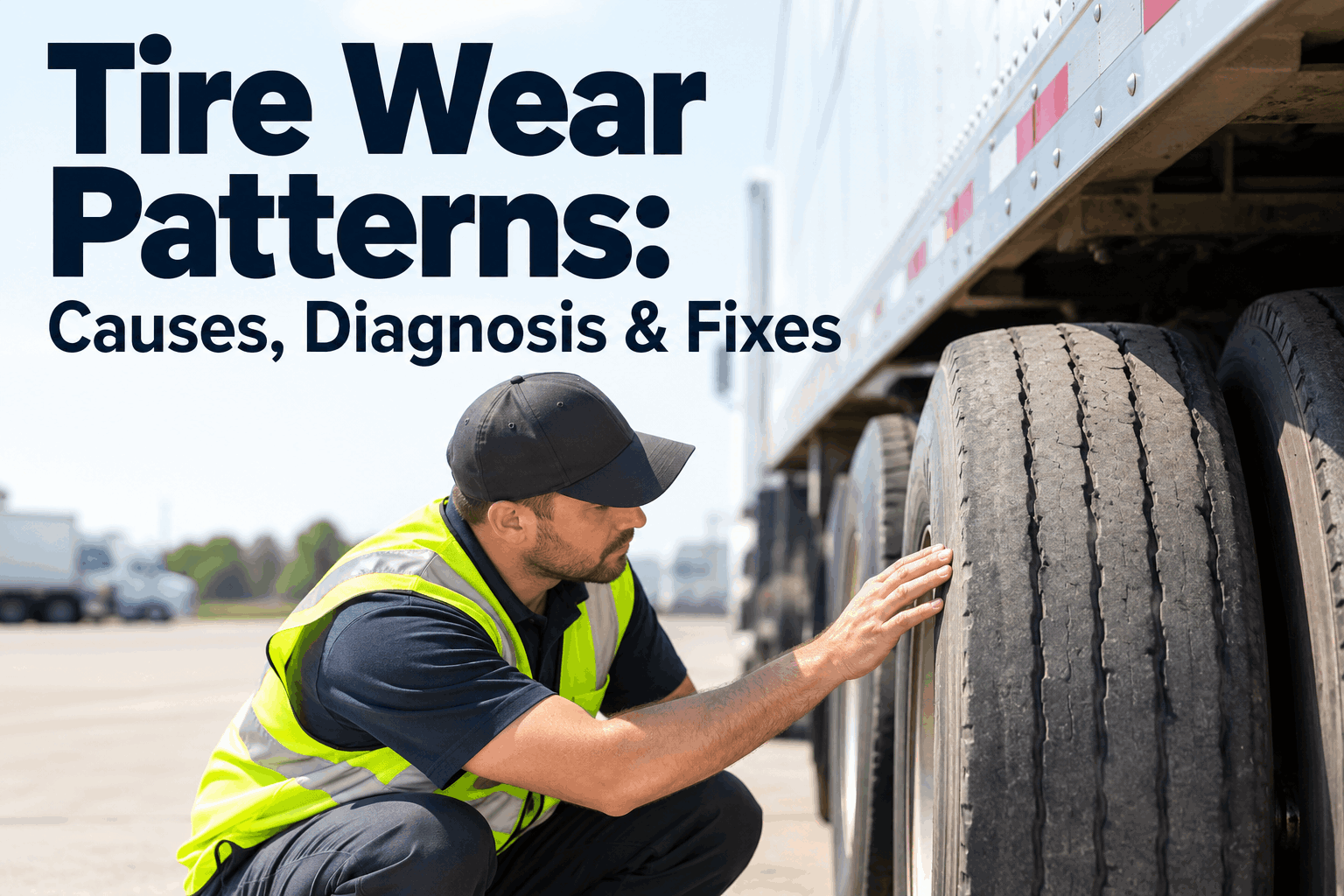
Tire wear patterns are diagnostic clues — they reveal inflation, alignment, suspension, wheel-end and braking problems long before a tire reaches its planned pull point. On drive and trailer positions especially, the goal isn't just to spot uneven tread; it's to read the signature, confirm the likely cause, and route the right fix before a whole axle's worth of rubber is gone.
Read the tire wear pattern before you replace the casing
Learn what cupping, feathering, one-sided and shoulder wear mean on the positions nobody walks back to check — and how to turn the pattern into a routed fix instead of a guess.
A wear pattern is evidence, not a verdict. The same signature means different things by position: feathering on a steer tire is a toe job, but the same feathering on a trailer is usually the trailer axle out of line. Start with the tread signature, then verify the vehicle conditions behind it — and record which position it came off, every time.
Drive & trailer tire wear patterns: match the tread to the next check
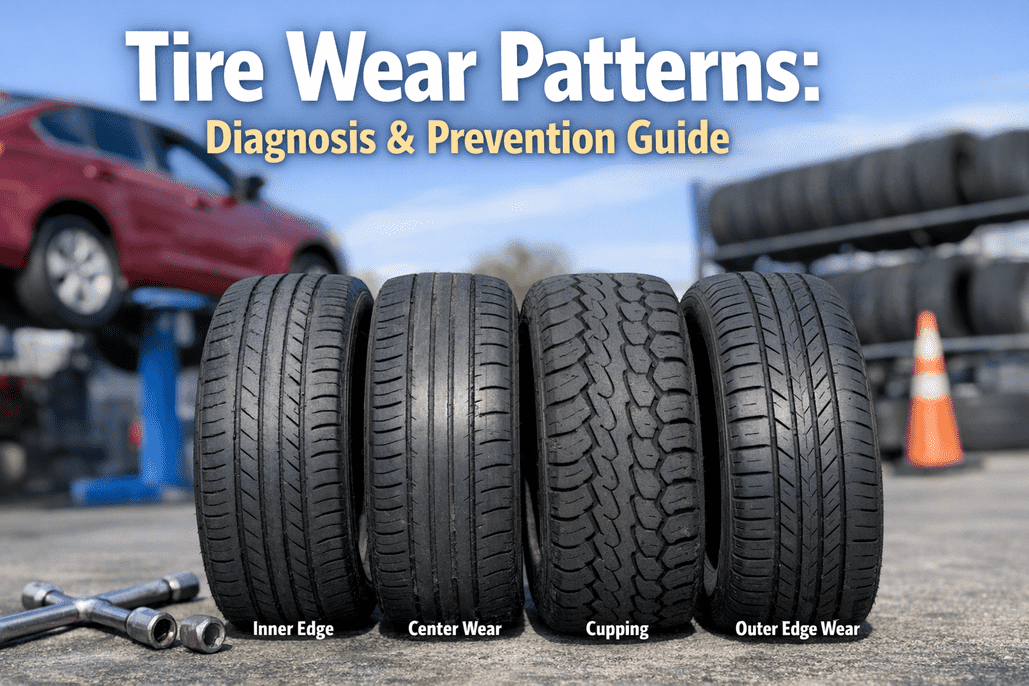
Stop treating every uneven rear tire the same. Identify where rubber is disappearing — center, both shoulders, one edge, scalloped blocks — then let that signature point the inspection. Each pattern below shows the actual tread shape and what to check first on a drive or trailer position.
Both outer edges gone before the center — chronic under-inflation, the most common trailer problem on parked units.
Center ribs worn faster than the shoulders — over-inflation for the load the drive axle is actually carrying.
Ribs sharp on one edge, rounded on the other. On a trailer this is dog-tracking from axles out of line — the #1 trailer killer.
One shoulder shaved fast. On trailers it's overload or an axle out of square; on drives it's often a dual mismatch dragging.
High-and-low dips around the circumference from worn or bouncing suspension — common on older trailers nobody's serviced the dampers on.
Saw-tooth scallops across the tread blocks — drivetrain torque on lightly-loaded drive axles. Rotation and even loading slow it.
Don't replace the tire and stop there. If the alignment, suspension or dual-match cause stays on the vehicle, the new casing starts wearing the same way within weeks.
A consistent tire inspection workflow records the pattern, the exact wheel position and a photo before the evidence wears away. Book a demo to see tire wear inspections standardized across your fleet.
Turn the pattern into a routed fix, not a guess
The tread signature says where to start, not where to stop. Read the wear, confirm the position, verify the mechanical cause, then route the work — so the fix lands on the axle, not just the tire. Book a demo to see the full path on a live record:
Spot the signature on a drive or trailer position during the walkaround or inspection.
Record which exact position it came off, with a photo and tread reading on the record.
Check inflation, alignment, suspension or dual match — the real driver behind that signature.
Flag the defect and send an alignment or suspension job before the next set wears out.
See every position's wear history in one place
Watch how HVI logs tread and condition by axle position, so a dual or trailer axle that keeps wearing early shows up as a pattern — not a surprise at the next tire change.
One worn tire is a clue — the same clue across trucks is a diagnosis
A single feathered trailer tire looks like a bad tire. But when the same position wears the same way on three trailers, it stops being the tire and becomes the pattern — pointing at one root cause you can fix. Book a demo to see this across a whole fleet:
"We chased 'bad tire brands' for a year before we figured it out. Three trailers were pulling the same inside-edge wear on the left rear every time, because those axles were out of square and nobody logged which position the worn tires came off. Once we recorded wear by position, the pattern was obvious in a week. We fixed the axles, not the tire supplier — the trailers were the problem the whole time, sitting in the yard where no one looked."
A caught pattern is a retread; a missed one is a scrapped casing
The whole reason to read the rear is money. A pattern caught early gets the casing to retread and fixes the cause once; a pattern missed scraps the casing years short and does it again next quarter — a gap a demo makes obvious. Same tire, two very different outcomes:
Missed the pattern
- Rear tires checked only when one looks low
- Worn casing scrapped, root cause untouched
- "Bad tire brand" blamed for an alignment fault
- Same trailer eats a set every few months
- No record of which position wore how
Read the pattern
- Every position inspected and logged on schedule
- Recurring wear flags the real upstream cause
- Alignment fixed before the next set wears out
- Casings pulled for retread, not scrapped early
- Position-level history shows the pattern fast
Reading the rear isn't more work once the record does the remembering — and it feeds the cost-per-mile and wear-rate numbers in your fleet analytics and reporting. If your trailers keep eating tires, start tracking wear by position free and find the pattern before the next casing goes.
For the full pattern catalog across every position, see our tire wear patterns guide, or the steer tire wear patterns companion for the front axle.
Drive & trailer tire wear patterns FAQ
What causes drive tire wear patterns that steer tires don't show?
Drive tires carry drivetrain torque and full load, so they show wear steer tires don't: heel-toe or saw-tooth depression from torque on lightly-loaded axles, and dual mismatch scrub where one tire in a pair wears far faster than its partner. Inflation still drives center and shoulder wear, but the torque-and-dual patterns are specific to driven, paired positions.
Why do trailer tires wear out faster than the rest?
Trailer tires are the least-owned and least-inspected on the rig. A trailer that's dropped and swapped rarely gets a PSI check, so chronic under-inflation is common, and a trailer axle out of alignment makes the unit dog-track and feather its tires down the road. Because nobody walks the full length of the unit, these patterns run for weeks before anyone notices.
How much does a mismatched dual pair really matter?
More than most fleets think. A diameter difference of just 5/16 of an inch between paired duals makes the larger tire drag the smaller one about 13 feet per mile — roughly 246 miles of scrubbing every 100,000 miles. That wears both tires out early, and it's invisible on a walkaround unless you're measuring, which is why matched pairs and equal pressure matter so much on drive axles.
Does the same tire wear pattern mean the same thing on every axle?
No — and this is the most common misread. Feathering on a steer tire is usually a toe-alignment job, but the same feathering on a trailer is typically the trailer axle out of line. Cupping up front points to steering-system wear; on a trailer it's worn dampers. The position changes the diagnosis, which is why recording the position with every wear reading matters.
How does HVI help catch rear tire wear patterns early?
HVI logs tread depth, pressure and condition at each axle position, attaches inspection photos of the actual wear, and lets you flag a defect that routes an alignment or suspension work order. Because every reading is tied to a position across the fleet, recurring wear on the same drive or trailer position surfaces as a pattern — so you fix the cause instead of just replacing casings.
Read the tire wear patterns behind the truck
Put every drive and trailer position on the record with HVI — tread, pressure, photos and defects by position — so recurring tire wear patterns surface early and you fix the cause, not just the casing.