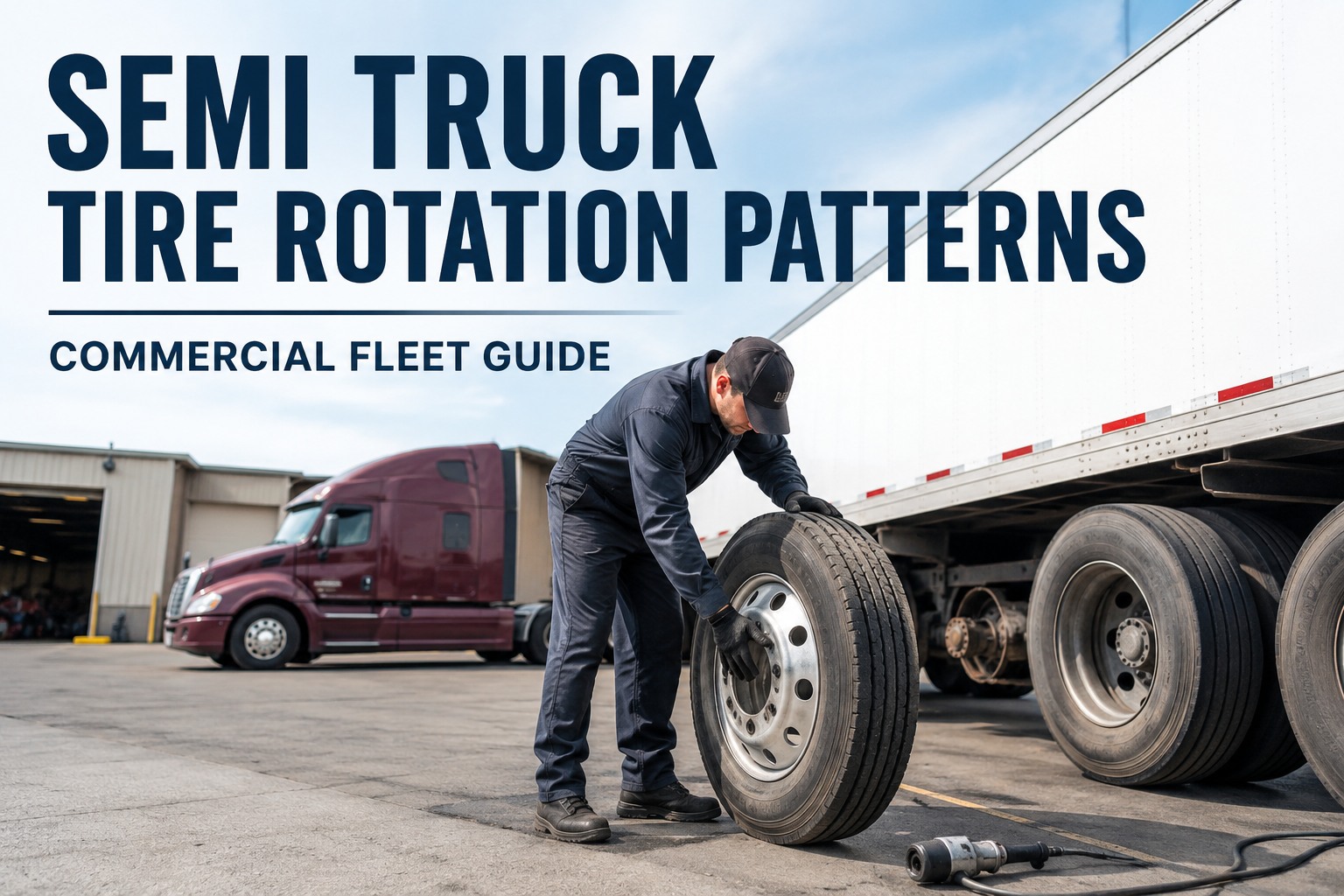
Semi truck tire rotation is one of the highest-ROI maintenance workflows a commercial fleet has — and one of the most commonly skipped. A properly rotated set of drive tires delivers 15–25% longer service life than the same tires left in fixed positions, translating to tens of thousands of dollars per year in avoided tire spend for a mid-sized fleet. Yet rotation gets neglected because the payoff is invisible until months later, and the mileage triggers get missed under production pressure. This semi truck tire rotation pattern guide walks the three recommended rotation patterns by axle position (steer, drive, trailer), when to rotate based on mileage and wear differential triggers, the common uneven wear patterns that signal rotation is overdue, and the five mistakes fleets make with tire rotation programs. Book a demo after you see how automated rotation scheduling integrates with fleet maintenance workflow.
Semi Truck Tire Rotation Patterns by Axle Type
Different axles wear differently. Each needs its own rotation pattern, its own interval, and its own trigger — below is the recommended sequence for each.
Left-to-right cross swap
Two steer tires swap sides to equalize wear. Address alignment or pressure root cause before rotating — rotation alone can't fix a mechanical issue.
X-pattern dual crisscross
Four drive tires rotate diagonally between sides and inner/outer positions in the duals to equalize wear across the axle group. The most impactful of the three patterns.
Front-to-back tandem swap
Tires swap between front and rear axle positions on the tandem to distribute stress evenly. Front trailer axle typically wears faster than rear — rotation levels the wear rate.
The three patterns above cover the mechanical side of rotation. Below is the operational side: when exactly to rotate, how to recognize the wear patterns that indicate rotation is overdue, and the recurring mistakes that undermine even well-intentioned rotation programs.
When to rotate — 3 triggers every fleet needs
Mileage isn't the only signal for tire rotation. Best-in-class fleets use three parallel triggers — whichever hits first drives the rotation. Relying on mileage alone means missing tires that need rotation earlier due to duty cycle or uneven wear, and over-rotating tires that are wearing evenly.
Mileage trigger
Steer: 30–50K mi. Drive: 40–60K mi. Trailer: 50–75K mi. Interval varies by duty cycle — heavy load or rough surface fleets rotate earlier.
Wear differential trigger
When tread depth measurement shows 2/32" difference or more between paired positions, rotation is due regardless of mileage. Catches early wear that mileage alone misses.
Visible wear pattern trigger
Uneven wear patterns visible during inspection indicate the tire has been in one position too long or has a mechanical root cause. Rotate immediately and diagnose cause.
The three triggers work together. A fleet running consistent long-haul at moderate loads will hit mileage triggers first. A fleet running heavy loads on construction sites will hit wear pattern triggers first. Fleets with alignment issues in the maintenance backlog hit wear differential triggers earliest. Monitoring all three catches problems the earliest of them would identify. Book a demo to see rotation triggers automated
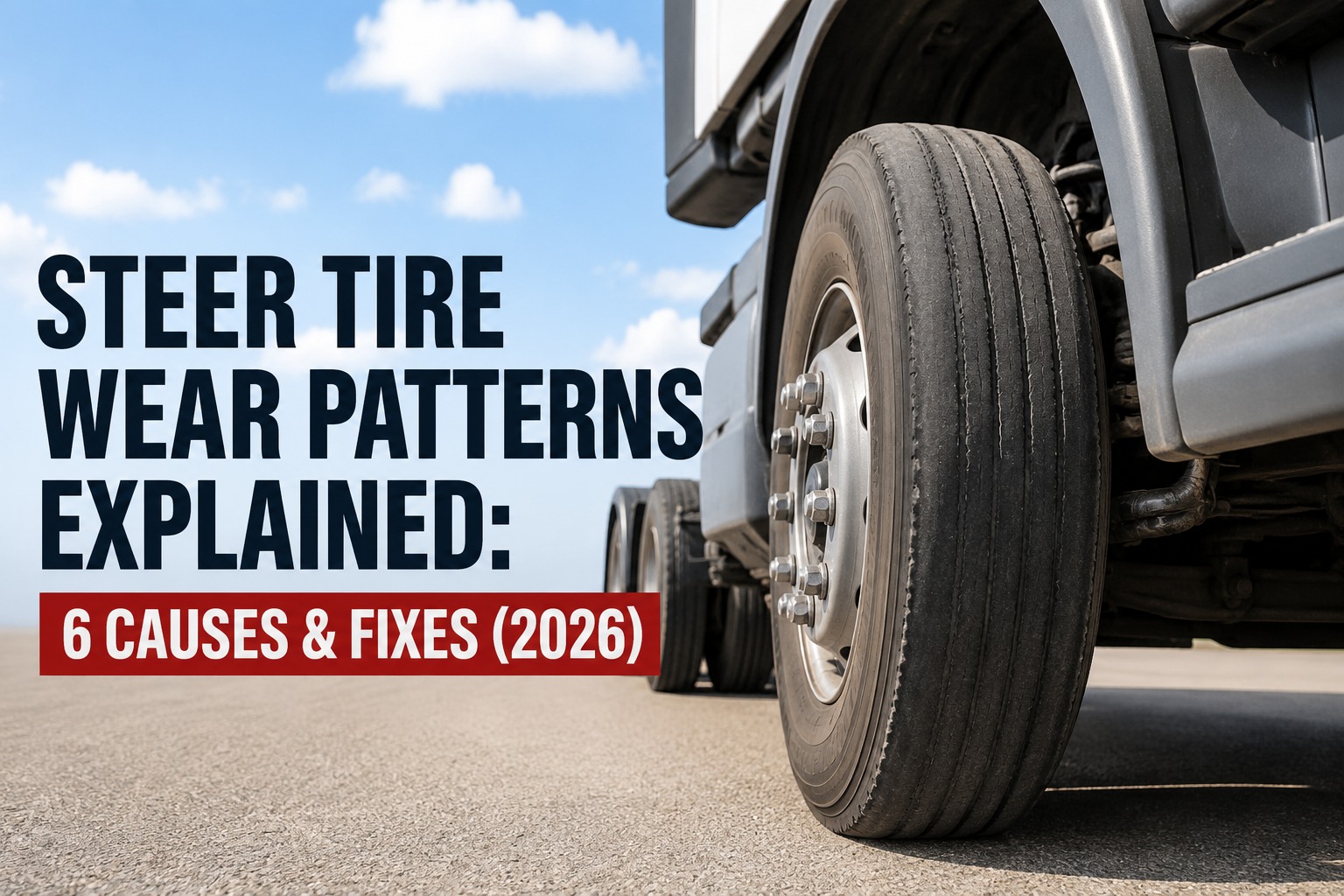
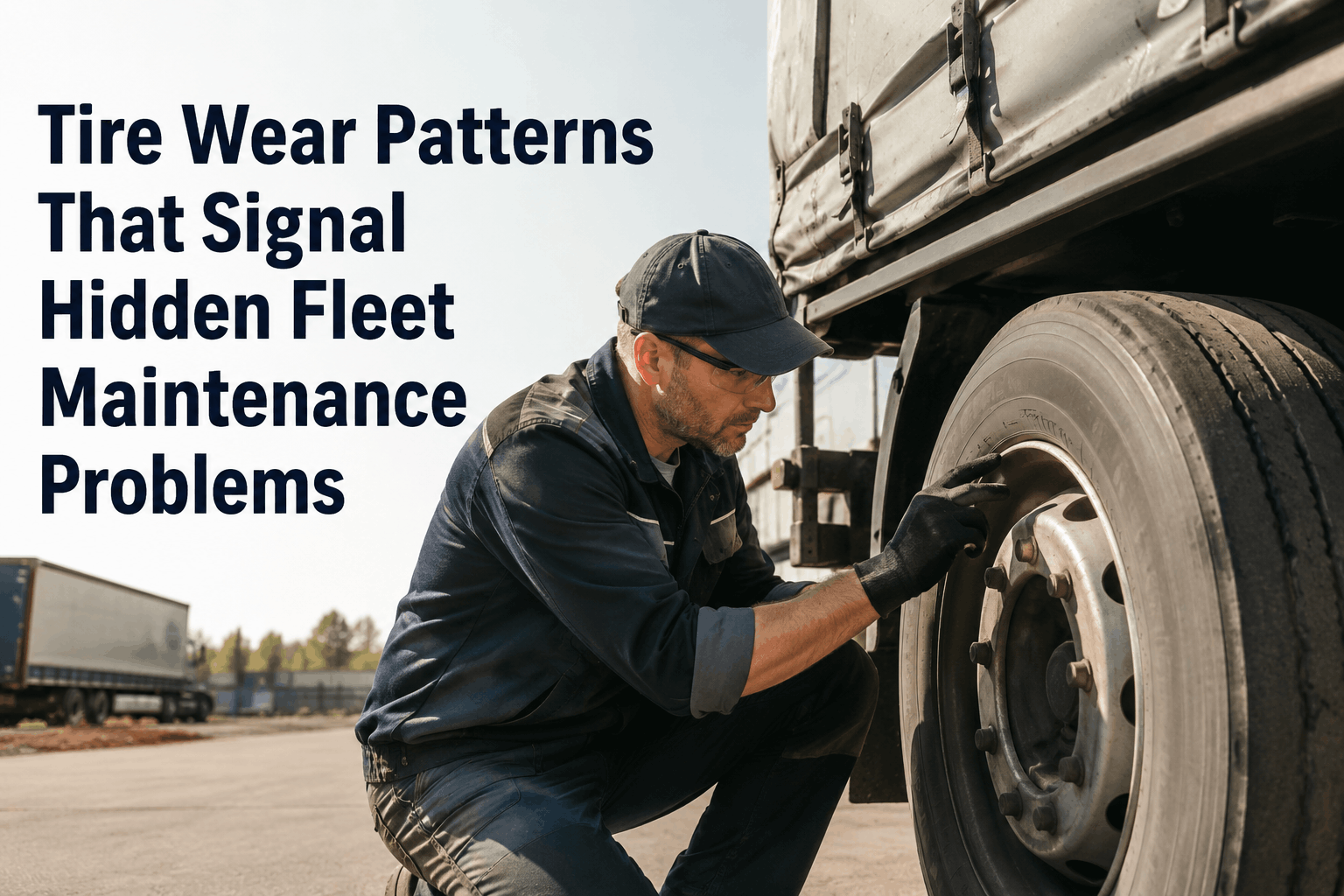
Recognizing uneven wear that signals rotation is overdue
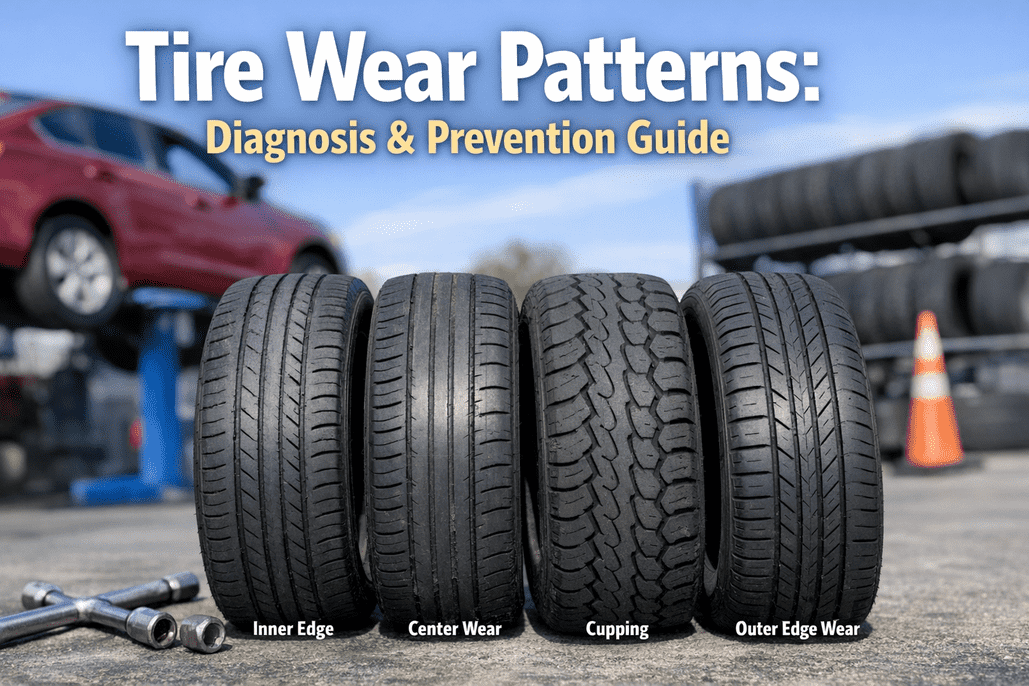
Four visible wear patterns show up on tires that have been in one position too long. Each has a specific mechanical root cause — and rotation without addressing the cause just moves the problem to a different tire.
Shoulder wear (one side)
Cause: Alignment out of spec, camber issue, or hard cornering pattern.
Fix: Alignment check first, then rotate. Rotation without alignment fix will produce the same wear on the new position within weeks.
Center wear
Cause: Chronic over-inflation, or fast highway operation for a highway-optimized tire.
Fix: Verify inflation against spec, correct pressure, then rotate. Verify TPMS is calibrated correctly if pressure was consistently over spec.
Feathering (angular wear)
Cause: Toe misalignment. Tire is being dragged sideways under load, producing angular tread wear.
Fix: Front-end alignment check for toe. Rotate only after alignment corrected — otherwise feathering resumes on new position.
Cupping (scalloped wear)
Cause: Worn shocks or suspension components producing bouncing under load.
Fix: Suspension inspection (shocks, bushings, bearings). Address root cause before rotating, or the new position will develop the same pattern.
Every wear pattern above is a diagnostic signal — not just a rotation trigger. Rotation without fixing the root cause is like painting over rust: the underlying problem continues, just on a different tire. A properly documented inspection captures the wear pattern alongside the rotation, so the mechanical cause gets addressed in the same maintenance visit. Book a demo to see wear-pattern-driven rotation workflow — or start free and add tire wear diagnostics to inspection workflow .
5 mistakes fleets make with semi truck tire rotation
Every fleet that gets under-performing life from its tire program can trace the shortfall to one of five recurring rotation mistakes. All five are preventable with tracked rotation schedules and inspection-driven diagnosis.
Rotating without addressing the mechanical root cause
Technician sees uneven wear, rotates the tire, moves on. Six weeks later the new position develops the same wear pattern because the underlying alignment, pressure, or suspension issue was never diagnosed or fixed.
Rotating retreaded tires into the steer position
Rotation schedule blindly rotates all tires without regard to whether a tire is new or retreaded. Retread ends up on steer axle — where retreads are federally legal but industry best practice explicitly advises against.
Skipping rotation intervals under production pressure
Truck due for rotation at 60,000 miles is in the middle of a critical run. Dispatch defers rotation to next PM window; next PM slips too. Rotation misses by 20,000 miles. By the time it happens, the wear differential is severe enough that rotation doesn't help.
Rotating without measuring tread depth first
Rotation happens on a fixed mileage schedule without measuring tread differential. Tires with 6/32" differential get rotated identically to tires with 0/32" differential. Effectiveness of rotation program becomes invisible.
No documentation of rotation history per tire
Rotations happen but nothing gets recorded. Six months later nobody knows which tire has been in which positions, how many rotations it's had, or whether it's approaching a retirement threshold. The rotation program has no historical data to improve on.
Every mistake above compounds silently until quarterly review reveals a bigger tire spend than the fleet should have. Get the rotation discipline right at the process level, and the ROI shows up as a per-vehicle tire cost that drops 15–25% over the first full lifecycle. Book a demo to see rotation tracking automated — or start free and deploy tire lifecycle tracking this week .
From a maintenance manager who rebuilt the tire program
We ran an audit on our tire spend and found we were replacing drive tires 40,000 miles earlier than industry averages on a 52-tractor regional fleet. Root cause: rotation was theoretically on the PM schedule but was getting skipped or deferred about 60% of the time under production pressure. When rotations did happen, they went in blind — no tread measurement, no wear-pattern diagnosis, no history tracking.
We put rotation on automated triggers: mileage plus wear differential plus visible pattern. First year: average drive tire life extended by 22% — from about 320,000 miles to 391,000 miles per casing. Tire spend dropped $89,000 across the fleet. The rotation discipline paid for the software platform six times over.
Frequently asked questions
How often should semi truck tires be rotated?
Semi truck tire rotation intervals vary by axle position. Steer tires should be rotated every 30,000–50,000 miles — typically a left-to-right cross swap between the two steer positions. Drive tires should be rotated every 40,000–60,000 miles using an X-pattern crisscross across the duals to equalize wear between inner and outer positions and between sides of the truck. Trailer tires should be rotated every 50,000–75,000 miles using a front-to-back tandem swap, since front trailer axles typically wear faster than rear axles. These are baseline intervals for long-haul operations at moderate loads. Fleets running heavy loads, rough surfaces, or aggressive duty cycles should shorten intervals by 20–30%. Beyond mileage, monitor wear differential (rotate when tread depth gap between paired positions exceeds 2/32") and visible wear patterns (rotate immediately when cupping, feathering, or edge wear appears, alongside root-cause diagnosis).
What's the best tire rotation pattern for semi trucks?
There's no single pattern — each axle group needs its own. Steer axle: left-to-right cross swap moves both tires to the opposite side of the truck. Drive axle: X-pattern crisscross rotates the four dual tires diagonally — left-front-outer to right-rear-inner, left-front-inner to right-rear-outer, and mirror on the other side. This equalizes wear across sides and between inner/outer dual positions, which is the highest-value rotation because drive tires produce the biggest tire spend on the fleet. Trailer axle: front-to-back tandem swap moves tires between the front and rear positions on the tandem axle group. Front trailer axles typically wear 15–20% faster than rear because they carry more of the trailer load during braking and cornering. Never mix retreads into the steer position during rotation — industry best practice keeps retreads on drive and trailer positions exclusively.
How much does tire rotation extend semi truck tire life?
Properly scheduled tire rotation extends commercial truck tire life by 15–25% on average, with drive tires seeing the largest gain (typically 20–25%) because they benefit most from equalizing dual wear. For a Class 8 tractor running drive tires that would deliver 320,000 miles unrotated, proper rotation extends life to roughly 390,000–400,000 miles per casing — often the difference between two retread cycles and three. On a 50-tractor fleet, the annualized savings from rotation discipline typically run $60,000–$100,000 versus a fleet with no rotation program. Steer tire rotation delivers smaller gains (5–10%) because there are only two positions to work with, and trailer rotation delivers moderate gains (10–15%) because tandem stress is meaningful but less dramatic than dual-axle wear differential. Rotation ROI compounds when combined with root-cause diagnosis of uneven wear patterns.
Do I need to rotate steer tires on a semi truck?
Yes, though the mileage interval is shorter and the pattern is simpler than drive or trailer rotation. Steer tires are subject to constant sideways loading during cornering, braking response, and lane changes — producing wear patterns that differ side-to-side even on tires from the same manufacturing batch. Left-to-right cross swap every 30,000–50,000 miles equalizes side-specific wear and extends steer tire life 5–10%. More importantly, mandatory tread depth measurement at steer rotation catches early alignment or camber issues before they produce severe wear that forces early replacement. Rotation of steer tires also gives the fleet a scheduled opportunity to verify the tires meet the 4/32" tread depth minimum applicable to steer positions — a compliance check that avoids CVSA violations at roadside. Retreads should not be rotated into steer positions if industry best practice is being followed, even though federal regulations permit it.
Can I rotate retreaded tires the same way as new tires?
Yes for drive and trailer positions, but industry best practice separates retreads from steer positions during rotation. Retreads have a higher failure-rate ceiling than new tires (though quality retreads from TRIB-certified retreaders come close), and steer position failure has more severe control consequences than drive or trailer failure. Best-in-class fleets configure rotation policies that categorize tires as new or retreaded and enforce steer position eligibility accordingly. Beyond position policy, retreads should be rotated on the same interval as new tires in the same position — but the tire's total life includes the original casing life plus the retread service life, so lifecycle tracking becomes more important. Track how many retread cycles a casing has been through, how many miles at each cycle, and the wear patterns at each rotation to identify casings that should be retired at end of current retread rather than sent for another retread cycle.
Put every tire rotation trigger from this guide on autopilot
HVI tracks miles per tire, tread depth at every inspection, and wear patterns during walkarounds. Rotation triggers fire automatically. Uneven wear diagnosis surfaces mechanical root causes in the same workflow. Live in under two weeks — typical fleets recover the platform cost from tire savings alone in the first quarter.
No credit card · No hardware · Rotation workflow ready day one