Real-Time Vehicle Condition Alerts: How AI Photo Upload Triggers Work Orders
By William Jerry on April 7, 2026
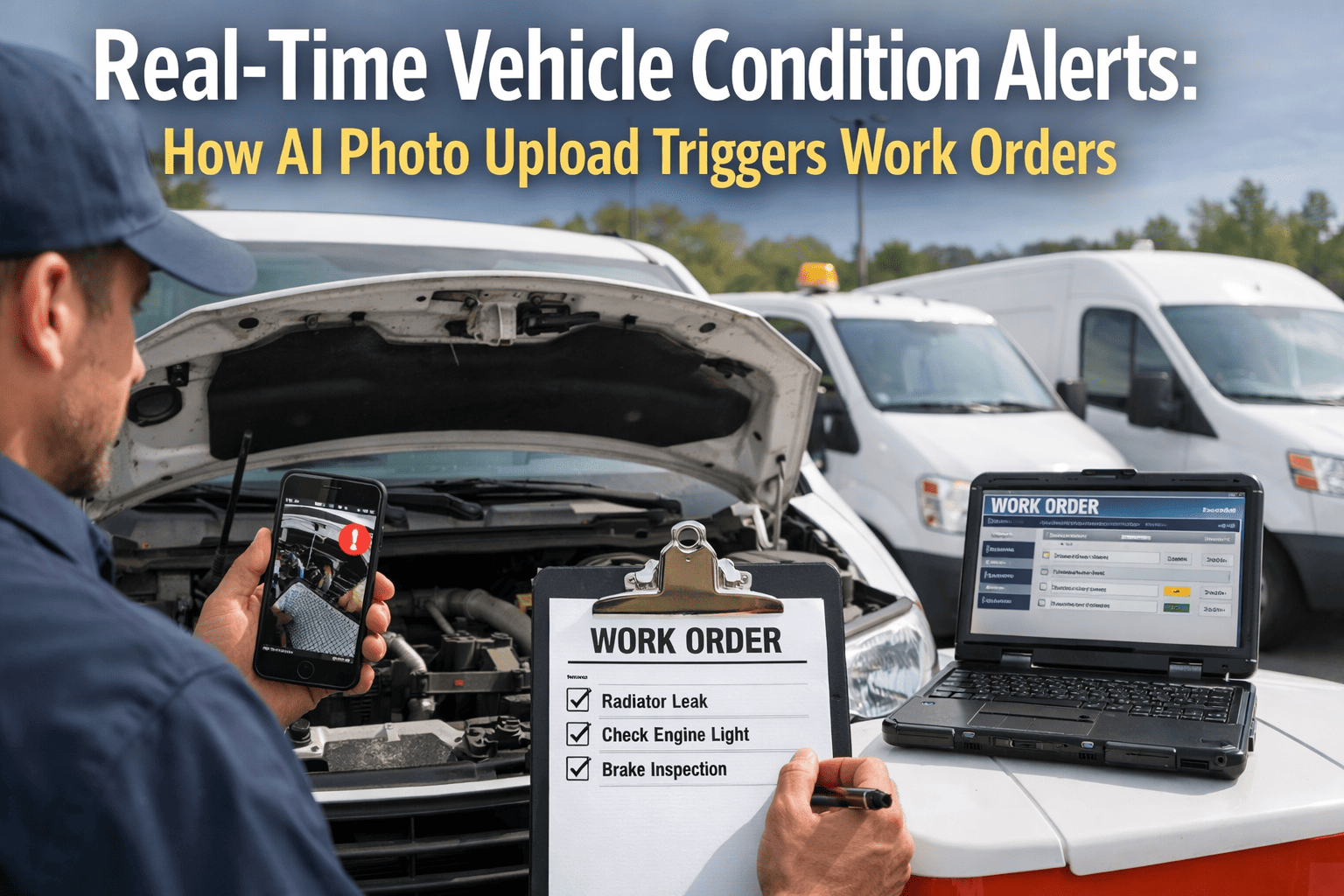
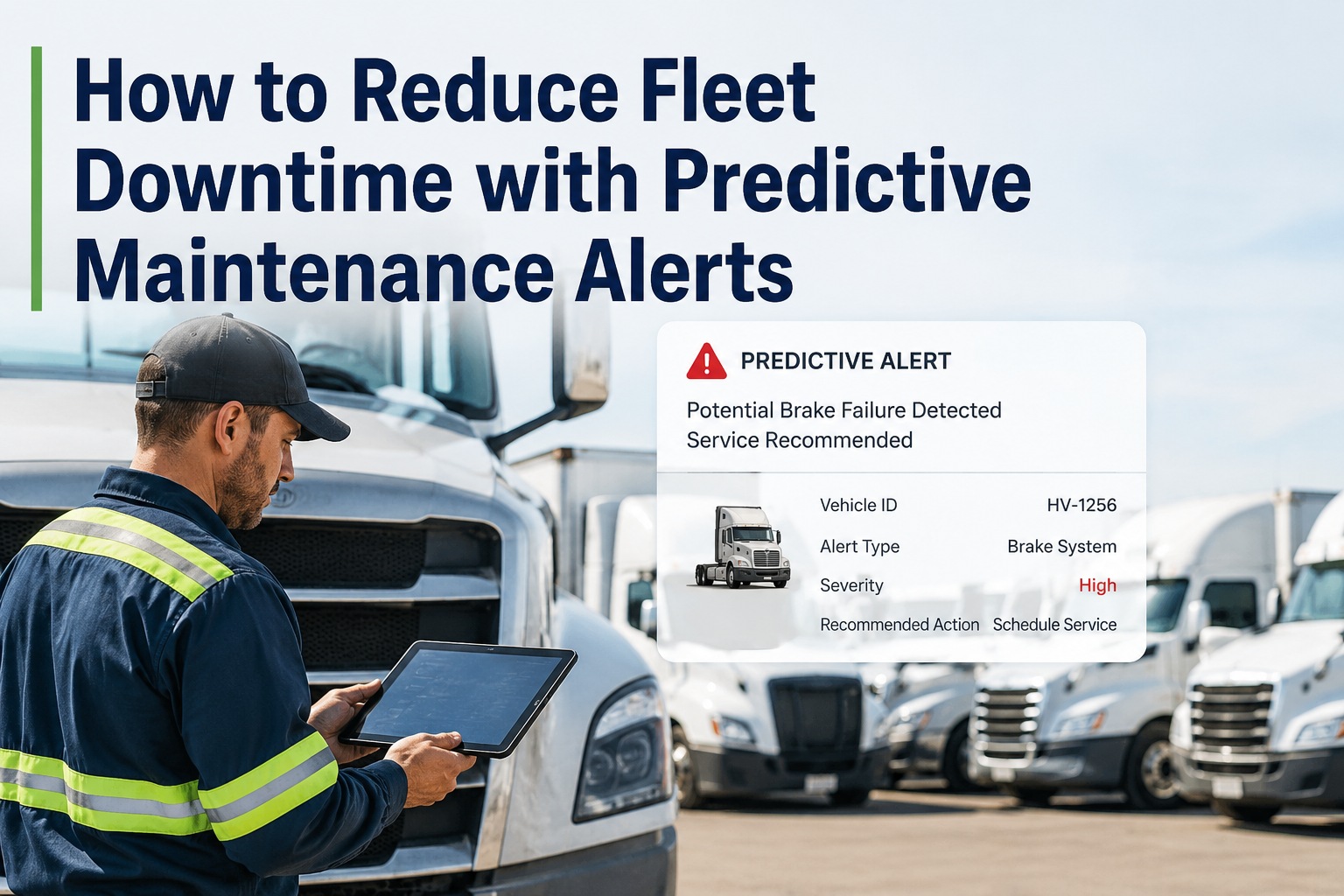
A driver photographs a cracked brake hose during a pre-trip walk-around. Before they've finished the inspection, AI has already analyzed the image, classified the defect as safety-critical, generated a work order with the photo and vehicle ID attached, routed it to the nearest qualified mechanic, checked parts inventory, and sent the fleet manager a real-time alert — all without a single phone call, email, or data entry keystroke. That's the closed-loop workflow reshaping fleet maintenance in 2026. It replaces the 4–24 hour gap between "driver reports a problem" and "maintenance knows about it" — the gap where paper DVIRs get lost, defects get forgotten, and $8,000 repairs become $45,000 emergencies. Computer vision systems now achieve 95–99% accuracy in defect detection, catching 40% more issues than manual inspection alone. And the FMCSA eDVIR rule effective March 2026 explicitly authorizes this entire digital workflow. The technology isn't experimental. It's the new compliance standard — and the fleets using it are documenting 35% lower repair costs and 89% fewer preventable breakdowns.
The AI Photo-to-Repair Pipeline
Driver Captures Photo
5 seconds
AI Analyzes & Classifies
Under 60 seconds
Alert Sent + Work Order Created
Instant
Mechanic Repairs + Confirms
Same-day resolution
Driver Notified + Loop Closed
Full audit trail
Total time from photo to work order: under 2 minutes. Paper DVIR equivalent: 4–24 hours — if it reaches maintenance at all.
What AI Sees in a Photo That Your Driver Doesn't
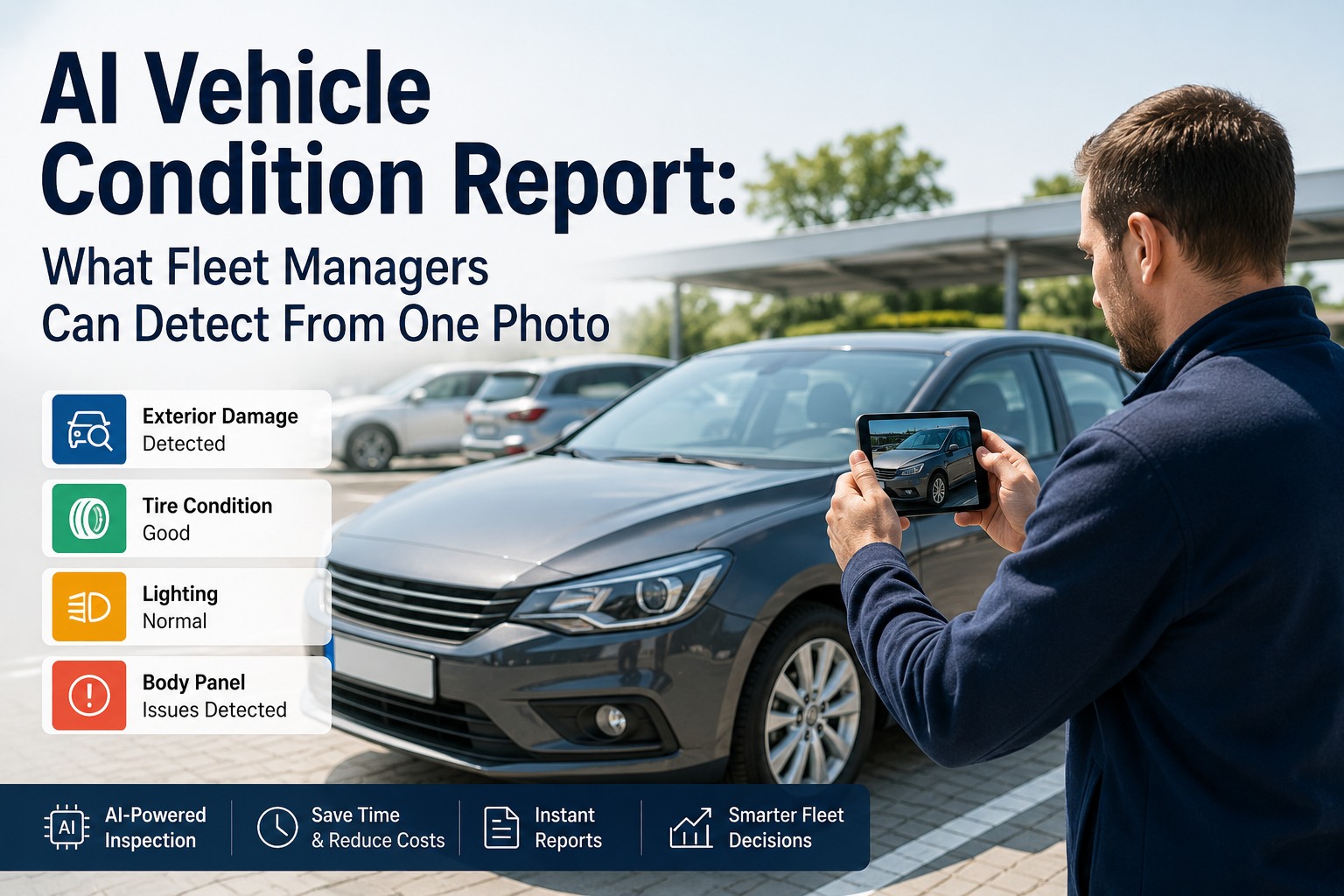
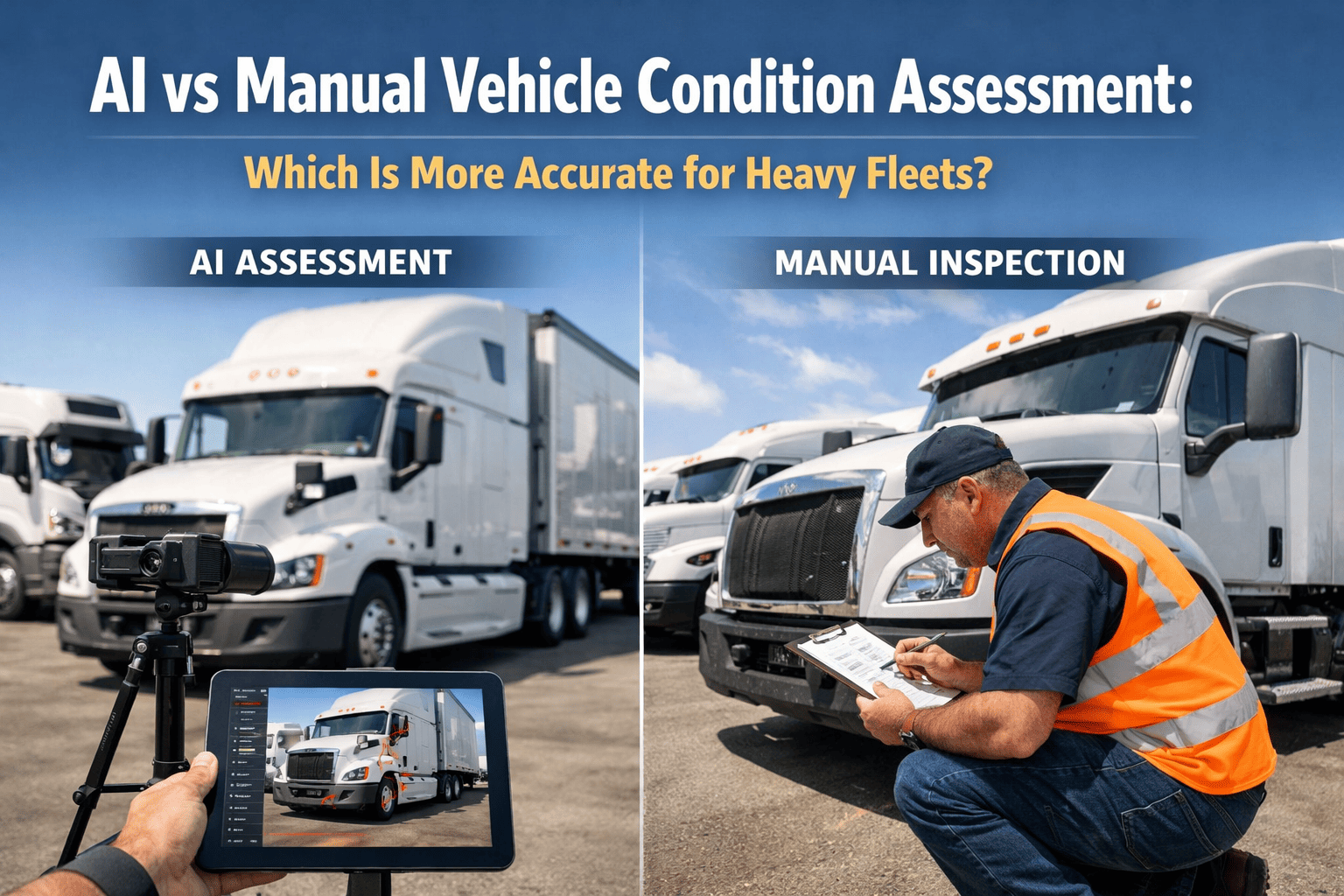
Human inspectors catch 70–80% of defects on a good day. On a rushed morning, in poor lighting, after a long haul — that number drops. AI computer vision, trained on millions of real-world vehicle images, achieves 95–99% accuracy consistently, regardless of time pressure, lighting conditions, or inspector fatigue. Here's what the AI detects from a single photo that a manual check regularly misses.
Tire Wear & Damage
Automatic tread depth estimation from photos. Flags tires approaching DOT minimum thresholds before they become violations. Detects sidewall damage, uneven wear patterns, and foreign objects embedded in tread.
Catches pre-violation wear that visual checks miss
Brake Component Wear
Identifies cracked hoses, leaking lines, worn pads, and glazed drums from inspection photos. Classifies severity as safety-critical, scheduled, or monitor — and routes accordingly.
Detects oil, coolant, hydraulic fluid, and fuel stains from under-vehicle and ground surface photos. Distinguishes fresh leaks from residual staining. Maps leak location to likely source component.
Identifies leaks too gradual for daily visual notice
Body & Structural Damage
Identifies dents, cracks, corrosion, frame stress fractures, and paint damage. Detects digitally altered images and duplicate photos to prevent fraud. Distinguishes broken glass from open windows.
Catches structural issues hidden by dirt or lighting
Light & Reflector Condition
Identifies cracked, clouded, or missing lenses. Detects non-functional bulbs from photo analysis. Flags missing reflectors and reflective tape degradation — a top DOT roadside citation item.
Prevents the #1 most common roadside violation
Belt, Hose & Wiring
Detects fraying, cracking, bulging, and chafing in belts, hoses, and visible wiring from engine compartment photos. Flags degradation that indicates failure within days — before fault codes trigger.
Pre-failure detection window: days to weeks earlier
Let AI inspect what your drivers miss. Start your free trial of HVI's AI-powered photo inspection — 95–99% defect detection, automatic work orders, and instant alerts. Or book a demo to see computer vision analyze a real vehicle photo.
Inside the Auto-Generated Work Order
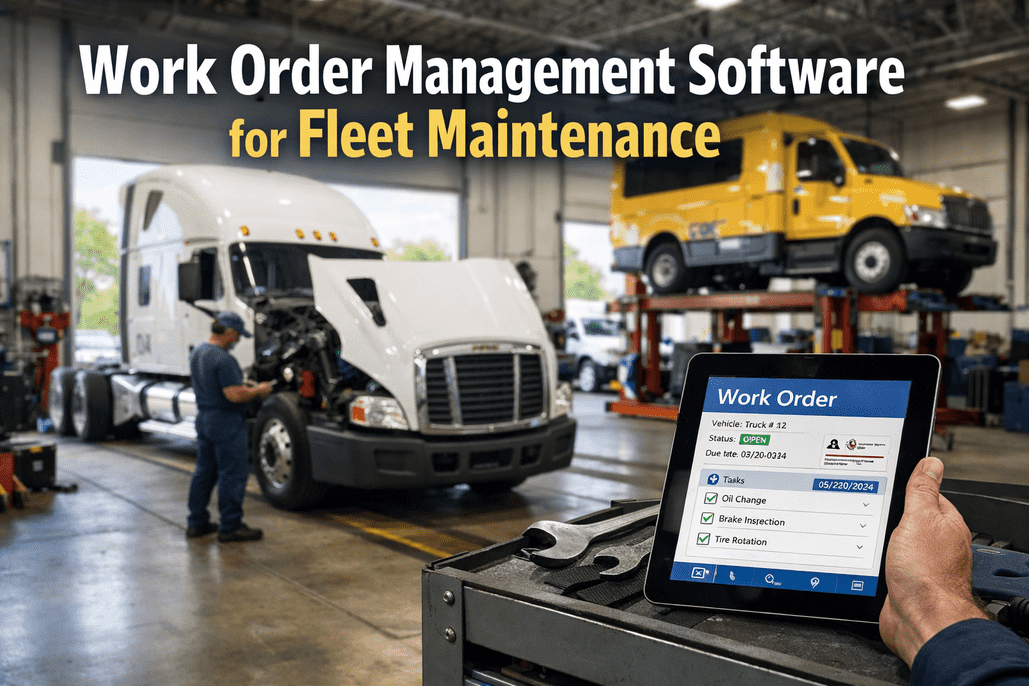
When AI detects a defect from an inspection photo, it doesn't just send an alert — it creates a complete, actionable work order that eliminates every manual step between "problem found" and "repair started." Here's exactly what an AI-generated work order contains and how it compares to the traditional defect reporting process.
AI-Generated Work OrderWO-2026-04872
Defect Photo
AI-annotated with defect highlighted
Auto-Populated Details
Vehicle: Truck #247 — 2022 Freightliner Cascadia
Component: Left front brake hose
Severity:Safety-Critical
Detection: AI photo analysis — pre-trip inspection
Location: GPS: 40.7128, -74.0060 (timestamped)
Assigned to: Tech J. Martinez (brake-certified)
Parts status: In stock — Bin C-14
Est. labor: 1.5 hours
What this replaces:
Driver writes note on paper DVIR
then
Paper sits in folder until someone checks
then
Fleet manager manually enters work order
then
Mechanic looks up parts, schedules repair
4–24 hours
Traditional defect-to-work-order time
vs
Under 2 min
AI photo-to-work-order time
The Numbers: What AI Photo Inspection Delivers
Every stat below is drawn from documented fleet implementations in 2025–2026. This isn't projected performance — it's measured results from fleets that switched from manual inspection to AI-powered photo analysis with automated work order generation.
95–99%
AI defect detection accuracy
vs. 70–80% manual
40%
more defects caught than manual
photo-verified inspections
67%
faster inspection completion
digital vs. paper
35%
lower repair costs
early detection advantage
89%
fewer preventable breakdowns
closed-loop workflow
96%
audit pass rate
vs. 73% with paper DVIRs
Get these results for your fleet. Start free with HVI's AI photo inspection platform — defect detection, auto work orders, and compliance documentation from day one. Or schedule a demo to see real ROI projections.
The Gap Between "Problem Found" and "Repair Started" Is Where Money Disappears
Every hour between a driver noticing a defect and a mechanic starting the repair is an hour where that defect can worsen, that vehicle can break down, or that compliance record can develop a gap. Paper DVIRs create a 4–24 hour gap as a structural feature — because the paper has to physically move through the system. AI photo inspection eliminates that gap entirely. The driver captures a photo. AI analyzes it in under 60 seconds. A work order generates instantly with every detail the mechanic needs. The repair gets scheduled, completed, and confirmed — and the driver gets notified that the loop is closed. That's not automation for automation's sake. That's the difference between catching a brake hose crack for $400 and replacing a brake system for $4,000 after a roadside failure.
Snap a Photo. AI Does the Rest.
HVI's AI photo inspection platform turns every driver walk-around into a high-accuracy defect detection system — with automatic work orders, real-time alerts, compliance documentation, and a closed-loop repair workflow that eliminates every manual step between problem and fix.
Drivers follow guided app prompts to capture photos of specific vehicle components during their walk-around inspection. Computer vision models — trained on millions of real-world vehicle images — analyze each photo instantly, identifying damage, wear patterns, and defects with 95–99% accuracy. The AI classifies severity (safety-critical, scheduled, or monitor), generates documentation, and triggers the appropriate workflow. No special equipment needed — standard smartphone cameras. Start your free trial to see AI analyze your fleet's first photos.
Q: Does the AI-generated work order actually replace manual entry?
Completely. When AI detects a defect, the work order generates automatically with the defect photo, vehicle ID, component, severity, GPS location, recommended repair, assigned technician (based on certification and availability), and parts status checked against inventory. Zero manual data entry. The 15–30 minutes per work order that manual creation requires drops to zero. Book a demo to see the auto-generated work order flow.
Q: Is AI photo inspection compliant with FMCSA eDVIR rules?
Yes. FMCSA published final rule FMCSA-2025-0115, effective March 23, 2026, explicitly authorizing electronic DVIRs under 49 CFR 396.11 and 396.13. Digital signatures fully replace wet ink. AI-generated DVIRs with timestamped photos, GPS verification, and the full 3-signature chain (driver, mechanic, next driver) exceed the minimum compliance standard. Sign up free for eDVIR-compliant AI inspections.
Q: What happens when AI detects a safety-critical defect?
The system immediately classifies it as safety-critical, sends real-time alerts to the fleet manager and designated maintenance personnel, generates a priority work order routed to the nearest qualified technician, and flags the vehicle as out-of-service until repair is confirmed. The driver is notified of the vehicle status and repair timeline. Once the mechanic completes the repair, digital sign-off closes the loop and clears the vehicle for dispatch.
Q: Do drivers resist switching from paper inspections to AI photo inspection?
Most fleets report the opposite — drivers prefer digital inspections because they're faster (67% faster than paper), eliminate paperwork, and provide immediate feedback on detected issues plus confirmation when repairs are complete. Training takes 25–30 minutes. Guided photo prompts make the process simpler than filling out paper forms. The closed feedback loop — where drivers see their reports actually lead to repairs — builds trust and increases reporting quality over time. Schedule a demo to see the driver experience firsthand.