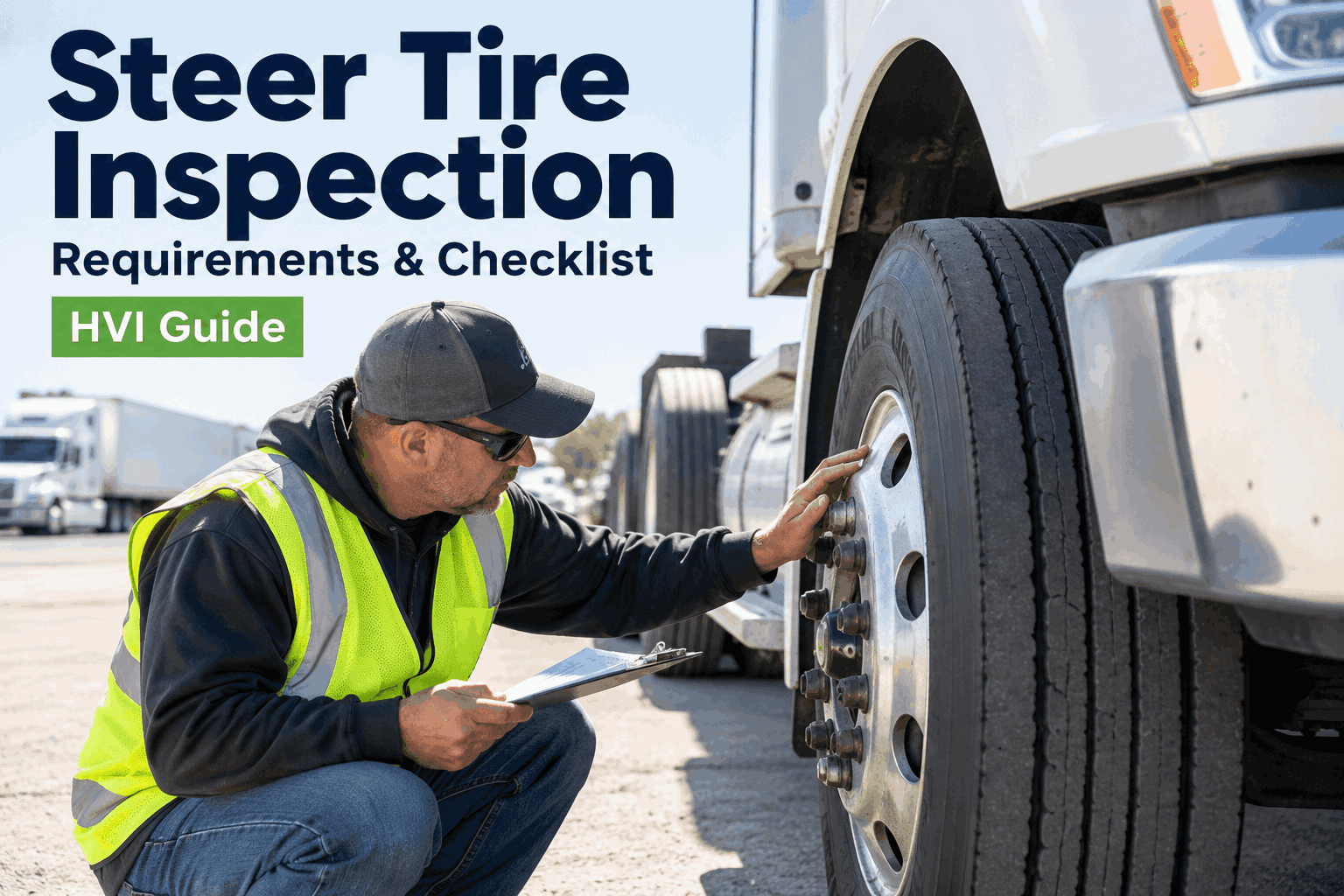
The steer tires are the two tires on the truck with no backup — and they're also the truck's most honest diagnostic surface. A proper steer tire inspection isn't just measuring tread; it's reading what the wear is telling you, because a steer tire that's feathering, cupping, or wearing one shoulder is reporting an alignment, suspension, or inflation problem long before it fails. Catch the pattern early and you fix a $200 alignment; miss it and you scrub a $500 steer tire to death on a broken front end. This guide covers how to inspect steer tires, what each wear pattern means, and when one has to come off. Book a demo to see steer wear patterns documented and routed.
A Steer Tire's Wear Is a Diagnosis
Two tires, no redundancy, and the most sensitive position on the truck. How a steer tire wears tells you what's wrong up front — toe, camber, suspension, or inflation. Read it early and you fix the cause; miss it and you feed good tires to a broken front end.
Every position on a truck wears, but the steer axle wears informatively. With only two tires carrying all of the directional control and much of the braking, and no other steer tires to share or mask the load, any front-end problem shows up in the steer tread first and clearest. That makes the steer tire inspection two jobs at once: confirming the tire is safe and legal, and reading what it's telling you about the truck.
Why the Steer Axle Is the Most Sensitive Position
The steer position is different from drive and trailer in a way that matters for both safety and diagnosis: there's no redundancy. Two tires do the whole job, so both the consequences and the clues concentrate there.
Two steer tires carry all of the directional control and the brunt of braking. If one loses grip or blows, the driver loses steering authority at speed — there's no other front tire to compensate.
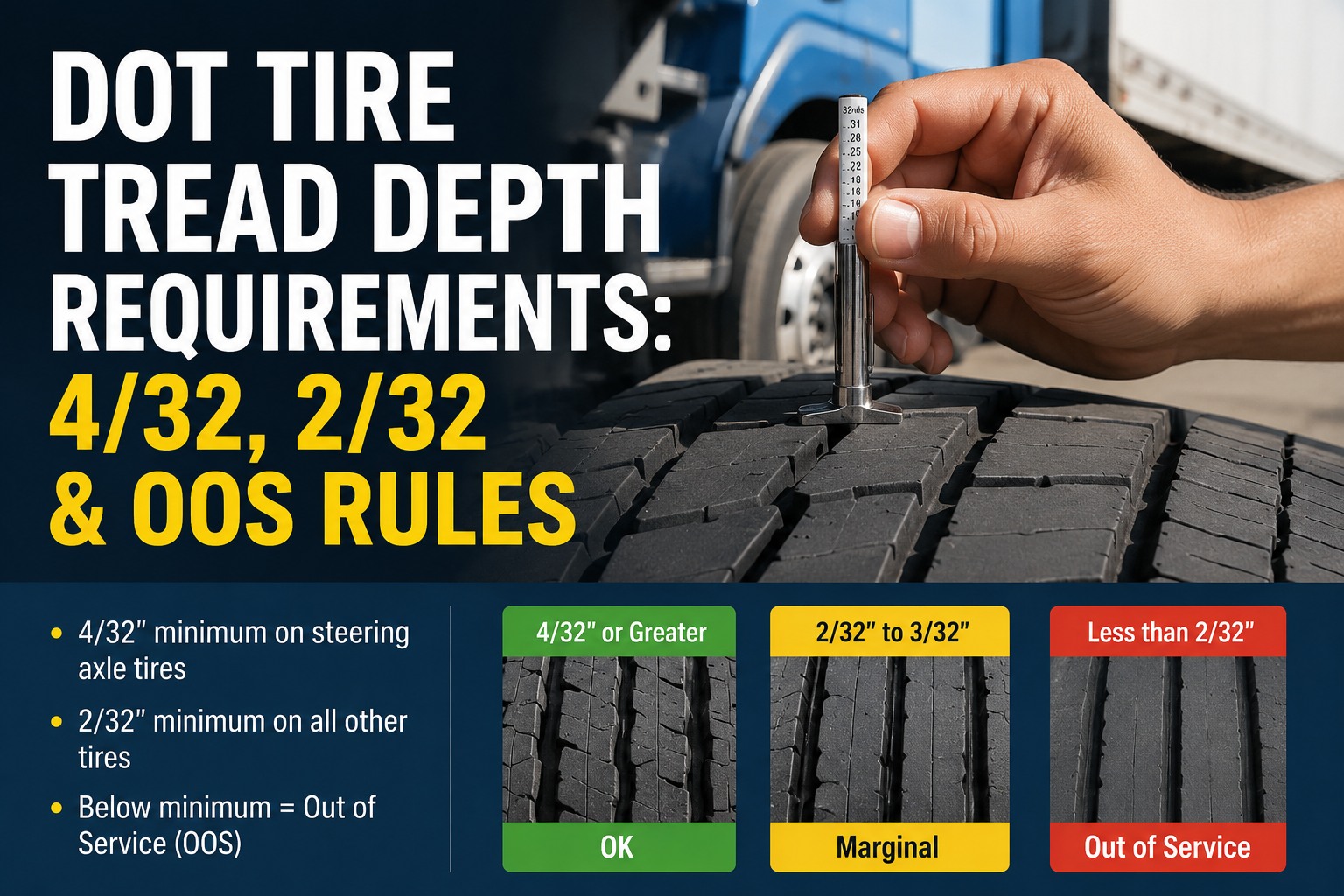
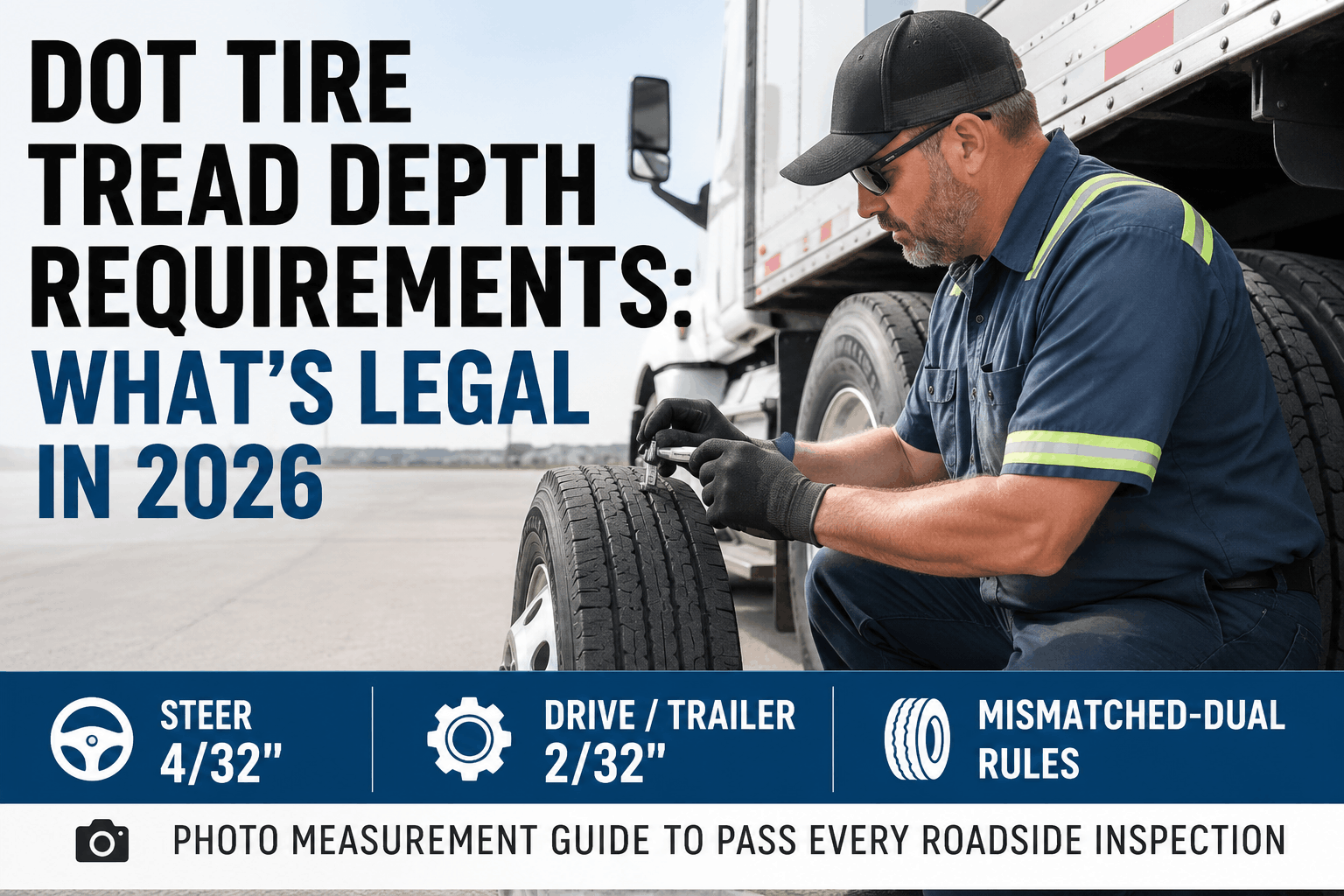
Front tires on a truck or tractor must have at least 4/32" tread in every major groove under 49 CFR 393.75 — double the 2/32" on other positions — precisely because steer failure is the most severe.
Because nothing shares its load, a steer tire shows front-end problems earlier and more distinctly than any other position — making it the best early-warning surface on the truck.
So the steer inspection carries more weight than any other. The compliance side — the 4/32" minimum and where to pull above it — is covered in detail in HVI's steer tire pull-point guidance in a demo; the rest of this page focuses on the part that's easy to miss: reading the wear to catch the cause. Start free and put a steer-specific check on every truck.
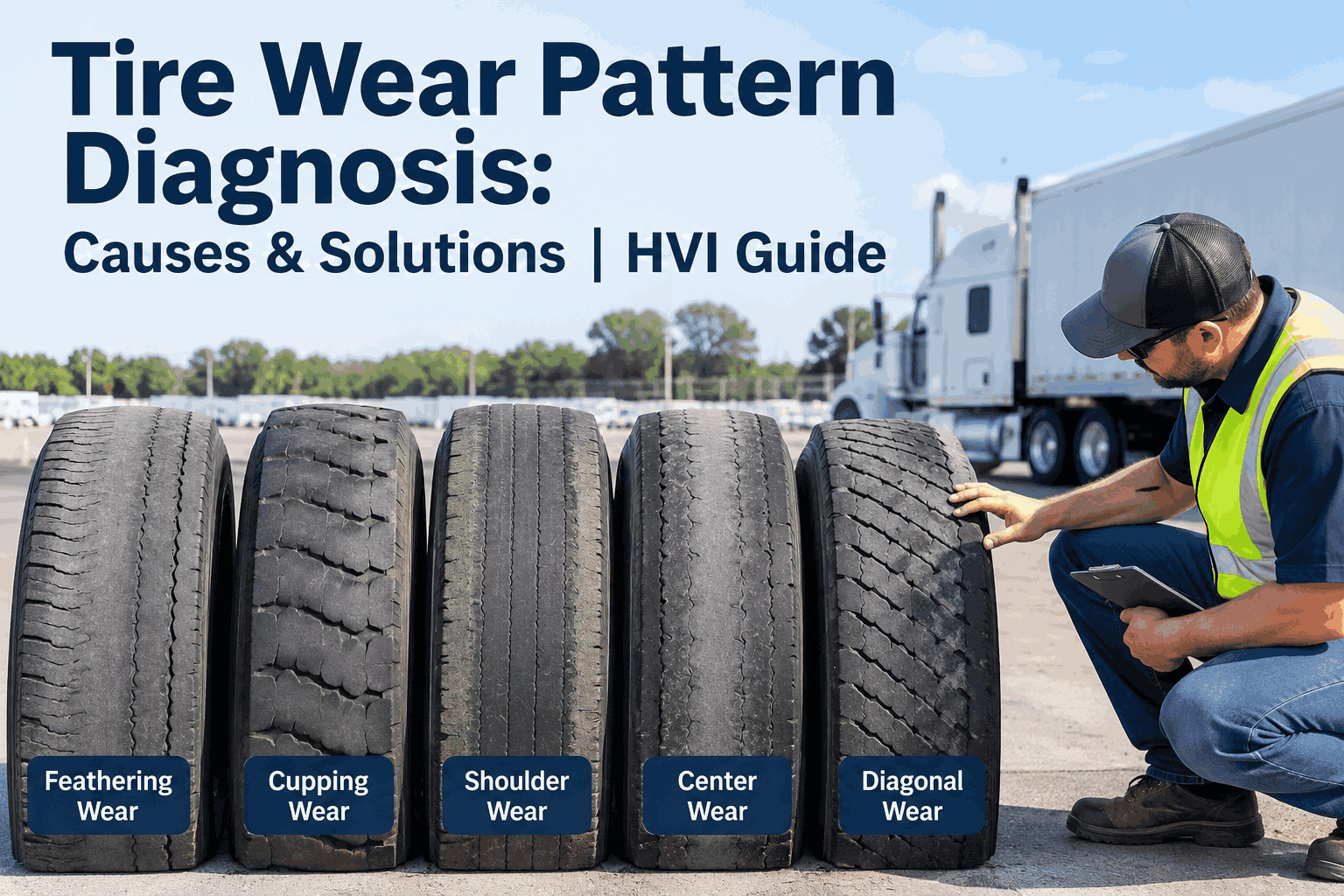
The Wear Patterns and What Each One Is Telling You
This is the heart of a steer inspection: irregular wear isn't just a worn tire, it's a symptom. Each pattern points at a specific front-end cause, so learning to read them turns a tire check into a diagnostic.
Tread ribs worn sharp on one edge and rounded on the other, so the tire feels smooth one way and sharp the other when you run a hand across it.
One shoulder or side of the tread worn noticeably more than the other, tapering across the face.
Dips or scallops worn around the tread in a repeating pattern, often with a wave you can feel.
Both outer edges worn faster than the center, with the center of the tread standing proud.
The center rib worn faster than the shoulders, the opposite of shoulder wear.
Uneven, patchy, or diagonal wear with no single clean pattern.
The discipline is to treat every irregular steer wear pattern as a work order waiting to happen: the tire is the symptom, the front end is the patient. A feathered steer tire that just gets replaced without correcting the toe means the new tire starts wearing the same way the day it goes on. Reading the pattern is how you fix the cause, not just the symptom. Book a demo to see wear patterns logged with a probable cause.
Tread and Pressure: The Two Numbers, Measured Right
The wear pattern tells you why; the tread and pressure numbers tell you whether the tire is legal and safe today. Both have to be measured, not eyeballed — a steer tire at 3/32" looks fine and is already illegal.
Tread depth — measured, in major grooves
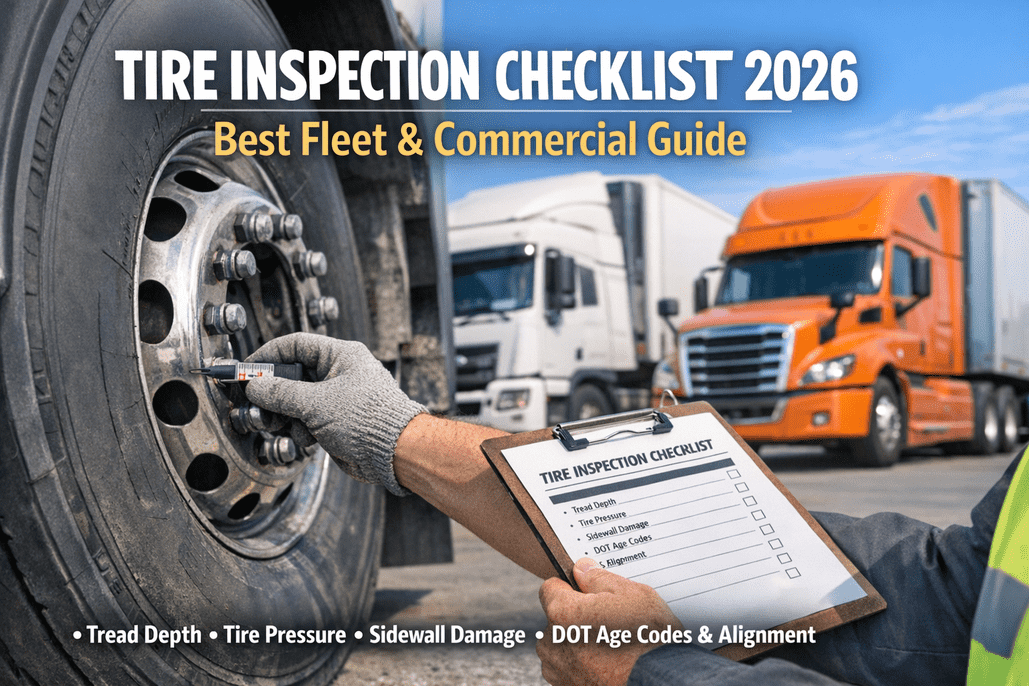
The federal minimum for front tires is 4/32" in every major groove. Measure with a gauge at the lowest point in the groove, at several points across the face — not the highest rib, and never by eye. Many fleets pull steers at 5–6/32" to keep a buffer above the line and off a roadside report.
Inflation — to spec, checked cold
Check pressure before the truck moves, against the tire and vehicle manufacturer's placard spec — not the sidewall maximum. Underinflation shows as both-shoulder wear and fails the tire structurally long before it looks flat; overinflation shows as center wear. Pressure is a cause and a clue at once.
These two numbers are where compliance lives, and they connect straight back to the wear patterns: the shoulder-and-center wear signatures are the inflation story written in rubber. Getting the pressure right doesn't just pass inspection — it removes one of the most common causes of steer wear. The full tread-depth rules by position are covered in HVI's tread-depth requirements walkthrough. Start free and capture steer tread and pressure by position.
Damage That Pulls a Steer Tire Immediately
Some findings aren't a plan-to-replace — they're an out-of-service, right now. On a steer tire, where failure means loss of control, these conditions come off the moment you see them, regardless of tread depth.
Any exposed body ply, belt, or cord material visible in the tread or sidewall is an automatic out-of-service condition — the tire's structure is compromised.
A sidewall bulge or bubble means the body ply has failed and the tire can let go without warning. It comes off immediately, no exceptions.
Cuts or cracks deep enough to reach the cords, on either the inner or outer sidewall, expose the casing to failure and pull the tire.
A flat or severely underinflated steer tire, or one run flat, may have hidden internal damage — it's out of service until inspected and cleared.
Inspect both faces of each steer tire — inner and outer sidewall — because damage on the inside face is easy to miss and just as dangerous. On the steer axle there's no room for "watch it and see"; a structural finding is a tag-out, because the failure mode is a driver losing the front of the truck at highway speed. Book a demo to see tag-out conditions enforced on the check.
Matching Across the Steer Axle
The two steer tires work as a pair, and they should match. Because there are only two, a mismatch here has nowhere to hide and directly affects how the truck tracks and wears.
The two steer tires should be the same size designation, construction, and tread design, and as close as possible in diameter and tread depth — and never mix radial and bias on the axle. A mismatch across the steer axle can pull the truck, cause uneven wear, and mask the very alignment signals you're trying to read. Match them, and the wear you see is telling you about the front end, not a tire that never belonged there.
Matching on the steer axle follows the same logic as matching duals, just with higher stakes because there are only two tires and they steer the truck. Confirm the pair matches before you diagnose a wear pattern — otherwise you might chase an alignment ghost that's really just a mismatched tire. Start free and record steer-axle matching per truck.
How HVI Documents Steer Wear and Routes the Cause
The value of reading steer wear is lost if it stays in one tech's head. Three capabilities turn the steer inspection into a documented loop from pattern to corrective action.
Position-specific steer template
A steer-axle inspection with tread at multiple points, cold pressure, sidewall (inner and outer), wear pattern, and matching — the criteria that matter on the front axle, not a generic tire check.
Wear-pattern photos & probable cause
Photograph the wear and log the pattern with its likely cause — feathering, cupping, one-sided — so the finding is a documented diagnosis, not a note that fades by the next shift.
Route to alignment & track history
Route an irregular pattern to an alignment or suspension work order, and keep the steer tire's history — so a recurring wear problem on a truck surfaces as a pattern, not a repeat replacement.
The result is a steer program that fixes causes instead of replacing symptoms: the wear is read, photographed, and tied to a probable cause; the front-end fix gets routed and done; and the tire history shows whether it worked. That's the difference between buying steer tires and managing them. Book a demo to see it on your steer axles. Start free and read your steer wear on the record.
From a fleet manager who read the wear instead of just the tread
We were replacing steer tires way too often on a handful of trucks and calling it bad luck. When we started photographing the wear and logging the pattern, three showed textbook feathering — toe was out on all three. We'd been feeding new steer tires to trucks that ate them in half the miles. A few alignments later, steer tire life on those units nearly doubled. The gauge said the tire was done; the wear said why.
Frequently asked questions
What is the minimum tread depth for steer tires?
Under 49 CFR 393.75, front (steer) tires on a truck or truck tractor must have at least 4/32" of tread in every major groove — double the 2/32" minimum for drive and trailer positions — because steer-tire failure has the most severe control consequences. Measure at the lowest point in a major groove with a gauge, at several points across the face, not by eye. Many fleets set a pull point of 5–6/32" to keep a safety buffer above the legal minimum. Federal requirements vary by position and vehicle type, and manufacturer guidance may add more.
What do steer tire wear patterns mean?
Irregular steer wear is a diagnostic signal. Feathering (ribs sharp on one edge, rounded on the other) points at toe misalignment; one-sided or tapered wear points at camber misalignment; cupping or scalloping points at worn suspension components or a balance issue; both-shoulder wear points at chronic underinflation; center wear points at overinflation; and erratic or diagonal wear suggests multiple issues to investigate. Because the steer axle has no other tires to share load, these patterns show up earlier and clearer there than anywhere else, which is why reading them catches front-end problems early.
Why do steer tires have stricter requirements than other tires?
Because there's no redundancy. The two steer tires carry all of the directional control and the brunt of the braking, and there are no other front tires to compensate if one wears out or blows. A steer-tire failure means the driver can lose steering authority at speed, so the consequence is the most severe of any position. That's why the federal tread minimum is 4/32" versus 2/32" elsewhere, why fleets pull steers with an extra buffer, and why structural damage on a steer is an immediate out-of-service rather than a watch item.
When must a steer tire be removed from service?
Immediately, regardless of tread, if it shows exposed body ply, belt, or cord; a sidewall bulge, bubble, or separation; cuts or cracks deep enough to reach the cords on either the inner or outer sidewall; or if it's flat, severely underinflated, or has been run flat. It's also out of service if tread falls below the 4/32" minimum in a major groove. Inspect both the inner and outer sidewall faces, since inside-face damage is easy to miss. On the steer axle, any structural finding is a tag-out, not a watch item.
Can you use retreaded tires on a steer axle?
It depends on the vehicle. Under 49 CFR 393.75, retreaded and recapped tires are permitted on the steer axle of trucks and truck tractors, though regrooved tires with a load capacity of 4,920 lb or more are prohibited on front wheels, and best practice at many fleets is new tires on steer. For buses, retreaded, recapped, or regrooved tires are prohibited on the front wheels under any circumstances. Retreads are permitted on drive and trailer positions for all vehicle types. Always verify current federal rules and manufacturer guidance for your equipment.
Inspect Steer Tires to Catch the Cause, Not Just the Wear
Capture steer tread, pressure, sidewall, and wear pattern by position with photo evidence, flag the probable front-end cause, and route it to the alignment or suspension fix — so a feathered steer tire triggers a correction, not just a replacement, and the truck stops eating tires. Live in under two weeks, trusted by 25,000+ users worldwide.
No credit card · No hardware · Steer inspection templates ready on day one