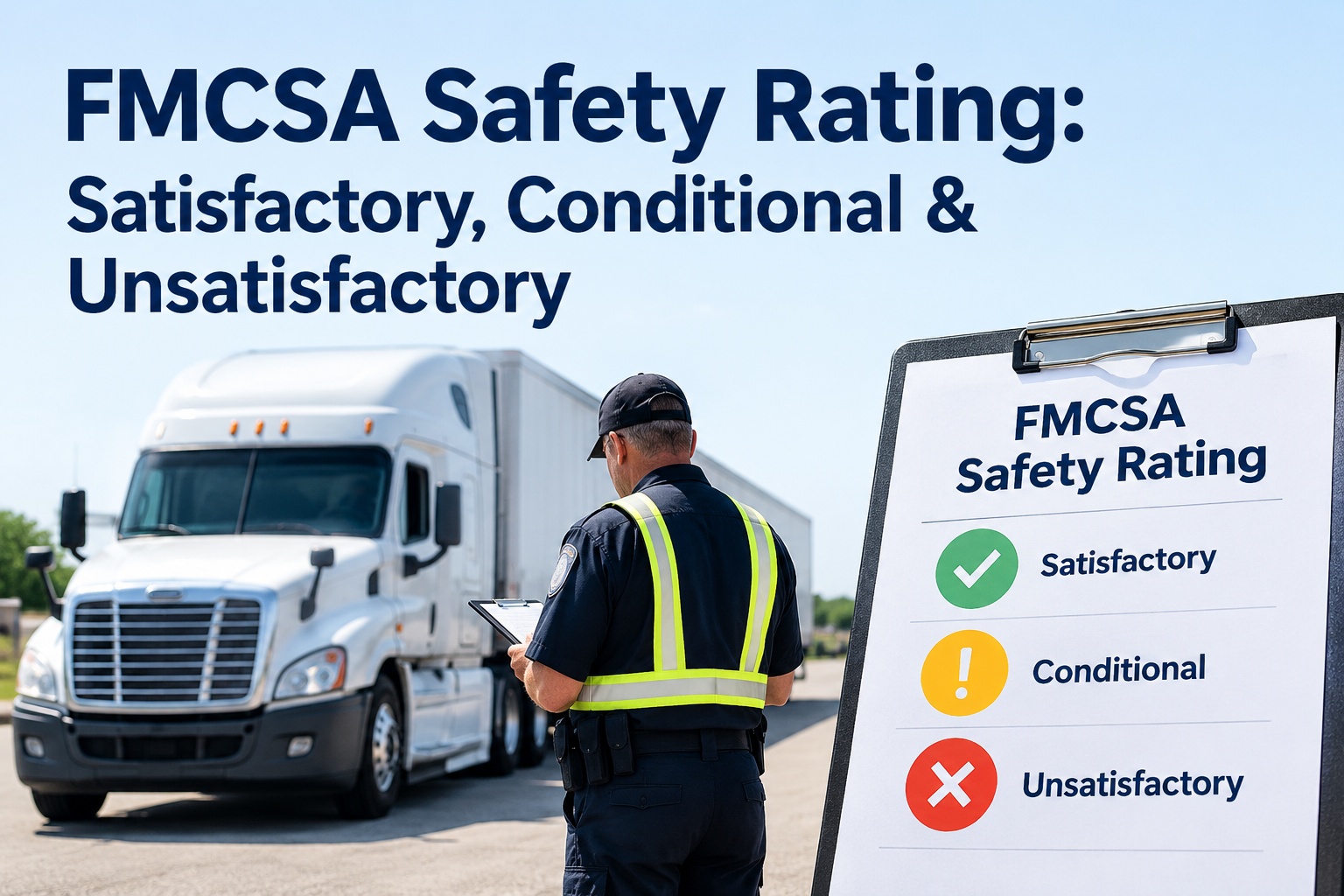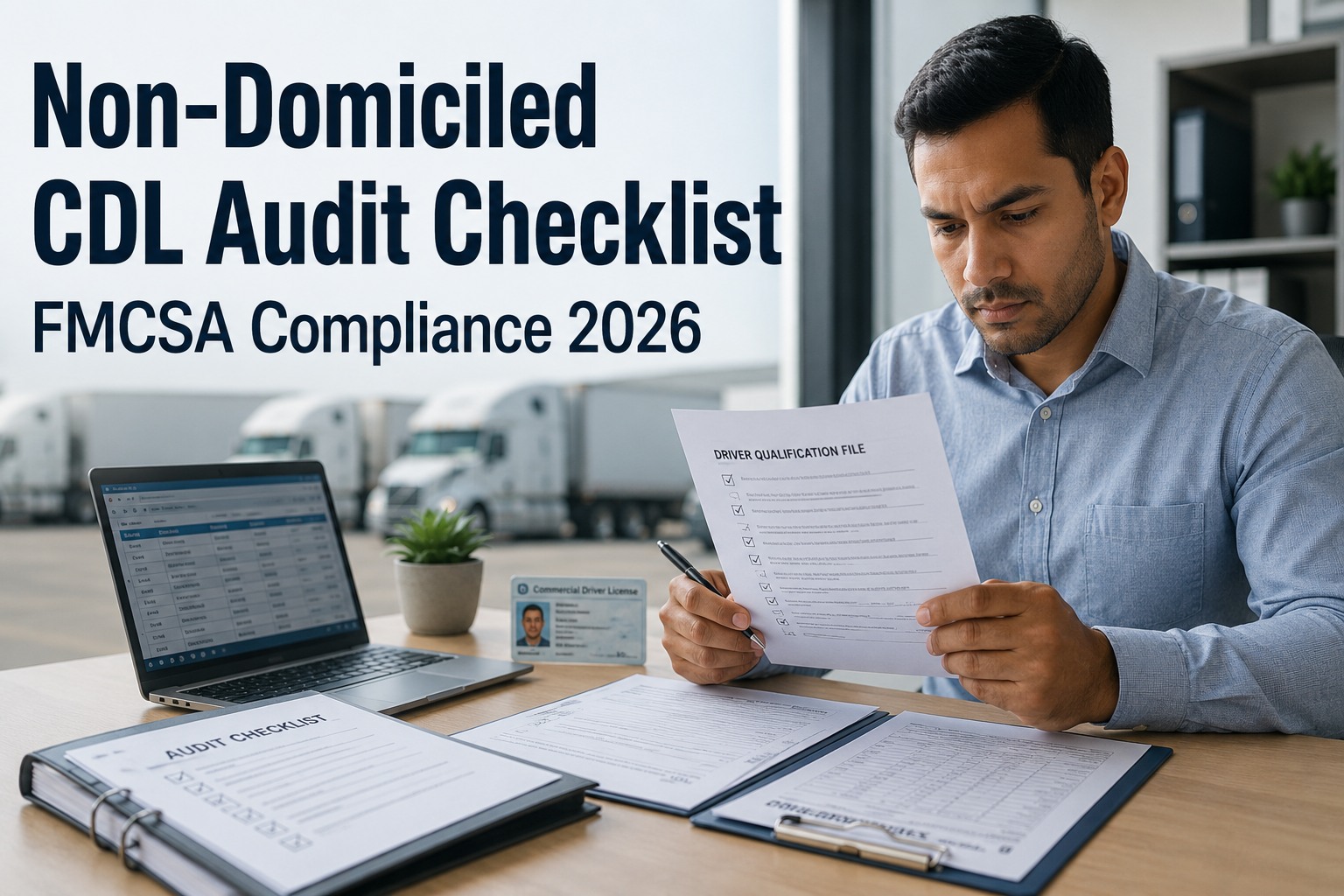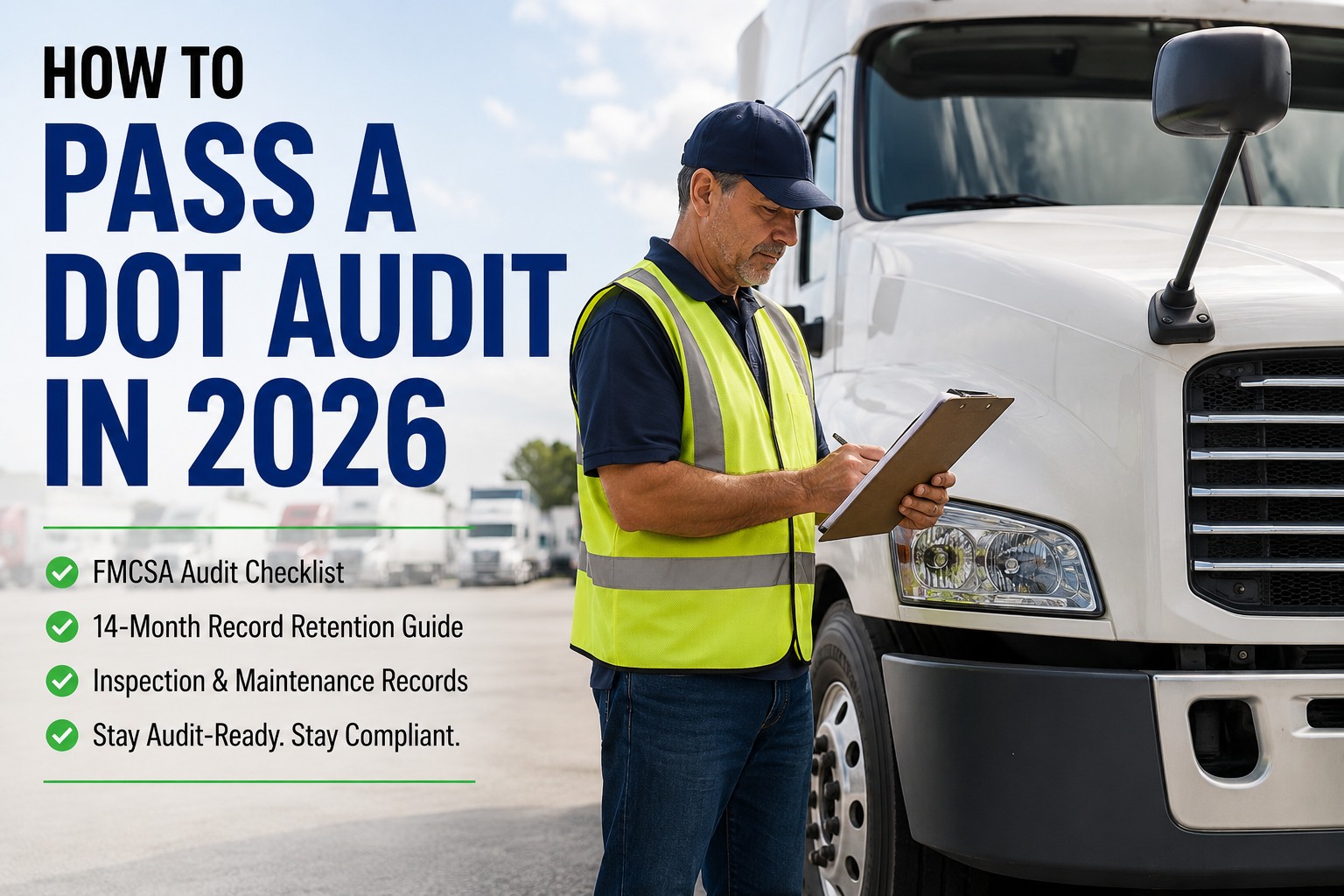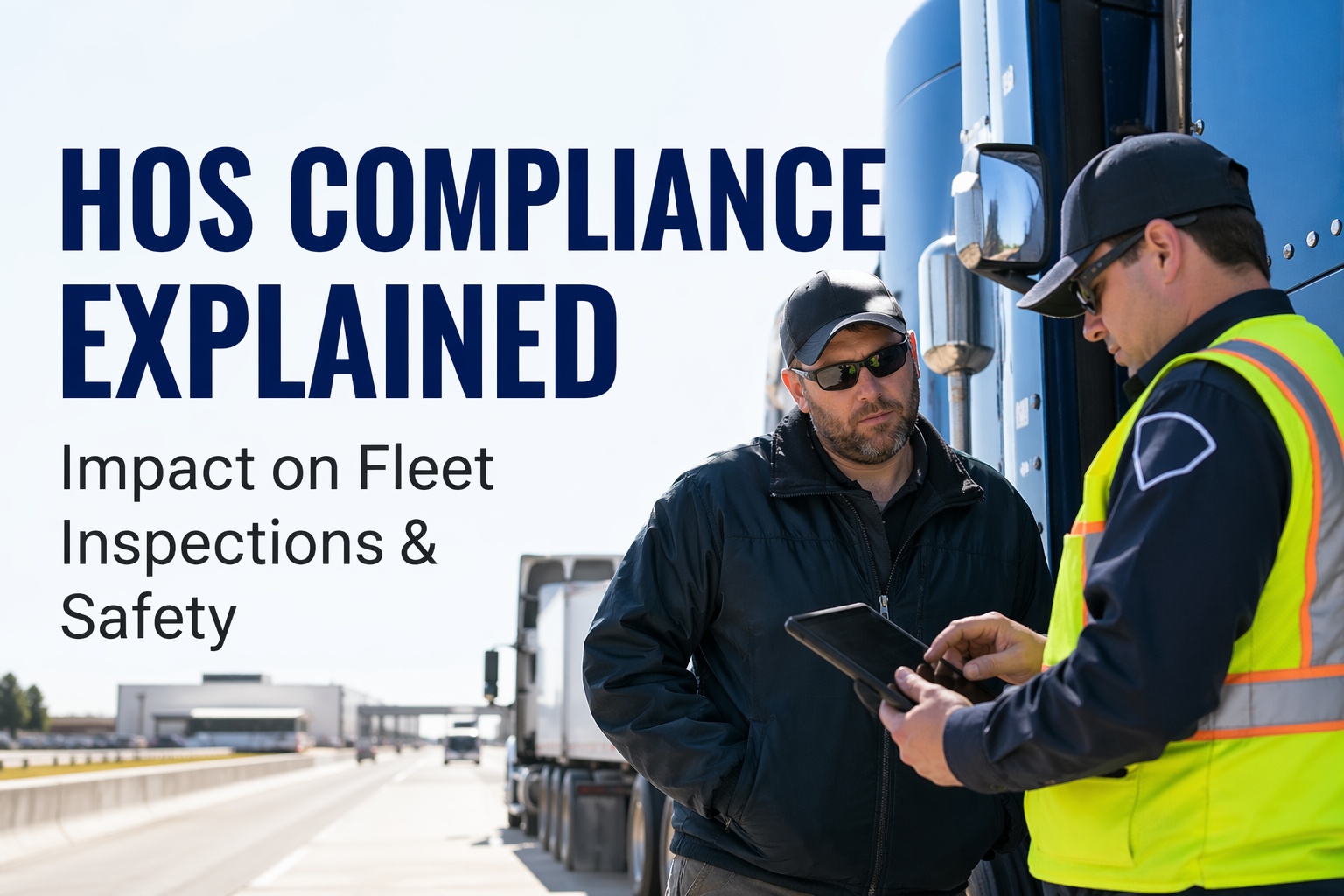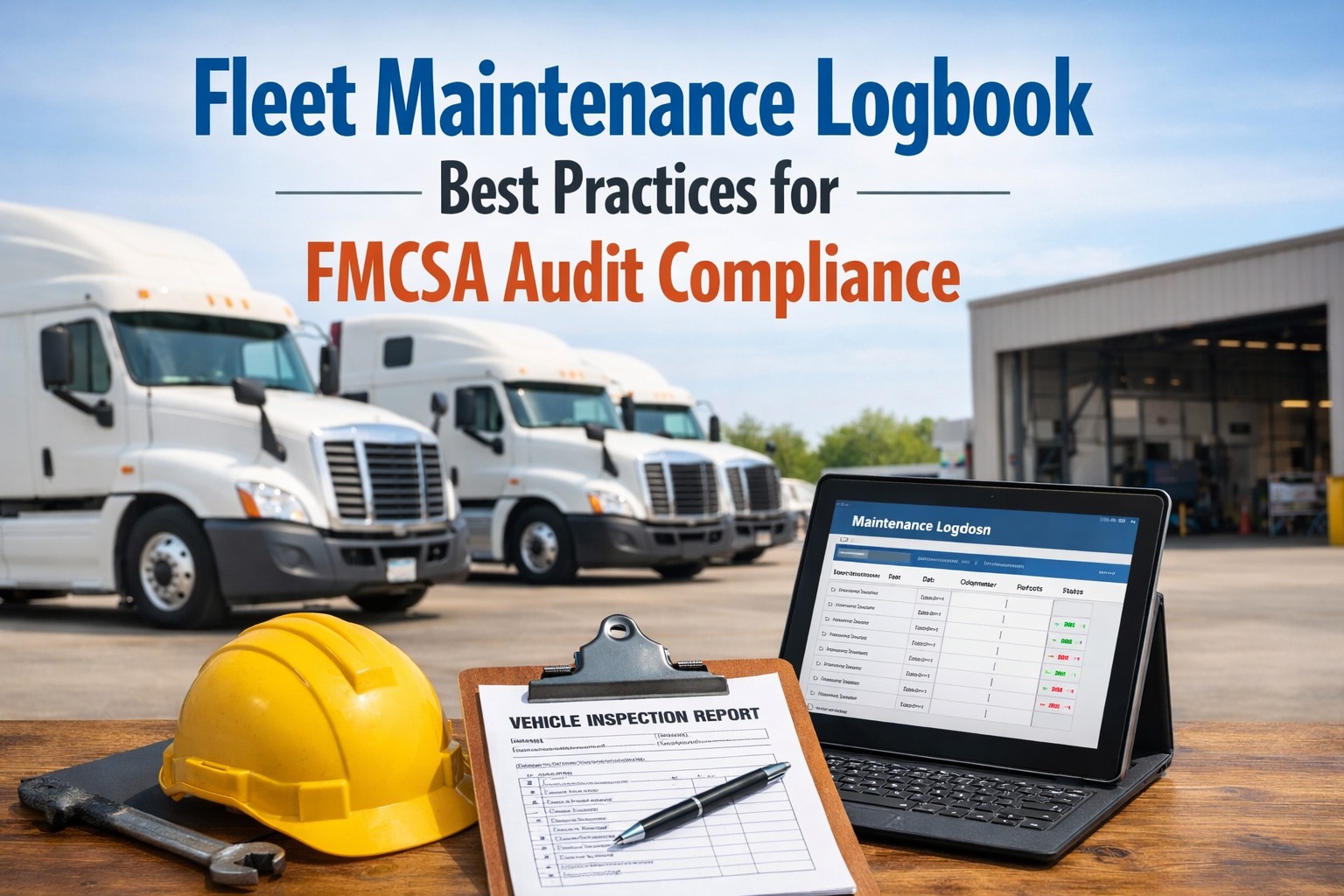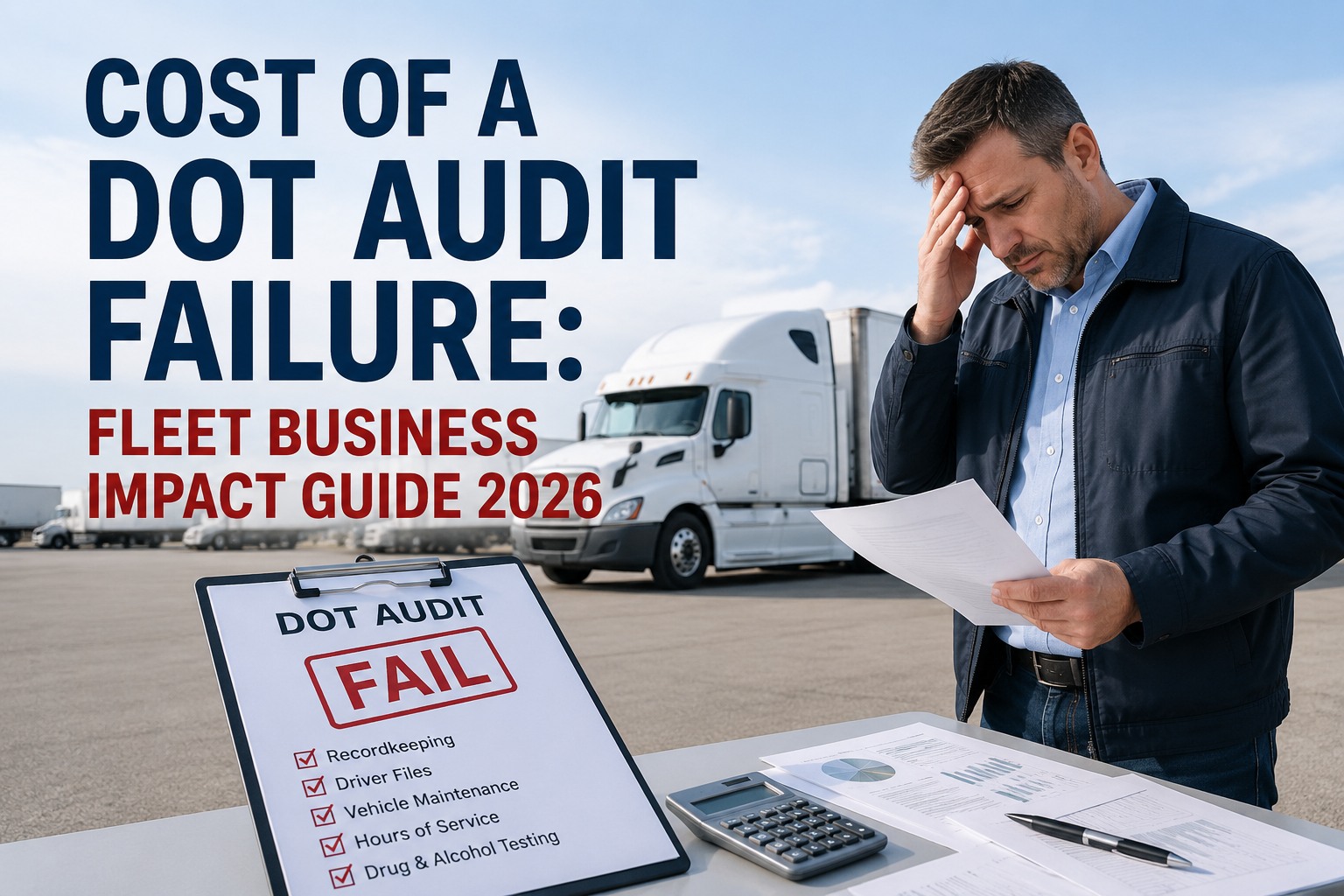
The civil penalty on an FMCSA compliance review is rarely the biggest number on the invoice. Once a Conditional rating lands, insurance premiums jump, brokers and shippers refuse loads, corrective-action costs stack up, and productivity drops during response. In the worst case — an Unsatisfactory rating — the fleet has 60 days (45 for HazMat) to fix everything or the DOT number gets revoked. This 2026 guide walks the cost cascade, from citation to potential shutdown. Book a demo .
The DOT Audit Failure Cascade — Where the Real Cost Lives
The fine is stage one. The freight loss, insurance hike, and shutdown risk are stages two through four.
Fleet leaders who benchmark DOT audit exposure against the potential citation amount are looking at the wrong number. Direct civil penalties are the visible cost; they're also the smallest cost in most compliance-failure scenarios. The real financial impact accumulates across a cascade — enforcement action, safety rating downgrade, insurance premium impact, freight loss, and in worst cases, complete operational shutdown. Understanding the cascade lets a CFO or fleet director price audit readiness accurately against the actual downside exposure, not just the visible line item. And the record system that supports audit response is where prevention investment actually lands.
The three FMCSA investigation types and what they costNew entrant safety audit, compliance review, and focused investigation — different scope, different consequence
Not every FMCSA investigation produces a safety rating, and different investigation types carry different consequence profiles. Understanding which type of investigation you're facing determines the appropriate response and the realistic cost range. Book a demo to see audit-ready record organization in HVI
New Entrant Safety Audit
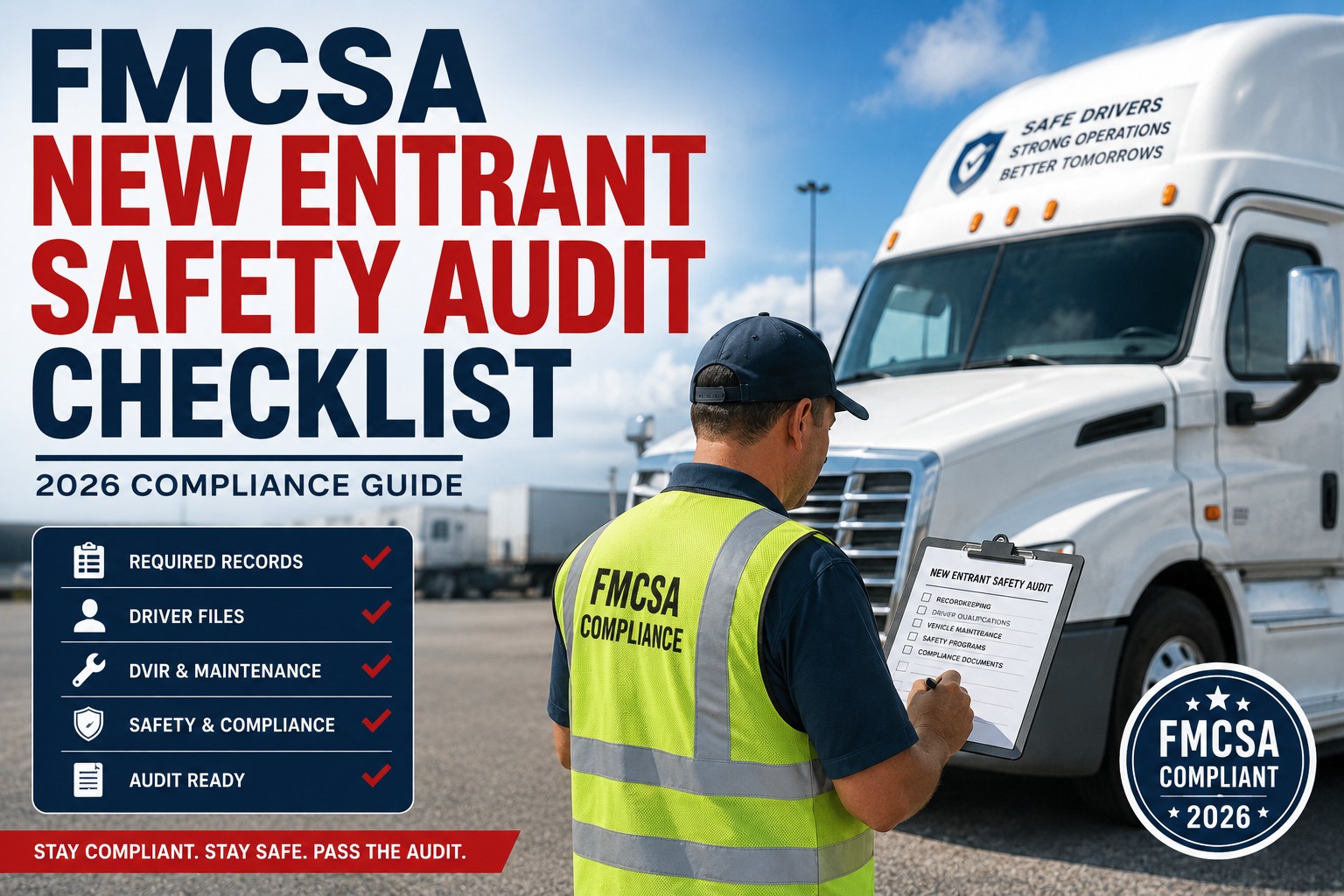
Trigger: Automatic within the first 12–18 months of operating authority. Scope: Verify carrier has basic safety management systems in place. Outcome: Pass or fail; failure to correct violations within timeframe results in revocation of new entrant authority. Not a safety-rating investigation, but consequential.
Compliance Review (rated)
Trigger: Elevated CSA BASICs, high crash rates, complaints, random selection. Scope: Six safety management factors (general, driver, operational/HOS, vehicle/maintenance, hazmat, accident). Outcome: Safety rating — Satisfactory, Conditional, or Unsatisfactory. This is the investigation that produces the cost cascade.
Focused Investigation
Trigger: Data-driven targeting of specific compliance areas where CSA shows problems. Scope: Narrowed to specific BASICs or violation patterns. Outcome: May or may not produce a rating; often produces enforcement action, corrective-action requirements, and CSA impact. Increasingly common in 2025–2026.
Off-site vs on-site
Format: FMCSA increasingly conducts off-site record reviews before on-site investigation. Records requested by upload or secure transmission. Ability to produce complete, organized records quickly is often the difference between an off-site review that closes and an on-site investigation that escalates.
Off-site record production is where digital audit trails pull well ahead of paper — the response window is measured in days, not weeks. Book a demo to see one-click audit export in HVI
Direct costs vs indirect costs — a realistic breakdownThe line items most compliance failure analyses miss
A defensible cost analysis separates direct regulatory costs (fines, corrective action) from indirect business costs (insurance, freight loss, productivity). Both are real, but they operate on different timelines and require different mitigation strategies.
Where documentation gaps turn small findings into ratings downgradesThe 6 record failures that drive audit outcomes disproportionately
FMCSA investigators don't rate fleets on operator behavior in isolation — they rate on documented evidence of safety management systems. A fleet that operates safely but can't prove it produces the same audit outcome as a fleet that doesn't operate safely at all. The record failures below account for most Conditional and Unsatisfactory ratings on otherwise compliant operations. Start a free trial to close the documentation gap.
Missing DVIRs or repair certifications
DVIR chain incomplete under 49 CFR 396.11 — missing daily reports, missing repair certifications, or missing next-driver acknowledgments. Vehicle Maintenance BASIC hits hard when the paper trail doesn't reconcile.
Untraceable defect-to-repair records
Defect flagged on DVIR but no work order, no parts record, no completion signoff. Investigator asks "how do you know this was fixed?" Answer determines the finding.
Annual inspection records not accessible
49 CFR 396.17 periodic inspection records must be retained 14 months. Missing or disorganized annual inspection records force the investigator to assume non-compliance until proven otherwise.
Corrective-action gaps
Roadside violations, prior audit findings, or CSA-flagged issues without documented corrective action. FMCSA expects to see a written response and evidence of implementation for previously identified issues.
Driver qualification file gaps
Missing MVRs, expired medical certificates, incomplete D&A testing records, or Clearinghouse query gaps. Driver BASIC downgrade often traces to DQF completeness, not driver behavior itself.
Records that exist but can't be produced quickly
Records in paper files at three yards, or across four spreadsheets, or in an email inbox — that don't come together in the 5–10 days FMCSA typically allows for off-site review. Existence doesn't equal accessibility. Investigators score what they can see in the response window.
Existence doesn't equal accessibility — a searchable digital audit trail closes the gap between "we have that somewhere" and "here it is." Book a demo to see records ready in minutes in HVI
From a fleet compliance officer on rebuilding after a Conditional
We took a Conditional in Q2 after a focused investigation on Vehicle Maintenance BASIC. Fine itself was under $20K — painful but manageable. What followed wasn't. Our insurance renewal came back with a 40% premium increase, one of our two largest shippers pulled us off their qualified carrier list, and we spent six weeks and about $60K on legal and consulting fees rebuilding our compliance program.
The frustrating part: we weren't actually operating unsafely. We just couldn't produce the documentation to prove it in the timeframe FMCSA gave us. Records were in three systems and two paper file rooms. When we came out the other side and rebuilt as a single digital audit trail, our next annual review closed clean in under an hour of investigator time. Same fleet, same trucks, same drivers — different records infrastructure.
Frequently asked questions
What does a DOT audit failure cost a trucking company?
DOT audit failure cost is a cascade, not a single line item. Direct enforcement includes civil penalties up to $34,116 per non-hazmat violation and up to $102,348 for placardable hazmat operations, plus ELD tampering penalties up to $19,277 per violation under 49 USC 521(b)(2)(B). Corrective action costs typically run $10K–$50K+ for a rated fleet (new policies, training, equipment, systems). Legal and safety consulting fees commonly range $15K–$75K+ for compliance-review response. Indirect business costs typically dwarf the direct costs: Conditional rating can drive insurance premium increases of 25–100%+ at renewal (some carriers non-renew entirely); elite shippers (Amazon, Walmart, retail tier) exclude non-Satisfactory carriers from load boards, causing multi-year revenue impact; financing terms may tighten for downgraded carriers; and productivity loss during 30–60 day corrective action periods shifts operational focus from freight to FMCSA response. Unsatisfactory rating without correction within 60 days (45 for HazMat/passenger) results in DOT number revocation and Out-of-Service order — a company-ending event. The realistic exposure is business-continuity risk, not fine risk.
What are the FMCSA safety ratings and what do they mean?
FMCSA assigns one of three safety ratings following a rated compliance review. Satisfactory means the carrier's safety management controls meet the safety fitness standard — the target outcome for any rated carrier. Conditional means one or more deficient safety management areas identified; the carrier can continue operating but under a downgraded rating visible on SAFER. Insurance carriers and shipper compliance teams monitor SAFER continuously, so a Conditional rating drives insurance premium impact and shipper/broker exclusion in weeks. Unsatisfactory means critical safety management deficiencies; the carrier has 60 days for standard freight (45 days for HazMat or passenger) to demonstrate corrective action, or DOT operating authority is revoked and an Out-of-Service order issued. Roughly 20% of compliance reviews result in a Conditional or Unsatisfactory rating per industry data. Carriers may request a rating change based on documented corrective action; the burden of proof rests with the carrier to show what changed and how.
How can fleets prepare for a DOT compliance review?
Audit readiness comes down to being able to produce complete, organized records in the timeframe FMCSA allows — typically 5–10 days for off-site review. Six record categories account for most rating downgrades on operationally-compliant fleets. Complete DVIR chains under 49 CFR 396.11 (daily reports, repair certifications, next-driver acknowledgments) with no gaps. Traceable defect-to-repair records: every flagged defect connected to a work order, parts record, and completion signoff. Annual periodic inspection records under 49 CFR 396.17 retained 14 months and immediately accessible. Documented corrective action for prior findings, roadside violations, and CSA-flagged issues. Complete driver qualification files (MVRs, medical certificates, D&A testing, Clearinghouse queries). Records that exist and can be produced quickly — not paper files spread across yards or spreadsheets across systems. Investigators score what they can see in the response window; records that exist but can't be produced don't count. A single searchable digital audit trail typically closes the gap between "we're compliant" and "we can prove it."
Does HVI help with DOT audit readiness?
Yes. HVI supports the record layer that underpins audit readiness — digital DVIR chains with electronic signatures meeting 49 CFR 396.11 and 396.13, storage of qualified periodic inspection records under 49 CFR 396.17, defect capture with photo documentation, work order generation from flagged defects with parts and labor tracking, corrective action documentation, and unified audit-ready export across the fleet with per-asset inspection and maintenance history searchable together. HVI is not a safety consultant, FMCSA representation service, DataQs challenge service, insurance broker, legal counsel, or safety rating certification authority. Compliance strategy, rating challenges, legal response, and FMCSA representation remain with credentialed safety consultants and attorneys. What HVI provides is the operational and inspection record system that turns "we can't find that" into "here's the complete history" — the difference between a Conditional rating and a clean review.
What is the difference between a compliance review and a new entrant safety audit?
These are two distinct FMCSA investigation types with different scope and consequences. A New Entrant Safety Audit is automatic within the first 12–18 months of receiving operating authority. Its purpose is to verify the carrier has basic safety management systems in place. It's a pass/fail investigation, not a rated one — failure results in revocation of new entrant authority if not corrected within the required timeframe. A Compliance Review is a formal rated investigation triggered by elevated CSA BASICs, high crash rates, citizen complaints, or random selection. It evaluates six safety management factors (general, driver qualification and drug/alcohol, operational/hours of service, vehicle maintenance, hazardous materials when applicable, and accident) and produces one of three safety ratings: Satisfactory, Conditional, or Unsatisfactory. This is the investigation that produces the cost cascade. A third type — Focused Investigation — targets specific compliance areas where CSA data shows problems. Focused investigations may or may not produce a rating but often produce enforcement action and corrective-action requirements. All three investigation types increasingly happen off-site first, with on-site escalation only when off-site record production is inadequate.
Don't let a documentation gap become a Conditional rating
The fine is $34K. The insurance hike is $75K. The lost freight is $500K. HVI keeps every inspection, work order, and corrective action in one searchable audit trail — so a compliance review closes clean instead of cascading.
No credit card · No hardware · Setup in minutes