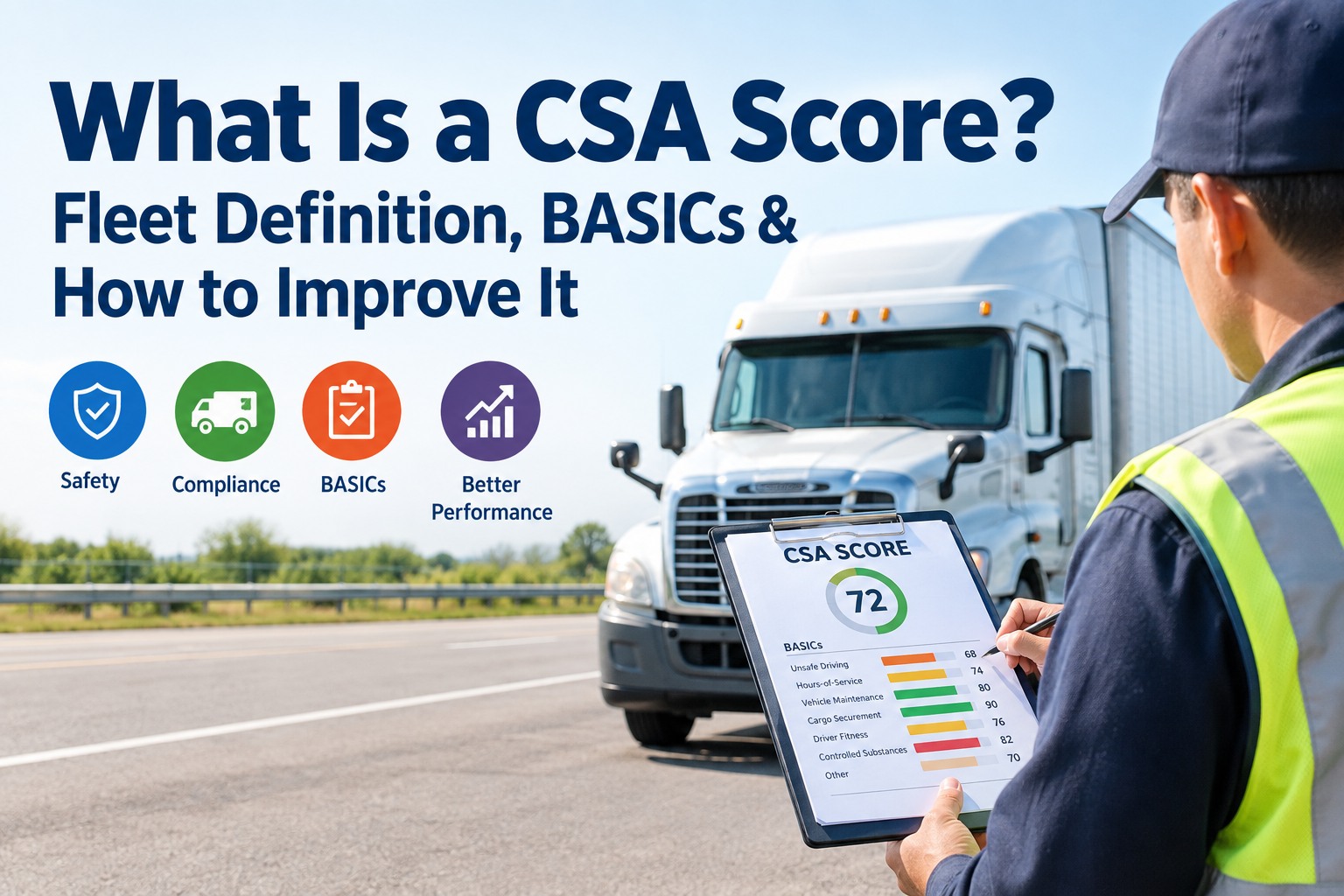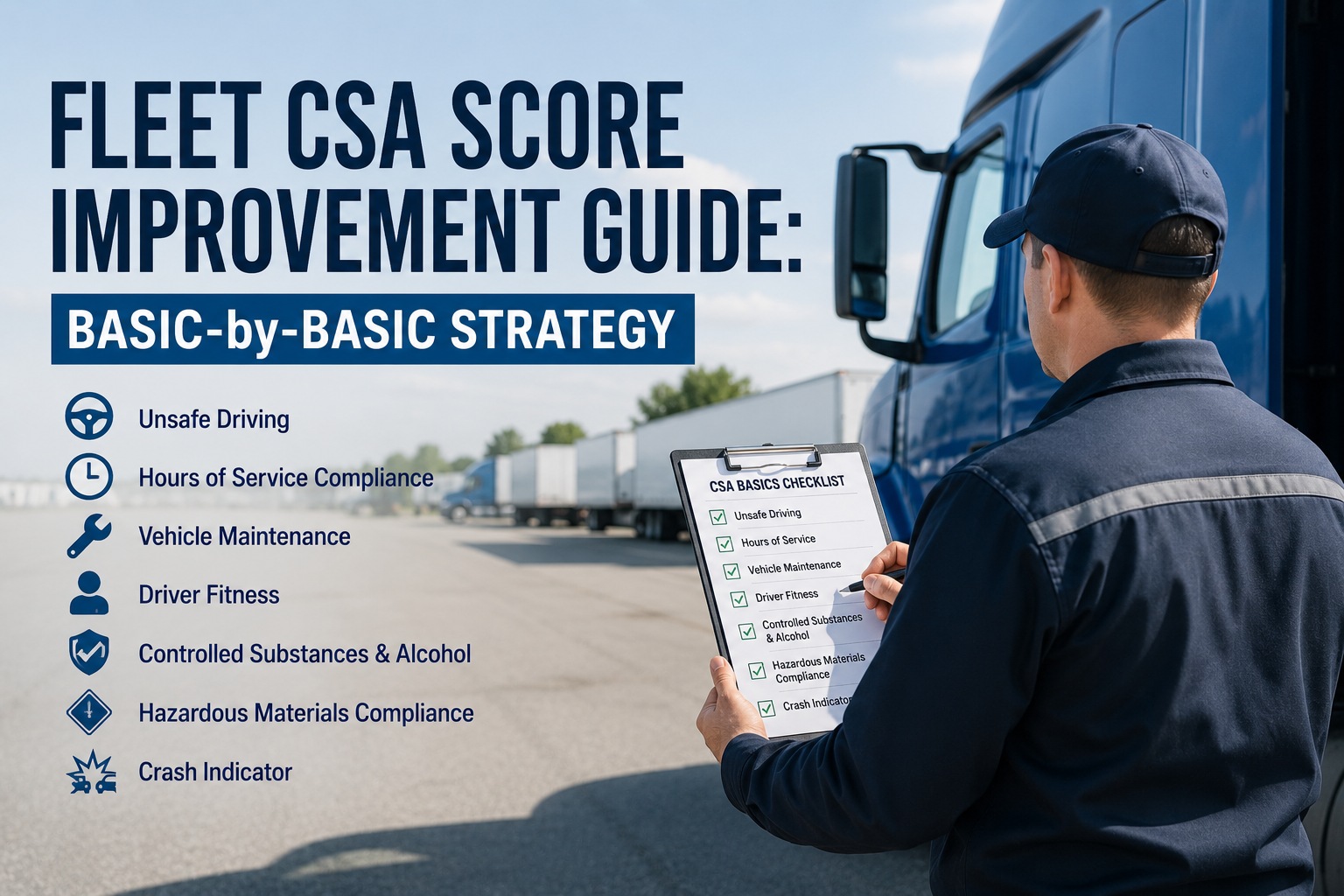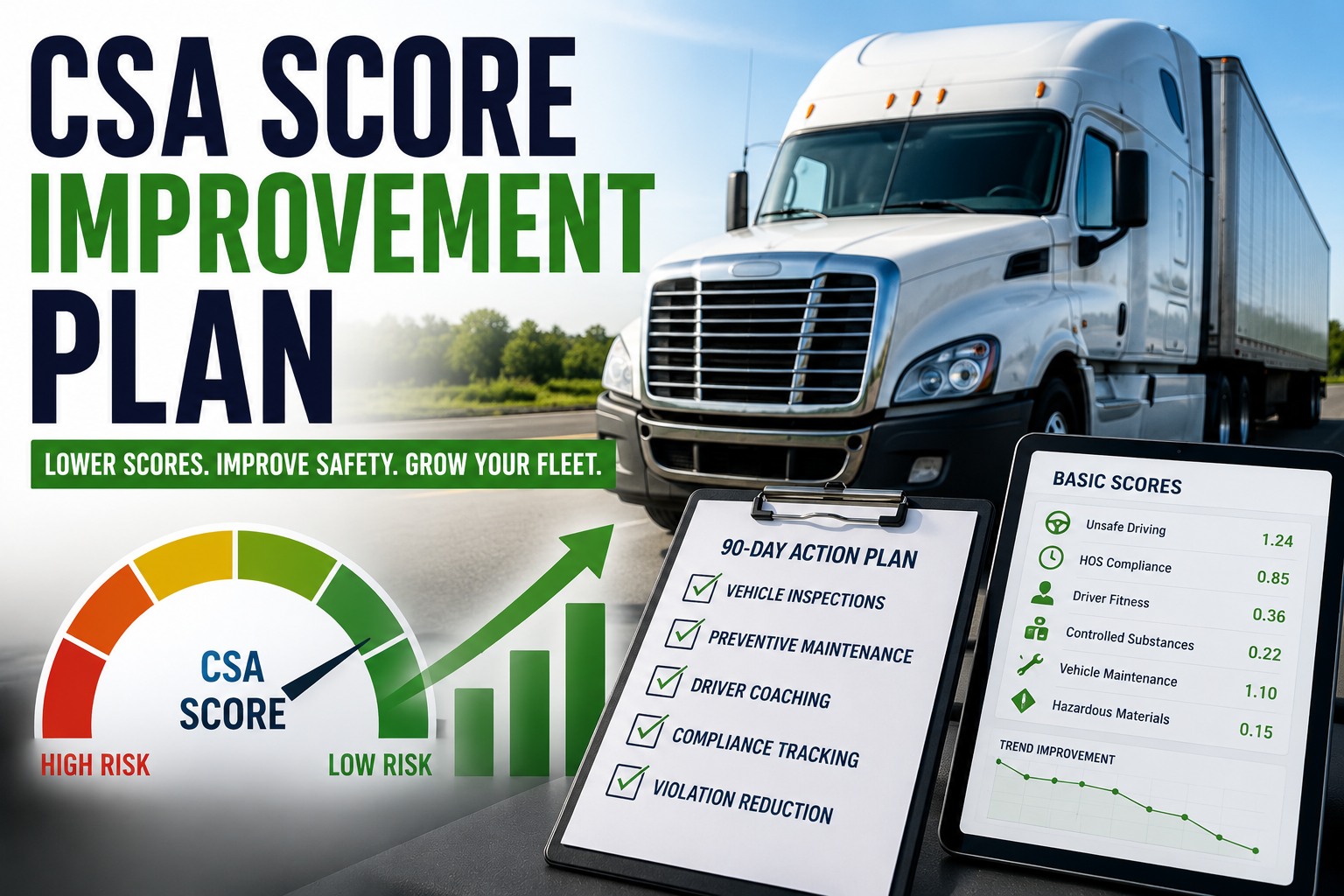
Your CSA score crept up, a warning letter landed, and your first instinct was to open DataQs and dispute every violation you could find. That's the move almost every fleet makes — and it's largely the wrong one, because violation challenges succeed only about a third of the time and do nothing to stop the next batch. Real CSA score improvement is a sequence, not a scramble: prioritize the categories that actually matter, prevent the violations generating points, and use DataQs surgically where you have evidence. This guide lays out that sequence in the order that produces results. Book a demo to see your CSA data working for you.
Most Fleets Try to Improve Their CSA Score Backwards
They pour effort into disputing old violations and almost none into preventing new ones. The leverage is the other way around. Here's where your effort actually moves the number.
Here's the mechanic that reframes everything: a CSA score can only move one way — you accumulate recent, violation-free inspections while cutting the behaviors that create violations. The Safety Measurement System weights recent events most heavily and drops them from the calculation after two years, so consistency compounds and old problems fade on their own. That means CSA score improvement is less about fighting the past and more about controlling the present. Below is the sequence that works.
Step 1: Prioritizenot all BASICs are worth the same effort
Before you fix anything, know where you're bleeding. Your CSA score is seven separate percentile rankings across the BASICs, and treating them as equally urgent wastes effort. Two things decide where to spend it first: how close a category is to its intervention threshold, and how much that category actually predicts crash risk. Chase the categories that are both near the line and high-consequence.
Unsafe Driving, HOS, or Crash Indicator over the line demand immediate attention — these carry the lowest thresholds and the strongest link to future crashes.
A category drifting from the low 50s toward 60 over three months needs a fix now — before it crosses, not after. Watch trajectory, not just today's number.
Vehicle Maintenance is the largest category by violation count and the one you control most directly through inspections — often the fastest measurable win.
The mistake to avoid is firefighting — reacting only to whichever BASIC crossed a threshold last month while three others quietly climb. Review all seven monthly, rank them by this logic, and put your effort where it changes the most risk. Book a demo to see all seven BASICs trended in one view
Step 2: Preventthe only lever with unlimited upside
This is where the real improvement lives, and it's the step fleets under-invest in because it's less dramatic than a dispute. Every clean, recent inspection you add to your record improves your percentile, and unlike a DataQs challenge, prevention has no cap — you can always add another clean inspection. The categories you can move fastest are exactly the ones a disciplined pre-trip controls.
These drive the majority of out-of-service vehicle violations. A thorough, documented pre-trip catches them in the yard, before an inspector does at roadside.
These dominate the Unsafe Driving BASIC — the lowest-threshold, most crash-predictive category. Targeted coaching on the drivers producing them moves it fastest.
Falsified logs, ELD paperwork gaps, and missed breaks feed the HOS BASIC. Clean log discipline and pre-departure review prevent the citations before they happen.
Expired CDLs and medical cards feed Driver Fitness — entirely preventable paperwork violations that a records system flags before they lapse.
The compounding effect is the point. One clean inspection barely registers; a steady stream of them, month after month, is what actually drags a percentile down and keeps it there. Prevention is the lever with no ceiling — and it's the one software carries for you by turning every inspection into a clean, dated record. Start free and start building clean inspection records today
Step 3: Dispute — surgicallyhow to use DataQs so it actually works
DataQs has its place — it's just not the first move, and it's not a shotgun. It's FMCSA's Request for Data Review system, where you challenge a record you believe is inaccurate, duplicated, or attributed to the wrong carrier. A successful challenge changes the underlying record and flows through to your percentile on the next monthly refresh. The catch: violation challenges succeed only around a third of the time, and challenging everything with thin evidence mostly irritates the issuing agency without moving your score.
- Violation attributed to the wrong carrier
- Duplicate record for one event
- Clear factual error backed by evidence
- A crash eligible for preventability review
- Wrong violation code with documentation
- Disputing a valid violation you just dislike
- Filing with no supporting evidence
- Challenging the regulation itself
- Blanket-challenging your whole record
- Using it as an appeal of the citation
The winning DataQs habit starts at the roadside, not the keyboard: capture the inspection details, photos, and documentation at the time, so when you do file a Request for Data Review, it's backed by evidence rather than opinion. File the strong ones, skip the weak ones, and don't treat a denial as the end — the process allows escalation. Used this way, DataQs cleans up the genuinely wrong records without burning your credibility. Book a demo to see inspection evidence captured for DataQs
Step 4: Let time workwhy patience is a real strategy here
The most underappreciated fact about CSA score improvement is that the system is designed to reward recent behavior and forget old behavior. Violations carry the most weight when they're fresh and lose weight as they age, dropping out of the calculation entirely after two years. That means a fleet that simply stops generating violations will watch its score improve on its own — the math is on your side once the bleeding stops.
A fresh violation hits your percentile hardest. Recent events carry the most impact in the calculation.
As the violation ages, its influence on your score drops — while your clean inspections accumulate.
The violation leaves the scoring window completely. With consistent clean data, your score reflects the improved present.
This is why the sequence matters so much. Prevention (Step 2) and patience (Step 4) work together: every month you go without new violations, old ones lose weight and clean inspections pile up, and the two forces pull your percentile down in tandem. DataQs cleans up the errors at the margins, but time plus discipline does the heavy lifting. Book a demo to watch old violations age off your record Or start free and let a clean-inspection streak compound in your favor
From a safety manager who stopped chasing disputes
When our Vehicle Maintenance BASIC spiked, I spent a month filing DataQs challenges on everything. I won maybe three out of fifteen, made a couple of enforcement officers annoyed, and the score barely moved. Total waste of a month.
What actually worked was boring: we tightened the pre-trip, fixed the two trucks that generated half our brake violations, and kept the driver files current. Within two quarters the old violations had aged down and the clean inspections had stacked up. The score fell into the 30s and stayed there. I still use DataQs — but only when I've got real evidence, and never as the first move.
Frequently asked questions
How do you actually improve a CSA score?
A CSA score improves through one core mechanism: accumulating recent, violation-free inspections while eliminating the behaviors that generate violations. The Safety Measurement System weights recent events most heavily and drops violations from the calculation after two years, so consistency compounds in your favor over time. The most effective approach follows a sequence. First, prioritize — your score is seven separate BASIC percentiles, so focus effort on the categories that are above or climbing toward their intervention thresholds and that most predict crash risk, rather than treating all seven equally. Second, prevent — add clean inspections and cut the violations that generate points, especially in Vehicle Maintenance (the highest-volume, most controllable category) and Unsafe Driving (the lowest-threshold, most crash-predictive one). Third, dispute inaccurate records surgically through DataQs, but only where you have evidence. Fourth, let time work, since old violations lose weight and age off on their own once you stop generating new ones. Prevention and patience do the heavy lifting; disputes clean up the margins.
What is DataQs and how does it help my CSA score?
DataQs is FMCSA's online Request for Data Review (RDR) system, where a carrier or driver can challenge a record in the federal database they believe is inaccurate, duplicated, or attributed to the wrong carrier. Because that database feeds the Safety Measurement System, a successful challenge changes the underlying record and flows through to your BASIC percentile on the next monthly refresh — either removing a violation from the scoring window or reducing its impact. The important caveat is that DataQs is not a cure-all: violation challenges succeed only around a third of the time, and challenging valid violations with no evidence wastes effort and can annoy the issuing agency. It's most effective for clear factual errors, wrong-carrier attributions, duplicate records, wrong violation codes backed by documentation, and crashes eligible for preventability review. The key to success is evidence gathered at the time of the inspection or crash — photos, documentation, and inspection details — so your request is backed by facts rather than opinion. Use it surgically on strong cases, not as a blanket first response to a rising score.
Which BASIC should I focus on first to improve my score?
Focus first on categories that are both near or above their intervention threshold and strongly linked to crash risk. Unsafe Driving, Hours-of-Service Compliance, and Crash Indicator carry the lowest thresholds and the strongest correlation with future crashes, so a problem in any of those is the most urgent to address. Second in priority are categories that are climbing — a BASIC drifting from the low 50s toward 60 over a few months needs attention before it crosses the line, so watch trajectory and not just this month's number. Third, Vehicle Maintenance is usually the fastest measurable win because it's the highest-volume category by violation count and the one you control most directly through disciplined inspections and preventive maintenance. The mistake to avoid is firefighting — reacting only to whichever BASIC crossed a threshold most recently while others quietly climb. Review all seven every month, rank them by threshold proximity and crash-risk weight, and direct your effort where it reduces the most risk rather than spreading it evenly.
How long does it take to improve a CSA score?
There's no instant fix, because the score is built on a rolling window of the past 24 months of data, but meaningful improvement typically shows over one to two quarters of consistent clean performance. The reason is how the Safety Measurement System weights data: recent violations carry the most weight, that weight decreases as they age, and violations drop out of the calculation entirely after two years. So a fleet that stops generating violations sees a double benefit over time — existing violations steadily lose influence while new clean inspections accumulate and pull the percentile down. A single clean inspection barely registers, but a steady stream of them month after month is what actually moves the number and keeps it low. Because the system also updates monthly, you'll see incremental progress refresh regularly rather than all at once. The practical takeaway is that patience is a legitimate strategy: once you stop the bleeding through prevention, time works in your favor, and the fleets that improve fastest are the ones that pair disciplined prevention with the willingness to let the aging process do its part.
Can I remove violations from my CSA record?
You can remove violations that are genuinely inaccurate, but not ones that are valid. The mechanism is a DataQs Request for Data Review: if a violation was attributed to the wrong carrier, duplicated in the system, cited under the wrong code, or is otherwise factually incorrect — and you can prove it with evidence — a successful challenge removes it from the record, which then improves your affected BASIC percentile on the next monthly update. Crashes may also be removed from consideration or recategorized if they qualify under FMCSA's crash preventability review. What you cannot do is remove a violation simply because you disagree with it or find it inconvenient; DataQs is not an appeal of the citation itself or a way to challenge the underlying regulation. Valid violations stay on your record until they age out of the two-year scoring window. That's why the durable path to a better score isn't removal but prevention — stopping the violations before they happen — combined with using DataQs surgically on the records that are actually wrong. Building the habit of capturing inspection evidence at the roadside is what makes the legitimate challenges winnable.
Turn CSA improvement into a routine, not a fire drill
HVI trends your seven BASICs so you know exactly where to aim, captures clean inspection records that pull your percentiles down over time, flags driver files and maintenance intervals before they lapse into violations, and preserves the roadside evidence that makes DataQs challenges winnable. Prioritize, prevent, dispute surgically, and let time work — all from one system. Live in under two weeks.
No credit card · BASIC trending & clean records from day one · Built for USA carriers