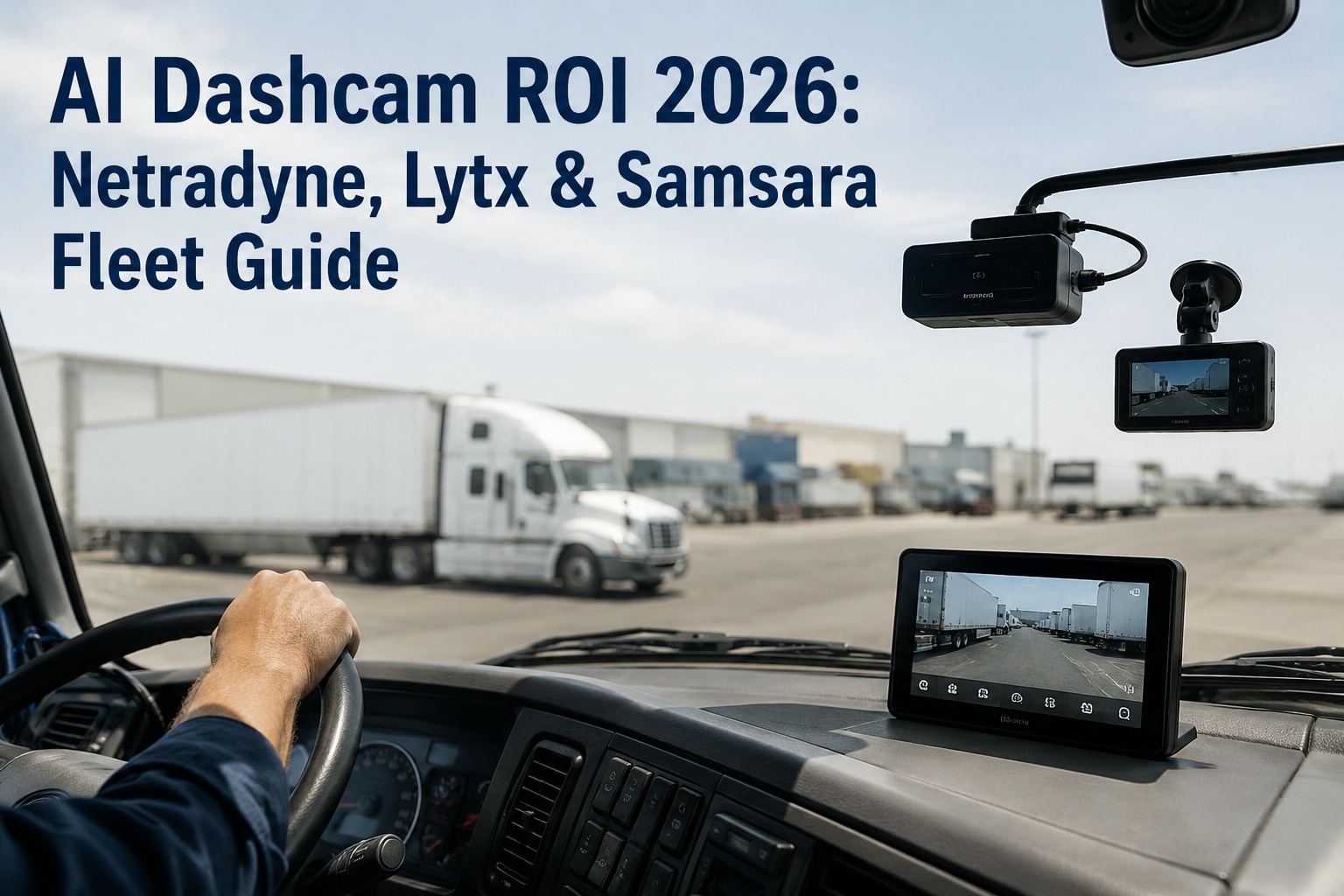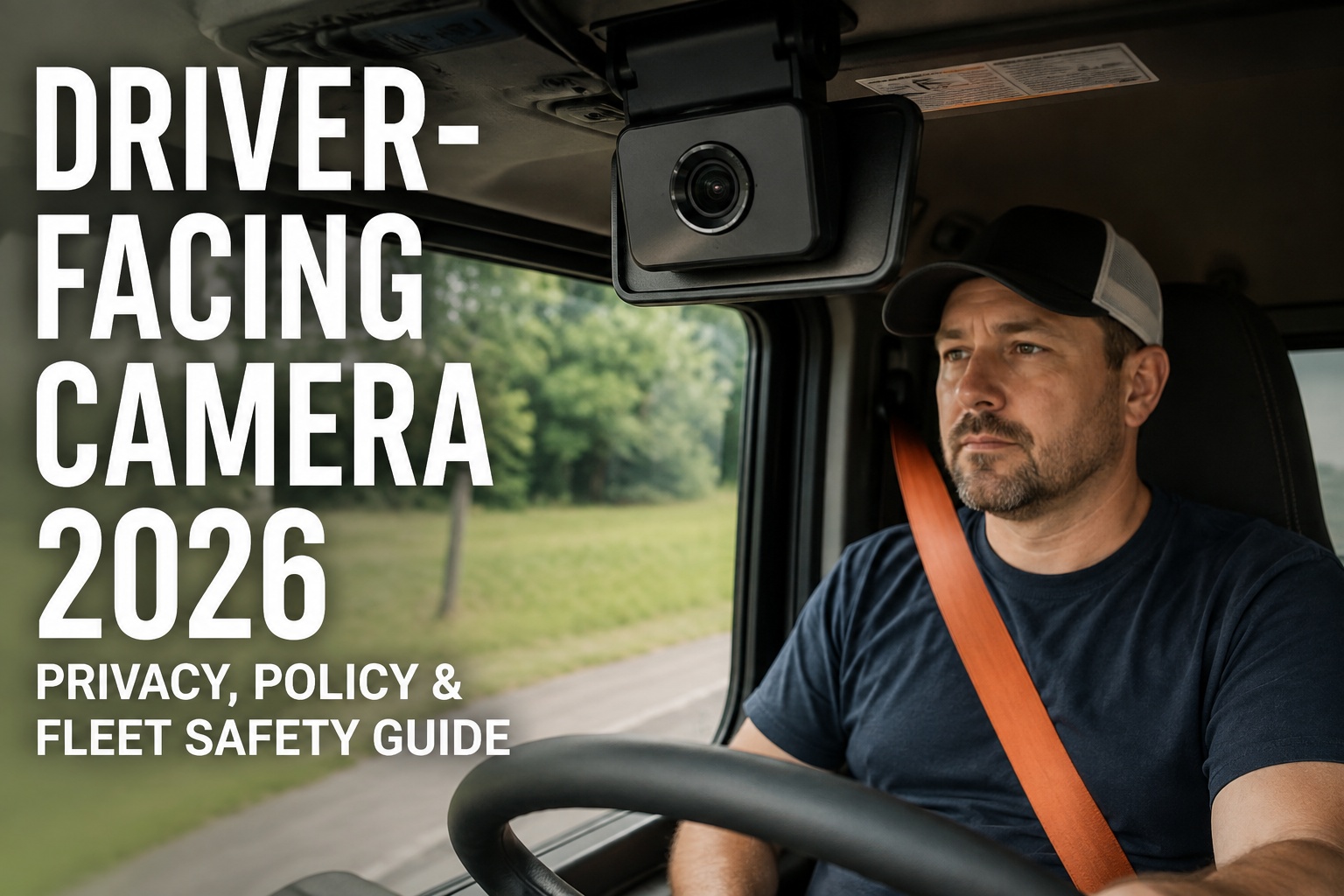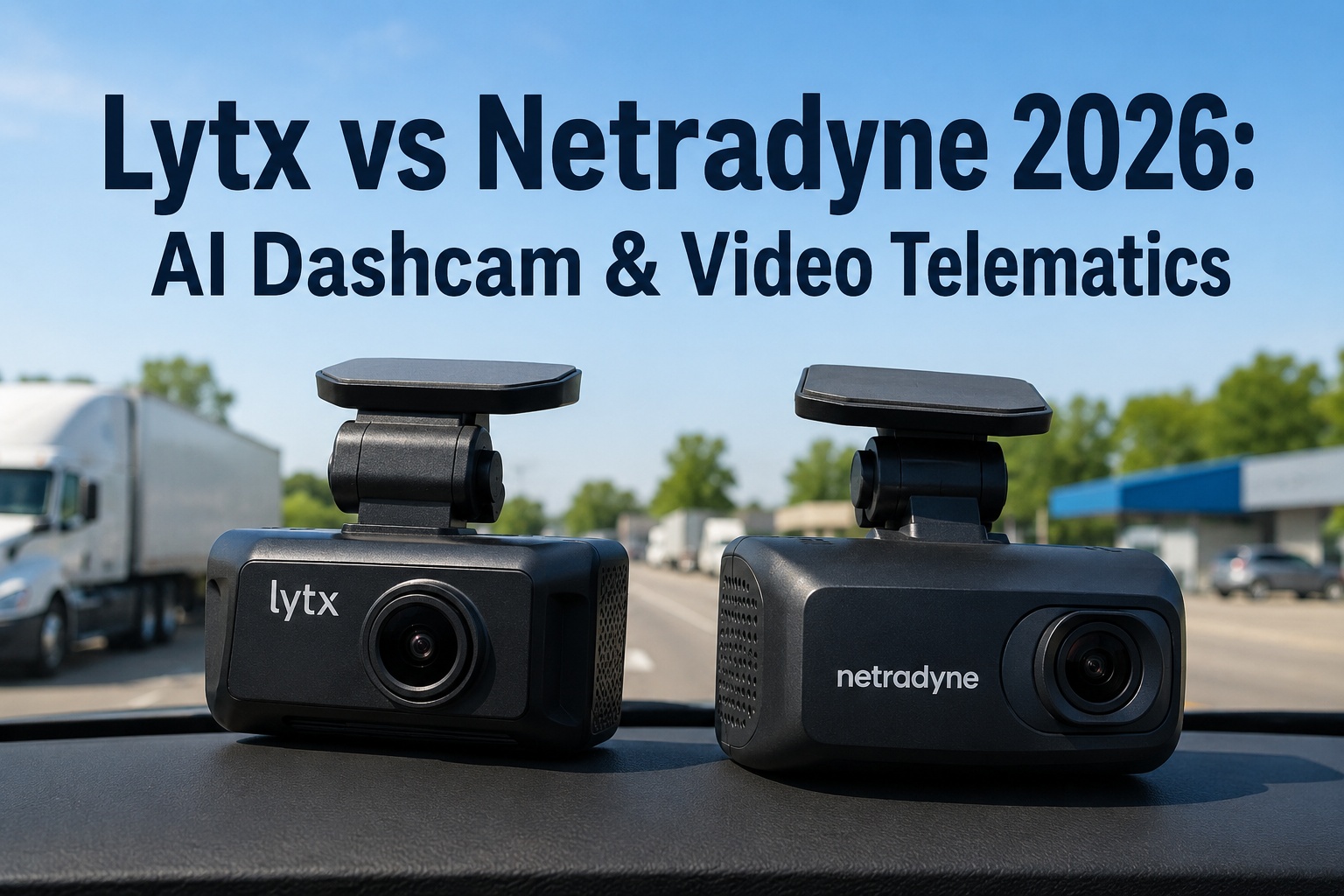
Fleet dash cameras have completed the transition from optional add-on to mission-critical fleet infrastructure in 2026 — and the question is no longer whether to deploy them, but which type and which vendor. The decision matters: AI dash cam programs deliver 15–25% insurance premium reductions for fleets that actively use the footage to reduce risk, up to 60% crash rate reduction across the driver-monitoring research base, and protection from the catastrophic claim exposure that follows a roadside incident. But the choice between forward-facing, driver-facing, and dual cameras isn't just a technical question — it's a driver-acceptance question. Survey data from 2025–2026 shows driver-facing cameras carry a baseline approval rating of just 2.24 out of 10, while the same drivers report a 92% willingness to accept the technology if footage can exonerate them in a collision. That privacy-vs-protection paradox is the central operational question for fleet managers choosing a camera program in 2026. This guide breaks down the three camera configurations side-by-side, the 2026 pricing landscape across budget, mid-range, and premium tiers ($15–$60/vehicle/month), the insurance-discount mechanics insurers now demand, the driver-acceptance dynamics that determine deployment success or failure, and a head-to-head comparison of the top five vendors — Samsara, Lytx, Motive, Netradyne, and SmartWitness. HVI is purpose-built inspection and maintenance software that pairs cleanly with whichever dash cam platform a fleet selects — integrating camera-detected safety events into the same per-VIN maintenance and compliance archive as DVIRs, work orders, and PM records. Sign up for a free HVI trial and unify your inspection, maintenance, and dash cam compliance records on one platform, or schedule a 30-minute walkthrough with the HVI team to see how HVI inspection and maintenance software complements your dash cam stack.
Insurance-discount infrastructure or driver-mistrust trigger? In 2026, dash cams are both — depending on how you deploy them.
Insurance premium reduction
Per vehicle per month
Crash rate reduction
Privacy vs Protection paradox
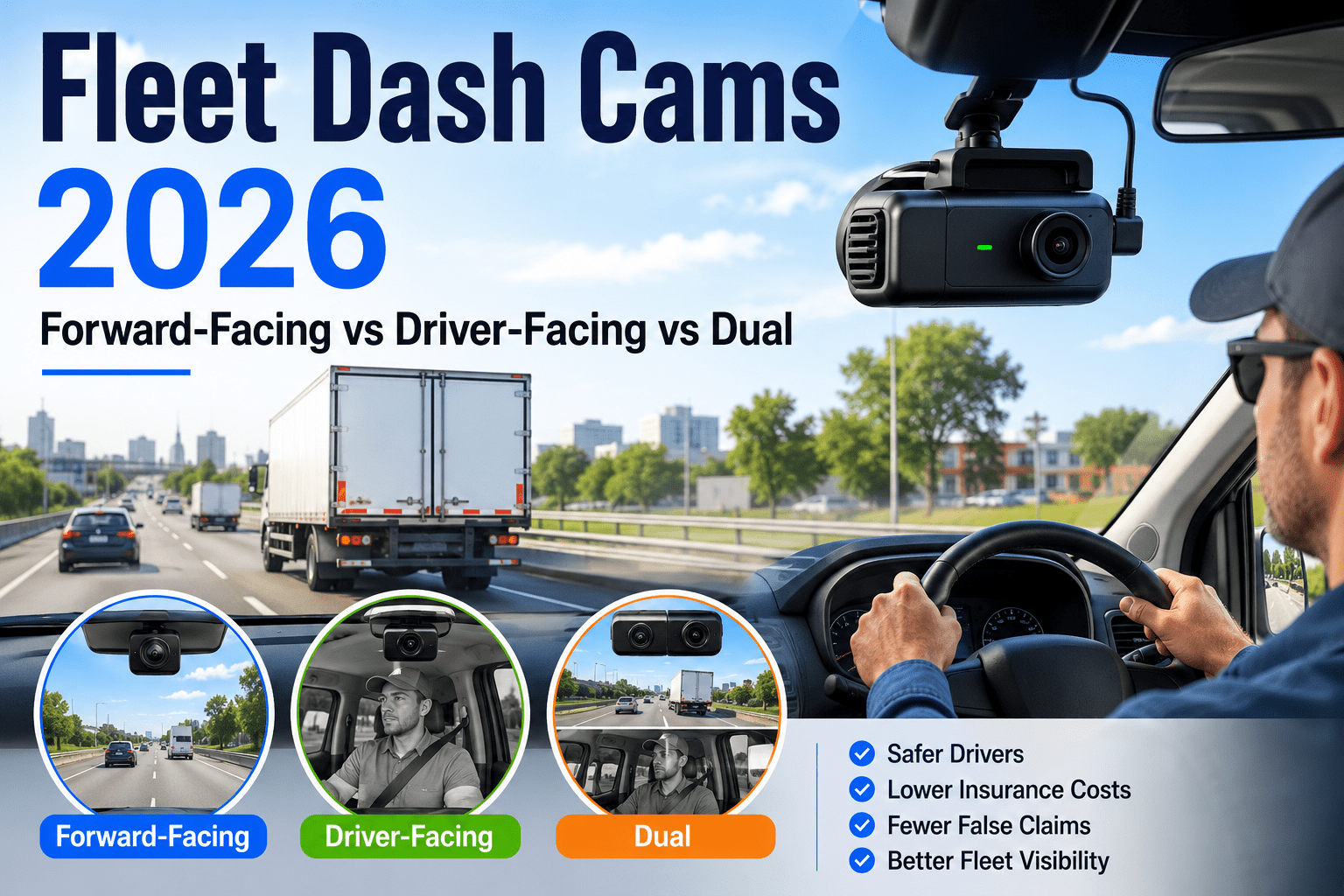
Forward-facing vs driver-facing vs dual — the three configurations compared
The hardware decision shapes everything downstream: cost, driver acceptance, insurance discount eligibility, and evidentiary value. Each configuration serves a different operational priority. Most fleets in 2026 are converging on dual-camera setups, but the decision should reflect what your fleet actually needs to prove and protect against.
Forward-facing only
Records road conditions, traffic, collisions, and weather events. Strong evidentiary value for accident defense without crossing the privacy line. Driver acceptance is high because the camera doesn't monitor the operator. Most fleets start here.
Driver-facing only
Monitors driver attention, distraction, phone use, smoking, eating, drowsiness, and seatbelt compliance. Highest insurance impact, but also highest driver resistance — 2.24/10 baseline approval rating. Rarely deployed alone in 2026.
Dual (forward + driver)
Both road and driver views in a single device. Maximum insurance discount eligibility, full evidentiary context, and the configuration insurers increasingly require for premium tiers. Driver acceptance hinges entirely on deployment policy.
2026 pricing landscape — three tiers across all vendors
Fleet dash cam pricing has stratified into three clear tiers in 2026. Per-vehicle monthly costs range from $15 entry-tier to $60+ enterprise premium. The right tier depends on fleet size, integration requirements, and what data you need to extract from the camera platform.
Best for
Small fleets (5–50 vehicles) needing basic AI detection without enterprise integration. Standalone camera systems that pair with third-party telematics via API.
Best for
Mid-market fleets (50–500 vehicles) wanting integrated telematics + camera on one device. Single subscription covers ELD, GPS, dash cam, and basic AI detection.
Best for
Enterprise fleets (500+ vehicles) needing advanced AI behavior detection, large-scale driver coaching programs, and the deepest insurance-discount eligibility.
The 2026 insurance-discount mechanics — what insurers actually require
Insurers in 2026 no longer offer discounts simply for installing cameras. They want documented evidence that the camera program is actively reducing risk — declining event frequency, completed coaching tasks, and exoneration statistics. Fleets that package this data as a safety improvement narrative achieve the 15–25% premium reductions. Fleets that install cameras and walk away get 5–10% at best.
Declining event frequency over time
Insurers want to see harsh braking events, distraction events, and risky behaviors trending down quarter over quarter. Static numbers signal a fleet has cameras but isn't using them.
Documented coaching completion
Camera detected an event to manager reviewed footage to driver was coached to coaching outcome documented. The four-link chain proves the camera is feeding back into operational change.
Exoneration statistics
How many incidents have your cameras exonerated drivers from? Insurers love this metric because it directly reduces their loss exposure. Track and report it quarterly.
Documented dash cam policy
Written policy covering system purpose, data collection, retention periods, access controls, and driver rights. Insurers increasingly require this for premium-tier discounts.
Coverage eligibility (the new mandate)
Some 2026 carriers now require camera programs for coverage eligibility — not just for discounts. Operating without cameras can mean operating without affordable insurance at all.
The fleets that win 20%+ discounts treat dash cams as a safety operations system, not a hardware deployment. Sign up for a free HVI trial and unify your inspection, defect routing, and camera-event coaching records into one audit-defensible archive — the documentation that insurers now require to grant the highest premium tiers. Or schedule a 30-minute walkthrough with the HVI team to see how HVI inspection and maintenance software complements your dash cam stack on a fleet your size.
The driver-acceptance reality — the 92% paradox
The single biggest predictor of dash cam program success isn't the hardware — it's how drivers feel about being recorded. The 2025 Geotab survey of 3,500+ professional drivers revealed a striking paradox: 92% expressed concern about in-cab cameras, but 92% would accept them if footage could prove they were not at fault in a collision. The acceptance battle is won or lost on deployment policy.
Drivers concerned about in-cab cameras
Would accept if footage exonerates them
Top 5 vendor head-to-head comparison
Five vendors dominate the 2026 fleet dash cam market: Samsara, Lytx, Motive, Netradyne, and SmartWitness. Each has a distinct strength profile. The right choice depends on fleet size, integration requirements, AI sophistication needs, and budget.
| Vendor | Pricing | Tier | Strengths | Best for |
|---|---|---|---|---|
| Samsara CM32 | $30–$60/mo | Premium | Integrated telematics + AI cam single device; HD low-light; encrypted security; broad operational platform | Enterprise (500+) needing end-to-end visibility |
| Lytx DriveCam | $35–$60/mo | Premium | 20+ years driver behavior data; 300B miles analytics; MV+AI detects phone/smoking/eating/drowsiness; 1M+ cameras deployed | Long-term driver coaching programs |
| Motive | $25–$35/mo | Mid-range | Integrated telematics + cam; strong AI baseline; competitive pricing; fast deployment | Mid-market (50–500) wanting one vendor |
| Netradyne (Driveri) | $35–$60/mo | Premium | 360-degree view; AI-focused architecture; edge processing; positive-driver-recognition | Fleets prioritizing AI sophistication |
| SmartWitness | $15–$25/mo | Budget | API integration with third-party telematics; standalone camera; low entry price; flexible deployment | Small fleets / camera-only deployments |
The 6-criterion buying decision framework
Cut through the vendor marketing with this framework. Each criterion separates the platforms that will deliver from the ones that will disappoint. The 2026 buying environment makes some of these criteria non-negotiable.
Fleet size match
Budget tier for < 50 vehicles, mid-range for 50–500, premium for 500+. Over-buying a small fleet on a premium platform wastes 40%+ of features. Under-buying enterprise scale creates integration debt.
Telematics integration model
Samsara and Motive offer integrated telematics + camera on a single device. Lytx and Netradyne are camera-focused and pair with separate telematics. Decide if you want one vendor or best-of-breed stacked.
AI detection sophistication
Lytx detects the most behaviors (phone, smoking, eating, drowsiness, seatbelt) backed by 300B miles of training data. Samsara is catching up fast. Mid-range and budget detect fewer behaviors with lower accuracy.
Edge vs cloud processing
Modern dash cams process AI on-device with dedicated chips — critical for rural routes with poor cellular. Verify the platform doesn't depend on cloud connectivity for real-time alerts.
Driver coaching workflow
Camera detects an event to who reviews it to how is the driver coached to where is the outcome documented? Insurers require this chain. Verify the vendor's coaching workflow before committing.
Integration with maintenance software
Camera events that surface maintenance issues (harsh braking pointing to brake wear, vibration pointing to suspension problems) should flow into your inspection and maintenance workflow — not stay siloed in a separate camera dashboard.
Where HVI inspection & maintenance software fits the dash cam stack
HVI is not a dash cam vendor — and that's deliberate. HVI is purpose-built inspection and maintenance software for commercial and heavy-equipment fleets, designed to pair cleanly with whichever dash cam platform a fleet selects. Camera-detected safety events (harsh braking pointing to brake wear, irregular vibration pointing to suspension issues, near-miss patterns pointing to driver coaching opportunities) flow into the same per-VIN maintenance archive as DVIRs, work orders, and PM records. The result: insurance auditors see one unified safety narrative, not five disconnected dashboards.
Camera-event-to-work-order routing
When the dash cam detects harsh braking, it often signals brake wear. When it detects irregular vibration, it often signals suspension issues. HVI's defect-to-work-order automation accepts these signals and creates the maintenance follow-up — closing the loop between safety event and mechanical fix.
Unified per-VIN safety archive
DVIRs, AVIRs, work orders, PM records, AND camera-event summaries indexed against the same VIN. Insurance auditors see the full safety picture without exporting from three separate platforms.
Coaching documentation hooks
Camera detects an event to manager reviews to driver coached to outcome documented in HVI against the driver and VIN. The four-link insurance chain insurers now require for premium-tier discounts.
Inspection-data context for camera events
When a harsh-braking event is reviewed, HVI surfaces the most recent brake inspection, last brake adjustment date, and brake-related defects flagged in DVIRs. Context that turns a single event into a maintenance decision.
Audit-ready compliance package
49 CFR 396 inspection compliance, PM execution records, defect-to-repair chain, AND camera-event safety narrative — all exportable as one audit package. Meets the documentation standard insurers and FMCSA both expect in 2026.
Vendor-agnostic integration
HVI works alongside Samsara, Lytx, Motive, Netradyne, and SmartWitness — pulling event summaries into the maintenance workflow without locking the fleet into a single camera vendor. Switch dash cams without rebuilding compliance infrastructure.
The fleets winning the 20%+ insurance discounts in 2026 don't just have dash cams — they have unified safety narratives that demonstrate active risk reduction. Sign up for a free HVI trial and unify your inspection, maintenance, and dash cam compliance records into one audit-defensible archive in under an hour, or schedule a 30-minute walkthrough with the HVI team to see how HVI inspection and maintenance software complements your chosen dash cam vendor.
Frequently asked questions
Q: How much do fleet dash cams cost in 2026?
Q: Do dash cams really lower fleet insurance premiums?
Q: Are driver-facing cameras legal in commercial vehicles?
Q: How do drivers actually feel about dash cams?
Q: Forward-facing or dual — which should I deploy?
Q: What's the ROI payback period on a fleet dash cam deployment?
Q: Does HVI replace a dash cam platform?
Dash cams aren't optional infrastructure in 2026 — and the fleets winning 20%+ insurance discounts aren't just installing cameras. They're unifying camera data with inspection and maintenance records into one safety narrative.
HVI is purpose-built inspection and maintenance software for commercial and heavy-equipment fleets. Camera-event-to-work-order routing, unified per-VIN safety archives, coaching documentation hooks, and audit-ready compliance packages — vendor-agnostic integration with Samsara, Lytx, Motive, Netradyne, and SmartWitness. The compliance platform that turns your dash cam investment into a documented insurance-discount-eligible safety program.
No credit card required · Vendor-agnostic integration · 49 CFR 396 & insurance-audit-ready