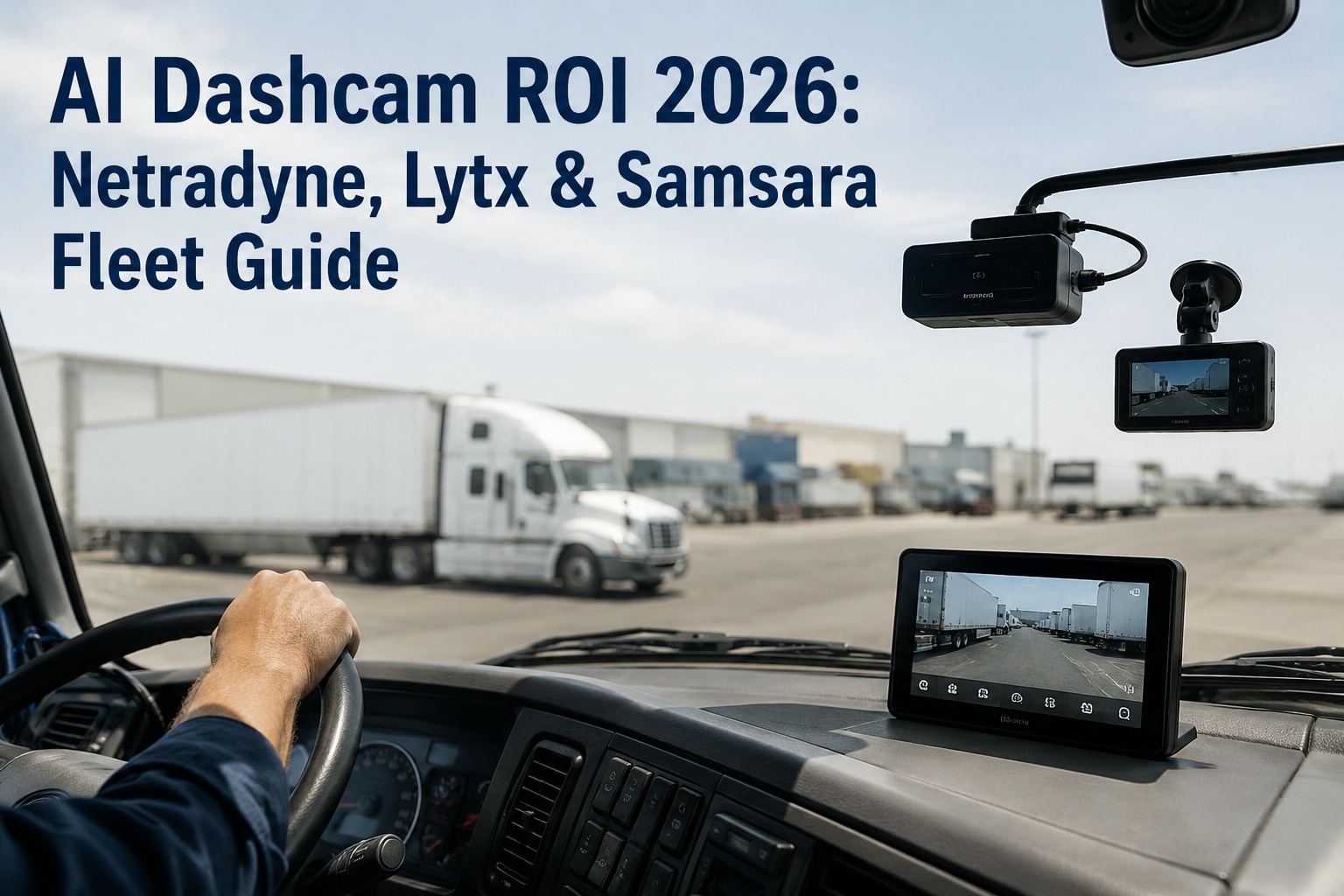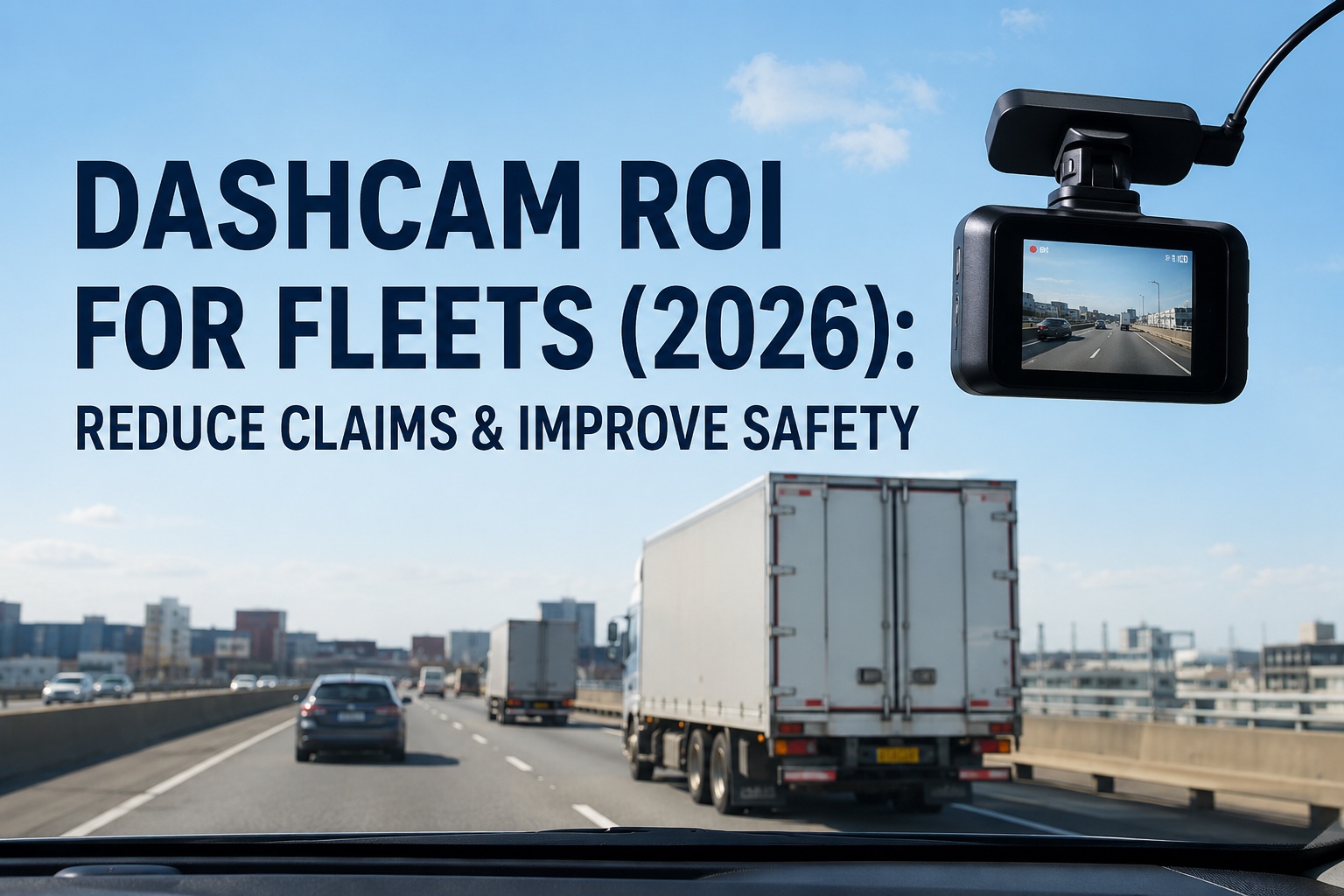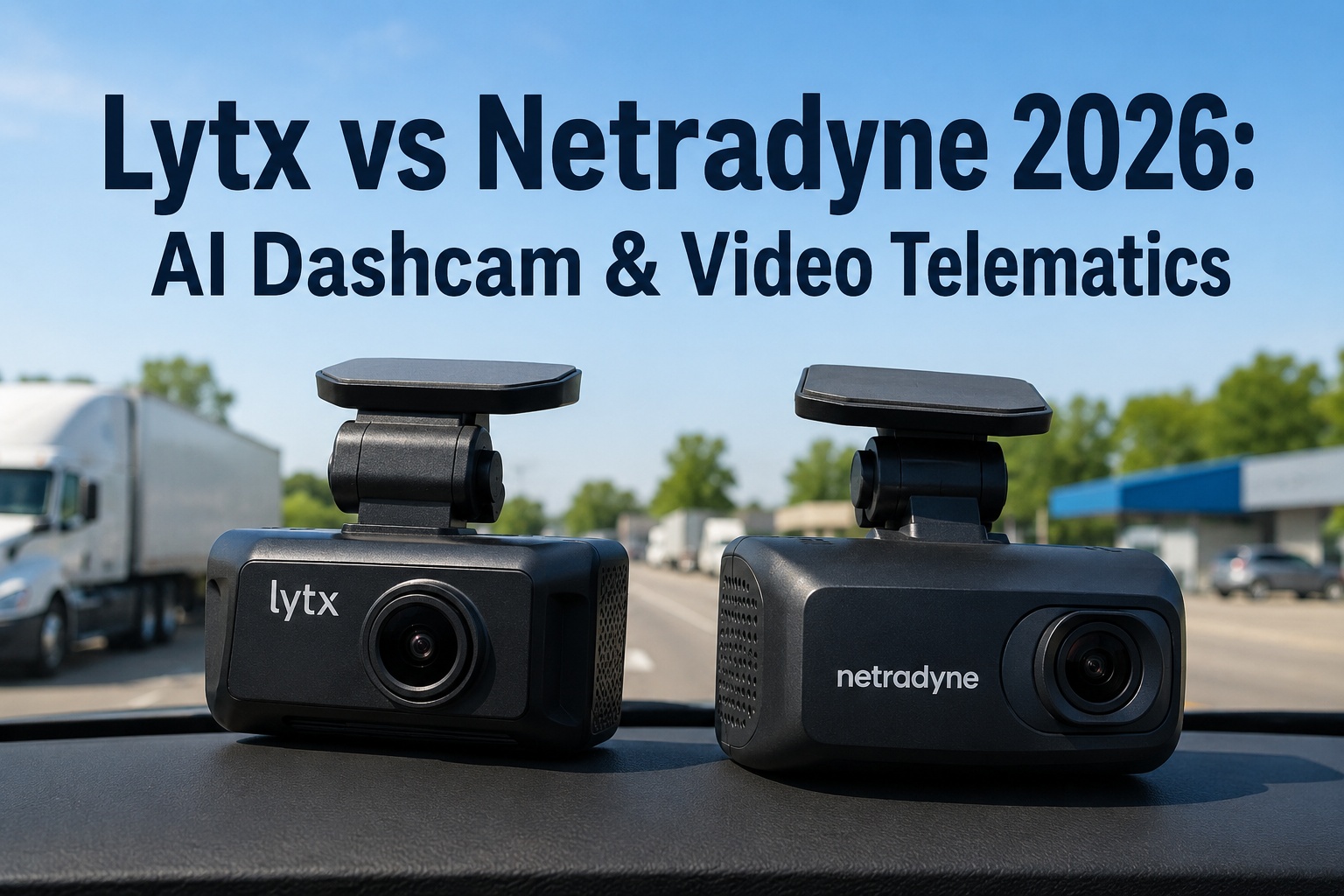
Two safety managers, same problem: a nuclear-verdict lawsuit risk, rising insurance premiums, and drivers who swear the near-miss "wasn't their fault." Both shortlist the same two AI dashcams — and land on opposite answers. That's the real story of Lytx vs Netradyne. DriveCam and Driveri solve identical problems with opposite philosophies: one reviews your risky moments, the other scores your whole day and rewards the good ones. This guide breaks down the difference so you pick right the first time. Book a demo to see either feed flow into HVI.
Lytx vs Netradyne: Same Problem, Opposite Playbooks
The AI dashcam market split in two. Here's which philosophy fits how your fleet actually coaches.
- Human-validated event review
- RISKPOINT risk scoring
- Broadest compliance platform
- 100% drive-time edge AI
- GreenZone positive scoring
- In-cab real-time coaching
Both platforms use machine vision and AI to cut collisions, exonerate drivers, and lower insurance costs. Neither is "better" in the abstract. The right pick depends on one question most buyers skip: does your safety culture run on catching mistakes, or on building habits? Below is the honest, side-by-side breakdown — hardware, AI approach, coaching workflow, cost, and fleet fit.
Two philosophiesthe split that decides everything else
Before you compare frame rates or price sheets, understand the design intent. Every other difference — the camera, the score, the workflow — flows from these two starting points.
Exception-based review
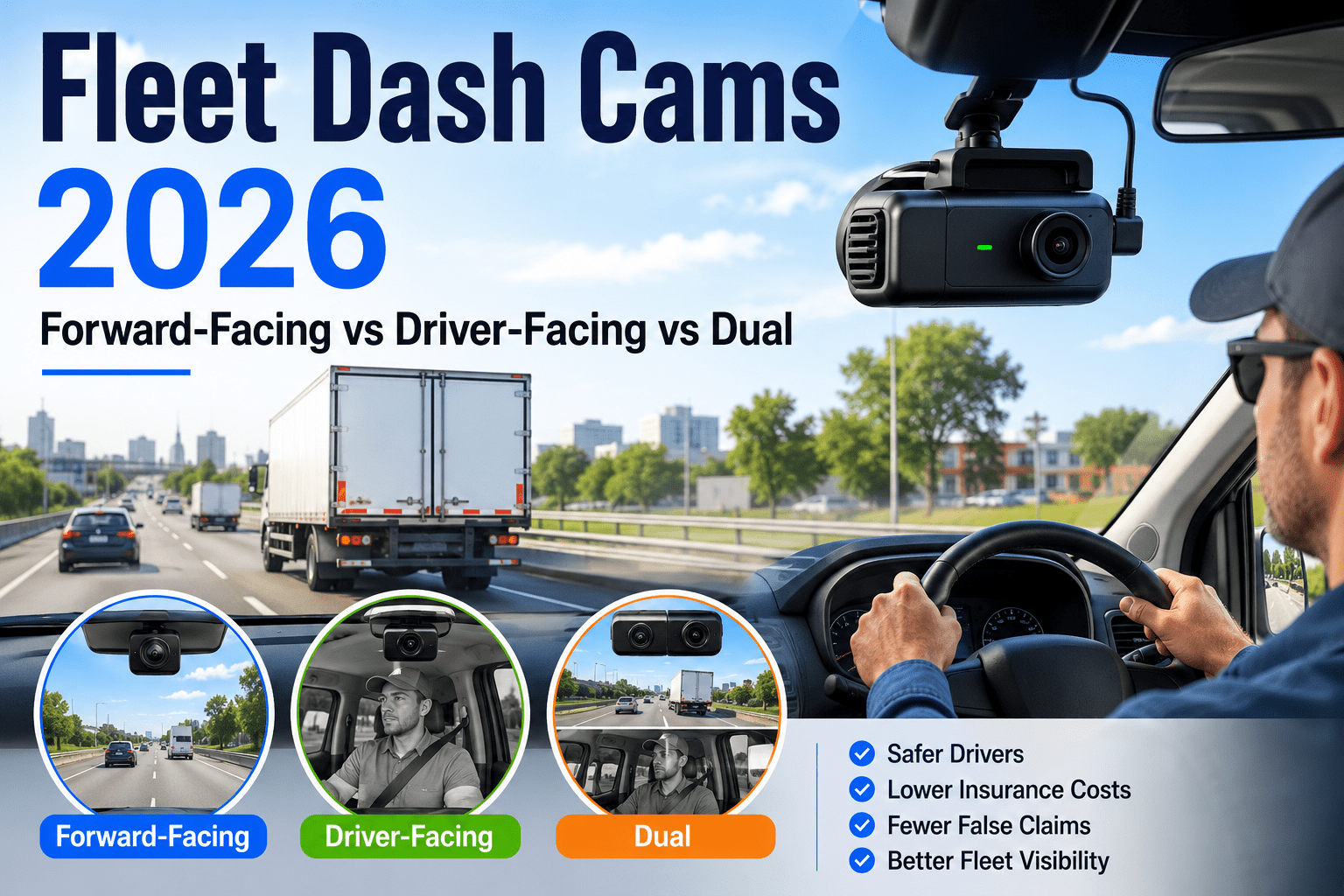
DriveCam captures a rolling buffer and saves a clip when a trigger fires — hard brake, lane departure, distraction. That clip runs through Lytx's review process where AI plus trained human analysts classify it. Only validated, real risk reaches your desk. You coach the exceptions, not the whole day.
Full-day scoring & recognition
Driveri's edge AI analyzes 100% of drive time on the device, not just triggered moments. Every trip feeds a GreenZone Score (1–1,000). Drivers earn DriverStars for good behavior — complete stops, safe following distance — and get in-cab feedback in the moment. Coaching becomes recognition, not just correction.
Neither approach is soft on risk — both flag speeding, distraction, and following-too-close. The gap is tone. Lytx hands you the moments that need a conversation; Netradyne scores the whole shift and rewards the wins. Book a demo to see both event feeds land inside HVI's safety module
Head to headthe spec sheet, without the marketing gloss
Here's the side-by-side that most vendor pages won't give you straight. Figures reflect publicly reported specs and independent reviews as of 2026; always confirm current numbers in your own quote.
| What you're comparing | Lytx DriveCam | Netradyne Driveri |
|---|---|---|
| Core philosophy | Review triggered risky events | Score 100% of drive time |
| AI processing | MV+AI, human-validated | Edge computing, on-device |
| Camera coverage | Dual-facing (road + driver) | Up to 270° quad-camera |
| Driver scoring | RISKPOINT (risk-focused) | GreenZone 1–1,000 (positive) |
| Positive recognition | Limited | DriverStars & Streaks, core feature |
| In-cab real-time alerts | Configurable | Yes, coach-in-the-moment |
| Data-to-cloud speed | Review adds some delay | Uploads within ~3 minutes |
| Compliance breadth | Broad: HOS, DVIR, CSA, tracking | Safety-first, pairs with telematics |
| Track record | Category inventor, since 1998 | Founded 2015, safety-native |
| Typical pricing tier | Premium (~$30–60/veh/mo) | Premium (~$30–60/veh/mo) |
Notice what's not a differentiator: both sit in the premium price band, both cut collisions, both protect you in a lawsuit. The decision lives in the middle rows — scoring style, recognition, and how much compliance you need bundled in. Start free with HVI and you can layer either camera's data on top of your inspection and maintenance records.
The coaching workflowwhat actually happens on Monday morning
Specs don't coach drivers — workflows do. Here's how a week plays out under each system, because this is the part your safety team lives in every day.
- 1Trigger fires
Hard brake or distraction saves a clip — roughly 12s before, 8s after.
- 2Review & validate
AI plus human analysts classify the event and filter out false positives.
- 3Prioritized list lands
Only validated risk hits your queue, rolled into a RISKPOINT score.
- 4Coach in minutes
Step-by-step workflow guides a short, focused driver conversation.
- 1Every mile analyzed
Edge AI scores 100% of drive time on-device, not just triggers.
- 2In-cab feedback
Driver hears real-time cues and self-corrects before it becomes an event.
- 3GreenZone updates
Good behavior earns DriverStars; the daily score rewards consistency.
- 4Coach with the positive
Managers open with a win, then address risk — buy-in comes easier.
One study cited by Netradyne found drivers who lifted their GreenZone engagement cut severely risky events by 65% and speeding by 81% — the numbers positive reinforcement can move. Lytx counters with the deepest dataset in the category, 300-billion-plus reviewed miles that sharpen what counts as real risk. Book a demo to map either workflow onto your HVI safety dashboard
Which fits your fleet?a straight answer, by situation
Skip the "it depends." Here's the plain-language read on who each platform is built for, based on independent reviews and how real fleets deploy them.
- You run a large, mixed fleet and want safety, tracking, HOS, DVIR, and CSA in one platform
- You'd rather coach a short, human-validated list than review the whole day
- You value a 25-year track record and the biggest training dataset in the category
- Compliance and routing matter as much as safety culture
- Driver retention and morale are front-of-mind and you want buy-in, not resentment
- You want AI on 100% of drive time, not only triggered clips
- In-cab real-time coaching and gamified scoring fit your culture
- You're fine pairing the camera with a separate telematics or maintenance system
A useful gut check: if your drivers already distrust "the camera," Netradyne's recognition model tends to lower the temperature faster. If your leadership wants one throat to choke for compliance and safety, Lytx's breadth is hard to beat. Either way, start free on HVI so the footage connects to inspections and maintenance instead of sitting in a silo. Or book a demo to see it live
From a safety manager who ran both
We piloted DriveCam and Driveri on split halves of the fleet for a quarter. Lytx gave me a cleaner list — I wasn't drowning in clips, and the human review meant I trusted what landed. But my drivers hated feeling watched.
Netradyne flipped that. The GreenZone scores turned into a leaderboard the guys actually cared about. Coaching stopped being a fight. Honestly the "right" camera came down to my drivers, not the tech spec — and I only figured that out by watching how each one landed in the cab.
The bottom line on Lytx vs Netradyne
There's no universal winner in the Lytx vs Netradyne dashcam debate — and any guide that names one is selling something. Lytx DriveCam wins on breadth, human-validated review, and a compliance platform that does more than safety. Netradyne Driveri wins on full-day AI, positive GreenZone coaching, and driver buy-in that sticks. Match the philosophy to your culture and you'll be right.
What matters just as much: what happens to the data after the camera catches it. A safety event that never becomes a work order, an inspection, or a maintenance flag is a missed save. That's where HVI fits — connecting your chosen video telematics feed to DVIRs, preventive maintenance, and safety management so every flagged risk drives an action. Book a demo and see exactly how it plugs in.
Frequently asked questions
What's the main difference between Lytx and Netradyne?
The core difference is philosophy. Lytx DriveCam is exception-based: it captures triggered risky events (hard braking, distraction, lane departure), runs them through a review process combining AI and trained human analysts, and hands your safety team a prioritized, validated list to coach. Netradyne Driveri is full-day and positive: its edge AI analyzes 100% of drive time on the device, scores every trip on a GreenZone scale of 1 to 1,000, and rewards safe behavior with DriverStars alongside flagging risk. In short, Lytx focuses your attention on the moments that need correction, while Netradyne scores the whole shift and builds habits through recognition. Both reduce collisions and protect drivers in disputes — they just get there through opposite coaching models.
Is Netradyne's GreenZone score better than Lytx's RISKPOINT scoring?
Neither is objectively "better" — they measure different things. Netradyne's GreenZone Score (1 to 1,000, with 850 as the target zone) is designed to be positive and visible to drivers themselves, rewarding consistent safe behavior like complete stops and safe following distance. That transparency and gamification tends to drive strong driver buy-in and works well where morale and retention matter. Lytx's RISKPOINT is a risk-prediction metric that rolls up human-validated events to forecast future collision likelihood, which appeals to safety teams that want a defensible, analyst-reviewed signal rather than a gamified one. If your goal is culture change and driver engagement, GreenZone's approach usually lands better. If your goal is a high-confidence, low-false-positive risk ranking, RISKPOINT's human-in-the-loop model is the stronger fit.
How much do Lytx and Netradyne cost per vehicle?
Both sit in the premium tier of the AI dashcam market. Industry reviews in 2026 place premium video-safety platforms — including Lytx, Netradyne, and Samsara — in roughly the $30 to $60 per vehicle per month range, versus $15 to $35 for budget and mid-range options. Neither vendor publishes fixed public pricing; both quote based on fleet size, contract length (often multi-year), hardware, and which service tier you choose. Installation is frequently bundled into qualifying contracts. Most fleets report the return on investment landing within about 4 to 6 months through avoided incidents, exoneration in false claims, and lower insurance premiums. Always get a written quote and review contract duration, renewal, and early-termination terms with your team before signing.
Can Lytx or Netradyne replace my fleet maintenance software?
No — and that's an important distinction. Lytx and Netradyne are video-safety and driver-coaching platforms. Lytx bundles more compliance features (HOS, DVIR, CSA scoring, tracking), but neither is a full maintenance management system with preventive maintenance scheduling, parts and inventory tracking, work order management, or fuel and tire management. That's what a CMMS like HVI is built for. The strongest setup pairs your chosen dashcam with a maintenance platform so a safety event or flagged defect can flow straight into a work order or inspection. HVI integrates with GPS/telematics and video feeds precisely so your safety data and your maintenance data stop living in separate silos. You can start free and connect the two without ripping out your camera provider.
Which is better for driver buy-in and retention?
Netradyne generally has the edge on driver buy-in, and it's by design. Its GreenZone system is built around positive reinforcement — drivers see their own scores, earn DriverStars and Streaks for good habits, and can compete on leaderboards, which reframes the camera from "surveillance" to "the tool that proves I'm a good driver." Many fleets report resistance dropping quickly once drivers realize the footage also exonerates them in false claims. Lytx can absolutely support a healthy culture too, especially with configurable rules and the option to coach without recording driver-facing video, but its model is more correction-oriented by default. Across any platform, buy-in improves fastest when leadership frames cameras as driver protection rather than monitoring, communicates transparently, and shares real stories of footage clearing a driver from a false claim.
Turn dashcam events into work orders, inspections, and PM triggers
HVI connects your Lytx or Netradyne feed to the rest of your operation — DVIRs, preventive maintenance scheduling, parts, safety management, and analytics — so every flagged risk becomes an action instead of another dashboard. One connected platform, mobile-first for the field, live in under two weeks.
No credit card · Works alongside your existing camera · Safety data connected on day one