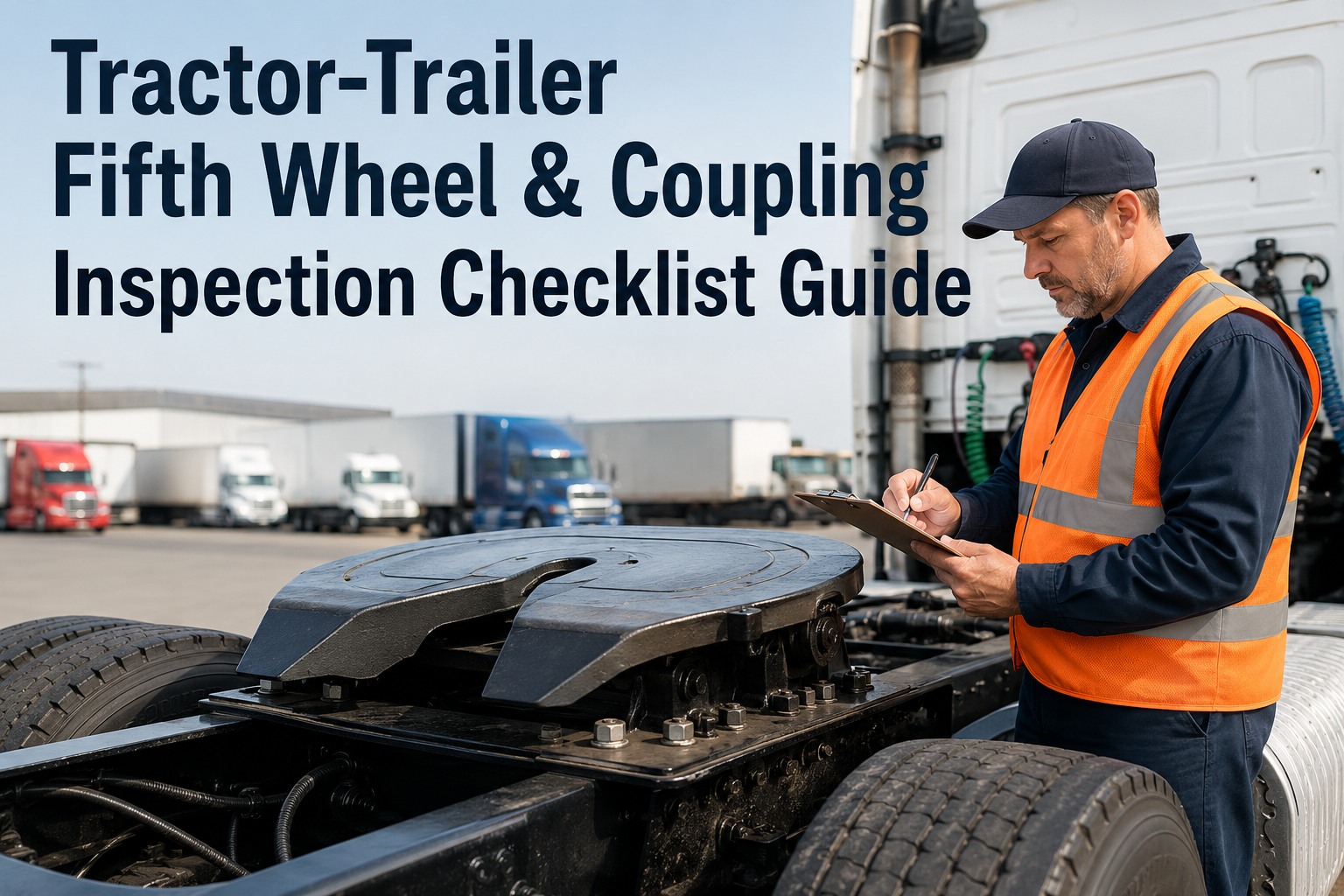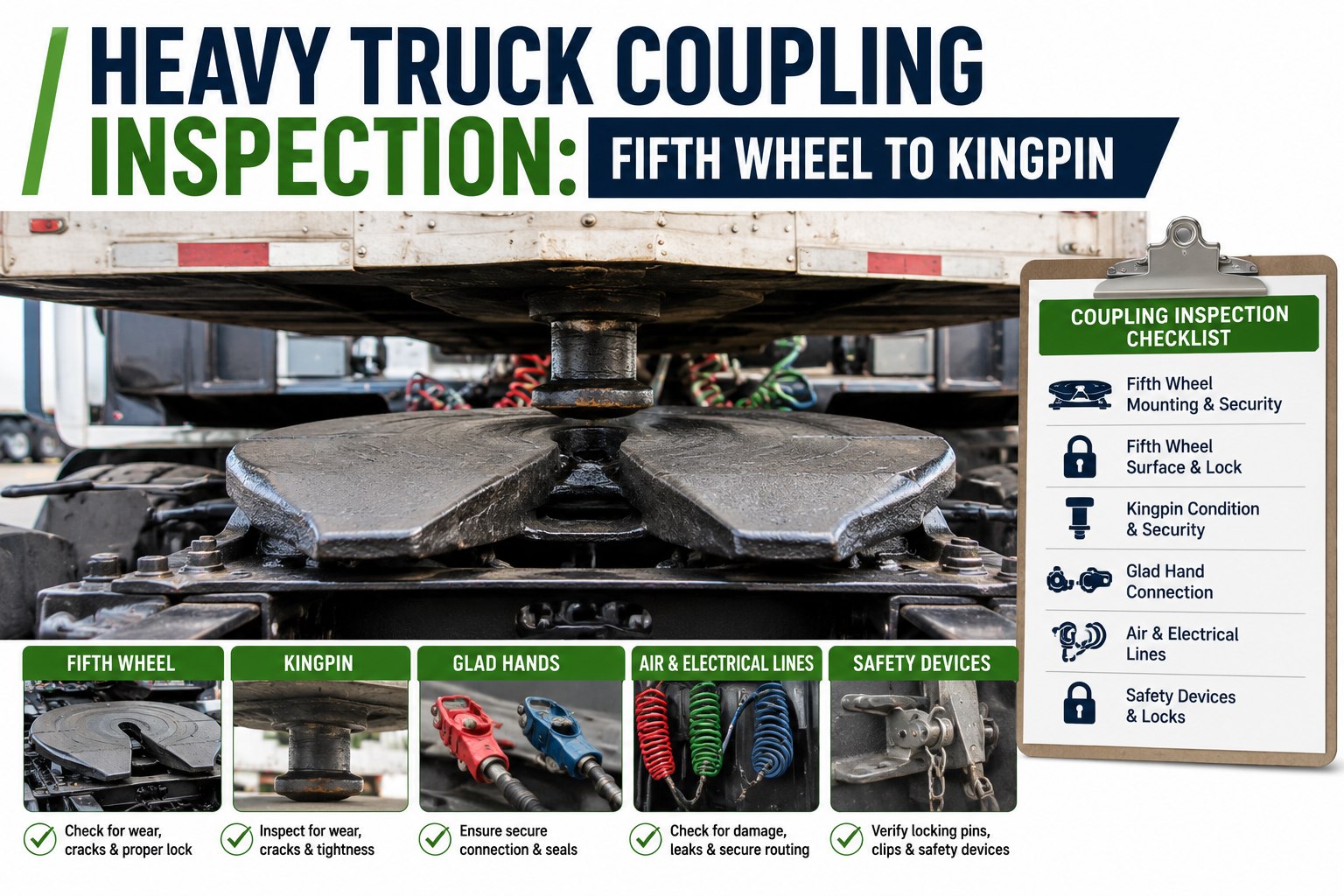
You hear a metallic bang, look in the mirror, and watch a 53-foot trailer pivot into oncoming traffic. A coupling failure separates a loaded trailer from a moving tractor in a fraction of a second, and there is no partial version of this defect. The kingpin pulls out of the fifth wheel, the landing gear crumbles on the asphalt, and you are left managing a catastrophic roadside scene. Heavy truck coupling inspection is the only thing standing between a routine hookup and a totaled rig. This guide breaks down the exact fifth wheel, kingpin, and glad hand inspection points, SAE J700 measurement specs, and out-of-service criteria that keep tractor-trailer combinations compliant. Start free with HVI to digitize your coupling inspections.
Heavy Truck Coupling Inspection: Fifth Wheel to Kingpin
The exact measurement specs, out-of-service criteria, and locking mechanism checks a qualified inspector uses to prevent tractor-trailer separation on the highway.
- Kingpin Wear0.04 in (Pass)
- Horn WearUnder 20%
- Locking JawFull Close
- ResultIn-Service
- 0.125 in
Maximum allowable kingpin wear before OOS on 2-inch pins
SAE J700 Standard - 20%
Fifth wheel horn wear threshold for immediate out-of-service
FMCSA Appendix A criteria - No Field Repair
Kingpins cannot be welded; heat treatment is destroyed
Industry metallurgical standard - 90 Days
Recommended measured coupling inspection interval
Fleet maintenance best practice
Why the visual tug test is not enough
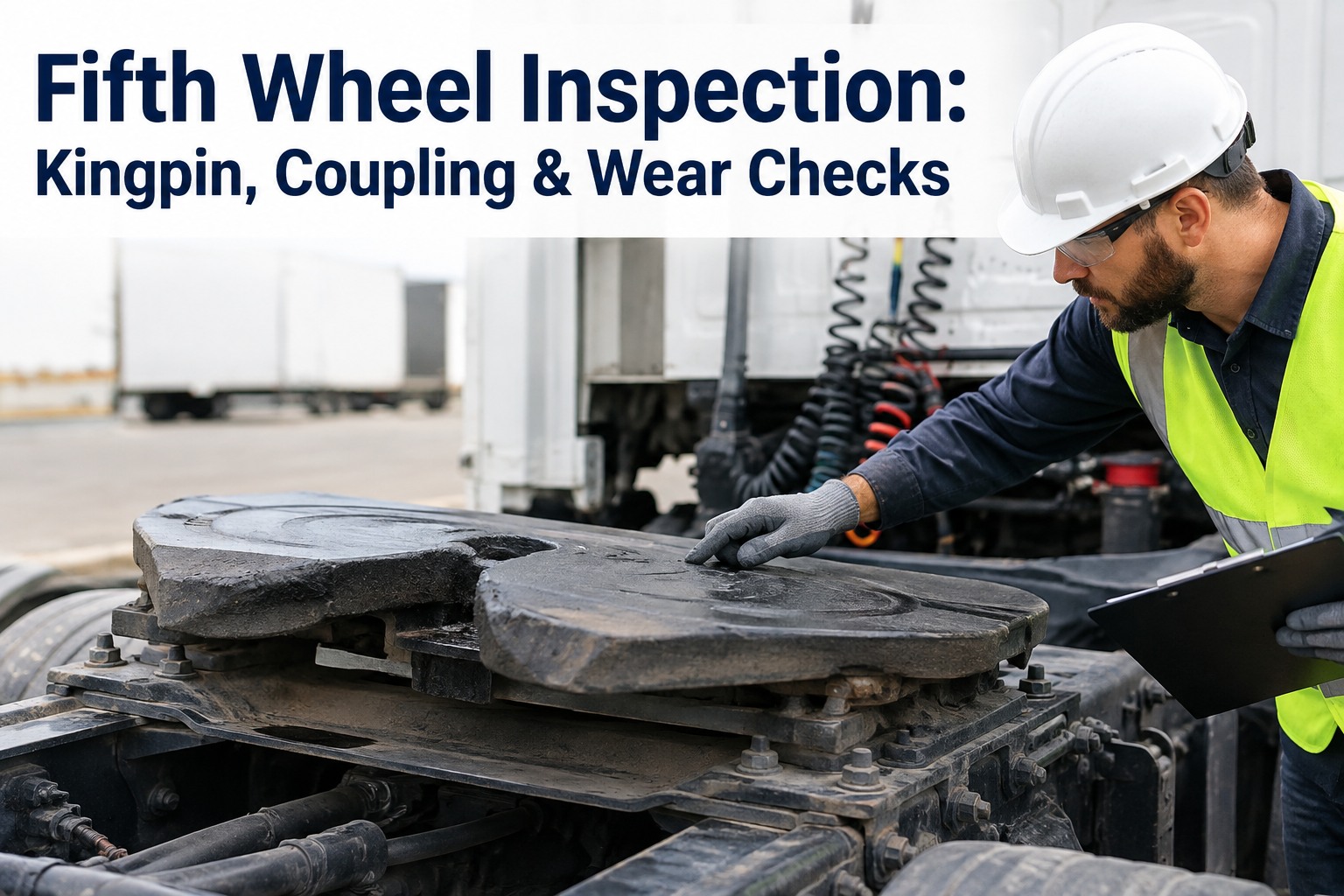
Every driver is taught to hook up, wind the landing gear up a few inches, and pull forward to feel if the trailer is attached. That tug test confirms the lock is engaged at that exact moment. It does not tell you if the kingpin is worn to 2.115 inches, or if the fifth wheel horn is worn so thin that a hard brake application will let the pin rattle over the top. A coupling inspection requires calipers, go/no-go gauges, and a flashlight, not just a clutch drop.
The false confidence of "it locked fine at hookup" is exactly why roadside inspectors find so many worn-out couplings. The lock engaged because the jaw closed, but the tolerance stack-up between a worn pin and a worn horn leaves almost no margin for dynamic loads. When you hit a pothole or brake hard at 65 mph, the pin lifts. If the horn is worn past 20%, the pin clears it. See how HVI enforces measured checks so your team never relies on a visual guess.
The coupling inspection workflow: 6 measured steps
A proper heavy truck coupling inspection follows a strict sequence. You cannot check the lock if the pin is already worn out of spec, and you cannot verify the air system if the mechanical connection is failing. Run these checks in order every 90 days or 30,000 miles.
Clean the connection
Wire brush the kingpin and fifth wheel horn face. Road grime and grease hide hairline cracks in the upper coupler weld. You cannot measure wear accurately on a dirty pin.
Measure the kingpin
Apply a SAE J700 go/no-go gauge to the 2-inch or 3.5-inch (2.875-inch body) kingpin. If the gauge slides past the wear limit of 0.125 inches, the pin is out of service.
Check horn wear
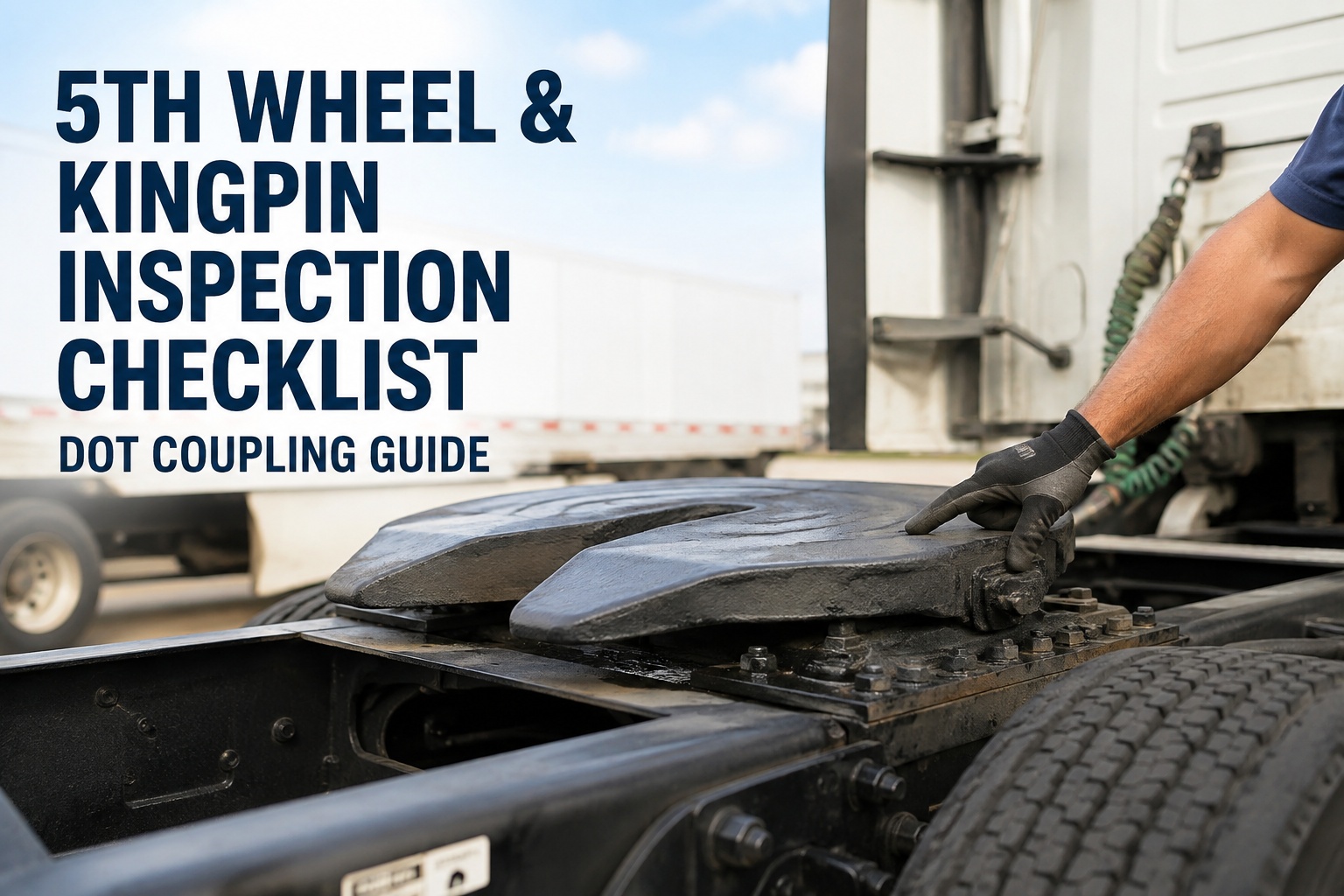
Measure the fifth wheel horn thickness. If wear exceeds 20% of original thickness, the fifth wheel must be replaced or rebuilt before the tractor moves.
Inspect the locking jaw
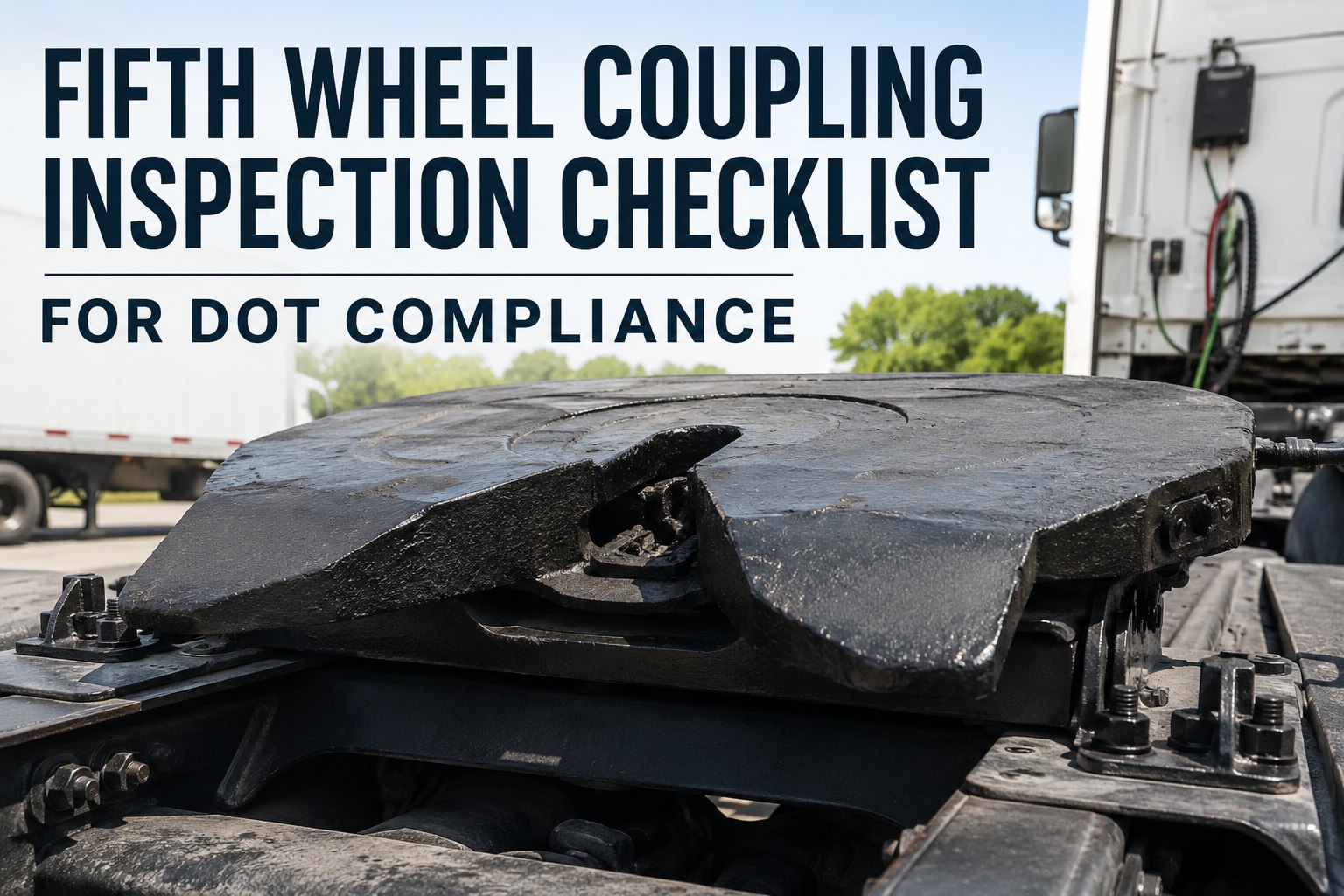
Cycle the release arm. The jaw must close completely with no gap. A jaw that stops short means the spring is broken or the mechanism is packed with debris.
Verify upper coupler flatness
Lay a straightedge across the trailer upper coupler plate. Gaps indicate the plate is bent from dropping the trailer too hard, preventing weight transfer to the fifth wheel.
Test glad hands and chains
Connect the glad hands, pressurize the system, and listen for leaks. Verify safety chains are crossed and secured, and that the air lines clear the catwalk without rubbing.
Expert view from the shop floor
"The worst near-miss I ever saw was a pin that looked fine but was worn to 2.12 inches. The driver did a tug test, pulled out, and the trailer bounced over a railroad crossing a mile down the road. The jaw held, but only because the horn wasn't worn yet. Now, nobody touches a fifth wheel without a go/no-go gauge in their hand.
-- Marcus T., Maintenance Director, regional reefer carrier
Out-of-service criteria for coupling devices
FMCSA regulations and industry standards are unforgiving when it comes to coupling devices. If a roadside inspector finds any of the following conditions, the vehicle is placed out of service on the spot. Learn how HVI keeps your fleet compliant with automated defect flagging.
Kingpin Movement
If the kingpin can be moved by hand in any direction when the trailer is uncoupled, it is an immediate OOS condition. This indicates a bent or cracked pin, or a failed weld in the upper coupler plate.
Cracks in Components
Any crack in the kingpin, fifth wheel, upper coupler weld, or mounting bracket is an automatic failure. Hairline cracks propagate rapidly under dynamic load and cannot be repaired by welding on the kingpin itself.
Lock Mechanism Failure
A locking mechanism that does not fully close, or a release arm that can be opened without pulling the latch, means the tractor-trailer combination is unsafe for operation.
Excessive Horn Wear
Fifth wheel horn section wear beyond 20% when coupled reduces the contact area enough to allow the kingpin to jump under dynamic loading. This requires immediate replacement of the fifth wheel.
Glad hand, air line, and safety chain verification
The mechanical connection is only half the coupling system. If the glad hands fail, the trailer brakes emergency-apply at highway speed, risking a jackknife. If the safety chains are dragging, you have no secondary retention if the fifth wheel fails. Book a demo to see HVI's air system checks built into the coupling workflow.
The kingpin replacement rule: no field welding
When a kingpin wears past the 0.125-inch SAE J700 limit, a technician might suggest building it back up with a welder. This is a dangerous violation of safety standards. Kingpins are manufactured from alloy steel with specific heat treatment. Welding destroys that heat treatment, creating a brittle zone that will shear off under the exact dynamic loads you are trying to survive. Set up replacement alerts with HVI before pins reach the limit.
Worn kingpins must be replaced. The upper coupler plate must be inspected for flatness, the old pin pressed out, and a new OEM-spec pin pressed in. Attempting to field-weld a kingpin is not a shortcut; it is a catastrophic failure waiting to happen at the first railroad crossing.
Frequently asked questions
How often should I perform a heavy truck coupling inspection?
A visual tug test should be performed at every hookup by the driver. A full measured coupling inspection using go/no-go gauges and calipers should be performed every 90 days or 30,000 miles, whichever comes first. This ensures wear is tracked over time before it reaches the out-of-service limit.
What is the SAE J700 kingpin wear limit?
SAE J700 sets a maximum wear tolerance of 0.125 inches for standard 2-inch and 2.875-inch (3.5-inch body) kingpins. If a go/no-go gauge slides over the pin past this limit, the kingpin is out of service and must be replaced.
Can a worn kingpin be welded and built back up?
No. Kingpins are made of heat-treated alloy steel. Welding destroys the heat treatment, creating a brittle area that can shear under dynamic load. Worn kingpins must be entirely removed and replaced with a new OEM-spec unit.
What does it mean if the kingpin moves by hand when uncoupled?
If a kingpin can be moved in any direction by hand when the trailer is uncoupled, it indicates a severely worn or cracked pin, or a failed weld in the upper coupler assembly. This is an immediate out-of-service condition and the trailer cannot be moved until repaired.
Why is the tug test not enough to verify a coupling?
A tug test only confirms that the fifth wheel locking jaw has closed around the kingpin at that moment. It does not measure if the kingpin or horn is worn past safe tolerances. A worn pin can still lock up but jump the horn under hard braking or rough road conditions.
Conclusion: Measure it, don't guess it
Coupling failures are catastrophic because they happen at speed, under load, with zero warning. The difference between a safe tractor-trailer combination and a runaway trailer comes down to fractions of an inch on a kingpin and the structural integrity of a fifth wheel horn. Relying on a visual tug test at hookup is not a coupling inspection; it is a hope. See how HVI digitizes your coupling compliance with mandatory measurement inputs and 90-day tracking. By enforcing a strict 90-day or 30,000-mile measured inspection interval, verifying glad hands, and replacing worn kingpins instead of welding them, you keep your fleet compliant and your drivers safe. Start your free HVI trial to put these checks on every technician's phone today.
Put measured coupling inspections on every inspector's phone
HVI runs the complete fifth wheel, kingpin, and glad hand inspection with go/no-go gauge inputs, automatic out-of-service flagging, and 90-day expiry alerts.
No credit card · No hardware · Live on your fleet in under two weeks