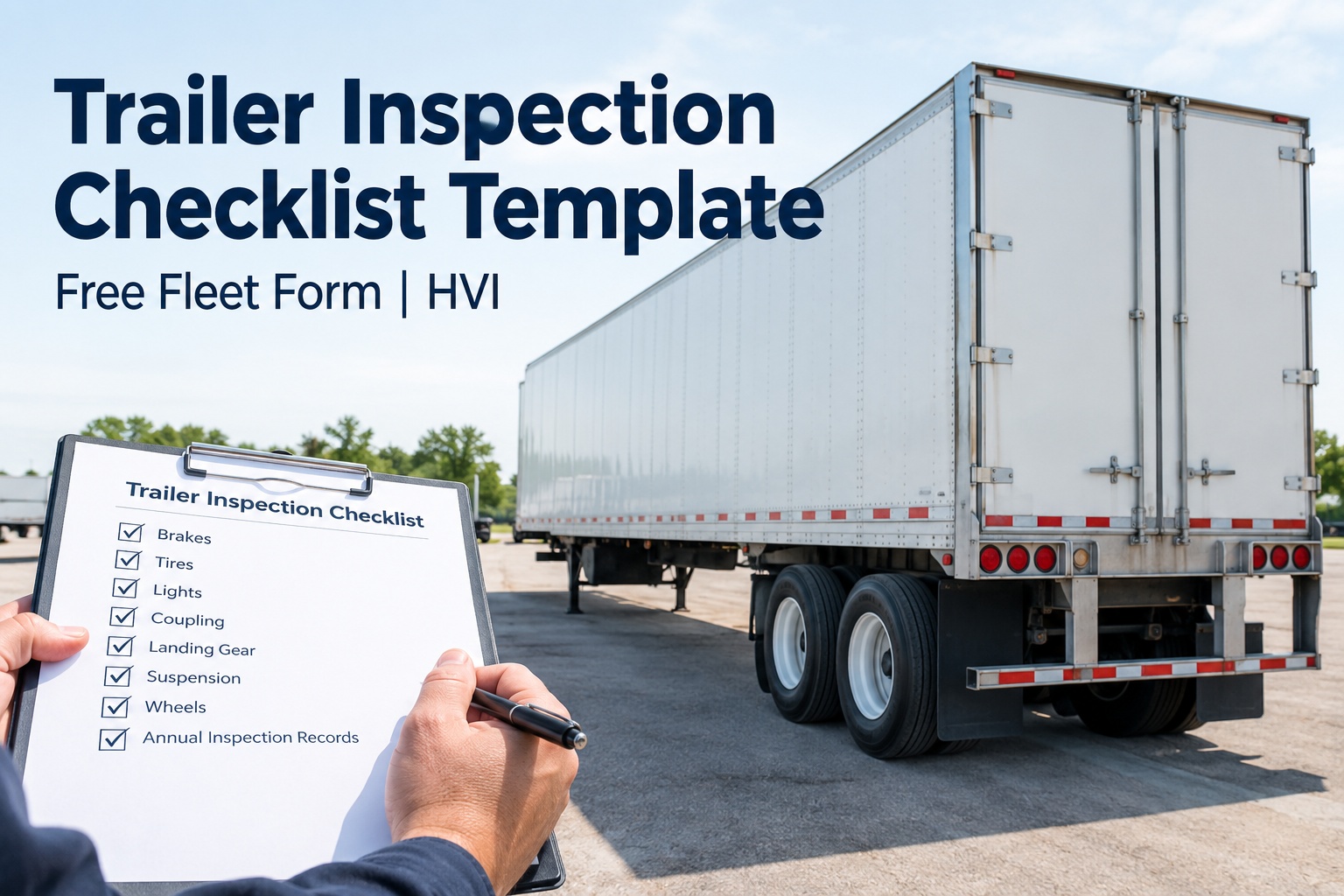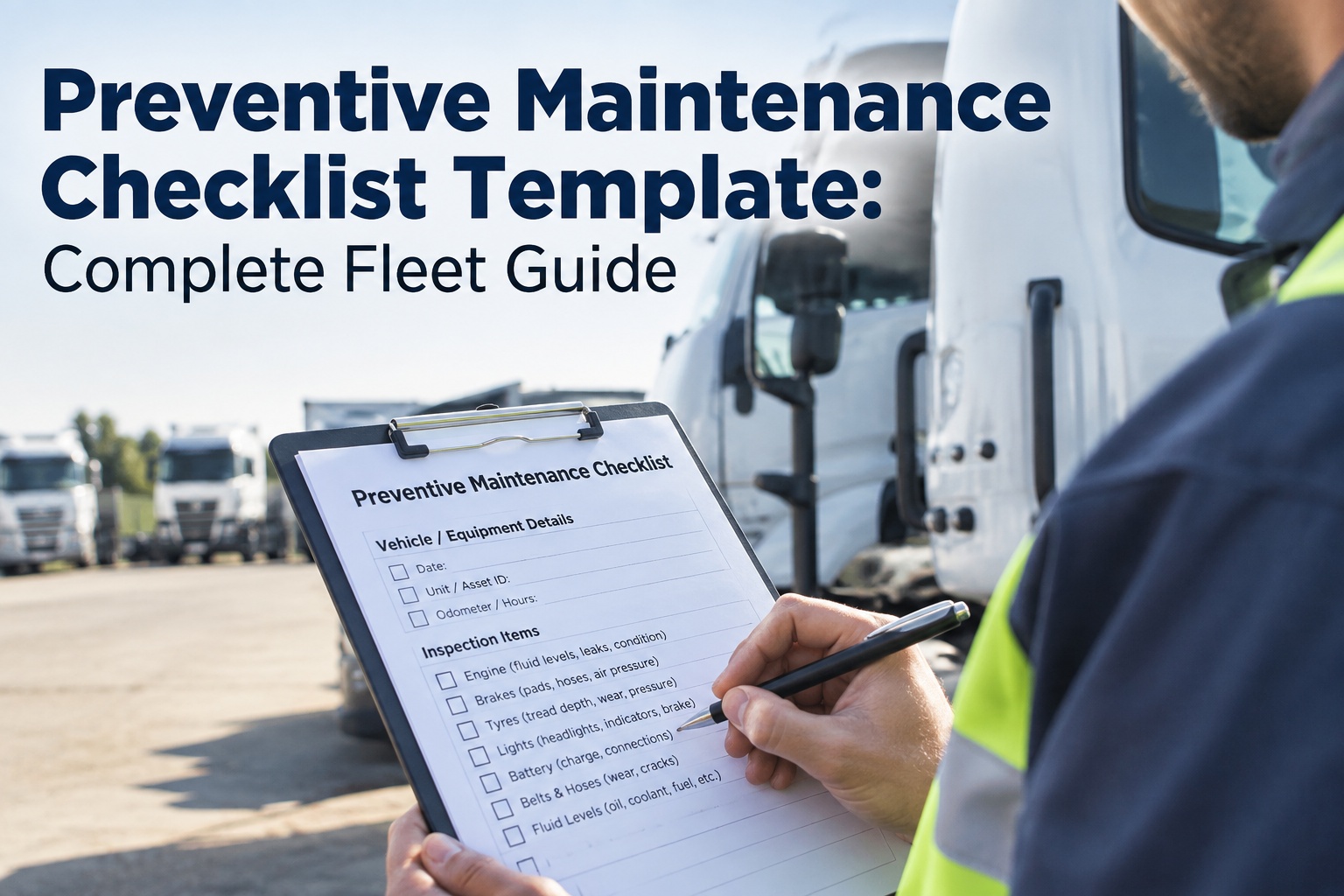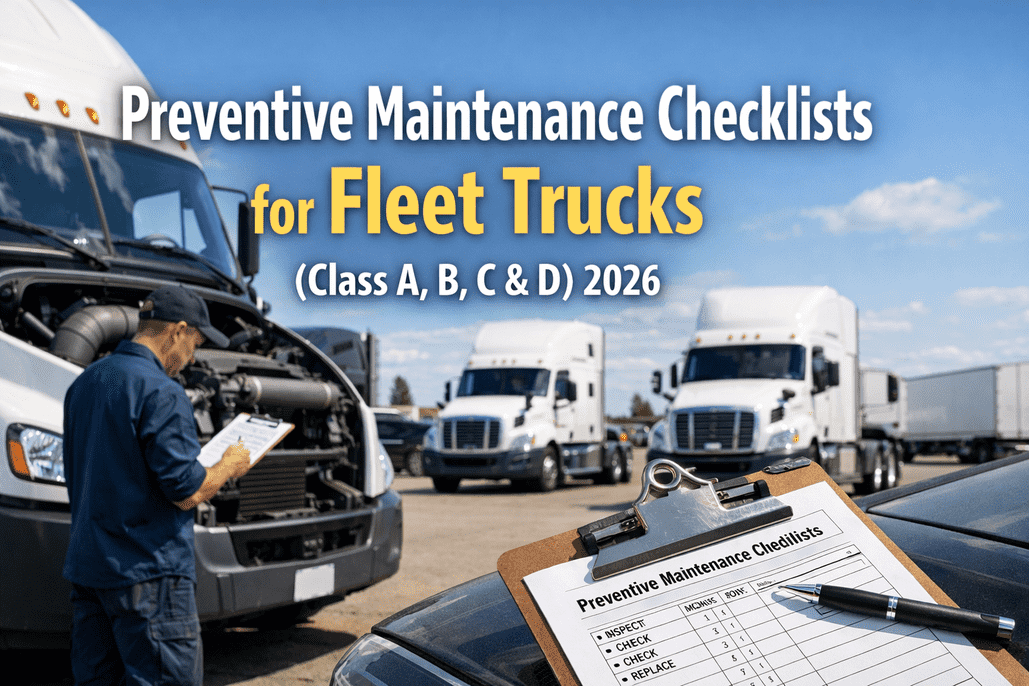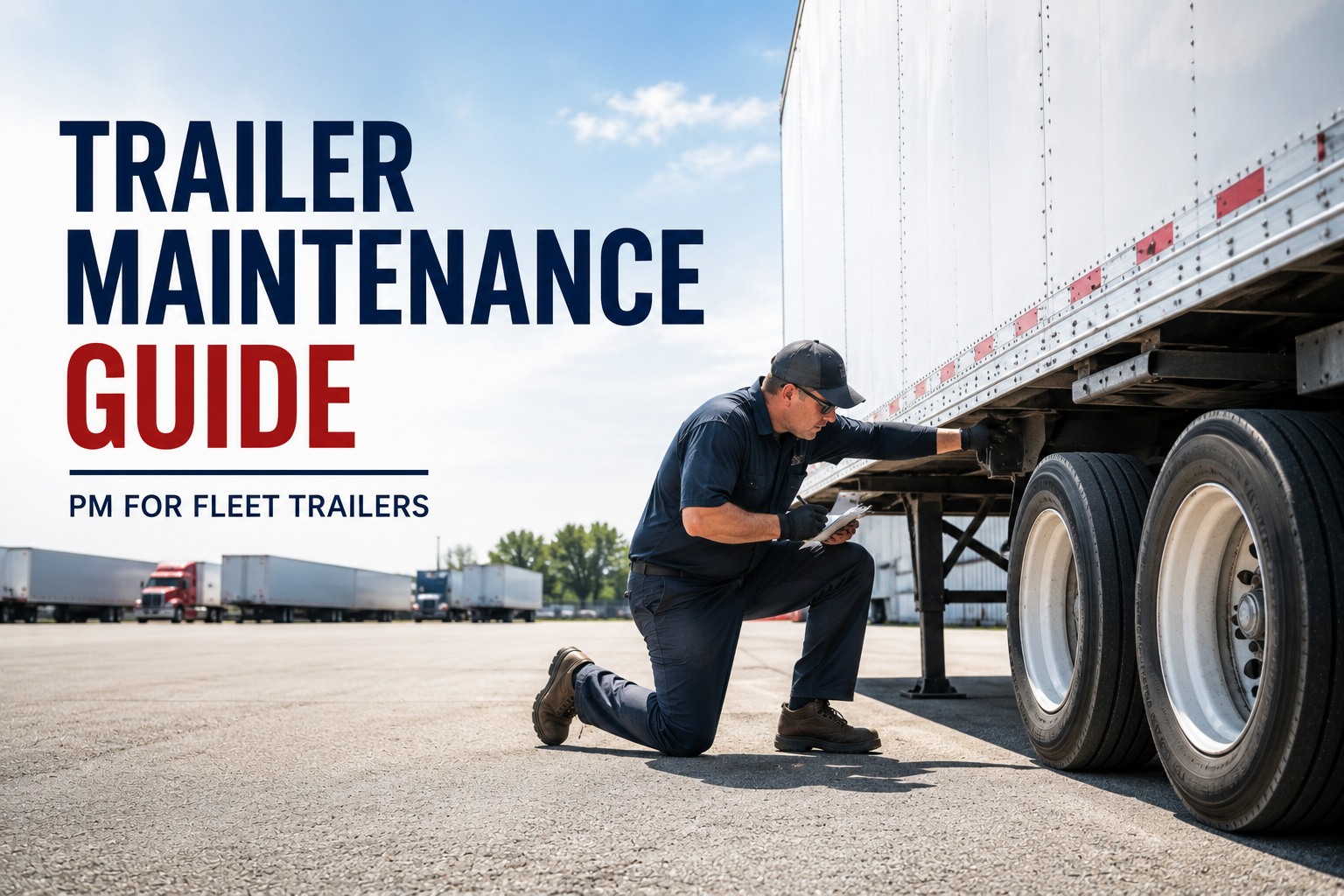
Trailers are the most under-maintained asset on almost every fleet. There's no engine to throw a fault code, no ELD dashboard pinging the maintenance manager, no driver-specific ownership because a different tractor pulls the same trailer every day. Yet 49 CFR 396.17 requires an annual DOT inspection, brake work is triggered by mileage that nobody's tracking, wheel-seal failures happen without warning, and a single lighting citation at roadside can pull the trailer out of service. This guide walks through a complete trailer maintenance program for the three most common trailer types in North American fleets — dry van, flatbed, and refrigerated (reefer) — covering the six PM zones every trailer needs, the 30-day / 90-day / annual PM cadence, type-specific requirements, and the common failure modes that trip up fleets running paper-based or ad-hoc trailer maintenance. Book a demo to see the trailer PM program running on your fleet.
Same PM discipline. Different critical zones.
Each trailer type shares the same foundational maintenance framework but has type-specific priorities that determine what fails first — and what you need to catch before it does
Enclosed trailer for palletized freight. Most common trailer type in North American general freight operations.
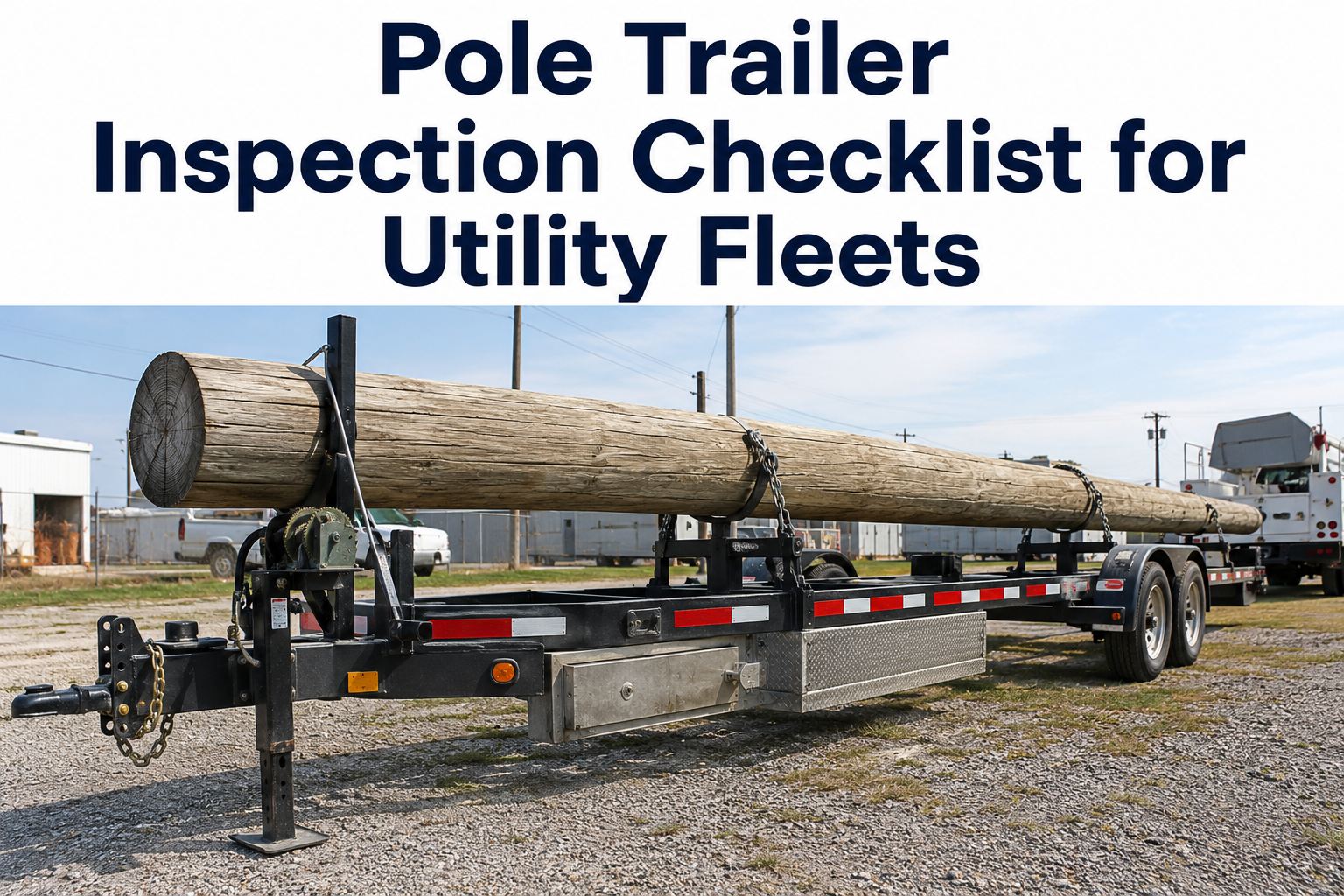
Open-deck trailer for oversized, machinery, construction, and steel freight. Cargo tied down with straps, chains, or binders.
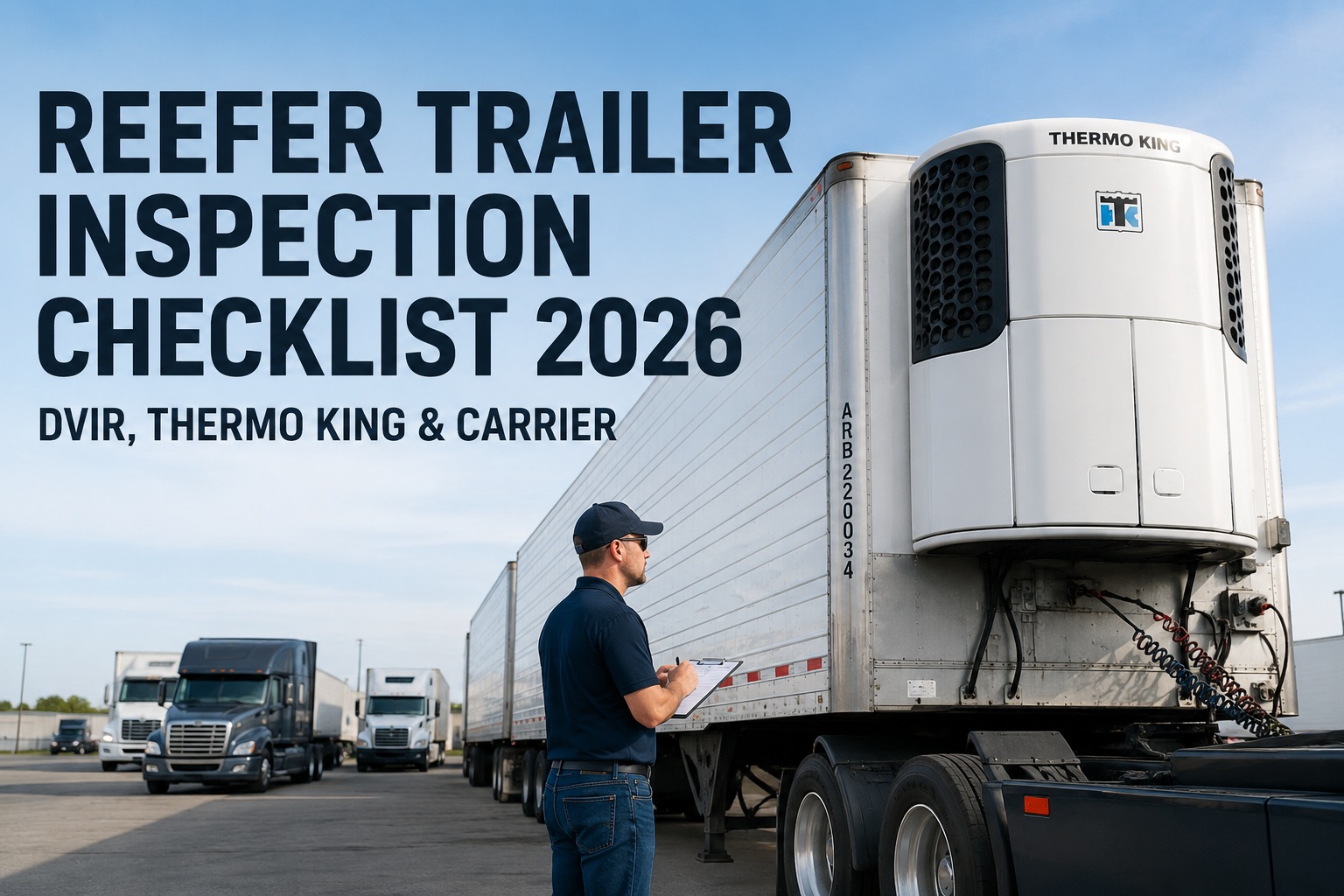
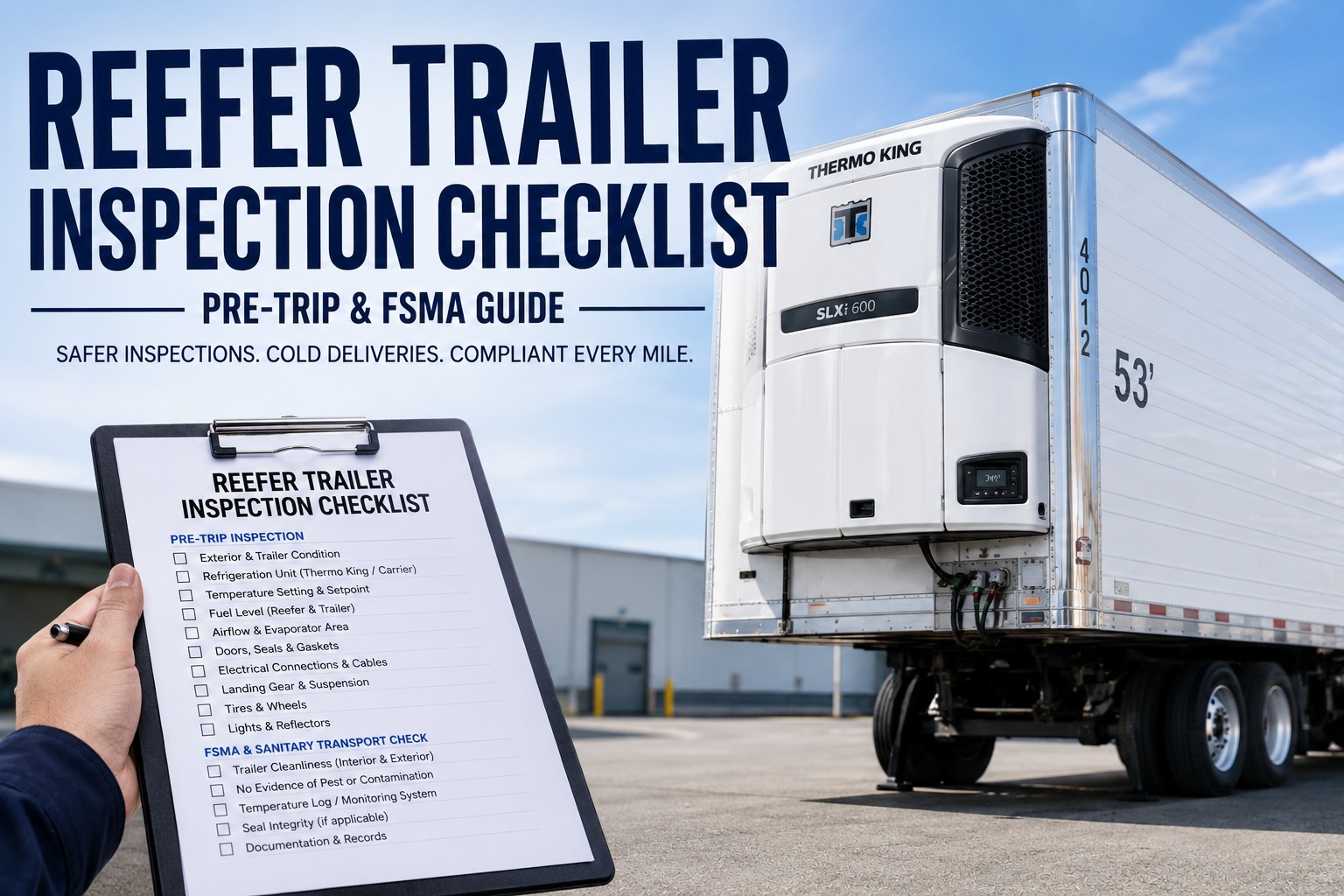
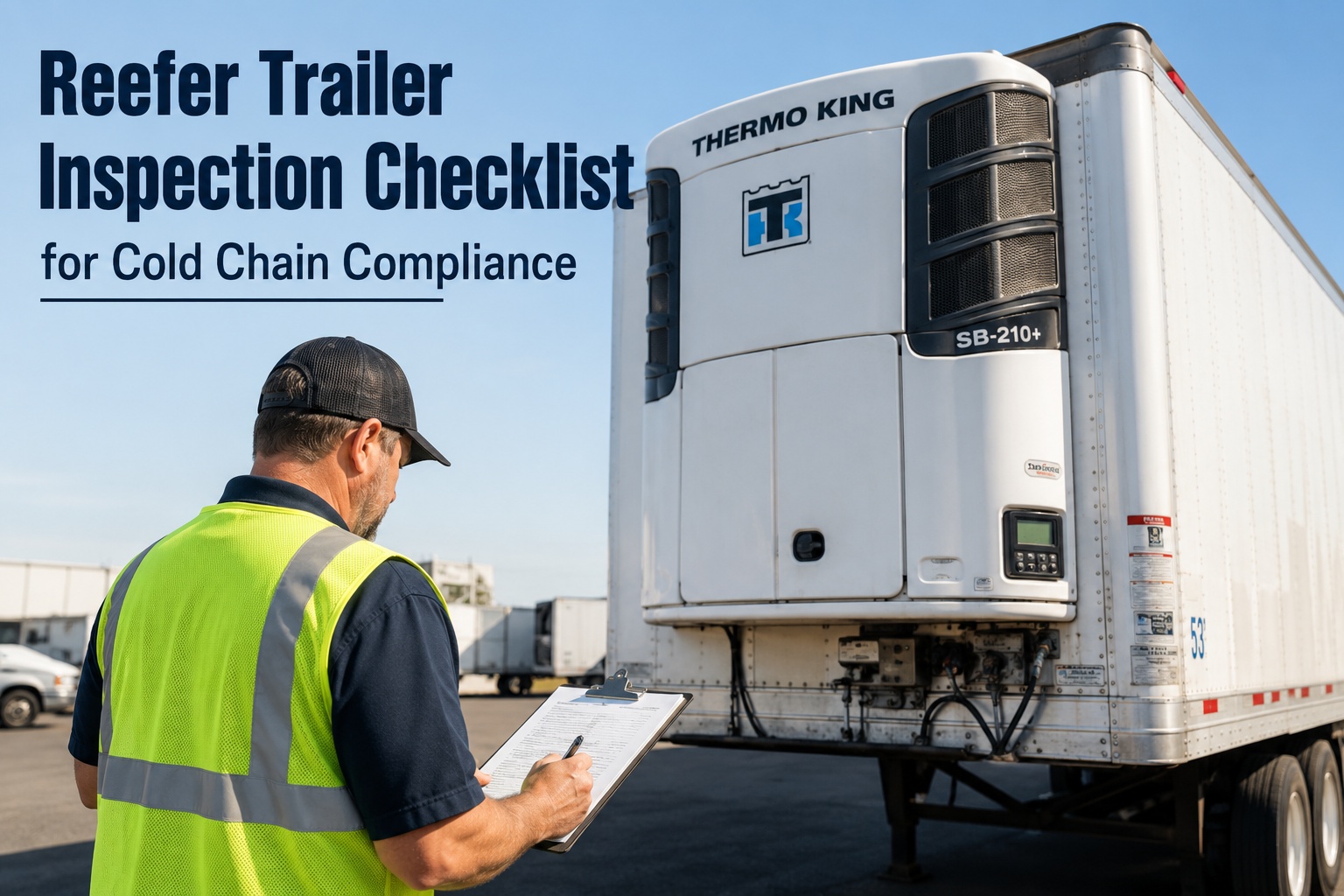
Refrigerated trailer for temperature-controlled freight. Adds a Thermo King or Carrier reefer unit driven by diesel or electric standby.
Why trailer maintenance gets neglected on most fleets
Trailer maintenance is uniquely easy to lose track of. Six specific reasons explain why the trailer PM program is where most fleets have their biggest gaps — and knowing them is the first step to closing them.
Trucks throw diagnostic trouble codes when something's wrong. Trailers don't. A trailer with a failing wheel bearing gives you nothing until it seizes on the highway. There's no early-warning system unless the fleet's PM program is generating one.
A driver is assigned to a tractor and takes ownership of it. Trailers get swapped between drivers dozens of times a month. Nobody feels responsible. The pre-trip walkaround catches obvious issues, but subtle wear patterns fall through the cracks.
Most trailers ship without built-in telematics. Aftermarket GPS beacons track location but not brake wear, wheel-bearing temperatures, or tire pressure. Trailer maintenance data has to be captured actively — it doesn't stream itself.
PMs typically trigger on miles or engine hours — both of which live on the tractor. Trailer mileage has to be reconstructed from load history, or estimated, or ignored. Fleets running paper PM programs often service trailers on age instead of use.
A trailer parked at a customer distribution center for two weeks isn't being pre-tripped by anyone. Latent defects accumulate. When the trailer finally hits the road again, roadside inspection catches the issue the fleet never saw.
Fleets that meet the 49 CFR 396.17 annual inspection requirement often stop there. But annual inspection catches things at the point of failure — not before. Trailer PM has to run monthly and quarterly cadences to actually prevent breakdowns.
Every reason above is fixable with a proper PM program. The alternative is what most fleets currently have: reactive trailer maintenance, roadside surprises, and annual inspection failures nobody saw coming. Book a demo to see the trailer PM program that catches these issues before they cost you
The 6 critical trailer PM zones
Every trailer, regardless of type, has six maintenance zones that determine whether it stays in service or ends up out-of-service at roadside. A good PM program tracks each zone independently, with type-specific overlays for dry van, flatbed, and reefer.
S-cam drum brakes on most trailers, disc brakes on premium units. Slack adjusters, brake chambers, air lines, and brake pads/shoes all require scheduled service. Brake violations are the #1 out-of-service category at roadside inspections.
PM cycle: Every 25K miles or 90 daysTypical 8-tire tandem configuration (4 per axle). Pressure monitoring, tread depth, sidewall condition, and wheel-nut torque all matter. Tire failure at 65 mph is a catastrophic event — and it's almost always preventable.
PM cycle: Every 30 days · rotation every 25KMarker lights, tail lights, brake lights, turn signals, ABS warning lights, and DOT-required reflective tape. Lighting citations are the fastest way to fail a roadside inspection. LED upgrades reduce maintenance frequency but don't eliminate the need for regular testing.
PM cycle: Every 30 days · check all circuitsBearing failure is silent until it isn't. Warm hubs, grease leaks around the hubcap, and wheel play are early indicators. Annual bearing repack and seal inspection required. Failure at road speed can cause a wheel-off event — the worst-case trailer failure.
PM cycle: Annual repack + monthly hub temp checkThe trailer's connection point to the tractor's fifth wheel. Kingpin wear (measured with a gauge), upper coupler plate flatness, and mounting bolt torque must be inspected. A worn kingpin can drop the trailer — catastrophic.
PM cycle: Annual measurement + 90-day visualGlad hands, air lines, ABS control module, sensors, and airbag suspension components. Air leaks are common, hard to trace, and progressively drain the tractor's compressor. ABS warning-light functionality is a roadside inspection item.
PM cycle: Every 90 days + air-leak testSix zones. Different cadences. Some annual, some monthly. A good trailer PM program tracks all six against each unit's actual usage — not the calendar. Start a free trial to configure all six zones on your trailer fleet this week.
The 3-tier trailer PM cadence
Trailer PM operates on three schedules simultaneously. Every trailer needs 30-day attention on high-frequency wear items, quarterly attention on progressive-wear items, and annual attention on major regulatory and structural items.
Monthly wear checks
- Tire pressure and tread depth on all 8 positions
- All lighting circuits (marker, tail, brake, turn, ABS)
- Wheel-nut torque check (especially first 500 miles after service)
- Brake shoe / pad visual inspection
- Air-leak test at maximum system pressure
- Wheel hub temperature check (indicator of bearing health)
- Landing gear operation
Quarterly service
- Full brake system inspection (drums, chambers, slack adjusters)
- Tire rotation (position swap) for even wear
- Suspension component inspection (leaf springs, airbags, bushings)
- Frame and cross-member visual inspection
- Door hinge lubrication and gasket condition
- ABS system diagnostic scan
- Kingpin visual inspection (90-day; full measurement annual)
- Roof and top-rail inspection (dry van / reefer)
Annual DOT inspection
- Full FMCSA annual inspection performed by a qualified inspector
- Kingpin measurement with gauge (replace if worn beyond spec)
- Wheel bearing repack and seal replacement
- Brake drum measurement (replace if machined thin)
- Frame integrity inspection for cracks or repairs
- Air tank inspection and drain-valve function
- Complete lighting-circuit continuity test
- Annual inspection certificate issued and retained 14 months per 49 CFR 396.21
Fleets running paper-based trailer PM typically nail the annual (because DOT requires it), sporadically do the 90-day, and miss the 30-day almost entirely. Digital PM systems triggered by meter data close all three gaps automatically. Book a demo to see all three cadences configured on your trailer fleet
Type-specific PM requirements
The 6-zone / 3-cadence framework applies to every trailer, but each of the three major types adds specific requirements the framework has to accommodate.
- Roof and side wall integrity: Leak-test the roof annually. Small holes let water in and destroy cargo.
- Rear door hardware: Hinges, latches, seals. A rear door that doesn't seal is a claim waiting to happen.
- Floor condition: Composite or wood floors need inspection for rot, damage, and delamination.
- E-track and interior tie-down anchors: If cargo shifts, the anchors get pulled — damage is often invisible until failure.
- Deck surface and nailer boards: Wood or composite deck inspected for rot, splitting, and load-strap grooves.
- Tie-down anchor rings and pockets: D-rings, winches, chain hooks — all rated hardware, all subject to load stress.
- Coil racks and specialty attachments: If configured for steel coils, machinery, or specialty freight, additional inspection required.
- Load securement equipment inventory: Straps, chains, binders, and tarps — regulatory requirement under 49 CFR 393.100.
- Reefer unit PM: Thermo King or Carrier unit needs its own service schedule — typically every 1,500 engine hours + annual inspection.
- Insulation and interior condition: Damaged insulation = energy loss = warmer cargo = claim risk.
- Door seals and gaskets: Reefer door seals are more critical than dry van doors — temperature loss compounds fast.
- Temperature recording equipment: Data loggers, sensors, and reporting compliance for FDA-regulated cargo.
Each trailer type earns its own PM template within the same platform, so a mixed fleet running dry vans, flatbeds, and reefers doesn't need three separate maintenance systems. Book a demo to see type-specific PM templates configured for your trailer mix
6 common trailer PM failure modes
The specific failures that trip up fleets running informal or paper-based trailer maintenance. Each is preventable with a proper PM discipline.
Bearing failures are the most catastrophic trailer failure. Missing PM on the annual bearing repack and monthly hub-temp check is the root cause 90% of the time. Preventable with $200 of shop labor per year per trailer.
Brake system violations account for the largest share of trailer out-of-service events in FMCSA data. Worn linings, out-of-adjustment slack adjusters, and inoperative brakes are all preventable with a proper 90-day PM.
A single failed marker light can cost the trip. Modern LED lighting reduces frequency but doesn't eliminate failure — connectors corrode, ground wires break. Monthly full-circuit test catches issues before roadside does.
Underinflated tires generate heat and fail catastrophically. Over-mileage tires wear beyond safe tread depth. Both prevented by 30-day pressure checks and mileage-based rotation scheduling.
A pinhole leak in a dry van roof can destroy a $50K load. Annual roof inspection with water test catches problems before cargo does. Cheap to fix, expensive to ignore.
A reefer unit that fails mid-trip with a load of frozen product creates cargo claims that can exceed the trailer's value. Reefer unit PM at 1,500-hour intervals + pre-trip diagnostic cycles prevents most in-service failures.
Every failure above is preventable with the 3-cadence PM discipline — but only if the discipline runs consistently across every trailer, every month, without depending on manual reminders. Start a free trial to close the trailer PM gaps that produce these failures.
From a maintenance manager who dropped trailer roadside violations by 63%
We're a 90-tractor / 180-trailer fleet. Tractors always got attention because we had ELD data, driver ownership, PM cycles baked in. Trailers were the neglected child. We'd do the annual DOT inspection, catch whatever was broken at that moment, and hope for the best until next year. Our trailer roadside violation rate ran about 3.2x our tractor rate.
We built out a proper trailer PM program — 30-day, 90-day, annual, tracked per unit with meter data from our trailer GPS beacons. Six months in, our trailer violation rate dropped from 3.2x to 1.2x our tractor rate. Insurance renewal came in 6% below prior year specifically because of the trailer improvement. The trailers were never the problem — the tracking discipline was.
Frequently asked questions
How often should fleet trailers be serviced?
Fleet trailers should follow a three-tier PM cadence: (1) 30-day PM for high-frequency wear items — tire pressure and tread checks across all 8 positions, full lighting-circuit tests, wheel-nut torque verification, air-leak testing, brake shoe visual inspection, and wheel-hub temperature checks; (2) 90-day PM for progressive-wear items — full brake system inspection including drums / chambers / slack adjusters, tire rotation for even wear, suspension component inspection, ABS diagnostic scan, and kingpin visual inspection; (3) Annual PM aligned with the 49 CFR 396.17 DOT annual inspection — full FMCSA-compliant annual inspection by a qualified inspector, kingpin measurement with gauge, wheel bearing repack and seal replacement, brake drum measurement, frame integrity inspection, and issuance of the annual inspection certificate retained for 14 months under 49 CFR 396.21. Reefer trailers add their own reefer unit PM schedule (typically every 1,500 engine hours). Fleets running meter-based PM programs typically produce 30-40% fewer roadside violations than fleets on calendar-based or annual-only schedules.
What are the most common trailer maintenance issues?
Six failure modes account for the majority of trailer maintenance issues in commercial fleets. First, brake system violations — worn linings, out-of-adjustment slack adjusters, and inoperative brakes are the single largest category of trailer out-of-service events in FMCSA roadside inspection data. Second, tire failures from underinflation or over-mileage — underinflated tires generate heat and fail catastrophically; over-mileage tires wear beyond safe tread depth. Third, lighting citations — a single failed marker light can ground the trailer at roadside. Fourth, wheel-off events from failed bearings — the most catastrophic trailer failure, almost always caused by missed annual bearing repack. Fifth, cargo claims from roof leaks on dry vans and reefers — pinhole leaks can destroy high-value loads. Sixth, reefer unit failures in transit — reefer PM missed at 1,500-hour intervals leads to spoilage claims that can exceed the trailer's value. Every issue on this list is preventable with proper PM discipline, but requires a program that runs on meter data or scheduled cadence rather than reacting to failures.
What does 49 CFR 396.17 require for trailer inspection?
49 CFR 396.17 requires an annual DOT inspection for every commercial trailer operating in interstate commerce. The inspection must be performed by a qualified inspector (defined under 49 CFR 396.19) using the criteria listed in Appendix G to Subchapter B — which covers brake systems, coupling devices (kingpin, upper coupler, safety devices), exhaust, fuel system, lighting, safe loading, steering (for trailers with steering axles), suspension, frame, tires, wheels and rims, windshield glazing (for trailers with windshields), and wipers. The inspector must complete an inspection report showing the trailer met the criteria, signed and dated. The inspection certificate must be retained by the fleet for 14 months from the inspection date under 49 CFR 396.21, and either affixed to the trailer or maintained where it can be produced upon FMCSA inspection request. Trailers that fail the annual inspection cannot be operated until the deficiencies are corrected. This is why the annual inspection is the anchor of every trailer PM program — but it's insufficient on its own, since it catches failures at the annual point rather than preventing them across the year.
How is reefer trailer maintenance different from dry van?
Reefer trailers share the same 6-zone / 3-cadence foundational PM framework as dry vans but add four additional maintenance areas that dry vans don't have. First, the refrigeration unit itself (Thermo King, Carrier, or similar brand) requires its own PM schedule — typically service every 1,500 engine hours plus an annual major inspection covering compressor, condenser, evaporator, refrigerant charge, and diesel engine or electric standby system. Second, insulation integrity has to be inspected annually — damaged insulation directly translates to energy loss, warmer cargo, and claim risk. Third, door seals and gaskets are more critical on reefers than dry vans because temperature loss compounds quickly through gaps that would be harmless on a dry van. Fourth, temperature recording equipment (data loggers, sensors, and cargo-temperature reporting systems required for FDA-regulated cargo) needs functional verification and calibration checks. The combined PM cost for a reefer typically runs 30-50% higher than a comparable dry van, but the failure economics are also different — a reefer unit failure with a load of frozen product creates cargo claims that can exceed the trailer's replacement value, so the higher PM investment is protective rather than optional.
How can I track trailer maintenance without ELD data?
Trailers don't come with built-in ELDs the way tractors do, but modern PM programs work fine without them by using several alternative data sources. First, standalone GPS beacons (typically $100-200 per unit with 5-year battery life) provide location data and rough mileage estimates via distance-between-pings calculations — enough for meter-based PM triggering. Second, some modern trailers ship with integrated telematics from manufacturers like Wabash and Great Dane, providing tire pressure, air pressure, door status, and reefer runtime data via cellular connection. Third, tractor telematics can be associated with the attached trailer via the fifth-wheel connection event — so the tractor's ELD-tracked mileage during the connection window becomes the trailer's mileage. Fourth, load-tender data from the TMS provides trip-level mileage that accumulates over the trailer's usage. Fifth, driver check-in/check-out apps allow drivers to log trailer condition and mileage at each pickup and drop. Modern fleet maintenance platforms like HVI can combine any or all of these sources to produce accurate trailer meter data that drives PM scheduling. A fleet with none of these can still run calendar-based PM successfully, but adding just one source (usually GPS beacons at $150 per trailer) shifts to meter-based PM and typically closes 60-80% of the PM discipline gaps that calendar-only programs suffer.
Every trailer type. Every PM zone. One connected program.
HVI runs your entire trailer maintenance program with type-specific PM templates for dry vans, flatbeds, and reefers — meter-triggered from GPS beacons or trailer telematics, 49 CFR 396.17 annual inspection tracking built in, and roadside-violation prevention baked into every PM cycle. Live for your fleet in under two weeks.
No credit card · Dry van · Flatbed · Reefer · 49 CFR 396.17 compliant