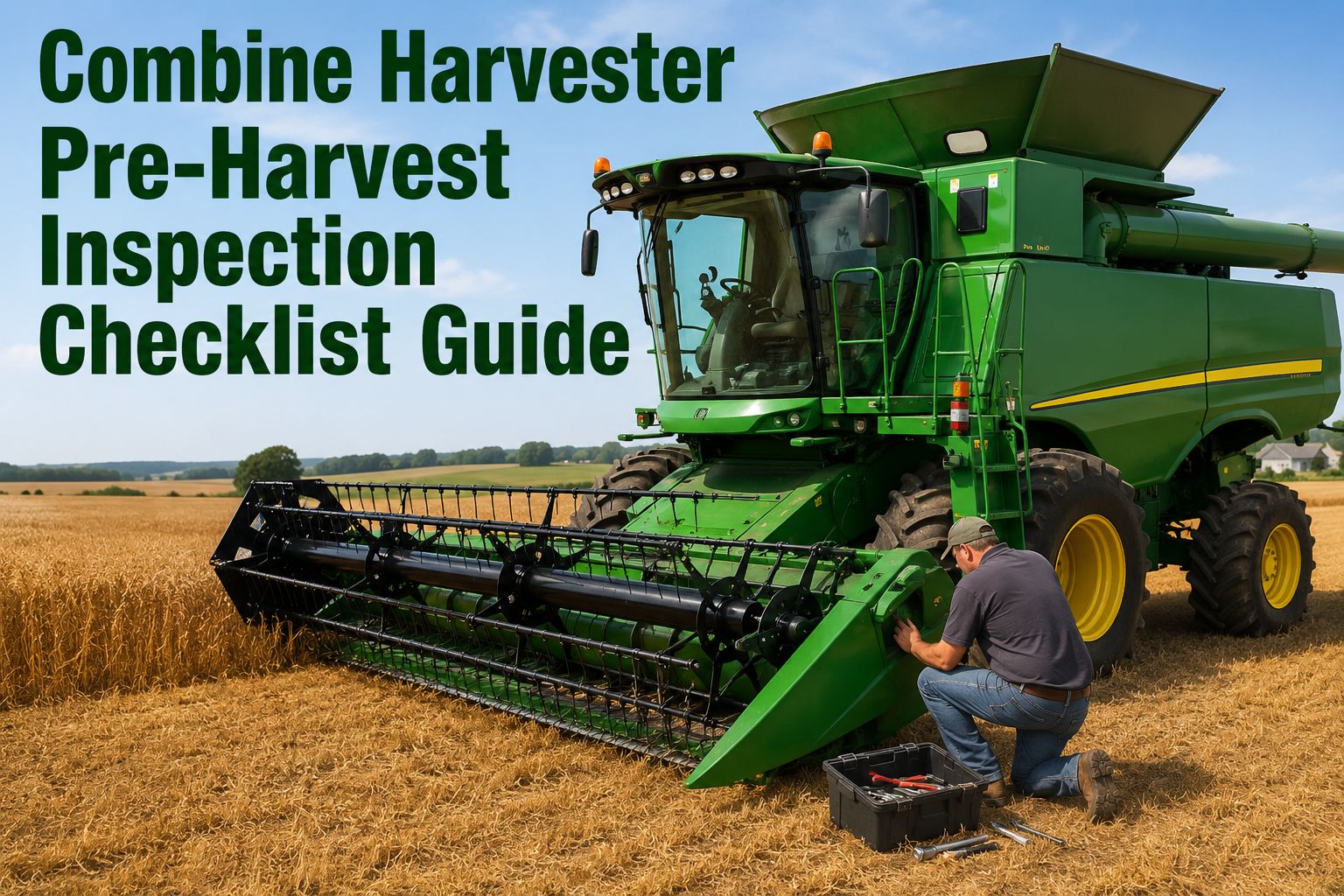
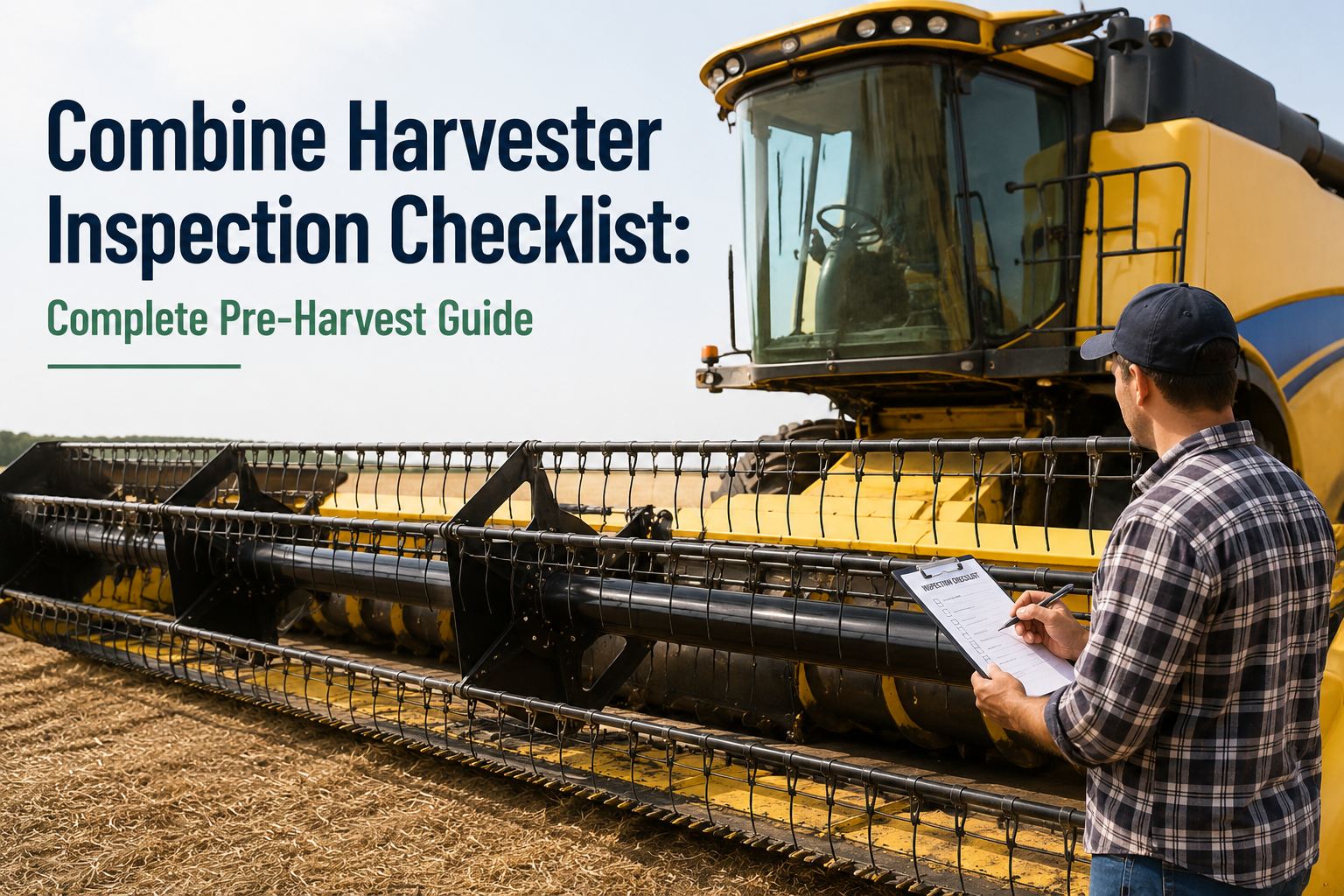
The window is short. Wheat ripens, soybeans dry, corn reaches harvest moisture, and the combine has to run — not next week, not tomorrow, today. Every hour the machine sits in the shop during harvest is yield going past in the field, grain loss accumulating, and a season's revenue ticking down. That's why pre-harvest inspection isn't a paperwork exercise — it's an economic one. A worn sickle section costs grain at the cutterbar before the reel even touches it. A loose feeder house chain slugs the throat and tears belts. A bent concave threshes unevenly across the width. A clogged radiator overheats the engine in 95° dust. A chaff pile on the exhaust manifold starts a fire that takes the whole machine and sometimes the field with it — the most common combine fire cause in every state. Pre-season catches these while you have time, parts, and shop access. Mid-season, a $40 sickle replacement becomes a $12,000 day on the bench. A digital combine harvester inspection & maintenance app turns the pre-harvest walkaround into a guided, photo-evidenced workflow on a phone or tablet — system by system, every wear part logged with hours, defects routed straight to a work order, and the full machine history on the asset record for next year. This guide is the complete pre-harvest checklist.
PRE-HARVEST + DAILY + IN-SEASON
The Combine Harvester Pre-Harvest Inspection Checklist
A complete system-by-system walkaround — header to grain tank, threshing to tires, fire risk to electronics — with every defect, photo, and wear part stored on the asset record in HVI before the first field.
5
core systems on every combine
$12K+
daily cost of an in-field breakdown
#1
cause of combine fires: chaff buildup
3–4%
yield lost to poor pre-harvest setup
Why Pre-Harvest Pays — and What It Prevents
The pre-harvest walkaround prevents four specific costs that hit every operation that skips it. Each one shapes the inspection order below.
Combine Fires
Dust, chaff, and crop residue on the exhaust or in the engine bay ignite. The #1 in-season catastrophe — preventable with pre-harvest cleaning.
Grain Loss
Dull sickles, worn rasp bars, mis-set concaves, and bad sieve action all leak grain. 3–4% yield loss is common with worn wear parts.
In-Field Downtime
A breakdown at full crop costs $12K+ a day in lost harvest. Pre-season repair is cheap; mid-season repair is panic and overnight freight.
Weather Window
You harvest when the grain says, not when the machine is ready. A combine that's already inspected runs the day the moisture is right.
The 5 Systems — How Crop Flows Through the Combine
Every combine moves crop through five functional stages in sequence. Pre-harvest inspection follows the same path — fix problems upstream and downstream gets easier.
STAGE 1
Header
Cuts & gathers the crop
STAGE 2
Feeder House
Moves crop into machine
STAGE 3
Threshing
Rotor + concave separate grain
STAGE 4
Separation
Beaters / grates free remaining grain
STAGE 5
Cleaning
Fan + sieves clean to grain tank
The Complete Pre-Harvest Checklist — Nine Sections
Every section below is what HVI's combine template prompts in sequence. Required fields, photo evidence on wear, and a signed sign-off at the end. Cleaning the machine before inspection is non-negotiable — fresh grease, dust-free panels, and a clean engine bay make every defect visible.
01
Engine, Cooling & Fluids
START HERE
Engine oil level & condition — change if questionable
Coolant level & protection rating; hoses no swelling
Hydraulic oil level & condition (clear, not milky)
Fuel system — water separator drained, filter dated
Air cleaner — primary & safety element clean/replaced
Radiator & coolers — chaff-free, fins straight
Engine & hydraulic filters replaced for the season
Battery terminals clean, voltage tested, hold-downs tight
02
Belts, Chains & Drive
POWER TRANSFER
Every drive belt — no cracks, glazing, or missing chunks
Belt tension to manufacturer spec; tensioners free
All roller chains — no stretch, no stiff/cracked links
Sprocket teeth — no hooking, no abnormal wear
Drive pulleys & sheaves — no wobble, no scoring
Variable-speed drive responds full range, no slip
All grease zerks taking grease (none skin-blocked)
Spare belt kit on board for in-field changes
03
Header — Cutterbar, Reel, Auger
WHERE PROFIT ENTERS
Sickle sections — sharp, complete, no rounded/chipped knives
Guards aligned, shearing surface clean, height to spec
Reel timing centered; bats straight, fingers intact
Reel axle 6–12" ahead of cutterbar; fingers ~2" clearance
Cross auger flighting — no rounded edges; bearings spin clean
Skid shoes — replaced if worn through
Header-to-feeder seal & dust shields intact
Header float / lift cylinders — no drift, no seep
04
Feeder House
THE THROAT
Feeder chain tension; slats — no cracked or worn cross members
Feeder house floor — no thin spots, no holes
Feeder latch / locking pins engage tight with header
Drum fingers straight, paddles square, no wobble
Front pivot block in correct position for first crop
Stone / rock trap empty & access door sealing
05
Threshing & Separation
CORE
Rasp bars / cylinder bars — bolt heads still readable
Concave — no bent/broken wires, level & zeroed
Concave clearance set for the first crop
Threshing element bolts — every accessible bolt torqued
Accelerator rolls — grooves still defined, not smooth
Beater grates clean, no cracks; carry-over removed
Rotor / cylinder spins freely, no abnormal noise
Separator grates — no rust holes, no broken bars
06
Cleaning Shoe — Fan, Chaffer, Sieve
QUALITY
Chaffer louvers — every louver functional, no broken
Lower sieve — open/close mechanism free, no debris
Sieve frame — no cracks, full travel, suspended cleanly
Cleaning fan blades clean, balanced, no wear
Fan speed control responds across full range
Return system — tailings auger clean, no blockage
07
Grain Handling — Tank, Auger, Elevator
OUTPUT
Clean grain elevator chain & cups — no missing/bent
Tailings elevator chain — same inspection
Unloading auger flighting — not rounded smooth
Unload tube seals, swing function, hydraulic limit
Grain tank — empty, no holes, lid hinge functional
Grain tank cross auger / sump augers turn free
08
Tires, Brakes & Steering
MOBILITY
Drive tires — sidewall condition, pressure to spec
Steer tires (rear) — wear pattern, no cuts to cord
Wheel lugs visibly tight, no rust streaking
Service brakes — firm, equal both sides
Parking brake holds on grade
Steering — full lock both directions, no excessive play
Final drive / axle — no oil seeping past seals
Ladder, handrails, platforms secure for 3-point contact
09
Electrical, Monitors & Safety
SAFETY + DATA
Headlights, field lights, hazard flashers, beacons functional
Tail lights, SMV emblem, reflectors for road transit
Grain loss monitors — sensors clean, calibrated
Yield, moisture, and mass sensors clean & responding
GPS / guidance system updated; subscription active
Backup alarm, horn, e-stop functional
Fire extinguishers (cab + ground) charged, in date
Operator manual on board; emergency contacts posted
Fire Risk — The Pre-Harvest Issue Most Often Skipped
Combine fires are the most catastrophic in-season failure and almost entirely preventable. Pre-harvest cleaning and three running-season habits stop nearly all of them.
1
Pre-Harvest Deep Clean
Pressure-wash and air-blow the engine bay, exhaust shielding, header drive, and feeder house. Last season's residue + this season's dust + a hot manifold = ignition.
2
Daily Air-Blow
Compressed-air blowdown of the engine bay, radiator, and exhaust area at fueling time. Five minutes a day prevents most field fires.
3
Bearings & Belts
A failed bearing turns red-hot in minutes and ignites surrounding chaff. Belts that slip generate enough heat to start fires. Both flagged on every shift check.
4
Extinguisher Readiness
One ABC unit in the cab, one at ground level — both inspected, dated, and accessible. A 10-second response window is the difference between a small fire and a total loss.
Critical Wear Parts to Have On Hand
Pre-harvest is the right time to stock the parts that fail in-field. Order before harvest; never wait for overnight freight at $200 a pound.
Sickle sections & full guards
Feeder house chain & slats
Rasp bars (matched set)
Concave (spare or rebuilt)
Filter kit — engine, hydraulic, fuel, air
Belt kit — every drive belt
Bearings — header, feeder, chopper
Skid shoes & auger fingers
Chopper / spreader knives
Light bulbs & flashers
Fire extinguisher refills
Greases, oils, fluids reserve
HVI captures every wear-part replacement as a logged event on the combine's asset record — so next year's pre-harvest opens to a list of "this is what we replaced last season." No more digging through receipts.
book a demo to see HVI's wear-part history tracking.
Paper Binder vs. HVI Mobile Workflow
Pre-harvest is one of the highest-stakes inspections a farm operation runs all year. Paper loses the trail; HVI keeps every part replaced, every defect photographed, and every reading captured on the asset record.
PAPER BINDER
Walkaround scribbled, then filed and forgotten
Last year's wear parts replaced — but no record of what
No photos of concave wear or rasp bar condition
Defects "we'll fix it later" never become work orders
Hours, fuel, service intervals tracked in three notebooks
HVI MOBILE APP
Walkaround prompted section-by-section, every field required
Every wear part logged with date, hours, and part number
Photo evidence required for every defect or wear flag
Defects auto-create work orders routed to the shop
Hours, fuel, service intervals on one asset record
Run Pre-Harvest on HVI — and Every Day After
HVI gives farm operations a digital inspection and maintenance platform for combines, tractors, grain carts, and trucks — pre-harvest deep checks, daily pre-shift walkarounds, in-season defect routing, hour-meter tracking, and wear-part history all on one asset record. Photo-verified, mobile, and ready for next harvest's first day. Trusted by 25,000+ users worldwide.
Frequently Asked Questions
When should a pre-harvest combine inspection be done?
Two to four weeks before the first field opens up — long enough to order parts, fix what's worn, and run the machine on a test patch, short enough that what you fixed is still fresh. A common timeline in the Midwest is wheat in mid-summer, soybeans in early fall, corn shortly after, and each transition needs its own short re-check because settings (especially the cleaning shoe and concave clearance) change between crops. The full pre-harvest deep inspection is annual; daily pre-shift walkarounds and in-season defect logging continue from first field to last. HVI's combine template runs both the annual pre-harvest check and the daily shift check from the same asset record, so the wear-part history flows from one to the next.
Start a free HVI trial to run pre-harvest on your fleet.
What causes the most grain loss in a poorly maintained combine?
The header — by far. Most pre-harvest problems trace to the cutterbar, reel, and feeder-house throat, and an uneven feed downstream shows up as uneven threshing, ragged separation, and grain over the back. Specifics: rounded or chipped sickle sections that shatter heads instead of cutting them; guards out of alignment that drag heads across the deck before the reel catches them; reel timing off so bats throw grain forward instead of into the cutterbar; cross-auger fingers worn so the feed isn't centered; feeder-house chain too loose, which slugs the throat and tears slats. Downstream, smooth-worn rasp bars and a mis-zeroed concave under-thresh, accelerator rolls without grooves under-feed the cleaning shoe, and worn sieve louvers dump good grain over the back. Pre-harvest catches all of this. HVI's section-by-section workflow forces you to look at each one.
Book a demo to see the section-by-section check.
How do you prevent combine fires during harvest?
Combine fires are the most catastrophic in-season failure on most operations, and they're almost entirely preventable with four habits. First, a pre-harvest deep clean — pressure wash and compressed-air blowdown of the engine bay, exhaust shielding, header drive, and feeder house. Second, daily air-blow at fueling time of the engine bay, radiator, and exhaust area — five minutes prevents most field fires. Third, catch failing bearings and slipping belts early — both generate the heat that ignites surrounding chaff, and both are flaggable on a shift check. Fourth, two charged ABC fire extinguishers — one in the cab, one at ground level — inspected and dated. Pre-harvest cleaning matters most because last season's residue plus this season's dust plus a hot exhaust manifold is the ignition source on the majority of combine fires.
Sign up for a free HVI trial to log fire-prevention checks.
How long should a pre-harvest inspection take?
Plan a full day for a class-7 or class-8 combine the first time you do it digitally with HVI; subsequent years drop to 4–5 hours because the asset record opens to last year's punch list and the wear parts you already replaced. The walkaround itself runs about 2–3 hours; the rest is hands-on — concave bolts torqued, sickles replaced, filters changed, belts swapped, grease at every zerk. A useful pre-harvest needs the machine clean before inspection, so add the pressure-wash and blowdown time. The full 9-section HVI template prompts every system in sequence, won't let you skip required fields, and tags every wear-part swap as a logged event with date, hours, and part number — so the rebuild list for next pre-harvest writes itself.
Schedule a demo to see the template.
What's the difference between pre-harvest and daily inspections?
Pre-harvest is an annual deep check — every wear part inspected, every fluid changed, every belt and chain assessed for season-long life, every monitor calibrated, every concave bolt torqued. It's the "rebuild to ready" pass. The daily pre-shift inspection during harvest is short and focused — fluid top-offs, belt tension spot-check, header damage, feeder-house unplug, grain tank empty, fire-extinguisher check, air-blow the engine bay. It runs 15–20 minutes at startup and again at fueling. Pre-harvest sets the machine up; daily keeps it running. HVI handles both on one asset record: the pre-harvest annual closes out, the daily shift check opens for the season, and any defect flagged on a daily walkaround auto-routes to maintenance with a work order.
Sign up for a free HVI trial for both inspection types.
Why use HVI instead of paper for a combine inspection?
A paper pre-harvest binder gets filed and forgotten; the next year's inspection starts from zero. HVI keeps every combine's asset record continuous across seasons — every wear part replaced with date, hours, and part number; every defect with photo evidence; every fluid change, belt swap, concave zero, and rasp bar replacement on one searchable history. Defects flagged during pre-harvest auto-create work orders for the shop. Daily in-season checks flow into the same record. Hours roll into accurate PM scheduling, so a hard-worked combine never slips past its 250-hour service. When something fails mid-field, the operator pulls up the machine's history on a phone and sees what was replaced when. The next pre-harvest opens to a year's worth of trend data on exactly which parts wore and when — turning pre-season prep from a guess into a plan.
Book a demo to see year-over-year combine history.
.png)