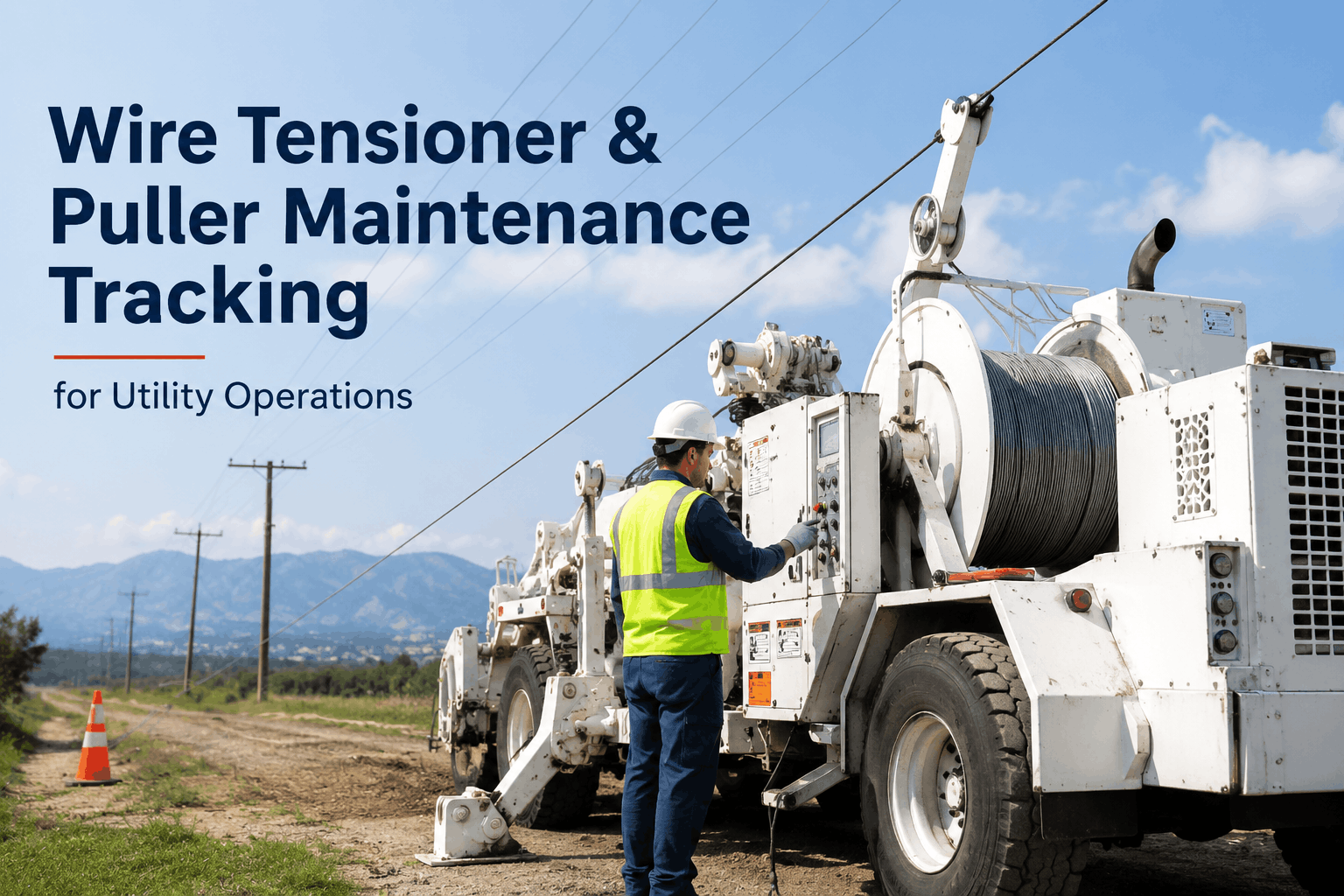
Wire Tensioner & Puller Maintenance Tracking for Utility Operations

By Sophie Hill on June 8, 2026

wire-tensioner-puller-maintenance-tracking

On a transmission or distribution stringing job, the puller and tensioner are the two machines holding a conductor under tons of tension across hundreds of feet of span — and they are not equipment you want to discover a problem with mid-pull. A worn bullwheel liner damages the conductor you're installing. A neglected hydraulic system loses the constant tension that keeps the line controlled. And the brake — the spring-applied, hydraulically-released system designed to grab automatically the instant hydraulic pressure is lost — is the single component standing between a controlled stop and a conductor running away under load. These machines spend most of their life parked between projects, then get pushed hard for a few intense weeks, which is exactly the usage pattern that hides developing faults until the worst possible moment. A puller-tensioner is also a serious capital asset — modern units carry digital tension control, disc brakes, and 30–100 kN capacities — and a failure mid-project doesn't just risk the conductor and the crew; it stalls an entire line-construction schedule. Maintenance tracking software for wire tensioners and pullers keeps these intermittently-used machines on a documented inspection and PM schedule, with full service records per unit. This page breaks down the critical systems, what to inspect, and how tracking keeps the equipment project-ready.

Parked for Months, Pushed for Weeks — That's When Faults Hide
HVI keeps every puller and tensioner on a tracked inspection and PM schedule — bullwheel liners, hydraulics, the brake system, and tension control — flagging a defect with a photo, routing the work order, and holding a full service record per unit so equipment is project-ready, not a mid-pull surprise.

The Critical Systems on a Puller-Tensioner

These machines come down to four systems that decide whether a pull is safe, controlled, and damage-free. Each one has a distinct wear pattern and a distinct consequence if it's missed.

SAFETY-CRITICAL

Brake System

The spring-applied, hydraulically-released brake grabs automatically the moment hydraulic pressure is lost — holding tension so the conductor can't run away. Test brake function and disc/caliper wear every project. This is the one that protects the crew.

SAFETY-CRITICAL

Hydraulic System

Drives the bullwheels and powers constant, infinitely-variable tension control. Check fluid level and condition, hoses and fittings for leaks, pump and motor function, and pressure. A weak system loses the tension control the whole operation depends on.

WEAR ITEM

Bullwheel & Liners

MC nylon or polyurethane groove liner segments grip the conductor without damaging it. Worn, cracked, or glazed liners scar the very conductor you're installing. Inspect groove liners and replace segments before they damage cable.

WEAR ITEM

Frame & Controls

The structural weldment holds the critical alignment and cant of the bullwheels; digital tension controls and the radio remote run the operation. Check frame integrity, bullwheel alignment, gauges, displays, and the recorder calibration.

The brake is the component you can least afford to find faulty under load — a spring-applied brake that doesn't engage on a pressure loss is the difference between a safe automatic stop and a runaway conductor. HVI makes the brake test a required, logged step every project. sign up for a free HVI trial and track the brake check on every unit.

Why Intermittent Use Is the Real Enemy

Unlike a haul truck running daily, a puller-tensioner sits idle between projects — and idle equipment fails differently. The maintenance program has to account for the project-cycle usage pattern, not just operating hours.

BEFORE PROJECT

Pre-deployment inspection after storage — hydraulics, brake, liners, controls all verified before the unit leaves the yard. Catch storage degradation here.

DURING PROJECT

Daily pre-use checks while the unit is working hard — fluid, leaks, brake function, liner condition, tension readout — every day it's under load.

AFTER PROJECT

Post-job service and storage prep — clean, lubricate, address defects, log condition. The unit goes into storage ready, not with hidden faults.

Idle equipment degrades quietly — seals dry out, hydraulic fluid absorbs moisture, brakes seize, rodents nest in wiring. A project-cycle inspection program catches storage damage before the unit is trusted with a live conductor.

The Maintenance Schedule

Puller-tensioner PM layers the project-cycle checks with hour-based service. The pre/post-project inspections prevent the surprises; the deeper services keep the hydraulics and brakes reliable for years.

Interval
Focus
Key Tasks
Daily / Pre-Use
Operator inspection
Hydraulic fluid & leaks, brake function test, bullwheel liner condition, tension readout, guards & E-stop, tire/chassis if mobile
Pre / Post Project
Deployment check
Full system verification after storage; clean, lubricate, and service before storage; address all open defects
~250 hrs
Light service
Hydraulic filter change, grease bullwheel bearings & pivots, brake disc/caliper inspection, engine service (powered units)
~1,000 hrs / Annual
Major service
Hydraulic fluid change, brake system overhaul, bullwheel liner replacement, tension-control calibration, structural inspection
Annual / Certification
Comprehensive
Load/tension verification, full safety-system certification, frame & alignment check, all records archived for audit
Follow the manufacturer's published schedule for your unit — Condux Tesmec, TSE International, and others differ by model. Hour-based intervals plus the project cycle together cover both wear and storage degradation.

Why Service Records Matter as Much as the Service

For utility equipment, the documented record isn't paperwork — it's proof of due diligence, the basis for warranty and resale value, and the institutional memory a project-cycle fleet otherwise loses between jobs.

Proof of Due Diligence

A timestamped record that the brake was tested and the safety systems certified is the documentation that protects the company if anything ever goes wrong on a job.

Warranty & Resale Value

A complete service history protects warranty claims on these high-value units and substantially raises resale value when the equipment is sold or traded.

Institutional Memory

When a unit moves between crews and projects, a per-asset record means the next team knows its history — what's been serviced, what's due, what to watch.

Reliability Trends

Tracked history surfaces a unit's recurring issues and true cost over time — the data behind smart repair-versus-replace decisions on capital equipment.

A puller-tensioner that moves between crews and sits in storage loses its history fast on paper — and history is exactly what you need to trust it on the next pull. HVI holds a complete record per unit, accessible to every crew. schedule a live demo to see per-asset service records.

From Inspection to Project-Ready

The tracking loop is what keeps an intermittently-used fleet reliable: inspect on the project cycle, schedule by hours, and document everything to a permanent per-unit record.

1

Inspect

Pre-use and pre/post-project checks run on a phone — brake, hydraulics, liners, controls — with photos on any defect.

2

Schedule & Route

PM tracks by hours and project cycle; a flagged defect becomes a work order routed to the shop before the next deployment.

3

Document

Every inspection, test, and service logs to the unit's permanent record — proof of due diligence, ready for any crew or audit.

Keep Every Puller and Tensioner Project-Ready

Project-cycle and hour-based PM scheduling, brake and hydraulic safety checks, bullwheel liner tracking, tension-control calibration, defect-to-work-order routing, and complete per-unit service records — built for transmission and distribution line construction fleets. Trusted by 25,000+ users worldwide.
Frequently Asked Questions

What is the most important system to inspect on a puller-tensioner?
The brake system. These machines use a spring-applied, hydraulically-released brake that engages automatically the instant hydraulic pressure is lost, holding line tension so the conductor can't run away under load — it's the component that protects the crew and the conductor. Testing brake function and inspecting disc and caliper wear should happen before every project and during daily pre-use checks. The hydraulic system is a close second, since it powers both the bullwheels and the constant tension control. Sign up for a free HVI trial to track brake checks.
How often should wire tensioners and pullers be maintained?
Layer two rhythms. The project cycle drives a full pre-deployment inspection after storage, daily pre-use checks while the unit is working, and post-project service before it goes back into storage. On top of that, hour-based intervals cover light service around 250 hours (hydraulic filter, greasing, brake inspection) and major service near 1,000 hours or annually (hydraulic fluid change, brake overhaul, liner replacement, tension-control calibration), with an annual safety certification. Following both rhythms covers wear from use and degradation from idle storage. Schedule a demo to set up the schedule.
Why does intermittent use make maintenance harder?
Because idle equipment degrades in ways that operating hours don't capture: seals dry out, hydraulic fluid absorbs moisture, brakes can seize, and wiring gets damaged in storage. A puller-tensioner may sit for months between projects, then get pushed hard for weeks — so a purely hour-based schedule misses the storage damage. A project-cycle program that inspects the unit before it leaves the yard catches those hidden faults before the equipment is trusted with a live conductor under tension. Sign up for a free HVI trial to run project-cycle inspections.
What should I check on the bullwheels?
The bullwheel groove liner segments — made of wear-resistant MC nylon or polyurethane — are what grip and guide the conductor without damaging it. Inspect them for wear, cracking, glazing, or chunking, because worn or damaged liners will scar the very conductor you're installing, creating an expensive problem on a live line. Replace liner segments before they reach that point, and check bullwheel alignment and cant, since the frame must hold that geometry precisely for controlled tensioning. Schedule a demo to track liner wear.
Why do service records matter for this equipment?
For utility line equipment, the documented record does four jobs: it proves due diligence on safety-critical systems like the brake if anything ever goes wrong on a job; it protects warranty claims and raises resale value on these high-value capital units; it preserves institutional memory as a unit moves between crews and projects; and it reveals reliability trends that inform repair-versus-replace decisions. HVI keeps a complete, timestamped record per unit that any crew can access — far more reliable than paper that gets lost between jobs. Sign up for a free HVI trial to keep full service records.

Share This Story, Choose Your Platform!

Start Free Trial Book a Demo