Air disc brakes stop better, fade less, and last longer than drums — but the technician habits built on decades of drum brakes don't transfer. You can't eyeball a rotor the way you'd size up a shoe, and "looks fine" hides the heat checking, the sticking caliper, and the rotor a micrometer reading away from its discard limit. A proper air disc brake inspection is a different discipline: visual condition, a measured thickness, and a caliper that has to move. See all three captured against the limit
Air disc brakes don't wear or fail like drums
A drum inspection is mostly about lining thickness and stroke. An air disc brake spreads the job across three components that each fail their own way — and each needs its own check. Miss the caliper movement and you'll blame the pads for a problem they didn't cause.
Work those three in order and an ADB inspection is fast and reliable. Below is what actually fails a rotor, how to tell a cosmetic surface condition from a replace-now defect, why the caliper is the component most likely to be overlooked, and how mixed drum-and-disc fleets need two different inspection templates — not one.
Inspecting the rotor: surface condition vs measured thickness
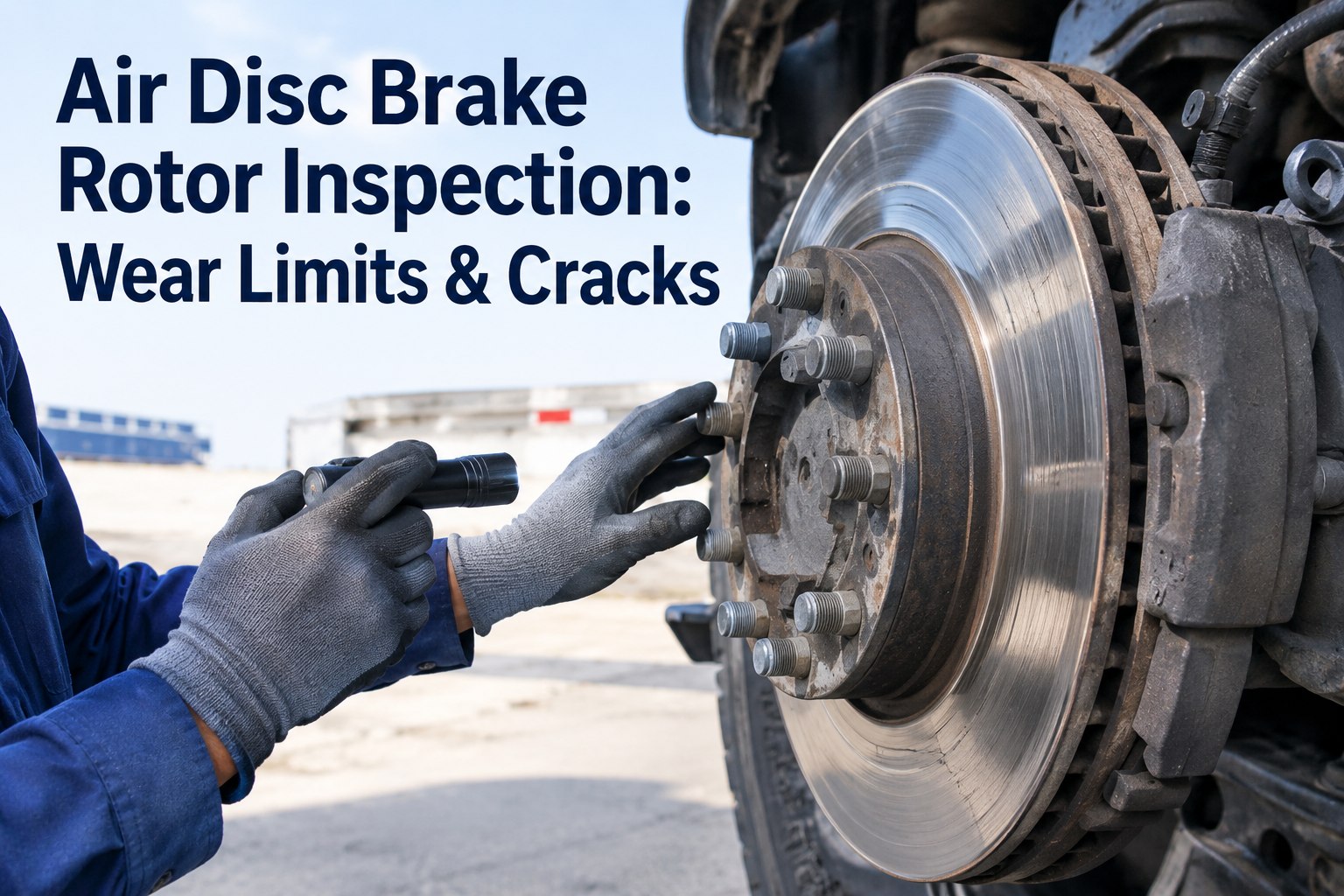
Rotor inspection has two halves that people tend to collapse into one glance. The first is a visual read of the friction surface. The second is a micrometer measurement against the manufacturer's discard limit. Both matter, and a rotor can pass one while failing the other — a thick rotor with a crack is scrap, and a clean-looking rotor worn past its minimum is scrap too.
- Light heat checking — fine surface lines from normal thermal cycling
- Light scoring — shallow grooves that don't catch a fingernail deeply
- Light surface corrosion — rust film that pads clean off in service
- Minor discolouration — slight bluing worth watching for a cause
Note the condition, look for a cause if it's more than mild, and re-check next interval.
- Cracks that exceed the manufacturer limit — or an external crack that opens under brake application
- Heavy heat checking — surface cracks with real width and depth
- Deep grooves or scoring past the maker's limit, or metal-to-metal contact
- Below discard thickness on the micrometer, or a piece missing / in danger of falling off
These are replacements — and cracks, bluing, and heavy checking are also heat clues worth chasing.
On thickness specifically: there is no single universal discard number for truck rotors. It's set by the rotor or brake manufacturer, measured with a micrometer at the locations they specify. Don't assume a value or borrow one from another model — pull the spec for the actual rotor. Book a demo to record rotor thickness against the right limit per wheel
Reading the pads — and what inner-vs-outer wear tells you
Pad inspection on an air disc brake is more than a thickness number. How the pads wear — evenly or not, inner versus outer, one wheel-end versus its mate — is a diagnostic signal about the caliper and the rest of the system. A borescope or inspection mirror gets you a real look without pulling everything apart.
Friction material thickness
Measure remaining friction material against the manufacturer's minimum — and check any wear indicator the pad carries. Don't run pads to the last millimetre; a pad worn out lets the backing plate contact the rotor and turns a pad job into a rotor job.
Inner vs outer pad wear
If the inner and outer pads on the same rotor wear unevenly, the caliper isn't sliding freely — it's applying harder on one side. A big inner-outer difference is a caliper-movement flag, not a pad-quality problem. Read both pads, not just the visible one.
Wheel-to-wheel across the axle
One wheel-end consistently wearing faster than its partner points to a system issue — a dragging or binding caliper, a duty-cycle imbalance, or a foundation problem — not simply old pads. Treat it as something to diagnose before you just replace.
Contamination & damage
Oil or grease on the friction surface fails the pad regardless of thickness and signals a leak to trace. Cracking, chunking, or a pad separating from its backing are failures too — and, like uneven wear, usually point to heat or a system fault behind them.
The theme is consistent: on an air disc brake the pads are often the messenger, and the caliper is often the message. Which is exactly why the caliper check isn't optional. Book a demo to flag inner-outer wear as a caliper signal Book a demo to log inner and outer pad wear separately
The caliper check most inspections skip
Here's the component that gets overlooked because it doesn't wear like friction material — and it's the one that quietly causes uneven rotor and pad wear across the fleet. An air disc brake caliper has to slide freely on its guides to apply the pads evenly. When it sticks or binds, one pad does too much work, the rotor heats unevenly, and you get exactly the wear patterns people misread as worn-out pads.
A fair rule of thumb: when a rotor or pad shows uneven wear, look at the caliper and guides before you conclude the friction material was the problem. The wear pattern is usually pointing at the movement. That said, no single component is behind every ADB issue — read the whole system. Book a demo to route a suspected caliper fault into corrective work
The air disc brake go/no-go checklist
This is the check that turns "looks fine" into a defensible call — the three measurements plus the ADB-specific caliper test drum habits skip. Use this air disc brake checklist online free, so every reading lands against its limit and the caliper check never gets forgotten.
Mixed fleets: two brake types, two inspection templates
Plenty of fleets run drum brakes and air disc brakes side by side — sometimes on the same truck, steer versus drive. The mistake is inspecting both with one generic brake checklist. They share almost nothing at the measurement level: different components, different limits, different failure modes, different tools.
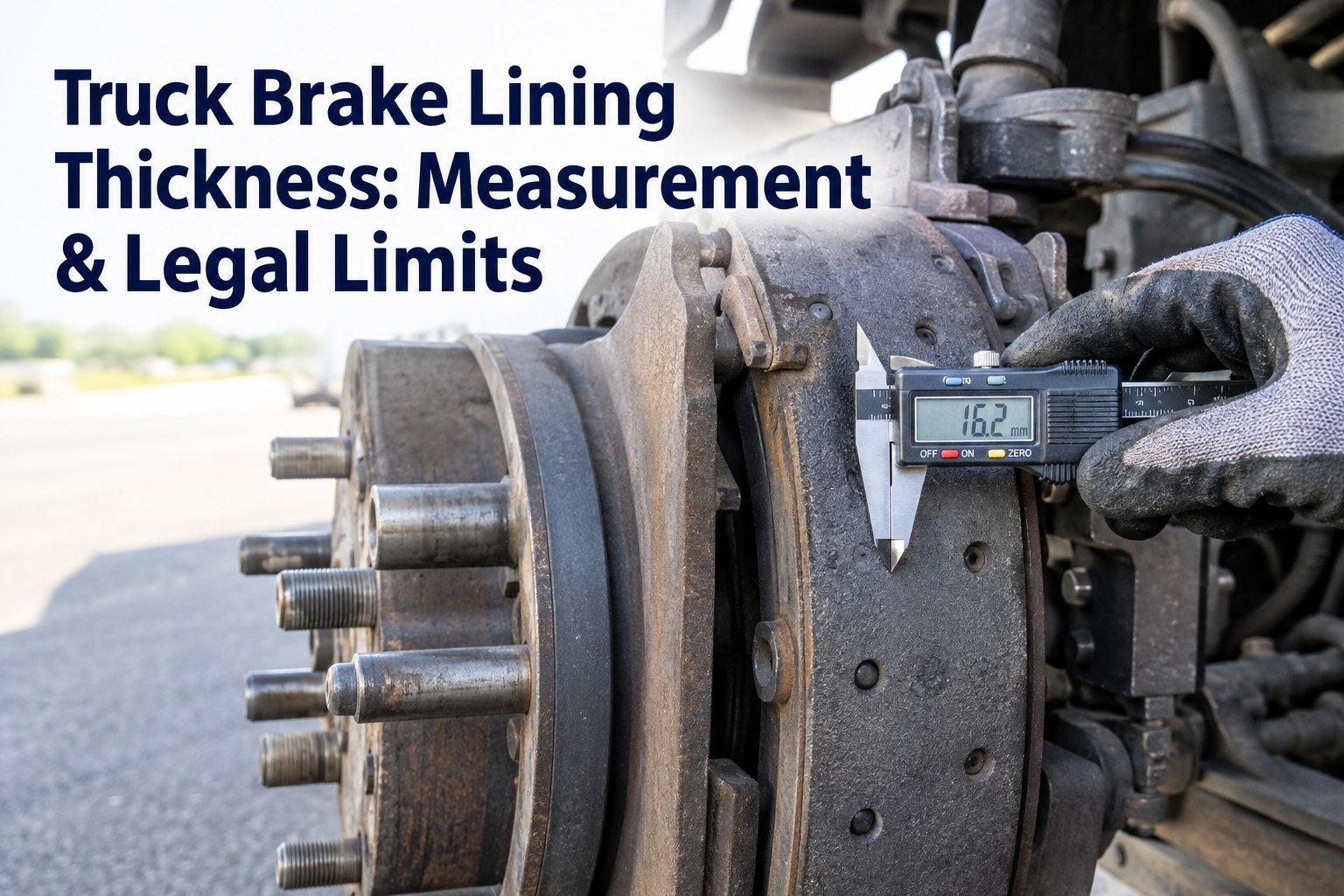
- Lining thickness at the shoe center
- Pushrod stroke against chamber limit
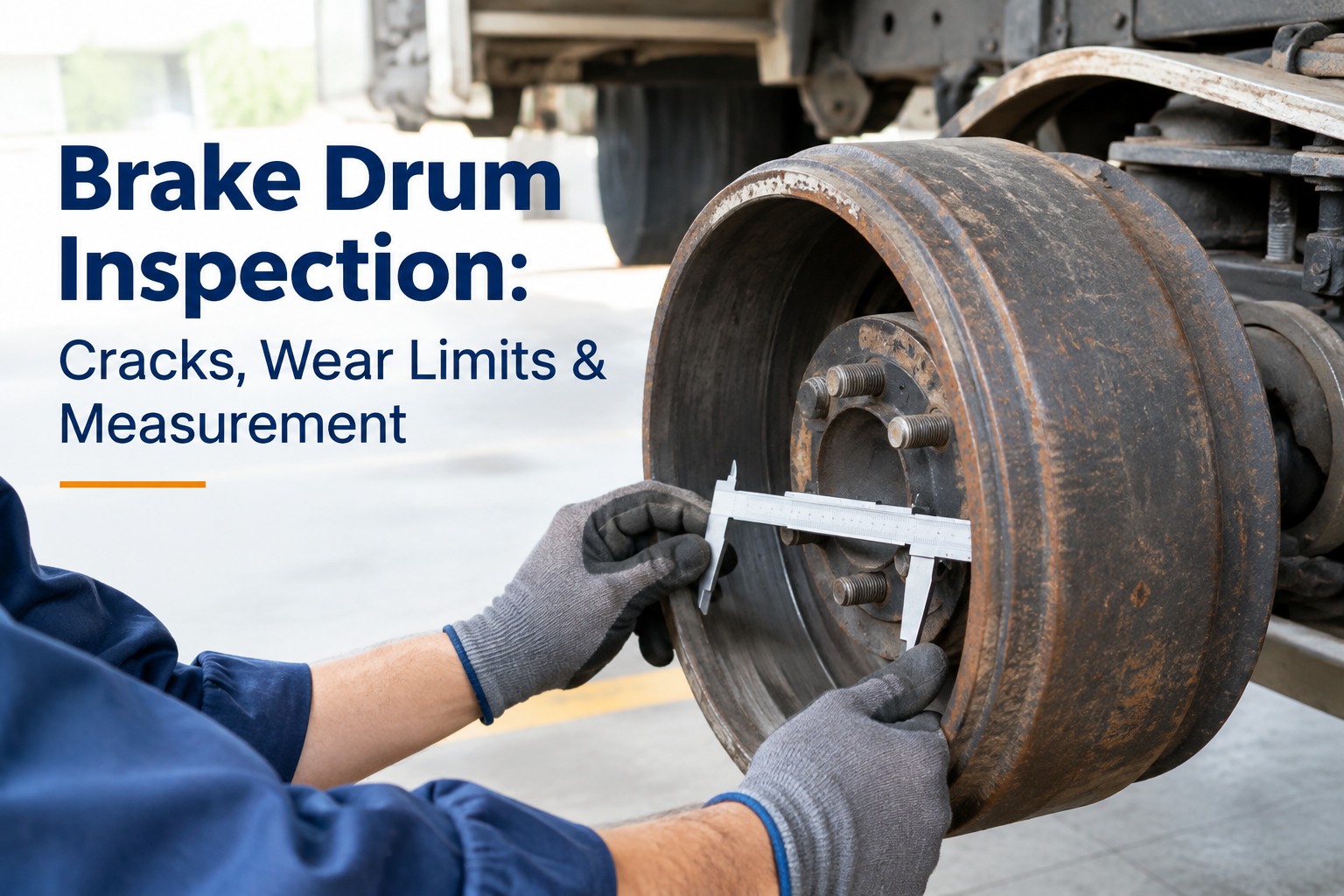
- Drum condition, cracks, heat checking
- Slack adjuster and S-cam
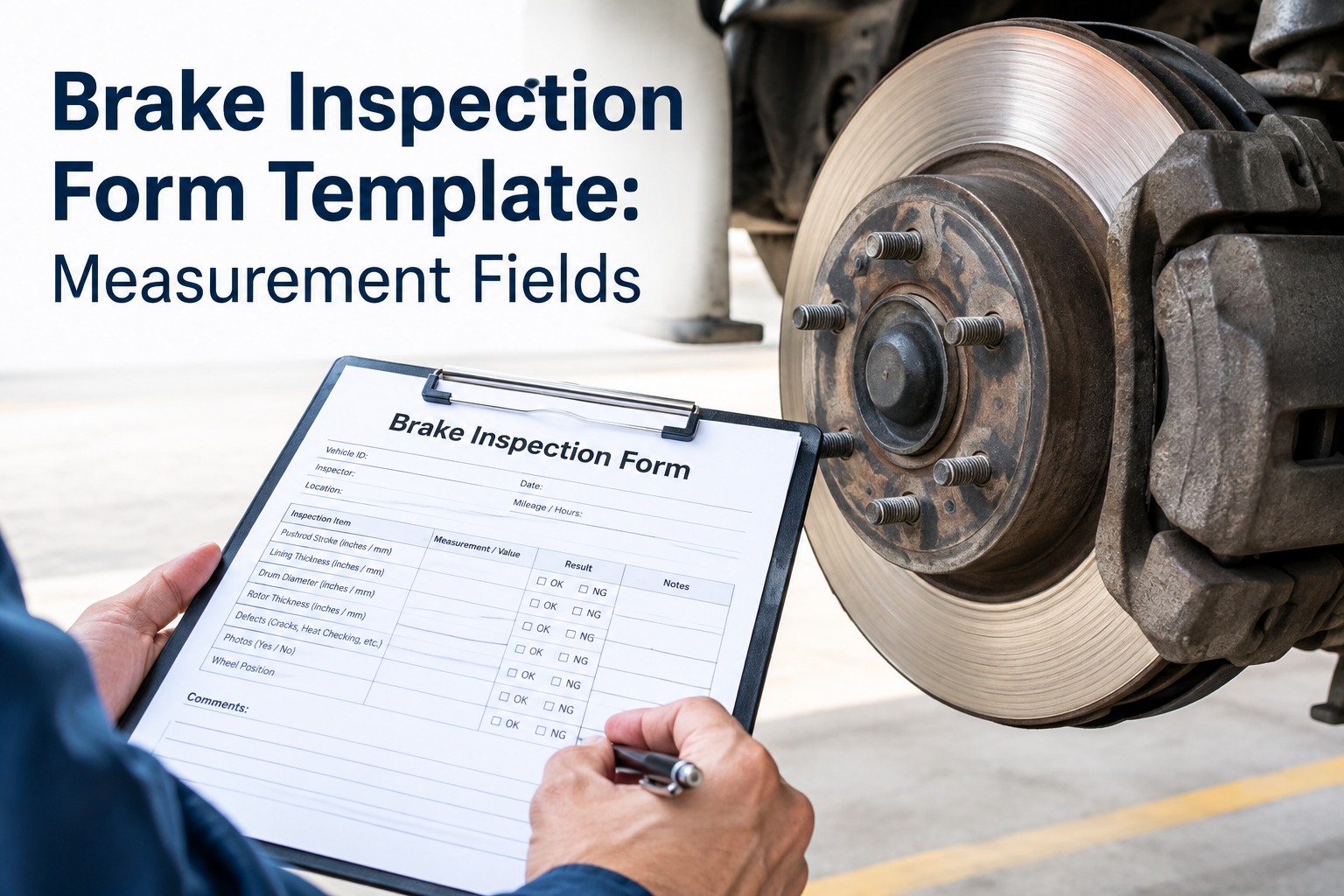
- Rotor thickness by micrometer + surface condition
- Pad thickness inner and outer
- Caliper slide / free movement
- Guide boots and pad hardware
A single tick-box "brakes: pass" can't hold both of these, and it certainly can't capture the measurements that matter for each. Configurable templates by brake type — with the right fields and the right limits for what's actually on that wheel-end — are what make a mixed-fleet inspection accurate instead of approximate. Start free and assign the right brake template per axle
From a fleet maintenance manager who switched to disc
When we started spec'ing air disc on the steer axles, my techs kept "failing" pads that were fine. They were reading uneven inner-outer wear as a bad pad and swapping them — and the wear came right back, because the caliper was sticking. Nobody was checking that the caliper actually slid, because on drums there's nothing like it.
Once we added the caliper-movement check and started logging inner and outer pad thickness separately, the picture changed completely. The uneven wear jumped out as a caliper flag, we fixed the guides, and pad life doubled on those wheel-ends. Disc brakes are better — but only if you inspect them like disc brakes, not like drums with a rotor.
Frequently asked questions
What is the minimum rotor thickness for a truck air disc brake?
There's no single universal number — the minimum (discard) thickness is set by the rotor or brake manufacturer and given in the service data for that model. Measure the rotor with a micrometer at its thinnest point and compare to that spec. At or below it, the rotor is replaced. Never work from a generic figure, since it varies by rotor.
What's the difference between heat checking and a crack on a rotor?
One is usually monitor-and-watch, the other is a replace. Light heat checking is fine surface crazing from normal heat cycling — generally acceptable and often machinable within limits. A crack is a definite line that can propagate, especially one reaching an edge or vent. Judge against the manufacturer's criteria: fine checking watches, a true crack replaces.
Why do air disc brake pads wear unevenly?
Almost always a caliper and guide problem, not the pads themselves. If the caliper can't slide freely, one pad does too much work — so inner-vs-outer wear differences point straight at a sticking caliper, worn guides, or torn boots letting grit in. That's why the caliper slide check is the ADB-specific test that explains wear patterns people misread as worn pads.
How do you inspect an air disc brake without removing the wheel?
A good deal can be done without pulling the wheel, using the right access points — viewing pad thickness through the caliper, checking rotor surface, and confirming caliper movement. But a complete inspection, an accurate rotor-thickness measurement, or a borderline reading often means removing the wheel. When access is limited or a reading is marginal, pull it.
Can I use the same inspection checklist for drum and air disc brakes?
No — using one generic checklist for both is a common source of missed defects on mixed fleets. Drum brakes measure drum diameter and check linings and hardware; air disc brakes measure rotor thickness, read inner-vs-outer pad wear, and test caliper slide — a check drums don't have. Each type needs its own template so every field on it actually applies.
Turn air disc brake inspection into measurable maintenance data
HVI runs a dedicated air disc brake template — rotor thickness, pad thickness inner and outer, caliper movement — captures each measurement by wheel position against the manufacturer's limit, attaches borescope photos of rotor and pad condition, routes defects into corrective work, and trends wear across inspections. Different brake type, different template, one inspection history you can plan and defend from. Live on your fleet in days.
No credit card · Configurable templates by brake type · Ready on day one