Ask ten drivers the minimum brake lining thickness and most will say "an eighth of an inch." They're often wrong — and that wrong number is how a truck gets grounded at a scale it should have passed, or passes an inspection it should have failed. The truth is there's no single brake lining thickness limit: it changes with the axle, the brake type, how the lining is built, and which rule you're held to. See lining measured right against the correct limit
There is no universal brake lining minimum
"1/8 inch" is one real limit — for certain disc brakes. Apply it to an air drum brake on a non-steering axle and you'll pass a lining that's below its 1/4-inch limit. The right minimum depends on four things, and getting any of them wrong means measuring against the wrong line.
Get those four right and lining inspection becomes simple and defensible. Get them wrong and you're guessing. Below is the limits matrix that actually applies, how to measure at the right point, the riveted-versus-bonded distinction, the defects that fail a lining regardless of thickness, and how tracking wear turns replacement into a plan instead of a surprise.
Brake lining thickness limits by axle and brake type
This is the table that decides pass or fail — and the one most people replace with a single remembered number. These figures come from the federal operating limits in 49 CFR 393.47. Note the last column: the periodic-inspection reject threshold can be stricter than the operating minimum, which trips up fleets preparing for annual inspection. Swipe on mobile to see every column.
| Brake / axle | Lining build | Operating minimum (393.47) | Watch for |
|---|---|---|---|
| Air drum — steering axle | Continuous strip | 3/16" (4.8 mm) at shoe center | Annual inspection rejects at 1/4" |
| Air drum — steering axle | Two pads | 1/4" (6.4 mm) at shoe center | Or to wear indicator if marked |
| Air drum — non-steering | Any | 1/4" (6.4 mm) at shoe center | Or to wear indicator if marked |
| Air disc — any axle | Pad | 1/8" (3.2 mm) | The "eighth inch" everyone quotes |
| Hydraulic or electric | Any | 1/16" (1.6 mm) | Different rule entirely |
The trap in row one is worth sitting with: a continuous-strip steering-axle air drum brake at 7/32" is above the 3/16" operating minimum but below the 1/4" that periodic inspection requires — legal to operate, but a fail on the annual. When prepping for inspection, use the stricter threshold. And always confirm against the manufacturer's service limit, which can call for replacement sooner. Book a demo to see the right limit auto-display per wheel position
Measuring at the right point — and what "thickness" means
A lining measurement is only as good as where you take it. Measure the wrong spot and a good number hides a worn edge, or a worn edge fails a lining with plenty of material left where it matters. Three rules keep it honest.
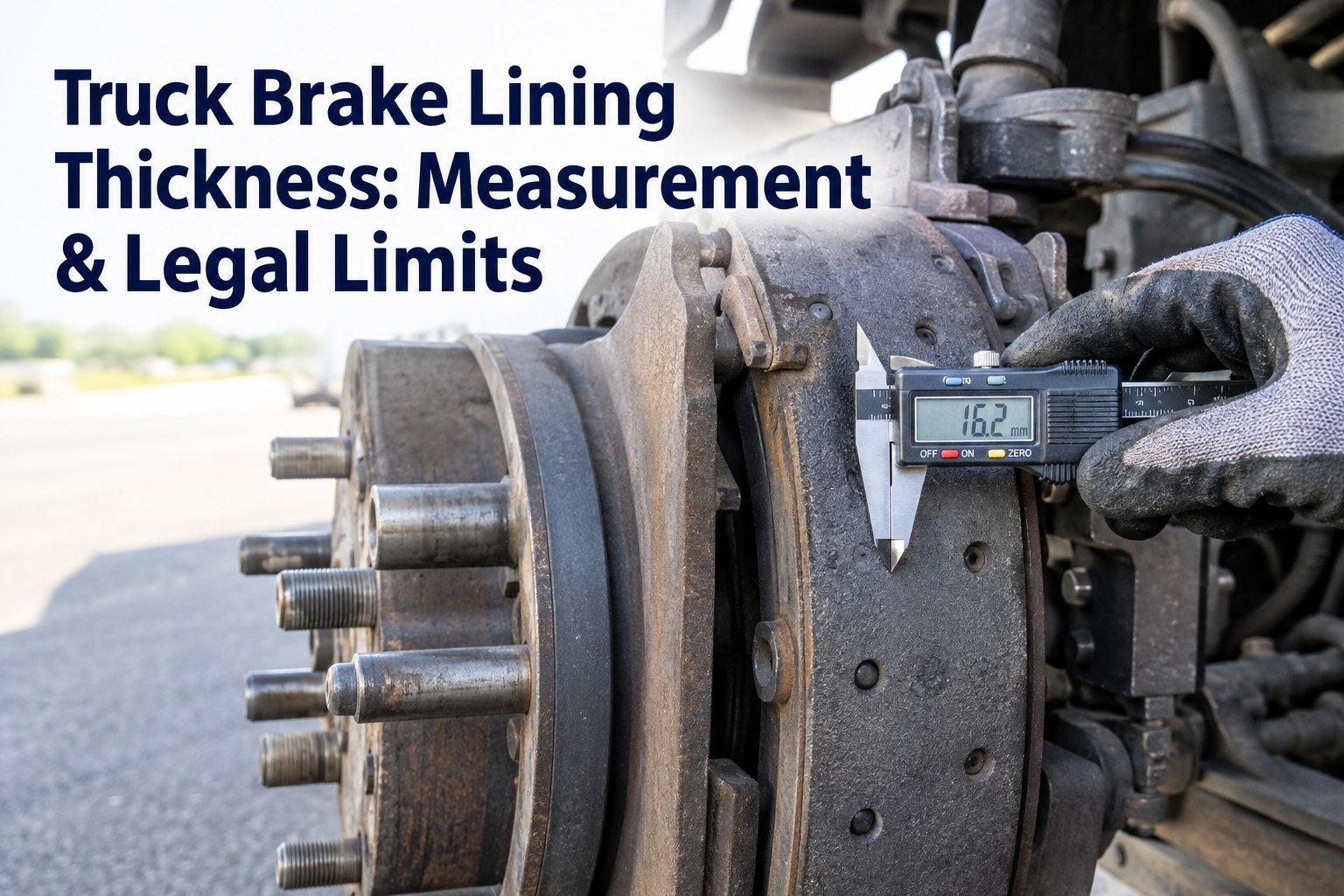
The limit is remaining friction material — not the combined thickness of lining plus the steel shoe behind it. On a riveted lining, what matters is the material above the rivet head, because once it's gone the rivet contacts the drum.
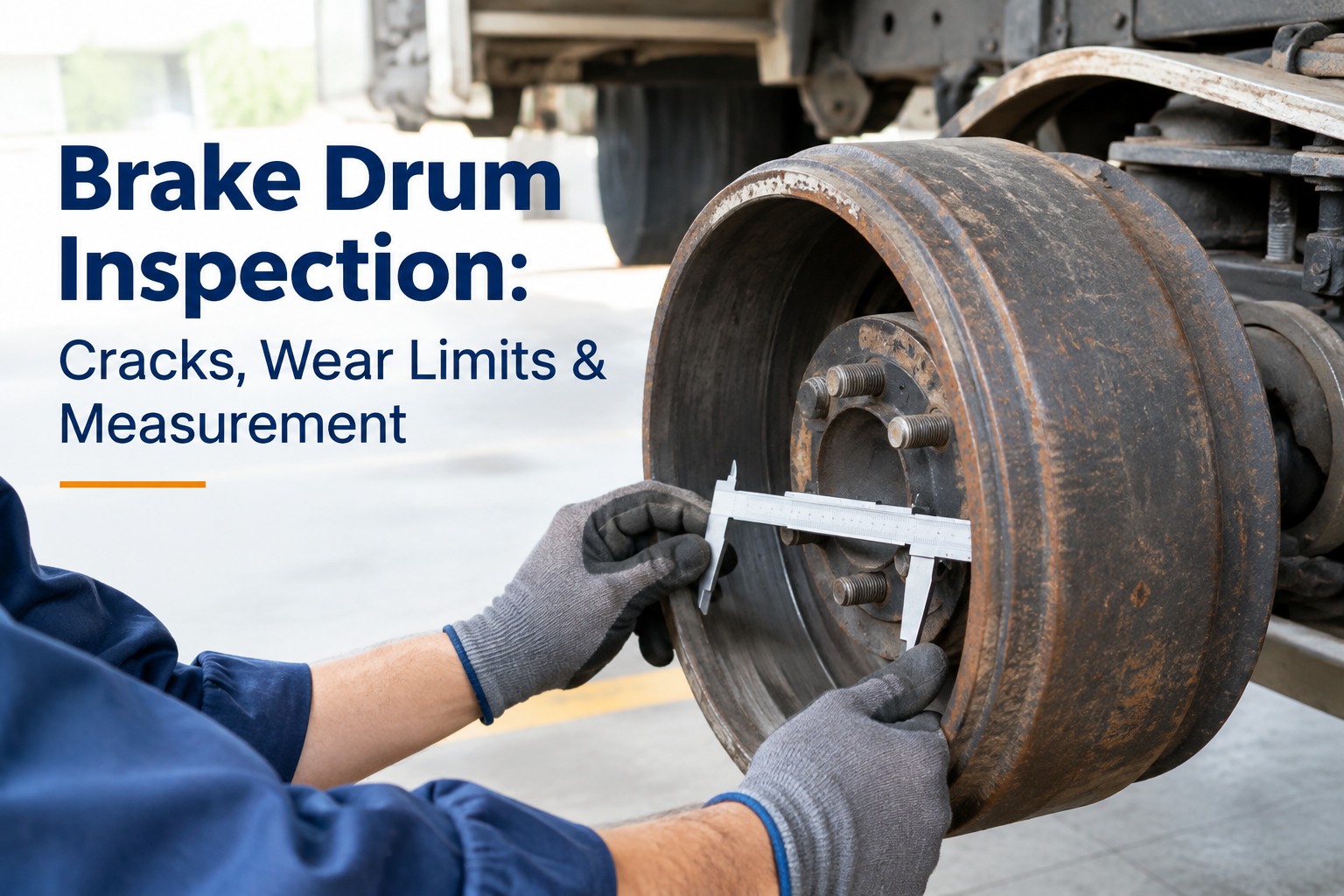
For drum brakes the regulation specifies the shoe center, but wear isn't always even. Check across the lining and read the thinnest point in the relevant zone — a tapered lining can be fine at center and gone at the edge.
An inspection slot or approved gauge works for many checks, but some conditions can't be judged reliably without removing the wheel. When access is limited or the reading is borderline, pull it. A guessed measurement isn't a measurement.
Safety note: brake and wheel work carries real hazards — chock the vehicle, follow lockout and manufacturer procedures, and treat spring brake chambers as stored energy. A borderline reading is a reason to inspect properly, not to round up. Book a demo to record lining thickness per wheel-end
Riveted vs bonded linings: why the measurement differs
How a lining is attached to the shoe changes what "worn out" means — and where you measure. Both wear the same way, but they reach their limit at different points, and the failure that ends each is different.
Friction material is fastened to the shoe with rivets set below the surface. The usable material is what sits above the rivet heads — once wear reaches them, the rivets contact the drum, scoring it and destroying braking. So the measurement that matters is material remaining above the rivet head, and a lining worn to expose a rivet is a defect regardless of thickness elsewhere.
Friction material is adhered directly to the shoe with no rivets, so the full thickness is usable down to the bond line. That's a wear advantage — more usable material for the same starting thickness — but it means watching for the bond itself failing: separation or a lining lifting from the shoe is a failure even with material left. Measure remaining friction material against the applicable limit.
Either way, the number on the gauge is only half the check. A riveted lining near its rivets and a bonded lining starting to separate are both replacements, and neither is caught by thickness alone. Book a demo to log lining type alongside the measurement
Defects that fail a lining no matter how thick it is
A lining can measure well above its limit and still be out of service. These conditions replace a lining on the spot — and several also point to a deeper problem worth chasing before the new lining suffers the same fate.
Contamination
Oil, grease, or brake fluid on the friction surface fails the lining regardless of thickness — contaminated friction material can't grip. It also tells you something's leaking: a wheel seal, a hub, a hydraulic line. Fix the source or the new lining contaminates too.
Cracks & voids
A crack or void visible on the lining edge beyond the allowed limit, or a crack past the allowed length, is a defect. Cracking often signals overheating — from dragging brakes, imbalance, or excessive stroke — so a cracked lining is a symptom as much as a fault.
Chunking & missing material
A missing segment that exposes a rivet or bolt when viewed from the edge is a defect, as is a loose lining segment that moves. Chunking points to heat, contamination, or a friction material that's failed — not just normal wear.
Separation
On a bonded lining, material lifting or separating from the shoe is a failure even with thickness to spare. On any lining, separation means the assembly can't be trusted to apply evenly — replace it and inspect the shoe.
The pattern across all four: the defect is often a messenger. Contamination means a leak, cracking and chunking mean heat, and heat usually means a foundation-brake or balance problem upstream. Replacing the lining without reading the message just resets the clock. Start free and photo-document lining defects against the asset
The brake lining go/no-go checklist
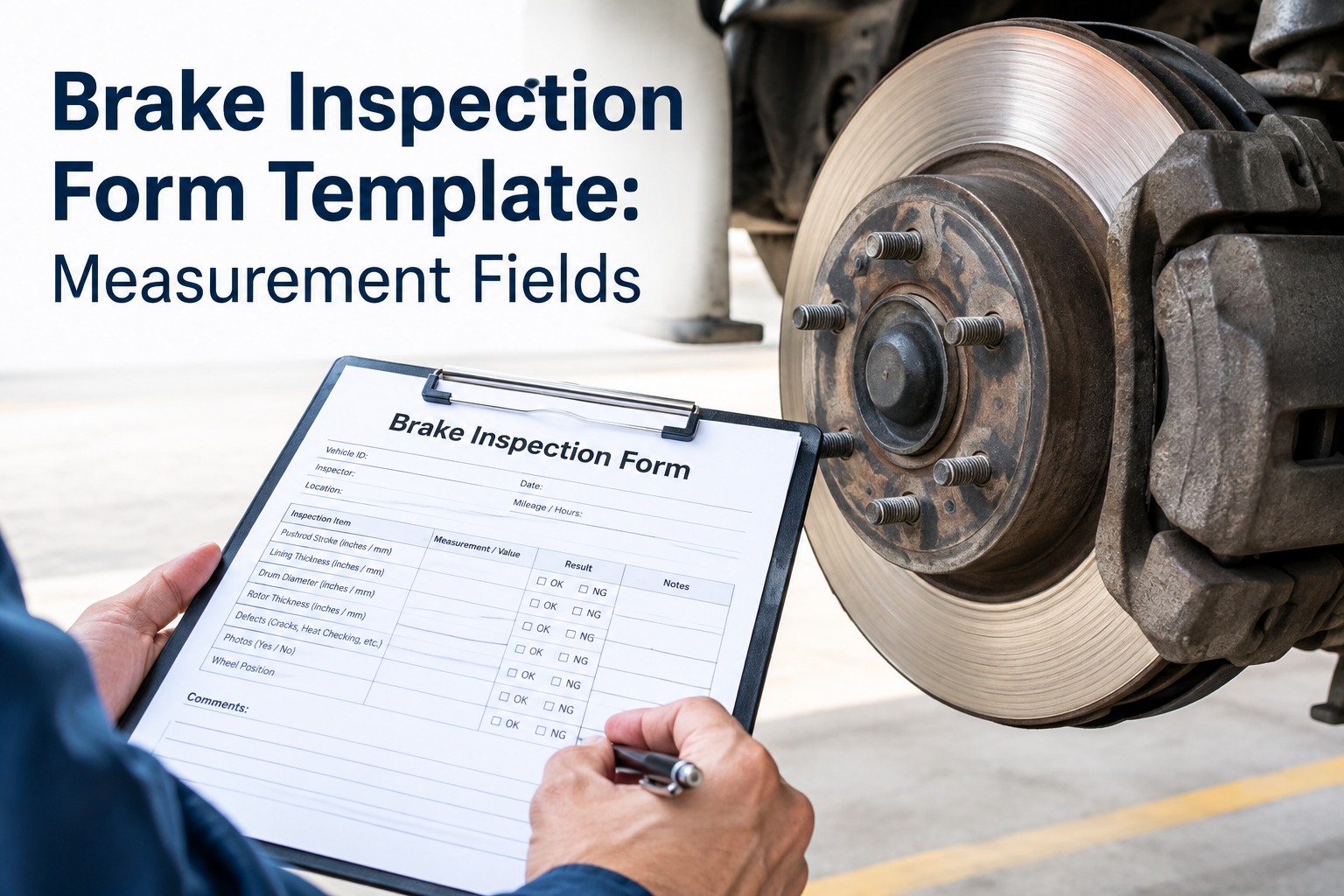
This is the check that turns "an eighth of an inch" into the right call for the actual brake in front of you — the measurement plus the defects that fail a lining no matter how thick it is. Use this brake lining checklist online free, so every reading lands against the limit that applies to that axle and build.
Wear patterns and trending: from tick-box to plan
A single lining measurement tells you where you are today. The same measurement taken at the same wheel position every service tells you where you're headed — and that's the difference between planning a brake job and being surprised by one. Wear patterns carry their own diagnosis, too.
That's the whole shift: from a lining check that produces a checkmark to one that produces data you can trend, defend, and plan around. The measurement was always there — capturing it is what makes it useful. Book a demo to trend lining wear across inspections
From a maintenance manager who stopped guessing at replacement
We used to replace linings on a mileage rule — same interval for the whole fleet. Problem was, some trucks were pulling steep grades loaded and some ran flat and empty, and we were either scrapping good material or catching a corner at metal-to-metal. The mileage number was a guess dressed up as a policy.
Once techs recorded actual thickness by wheel position every PM, the wear rates were all over the map — and obvious. Now I know which units need linings next month and which have a season left. And the uneven-wear flags caught two trucks with a balance problem we'd have paid for twice. The measurement was always there; we just weren't writing it down.
Frequently asked questions
What is the minimum brake lining thickness for a truck?
There isn't a single universal number — that's the most common misconception. The minimum depends on the axle, the brake type, and whether you're applying an operating minimum or a stricter roadside inspection reject limit. Federal criteria set out different thresholds by lining build (continuous strip vs pads) and position. Always measure against the specific limit that applies, not "an eighth of an inch."
Where exactly do you measure brake lining thickness?
You measure the remaining friction material only — not the combined thickness of the lining plus the steel shoe behind it. Measure at the thinnest point of the friction material, because linings wear unevenly and it's the thinnest spot that governs. Reading the whole stack, or an average, overstates what's left and is exactly how a lining gets run past its limit.
What's the difference between riveted and bonded brake linings?
It's how the friction material attaches to the shoe, and it changes usable life and the measurement. Riveted linings can only wear down to the rivet heads — go past and the rivets score the drum — so their usable limit is higher. Bonded linings can wear closer to the shoe. Know which build you're measuring so you apply the right limit.
Does contaminated brake lining need to be replaced even if it's thick?
Yes. Oil, grease, or brake fluid contamination of the friction material requires replacement regardless of remaining thickness — a contaminated lining can't generate reliable friction and may grab or fade. Thickness is irrelevant once the material is soaked. Find the source of the contamination too (a leaking seal or hub), or the new lining will contaminate the same way.
How does tracking lining thickness help plan brake replacement?
Because one measurement only tells you today's condition, while a series at the same wheel position over successive services reveals the wear rate. Rate is what lets you forecast when a lining will reach its limit and schedule the replacement into a planned window — instead of finding it at a roadside inspection or replacing early and wasting life.
Turn brake lining checks into measurable maintenance data
HVI captures lining thickness by wheel position, flags each reading against the correct limit for that axle and brake type, attaches photos of contamination and cracking, routes defects into corrective work, and trends wear across inspections — so replacement is a planned decision backed by a defensible record, not a pass/fail guess. Live on your fleet in days.
No credit card · Measurement capture by wheel position · Ready on day one