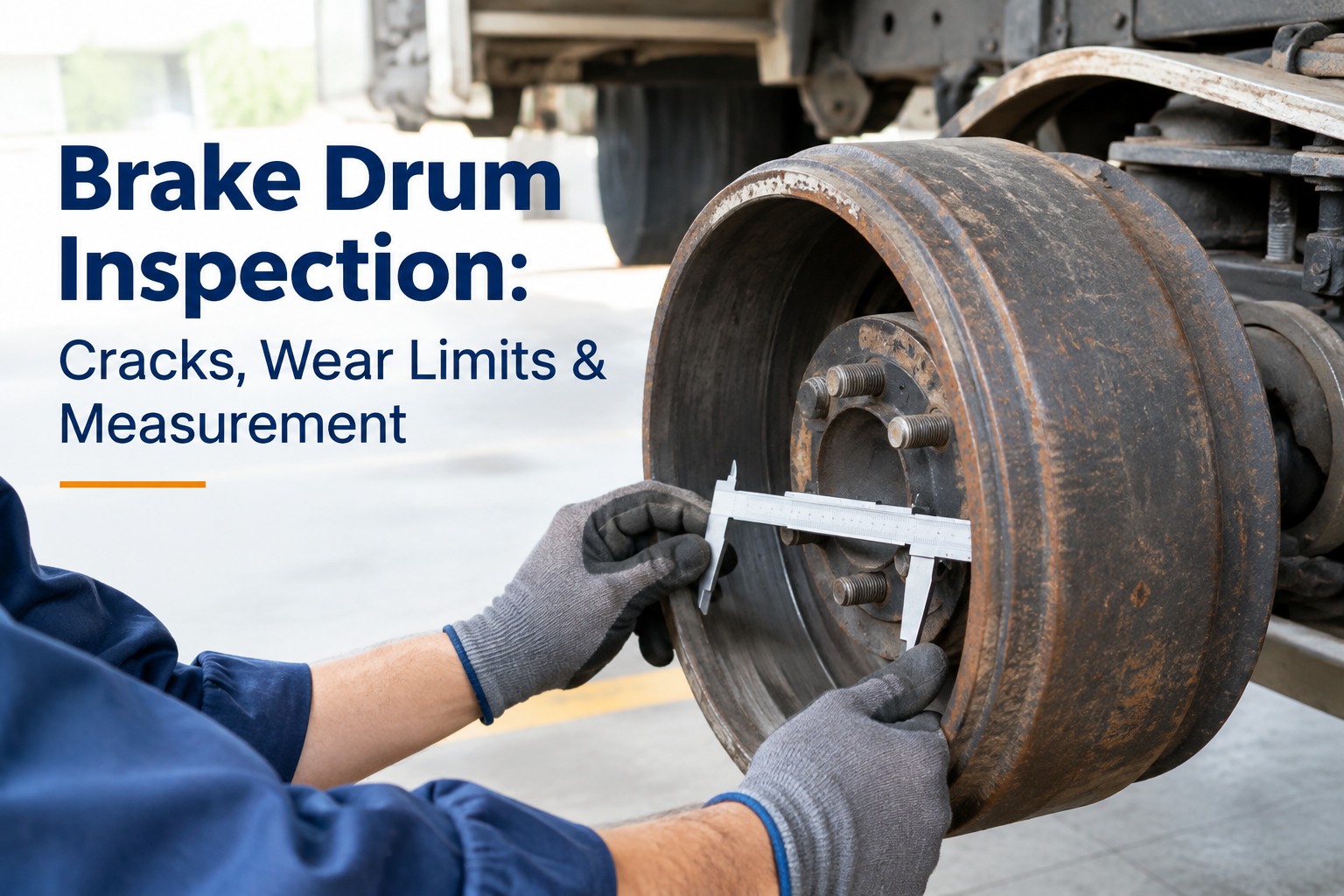
A brake drum can look rough and still be perfectly serviceable — or look almost clean and be scrap. That's the trap. Fine web-like heat checking is normal and doesn't fail a drum, while a single hairline crack through the wall means replace it now, no measurement needed. And a drum that looks fine can still be worn past the discard diameter stamped right on it. A real brake drum inspection reads two things at once: surface condition and dimension. See both captured against the stamped limit
A drum inspection is condition AND dimension — not one or the other
A drum can pass one track and fail the other, so both have to be checked every time. Judge the surface by eye and touch against the manufacturer's condition criteria; judge the size with a gauge against the discard diameter. Neither one alone tells you the drum is good.
Get both tracks right and the drum decision is clear-cut. Below is the condition line that trips up most technicians — heat checking versus a real crack — why the surface conditions are usually telling you about the rest of the brake, how to measure diameter against the right limit, and when a drum is done being machined and has to be replaced.
Heat checking vs cracks: the distinction that matters most
This is the single most misjudged call in drum inspection, and getting it wrong costs you either a good drum or a dangerous one. Both look like lines on the friction surface. One is a normal wear characteristic; the other is an immediate replacement. Here's how to tell them apart.
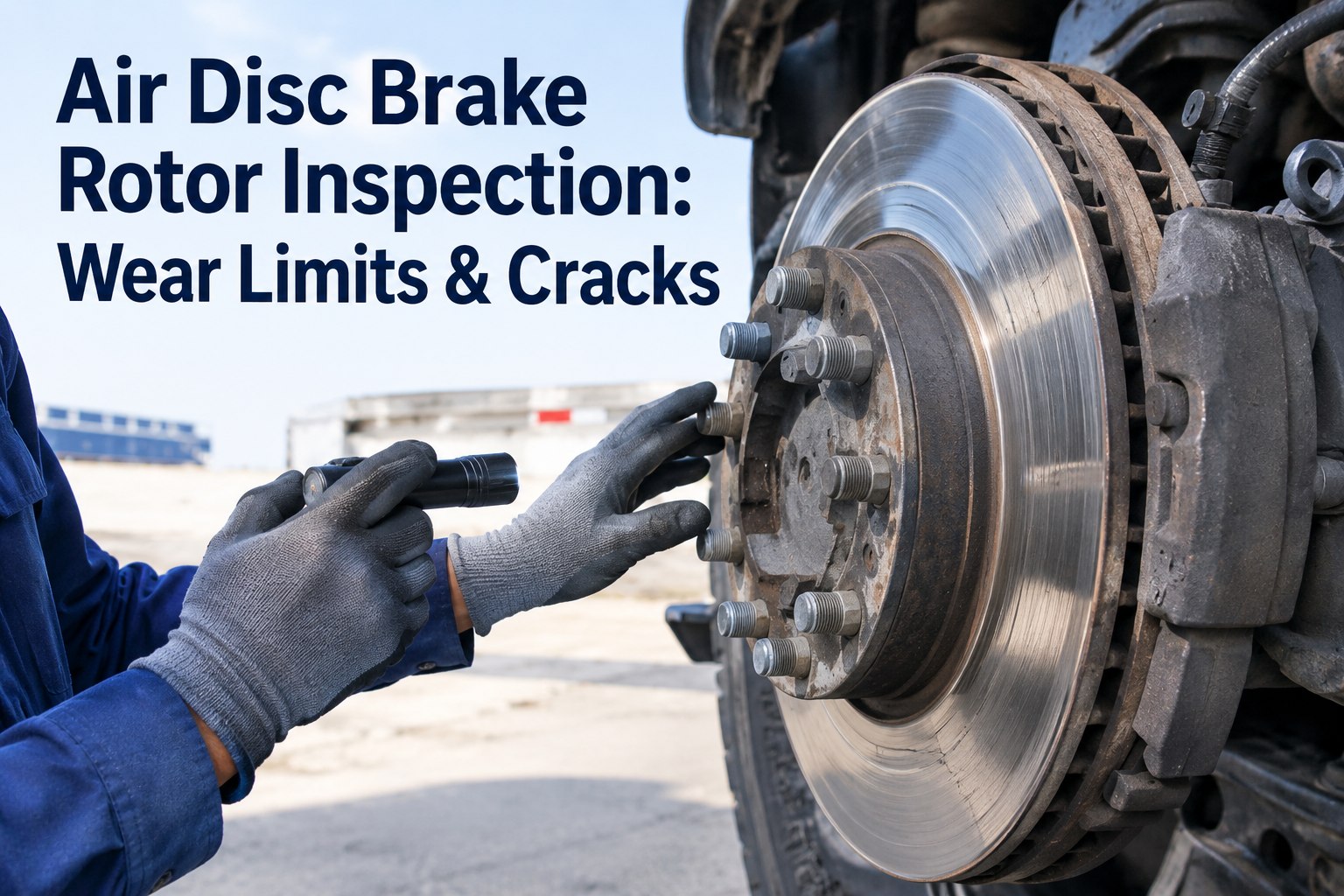
Numerous short, fine, hairline lines on the braking surface, caused by the normal heating and cooling of the drum in service. Per TMC guidance, heat checking does not impair brake performance, and the drum can stay in service as long as it's within the specified dimensional tolerance. Evenly distributed fine checking is expected wear, not a defect.
A crack that extends through the drum wall — or one running from the open face toward the back plate — is an immediate replacement and an out-of-service condition. No measurement required. Small cracks lead to big ones, often deeper in the casting than they appear, and a cracked drum can shatter under a hard stop.
The grey zone worth watching: heat checking that's localized in one area rather than evenly spread, or checking combined with localized discolouration, is a warning sign — and over time, heat checks can develop into true cracks depending on lining wear, brake balance, and how hard the brakes are worked. Even, fine, all-over checking is fine; concentrated checking is a clue. Book a demo to photo-document drum surface condition per wheel
Surface conditions are messages about the whole brake
Here's the mindset shift that separates a parts-swapper from a diagnostician: most drum surface damage isn't really about the drum. It's the drum reporting a problem somewhere else in the brake — a dragging shoe, an imbalance, a lining left too long. Replace the drum without reading the message and the new one goes the same way.
Hard spots (martensite)
Shiny, raised, hardened spots on the friction surface, formed when one area is rapidly heated to around 1400°F. They come from an imbalanced brake, a dragging brake, or an out-of-round drum heating one spot far more than the rest. They fail the drum — and tell you to inspect the rest of the brake for the cause.
Blue or purple discolouration
Overheating that has changed the metal's properties. The surface hardens, friction drops, and the drum can no longer do its job even if the diameter still measures within limit. Bluing means the drum ran far too hot — replace it, and find out why that wheel-end overheated.
Deep grooving & scoring
Deep scoring means the shoes wore through and metal contacted metal — usually a lining left in service too long. Run a fingernail across the surface; clear grooves you can feel mean machining or replacement. It's often an automatic out-of-service condition and a sign your lining interval slipped.
Out-of-round & bell-mouthing
An out-of-round drum causes a pulsating pedal; bell-mouthing — the open end wider than the closed end — causes poor feel and rapid, uneven shoe wear. Both are dimensional distortions a single diameter reading can miss, which is why the gauge goes in more than one spot.
The pattern across all four: the drum condition is a symptom, and the cause is usually a foundation-brake or balance problem upstream. A drum that keeps failing on the same wheel-end is pointing at something you haven't fixed yet. Book a demo to link drum damage to a corrective action Book a demo to see recurring drum damage flagged by wheel position
Measuring drum diameter against the right limit
The dimensional half of the inspection is where "looks fine" gets a truck grounded. A drum worn past its maximum diameter is out of service regardless of how good the surface looks — because a worn drum has less metal, less thermal mass, and less structural strength, so it fades faster and can fail under a panic stop. And the limit isn't a guess: it's cast right into the drum.
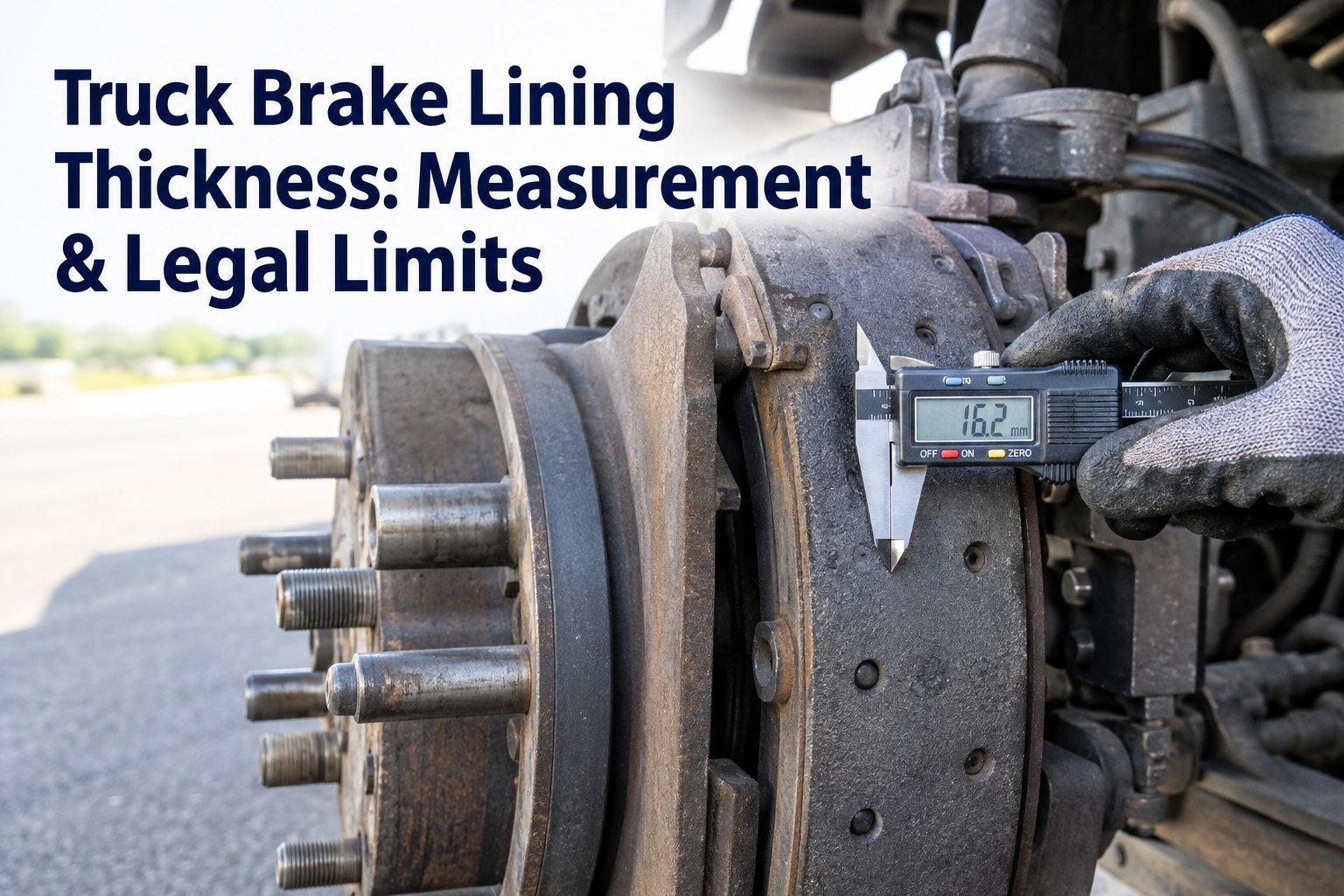
Every drum has its maximum allowable inside diameter — the discard limit — cast or stamped on it by the manufacturer. There is no universal number; a Type X drum from one maker differs from another. Read the stamp on the actual drum, or the manufacturer's service data. Reach or exceed it and the drum must be replaced.
Use a proper brake drum gauge or micrometer, not a tape measure. Measure the inside diameter in several places — outer edge, middle, and inner edge of the friction surface, and around the drum — because drums wear unevenly. Measuring one spot can miss out-of-round or bell-mouthing, and you want the most-worn area.
A visual inspection can never establish a dimensional limit — that's the whole point of the gauge. On many configurations a complete inspection, or a reliable measurement, means removing the wheel or drum; when access is limited or a reading is borderline, pull it.
Safety first: chock the vehicle, follow manufacturer and lockout procedures, and treat brake components as potentially hot and mechanically loaded. Book a demo to record diameter readings against the stamped limit
Machine or replace? Where the drum's life ends
A drum with minor imperfections can sometimes be resurfaced on a brake lathe to restore a clean friction surface — but machining removes metal and moves the drum closer to its discard diameter, and some conditions can't be machined out at all. Knowing where that line is prevents both wasted drums and unsafe ones.
The machining limit and the discard diameter are two different manufacturer numbers, and both matter: you machine to the first, and you retire at the second. Confirm both from the drum's service data rather than assuming, and record which drums have been machined so you know how much life is left. Start free and track machined drums and remaining life
The brake drum go/no-go checklist
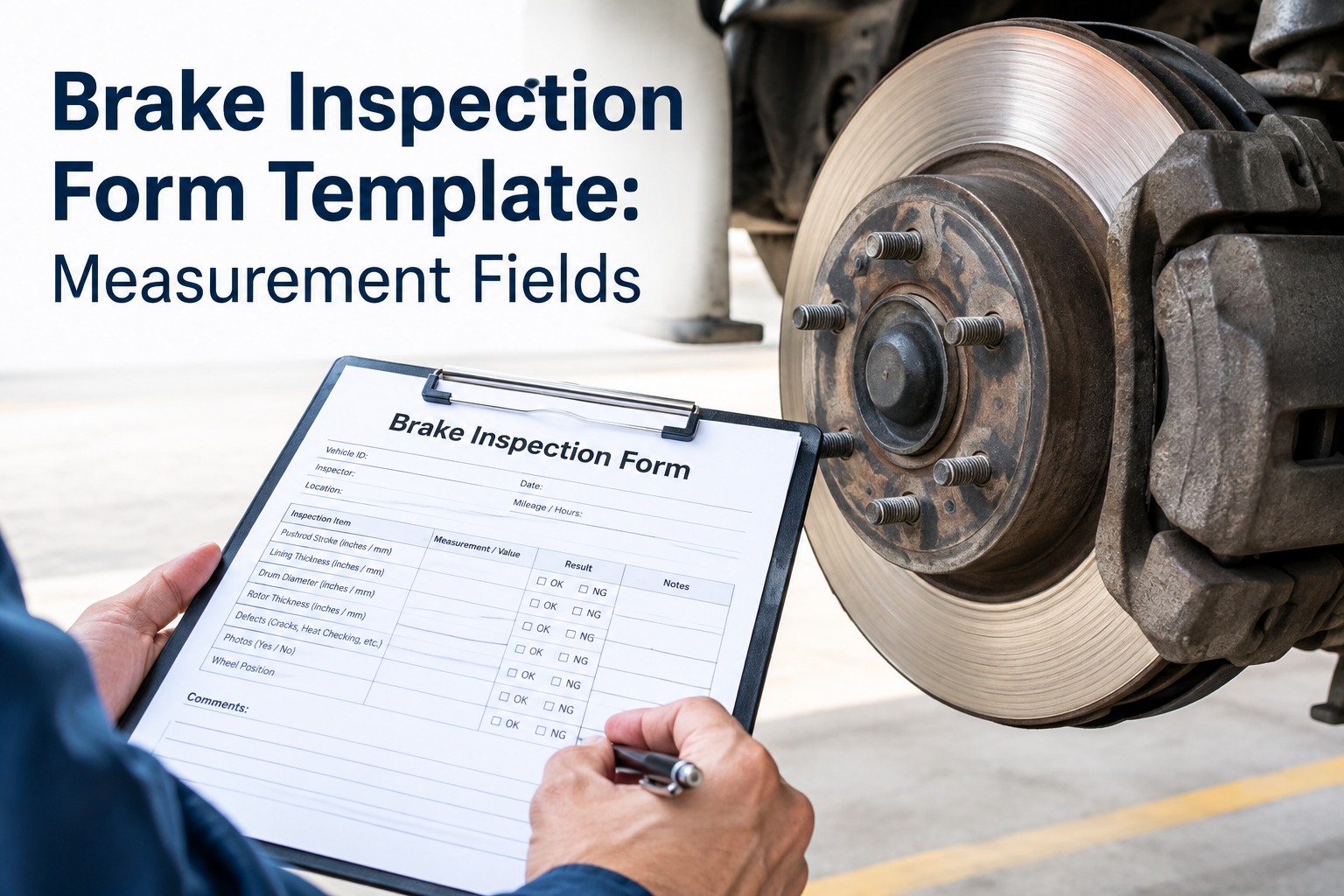
This is the check that turns "looks about right" into a defensible call, item by item — each one either a measurement against a limit or a defect that decides the drum's fate. Use this drum inspection checklist online free, so every reading lands against the stamped limit and every defect routes to a decision.
From a shop foreman who stopped condemning good drums
For years my younger techs would see heat checking on a drum and want to replace it. Perfectly good drums, within diameter, fine even checking — scrapped because the surface "looked cracked." We were throwing money in the bin. Heat checking is normal; you just have to know the difference between that and a real crack running to the edge.
The flip side bit us too — a drum that looked clean but measured past its limit went back on, and we caught it at a roadside instead of in the bay. Now the rule is simple: every drum gets a photo and a gauge reading against the stamped max, logged by wheel position. We stopped condemning good drums and stopped running worn ones. The measurement settled the argument.
Frequently asked questions
What is the maximum wear limit for a truck brake drum?
There's no single universal number — the maximum allowable inside diameter, called the discard diameter, is set by the manufacturer and stamped on the drum itself. A machining limit (tighter than the discard diameter) is also given. The rule is simple: measure the inside diameter with a gauge, compare it to the stamped discard limit, and replace at or before it. Never work from a generic figure.
Is heat checking on a brake drum a problem?
Usually not, if it's the normal kind. Heat checking is numerous short, fine hairline lines on the braking surface from normal heat-and-cool cycling — it's generally acceptable and can often be machined smooth. The concern is when it becomes severe, deep, or crosses into cracks. Judge it against the manufacturer's condition criteria, not by eye alone.
When does a cracked brake drum have to be replaced?
Immediately, without any measurement — a genuine crack in a brake drum is an automatic replacement and an out-of-service condition. A drum can be within its diameter limit and still be scrap if it's cracked through the wall. No machining, no monitoring: a cracked drum comes out of service now, because it can fail catastrophically under braking heat and load.
What causes hard spots and bluing on a brake drum?
Both are heat damage telling you something is wrong elsewhere in the brake. Hard spots (raised, hardened areas) come from extreme localized heat and cause pulsation and uneven wear. Bluing is discoloration from overheating that changes the metal. Both mean investigate the cause — a dragging brake, imbalance, or overload — and both typically mean the drum is replaced, not machined.
Can a brake drum be machined, or does it need replacing?
It depends on the condition and two separate manufacturer numbers. Minor imperfections — light pitting, minor scoring — can often be machined, but only if the finished diameter stays within the machining limit (tighter than the discard limit). Cracks, severe heat checking, hard spots, bluing, or a drum already at discard cannot be machined and must be replaced.
Turn brake drum inspection into measurable maintenance data
HVI captures drum diameter by wheel position against the correct discard limit, attaches photos of surface condition, flags cracks and heat damage by severity, routes replacements into corrective work, and trends wear across inspections — so a good drum isn't scrapped for normal heat checking and a worn one isn't caught at a roadside. Different wheel-ends, one defensible history you can plan from. Live on your fleet in days.
No credit card · Measurement capture by wheel position · Ready on day one