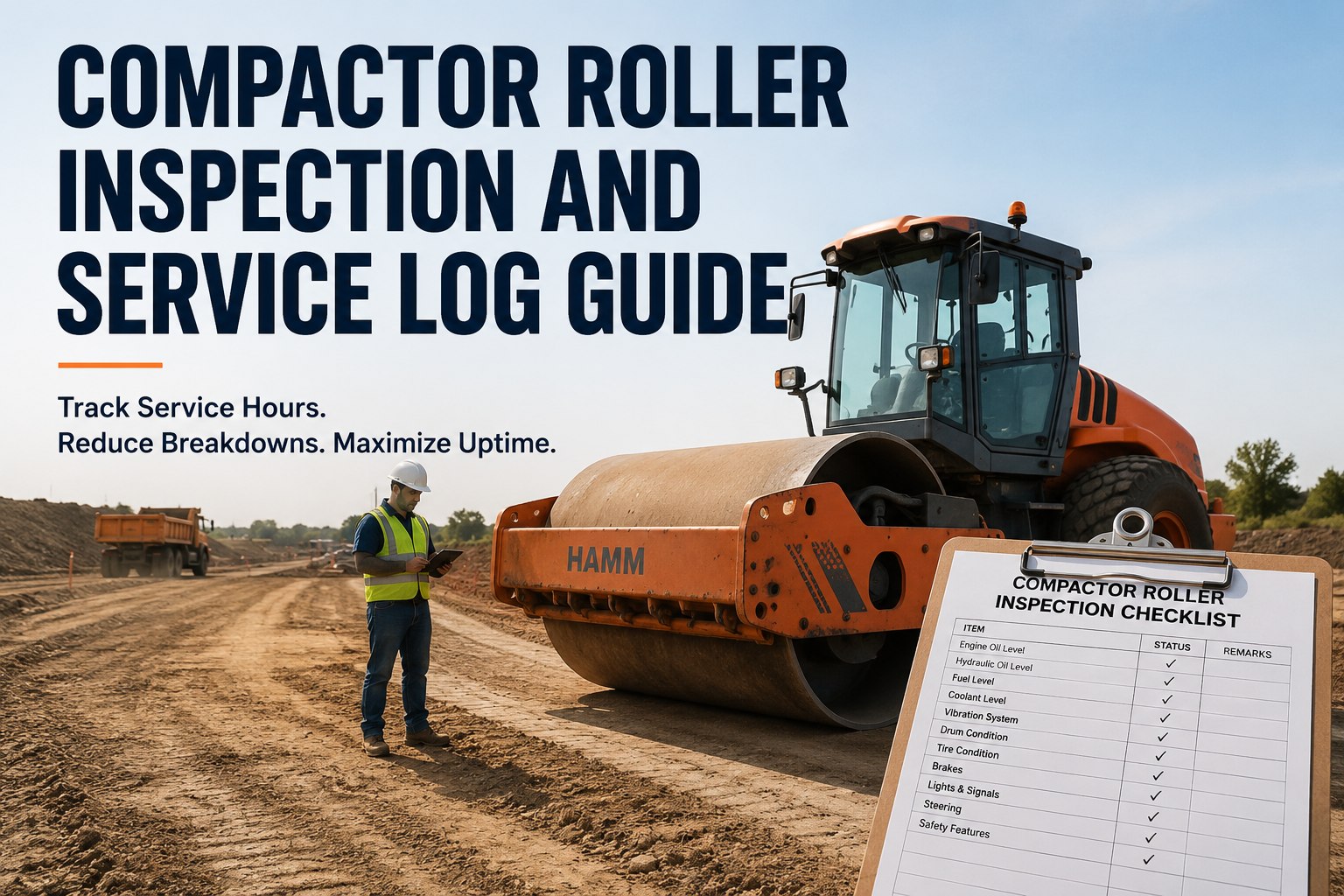
A roller is the machine that makes or breaks the job — literally. It's the last pass on the mat and the foundation under everything else, so when a compactor goes down mid-shift on a fresh asphalt lay or an overnight mill-and-fill, you're not just losing a machine — you're jeopardizing the finished mat and risking serious fines if the road isn't open by morning. The frustrating part is that almost every roller failure is preventable and predictable, because the vibratory system runs on a clean, hour-based maintenance clock: drum buffers at 100 hours, vibration frequency at 500, exciter oil at 1,000, drive belt at 2,000. Miss those and the drum — the heart of the roller — wears out fast and expensively. The contractors who keep rollers running don't rely on memory; they run a daily pre-shift check and a service log that tracks every interval by operating hours, so a $200 belt never becomes a warped drum or a rejected mat. This guide breaks down roller maintenance by type, the vibratory-system intervals that actually matter, the daily service-log checklist, and how to track it all. book a 30-minute walkthrough to see it set up for your compaction fleet.
When the roller stops, the mat is at risk and the deadline is on the clock.
HVI tracks every roller's vibratory-system intervals by operating hours, runs the daily pre-shift check from a phone, captures defects with photos, turns them into work orders, and keeps a complete service log per machine — for vibratory, padfoot, and pneumatic rollers across your whole compaction fleet.
Why roller maintenance is different
A roller breakdown isn't just downtime — it threatens the quality of work already on the ground and the deadline ahead. That's what makes the maintenance log non-negotiable.
The mat is at stake
A roller down mid-pass on fresh asphalt jeopardizes the finished mat — uneven density means a surface that fails early and may have to be redone.
The deadline bites
On an overnight mill-and-fill, the road has to open by morning. A stopped roller risks missing that window — and the serious fines that come with it.
The drum is costly
The vibratory drum is the heart of the machine. Neglect the exciter and bearings and a cheap service item becomes a warped, expensive drum failure.
"That can be pretty tough, especially on fresh asphalt — you're jeopardizing your finished mat." A roller's vibratory system is mostly self-maintaining if you hit the intervals — and a fast track to a rejected mat if you don't. The whole game is tracking those hours and never missing one.
Three roller types, three jobs
A compaction fleet rarely runs one type. Each roller is built for a different material and pass — and while they share a maintenance core, each has its own watch points.
Smooth-drum vibratory
The asphalt and granular-soil workhorse, using vibration to drive out air voids. The exciter, drum bearings, and vibration frequency are the critical maintenance items — this is where the hour-based clock matters most.
Padfoot soil compactors
Raised pads knead cohesive soils like clay for deep compaction. Watch the pads for wear and packing, plus the same vibratory exciter and bearing items as a smooth drum.
Pneumatic-tire rollers
Rubber tires knead and seal finishing layers for a smooth surface. No vibratory system, so the watch points shift to tire pressure and condition, ballast, and the kneading action — pressure consistency is everything here.
A single blanket schedule can't serve a vibratory drum and a pneumatic tire roller — they wear on completely different items. sign up free and set type-specific service templates for every roller, or book a demo to see mixed-fleet roller tracking live.
The vibratory system: maintenance by the hour
This is the technical heart of roller maintenance. The vibratory system runs on a precise, hour-based clock — hit these intervals and the drum lasts; miss them and it doesn't.
Because the whole drum vibrates, hardware works loose — bolts around the exciter housing need re-tightening regularly and missing hardware replaced. The simplest early warning is free: listen for abnormal sounds when vibration is active. HVI fires each of these intervals automatically off the roller's real operating hours, so none slips.
The daily service-log checklist
The hour-based intervals prevent the big failures; the daily pre-shift check catches what would strand a shift. Quick checks before and after every shift — logged, not remembered.
Fluids & filters
Engine oil, coolant, hydraulic level, and fuel checked; air filter replaced if the indicator light is on. The five-minute check that prevents the costly seize.
Drum & exciter
Check exciter oil level, listen for abnormal sounds under vibration, and inspect the drum surface and scrapers for damage and asphalt buildup.
Brakes & hydraulics
Service and parking brakes both engaging smoothly; hydraulics checked for leaks and sluggish response — critical on inclines and public sites.
Belts & hoses
Fan, drive, and vibratory belts plus hydraulic hoses checked for cracks or fraying — replace immediately, since belt failure means major downtime.
Water spray system
On asphalt rollers, spray nozzles flushed and unclogged and tank topped — a clogged nozzle lets the drum pick up and tear the mat.
Safety & tires
ROPS, seatbelt, lights, and backup alarm confirmed; on pneumatic rollers, tire pressure checked for the consistency that even compaction depends on.
A daily check on paper gets rubber-stamped or lost in the dust before it ever helps. sign up free and run the pre-shift roller check on a phone with photo capture on defects.
Why the service log itself pays off
The log isn't just a maintenance tool — it's an asset. A complete, documented service history protects the machine's value, its warranty, and your standing on the job.
Higher resale value
Documented maintenance fetches a higher resale price — a buyer pays more for a roller with a complete, provable service history than an identical machine without one.
Warranty protection
OEM warranties hinge on proof that scheduled service was performed with the right parts and fluids. A gap in the log can be a denied claim.
Proof on the job
A digital log shows exactly which machine was serviced when — the record that backs up safety and quality on inspected public-works sites.
A paper service log lives in a binder in a truck cab and is one coffee spill from gone. A digital log per machine is permanent, searchable, and exportable — and it travels with the asset. HVI keeps a complete, timestamped service history on every roller automatically.
Paper logs vs. HVI
Both technically keep a service log. Only one fires intervals off real hours, makes the daily check stick, and keeps a history that survives the jobsite and follows the machine.
Paper / reactive
- Hour-based intervals tracked by memory, often missed
- One blanket schedule across every roller type
- Daily checks rubber-stamped or lost in the dust
- Exciter oil and belt changes slip past due
- Service history scattered across truck-cab binders
- No proof of maintenance at resale or warranty claim
With HVI software
- Every interval fired automatically off real hours
- Type-specific templates for vibratory, padfoot & pneumatic
- Pre-shift checks on a phone with photo capture
- Exciter, belt & bearing service flagged before due
- Complete service log per machine, always current
- Documented history for resale, warranty & audits
of self-maintaining uptime. Hamm's own product team calls the vibratory roller a self-maintaining system if you change the belt around 2,000 hours and hit the other intervals — meaning the difference between a reliable roller and a warped-drum breakdown is simply tracking the hours. HVI does that tracking automatically, keeps the service log complete, and protects both the mat and the machine's resale value.
Frequently asked questions
What are the maintenance intervals for a vibratory roller's drum system?
The vibratory system runs on a clean, hour-based clock. Articulation joints and pivot points should be greased every 50–100 hours, drum buffers checked every 100 hours, fuel and air filters replaced every 200–250 hours, drum vibration frequency checked every 500 hours, the vibratory-system (exciter) oil changed every 1,000 hours, and the vibratory drive belt replaced around every 2,000 hours. Because the whole drum vibrates, hardware also works loose, so bolts around the exciter housing need periodic re-tightening and any missing hardware replaced. A free early warning is to simply listen for abnormal sounds when vibration is active. Hitting these intervals is what keeps the drum — the heart of the roller — alive; missing them is a fast track to expensive drum and bearing failure. HVI's inspection and maintenance software fires each interval automatically off the roller's real operating hours. sign up free and never miss a drum-service interval.
How are vibratory, padfoot, and pneumatic rollers maintained differently?
They share a core but diverge on the watch points. Smooth-drum vibratory rollers are all about the vibratory system — exciter, drum bearings, and vibration frequency on the hour-based clock. Padfoot soil compactors add attention to the raised pads, which wear and pack with cohesive soil like clay, on top of the same exciter and bearing maintenance. Pneumatic-tire rollers have no vibratory system at all, so the focus shifts entirely to tire pressure and condition, ballast, and the kneading action — and consistent tire pressure is what determines even compaction on finishing layers. Running one blanket schedule across all three either over-services the simple machine or under-services the complex one. HVI's inspection and maintenance software lets you set type-specific service templates per roller, all fired by each machine's hours.
What should a daily roller pre-shift inspection cover?
Quick checks before and after each shift catch what would strand a day. Cover fluids and filters — engine oil, coolant, hydraulic level, and fuel, replacing the air filter if the indicator is on. Check the drum and exciter — exciter oil level, abnormal sounds under vibration, and the drum surface and scrapers for damage or asphalt buildup. Test that service and parking brakes both engage smoothly and that hydraulics show no leaks or sluggish response, which matters on inclines. Inspect fan, drive, and vibratory belts plus hydraulic hoses for cracks or fraying. On asphalt rollers, flush the water spray nozzles so a clog doesn't let the drum tear the mat. And confirm safety items — ROPS, seatbelt, lights, alarm — plus tire pressure on pneumatic units. HVI's inspection and maintenance software runs this full check on a phone with photo capture and logs it to the machine's history. book a demo to see the digital pre-shift roller check.
Why does a documented service log matter for a roller?
A complete service log is an asset, not just paperwork. It directly raises resale value — a buyer pays more for a roller with a provable maintenance history than an identical machine without one. It protects your OEM warranty, because warranty claims hinge on proof that scheduled service was actually performed with the correct parts and fluids, and a gap in the record can mean a denied claim. And on inspected public-works sites, the log is the record that backs up your safety and quality compliance. The problem with paper logs is that they live in a binder in a truck cab and are one coffee spill or lost folder away from gone. A digital log per machine is permanent, searchable, exportable, and travels with the asset when it's sold. HVI's inspection and maintenance software keeps a complete, timestamped service history on every roller automatically. sign up free and build a service log that protects your asset.
How does HVI help track compactor and roller maintenance?
HVI is an inspection and maintenance software platform built for the way compaction fleets actually run. It fires every vibratory-system interval — articulation greasing, drum buffers, filters, vibration frequency, exciter oil, and drive belt — automatically off each roller's real operating hours, with type-specific templates for vibratory, padfoot, and pneumatic machines so each is serviced correctly. Operators run the daily pre-shift check from a phone or tablet with mandatory photo capture on defects, and it works offline on the jobsite, syncing when back in range. Every defect auto-creates a tracked work order so nothing gets forgotten between the field and the shop, and the platform keeps a complete, timestamped service log per machine — the documented history that protects resale value, warranty claims, and site compliance. Because it's the same platform running your whole fleet, the inspection, the defect, and the repair all connect. book a demo and we'll map the software onto your compaction fleet on the call.
Protect the mat, protect the machine, keep a service log that follows the asset.
HVI fires every roller's vibratory-system interval by operating hours, runs the daily pre-shift check on a phone, captures defects with photos, turns them into work orders, and keeps a complete service log per machine for vibratory, padfoot, and pneumatic rollers. Stop losing shifts to a warped drum and stop losing resale value to a binder you can't find.
No credit card required · Live in under two weeks · Hour-based interval tracking + daily pre-shift checks + per-machine service logs in one platform