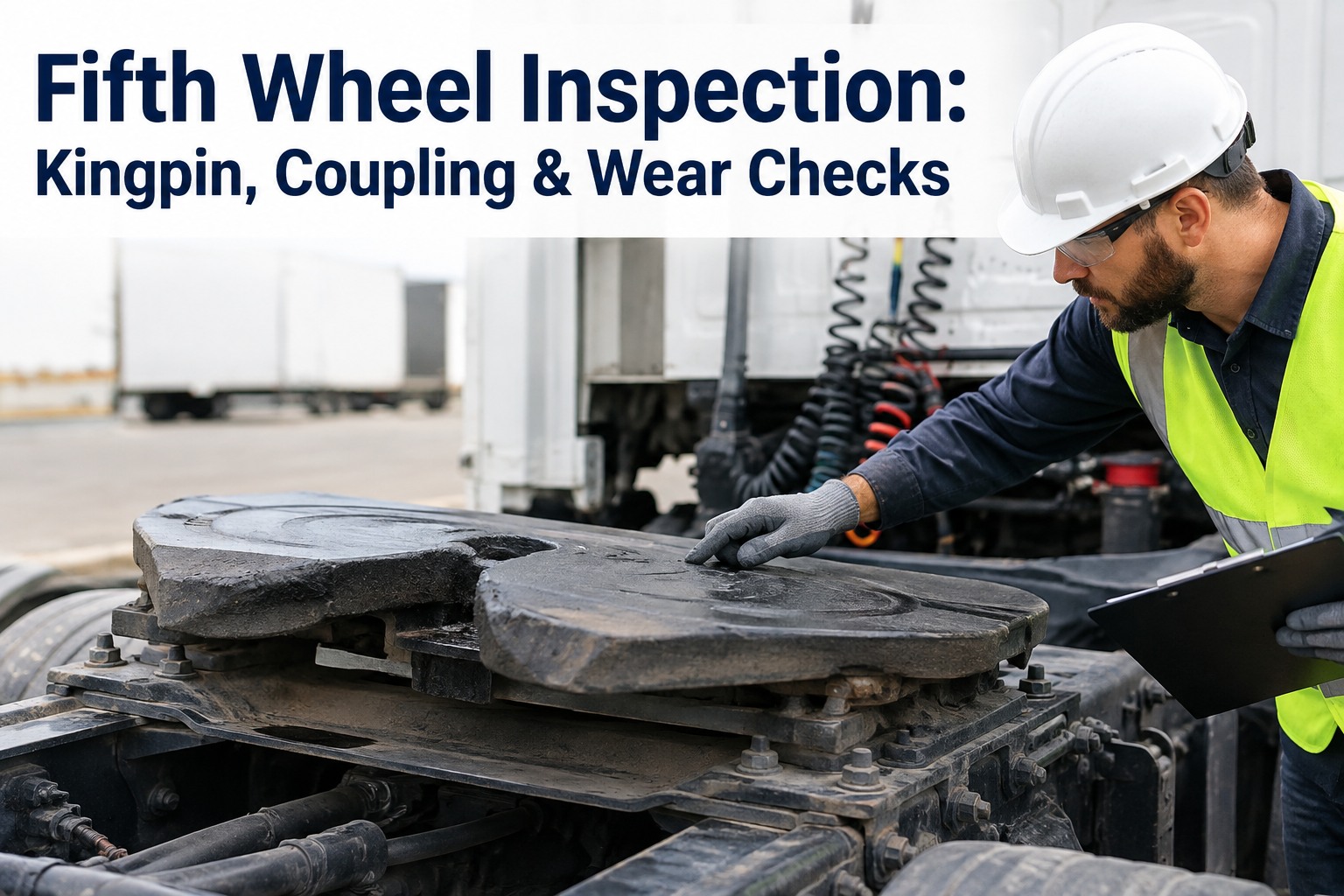
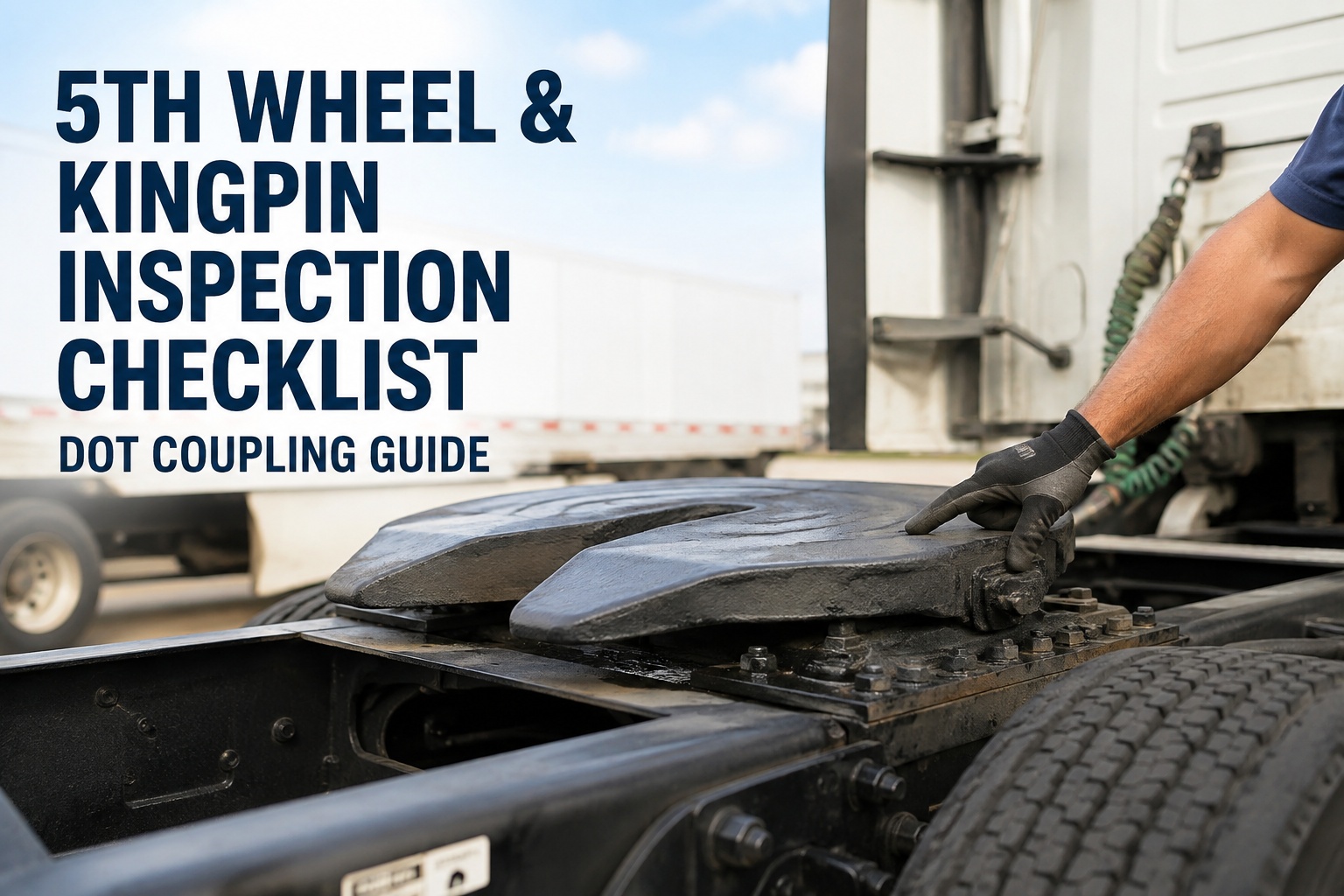
A driver couples up, does a tug test, feels it hold, and pulls out. Forty minutes later a DOT inspector gauges the kingpin and finds a gap over half an inch — the tug test passed, the coupling didn't. That's a coupling device violation, and it puts the rig out of service on the spot, no grace period.
Where Coupling Device Violations Actually Happen
Select a coupling type to see exactly what an out-of-service condition looks like at roadside.
This guide covers what a real fifth wheel inspection has to measure beyond a tug test, the pintle and drawbar criteria that get skipped, the safety chain requirement that trips up experienced drivers and how a coupling device violation gets caught before dispatch instead of at the scale house.
The thresholds below follow FMCSA's North American Standard Out-of-Service Criteria, built on 49 CFR 393.70 and SAE J2228. Fleets running into Canada should note that Canada's National Safety Code Standard 11 mirrors the same coupling and kingpin wear criteria — but always confirm against the current provincial enforcement bulletin if you run cross-border regularly.
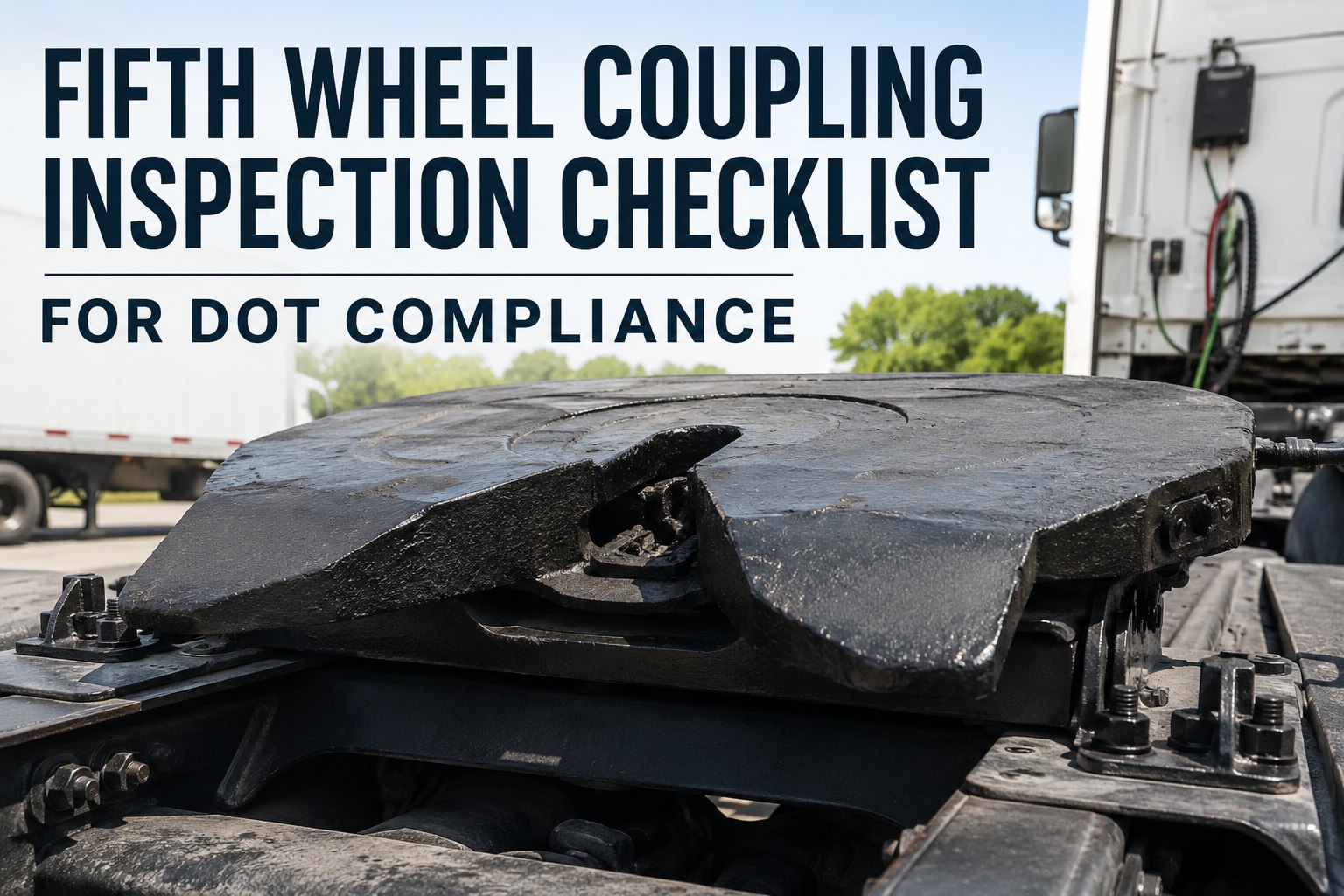
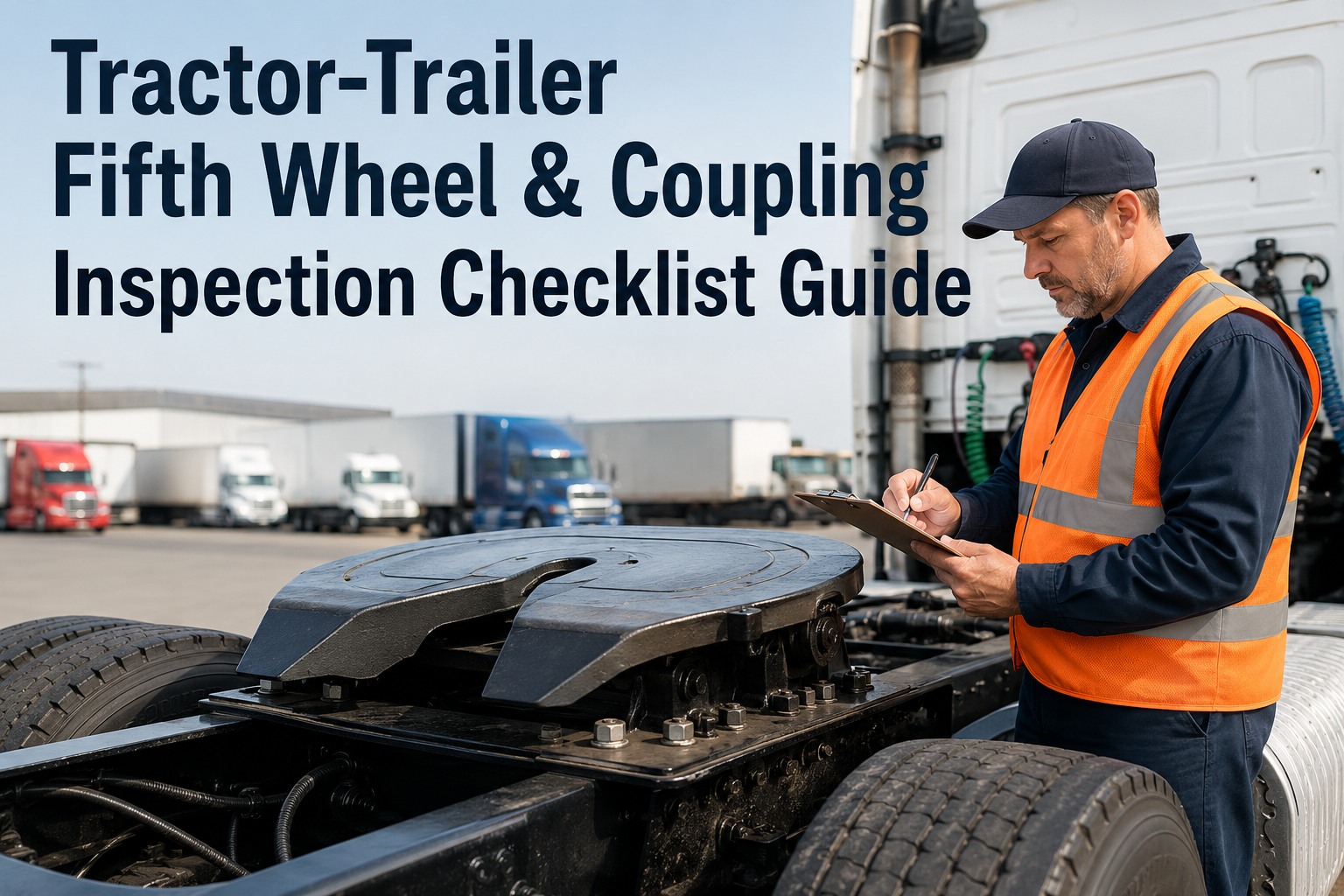
The 5 Measurements That Decide Fifth Wheel OOS or Nota fifth wheel inspection violation is rarely one big failure — it's one of these five
A fifth wheel can look coupled, pass a tug test, and still fail every one of these. Coupling defects are treated as immediate out-of-service conditions under FMCSA's North American Standard criteria, because a separation at highway speed isn't a repair-later problem.
Kingpin wear
0.125" maxSAE J2228 caps wear on a 2" or 2-7/8" kingpin at 1/8 inch in any direction. Beyond that, the jaws can't grip securely no matter how tight the lock feels.
Kingpin-to-jaw gap
1/2" maxMeasured with a kingpin gauge, jaws fully closed. A visual check will not catch this — it needs the gauge, every time, not just when something feels loose.
Horn section wear
20% max reductionThe horn is the wear surface the jaws close against. Past 20% section loss, coupled or not, it's an out-of-service condition on sight for a trained inspector.
Cracks — any size
Zero toleranceAny crack in the kingpin itself is immediate OOS regardless of length. On the plate or weld, a crack through 20% or more of the original weld or parent metal is OOS.
Mounting bolts
All present, tightA missing or ineffective fastener — one that turns by hand or normal wrench pressure — is an out-of-service condition even if the fifth wheel itself checks out clean.
See these five measurements captured as required fields on every coupling inspection, not left to memory.
Why a Tug Test Alone Isn't a Coupling Security Checkit's the right first step — just not the last one
The tug test is real and it matters: the driver pulls forward against the trailer's locked brakes to confirm the coupling holds under load, catching a coupling that never engaged. What it doesn't catch is wear — a kingpin at 0.100" of wear passes a tug test every time and is still weeks from an out-of-service gauge reading. A coupling security check needs all five steps below, not just the first.
Skip steps two and three and the tug test is doing all the work it was never meant to do alone. See all five steps built into one guided coupling inspection instead of a driver's memory and a hopeful pull.
Pintle Hook & Drawbar Inspection: A Different Set of Criterianot a fifth wheel with a different shape — its own failure modes
Pintle hook and drawbar combinations show up constantly on converter dollies, full trailers, and municipal or utility fleets, and they get inspected with less rigor because they look simpler. They're not simpler — they fail differently.
A pintle inspection that skips the drawbar eye measurement is the most common gap — the hook looks fine while the eye it holds has worn into an oval. When that eye separates under load, the trailer swings free on whatever safety chains are left, which is exactly why the backup chain requirement isn't optional. See pintle and drawbar checks built as their own template, not a shortened fifth wheel form.
Safety Chain Requirements Drivers Miss Mostthe backup device only works if it's actually installed correctly
Safety chains exist for the moment the primary coupling fails — and under 49 CFR 393.71, that backup system has its own rules, not just "make sure there are chains." A chain that's present but wrongly rated, run straight instead of crossed, or dragging on the road is still a violation, even though from ten feet away it looks like the box got checked.
Combined rating exceeds GVWR
Chain capacity has to cover the full weight of the towed unit, not just look heavy-duty.
Crossed under the coupler
Crossing forms a cradle that catches the tongue if the coupling separates, instead of letting it drop to the road.
No improvised links
Wire, cable clamps, or a bent hook standing in for a rated chain link is a defect, not a fix.
Slack within limits
Enough slack for the full turning radius, not so much the chain drags or slaps the ground on turns.
A safety chain check takes under a minute and it's the last line of defense if everything else on this page fails at once. Add a rating and cross-pattern check to your coupling checklist online free.
The Pre-Dispatch Coupling Checklistevery OOS trigger on this page, in one pass before the unit moves
Every coupling violation on this page comes down to a short set of measured, yes/no checks. Keep this at the hookup, so a borderline reading gets flagged in the yard instead of gauged at the scale.
- Kingpin wear gauged under 0.125"
- Kingpin-to-jaw gap gauged under 1/2"
- Horn wear under 20%; no cracks anywhere
- All mounting bolts present and tight
- Latch secured; drawbar eye not worn oversize
- Retaining pin present, not zip-tied
- Chains crossed, rated above GVWR, no improvised links
- Any failed item photographed and logged
Eight checks between the hookup and an out-of-service order. Use this coupling checklist online free, with gauge readings and photo evidence on every item.
From a compliance officer who stopped losing units to coupling defects
We had two coupling device violations in one quarter, both on trailers that had passed a driver's tug test that same morning. Neither driver did anything wrong — the tug test just isn't built to catch kingpin wear. Once we added a gauge measurement and a required photo to the coupling item on our pre-trip template, the number went to zero. The photo turned out to matter almost as much as the gauge — it's the difference between "I checked it" and being able to show exactly what the inspector saw six months later.
How HVI Prevents a Coupling Device Violation Before Dispatch
HVI builds coupling checks into the pre-trip and periodic templates as measurement fields, not open-ended checkboxes — kingpin wear, jaw gap, horn condition, and chain rating each get a required entry with a pass/fail threshold, so a borderline reading gets flagged instead of rounded up to "looks fine." That matters most at the exact moment a basic checklist fails: when the number is close to the limit and the person filling out the form is in a hurry.
Every failed item can carry a photo automatically, timestamped and tied to the unit, driver, and inspection — the evidence a compliance officer needs six months later during an audit. And because coupling defects are safety-critical, a failed reading can trigger a dispatch lock: the unit stays flagged until it's cleared and re-inspected. See the dispatch lock and photo evidence working together. The same history feeds into safety management reporting, so a coupling trend shows up before it becomes a pattern.
Frequently Asked Questions
What counts as a coupling device violation?
A coupling device violation is any condition on a fifth wheel, pintle hook, drawbar, or safety chain setup that fails FMCSA's North American Standard out-of-service criteria — for example, jaws not fully closed around the kingpin, a kingpin-to-jaw gap over 1/2 inch, any crack in the kingpin, or a missing safety chain. Coupling violations are treated as immediate out-of-service conditions, meaning the vehicle can't move until the defect is corrected.
How much kingpin wear is allowed before a fifth wheel is out of service?
SAE J2228 sets the maximum allowable wear at 0.125 inch (1/8 inch) on a 2-inch or 2-7/8-inch kingpin, in any direction, and the CVSA out-of-service criteria treat a kingpin-to-jaw gap over 1/2 inch, measured with a gauge, as an immediate out-of-service condition. Neither of these can be reliably judged by eye — they require a kingpin gauge.
Does a tug test satisfy the coupling inspection requirement?
A tug test confirms the coupling holds under load, which is a necessary first check, but it doesn't measure kingpin wear, jaw gap, or horn wear — a worn kingpin can pass a tug test right up until it fails a gauge measurement. A complete coupling security check needs a tug test plus a visual jaw check and a gauge measurement, not the tug test alone.
What are the safety chain requirements for commercial trailers?
Under 49 CFR 393.71, safety chains or cables must have a combined rating that exceeds the towed unit's GVWR, must be crossed to form a cradle that catches the tongue if the coupling separates, must be free of improvised links like wire or bent hooks, and must have enough slack for a full turning radius without dragging.
How does dispatch lock help prevent coupling violations?
Dispatch lock flags a unit in the system the moment a critical inspection item — like a failed kingpin gauge reading or a missing safety chain — comes back out of spec, holding that vehicle from dispatch until the defect is corrected and re-inspected. It moves the catch point from a roadside inspection, where the violation is already on record, back to the yard, where it's still just a work order.
The Takeaway
A coupling device violation almost never comes from a coupling that was obviously wrong — it comes from wear that passed a tug test and a glance, because nobody gauged it. Fifth wheel inspection has to include the measurements, not just the feel; pintle and drawbar setups need their own checklist, not a shortened fifth wheel one; and the safety chain requirement only works when the chains are crossed and rated for the load. None of these takes more than a minute or two once they're built into the form as required fields — the cost isn't the time, it's remembering to do it consistently across every driver and unit. Build all three into a measured, photographed, dispatch-gated inspection, and the violation shows up on a work order in your yard instead of an out-of-service order on the highway.
Catch the coupling defect before it becomes an OOS order
HVI turns kingpin gauge readings, jaw gaps, and safety chain checks into required measurement fields with photo evidence attached — and holds a unit from dispatch the moment one fails.