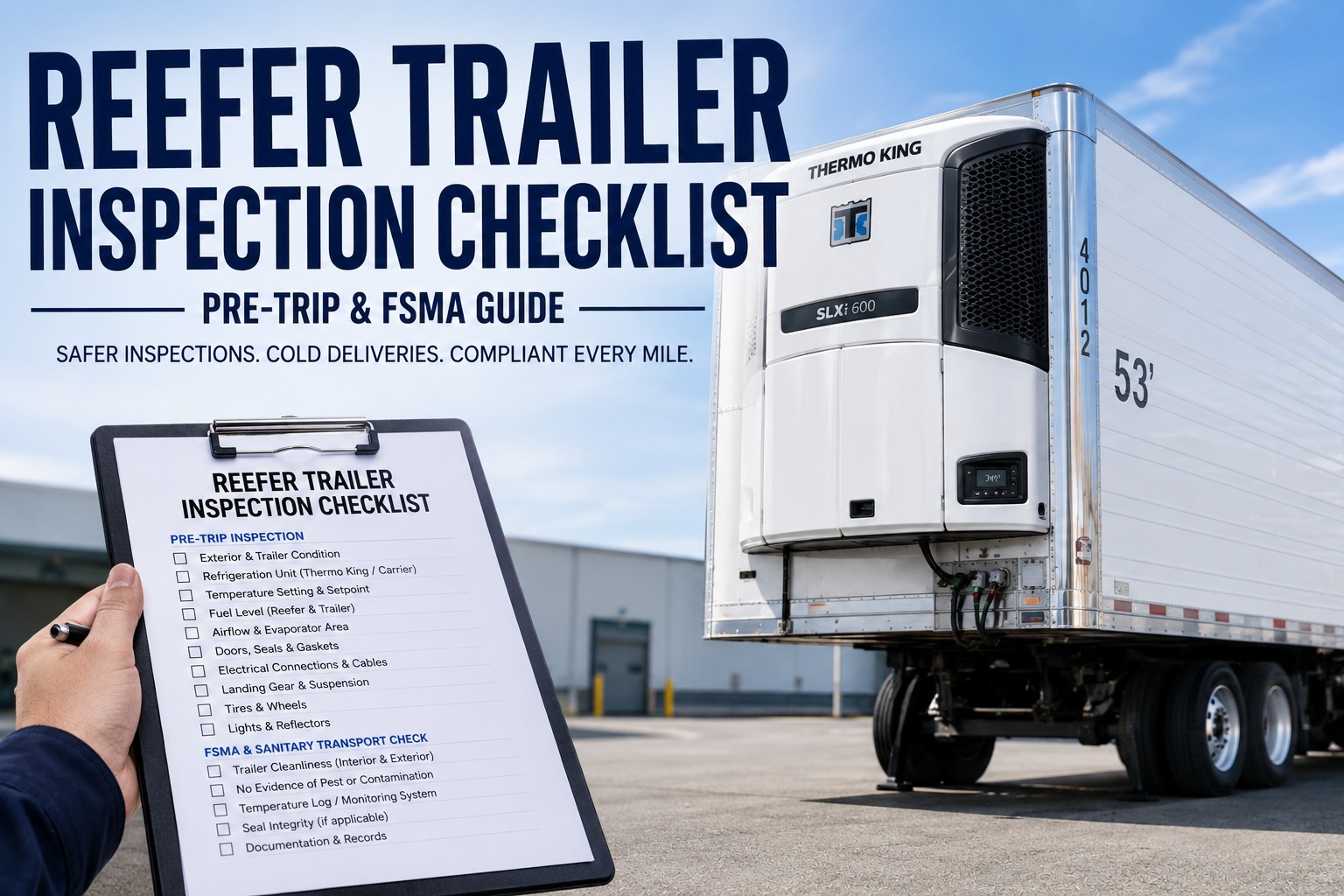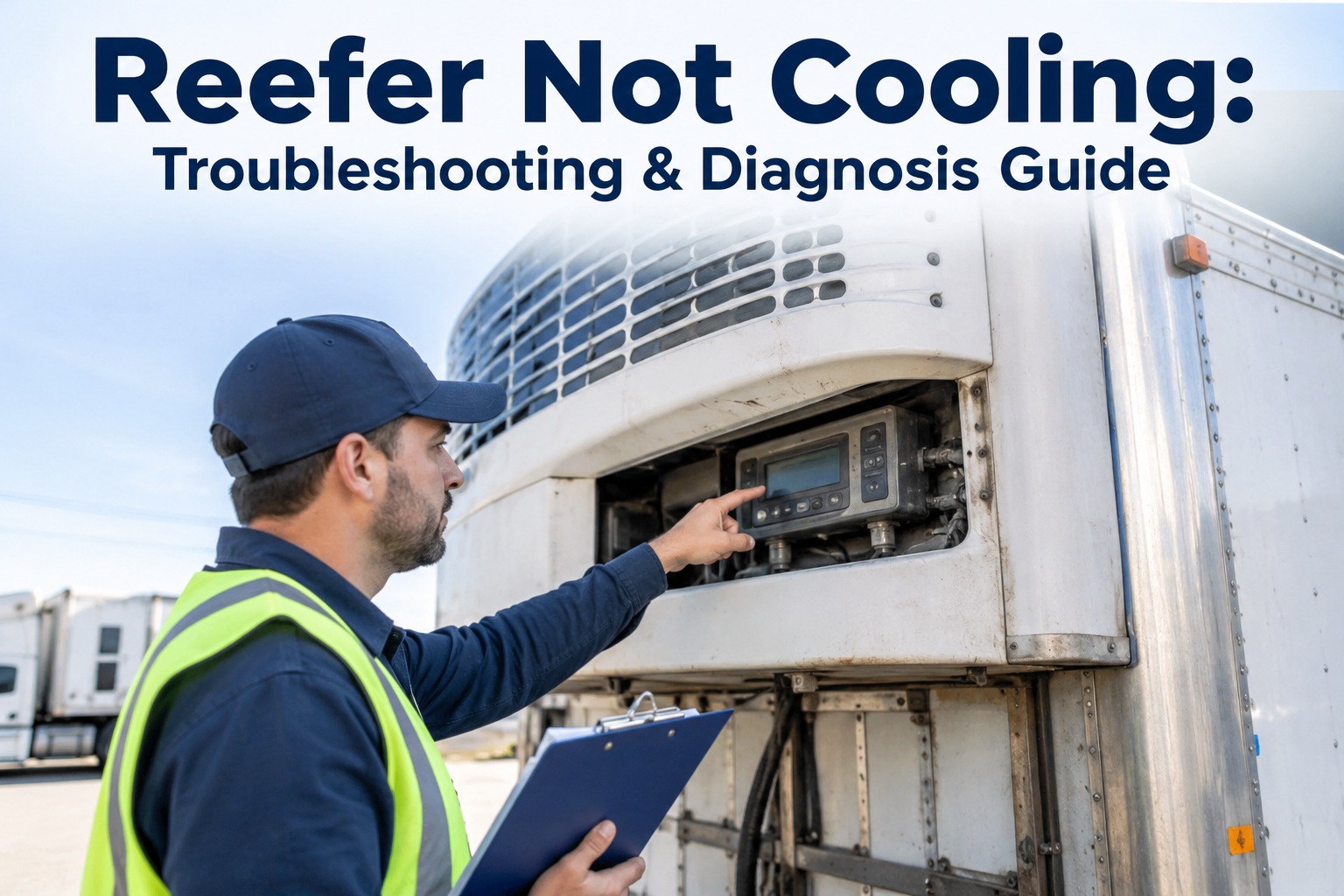
Reefer not cooling is not one problem — it's three different failure branches: unit won't start, unit runs but produces no cooling, or unit cools but not enough. Each branch has a different top-3 likely cause, and picking the wrong branch wastes the 20 minutes that decide whether $80,000 of pharmaceuticals reaches the receiver in-temp or gets rejected. This guide walks the 3-branch decision tree, Thermo King and Carrier alarm codes and the load-protection actions — book a demo to manage reefer PM and defects in HVI.
Reefer Not Cooling — The 3-Branch Diagnostic Tree
First diagnose the branch. Then diagnose the fault. Picking the right branch narrows the problem from "everything that can go wrong" to "these three things, in this order."
Unit won't start
No diesel engine running. No compressor. Display dark or shows shutdown alarm.
Runs but no cooling
Engine running, compressor engaged, belts turning. Zero pull-down. Temp rising.
Cools but not enough
Unit cooling but return air 5-15°F above setpoint. Slow pull-down.
Answer the branch question first (won't start / no cool / not enough cool). Every downstream diagnostic depends on it. Refrigeration-system work stays with qualified reefer technicians only.
The rest of this page walks the alarm-code decode for Thermo King and Carrier, the immediate load-protection actions every driver should run before calling service, the difference between a mechanical refrigeration fault and a cargo-loading problem, and the reefer PM cadence that stops most in-transit failures before they happen. Book a 30-minute demo to see reefer PM scheduling per hour and calendar in HVI.
Load protection first — the 6 actions before the service call
Cold-chain financial loss is measured in the first 20 minutes of a reefer fault. A rejected trailer of pharmaceuticals or fresh protein is a $30K-$200K claim. Every driver on a reefer route runs these 6 actions in order the moment the temperature starts drifting or the alarm sounds — before any refrigeration diagnosis is attempted.
Note the reading
- Current return air temperature
- Setpoint temperature
- Delta between setpoint and actual
- Any alarm code(s) displayed
- Time noticed / time of last known good
- Cargo product & required range
Verify setpoint & mode
- Setpoint matches BOL for this load
- Mode correct (Continuous vs Cycle-Sentry)
- No accidental setpoint change on trip
- Defrost cycle not currently running
- No sleep or standby state active
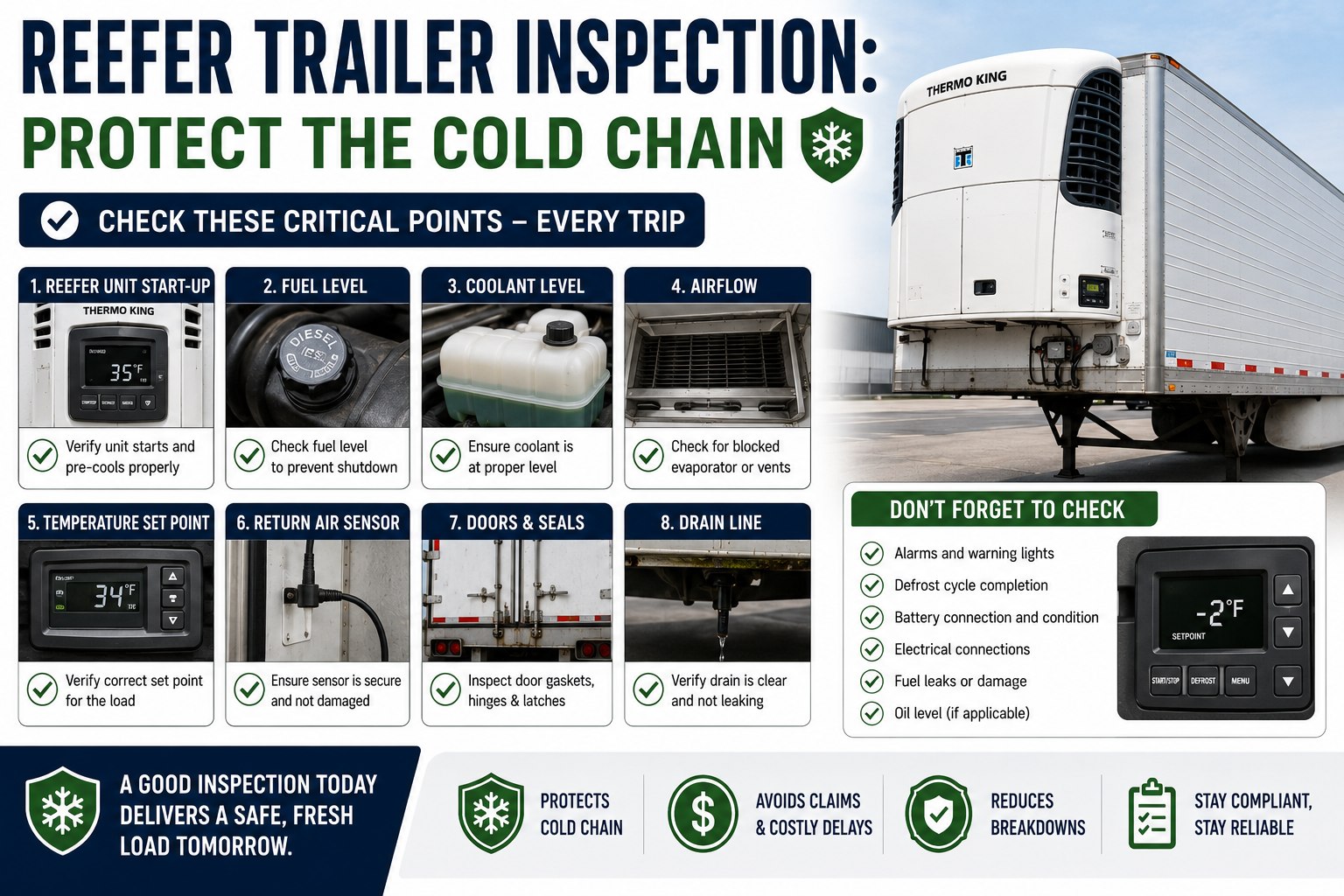
- Fuel level >25% for diesel-driven unit
Physical checks (safe only)
- Door properly closed & sealed
- Visual: condenser coil not obstructed
- Belts intact (visual through door only)
- No visible leaks or damage
- Air intake / discharge chute clear
- No refrigeration system contact
Photo evidence
- Display showing temp & alarm code
- Cargo loading pattern in trailer
- Any visible damage or leak
- Door seal condition
- Condenser / evaporator visible state
- Time-stamped for record
Contact dispatch & customer
- Report to dispatch immediately
- Reefer service call authorised
- Receiver / customer notified of delay
- Cargo owner alerted if excursion risk
- Insurance/claims notified if warranted
- ETA to nearest service centre logged
Protect the load
- Keep doors closed until service arrives
- Move to shaded parking if possible
- Monitor cargo temp with hand thermometer
- Do not attempt refrigerant / mechanical fix
- Document all actions with timestamps
- Transfer load if excursion imminent
Every one of these 6 actions is driver-safe and load-protective. None require refrigeration system knowledge, none require opening the unit, none put the driver in a position of doing unqualified refrigeration work. What they do produce: the timestamped record that supports the insurance claim if the load is rejected, and the diagnostic context that helps the reefer technician arrive with the right parts on the truck. Book a demo to see driver reefer-fault DVIRs with photo evidence in HVI.
Alarm codes decoded — Thermo King vs Carrier
Thermo King and Carrier/Transicold use different alarm code systems, and the driver's first job when a code appears is to note the exact code before it's cleared or reset. Thermo King uses numbered codes; Carrier uses letter-number combinations. Both stores recent fault history on the controller. Below are the most commonly encountered codes and what they typically indicate — but final diagnosis always belongs to a qualified reefer technician using the manufacturer's service documentation.
| Code (system) | Typical meaning | Common root cause |
|---|---|---|
| Code 15 (Thermo King) | Low fuel pressure | Fuel filter clogged, fuel pump wear, air in fuel line |
| Code 32 (Thermo King) | High discharge pressure | Dirty condenser coil, condenser fan not running, high ambient |
| Code 52 (Thermo King) | Check heat circuit / defrost fault | Heater or defrost sensor fault; affects cold-weather & defrost cycles |
| Code 100 (Thermo King) | Engine failed to start | Fuel, battery, glow plug, engine mechanical (branch A) |
| AL-1 (Carrier) | Low suction pressure | Low refrigerant charge (leak), restricted expansion valve, iced evaporator |
| SH-2 (Carrier) | High superheat | Expansion valve underfeeding, low refrigerant, sensor calibration |
| dF (Carrier) | Defrost cycle active or fault | Normal during cycle; if persistent = defrost sensor or heater fault |
| Any recurring alarm | Underlying issue not corrected | Requires systematic troubleshooting rather than repeated resets |
Recurring alarms are the single most-ignored fault signal on a reefer fleet. An alarm cleared and resumed three times in a shift is an alarm that will surface again in transit — often at the worst possible time. Any recurring code should be logged per unit and routed to reefer PM investigation, not just cleared each time. Book a demo to see recurring reefer alarms flagged per trailer in HVI.
Mechanical fault vs cargo-loading problem — why Branch C matters most
Branch C ("cools but not enough") is where most reefer service calls turn out to be a cargo-loading or operating problem rather than a mechanical fault. A qualified reefer technician arrives, finds the refrigeration system operating exactly to spec, and bills for a diagnostic visit that only confirms the load was warm at pick-up or the cargo is blocking the airflow chute. Understanding the distinction saves the false service call.
Warm load at pick-up
Reefer specification is designed to hold pre-cooled cargo at setpoint, not to pull a warm load down. A shipper loading 65°F cargo into a 35°F reefer will show 5-15°F above setpoint for the first hours regardless of unit health. Not a fault.
Airflow blocked
Cargo loaded against the discharge chute or return-air intake prevents cold air distribution. Return-air sensor reads the recirculating cold air near the chute and thinks the load is at setpoint, while the far end of the trailer stays warm. Bulkheads and 3-4" clearance solve this.
Door seal / open door
Door seal damage or extended door-open at multi-stop delivery introduces warm ambient air faster than the unit can cool. Return air rises 5-10°F per stop on a hot day. Ambient exceeding unit design capacity produces the same signature without any component fault.
Actual mechanical fault
Dirty condenser (high discharge pressure alarm), refrigerant leak (low suction pressure alarm), belt failure, iced evaporator, fuel/battery issue, or compressor wear. These produce alarm codes and observable system indicators — unlike loading issues, which look normal on the controller.
The distinction: loading problems produce a return-air-vs-setpoint gap with no alarms and normal system operation; mechanical faults produce alarm codes, abnormal pressures, or observable component issues. Running the driver-side 6-action load-protection sequence usually surfaces which category the current fault falls into within 15 minutes — and eliminates 30-50% of unnecessary reefer service calls on most fleets. Start a free HVI trial to log driver reefer diagnostics with photo evidence.
A cold-chain operations manager on the $6,400 pharma save
We haul temp-sensitive pharma across the US West Coast — setpoint 36°F on most loads, tight excursion tolerance from the shipper. Driver called dispatch at 2:14 AM outside Bakersfield: return air 44°F and rising, no alarm code, unit running normally. Old process would have dispatched a mobile reefer tech and probably swapped the trailer at $3,500-plus in service and downtime.
Driver worked the 6-action DVIR on his phone before we escalated. Photos showed cargo pallets stacked directly against the discharge chute at the front bulkhead — loaded that way by the shipper's forklift crew. Airflow was recirculating in the front 8 feet of the trailer, sensor reading the cold return, while the rear pallets sat at 44°F. Repositioned pallets at the next fuel stop with the driver, added a temp bulkhead. Return air dropped to 36°F within 45 minutes. No mechanical fault. No excursion.
Saved the pharma load (~$180K value), avoided the service call, kept the delivery on ETA. Whole thing worked because the driver had the 6-action sequence on his phone and photographed the loading pattern before we called anyone.
Frequently asked questions
Why is my reefer not cooling?
Reefer not cooling falls into one of three failure branches, and identifying which branch you're on is the first diagnostic step. Branch A (unit won't start): no diesel engine running, no compressor engaged, display dark or shows shutdown alarm. Top 3 causes are fuel (level, quality, filter clog, air in line), battery (voltage below 12.4V rested or crank sag), or shutdown alarm (low oil pressure, high coolant temp, low fuel). Branch B (runs but no cooling): engine running, compressor engaged, belts turning, but zero pull-down and temperature rising. Top 3 causes are refrigerant charge (low = leak, or loading/modulation valve stuck), expansion valve or filter drier restricted or clogged, or defrost cycle stuck with iced evaporator blocking airflow. Refrigerant system work is qualified-technician-only. Branch C (cools but not enough): unit cooling but return air 5-15°F above setpoint with slow pull-down. Top 3 causes are airflow blocked (cargo against chute, no bulkhead, overloaded), door or seal or warm load issue (door open too long, seal damage, load not pre-cooled), or condenser dirty (high discharge pressure, airflow restricted). Branch C is where most false service calls originate — loading and operating fixes usually resolve it without mechanical work. Identifying the branch narrows the problem from "everything that can go wrong" to three things worth checking in order.
What should a driver do when a reefer alarm goes off?
Run the 6-action load-protection sequence in order before attempting any refrigeration diagnosis. First, note the reading: current return air temperature, setpoint, delta, any alarm codes displayed, time noticed, cargo product and required temperature range. Second, verify setpoint and mode: setpoint matches bill of lading for this load, mode is correct (Continuous vs Cycle-Sentry), no accidental setpoint change, no defrost cycle currently running, fuel level above 25% for diesel-driven units. Third, safe physical checks only: door properly closed and sealed, condenser coil visually unobstructed, belts visually intact from the door (do not open the unit), no visible leaks or damage, air intake and discharge chute clear. Fourth, photograph everything: the display showing temperature and alarm code, cargo loading pattern in trailer, any visible damage or leak, door seal condition, condenser and evaporator visible state — all time-stamped. Fifth, contact dispatch and customer: report the fault, authorise the reefer service call, notify the receiver of delay, alert the cargo owner if excursion risk exists. Sixth, protect the load: keep doors closed until service arrives, move to shaded parking if possible, monitor cargo temperature with a hand thermometer, do not attempt refrigerant or mechanical repair, document all actions with timestamps, transfer the load if excursion becomes imminent. None of these actions require refrigeration knowledge; all are load-protective and produce the diagnostic and insurance record that supports what happens next.
What is the difference between Thermo King and Carrier reefer alarm codes?
Thermo King and Carrier/Transicold use different alarm code numbering systems, controller logic, and alarm thresholds. Thermo King uses numbered codes: Code 15 = low fuel pressure, Code 32 = high discharge pressure, Code 52 = check heat or defrost circuit, Code 100 = engine failure to start. The alarm number itself tells the technician what family of fault to investigate. Carrier and Transicold use letter-number combinations: AL-1 = low suction pressure, SH-2 = high superheat, dF = defrost cycle active or fault. Both systems store recent fault history in the controller so a technician can see whether an alarm is a first-time event or a recurring pattern. Both display active alarms on the control panel and both require the underlying fault to be resolved before the alarm can be permanently cleared — simply clearing an alarm without addressing the root cause will produce the same alarm again within hours or days. Recurring alarms are the single most-ignored diagnostic signal on reefer fleets: an alarm cleared and returned three times in a shift is an alarm that will surface again in transit at the worst possible time. Every alarm code should be logged per unit and per date so the recurrence pattern is visible to reefer PM planners, not just cleared by the driver each time.
How often should a reefer unit be serviced?
Reefer PM cadence should be scheduled on operating hours rather than calendar or mileage alone, because the reefer's diesel engine and refrigeration system run independently of the tractor's mileage. Typical manufacturer intervals: pre-trip inspection (PTI) every trip or every 24 hours (whichever is shorter) — belts, oil level, coolant level, defrost cycle, alarm history, setpoint verification. 250-hour service: engine oil and filter, fuel filter, air filter inspection, belt tension check, refrigerant sight-glass check, condenser and evaporator visual cleanliness. 1,000-1,500-hour service: full A-service including engine tuning, coolant analysis, belt replacement, thermostat and sensor calibration, refrigerant charge verification, controller software update if applicable. 3,000-6,000-hour service: full B-service or major overhaul depending on manufacturer, including compressor inspection, refrigerant recovery and recharge, valve service, extensive component replacement. Cadence varies by manufacturer (Thermo King and Carrier each publish specific hour-based schedules for their unit families) and by duty cycle (a reefer running 24/7 on long-haul reaches service intervals in weeks; one running 4-6 hours a day on regional delivery takes months). Additional inspections: full trailer inspection at each PM (door seals, floor drains, insulation condition, exterior damage), and reefer-specific driver DVIR at each pre-trip.
Can a driver fix a reefer that isn't cooling?
Drivers can safely and appropriately address several categories of reefer issues that don't involve the refrigeration system itself. Cargo loading problems: repositioning cargo away from the discharge chute or return-air intake, adding a bulkhead for airflow, ensuring 3-4 inches clearance around vents. Operating errors: verifying setpoint matches the bill of lading, confirming the operating mode is correct (Continuous vs Cycle-Sentry), running a manual defrost cycle if the evaporator is iced, restoring the correct mode after unauthorised changes. Door and seal issues: closing a door that's not properly latched, reporting seal damage for repair, minimising door-open time at multi-stop deliveries. Fuel issues: refuelling the reefer if below 25%, checking fuel-shutoff and fuel-line routing visually. Physical / environmental: moving to shaded parking to reduce ambient load, pre-cooling the box before loading. What drivers should never attempt: refrigerant system work of any kind (recovery, recharge, valve service, leak repair), electrical repairs beyond visual inspection, compressor or expansion valve service, belt replacement while the unit is running, or any procedure requiring specialised tools or refrigeration certification. Unqualified refrigeration work is unsafe (high pressures, refrigerant exposure), often makes the fault worse, and violates EPA Section 608 requirements. Anything beyond the driver-safe list belongs to a qualified reefer technician.
Protect the load. Run the 6-action sequence. Trend the alarms.
HVI runs reefer DVIRs on driver mobiles with the 6-action load protection built in, captures alarm codes and setpoint / return air readings per event, schedules reefer PM separately on hours and calendar, flags recurring alarms per trailer as pattern signals, routes confirmed defects into corrective work orders, and produces per-trailer service history covering the full life of the unit. Live in under two weeks. No hardware. No credit card.
Trusted by reefer fleets protecting cold-chain loads across USA, Canada, UK & Australia · Ready on day one