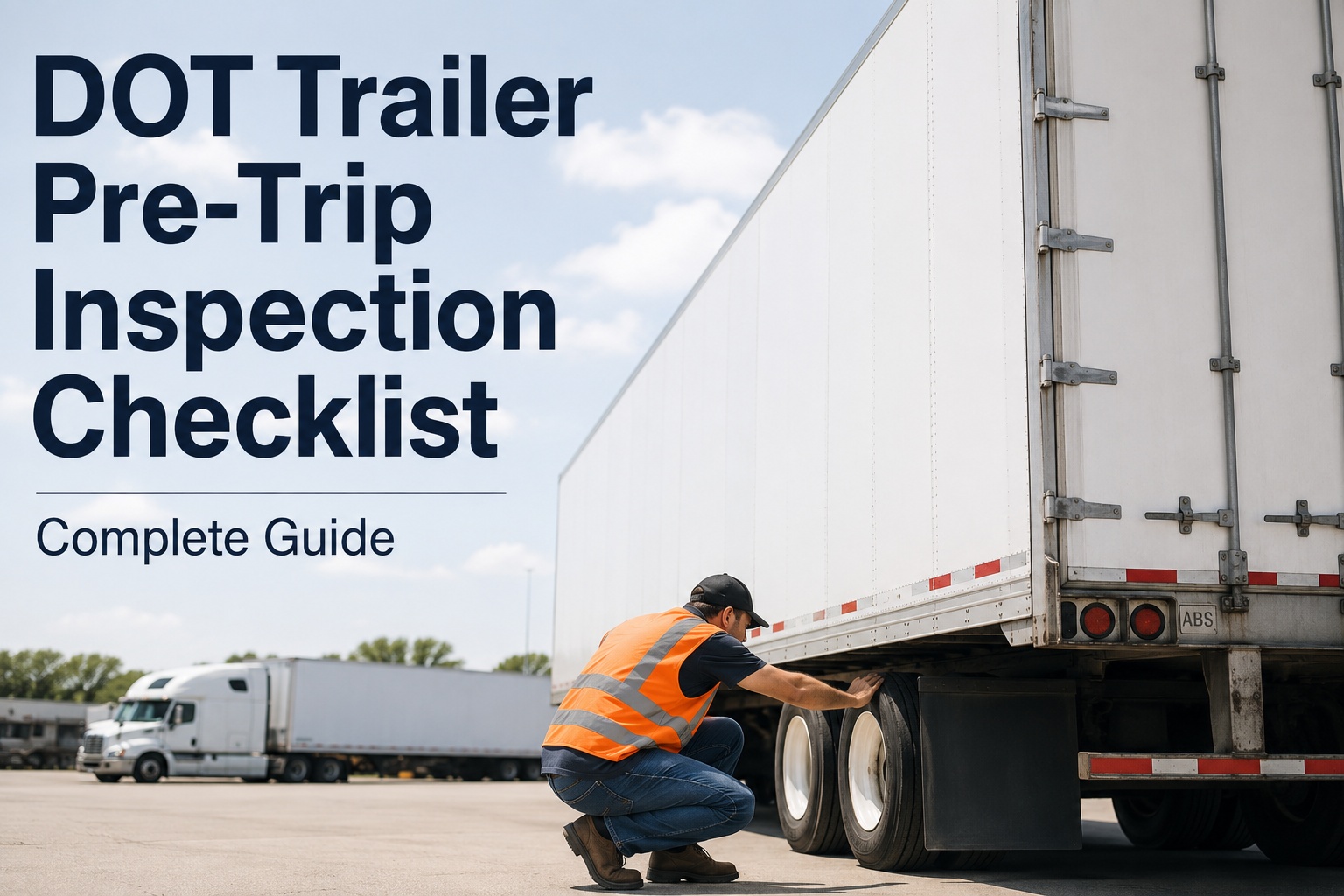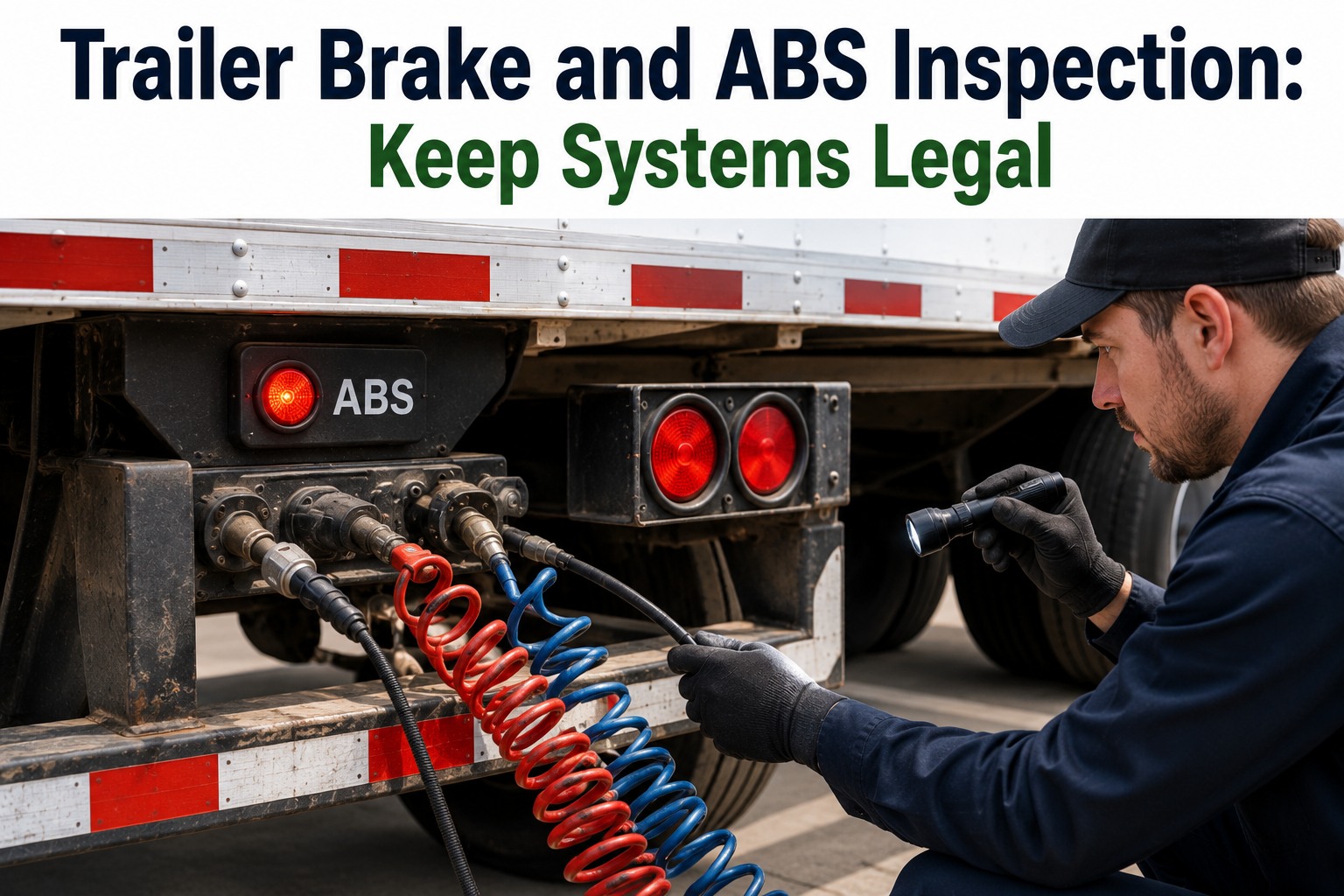
You are sitting at the scale house waiting for the green light, and the inspector walks straight to the left rear of the trailer. They are not checking your brake chambers or looking for air leaks—they are staring at a small plastic lens marked ABS. A missing bulb, a cracked lamp, or a light that stays on a second too long is all it takes to put your trailer out of service. A proper trailer brake inspection goes far beyond measuring pushrod stroke; it requires verifying the trailer ABS function and the physical brake connection before the truck ever leaves the yard. Start free with HVI to turn these roadside surprises into guided, digital yard checks.
Trailer Brake & ABS Inspection: Keep Systems Legal
The exact air line, brake chamber, and ABS malfunction lamp checks a qualified inspector uses to keep trailers roadworthy and compliant under 49 CFR 393.55 and FMVSS No. 121.
- Build Date14 Mar 2003
- External LampSelf-test OK
- Dash LampSelf-test OK
- ResultCompliant
- ~33%
of all commercial vehicle out-of-service orders are brake-related
CVSA Roadcheck data - 1998
mandatory build date for external trailer ABS malfunction lamps
FMVSS No. 121 - 2001
build date requiring in-cab dash lamp transmission for trailer ABS
49 CFR 393.55 - 90-100
PSI required to accurately measure brake chamber pushrod stroke
FMCSA inspection protocol
Why the trailer ABS lamp dictates your compliance status
Most trailer brake violations are not catastrophic mechanical failures. They are electrical and diagnostic gaps. Every trailer manufactured on or after March 1, 1998 is required to carry an external ABS malfunction lamp. This lamp must be mounted on the left side of the trailer, near the rear marker light, and clearly marked with the letters "ABS." The purpose is simple: an inspector or a driver in any tractor—whether that tractor is ABS-equipped or not—must be able to spot a trailer ABS fault from the ground without climbing underneath the equipment.
Trailers built on or after March 1, 2001 add a second layer of complexity. They must be able to transmit that malfunction signal electronically to a dash-mounted lamp inside the tractor cab. The driver needs to see the fault while seated behind the wheel, not just by walking around the trailer at a truck stop. If the in-cab lamp fails to communicate a trailer fault, the system is non-compliant. To systematically verify these diagnostic paths across your entire fleet, you can book a demo of HVI and map your inspection workflows directly to these federal requirements.
The 4-state ABS lamp diagnostic matrix
The ABS check itself is simple, but drivers skip it constantly. When the ignition is turned to the "on" position, the ABS lamp—both the dash lamp and the external trailer lamp—should light briefly as a self-test, then turn off. Inspectors look for four specific outcomes during this test, and two of them are immediate violations. Use this matrix to train drivers on exactly what they are looking at during their pre-trip inspection.
Lights briefly, then turns off
System Status: Normal / Compliant
The self-test circuit is functional, the bulb is intact, and no fault codes are stored. The trailer ABS is receiving continuous power and ready for operation.
Never lights at all
System Status: Violation
The self-test circuit or the lamp itself has failed. There is no way to know if the ABS is working. CVSA guidance treats this as a clear violation under 49 CFR 393.55.
Lights and stays on
System Status: Violation
A fault is present and stored in the trailer ABS controller. The system is actively disabled or degraded. The trailer must be repaired before dispatch.
Only lights when brakes applied
System Status: Hidden Violation
The trailer ABS is running on the brake-light circuit as a backup power source instead of getting continuous power from the tractor. 393.55 requires continuous power whenever ignition is on.
That fourth state is a subtle failure mode that tricks many technicians. A tech chasing an "intermittent ABS fault" should check the 7-way plug connection and tractor ground before replacing any wheel-speed sensor. A trailer that only faults ABS behind one specific tractor almost always has a connector or grounding issue at the tractor's plug, not a failed trailer ABS controller. Swapping the wheel-speed sensor first is the most common wasted repair in the shop. You can start your free HVI trial to log these diagnostic steps digitally and spot recurring tractor-side issues across your fleet.
Step-by-step trailer brake & air system workflow
Beyond the ABS electronics, the physical brake inspection requires a strict sequence. If the steps are done out of order, the measurements are invalid and the liability remains on the shop. Follow this workflow to ensure every brake component is checked to spec.
Chock wheels & build air pressure
Wheels must be securely chocked. Start the engine and allow the air system to build to governor cut-out (typically 120-130 PSI). Shut off the engine. Ensure the trailer is fully charged to at least 90 PSI before any stroke measurement is attempted. See how HVI enforces pressure gates before allowing inspection inputs.
Apply brakes at 90-100 PSI
Make a full brake application (90-100 PSI). Do not fan or pump the brakes, as this depletes the reservoirs and alters the pushrod stroke. The application must be steady and maintained while the measurement is taken.
Measure pushrod stroke
Measure the movement of the pushrod against the chamber body. The stroke must fall within the regulation limit stamped on the brake chamber. If the stroke exceeds the marked adjustment limit, the slack adjuster is out of adjustment and the unit is out of service.
Inspect glad-hands & air lines
Check trailer air lines for cracking, chafing, or bulging. Inspect glad-hand seals for wear and ensure the connections are free of debris. Listen for audible leaks at the glad-hands and the relay valve while the system is under pressure. Book a demo to see HVI's defect photo capture for air line damage.
Test the breakaway system
Disconnect the tractor's air supply to the trailer. Pull the plunger on the trailer's breakaway valve. The trailer brakes must apply. The driver should then attempt to pull forward—the trailer wheels should lock or show clear, heavy resistance. If the brakes do not apply, the breakaway system is non-functional and illegal.
Trailer brake failure modes: What actually breaks
Understanding the physical failure modes helps technicians prioritize their diagnostic time. The table below breaks down the most common trailer brake and air system failures, their root causes, and what the inspector will see when they check the equipment. Explore HVI's maintenance workflows to see how these failure modes are tracked over a trailer's lifecycle.
| Component | Failure Mode | Root Cause | Inspector Result |
|---|---|---|---|
| Brake Chamber | Excessive pushrod stroke | Slack adjuster out of adjustment or worn cam bushings | Out of Service |
| ABS Controller (ECU) | Dash lamp stays illuminated | Failed wheel speed sensor, tone ring damage, or water ingress | Out of Service |
| 7-Way Connector | ABS only powers on during brake application | Bent pin, corrosion, or broken ground at tractor plug | Out of Service |
| External ABS Lamp | No illumination during self-test | Blown bulb, broken wire, or failed self-test circuit | Out of Service |
| Glad-Hand Seals | Audible air leak | Cracked, flattened, or missing rubber seal ring | Defect (30-day) |
| Breakaway Valve | Brakes do not apply when plunger pulled | Seized valve, low trailer air pressure, or broken cable | Out of Service |
Expert view from the shop floor
"I had a tech spend three hours swapping wheel speed sensors on a reefer trailer because the dash light kept coming on. Turns out the 7-way plug on the day cab he was testing it with had a bent pin. Now, if a trailer faults ABS behind one tractor but not another, nobody touches the sensor until they check the plug. That one rule saved us thousands in unnecessary parts last quarter.
-- Marcus P., Maintenance Manager, regional reefer carrier
Frequently asked questions
Where must the ABS malfunction lamp be located on a trailer?
For trailers manufactured on or after March 1, 1998, the external ABS malfunction lamp must be mounted on the left side of the trailer, near the rear marker light, and clearly marked with the letters "ABS." This allows an inspector to see a fault from the outside without going under the trailer.
What does it mean if the trailer ABS light only comes on when the brakes are pressed?
This means the trailer's ABS is running on the brake-light circuit as a backup power source instead of receiving continuous electrical power from the tractor. Under 49 CFR 393.55, the ABS must have continuous power whenever the ignition is on, making this a violation. The root cause is almost always a connector or grounding issue at the 7-way plug.
How is the brake chamber pushrod stroke measured during a trailer brake inspection?
The wheels must be chocked, the engine off, and the system charged to 90-100 PSI. A full brake application is made, and the movement of the pushrod against the chamber body is measured. The stroke must not exceed the adjustment limit stamped on the brake chamber body.
How do you test a trailer breakaway system?
The driver disconnects the tractor's air supply to the trailer, then pulls the plunger on the trailer's breakaway valve. The trailer brakes should apply immediately. The tractor is then driven forward slightly to confirm the trailer wheels lock or show clear, heavy resistance. If the brakes do not apply, the breakaway system is non-functional and must be repaired before dispatch.
Do trailers built before 2001 need to send ABS faults to the tractor dash?
No. Trailers built on or after March 1, 2001 must be able to transmit the ABS malfunction signal electronically to a dash-mounted lamp inside the tractor cab. Trailers built between 1998 and 2001 only require the external lamp on the left rear of the trailer.
Conclusion: Make trailer brake checks systematic
Keeping your trailers legal isn't about working harder; it's about checking the right things in the right order. A proper trailer brake inspection requires verifying the ABS self-test on both the external lamp and the in-cab dash, confirming continuous power at the 7-way connection, measuring pushrod stroke at 90-100 PSI, and function-testing the breakaway valve. When these checks are left to memory, the details slip—usually right at the scale house. By digitizing these steps, you ensure every driver and technician follows the same standard, catching the bent pins and out-of-adjustment slack adjusters before they become roadside violations. Get started with HVI today to standardize your fleet's trailer brake checks.
Put the complete trailer brake & ABS inspection on every driver's phone
HVI guides your team through every ABS lamp state, pushrod measurement, and breakaway test—automatically flagging violations and generating compliance reports before the truck leaves the gate.
No credit card · No hardware · Live on your fleet in under two weeks