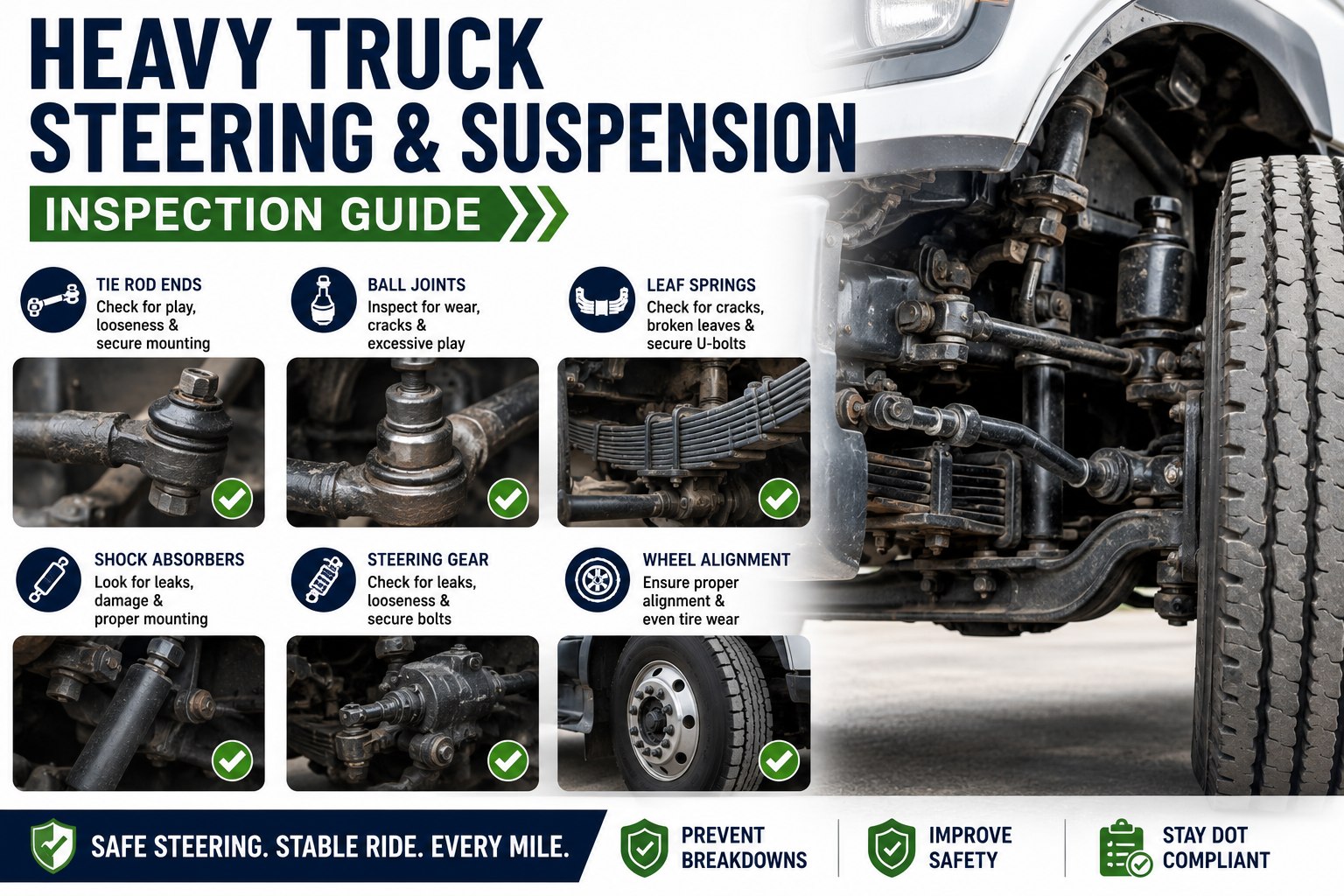
You are creeping down the highway at 65 mph when the steer axle suddenly develops a violent shake you can feel through the floorboards. The wheel jerks, the hood rattles, and your gut drops. Worn tie rod ends and sloppy ball joints do not usually fail all at once — they telegraph their collapse through a subtle shimmy weeks before, a shimmy that disappears the moment you back off the throttle. By the time a steering defect shows up at highway speed, the damage is already done. A proper heavy truck steering and suspension inspection catches these failures in the shop, under the frame, with a pry bar. This guide walks through the exact steering inspection and suspension checks a qualified technician needs to run — the drag link, the pitman arm, the leaf spring stacks — before that truck ever leaves the yard. Start free with HVI to digitize the entire front end inspection workflow.
Heavy Truck Steering and Suspension Inspection Guide
The exact components, measurement specs, and failure modes a technician must check during a front end inspection — from tie rod end play to broken leaf spring out-of-service thresholds.
- Tie Rod Play0.00 in (Pass)
- Drag LinkSecure
- Leaf SpringsNo breaks
- Air BagsRide Height OK
- ~2%
of roadside out-of-service orders are steering-specific, but they cause the most severe highway crashes
CVSA Roadcheck data - 1/4
of leaves broken in a leaf spring stack triggers an automatic out-of-service violation
49 CFR 393.207 - 0.030"
movement at the tie rod end ball joint is the threshold for rejection on most heavy duty steer axles
Steer axle OEM specs - All
axles must be aligned, not just the steer, to prevent rapid drive and trailer tire shoulder wear
TMC RP 642
Why steering defects are different from brake failures
Steering and suspension violations make up a small slice of total roadside out-of-service orders — usually hovering around 2 percent during CVSA Roadcheck blitzes. That low frequency easily lulls a maintenance program into complacency. But that statistic masks the severity of the failure mode. When brakes fail, a truck stops slowly. When a tie rod end separates or a pitman arm fractures, the truck stops sideways, often at highway speed, and almost always catastrophically.
Because steering defects are relatively rare in the grand scheme of violations, they rarely get the proactive maintenance focus that brakes, tires, and lights command. The components are buried under the hood, behind the wheels, and deep in the chassis. Most of these defects require getting under the vehicle with a pry bar to identify — which is exactly why they get missed on a rushed pre-trip inspection or a superficial walk-around. Drivers cannot physically check ball joint play from the driver's seat, and a visual glance at a greasy, dirt-caked steering linkage will not reveal a hairline crack in a spring leaf.
The only way to catch these failures is a structured, documented truck steering inspection performed on a lifted truck or over a pit by a technician who knows exactly where to look. The rest of this guide details the specific checks required, the measurement thresholds that determine pass or fail, and how to document them digitally so nothing slips through the cracks.
The steering inspection: tie rods, drag links, and the gearbox
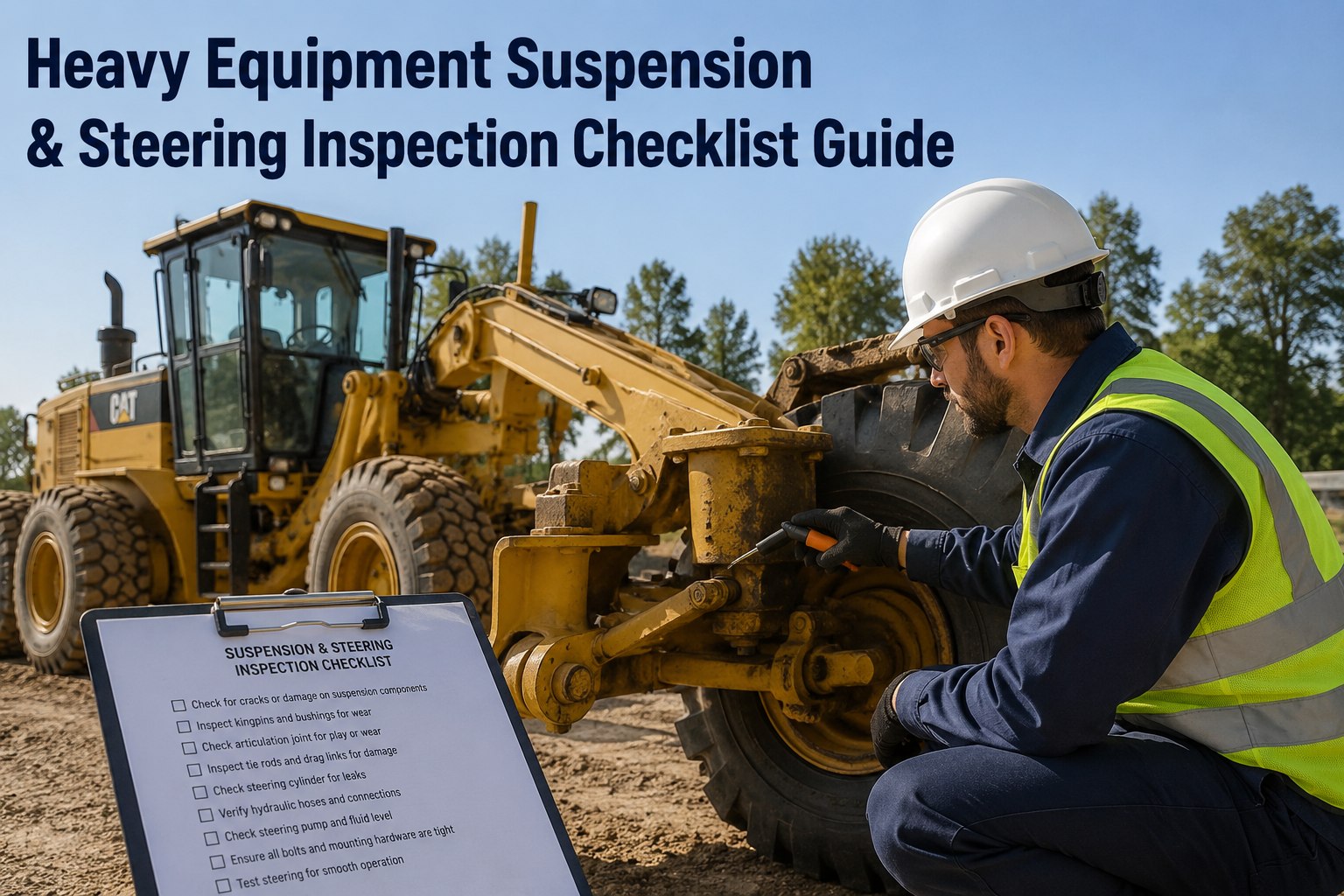
The steering system translates the rotation of the steering wheel into the lateral movement of the front tires. Any looseness in this translation translates directly to lost control. A thorough steering inspection requires physical manipulation of the linkage, not just a visual check. You are looking for vertical play, rotational binding, and fluid leaks.
Check Tie Rod End Ball Joints for Vertical Play
Have an assistant turn the steering wheel back and forth rapidly, just enough to take up the slack before the tires actually move. Watch the tie rod ends closely. Any vertical movement at the ball joint means the socket is worn. Most heavy truck OEMs reject a tie rod end if you can see more than 0.030 inches of movement. If you see play, mark it with paint and schedule the replacement immediately.
Twist the Tie Rod by Hand to Confirm Free Rotation
Grab the cross tube of the tie rod and try to twist it. A healthy tie rod end should rotate freely within its socket. If it is seized solid, the internal bearings are destroyed, and the joint will soon tear itself apart. A seized tie rod end also binds the steering, preventing the wheels from returning to center after a turn.
Inspect the Rubber Boots for Tears and Grit
The rubber boot keeps grease in and abrasive road grit out. If the boot is cracked, torn, or missing, assume the socket is already contaminated. Road grit acts like grinding paste inside the ball joint. A torn boot is not an automatic out-of-service violation on its own, but it is a guaranteed failure waiting three months down the road.
Check Drag Link and Pitman Arm at the Gearbox Shaft
Move down the linkage to the drag link. Check the connection at the pitman arm where it attaches to the steering gearbox output shaft. Have the assistant rock the wheel again. Look for any looseness between the pitman arm and the gearbox shaft, or at the drag link joints. A loose pitman arm nut can eventually spline-stripe the gearbox output shaft, turning a $50 repair into a $2,500 gearbox replacement.
Look for Power Steering Fluid Leaks
Power steering leaks are one of the two most cited steering defects at roadside. Check the power steering pump, the steering gearbox, and the hydraulic lines running between them. Look for wet spots on the frame rail and a greasy buildup on the steering arm. Low fluid leads to pump cavitation, which destroys the pump and causes sudden, total loss of power assist.
Documenting each of these steps in a digital DVIR and inspection app forces the technician to physically verify the condition of each joint rather than checking a generic "steering OK" box on a paper form.
Expert view from the shop floor
"The worst shakes I ever chased weren't from bad tires — they were from a tie rod end that looked fine visually but had a quarter-inch of vertical play once you put a bar on it. Drivers don't feel it until they hit a bridge seam at speed. Now, we mandate a pry bar test on every steer axle at every PM-A interval. If the tech doesn't log the measurement, the work order doesn't close.
-- Marcus T., Maintenance Manager, regional refrigerated carrier
The suspension inspection: leaf springs, air bags, and ride height
If the steering system determines where the truck goes, the suspension determines how well it stays on the road. A broken leaf spring or a deflated air bag completely changes the weight distribution on the steer axle, instantly altering how the steering responds. A truck with a collapsed suspension on one side will pull violently toward the low side, mimicking a steering defect.
Leaf Spring Breakage Thresholds
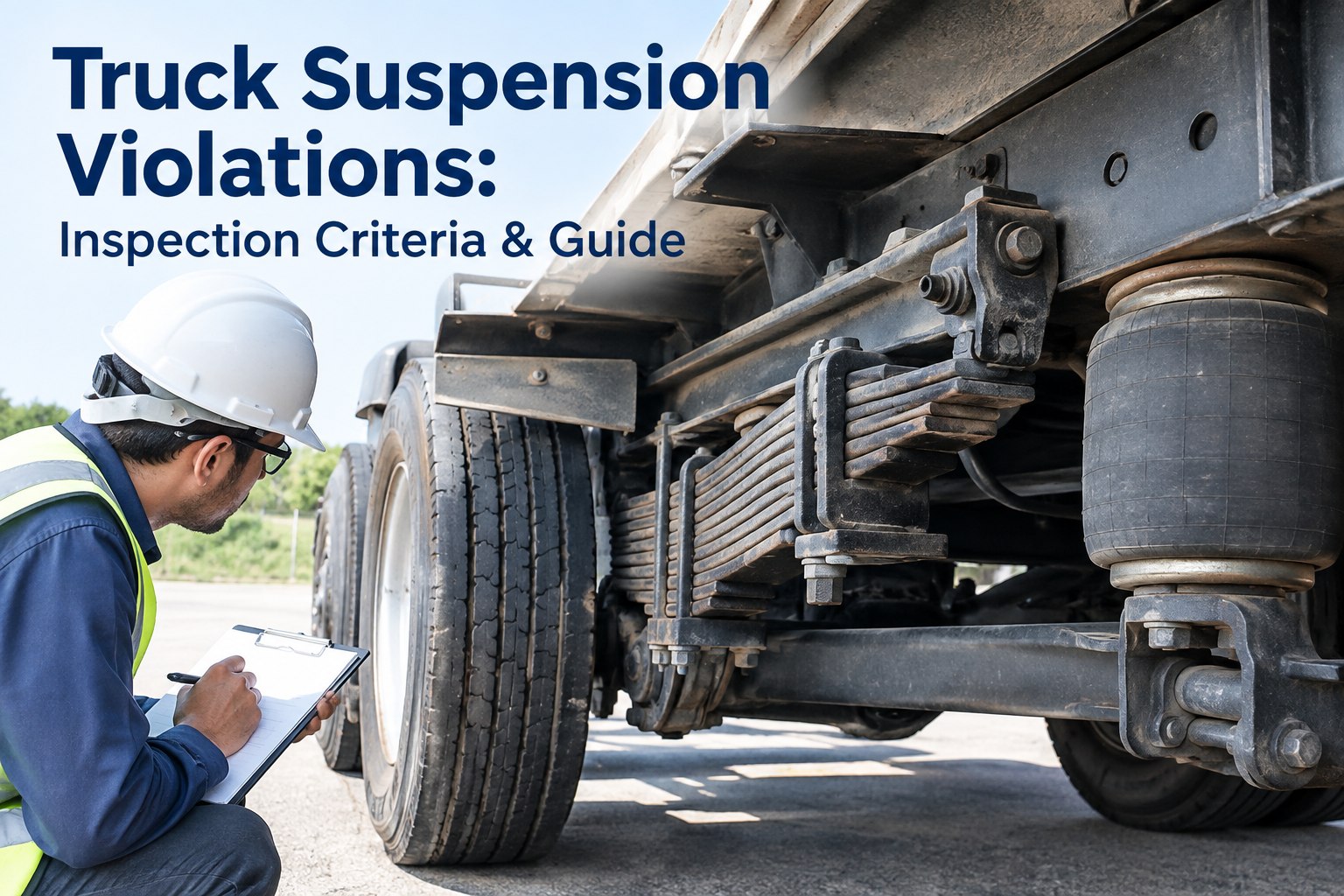
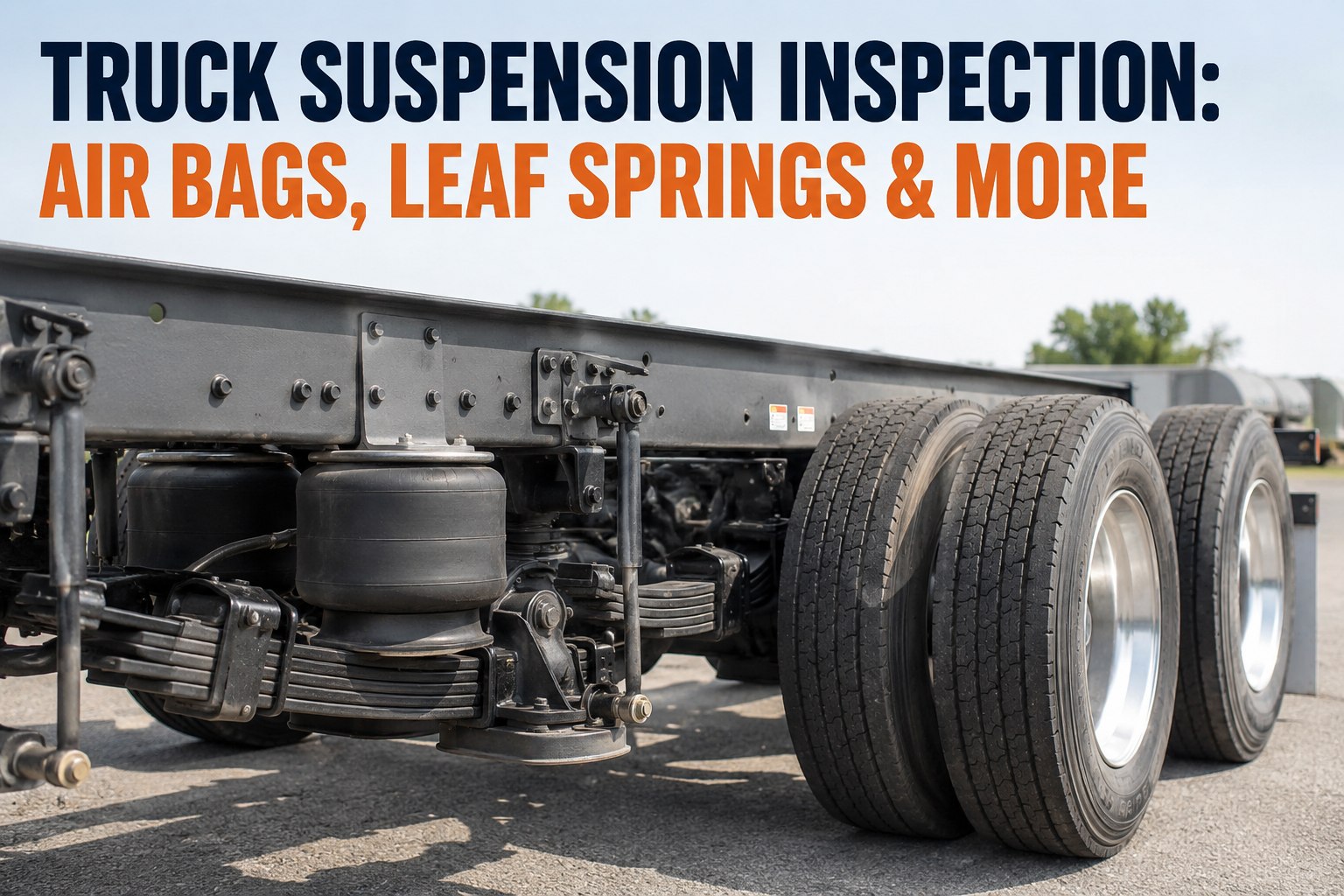
The federal out-of-service criteria for leaf springs are very specific. A truck is placed out of service if one-fourth or more of the leaves in a spring assembly are broken, or if any main leaf (the leaf that connects to the spring hanger or eye) is broken. A single cracked helper spring might be legal, but a cracked main leaf means the axle is no longer properly located.
Deflated Air Suspension
Air suspension systems fail when bags rupture, airlines chafe through, or leveling valves stick. A deflated air bag drops the frame onto the axle, eliminating suspension travel. This destroys ride quality, damages cargo, and shifts massive weight to the affected axle group. Check for air leaks by spraying the bags with soapy water while the system is pressurized.
U-Bolts and Spring Hangers
Check the U-bolts holding the axle to the springs for looseness. A loose U-bolt allows the axle to twist under torque, shifting the driveline and snapping spring centerpins. Inspect the spring hangers mounted to the frame for cracks, especially around the welds. A cracked hanger eventually tears away from the frame rail.
Axle Alignment and Tire Wear
Alignment on all axles — not just the steer axle — matters for tire wear. If a drive or trailer axle is misaligned, it pushes the truck sideways down the road. The driver constantly corrects with the steering wheel, which scrubs the rubber off the steer tires in a matter of weeks. A proper alignment check measures the thrust angle of every axle.
Suspension defects hide under layers of road grime. A technician performing a truck suspension inspection needs to physically clean the spring packs and run a hammer along the leaves to listen for the dull thud of a hairline crack. Relying on a visual scan from three feet away is how broken main leaves end up at the roadside scale.
Component failure modes: what to look and listen for
Having these criteria built directly into your fleet maintenance software removes the guesswork. The technician sees the exact rejection threshold on their phone screen while they are under the truck.
Frequently asked questions
How often should a heavy truck steering inspection be performed?
A thorough steering and suspension inspection should be part of every Preventive Maintenance A (PM-A) interval, typically every 10,000 to 15,000 miles or 30 days, whichever comes first. Drivers should also perform a visual check for obvious leaks and loose components during their daily pre-trip DVIR, though the physical pry bar checks require a shop environment.
What is the out-of-service threshold for a broken leaf spring?
Under 49 CFR 393.207 and CVSA out-of-service criteria, a commercial vehicle is placed out of service if one-fourth or more of the leaves in any spring assembly are broken, or if any main leaf is broken. A single broken helper spring may not trigger an out-of-service order, but it must still be repaired immediately as it compromises load capacity.
Why does my truck have a steering shimmy at highway speeds?
A steering shimmy at highway speeds is usually caused by a combination of worn steering components (like tie rod ends or kingpins) and an imbalance or irregular wear on the steer tires. The worn components allow the front end to oscillate, and the tire imbalance acts as the forcing function that triggers the violent shake. A thorough front end inspection is required to isolate the looseness.
Can a driver check tie rod ends during a pre-trip inspection?
A driver can perform a basic visual check for missing grease fittings, torn boots, and obvious looseness, but they cannot accurately measure ball joint play without a second person turning the wheel or specialized equipment. This is why a documented, shop-based steering inspection at regular PM intervals is critical for compliance and safety.
Does HVI track steering and suspension repairs over time?
Yes. HVI logs every inspection finding, measurement, and repair against the specific unit's history. If a truck goes through tie rod ends every 80,000 miles, the system flags the pattern so you can address the root cause — whether it is a bad parts supplier, an alignment issue, or operator abuse on rough routes.
Conclusion: catch the shake before the break
Steering and suspension defects might not dominate the out-of-service statistics, but they dominate the severity of the crash when they let go. A worn tie rod end, a broken main leaf, or a leaking power steering pump will not fix themselves — they will fail at the worst possible moment, usually at highway speed. The only defense is a rigorous, documented heavy truck steering and suspension inspection performed by a technician who knows the exact rejection thresholds and has the right tools in hand.
Stop relying on paper checklists that let a tech skip the hard-to-reach components. Move your front end inspections into a system that enforces the workflow, captures the measurements, and holds everyone accountable. Book a demo with HVI to see how digital inspections transform your steering maintenance program, or start your free trial today.
Put the complete steering inspection guide on every technician's phone
HVI enforces step-by-step steering and suspension checks, requires measurement inputs and defect photos, and automatically flags out-of-service conditions like broken main leaves and excessive tie rod play.
No credit card · No hardware · Live on your fleet in under two weeks