Bus fleet inspection runs on three parallel FMCSA cadences: daily DVIRs under 49 CFR 396.11, 90-day emergency exit checks under 49 CFR 396.3 (bus-specific), and annual periodic inspection under 49 CFR 396.17 — each with its own retention and out-of-service triggers. Miss any one and an FMCSA audit lands the same finding: non-compliant inspection programme. This bus fleet inspection guide walks the three cadences, the bus-specific items generic checklists skip, and the 2026 eDVIR rule — book a demo to run bus DVIRs digitally in HVI.
The Three-Cadence Bus Inspection Compliance Dashboard
Daily. Ninety-day. Annual. Each has its own regulation, its own retention, its own penalty. Missing any one produces the same audit finding — and the same out-of-service risk.
All three cadences apply to every commercial passenger bus. All three must produce records that stand up on 48 hours' notice to an FMCSA auditor.
The rest of this page walks the 7-zone daily walk-around, the bus-specific items generic CMV checklists miss (stop arms, crossing gates, wheelchair lifts, kneeling systems, farebox), the 90-day emergency exit protocol, and the audit-readiness practices that turn a 48-hour FMCSA record request into a 5-minute export rather than a weekend of paperwork. Book a 30-minute demo to see bus DVIR templates and PM cadences in HVI.
The 7-zone daily walk-around — bus edition
A driver satisfying 49 CFR 392.7 (satisfaction of vehicle safe operating condition) plus 396.13 (review of prior DVIR) plus 396.11 (end-of-day DVIR) works through a 7-zone walk-around. On a school bus the walk takes 8-12 minutes done properly; a driver getting through it in 3 minutes is not doing it. Each zone covers items that are shared with all commercial motor vehicles plus items unique to passenger buses.
Front & approach
- Headlights, high beams, DRLs
- Turn signals, hazards, marker lights
- Windshield, wipers, washer fluid
- Bus: 8-way warning light system operational
- Bus: Crossover mirrors, convex mirrors positioned
- Bus: Stop arm cycles fully (school)
Driver side + engine
- Fuel level, cap secure, no leaks visible
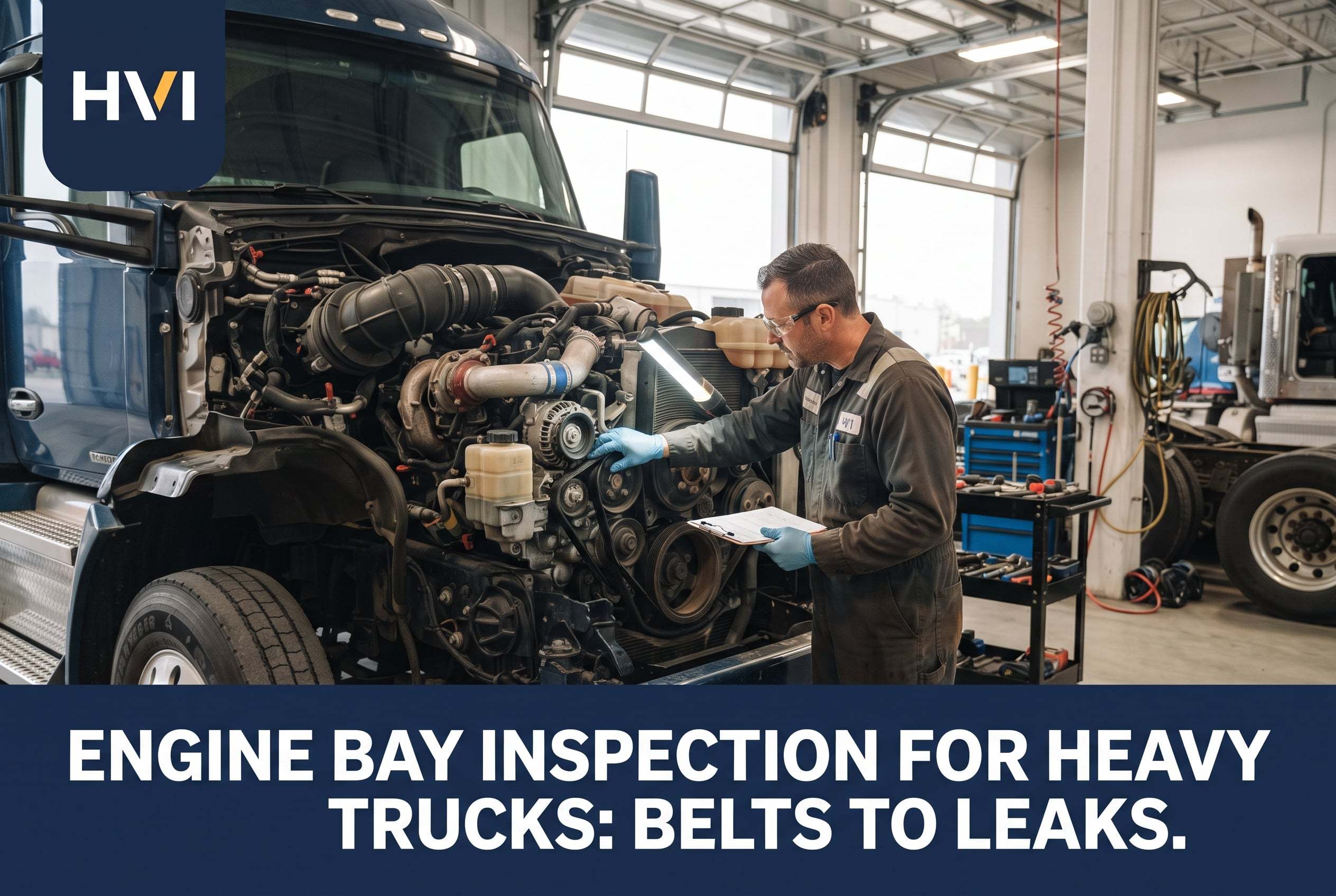
- Engine oil, coolant, DEF, PS fluid levels
- Belts, hoses visual for cracks or bulges
- Battery terminals clean, hold-down secure
- Bus: Air compressor operational, pressure builds normally
- Front tires: PSI, tread depth, sidewall integrity
Rear driver side
- Drive tires: dual matched, no debris, no visible damage
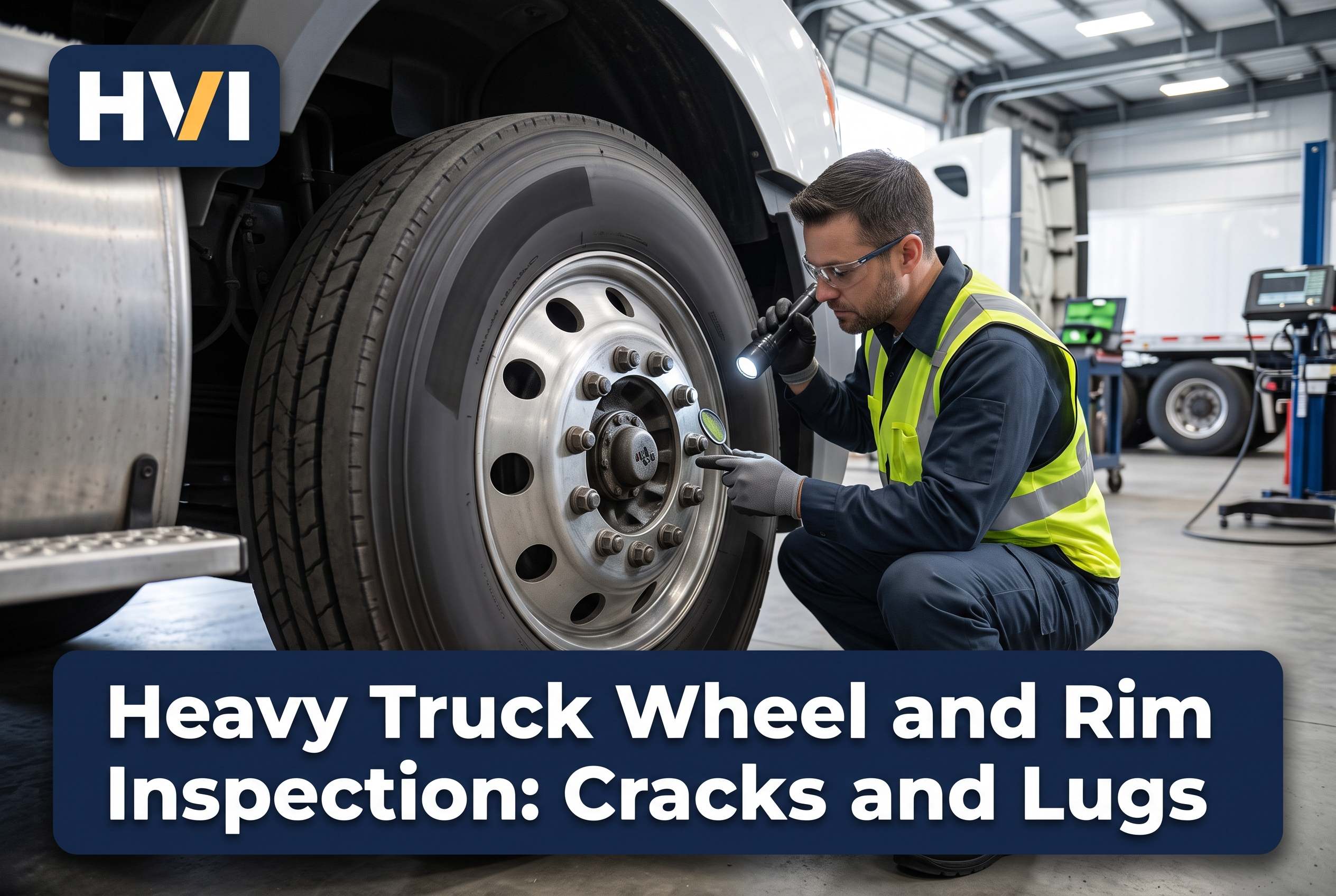
- Wheel lug nuts: no missing, no rust streaks
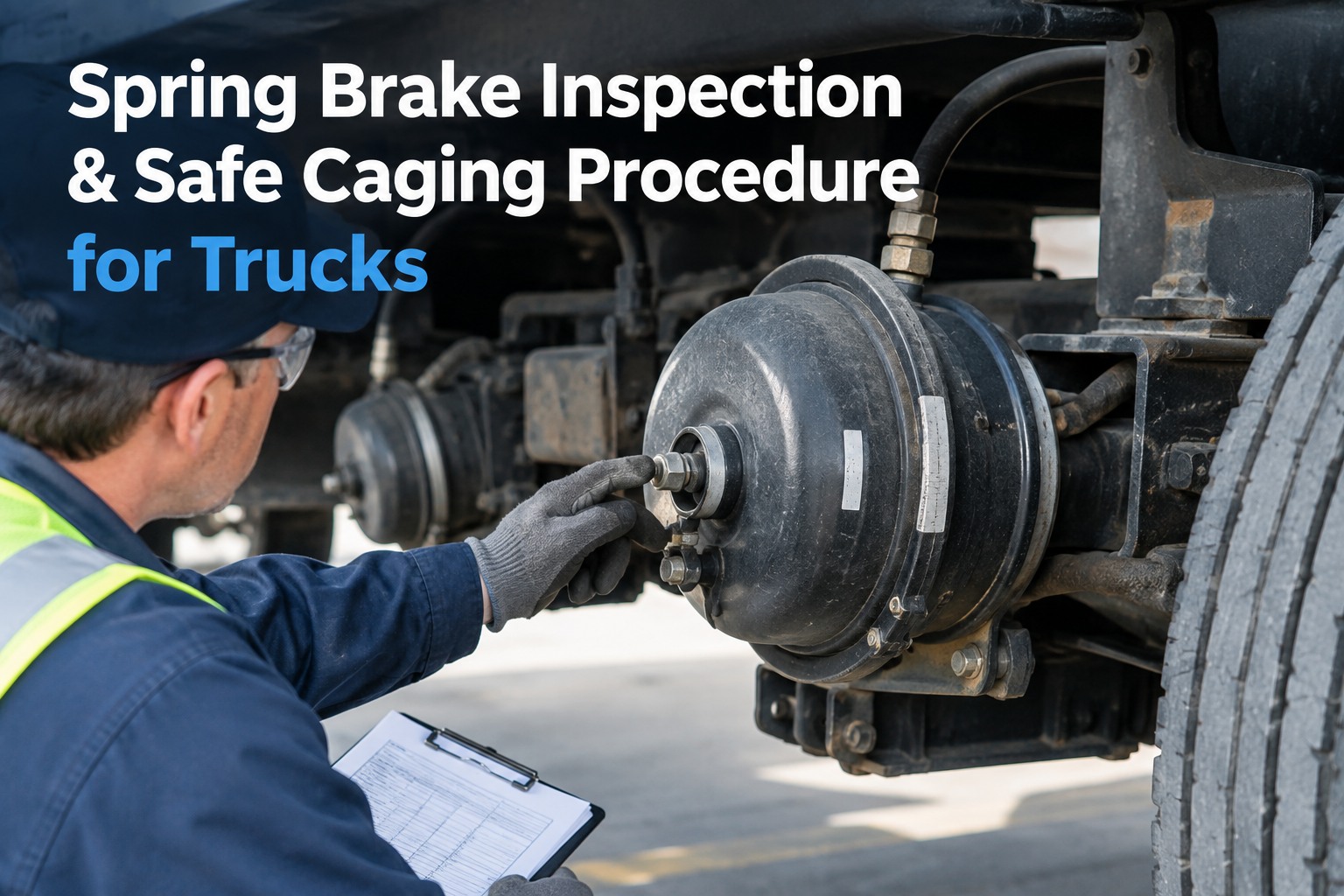
- Brake components visible: no leaks, drum condition
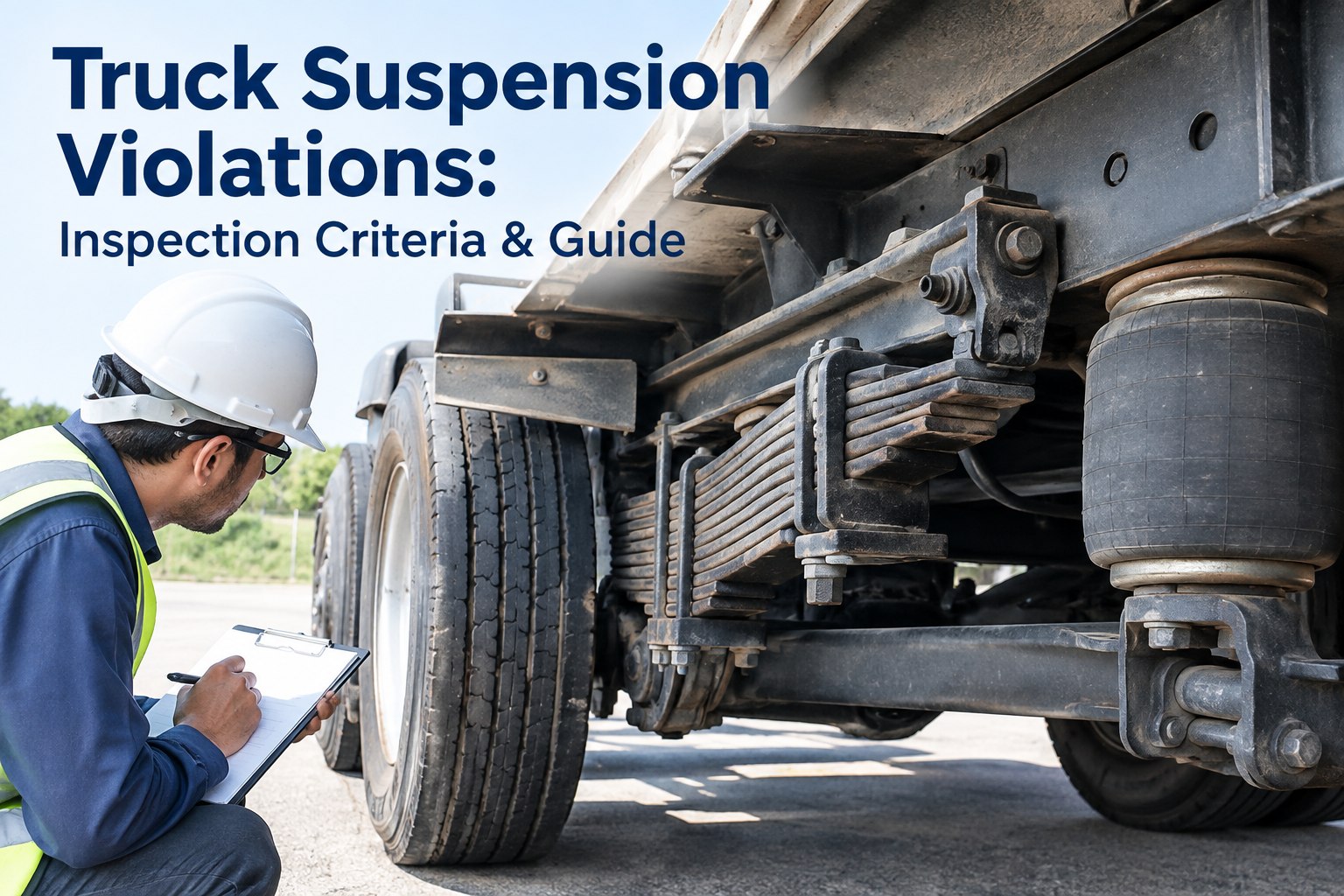
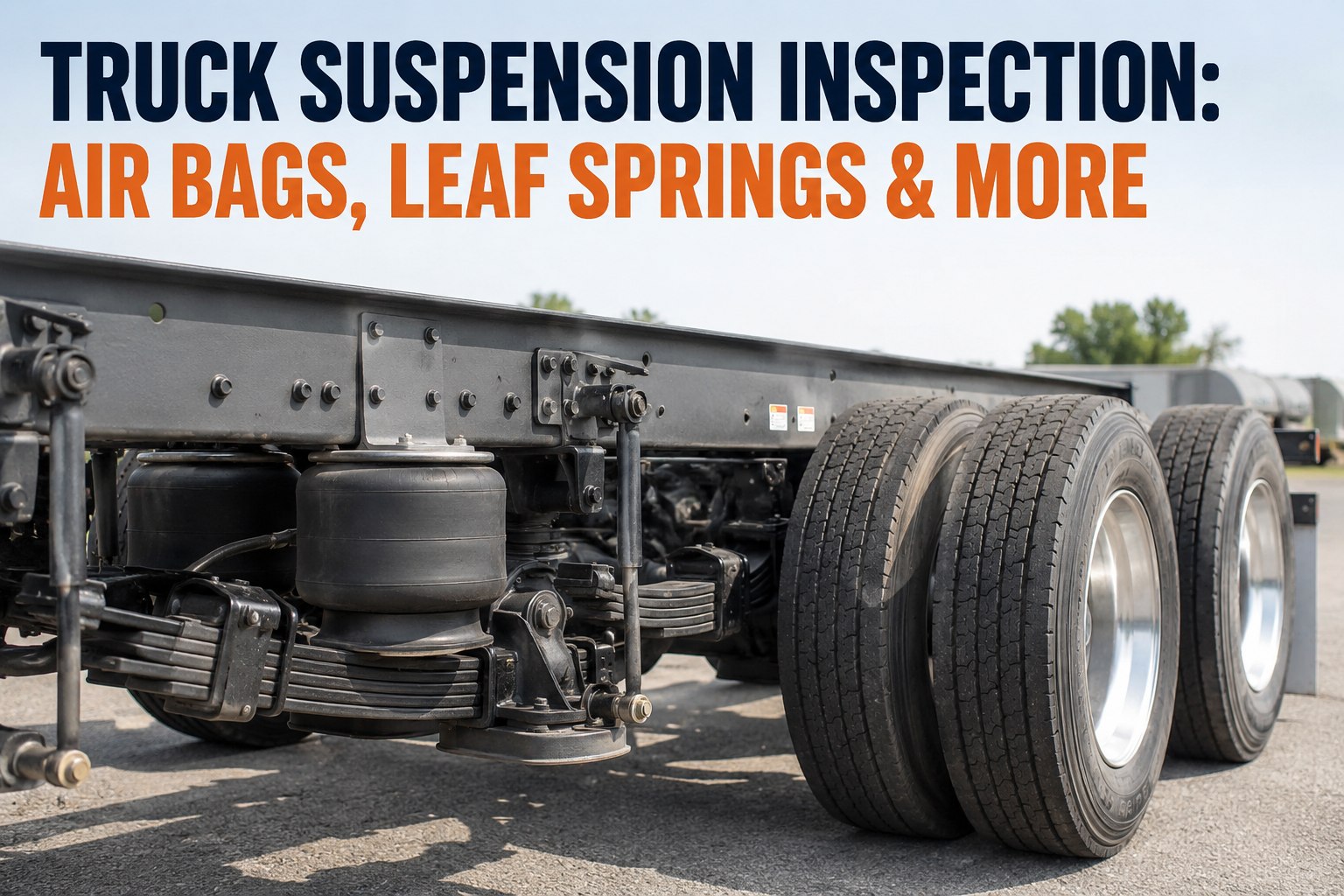
- Frame, suspension: no cracks, mounts intact
- Exhaust system: no leaks (CO risk for passengers)
- Fuel tank straps secure
Rear + emergency exits
- Rear lights, brake lights, turn, hazards
- Reverse lights, backup alarm audible
- Licence plate light, licence current
- Bus: Rear emergency door opens, buzzer sounds
- Bus: Emergency door marking light illuminated
- Bus: Reflective triangles present in kit
Passenger side + wheelchair
- Passenger door opens/closes smoothly
- Bus: Kneeling system cycles (transit)
- Bus: Wheelchair lift cycles under load (not empty)
- Bus: Lift barrier, roll-off, tie-down system
- Rear tires driver side check per zone 3
- Push-out windows accessible, marking visible
Interior + cab
- Seats secure, belts operational (where required)
- Interior lights, dome lights all functional
- Fire extinguisher present, fully charged, mounted
- First-aid kit stocked, body fluid kit present
- Aisle clear, no debris or trip hazards
- Bus: Farebox operational, cash secured (transit)
Controls + gauge
- Air pressure builds correctly (85-100 PSI cutout)
- Air leak test: 3-4 PSI/min service, 3 PSI/min parked
- Low air warning at 60 PSI
- Service brake, parking brake, brake abnormal test
- Gauges: fuel, oil, coolant, air, tachometer functional
- Horn: city + air; heater/defroster; wiper speeds
Sign & certify
- Complete DVIR at end of workday per 396.11
- Review prior day's DVIR before operating per 396.13
- Report defects to supervisor; OOS if safety-critical
- Mechanic certification if defect flagged
- Signed record retained 3 months minimum
- Since March 2026: electronic DVIRs fully compliant
Every bus-specific item (marked Bus:) is where a generic commercial vehicle inspection template falls short and where bus fleet enforcement actions concentrate. The wheelchair lift cycle under real load (not an empty test) is the single item most often skipped and most heavily cited under ADA and FTA reviews. Book a demo to see bus-specific DVIR templates with mandatory wheelchair lift cycle in HVI.
Bus-specific items generic CMV checklists skip — and why they cost the most
The most common source of preventable bus enforcement findings is a fleet running a generic commercial motor vehicle inspection template that treats a bus as a large truck. Buses carry passengers, which triggers a separate stack of safety requirements around emergency egress, accessibility, and driver-to-passenger interface that trucks do not have. Six item categories separate a bus-compliant inspection from a truck-compliant one.
| Bus-specific item | Regulation | What generic checklists miss |
|---|---|---|
| Emergency exits (doors, windows, hatches) | 49 CFR 396.3 (90-day) + daily verification | Windows are easy to skip; marking lights and buzzer function often untested |
| Wheelchair lift & tie-downs | 49 CFR 37.163 (ADA) | Empty-cycle test only; ADA requires cycle under load with tie-down verification |
| 8-way warning system (school) | State-specific + FMVSS 108 | All 8 lights functional, sequence correct, activation on door open |
| Stop arm + crossing gate (school) | State-specific + FMVSS 131 | Stop arm cycles fully, reflective condition, crossing gate deploys |
| Kneeling system + farebox (transit) | ADA + transit agency | Kneel cycles under load; farebox operates without stopping revenue |
| Student crossover mirrors (school) | FMVSS 111 + state | Mirror position ensures no blind zone in front & sides of bus |
| Interior safety equipment | State + FMCSA | Fire extinguisher charge, body fluid kit, first aid stocked, triangles |
| Exhaust integrity (CO risk) | 49 CFR 393.83 | Passenger exhaust exposure creates unique CO risk not in truck spec |
A defensible bus inspection checklist covers the full commercial vehicle scope plus every item in the bus-specific table above, and captures each with pass/fail plus photo evidence on any defect. The compliance record is what stands up on 48 hours' notice to an FMCSA auditor or FTA reviewer, and the difference between "we do these checks" and "here's the timestamped record of the last 90 days" is measured in prevented citations. Book a demo to see bus-specific inspection templates with photo capture in HVI.
The 90-day emergency exit inspection — the cadence most fleets forget
49 CFR 396.3 requires bus emergency exits (emergency doors, push-out windows, roof hatches) to be inspected every 90 days — independent of the daily DVIR requirement and independent of the annual inspection. This is a bus-specific obligation that trucks do not have, and it is where an FMCSA audit most often finds fleets under-documented because the cadence sits between the two more familiar inspection rhythms.
Emergency door
Opens fully from inside & outside without excessive force. Buzzer sounds when open. Marking light illuminates. Latch mechanism inspected for wear. Any obstructions clear.
Push-out windows
Each push-out window releases with normal effort. Hinges intact. Markings visible and legible. Buzzer or warning function per state spec. Frames not corroded through.
Roof hatches
Each roof escape hatch opens and latches back cleanly. Seal condition inspected (weather ingress risk). Markings visible from inside. Locking mechanism per manufacturer spec.
Marking lights + record
All emergency exit marking lights functional. Timestamped record signed by qualified inspector. Any defect creates immediate corrective action; safety-critical defect is OOS trigger until repaired.
The 90-day check is where a fleet either passes an FMCSA audit cleanly or explains why one bus has a 6-month gap between emergency exit inspections. Because the cadence isn't tied to the driver's daily workflow and isn't tied to the annual PM cadence, it slips through the cracks on fleets that manage inspections through paper calendars or spreadsheets. Digital scheduling with automatic 90-day trigger alerts per unit closes the gap. Start a free HVI trial to schedule 90-day emergency exit inspections automatically per bus.
A school district transportation director on the 48-hour DVIR audit
We run 72 buses across 3 depots in the district. In late 2024 we had an FMCSA compliance review request 90 days of DVIRs on 48 hours' notice. At that time we were still on paper DVIRs stored in binders at each depot. Two staff spent a full weekend photocopying, indexing, and reformatting to something we could submit. Findings still cited us for 6 missing DVIRs across the 90 days and 3 emergency exit inspections that had drifted past 90 days.
Went digital in Q1 2025. Every DVIR is timestamped, signed, retained in one system, exportable to PDF in a single click. 90-day exit inspections auto-schedule and alert at 15 days prior. Annual PMs schedule the same way. When our follow-up review came in Q4 2025, the auditor requested the last 90 days DVIRs on Wednesday afternoon; we exported and delivered by Wednesday evening. Zero missing records, zero cadence gaps. Auditor commented specifically that the export format was one of the cleanest they'd received. Whole exercise took 20 minutes instead of a weekend.
Frequently asked questions
What is required for a bus fleet inspection under FMCSA?
Three parallel inspection cadences apply to every commercial passenger bus. Daily Driver Vehicle Inspection Report (DVIR) per 49 CFR 396.11: required at the end of every workday, driver signs certifying vehicle condition, next driver reviews prior DVIR before operating per 49 CFR 396.13, mechanic certification required if defect flagged, retained 3 months minimum. 90-day emergency exit inspection per 49 CFR 396.3 (bus-specific, independent of daily DVIR and annual): every 90 days a qualified inspector verifies emergency doors, push-out windows, roof hatches, marking lights, and buzzer functions. Annual periodic inspection per 49 CFR 396.17: every 12 months (some states require semi-annual for school buses) a qualified inspector per 49 CFR 396.19 covers all items in 49 CFR 396 Appendix A including brakes, steering, tires, lighting, emergency exits, mirrors, interior safety equipment, engine, and exhaust; annual inspection records retained 14 months. Additional bus-specific items required by ADA (49 CFR 37.163 for transit), FMVSS 108/111/131 for lighting, mirrors, and stop arm on school buses, and state-specific requirements including 8-way warning, crossing gate, stop arm, student crossover mirrors. All three cadences produce records that must stand up on 48 hours' notice to an FMCSA auditor.
Are electronic DVIRs legal for bus fleets in 2026?
Yes, explicitly. On February 19, 2026, FMCSA published a final rule effective March 23, 2026, that explicitly authorises electronic DVIRs under 49 CFR 396.11 and 396.13, removing any remaining ambiguity for fleets still on paper. An electronic DVIR that captures the required items (vehicle identification, date, driver signature, defect condition, mechanic certification if applicable, next-driver review) and is retained the required 3 months in an accessible format satisfies the regulation identically to a paper DVIR. In practice, electronic DVIRs deliver several compliance advantages over paper: timestamped and geo-tagged automatically so the auditor cannot dispute when or where the inspection was performed, signature capture is unambiguous, defect flagging routes to maintenance immediately rather than sitting in a shop binder, wheelchair lift cycle logs with timestamps satisfy the ADA documentation requirements for transit and school operations, and 48-hour FMCSA record requests export to PDF in seconds rather than requiring a weekend of manual photocopying and indexing. Fleets running paper DVIRs in 2026 are legally compliant but operationally disadvantaged compared to digital equivalents.
How often must school bus emergency exits be inspected?
Every 90 days per 49 CFR 396.3. This is a bus-specific obligation that applies to emergency doors, push-out windows, roof hatches, marking lights, and buzzer functions — independent of the daily DVIR requirement (where the driver verifies exits are functional and unobstructed before each trip) and independent of the annual periodic inspection per 49 CFR 396.17. The 90-day cadence sits between the two more familiar inspection rhythms, which is why FMCSA audits most often find fleets under-documented on this specific item. A qualified inspector must cycle each emergency door (opens from inside and outside with normal force, buzzer sounds, marking light illuminates, latch inspected), each push-out window (releases with normal effort, hinges intact, markings visible), each roof hatch (opens and latches cleanly, seal condition, locking mechanism per manufacturer spec), and confirm all emergency exit marking lights are functional. Record must be timestamped and signed by the qualified inspector. Any defect creates immediate corrective action; safety-critical defect is an out-of-service trigger until repaired. Digital scheduling with automatic 90-day trigger alerts per unit closes the gap that paper calendars typically leave.
What are the penalties for bus DVIR non-compliance?
Multiple penalty categories apply to bus inspection non-compliance. DVIR violations under 49 CFR 396.11: up to $1,584 per day per violation, meaning a fleet missing DVIRs across multiple buses over multiple days accumulates penalties quickly. Operating a bus placed out of service under 49 CFR 396.9: up to $23,048 per incident, and each drive of an OOS bus is a separate incident. Failure to complete a DVIR per FMCSR 396.13 can result in driver disqualification, civil penalties against the driver personally, and carrier enforcement actions against the fleet. Failure to conduct annual periodic inspection per 396.17: OOS placement of the vehicle, civil penalty, plus loss of insurance and operating authority in severe cases. Failure to perform 90-day emergency exit inspection per 396.3: OOS placement, civil penalty. Beyond regulatory penalties, an FMCSA enforcement action creates insurance implications (higher premiums or coverage denial), federal funding implications for transit and school operations, and reputational damage that affects contract renewals and public trust. Fleets with strong inspection compliance records typically face lower insurance premiums, faster contract renewals, and cleaner audit cycles — making the compliance investment self-funding within the first 12-18 months.
Does ADA require wheelchair lift documentation on buses?
Yes, and 2026 updated documentation requirements sharpened the record-keeping standard for wheelchair lift operations. Under 49 CFR 37.163, transit agencies must maintain wheelchair lift accessibility features in operative condition and must promptly repair any inoperative feature. The 2026 ADA wheelchair lift documentation updates require timestamped daily inspection records and preventive maintenance logs with specific measurements for all wheelchair lift operations, applying to public transit agencies, school districts operating accessible buses, and private charter companies providing public transportation services or receiving federal funding. Practical implication: every daily DVIR on a lift-equipped bus must include a wheelchair lift cycle check, and the cycle must be performed under load (not just an empty test) with tie-down verification, buzzer function, roll-off barrier, and full deployment/stow sequence. Records must be retained per the fleet's documented policy and available on request for FTA triennial review or DOJ ADA inquiry. Fleets running the lift cycle as a quick empty test with a checkmark on paper are technically non-compliant against the 2026 documentation standard and are the ones most likely to face findings at the next FTA review. Digital DVIR systems that log lift cycles with timestamps, load confirmation, and photo evidence satisfy the requirement cleanly.
Every DVIR. Every 90-day check. Every annual. One system. One export.
HVI runs daily DVIRs digitally with bus-specific templates (8-way warning, stop arm, wheelchair lift under load, emergency exits), auto-schedules 90-day emergency exit inspections per 49 CFR 396.3, holds annual periodic inspections per 49 CFR 396.17 Appendix A, retains records to 396.21 (14 months annual / 3 months DVIR), and exports 90 days of DVIRs to PDF in seconds when FMCSA calls. Fully compliant with the March 2026 eDVIR final rule. Live in under two weeks. No hardware. No credit card.
Trusted by school districts, transit agencies & motorcoach operators across USA, Canada, UK & Australia · Ready on day one