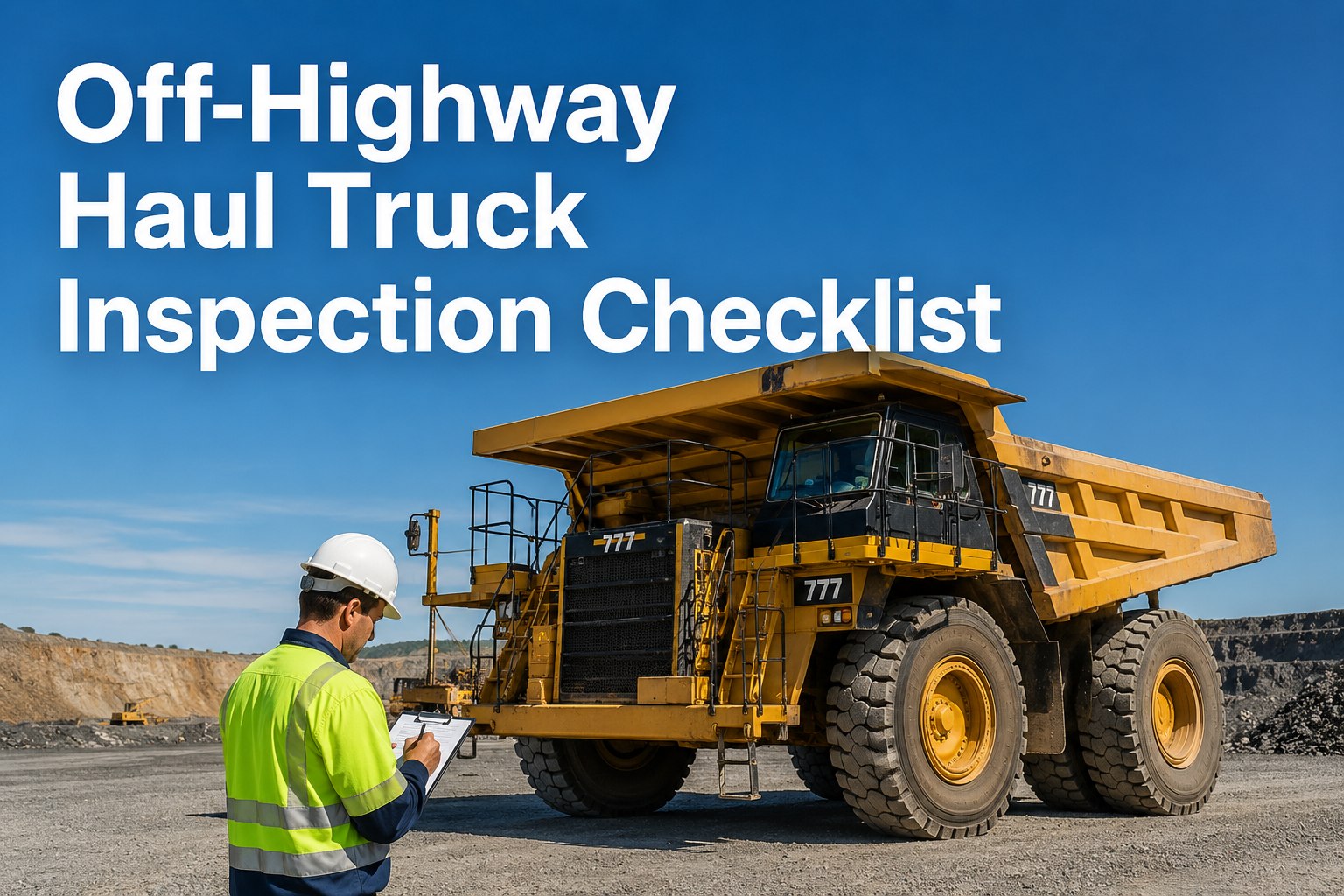
Every shift, an articulated haul truck operator sits on a goldmine of data — how many loads moved, how much fuel burned, how many hours the engine ran, and which fault codes flashed on the dash. The problem isn't capturing it; modern ADTs from Volvo, John Deere, and Develon already display active payload, cycle counts, and fuel use right in the cab. The problem is getting it off the truck and into the hands of someone who can act on it. In too many fleets, the operator scribbles a few numbers on a paper sheet, leaves it in the cab, and hands it to a foreman who drops it in a folder at the end of the week. By the time the office sees a brake-wear note logged on Tuesday, it's Friday — and the truck has been hauling on it for three days. That field-to-office gap quietly costs fleets real money: drivers spend roughly 110 hours a year on paper logs, line-haul fleets idle 20–30% of the time, and a defect that sits unread becomes a roadside breakdown that idles a crew. HVI's haul truck operator app closes that gap — fuel, hours, defects, and load counts captured from the cab and instantly visible to the office, no paperwork. This guide covers what belongs in a daily ADT operator report, the reporting gap that kills fleets, and how HVI turns each shift into usable data. schedule a 30-minute walkthrough with our team to see it set up for your haulers.
Your operators already have the data. It just never makes it off the truck.
HVI lets ADT operators log fuel, hours, load counts, and defects from the cab in seconds — instantly visible to the office, so a defect noted at 7am is a work order by 7:05, not a breakdown next week.
The field-to-office gap, in numbers
The cost of paper reporting isn't one big hit — it's a steady leak of time, missed defects, and decisions made too late. These are the figures behind the gap.
A paper form that sits in the cab creates a false sense of compliance: the record exists, but it's in the wrong place at the wrong time. If a driver notes brake wear on Tuesday and the office sees it Friday, the report didn't protect the fleet when it mattered. Digital capture sends it to the right people the moment it's logged.
What belongs in a daily ADT operator report
A complete haul-truck shift report captures four things — and an ADT's in-cab systems already track most of them. The job is logging them in one place, every shift, in under two minutes.
Fuel & DEF
Fuel added and consumed, plus DEF level. ADT dash gauges show consumption live; logging it per shift surfaces the 20%+ swing between efficient and wasteful operation — and flags a sudden spike that signals a developing fault.
Engine hours
Start and end hour-meter readings. Accurate hours are the backbone of PM scheduling — service fires on real usage, not a guess — and reveal true utilization versus idle, the gap most fleets never see.
Load & cycle counts
Loads moved, tonnage, and cycle times — the production numbers. Onboard weighing tracks payload, but recording counts against a target keeps the shift on schedule and gives the office real productivity data per truck.
Defects & fault codes
Any fault code, leak, tire issue, or articulation-joint concern — reported the moment it occurs, because continuing to operate can make it worse. A photo and a tap turn it into an instant, actionable record for maintenance.
Faults should be reported when they happen, not at week's end — continuing to run a flagged machine only deepens the damage. sign up for a free HVI account and let operators log fuel, hours, loads, and defects from the cab, or schedule a live demo to see a fault code become a work order in real time.
From cab to office in one tap
The whole point is speed. A digital report collapses the days-long paper lag into a moment — here's the loop that replaces the folder on the foreman's desk.
Operator logs from the cab
At shift end (or the moment a fault appears), the operator taps in fuel, hours, loads, and any defect with a photo — on a phone or tablet, in under two minutes.
Office sees it instantly
The report lands in the fleet system with a timestamp and machine ID — no transcription, no folder, no waiting until Friday. Managers see the shift as it closes.
Defects auto-route
A flagged defect becomes a work order on the spot and can tag the truck out of service — so a brake issue noted at 7am is being scheduled by 7:05, not discovered next week.
What the office actually does with the data
Capturing shift data is only half the value — the other half is what it unlocks. Consistent daily reports turn a fleet of haulers from a black box into a managed operation.
Accurate PM scheduling
Real engine hours mean preventive maintenance fires on actual usage, not a calendar guess — so service happens before a failure, and never wastefully early. HVI schedules each interval automatically from logged hours.
Productivity per truck
Loads, cycle times, and tonnage per machine show which trucks and routes are pulling their weight — and where utilization is lost to idle time, the 20–30% most fleets can't see.
Fuel & cost insight
Fuel logged per shift reveals the 20%+ gap between operators and the spikes that signal a fault — turning fuel from an unexamined expense into a managed, per-asset cost.
Faster defect response
Defects reaching maintenance in real time mean small problems get fixed before they become roadside breakdowns — closing the gap that turns a Tuesday note into a Friday failure.
Keep it dead-simple for the cab: every field should trigger a clear action and need no training. A good shift report is one an operator can finish in under two minutes and a manager can read in sixty seconds — which is exactly how HVI's operator report is built — sign up free and build your two-minute shift report for every hauler.
Paper sheets vs. HVI operator reporting
Both collect the same numbers. Only one gets them to the office in time to matter — and turns them into scheduling, cost, and productivity decisions.
Paper shift sheets
- Report left in the cab, handed in at week's end
- Defects noted Tuesday, seen Friday — after three days of hauling
- Hours and fuel transcribed by hand, full of errors
- Load counts lost or never totaled against target
- No way to verify the numbers are accurate
- ~110 hours a year per driver spent on paperwork
With HVI software
- Fuel, hours, loads, and defects logged from the cab in under two minutes
- Office sees every shift instantly, timestamped per machine
- Defects auto-create work orders and can tag the truck out
- Engine hours feed PM scheduling automatically
- Productivity and fuel trended per truck and operator
- A searchable shift history exports in seconds
defect noted to work order created — not Tuesday to Friday. That's the difference digital operator reporting makes: hours and fuel feeding PM and cost decisions, loads tracked against target, and defects reaching maintenance before they become breakdowns. HVI connects the cab to the office for your whole hauler fleet.
Frequently asked questions
What should a daily articulated haul truck operator report include?
Four things. Fuel and DEF — fuel added and consumed plus DEF level, which surfaces the 20%-plus efficiency gap between operators and flags spikes that signal faults. Engine hours — start and end hour-meter readings that drive accurate PM scheduling and reveal real utilization versus idle. Load and cycle counts — loads moved, tonnage, and cycle times tracked against a target to keep the shift on schedule and give the office production data. And defects and fault codes — any leak, tire issue, articulation-joint concern, or dash fault, reported the moment it occurs. Modern ADTs already display most of this in the cab; the value is logging it in one place every shift. HVI captures all four in under two minutes.
Why is paper-based shift reporting a problem for haul truck fleets?
Because the data ends up in the wrong place at the wrong time. A paper report left in the cab and handed in at week's end creates a false sense of compliance — the record exists, but the office can't act on it when a decision needs to happen. If a driver notes brake wear on Tuesday and the office doesn't see it until Friday, the truck has hauled on that defect for three days and the inspection didn't protect the fleet when it mattered. Paper logs also get lost, damaged, or filled in incorrectly, consume around 110 hours per driver per year, and make it impossible to verify whether logged hours and fuel are accurate. Digital reporting sends each shift to the right people instantly.
Do operators need to enter data manually if the ADT already tracks it?
Modern articulated dump trucks do display a lot in the cab — active payload, accumulated payload, cycle counts, fuel and DEF consumption, and fault codes. But that data lives on the truck's screen and, without a reporting workflow, never reaches the office or the maintenance system. A digital operator report is how it gets there: the operator reads the in-cab figures and logs them in seconds, or where telematics integration is available, key values like engine hours and fuel can flow in automatically. Either way, the operator report is what connects the truck's onboard data to PM scheduling, productivity tracking, and defect response. Most fleets start with quick manual entry and add integrations over time.
How does fast defect reporting actually save money?
A defect caught early is cheap; the same defect discovered after days of operation is expensive. Fault codes deliver critical information, and continuing to operate after one appears can exacerbate the problem — a minor issue becomes a major repair, or a roadside breakdown that idles a whole crew waiting on the hauler. The reporting gap is the killer: when a defect noted in the cab takes days to reach maintenance, the window to fix it cheaply closes. Real-time digital reporting collapses that lag, so a brake or hydraulic issue logged at the start of a shift becomes a scheduled work order minutes later, before it cascades into downtime and emergency costs.
How does HVI handle haul truck operator reporting?
HVI gives operators a simple in-cab report on a phone or tablet: fuel, DEF, start and end engine hours, load and cycle counts, and any defect or fault code with a photo — completed in under two minutes. The report reaches the office instantly, timestamped and tied to the specific machine, with no transcription. Flagged defects automatically create work orders and can tag the truck out of service, so a fault noted at 7am is being scheduled by 7:05. Logged engine hours feed PM scheduling automatically, fuel and productivity trend per truck and operator, and the full shift history is searchable and exportable. It works across mixed ADT fleets — Volvo, John Deere, Develon, Cat, and more. schedule a demo and we will set it up around your haulers and shift workflow on the call.
Get every shift's data off the truck and into the office — instantly.
HVI lets your ADT operators log fuel, hours, load counts, and defects from the cab in under two minutes, with defects auto-routing to work orders and hours feeding PM scheduling. Stop losing data in folders and discovering breakdowns too late. Sign up free and connect your haulers' cabs to your office.
No credit card required · Live in under two weeks · Fuel + hours + load counts + defect reporting from the cab in one platform