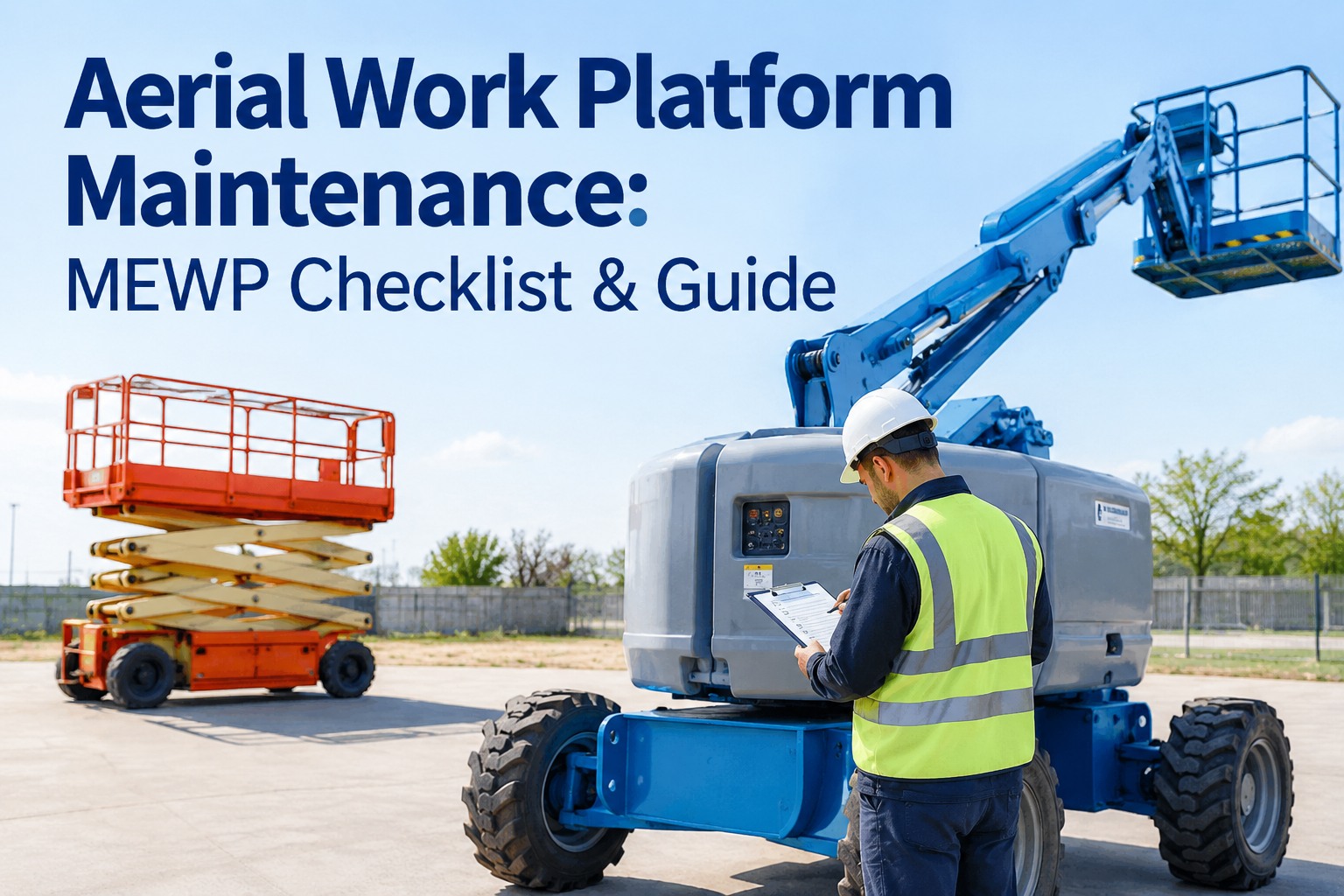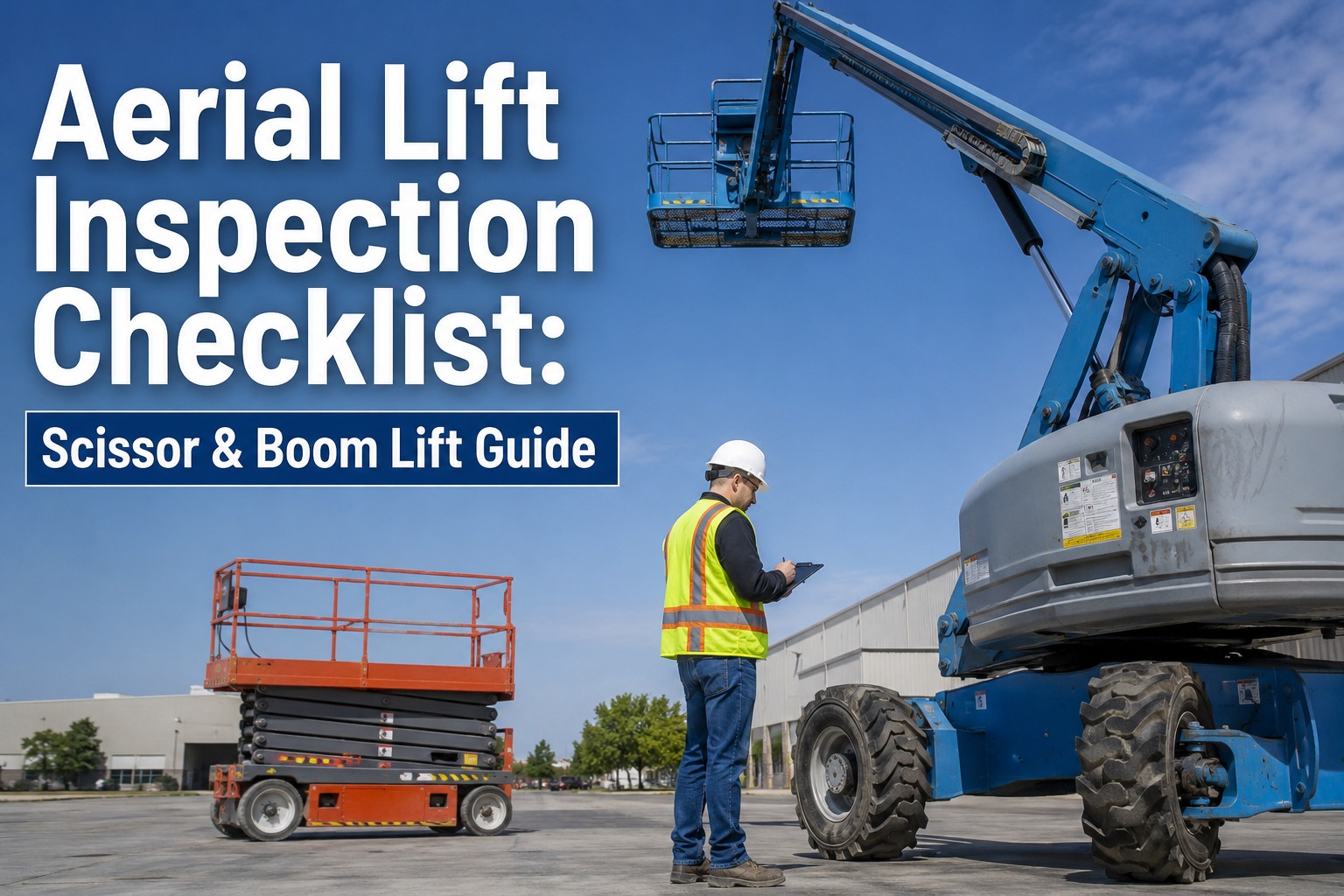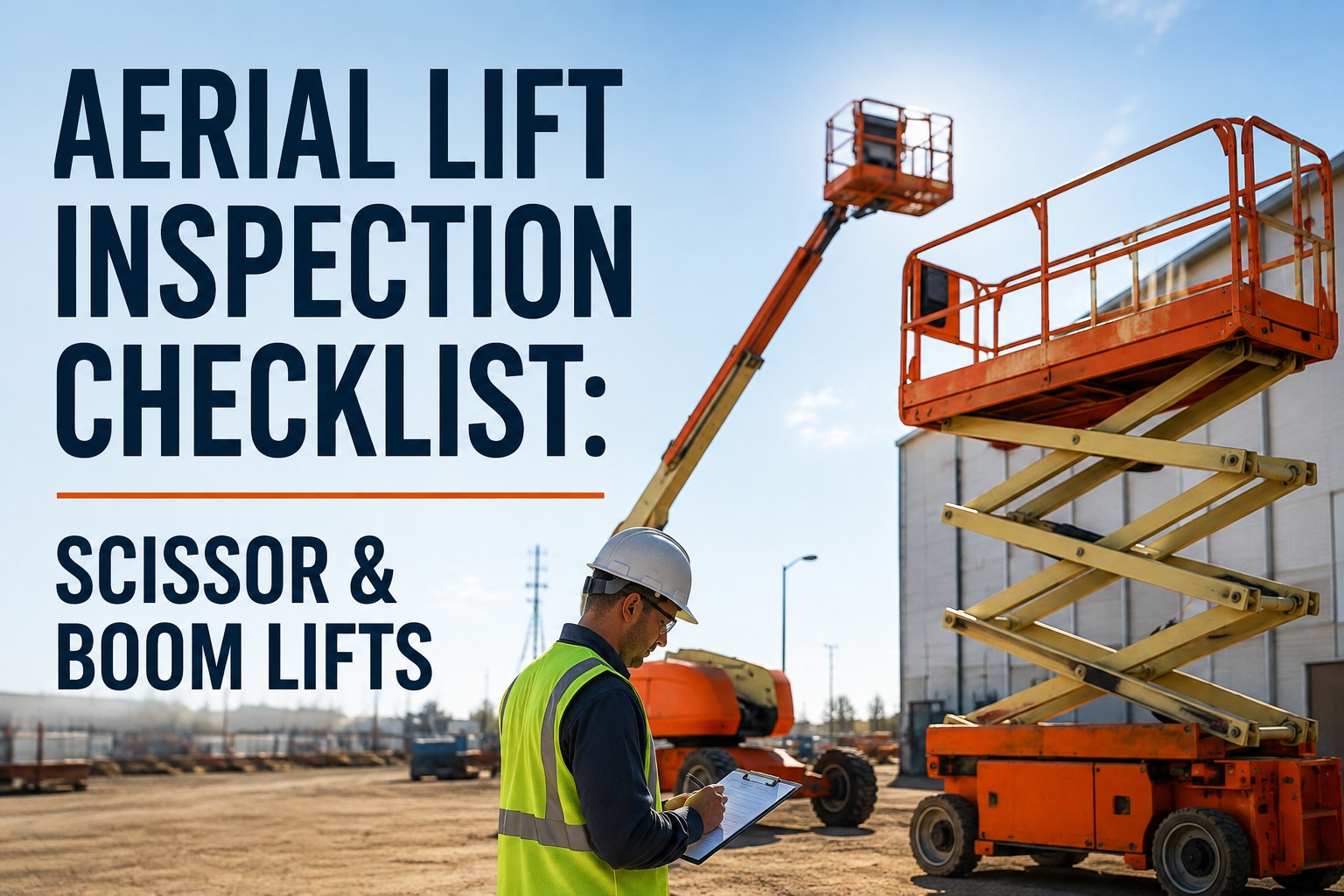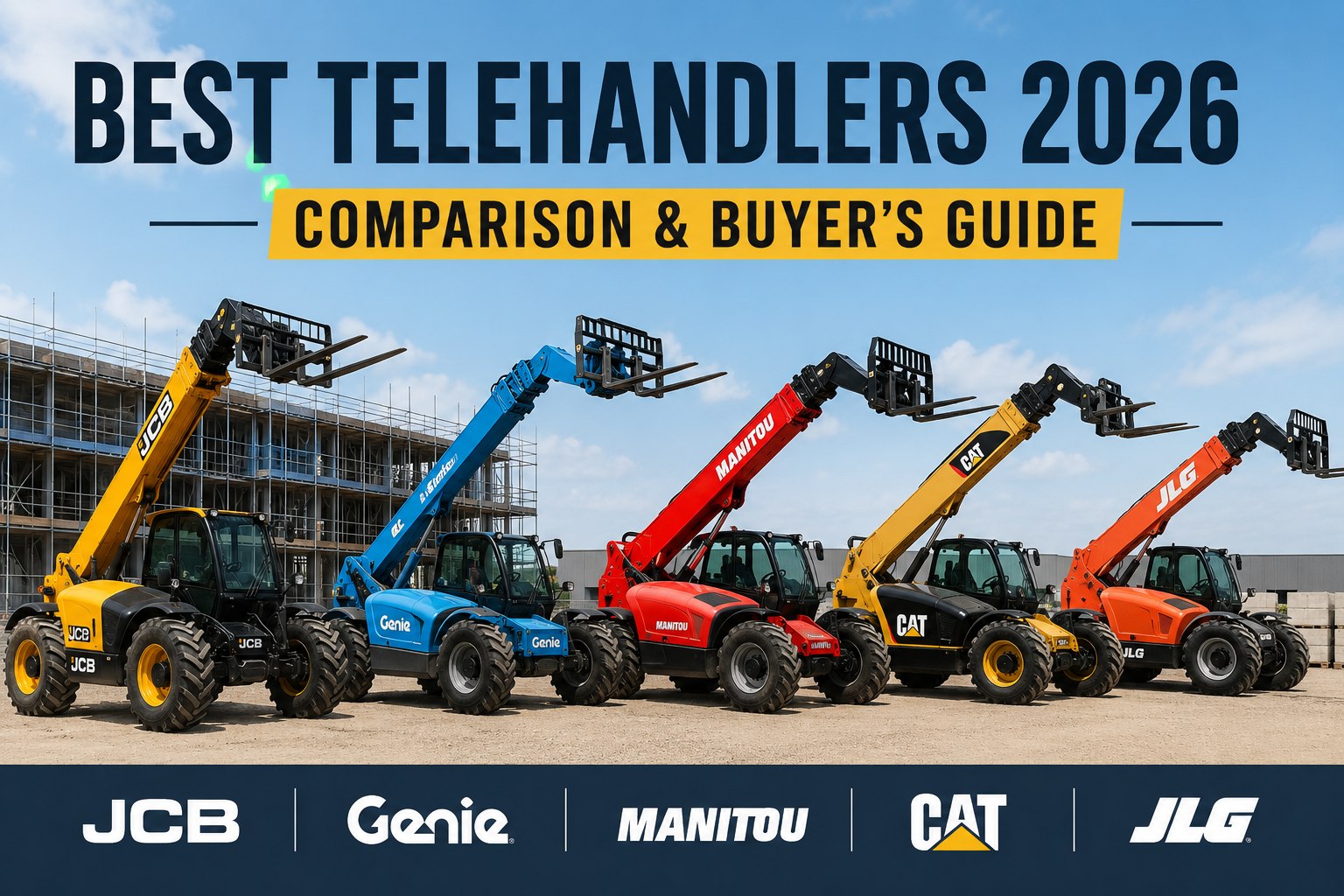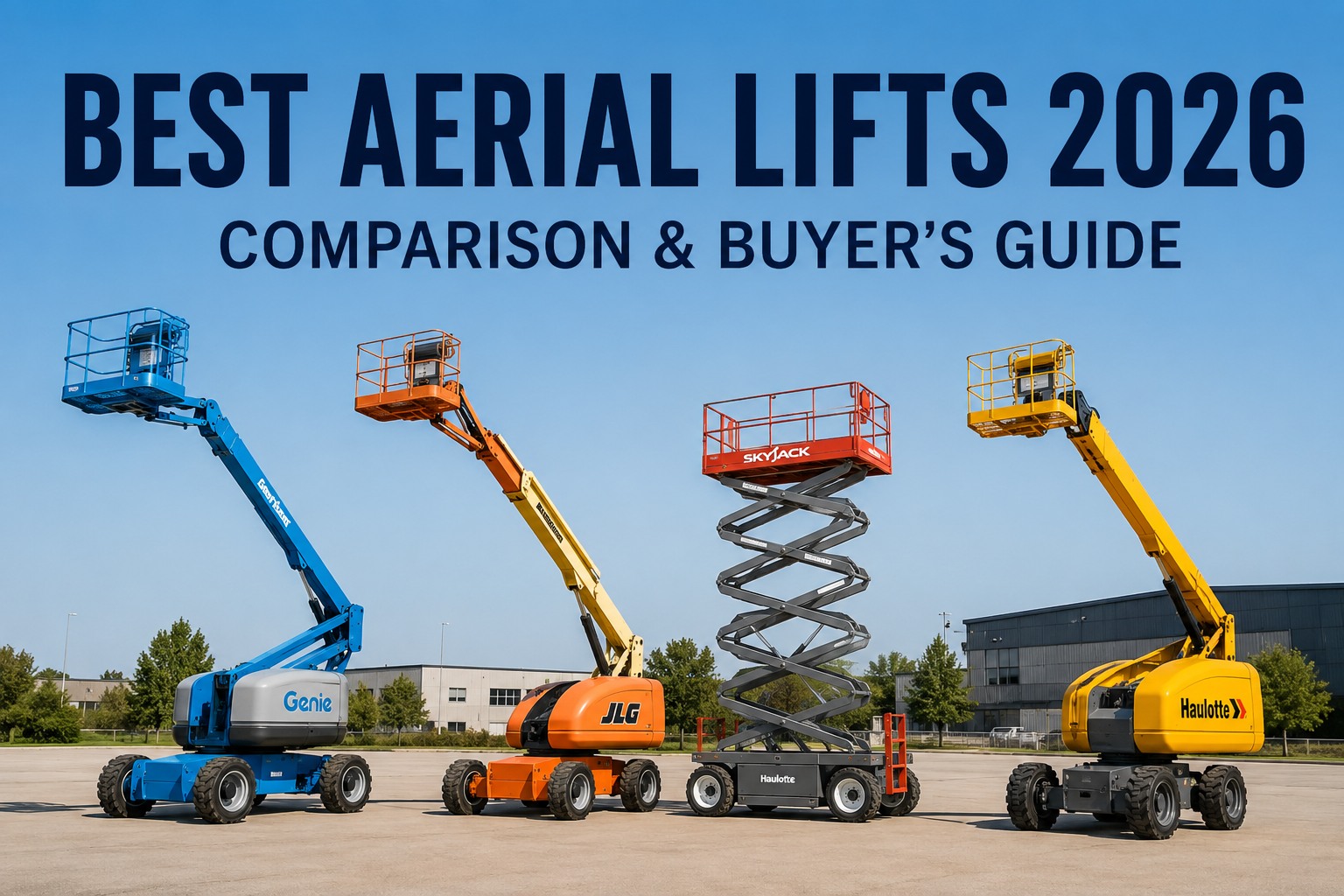
The best aerial lifts of 2026 aren't a single ranked list — the right answer depends on whether you're finishing warehouse ceiling panels, framing a two-story extension, running utility line maintenance at 80 feet, or handling daily facility maintenance under 30 feet. Four aerial lift categories dominate the 2026 commercial market — electric slab scissor lifts, rough terrain scissor lifts, articulating boom lifts, and telescopic boom lifts — served primarily by four manufacturers (Genie, JLG, Skyjack, Haulotte) with meaningfully different product lines, price points, safety features, and dealer support networks. This best aerial lifts 2026 buyer's guide walks the four categories with height and application ranges, a full head-to-head brand comparison table, the four leading manufacturers with strengths, six capability dimensions to evaluate on any candidate, application-based recommendations, and the mistakes contractors make when selecting aerial work platforms. Book a demo to see how aerial lift inspection and ANSI A92 compliance run on the HVI dashboard.
An aerial lift — formally called a Mobile Elevating Work Platform (MEWP) under ANSI A92.20—2020 — is a self-propelled machine that elevates workers and materials to elevated work positions via a scissor mechanism, articulating boom, or telescopic boom. The four dominant categories in 2026 are electric slab scissor lifts (19–32 ft, indoor), rough terrain scissor lifts (26–53 ft, outdoor), articulating boom lifts (30–135 ft, reach over obstacles), and telescopic boom lifts (40–185 ft, straight-line maximum height).
4 Categories of Aerial Lifts in 2026
Every buyer decision starts with picking the category. Height range, terrain, and application drive the choice before brand ever enters the conversation.
Battery-powered, non-marking tires, silent operation for occupied spaces. Slab-only terrain rating.
Diesel or hybrid power, 4WD, extended deck. Handles jobsite grades and uneven surfaces.
Multi-joint boom bends over obstacles. Best up-and-over reach in the industry for interior finishing.
Straight-line telescoping boom. Highest reach in commercial fleet use for utility and telecom work.
The four categories above are the shortlisting starting point. Below is the full head-to-head comparison table across brands, deeper detail on each manufacturer, the six capability dimensions to evaluate on any candidate, application-based recommendations, and the five recurring mistakes contractors make on aerial work platform purchases.
Genie vs JLG vs Skyjack vs Haulotte — full comparison table
The head-to-head answer for 2026: Genie is the market leader with broadest product line and highest resale value. JLG leads on advanced safety features and hybrid electric options. Skyjack delivers best value in the scissor category. Haulotte offers European-engineered alternatives with strong articulating boom design.
| Attribute | Genie (Terex) | JLG | Skyjack | Haulotte |
|---|---|---|---|---|
| Market position | Market leader | Innovation leader | Value leader | European emerging |
| Product breadth | Full line | Full line | Scissor-strong | Boom-strong |
| Scissor lift range | 19–53 ft | 19–53 ft | 19–53 ft | 20–53 ft |
| Boom lift range | 30–185 ft | 30–185 ft | 40–60 ft | 30–135 ft |
| Pricing tier | Premium | Premium | Value | Mid-tier |
| Typical scissor price | $22K–$85K | $23K–$88K | $18K–$72K | $20K–$78K |
| Safety features | Standard ANSI A92.20 | Industry-leading | Standard ANSI A92.20 | Standard ANSI A92.20 |
| Dealer network (NA) | Largest | Very large | Large | Regional |
| Resale value (5-year) | 55–65% MSRP | 50–60% MSRP | 45–55% MSRP | 40–50% MSRP |
| Best fit | Rental fleets | Safety-focused ops | Cost-conscious buyers | Boom specialty |
Cross-shopping the top three is standard practice on any commercial aerial lift purchase over $50,000. Local dealer support quality often matters as much as brand differentiation for post-sale reliability — a Skyjack with same-day parts availability beats a Genie with 3-week parts delivery. Book a demo to see multi-brand fleet inspection tracked together
4 leading aerial lift manufacturers — detailed
Four manufacturers dominate the 2026 North American aerial work platform market: Genie, JLG, Skyjack, and Haulotte. Each has category strengths, pricing tiers, and dealer network coverage that matter meaningfully in the buying decision.
Rental companies typically standardize on Genie or JLG for parts availability across large fleets; individual contractors often win better pricing from Skyjack; specialty applications sometimes favor Haulotte's articulating boom engineering. All four brands meet ANSI A92.20 safety standards on current production equipment. Start free and add multi-brand aerial lift tracking
6 capability dimensions to evaluate on any aerial lift
Regardless of brand or category, six dimensions determine whether an aerial lift fits your application: platform and working height, weight capacity, terrain rating, power source, ANSI A92-compliant safety systems, and serviceability including dealer support.
Platform + working height
Platform height is standing surface elevation. Working height adds approximately 6 feet for reach. Best practice: buy 20% above minimum need to handle unexpected reach requirements without renting supplemental equipment.
Platform capacity
Weight rating in pounds, plus number of occupants. Standard slab scissors 500–750 lb; RT scissors 750–1,500 lb; booms 500–1,000 lb. Account for tools, materials, and worker weight before purchase.
Terrain rating
Slab (indoor/flat only), rough terrain (4WD, extended deck), or all-terrain. Wrong terrain rating for jobsite conditions is not a cost-optimization decision — it's a safety failure exposing the fleet to OSHA violations.
Power + fuel source
Electric (indoor, quiet, zero emission), diesel (outdoor power), hybrid (both). ANSI-compliant lifts must meet emissions requirements for indoor use in occupied spaces.
Safety systems (ANSI A92.20)
Load-sensing system with automatic halt at capacity, tilt sensors, anti-entrapment secondary guarding, and fall arrest attachment points. ANSI A92.20 compliance mandatory on all 2020-or-newer manufactured equipment.
Serviceability + dealer support
Dealer network coverage, parts stocking, and service response time. A cheap lift with 3-week parts delivery costs more in downtime than a premium lift with same-day availability. Evaluate this equally with sticker price.
The six capabilities together cover the entire aerial work platform buying decision. Any candidate that fails on more than one dimension is likely a wrong-category match rather than a wrong-model match — go back to the four categories and re-shortlist. Book a demo to see all 6 capability dimensions tracked automatically
Application-based aerial lift recommendations
The best aerial lift for your application depends on the job, not the brand. Match category to application first, then category to brand.
Match the application to the category first, then the category to the brand. Buying based on brand loyalty before understanding application creates the highest-regret aerial lift purchases in commercial fleets. Book a demo to see per-unit application tracking
5 mistakes contractors and fleet managers make when buying aerial lifts
Every underperforming aerial lift purchase traces back to one of five recurring mistakes — buying by max height instead of application height, wrong terrain rating, skipping ANSI A92 compliance verification on used equipment, underestimating dealer support, and no inspection/maintenance system planned before purchase.
Buying based on maximum height instead of application height
Contractor buys 60 ft lift "in case we need it" for jobs that never exceed 32 ft. Extra height means bigger machine, bigger transport rig, worse maneuverability, higher operating cost. 90% of use cases are on-tie-down.
Wrong terrain rating for jobsite reality
Fleet buys slab scissor for construction site that turns out to have uneven ground. Lift fails on grade, or operator brings it out to slope and creates an OSHA-reportable accident. Wrong rating for the environment isn't cost-optimization — it's safety failure.
Skipping ANSI A92 compliance verification on used equipment
Used lift purchased at auction predates the 2020 ANSI A92 update. New safety systems (load sensing, secondary guarding) never retrofitted. Fleet takes on OSHA and liability exposure for operating non-compliant equipment.
Underestimating parts availability and dealer support
Buyer picks lowest sticker price without checking local dealer network. First breakdown reveals 3-week parts delivery. Downtime costs eclipse the savings on purchase price within the first year.
No inspection or maintenance system planned before purchase
Fleet buys aerial lifts but has no digital system for daily pre-shift inspections, ANSI-required PMs, or repair work orders. Compliance falls to paper logs that get lost. OSHA audit or lift accident exposes the documentation gap.
Every mistake above becomes visible after purchase when it's too late to fix without meaningful cost. Get the category, terrain, compliance, dealer, and inspection framework right during shortlisting, and the purchase pays back consistently across the equipment's service life. Book a demo to see aerial lift inspection workflow — or start free and deploy this week .
Related aerial lift questions buyers ask
What's the difference between an aerial lift and a MEWP?
They're the same equipment. MEWP (Mobile Elevating Work Platform) is the formal ANSI A92 and international terminology; "aerial lift" is the common industry name in North America. Both terms cover scissor lifts, boom lifts, and vertical mast lifts under the ANSI A92.20—2020 standard.
Do aerial lift operators need certification?
Yes. ANSI A92.24 and OSHA 29 CFR 1926.453 require operator training and evaluation before independent operation. Training must be documented, equipment-specific, and re-verified at least every 3 years or after a near-miss or accident. IPAF PAL Card and OSHA-compliant training programs both satisfy the requirement.
How often do aerial lifts need inspection?
Three cadences apply. Pre-shift inspection by the operator on every workday (required under ANSI A92.22). Frequent inspection every 3 months or 150 hours by a qualified person. Annual inspection by a manufacturer-authorized technician. All three must be documented and available for OSHA or insurance review.
What's the ANSI A92.20 load sensing requirement?
ANSI A92.20—2020 requires all new MEWPs to have a load-sensing system that automatically stops elevation and extension functions when platform load exceeds rated capacity. This is not an option or upgrade — it's a mandatory safety system on all lifts manufactured or imported after March 2020.
What are typical aerial lift rental rates in 2026?
Electric slab scissor lifts (19–26 ft): $180–$380/day. Rough terrain scissors (32–40 ft): $350–$700/day. Articulating booms (45–60 ft): $450–$900/day. Telescopic booms (80–125 ft): $750–$2,500/day. Weekly rates typically 3–3.5x daily; monthly rates typically 8–10x daily. Delivery and pickup fees add $150–$500 per direction.
Should I buy or rent aerial lifts?
Utilization drives the decision. Own if you'll use 1,500+ hours/year or 200+ days/year on the same category of lift — ownership typically pays back within 3 years at that utilization. Rent for occasional use, height outliers, or specialty applications. Best-in-class fleets own 60–80% of daily-use categories and rent for tall boom outliers.
These questions cover the most common "people also ask" queries for aerial lift buyers in 2026. If your specific application isn't covered, the four-category framework and six-capability evaluation above will surface the right answer for it.
From an equipment manager after a formal aerial lift evaluation
We ran a formal evaluation on 8 aerial lift purchases across Q2 — scissors and booms mixed for indoor and outdoor projects. Two big learnings. First, we'd been over-buying height by 30–40% on typical purchases — the "just in case we need it" thinking cost us bigger transport, worse maneuverability, and higher operating cost across the whole fleet.
Second, we hadn't been tracking which brand serviced fastest on breakdown. When we finally pulled the data, Skyjack was consistently 2 days faster than one Big Two brand on parts through our regional dealer. Combined with lower sticker price, Skyjack ended up winning 5 of the 8 purchases. Total spend was 22% below budget; total forecast downtime dropped roughly 35% based on dealer response modeling.
Frequently asked questions
What are the best aerial lifts to buy in 2026?
There is no single "best" aerial lift — the right choice depends on application, height needed, terrain, and fleet standardization. Four aerial lift categories cover most 2026 commercial use cases: electric slab scissor lifts (19–32 ft platform, indoor use, silent operation), rough terrain scissor lifts (26–53 ft, outdoor construction, 4WD), articulating boom lifts (30–135 ft, multi-joint reach over obstacles), and telescopic boom lifts (40–185 ft, straight-line maximum height). Four manufacturers dominate the North American market: Genie (Terex) as the broadest product line and market leader with the best resale value; JLG as the innovation and safety-feature leader; Skyjack as the value leader with particularly strong scissor lift ROI; and Haulotte as the European-engineered alternative with strong articulating boom design. Best-in-class buyers cross-shop the top three brands in whatever category matches their application, weighted equally on sticker price, local dealer support, and post-sale parts availability.
What's the difference between scissor lifts and boom lifts?
Scissor lifts elevate a large platform straight up on a folding scissor mechanism. They offer a large working deck (typically 5x8 to 10x18 feet), high weight capacity for multiple workers and materials, but only vertical reach with no horizontal extension. Best for large-area work at a single elevation like drywall, ceiling grid, or warehouse maintenance. Scissors max out around 53 ft platform on rough terrain versions. Boom lifts extend a boom arm (articulating or telescopic) that can reach out horizontally and over obstacles. Articulating booms bend at multiple joints for up-and-over access to hard-to-reach areas like interior finishing and HVAC installation. Telescopic booms extend in a straight line for maximum reach and are used for utility, telecom, and tall exterior work. Booms have smaller platforms (typically 500–1,000 lb capacity) but can reach 135–185+ ft. Rule of thumb: scissor for area work at one level, boom for reach work over or around obstacles.
How do I compare Genie vs JLG vs Skyjack aerial lifts?
Cross-shopping the top three brands is standard practice on any commercial aerial lift purchase over $50,000. Compare on six dimensions: platform and working height, platform weight capacity, terrain rating, power source, safety systems (ANSI A92.20 compliance mandatory), and serviceability including local dealer network. Genie offers the broadest product line and highest resale value; typical premium of 3–7% over Skyjack for equivalent specs but easier resale in 5–8 years. JLG leads on advanced safety features and hybrid electric options; typical premium of 5–10% over Skyjack; strong choice for safety-focused contractors and indoor/outdoor mixed operations. Skyjack offers the best value in the scissor category with typically 5–15% lower sticker price than the Big Two; simpler mechanical design means easier maintenance and often faster dealer service. On specialty applications like articulating boom engineering, Haulotte's HA-Series is worth adding to the shortlist. Local dealer support quality typically matters more than brand differentiation for post-sale reliability.
What are ANSI A92 standards for aerial lifts?
ANSI A92 is the American National Standards Institute's family of standards governing Mobile Elevating Work Platforms (MEWPs), which is the technical term for what most operators call aerial lifts. The current standards became effective in 2020 and remain the operative reference in 2026. Three primary standards apply: A92.20 governs design and manufacture, requiring load-sensing systems that automatically halt operation at platform capacity, tilt sensors, and secondary guarding against entrapment. A92.22 governs safe use in the field, including pre-shift inspection requirements, hazard analysis, and rescue planning. A92.24 governs operator training and familiarization requirements. All new aerial lifts manufactured or imported for North American use must comply with A92.20. Used equipment predating 2020 may lack the required load sensing and secondary guarding systems — verify compliance and retrofit status before purchase. Failure to comply with ANSI A92 in operation creates OSHA violation exposure and eliminates a fleet's legal defense if an accident occurs.
Should I buy a new or used aerial lift?
Depends on utilization, cash position, and compliance willingness. New aerial lifts deliver full warranty coverage (typically 1–2 years comprehensive plus extended powertrain), latest ANSI A92 safety features already installed, longer expected service life (10–15 years for scissors, 15–20 for booms), and easier parts availability. Sticker prices range from $18,000–$30,000 for small electric slab scissors up to $200,000+ for large telescopic booms. Used aerial lifts offer 40–60% lower acquisition cost but require careful compliance verification: is the unit ANSI A92.20 compliant (2020-or-newer manufacture, or verified retrofit)? What's the meter reading? Has the unit had regular PMs, or is service history a black box? Rental fleets often sell 3–5 year old units with clean maintenance history at reasonable prices, which is often the sweet spot for used purchases. Auction purchases carry higher risk. Best-in-class buyers finance new for high-utilization units (2,000+ hours/year) and buy used for occasional-use fleet additions.
Related HVI guides for aerial lift and heavy equipment fleets
Whatever aerial lift you buy, HVI runs the inspection and maintenance
HVI captures ANSI A92.22 pre-shift inspections, scheduled PMs, safety system checks, and repair work orders per unit. Multi-brand fleets tracked in one platform with brand-specific PM schedules per manufacturer's recommendations. Live in under two weeks — typical aerial lift fleets see 30–50% reduction in unplanned downtime in the first quarter.
No credit card · No hardware · Aerial lift inspection templates ready day one