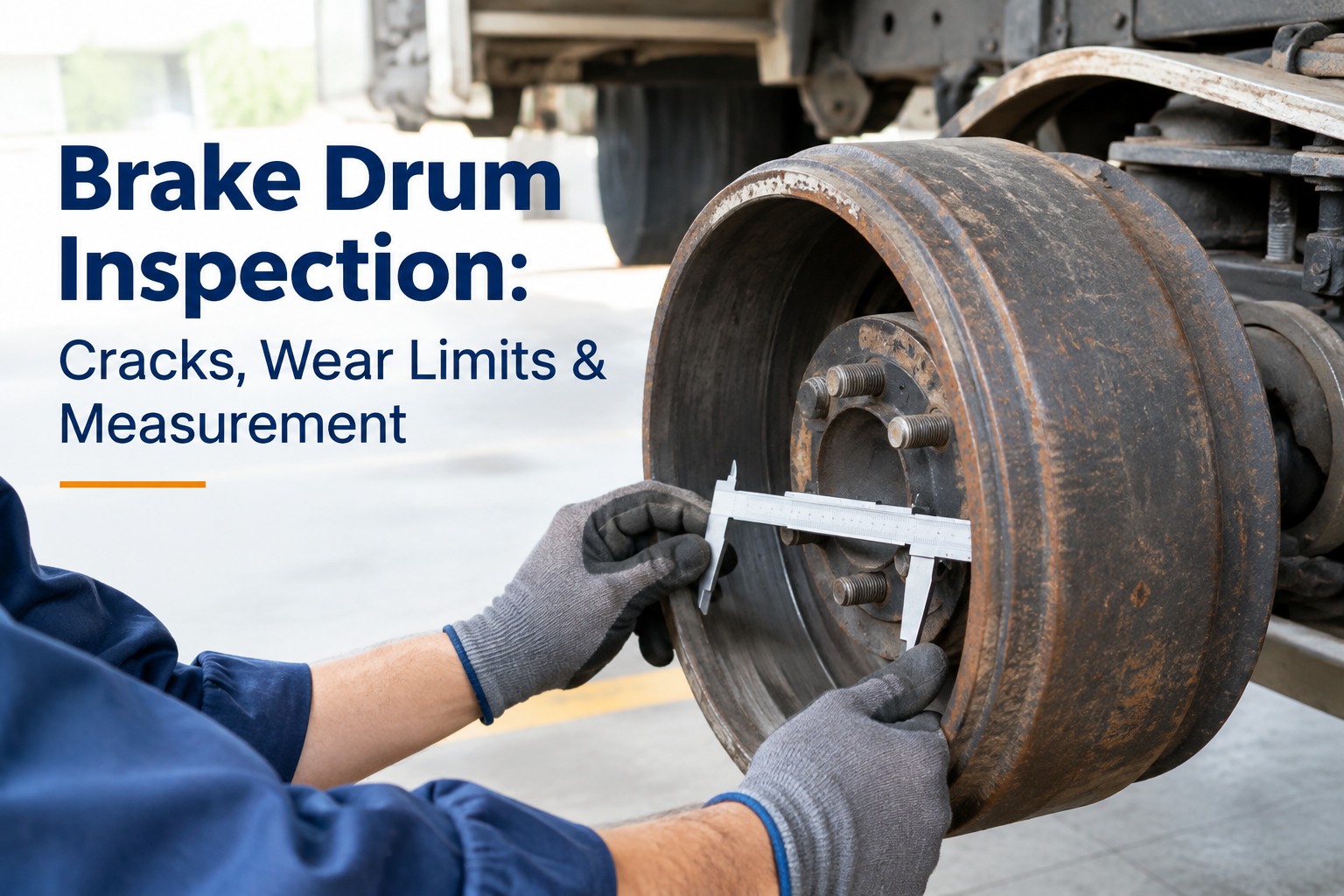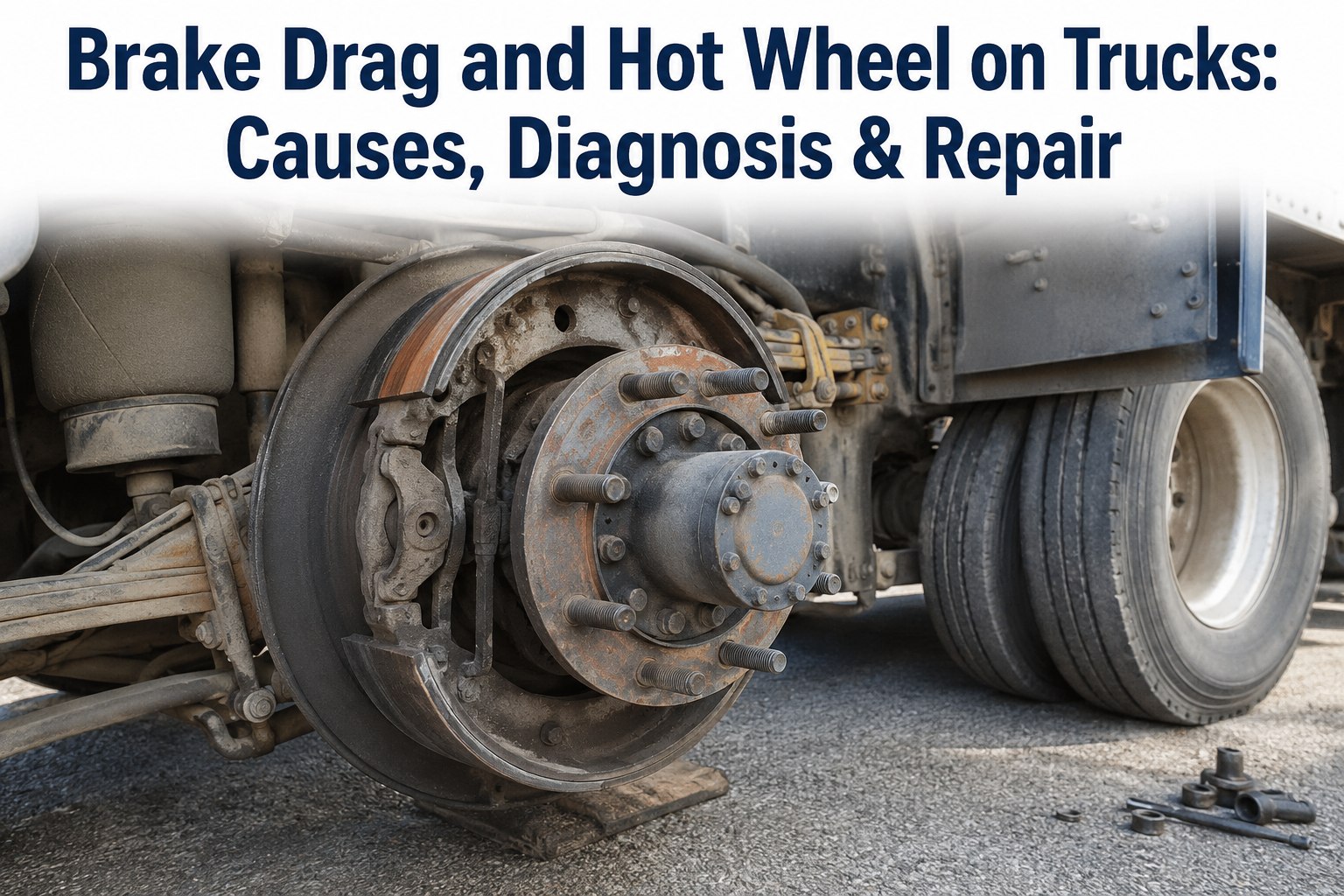
You park at the yard, walk the trailer, and one hub is putting off heat you can feel from a foot away. The others are warm. That one is hot. That difference — not a warning lamp, not a fault code — is the earliest sign of a brake not fully releasing. Left running, that hot wheel wrecks linings, cracks the drum, boils wheel-seal grease, and can ignite the tire. Caught in the yard, it's a 90-minute repair — book a demo to see hot-wheel findings logged per asset.
One Wheel Doesn't Match the Others
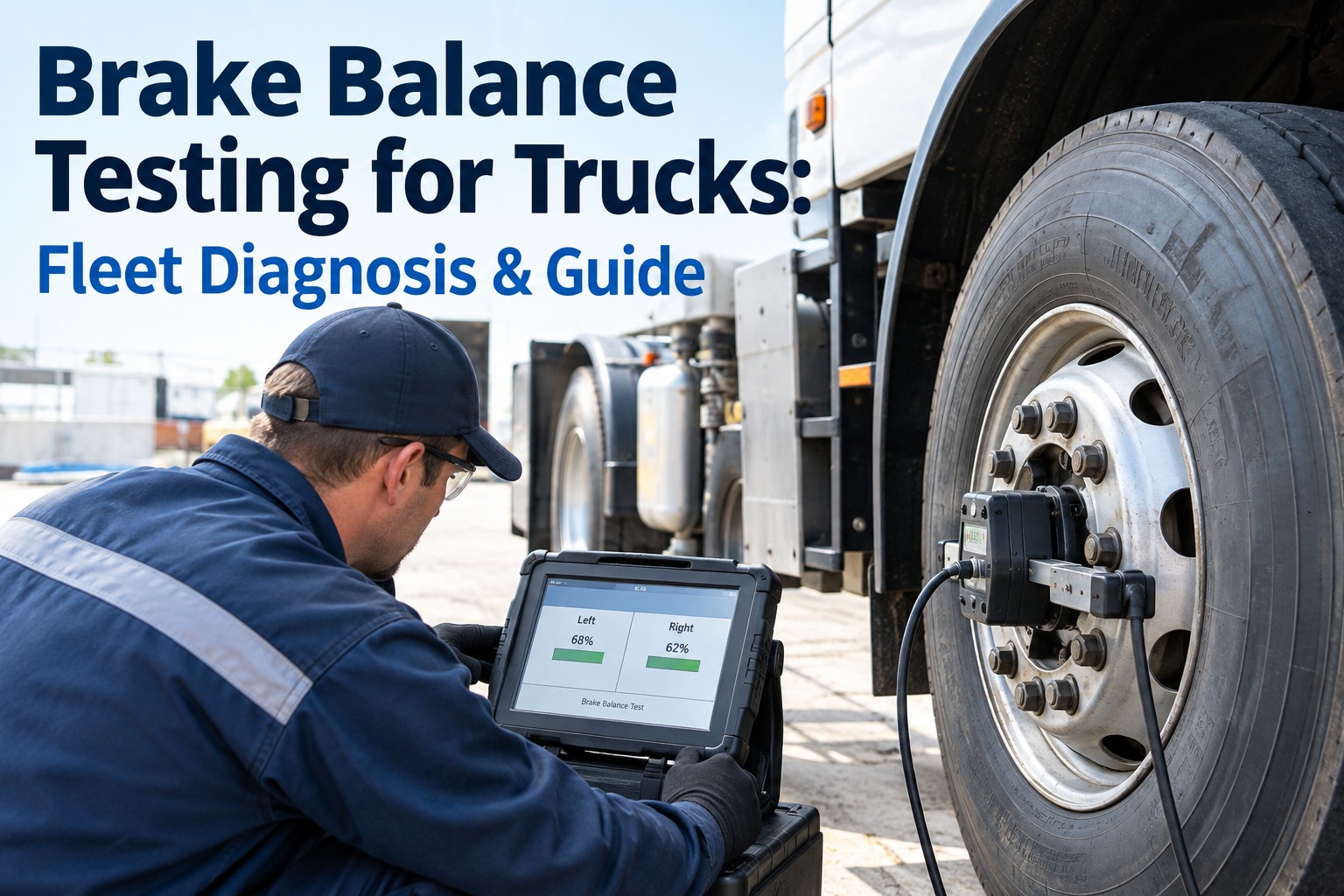
A single infrared temperature reading at each hub after a drive is the fastest brake-drag test in trucking. It's not the absolute number that matters — it's the difference between the same-axle wheels.
Take the reading within 5 minutes of parking, from the same distance on each hub (15–20 cm is ideal), on a similar surface (drum face, not the lug nuts).
The IR reading tells you which wheel is dragging. The diagnostic sequence below tells you why. Six components, in order of what to check first — because guessing wrong means replacing a $200 slack adjuster to solve a $60 S-cam bushing problem. Book a 30-minute demo to see this workflow inside HVI's brake PM template.
What actually causes a brake to drag
The foundation brake is a chain of moving parts — chamber, push rod, slack adjuster, S-cam, bushings, shoes, drum. If any one link doesn't return fully to its released position, the shoes stay lightly in contact with the drum and the wheel end runs hot. Six components explain almost every field case:
Worn S-cam bushings
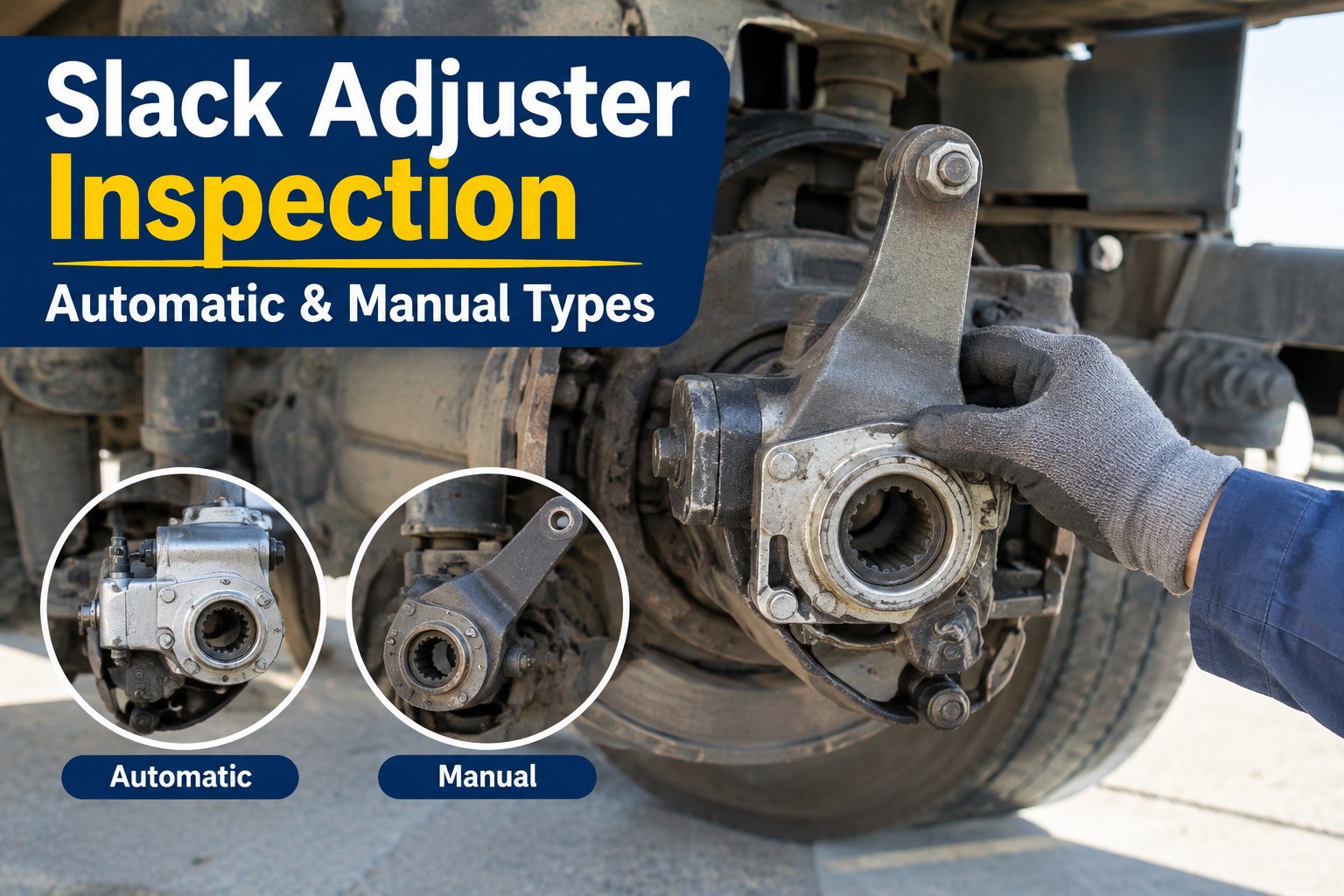
The most misdiagnosed. Excessive cam-shaft play lets the lower shoe drag on the drum even at rest, and the automatic slack adjuster keeps chasing the drum trying to compensate. Often blamed on the ASA when the bushings are the real issue.
Seized or dry slack adjuster
A slack adjuster that won't rotate freely can't back off after brake application. Root cause is usually neglected lubrication — the clevis pin, adjuster body, and internal mechanism all need grease at PM.
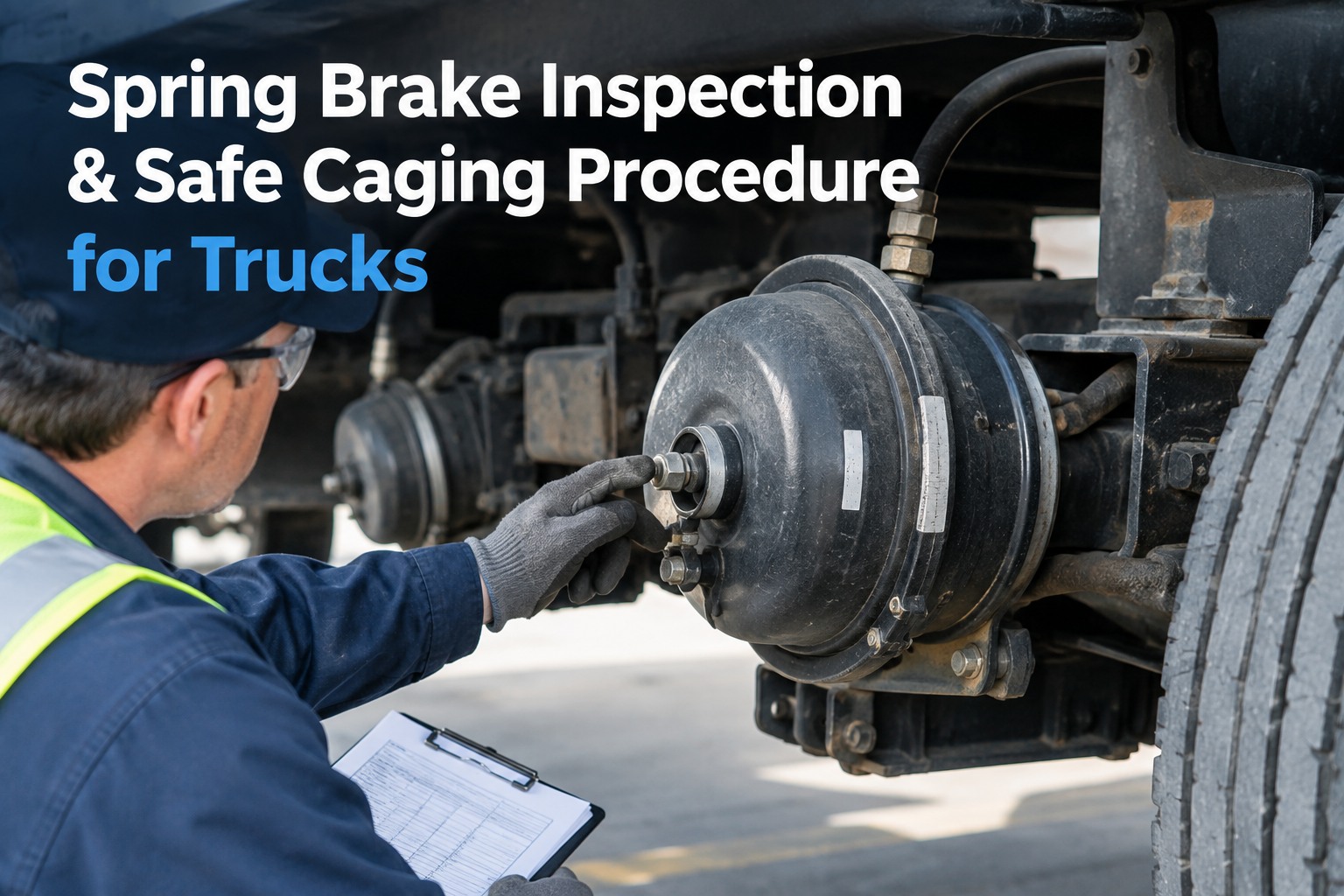
Spring brake not fully releasing
Insufficient air pressure to the spring-brake chamber leaves the parking-brake spring partially compressed — the truck moves, but the brake is still applying. Check for air leaks, restricted lines, or a failing spring-brake valve.
Sticking brake or relay valve
A relay or quick-release valve that fails to exhaust holds residual application pressure at the chamber. The brake never fully releases even though the driver has released the pedal. Common on trailers with old or moisture-contaminated valves.
Chamber return-spring failure
A weak or broken chamber return spring won't pull the push rod back to its rest position. Same effect as a stuck valve — light shoe-to-drum contact that produces heat over the whole drive.
Seized shoe rollers or anchor pins
The shoes sit on rollers at the S-cam end and pivot on anchor pins at the other. Corroded or dry rollers/pins keep the shoe from retracting cleanly. Usually caught during a full wheel-end teardown, not a walkaround.
Six components, one symptom. Which of them is guilty on any given hot wheel is what the diagnostic sequence below sorts out — and book a demo to see the whole sequence built as a step-by-step brake inspection template in HVI.
Why "just readjust the slack adjuster" is the wrong answer
Automatic slack adjusters are not for manual adjustment
Automatic Slack Adjusters (ASAs) have been required by law on North American commercial vehicles since 1994, and manufacturers are explicit: do not manually adjust them. Doing so works against the internal back-off clutch and shortens adjuster life. More importantly, a brake found out of adjustment almost never has an ASA problem — the ASA is compensating for something else that's wrong upstream (worn cam bushings, dry rollers, chamber pushrod length, or a seized foundation component). Manual adjustment masks the real problem, resets the wear indicator, and sends the truck back out with the underlying fault still there. The correct response to an out-of-adjustment brake is to inspect the S-cam, bushings, shoe hardware, and chamber — not to spin the manual adjustment nut. If the ASA itself is confirmed faulty, replace it. Do not repair it.
The 6-step diagnostic sequence
IR reading identifies the hot wheel. Then work the foundation from the outside in — visual first, mechanical second, teardown last. Doing it in this order catches the cheap fix (unstuck valve, dry bushing) before you're pulling drums for a $60 part.
-
1IR temperature scan, hub by hub5 min
Immediately after parking. Take each hub at the same distance and location on the drum. Log the readings against the truck or trailer. The outlier is the wheel to work on — and the historical readings are how you catch drift before it becomes a hot wheel.
-
2Visual walkaround & smell test5 min
Look for smoke, blued drum, blistered paint on the wheel end, and burnt-friction smell. Blueing on the drum means the wheel has been running hot for a while and heat damage is already done. Any smoke or fire risk — stop, cool, then diagnose. Never touch the drum or hub bare-handed until it's cooled.
-
3Air-release check10 min
With chocks in place, cycle the brakes and confirm full release at the chamber. Listen for exhaust from the quick-release or relay valve. Weak, delayed, or silent exhaust = valve issue. Check that spring brake air pressure is at spec so the parking-brake side is fully caged.
-
4Slack adjuster & pushrod inspection15 min
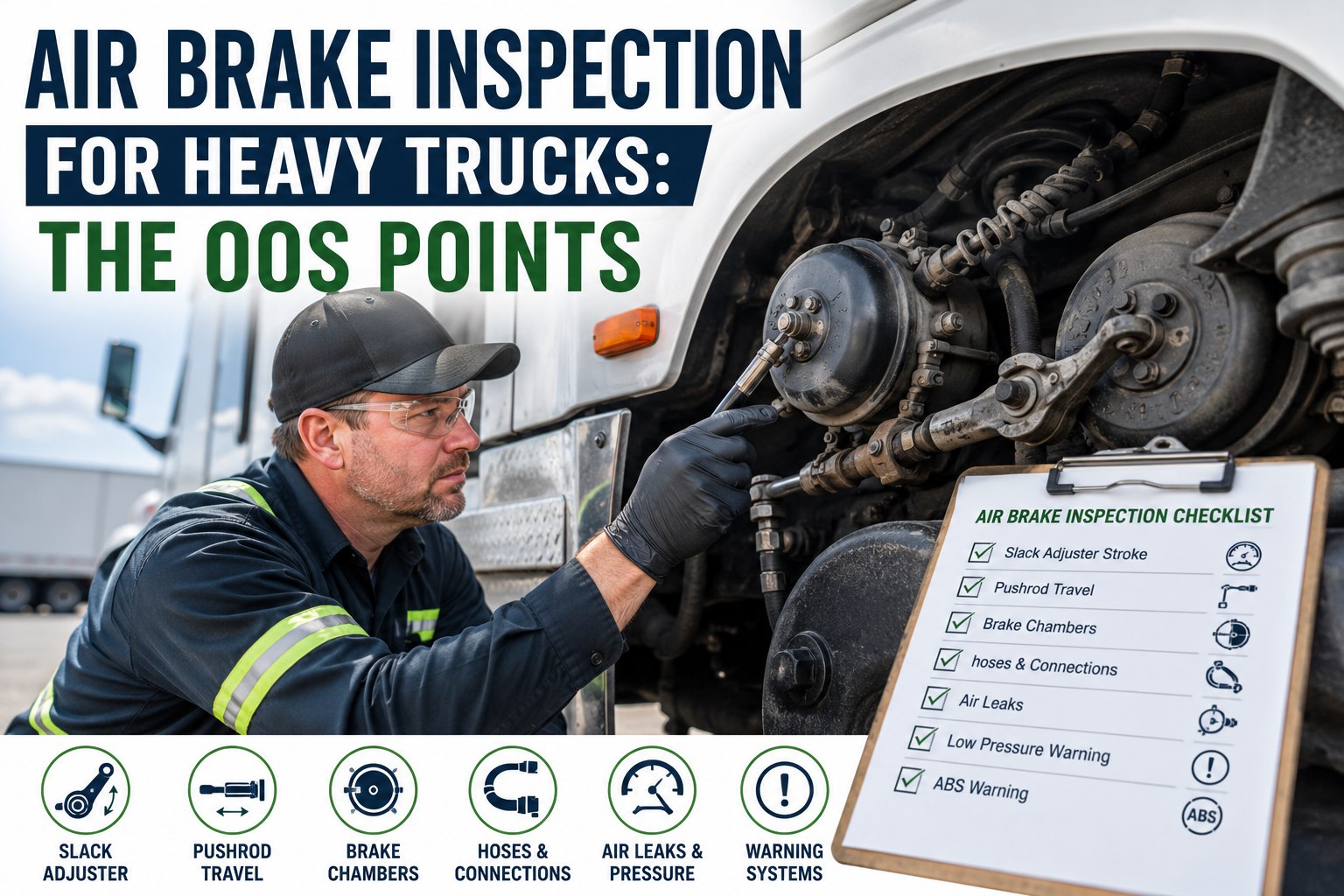
With brakes released, measure applied pushrod stroke. Excessive stroke is the alert, not the diagnosis — do NOT manually readjust an ASA. Instead, check the clevis pin for wear (clearance should not exceed .020 in.), pin freedom, and adjuster rotation with a pry bar. Anything sticky, dry, or bent goes on the repair list.
-
5S-cam & bushing check15 min
Pry-test the S-cam for radial play. Excessive movement means worn cam bushings — and worn bushings are the hidden cause of most repeat brake-drag complaints. This is the check technicians skip because it's fiddlier than swapping a slack adjuster. Skip it and the drag comes back in 30 days.
-
6Drum-off wheel-end teardown45–90 min
Only when steps 1–5 haven't answered it. Pull the drum. Inspect shoe rollers for corrosion and flat spots, anchor pins for wear, return springs for tension, and lining wear pattern for tapered or uneven wear (uneven wear points back to worn hardware). Fix the actual fault, reset everything to spec, verify temperature on next drive.
What the heat is actually costing you
A dragging brake is not a "we'll get to it Monday" defect. Every mile the wheel spins with the shoes lightly on the drum, four separate costs accumulate at once.
Lining & drum destroyed
Shoes wear out in a fraction of their rated life. Drums glaze, blue, and eventually crack from thermal cycling. A pair of drums plus shoes on one axle runs $600–$1,200 in parts alone — and the failure is usually asymmetric, so you're replacing both sides for balance.
Wheel-end damage cascade
Sustained heat cooks the wheel-seal grease, contaminates the linings from behind, and can damage bearings. A brake drag caught late turns into a bearing job, a seal job, and sometimes a hub replacement — multiplying a $150 diagnosis into a $2,500 repair.
Fuel economy penalty
The engine works against constant rolling resistance. Real-world impact varies with severity, load, and route, but even a light drag on one wheel of a Class 8 rig is measurable on the fuel line. Multiply across the fleet and it's not a rounding error.
Fire & safety risk
The worst case is not the repair bill — it's the tire igniting from sustained drum heat, the load lost, or a rollover on a dragging trailer axle that pulls asymmetrically. Hot-wheel findings are a safety-first defect, not a maintenance-when-we-get-to-it defect.
Start a free HVI trial to log wheel-end IR readings in every post-trip inspection — so the first sign of drift on any hub is captured before it becomes any of the four costs above.
Tractor vs trailer: where drag usually hides
Same symptom, different diagnostic starting points depending on which vehicle is showing the hot hub.
| Where the hot hub is | Check first | Then |
|---|---|---|
| Steer axle | Slack adjuster rotation, S-cam bushing play | Foundation hardware (rollers, springs), then chamber return |
| Drive axle | Spring brake fully caged, slack adjuster and clevis pin | S-cam bushings, then relay valve exhaust |
| Trailer axle (single wheel hot) | ABS-related sensor fault, slack adjuster / S-cam | Chamber return spring, quick-release valve |
| Trailer axle (both sides hot) | Relay or service valve not exhausting | Restricted air line, water/ice in valve |
| Every hub hot — whole trailer | Spring brake circuit or hand valve stuck applied | 7-way brake power circuit and gladhand supply |
The "one hub hot" cases are almost always foundation-brake mechanical. The "multiple hubs hot" cases are almost always air-side (valve, supply, or spring-brake circuit). Which pattern you see decides which end of the truck to open first. Book a demo to see wheel-position temperature readings logged in a live inspection template.
The habit that catches this before the tire smokes
The trailer with the blued drum came in last winter — driver hadn't reported anything. We pulled it, and the outboard shoe on the rear-right had cooked. Anchor pin seized. He'd been dragging that wheel for probably a week without knowing.
Now every driver on our yard has a $30 IR thermometer in the door. Post-trip, they shoot each hub, they call the outlier. Takes about 90 seconds. Since we started, we've caught eight brake-drag cases before the drum blued — and the savings on that alone paid for the thermometers 40 times over. It's the cheapest tool in the fleet.
Frequently asked questions
Why is one wheel on my truck hotter than the others after driving?
A wheel end that runs significantly hotter than its siblings after a normal drive is almost always a brake that isn't fully releasing. On air-brake trucks and trailers, the usual culprits are worn S-cam bushings letting the lower shoe drag on the drum, a seized or dry slack adjuster that can't back off after brake application, a spring brake that isn't fully released due to low air pressure, a sticking relay or quick-release valve holding residual chamber pressure, or a broken chamber return spring. As a field rule, a side-to-side difference of more than roughly 50°F on the same axle after similar use deserves investigation. The absolute temperature matters less than the difference between wheels — three hubs at 150°F and one at 380°F is a brake-drag pattern regardless of ambient conditions. Start with the visual walkaround, check air release at the chamber, then work the foundation hardware from slack adjuster to S-cam.
Is it safe to drive a truck with a dragging brake?
No — and the risk escalates quickly. A brake that's dragging light-handedly right now generates heat that damages the drum, linings, wheel seal, and bearings within a few hundred miles. Left running, the drum can crack from thermal cycling, the wheel seal can leak grease onto the friction surface (killing braking on that wheel entirely), and in worst cases sustained drum heat can ignite the tire. If you notice a burning smell, see smoke or blueing on the drum, or feel unusual heat coming off one hub, park the truck in a safe location, chock the wheels, and get the brake diagnosed before continuing. Never touch a hot hub, drum, or brake component bare-handed — wheel-end temperatures during a drag event routinely exceed 400°F and can cause severe burns. If in doubt, call for service rather than continuing to drive.
Should I manually adjust an automatic slack adjuster if the brake is out of adjustment?
No. Automatic slack adjusters have been required by law on North American commercial vehicles since 1994, and every major manufacturer (Bendix, Haldex, Meritor) is explicit: do not manually adjust an ASA. Doing so works against the adjuster's internal back-off clutch, shortens its life, and masks the real problem. When an ASA-equipped brake is out of adjustment, the ASA is almost always compensating for something else that's failing upstream — typically worn S-cam bushings, dry brake-shoe rollers, seized anchor pins, wrong push-rod length after a chamber replacement, or a mechanical binding in the foundation hardware. The correct response is to diagnose and repair the actual underlying cause. If testing confirms the ASA itself is faulty (won't rotate, internal mechanism failed), replace it with a new unit — do not attempt to repair or manually re-set it. Skipping this rule is one of the most common reasons brakes end up back out of adjustment days after "repair."
What temperature is normal for a truck or trailer wheel end?
There's no single "normal" number — wheel-end temperature depends on ambient conditions, load, terrain, brake usage during the drive, and drum material. What matters is consistency across the wheels of the same vehicle. After a similar drive, hubs on the same axle should read within roughly 20–30°F of each other, and the two axles of a tandem should be reasonably close. A common field rule is that any wheel reading more than 50°F above the average of its neighbors after similar use is worth investigating. Bendix guidance and other OEM references point in the same direction: it's the outlier, not the absolute number. Take the reading within 5 minutes of parking, from the same distance on each hub (15–20 cm is ideal for most consumer-grade IR thermometers), and always on the same surface — the drum face or hub, not the lug nuts (which read cooler) or the tire (which reads warmer). Log the readings against the specific truck or trailer so you can spot drift on any individual hub over time.
Does brake drag affect fuel economy?
Yes, though the impact varies with severity, vehicle configuration, load, and duty cycle. A brake that's dragging even lightly adds constant rolling resistance the engine has to overcome, and that shows up on the fuel bill. Severe drag on a Class 8 truck can produce a measurable MPG hit; a subtle drag on one wheel of a trailer might not be visible in single-truck fuel data but is very visible when the same trailer's fuel-per-mile is compared against sister units on the same routes. The bigger cost is almost never the fuel itself — it's the compounding damage to linings, drums, wheel seals, and bearings that a dragging brake causes over its next few thousand miles. Fuel is a symptom of the problem; component damage is the actual bill. Fleets that track wheel-end temperature at PM or post-trip catch drag early enough that neither the fuel penalty nor the repair cost gets a chance to add up.
Catch the hot wheel before the drum blues
HVI captures wheel-end temperature readings in every pre-trip and post-trip inspection, flags outliers automatically, logs defects and photos against the specific asset, and stores repair verification against the VIN. When the same hub trends hot across three shifts, the shop sees the pattern before it becomes a smoking drum. Live in under two weeks. No hardware. No credit card.
Trusted by fleets across North America · Ready on day one