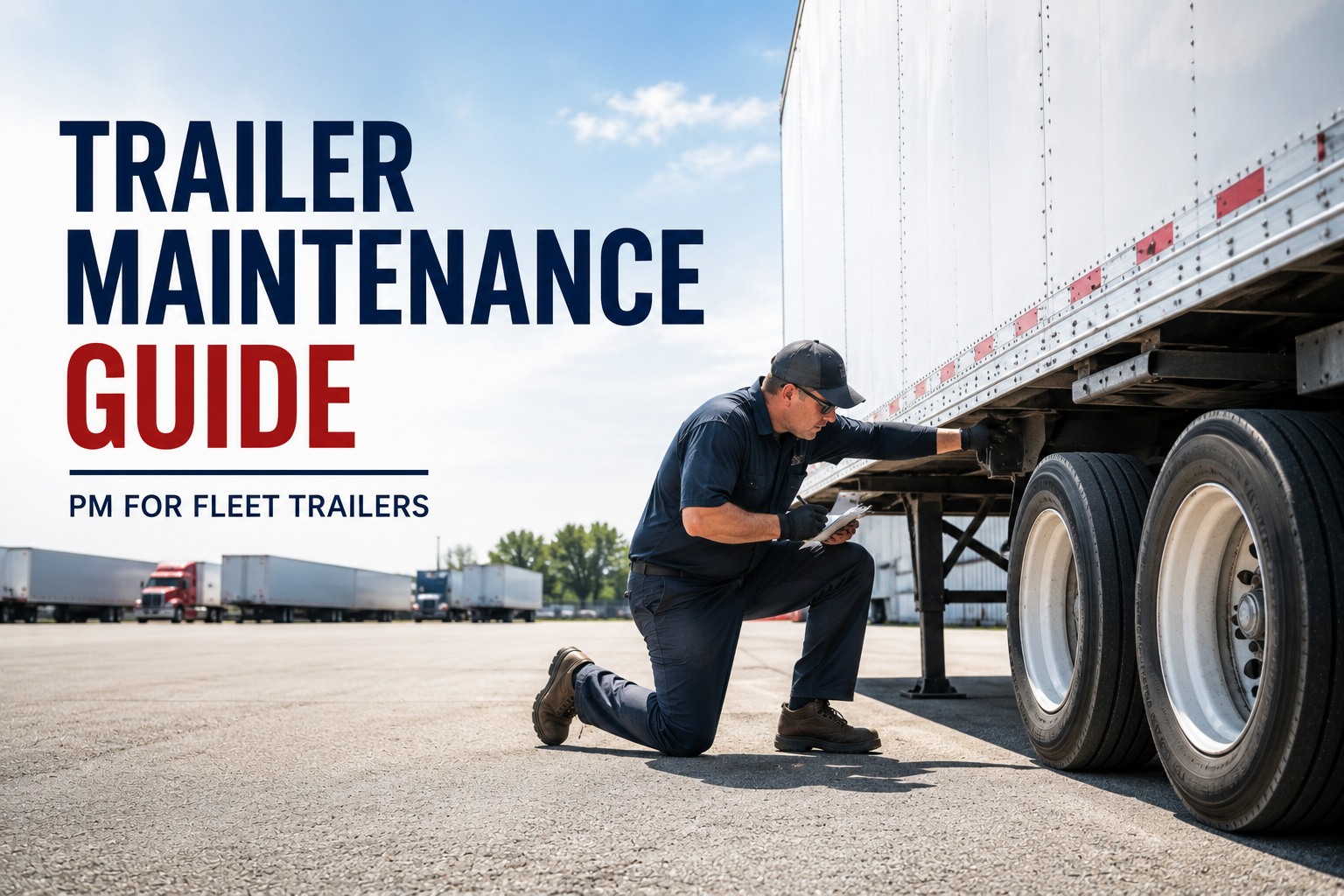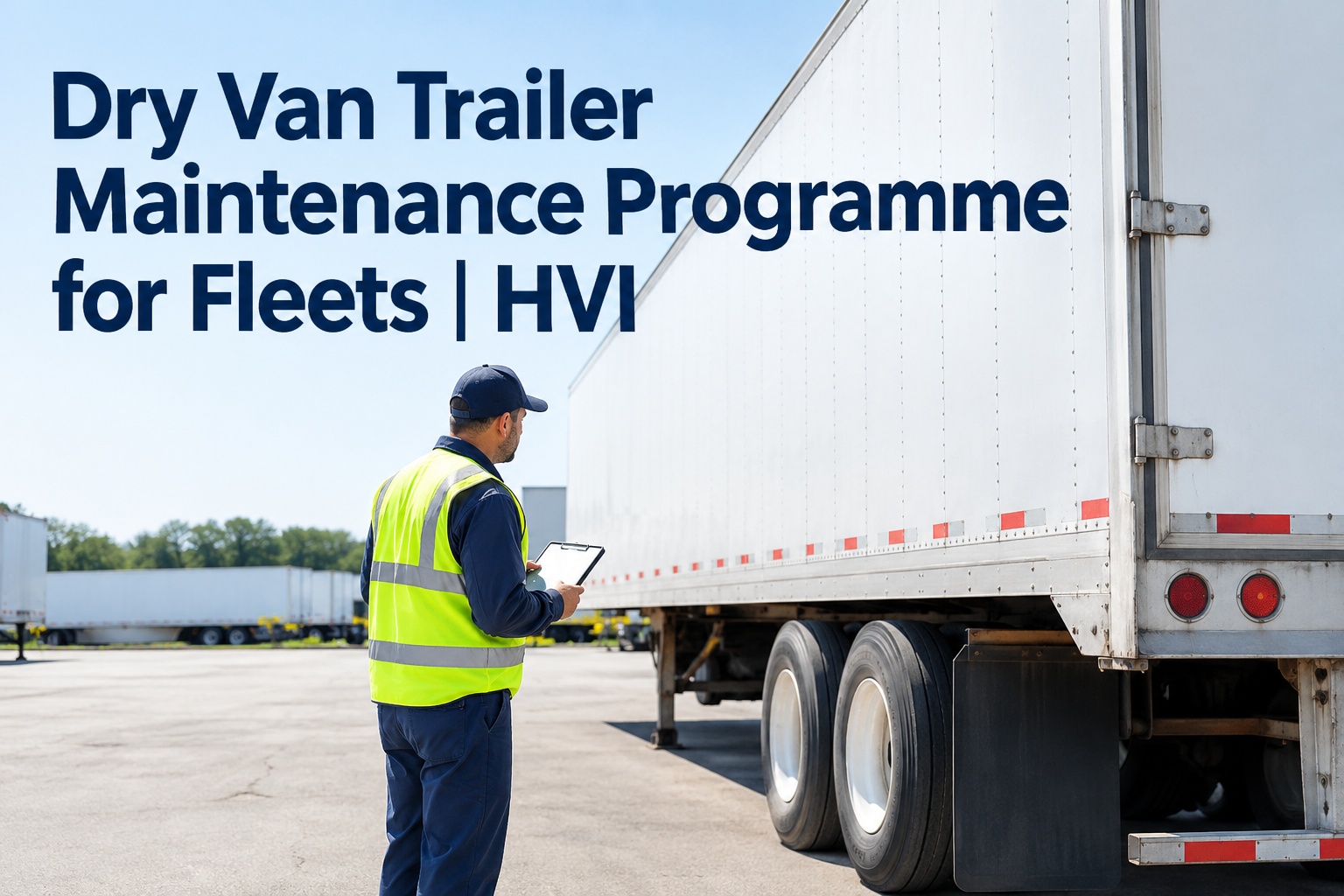
Dry van trailer maintenance breaks the one rule every other maintenance program runs on: there's no engine, no oil to change, and no reliable meter to schedule from. A tractor tells you it's due — miles, engine hours, oil life. A dry van tells you nothing. It gets dropped in a yard, swapped between drivers and pooled across terminals, so the trailer that fails a roadside inspection is almost never the one someone forgot to fix — it's the one everyone forgot they had. See a trailer pool that can't go dark
The Trailer That Fails Inspection Is the One Nobody Was Watching
A tractor reminds you it's due. A dry van doesn't. Without a calendar-based program, trailers don't get skipped on purpose — they just quietly disappear from the schedule.
- Calendar-based PM per asset — no meter required
- Annual inspection alerts at 90, 60 and 30 days
- Photo capture on every defect, offline in the yard
A dry van is the workhorse of the fleet and the asset drivers rush hardest on the DVIR — because it looks like an empty box. But that box has eight tires, brake components at eight wheel-ends, sixteen-plus lights, two big doors, and a floor that forklifts pound daily. None of it is engine-driven, so none of it gets caught by an engine-driven schedule. Below is why the calendar has to run the program, what actually fails on a dry van, and how photo documentation turns a rushed DVIR into a record you can defend.
Why dry van trailer maintenance has to run on the calendar
Mileage-based scheduling assumes you can trust the number and that the number follows the asset. Neither holds for a trailer. A pooled dry van might be pulled by ten different tractors in a month, none of which logs the trailer's miles. It can deadhead empty for weeks or run loaded every day. Try to schedule that on distance and you're guessing — and the guess fails at the worst time, on the side of a highway with an inspector writing it up.
Calendar-based scheduling fixes the problem by ignoring the meter you don't have and using the one clock that's always true: time. A 30/90-day PM cadence, a six-month deeper service, and the hard annual inspection deadline all run on dates, not distance — so every trailer in the pool comes due on a schedule that doesn't depend on anyone reading a number off it. See trailer PM scheduled by calendar per asset in a demo is the only approach that survives a trailer pool that's constantly moving.
The daily DVIR catches what's obvious, the periodic PMs catch what's wearing, and the annual inspection is the legal floor — but only the annual one has a date most fleets actually track. The 30, 90, and 180-day services are exactly the ones that slip when there's no meter shouting about them. Sign up free to put every interval on one calendar is what closes that gap.
Where a dry van actually fails
A dry van has no drivetrain to break, so its failures cluster in a few predictable places — and the top two are the same two that top the roadside out-of-service lists year after year. Knowing where to look turns a vague "check the trailer" into a focused inspection.
Out-of-adjustment brakes, cracked drums, worn linings, S-cam and slack-adjuster wear. Brake violations are the most common roadside out-of-service condition, full stop. Schedule adjustment on a set interval — not to exceed the manufacturer's mileage limit — because a trailer that hasn't been touched in a season is a trailer with a brake out of spec.
Hub-oil leaks, worn bearings, a hot hub, low inflation, uneven wear. Never reuse a hub seal on a repack. A wheel-end that runs a season past its seal check is how a trailer sheds a wheel — and how tire and wheel violations pile up beside the brake ones.
A roof puncture you find at the next rainfall — after the load's already wet. Loose rivets, cracked welds, holes over a quarter-inch. Cargo-damage claims and rejected loads start here, and this is the one a rushed DVIR skips because you can't see the roof from the ground.
Soft floorboards from water intrusion, worn door seals letting weather in, latches and holdbacks that don't hold. Floor replacement is the single most expensive dry-van repair there is, and it always starts as a small soft spot someone drove past for months.
Every one of these is invisible on a meter and obvious to a set of eyes on a schedule. That's the whole case for a calendar program with real inspection steps — book a demo to see the template walk a tech through brakes, wheel-ends, roof, floor, and doors every single time, so the roof check doesn't get skipped just because it's raining.
Annual inspection alerts: the deadline you can't let slip
Every commercial trailer has to carry a valid annual DOT inspection, signed and dated by a qualified inspector, with the record retained and available at roadside. Miss the date and it's not a maintenance oversight — it's an out-of-service trailer, a violation on the fleet's record, and a CSA hit. And because a dry van never reminds you, the expiring sticker on trailer 4471 sitting in a drop yard two states away is exactly the kind of thing that goes unnoticed until an inspector finds it first.
The fix is dead simple in principle and impossible to do reliably on a spreadsheet: an alert that fires well before each trailer's annual date, per asset, across the whole pool. Store the inspection date, inspector, and decal number against the trailer, and get pinged at 90, 60, and 30 days out so the service is booked before the deadline instead of after the violation. Book a demo to see automatic annual-inspection alerts fire across the pool and turn a compliance landmine into a routine calendar entry.
Photo capture: proof the DVIR was real
The dry van DVIR is the one drivers rush the most, because from the ground an empty van looks fine. A text note that says "door seal worn" is easy to write, easy to ignore, and impossible to verify later. A photo of the actual torn seal is none of those things — it's proof the defect exists, a head start for the tech who'll fix it, and a dated record if a cargo-damage claim or an audit ever asks what condition the trailer was in.
Photo documentation changes the whole tone of trailer inspection. It makes the driver's walkaround real work instead of a checkbox, it lets a shop foreman triage defects without walking to the trailer, and it builds a visual history per asset that a spreadsheet simply can't hold. Start free and attach a photo to every trailer defect is how a fleet turns "trust me, I checked it" into a record it can stand behind.
Our trailers used to be the black hole of the fleet. Tractors got serviced like clockwork because the shop system flagged them on mileage. The vans just drifted — we found out one was three weeks past its annual only because a roadside inspection caught it. That's a violation you can't argue with.
Moving the whole pool onto calendar scheduling with the annual alerts was the fix. Now every trailer comes due on a date, I get warned months ahead, and the drivers photograph anything they flag — so a worn seal is a picture in the system, not a note nobody reads. We haven't missed an annual since.
Frequently asked questions
Why is dry van trailer maintenance scheduled by calendar instead of mileage?
Because a trailer has no engine and no reliable meter that follows the asset. A dry van gets pulled by many different tractors, dropped in yards, and pooled across terminals, and none of those tractors logs the trailer's individual mileage. It might sit for weeks or run every day. Mileage-based scheduling assumes a number you can trust that stays with the asset — and a trailer gives you neither. Calendar-based scheduling uses the one clock that's always accurate: time. A 30/90-day PM cadence, a six-month deeper service, and the annual DOT inspection all run on dates, so every trailer in the pool comes due on a schedule that doesn't depend on anyone reading a meter off it.
What does a dry van trailer PM program actually include?
A tiered, calendar-driven program. Daily, the driver runs a pre-trip DVIR covering lights, tires, doors, and obvious damage. Every 30 to 90 days, PM-A covers brake adjustment, lighting bench-testing, an ABS diagnostic scan, suspension and air-ride, door seals, and the floor. Around six months, PM-B adds wheel-end seal checks, hub inspection, slack-adjuster assessment, kingpin lubrication, and roof and sidewall integrity. Annually, a qualified inspector performs the full FMCSA-mandated DOT inspection and signs the certification. The trailer has no oil to change, so unlike a tractor the program is structural and braking-system driven rather than engine driven — eight tires, brake components at eight wheel-ends, sixteen-plus lights, two doors, and a heavily loaded floor.
What are the most common dry van trailer failures?
Brakes and wheel-ends top the list, and they're also the two most common roadside out-of-service categories. Brake failures mean out-of-adjustment brakes, cracked drums, worn linings, and S-cam or slack-adjuster wear. Wheel-end failures mean hub-oil leaks, worn bearings, a hot hub, and low or uneven tire wear. After those come structural problems: roof punctures usually discovered at the next rainfall after the load is already wet, loose rivets and cracked welds in the sidewalls, and soft floorboards from water intrusion — with floor replacement being the single most expensive dry-van repair. Door seals and latches round it out. Every one of these is invisible on a meter and obvious to eyes on a schedule, which is the case for a calendar-based inspection program.
How do annual inspection alerts prevent violations?
Every commercial trailer must carry a valid annual DOT inspection, signed and dated by a qualified inspector, with the record retained and available at roadside. Miss the date and the trailer is out of service, which is a violation and a CSA hit. Because a dry van never reminds you, an expiring inspection on a trailer parked in a distant drop yard is exactly what goes unnoticed until an inspector finds it first. Annual inspection alerts store the inspection date, inspector, and decal number per asset and notify you well ahead — typically 90, 60, and 30 days before expiry — so the service is booked before the deadline instead of after the violation. Across a large pool, this is impossible to do reliably by hand and routine to do with software.
Why does photo documentation matter on trailer inspections?
The dry van DVIR is the inspection drivers rush the most, because an empty van looks fine from the ground. A written note like "door seal worn" is easy to write, easy to ignore, and impossible to verify later; a photo of the torn seal is proof the defect is real, a head start for the technician who'll fix it, and a dated record if a cargo-damage claim or a compliance audit ever asks about the trailer's condition. Photo capture makes the walkaround real work instead of a checkbox, lets a shop foreman triage defects without walking to the trailer, and builds a visual history per asset that a spreadsheet can't hold. It turns "trust me, I checked it" into a record the fleet can stand behind.
Give every dry van a schedule it can't slip off
HVI runs dry van trailer maintenance on calendar-based PM per asset, fires annual inspection alerts at 90, 60, and 30 days across your whole pool, walks techs and drivers through a configurable inspection template, and captures a photo on every defect — signed, dated, and audit-ready, even offline in the yard. See your trailer pool stop going dark.
No credit card · Works offline · Photo capture on every defect