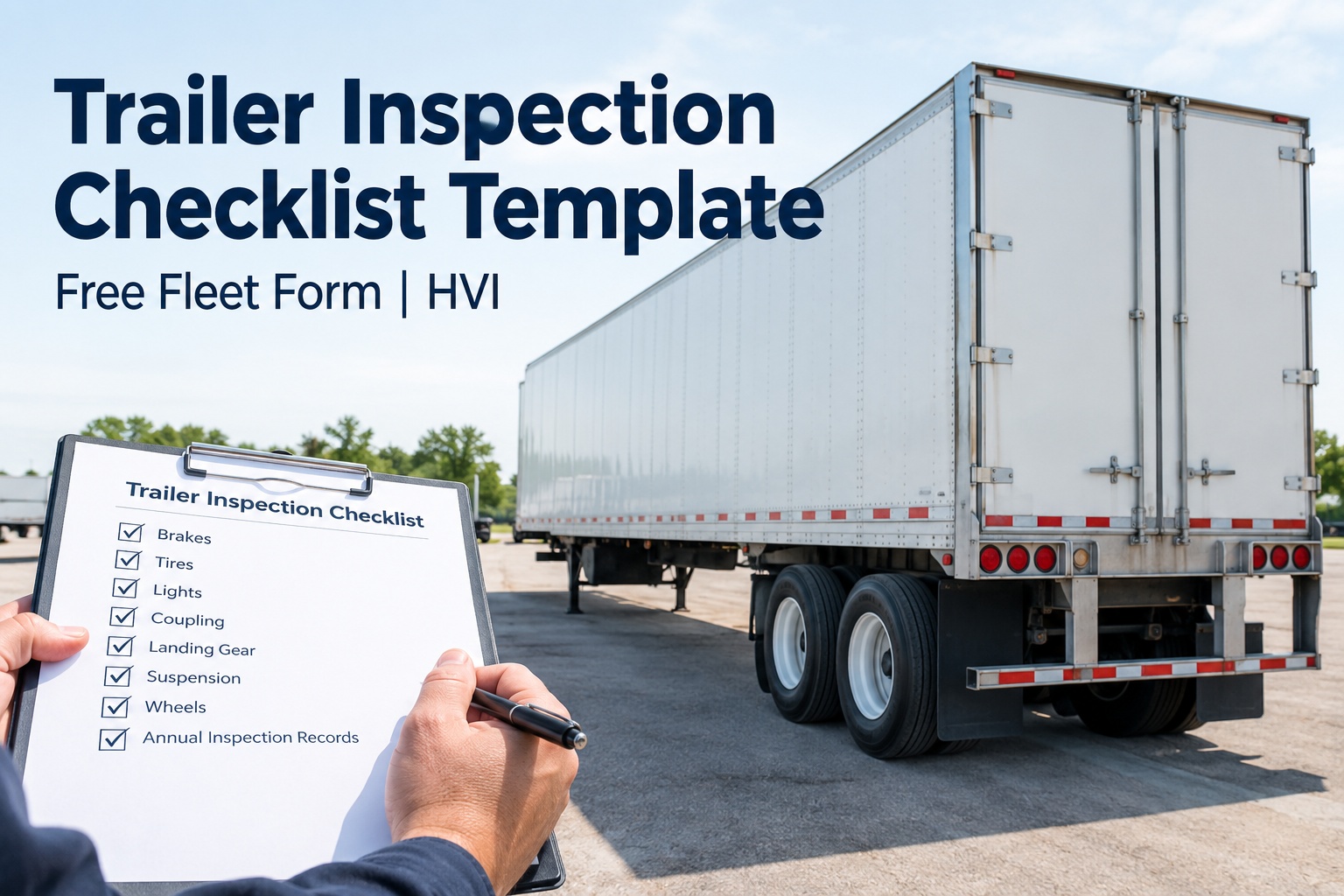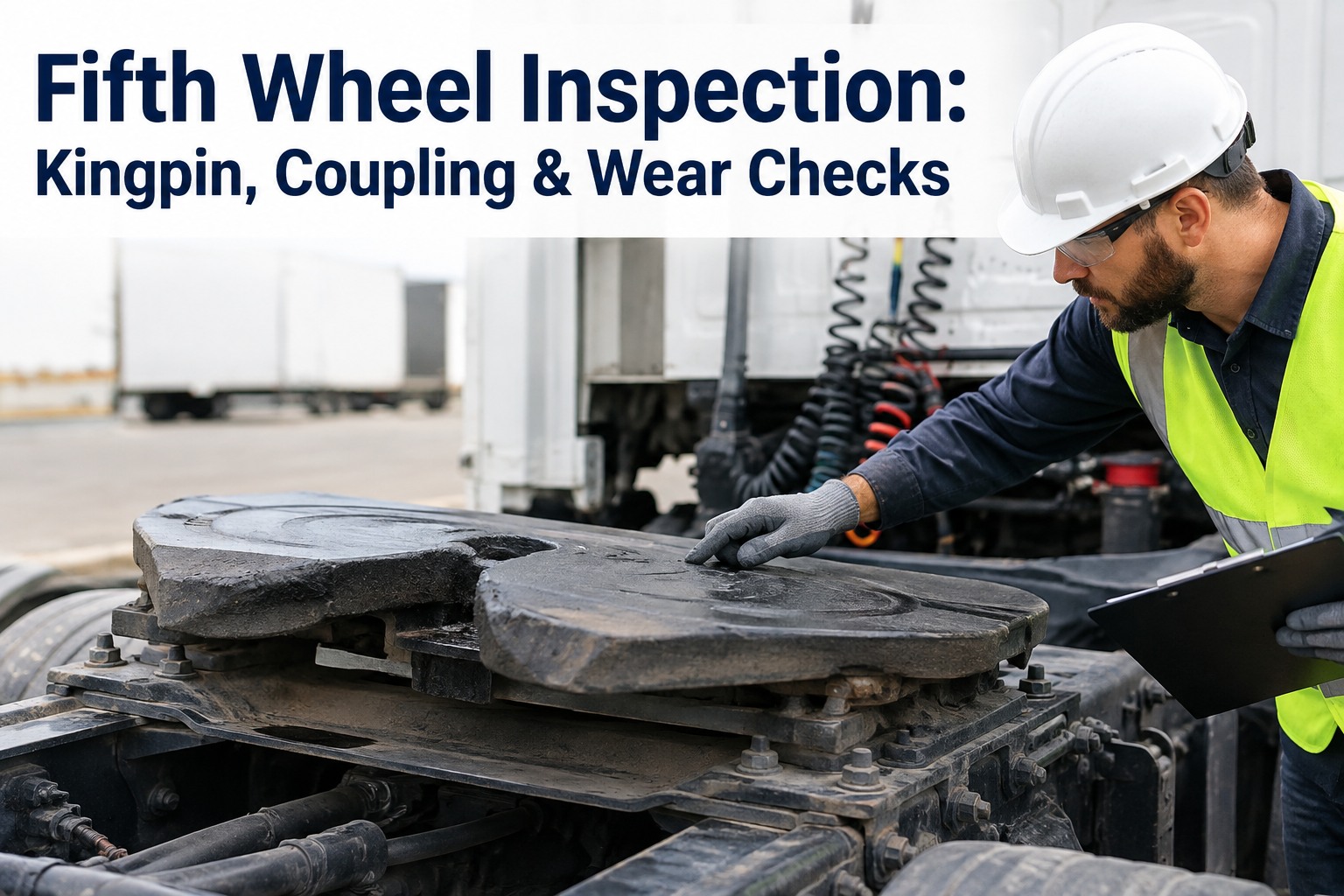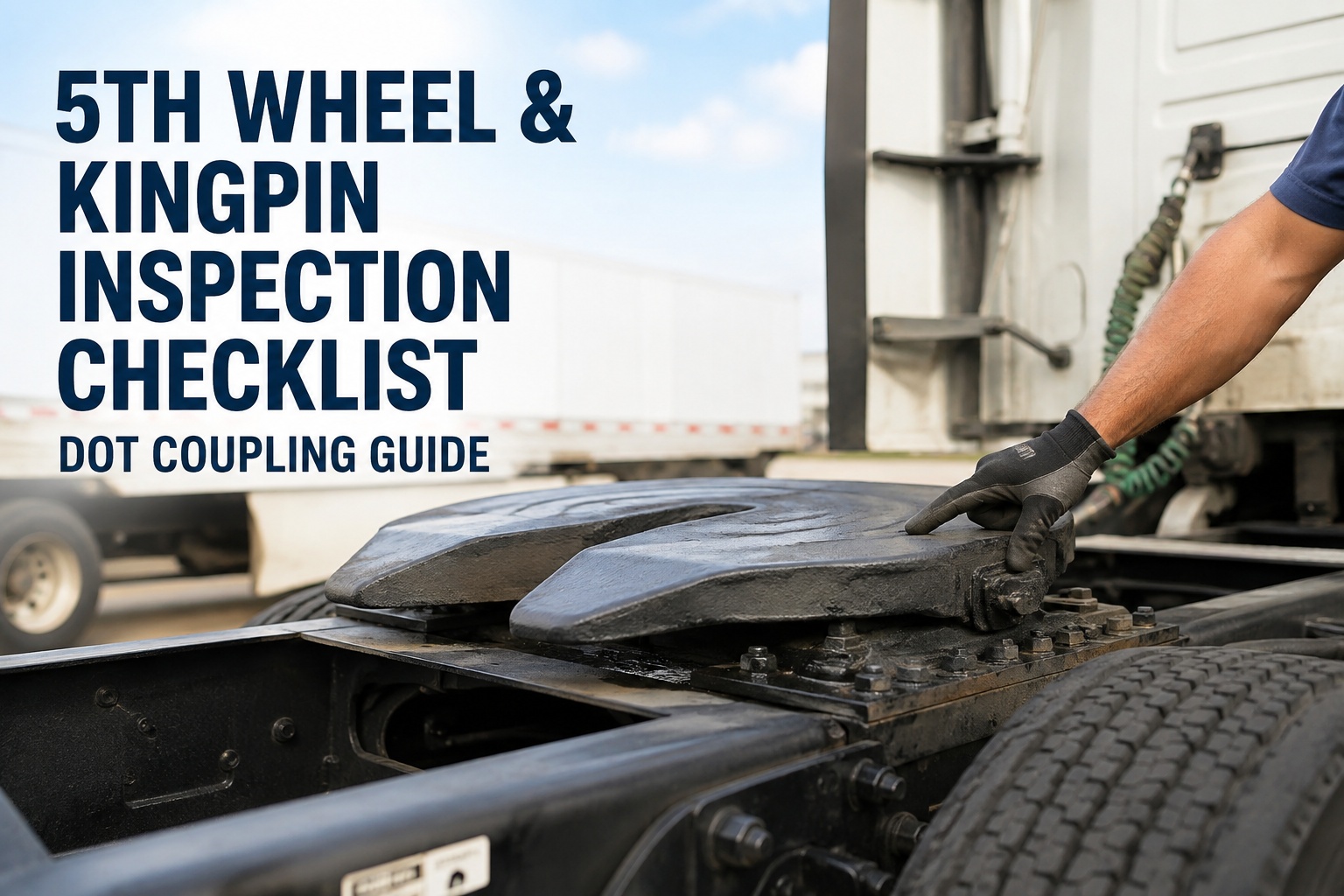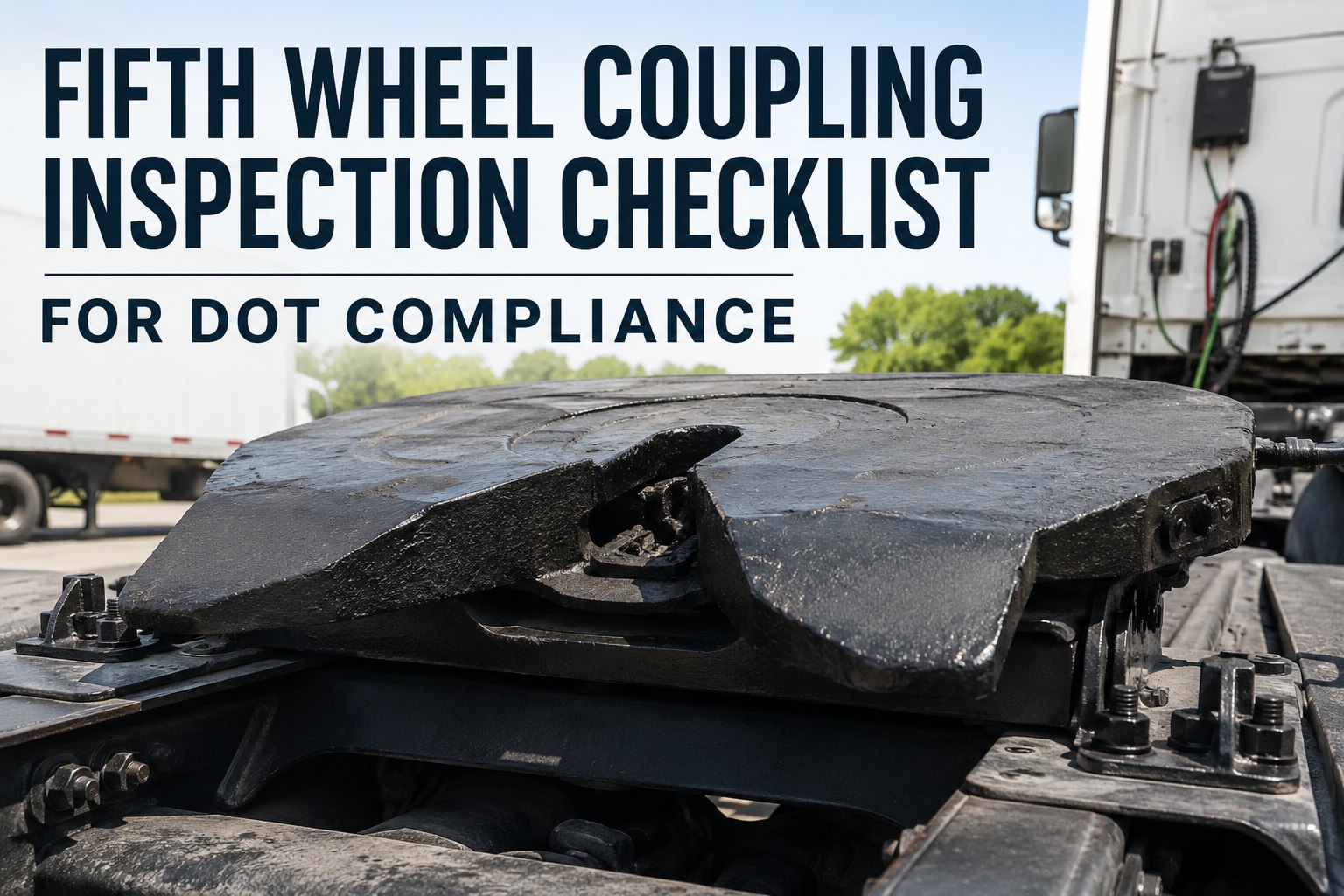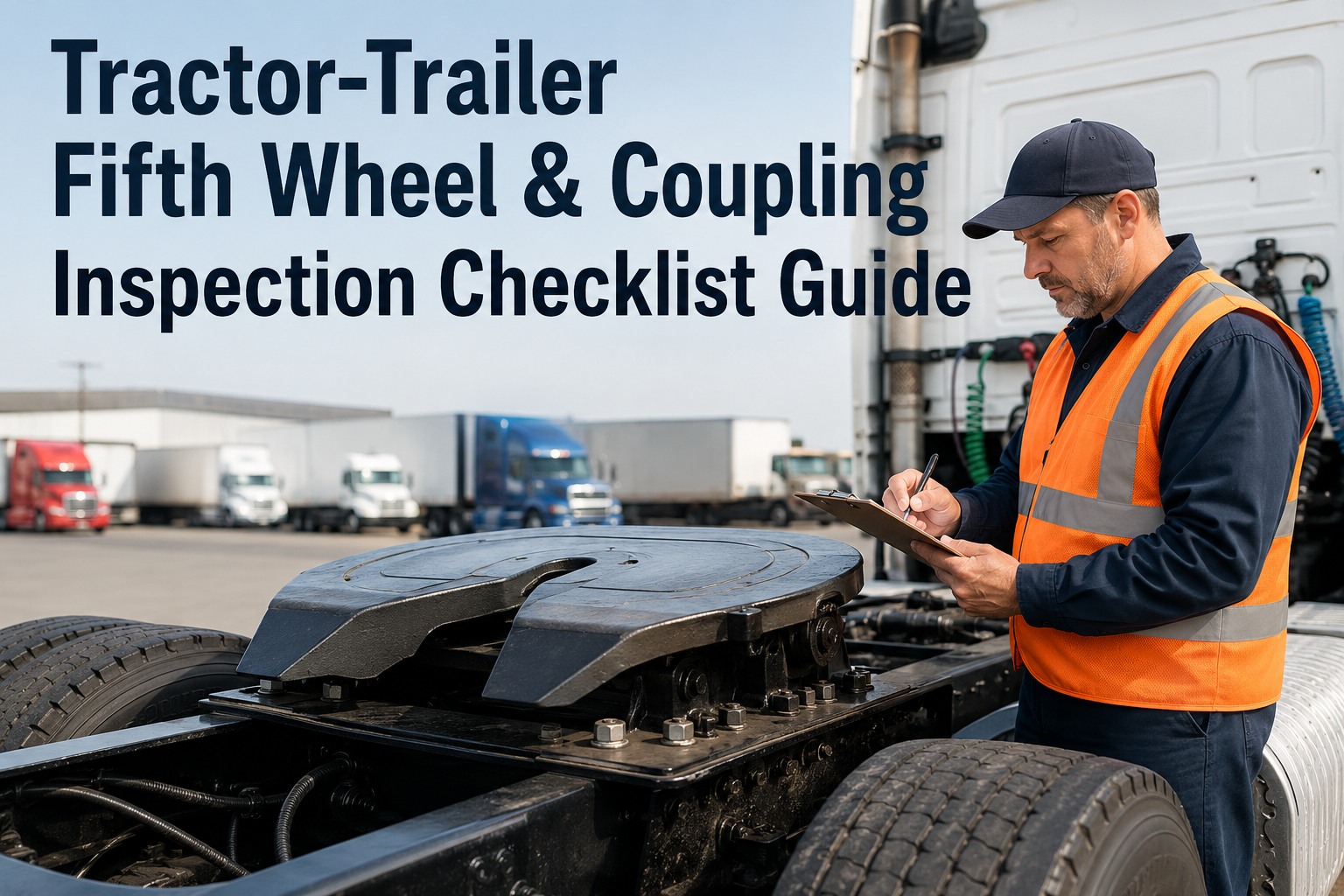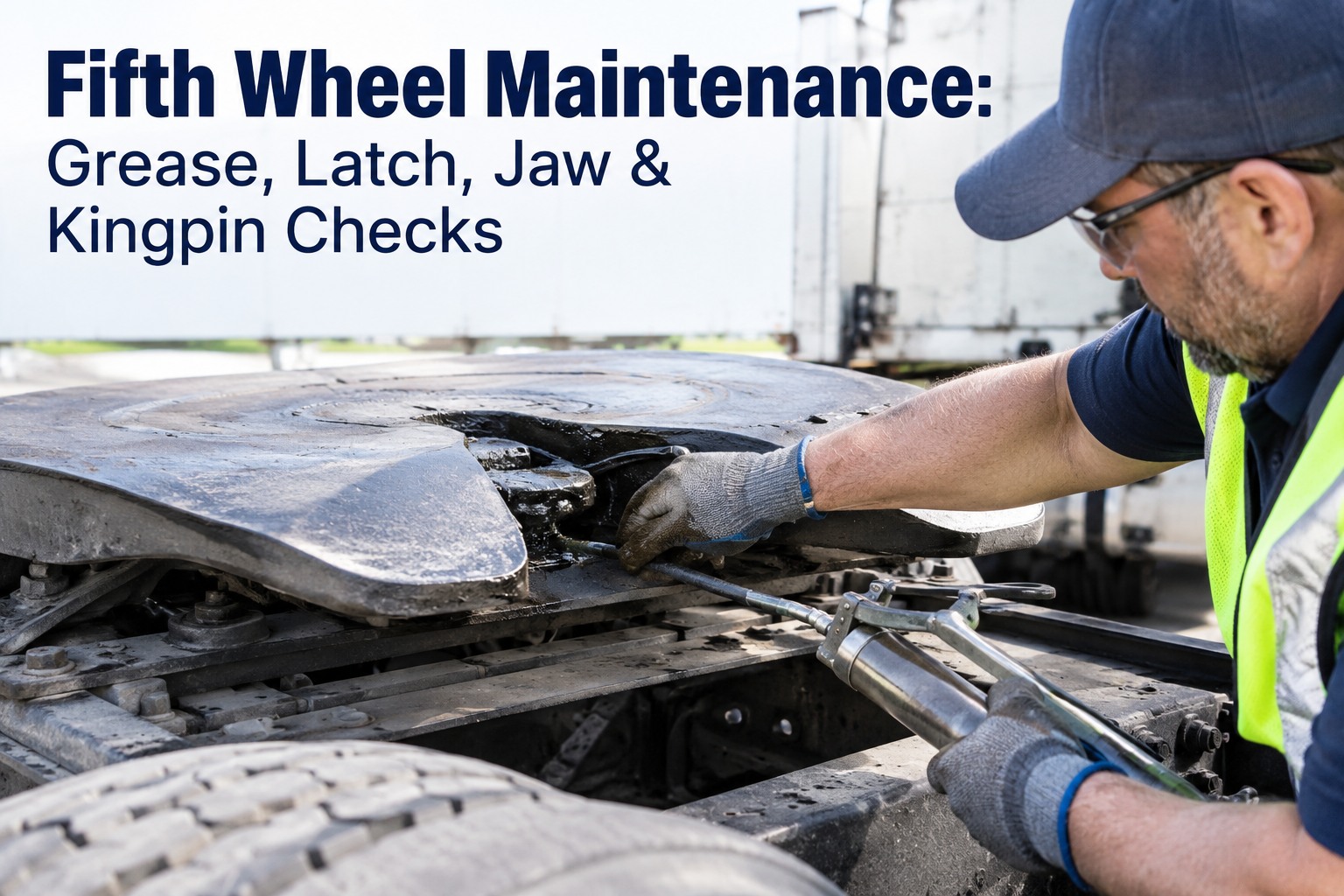
Ask ten drivers what fifth wheel maintenance means and most say one word: grease. It's not wrong, but it's the smallest part — and the part that hides the rest. Caked grease covers the cracked top plate, the stretched lock spring, the worn jaw quietly letting play into the coupling. Real fifth wheel maintenance is lubrication plus inspection of the jaws, latch, kingpin, wear surfaces, and mounting hardware, as a routine. This guide separates the daily driver check from scheduled PM. Book a demo to see fifth wheel PM tracked per vehicle in HVI.
Fifth Wheel Maintenance, Done Right
Grease is one step. Jaws, latch, kingpin, wear plate, and mounting hardware are the rest — and the difference between a coupling you trust and one you hope about.
The fifth wheel is the single connection between tractor and trailer — the coupling that everything the truck hauls depends on. Over millions of miles, constant motion under load wears the kingpin shank, the fifth wheel jaws, the locking mechanism, and the upper coupler plate. That wear isn't avoidable; the question is whether the fleet is tracking it against tolerance before it becomes a problem. Getting that right starts with separating two very different activities that too often get blurred into one.
Two different jobs, not one
The most useful thing a fleet can do is stop treating "fifth wheel maintenance" as a single task. There's the quick coupling check a driver does before every trip, and there's scheduled preventive maintenance a technician performs on an interval. They catch different problems.
Driver coupling check
- Trailer rides level; no gap between top plate and trailer
- Locking jaws fully closed around the kingpin
- Release handle in the locked position
- Safety catch engaged; no visible damage
- A tug test confirms the coupling is locked
Scheduled PM
- Degrease and clean to expose hidden damage
- Inspect jaws, springs, and locking mechanism for wear
- Measure kingpin and wear surfaces against tolerances
- Check mounting bolts, brackets, and liner thickness
- Lubricate to manufacturer spec and verify lock function
A driver's pre-trip catches a bad coupling today; it can't measure kingpin wear or spot a hairline crack under grease. Scheduled PM catches the slow failures a daily glance never will. A complete program documents both — and that's exactly the split most fleets never formalize. Book a demo to run pre-trip checks and scheduled PM as separate tracked workflows
Lubrication: right grease, right places
Lubricant is the lifeblood of most fifth wheels. Without it, top plates chafe and wear, jaw locks corrode and stop working, and steering gets heavy. But "add grease" oversimplifies it — different surfaces want different lubricants, and the exact points depend on your model.
The top-plate face that bears the trailer. Manufacturer guidance commonly calls for a lithium-based grease with EP (extreme-pressure) additive here.
The locking mechanism is lubed through the grease zerk on the fifth wheel skirt — some guidance uses a lighter oil or silicone on the jaws rather than heavy top-plate grease.
Light oil on the moving linkage; on sliding fifth wheels, the slide path of the base plate gets its own treatment per the manufacturer.
Because lube-free and low-maintenance designs vary so widely — some need only the lock jaw greased, some nothing for years — there's no single lubrication interval that fits every fifth wheel. That's precisely why manufacturer-specific procedure matters more than any rule of thumb. Start free on HVI to store each unit's correct lube spec right in its PM template.
The scheduled inspection sequence
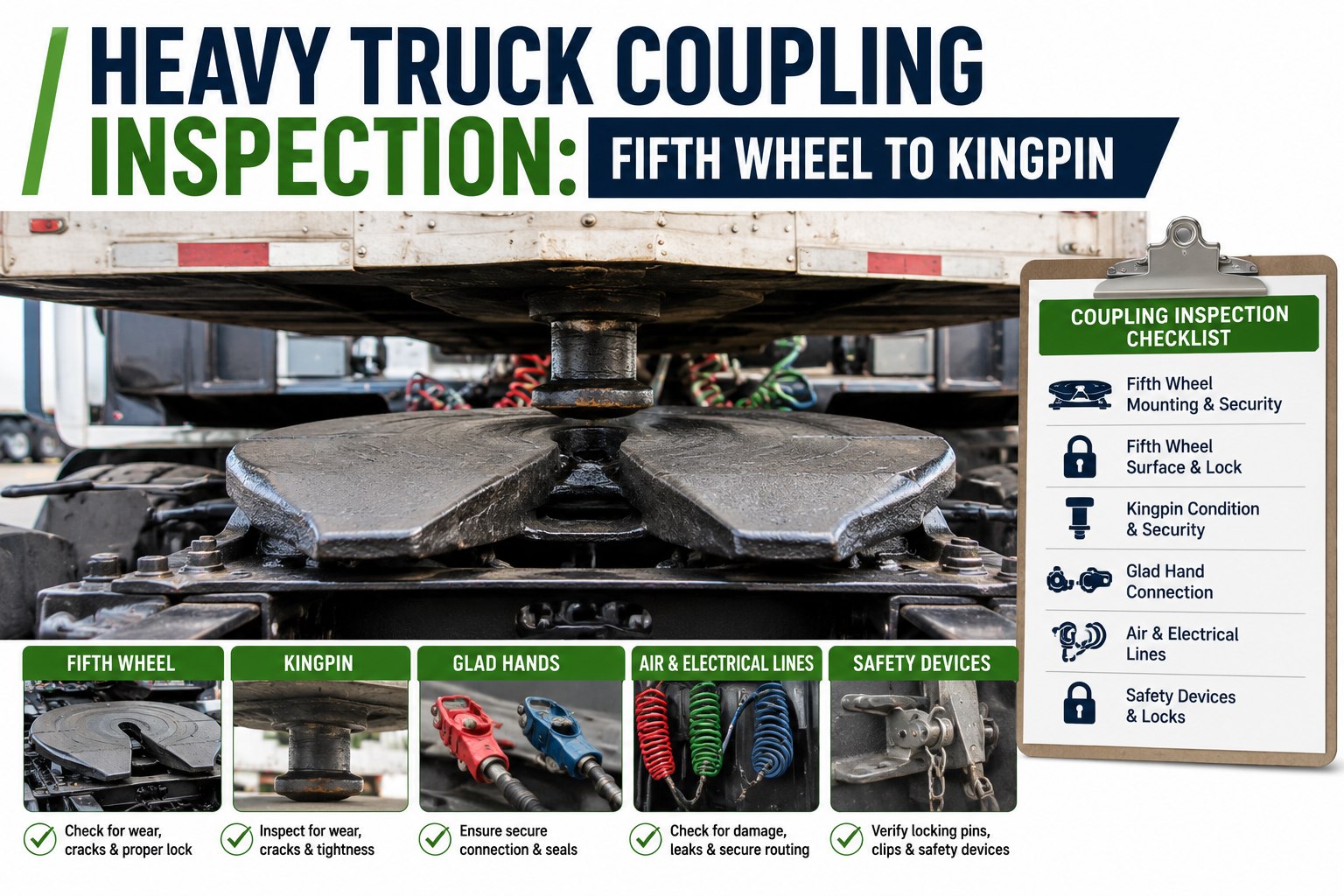
This is where a fifth-wheel problem stops being "just a grease issue." A proper inspection walks the whole coupling in order — and it starts with cleaning, because caked grease is where damage hides. Perform all of this with the tractor uncoupled from the trailer.
Remove old grease and debris so cracks, broken welds, and worn parts are actually visible. Damage from a high-pin event or bent plate can hide completely under caked grease.
Inspect the jaws for wear and the springs for stretch or breakage. Cycle the lock several times — ideally with a lock tester — to confirm it engages and releases properly.
Check the pull handle, spring tension, and that the secondary safety catch functions. A handle that won't stay put or a weak spring is a coupling risk.
Measure the kingpin with a kingpin gauge — this is not a visual pass. Confirm wear and any deflection are within the manufacturer's out-of-service criteria.
Inspect the top plate and throat for wear; check bracket liner thickness and replace worn or broken liners per the manufacturer's minimum (and their duty-cycle mileage guidance).
Inspect mounting bolts, bracket pin bolts, and locking tabs; look for cracks, deformation, and missing or damaged fasteners. Replace with genuine parts.
Notice how much of this has nothing to do with grease. Excessive wear, a stretched spring, a bent plate, loose mounting hardware — these are the failures that a lube-only mindset misses entirely. Treating every fifth-wheel concern as a grease problem is how a worn jaw or damaged kingpin goes unaddressed until it's a roadside event. Book a demo to standardize this inspection sequence as a digital template
What excessive wear looks like
Wear is inevitable; unmonitored wear is what causes failures. Here are the signs that a coupling has moved from "worn" to "needs attention" — the things a scheduled inspection is specifically hunting for.
Fore/aft or side movement in the coupling beyond spec signals worn jaws or kingpin.
Deep scoring from poor lubrication or a high-pin event where the kingpin rode up.
A lock that doesn't snap firmly, or a handle that won't hold, points to spring failure.
Thin bracket liners or loose fasteners let the whole assembly shift under load.
Left unmonitored, this wear compounds in an ugly way: a worn kingpin accelerates jaw wear in every tractor it couples to, and a worn jaw accelerates kingpin wear in every trailer it hauls. Ignored kingpin wear can lead to structural trailer repairs running into the thousands per unit. Catching it early, on schedule, is dramatically cheaper than catching it late. Book a demo to trend coupling wear before it crosses the line
Who checks what: tractor vs trailer PM
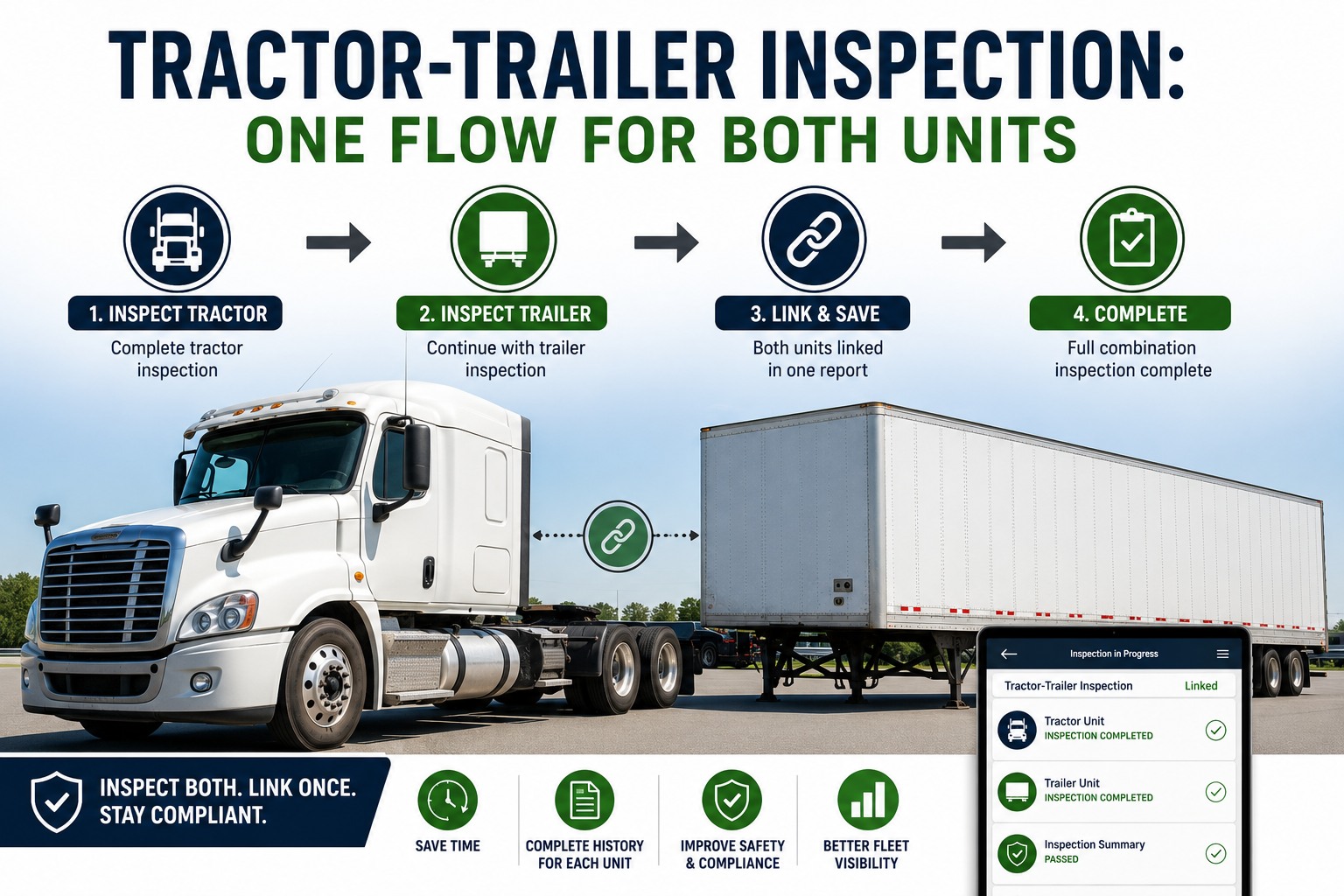
Here's a detail that trips up even organized fleets: the coupling spans two assets, so its maintenance splits across two PM schedules. Assign it clearly, or checks fall through the gap between tractor and trailer service.
- Fifth wheel jaw & locking mechanism inspection
- Top plate lubrication & wear check
- Bracket liner measurement
- Mounting bolts & bracket pin hardware
- Kingpin gauge measurement
- Upper coupler plate flatness
- Kingpin wear against out-of-service criteria
- Upper coupler condition & fasteners
- Actual engagement & lock-up under load
- Free play between top plate and trailer
- Ride height & alignment when mated
- Tug test verification
When ownership is vague, the kingpin gauge check gets skipped because "the tractor shop handles the fifth wheel" — even though the kingpin lives on the trailer. Clear assignment across tractor PM, trailer PM, and coupled evaluation is what closes that gap, and it's far easier to enforce when each is a defined task on the right asset's schedule. Start free and assign every coupling check to the correct asset's PM.
From a maintenance manager who stopped guessing
We thought we had fifth wheels handled because the guys greased them. Then a trailer came in with a kingpin worn past spec that nobody had gauged in who knows how long — the fifth wheel jaws on three different tractors had been chewing on it, and those were now worn too. One neglected kingpin had quietly damaged half a dozen components across the fleet.
That's when it clicked that greasing isn't inspecting. We built a real PM task — degrease, inspect, gauge the kingpin, check the mounting — on a schedule, on the right asset, documented every time. Now we catch the wear while it's a liner or a spring, not after it's a structural repair.
Grease it, but don't stop there
Solid fifth wheel maintenance is a system, not a grease gun. It starts with the right lubricant on the right surfaces using a hand gun — or with respecting the low-maintenance design your specific model may use — but it only becomes reliable when lubrication is paired with real inspection: locking jaws and springs, the release latch and safety catch, kingpin engagement measured with a gauge, wear surfaces and liners, and mounting hardware. The through-line is that a fifth-wheel concern should never be dismissed as merely a grease issue when wear, damage, or a coupling problem may be underneath. And because procedures, intervals, and wear limits vary by manufacturer and model, the manufacturer's manual is always the final word.
The real opportunity for a fleet is turning all of this from an informal habit into a documented, recurring workflow. Separate the driver's pre-trip coupling check from scheduled preventive maintenance, assign each inspection to the correct asset's PM, and record every lubrication, defect, and repair so recurring problems and overdue tasks surface before they strand a truck. That's exactly what HVI is built to do: configurable fifth-wheel inspection templates, PM scheduling with reminders, defect and repair tracking, and searchable maintenance history per vehicle. Always follow your fifth wheel manufacturer's service manual for lubrication, adjustment, and wear specifications. Book a demo to see how HVI tracks fifth wheel PM and inspections.
Frequently asked questions
How often should a fifth wheel be greased and maintained?
There's no single interval that fits every fifth wheel, because it depends heavily on the make, model, and design. Traditional greased fifth wheels need regular lubrication and periodic cleaning — for example, some manufacturer guidance calls for lubricating the locking mechanism roughly every three months or 30,000 miles and thoroughly cleaning it about every six months or 60,000 miles, while others emphasize lubricating through all four seasons, which conveniently also creates four inspection opportunities a year. However, many modern fifth wheels are low-maintenance or lube-free by design, using top-plate liners, treated metals, or automatic lubrication systems that dramatically reduce or eliminate manual greasing — some need only the lock jaw lubricated, and some are engineered to go years between service. Because of this variation, you should always follow the specific lubrication and maintenance intervals in your fifth wheel manufacturer's service manual rather than applying a universal rule. What is consistent across all designs is that lubrication alone isn't maintenance — scheduled inspection of the jaws, kingpin, wear surfaces, and mounting hardware matters regardless of the lube approach.
What's the difference between a driver coupling check and fifth wheel PM?
They serve different purposes and catch different problems. A driver's coupling check happens before every trip and confirms that this particular coupling is safe right now: the trailer sits level with no gap at the top plate, the locking jaws are fully closed around the kingpin, the release handle is in the locked position, the safety catch is engaged, there's no obvious damage, and a tug test confirms the lock is holding. It's a fast visual-and-function check the driver can do without tools. Scheduled preventive maintenance is a deeper, interval-based service a technician performs with the tractor uncoupled: degreasing to expose hidden damage, inspecting jaws and springs for wear, measuring the kingpin with a gauge against out-of-service criteria, checking bracket liner thickness and mounting hardware, and lubricating to manufacturer spec. The driver check catches an unsafe coupling today; PM catches the slow wear and hidden damage a daily glance can't. A complete program documents both as separate activities, because one cannot substitute for the other.
What are the signs of a worn fifth wheel or kingpin?
The most important sign is excessive free play — noticeable fore/aft or side-to-side movement in the coupling beyond specification, which points to worn jaws, a worn kingpin, or both. One commonly cited benchmark is that roadside inspectors will sideline a truck for more than about half an inch of fore/aft movement between the top plate and trailer, while manufacturers typically recommend much tighter tolerances, on the order of 1/16-inch freeplay around the kingpin. Other signs include a grooved or gouged top plate (often from poor lubrication or a high-pin event where the kingpin rode up onto the plate), weak or broken locking springs that keep the jaws from snapping firmly shut, a release handle that won't stay in position, thin or broken bracket liners, and loose or damaged mounting hardware. Because a worn kingpin accelerates jaw wear in every tractor it couples with — and a worn jaw accelerates kingpin wear in every trailer — this damage compounds across a fleet if not caught. Exact wear limits vary by manufacturer, and the kingpin should be measured with a proper gauge rather than judged by eye.
Why shouldn't I treat every fifth wheel problem as a grease issue?
Because grease is only one of several things that can go wrong with a coupling, and reaching for the grease gun can mask more serious problems. A fifth wheel can have worn or cracked locking jaws, stretched or broken springs, a bent or gouged top plate from a high-pin event, a kingpin worn past its out-of-service limit, worn bracket liners, or loose mounting hardware — none of which lubrication fixes. Worse, caked grease actively hides these defects: cracks, broken welds, and worn locks can be completely obscured until the fifth wheel is degreased and properly inspected. If a coupling is behaving oddly — stiff operation, excess play, a lock that won't seat — assuming it just needs grease can leave genuine wear or damage unaddressed until it becomes a roadside or operational failure. That's why proper maintenance always pairs lubrication with inspection, and why a change in fifth wheel operation should be reported and investigated rather than simply greased over. When in doubt, degrease, inspect against the manufacturer's criteria, and measure wear rather than assuming.
How can fleets track fifth wheel maintenance across many vehicles?
The challenge is that fifth-wheel maintenance is really several recurring activities spread across two assets: driver pre-trip coupling checks, tractor-side PM (jaw inspection, top-plate lubrication, liner measurement, mounting hardware), trailer-side PM (kingpin gauging, upper coupler flatness), and coupled evaluations — each on its own interval and easy to let slip. A digital inspection and maintenance platform like HVI helps by turning these into configurable inspection templates and scheduled PM tasks assigned to the correct asset, so nothing falls through the gap between tractor and trailer service. It captures defects and repairs per vehicle, flags overdue PM before it becomes a problem, and keeps a searchable maintenance history so recurring issues — a kingpin that keeps wearing, a fifth wheel that repeatedly needs adjustment — become visible patterns rather than isolated events. Fleet-level visibility also lets managers see which units are due, which have open coupling defects, and whether a repair actually resolved the issue, converting fifth-wheel care from an informal, easily-forgotten task into a documented, auditable workflow across the whole fleet.
Make fifth wheel PM a documented, recurring workflow
HVI turns fifth-wheel inspection and lubrication into scheduled PM tasks with configurable templates, assigns each check to the right asset, captures defects and repairs per vehicle, and flags overdue intervals — with searchable maintenance history across the fleet. Turn coupling care from a habit into a record. Mobile-first for drivers and the shop, live in under two weeks.
No credit card · Configurable fifth wheel PM templates · Maintenance history on day one